When you buy through links on this page, we may earn an affiliate commission. This guide is built from manufacturer specifications, published charging standards and launch documentation — the phones below are compared on what their makers publish about wireless charging, not on accessories, cameras or screen quality.
Wireless charging used to be a simple checkbox: a phone either had it or it did not, and every pad delivered roughly the same slow trickle. That era is over. The current generation splits along three fault lines that matter far more than the checkbox ever did. The first is the standard: Qi2 has brought magnetic alignment and higher wattages to phones beyond Apple, while MagSafe continues as Apple’s own implementation of the same basic idea, and a few brands still run proprietary systems that are faster than either but only with their own chargers. The second fault line is where the magnets live. Some phones now carry a magnetic ring inside the body, so the phone snaps onto a pad, stand or car mount by itself. Others are sold as ready for the standard while carrying no magnets at all, which quietly moves the entire alignment system into a case you have to buy separately. The third is speed, and specifically the conditions attached to it: a headline figure of 25W or 50W is only available with the right charger, the right adapter feeding it, and sometimes the right case.
There is a reason this comparison has become necessary now rather than two years ago. For a long stretch, wireless charging on Android meant a single slow standard and a take-it-or-leave-it pad, while Apple built its magnetic system in relative isolation. The arrival of Qi2 phones with built-in magnets — and of a 25W tier above the old ceiling — has collapsed that separation. Accessories increasingly serve both platforms, buying decisions increasingly hinge on which magnetic dialect a phone speaks, and the wrong assumption at purchase time follows a phone for its whole life, because none of these capabilities can be added later by software. A phone without a magnet ring will never grow one; a 15W phone will never negotiate 25W. That permanence is why this guide treats charging as a primary axis rather than a footnote.
This roundup is organised around those three questions and nothing else. Every phone here supports wireless charging, but they get there by different routes, and the right choice depends on which route fits the chargers, stands, mounts and habits you already have. A buyer deep in MagSafe accessories needs a different answer from a buyer who wants the fastest possible top-up from a proprietary puck, and both need a different answer from someone who simply wants a phone that snaps onto the magnetic stand they already own without a special case in between.
The short version
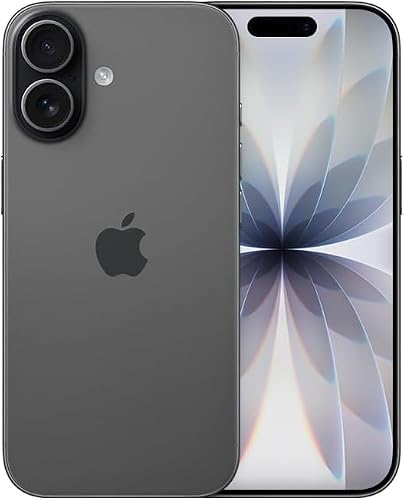
If you want the full magnetic experience with no asterisks on the Apple side, the iPhone 17 and iPhone 17 Pro Max both charge at up to 25W over MagSafe and Qi2 25W, with the magnet ring built into the phone. On Android, the Google Pixel 10 Pro XL is the closest equivalent: its Pixelsnap ring is built in, and it is the Android pick here with Qi2 charging at up to 25W. The standard Pixel 10 keeps the same built-in magnets at a 15W ceiling and a lower position in the range. The Samsung Galaxy S25 Ultra is the odd one out in a way buyers must understand before ordering: it is certified Qi2 Ready at 15W but has no magnets in the phone, so the snap-on experience arrives only through a magnetic case. The OnePlus 13 plays a different game entirely, with proprietary wireless charging published at up to 50W through the brand’s own magnetic charger, and standard Qi as a slower fallback.
None of those headline speeds is automatic. Each one assumes a charger built for the standard and an adapter strong enough to feed it, and the sections below unpack those conditions standard by standard before the individual reviews, because buying the phone is only half of the purchase — the charging hardware around it decides what you actually get every night.
It is also worth naming what this guide deliberately leaves out. All six phones are capable cameras, fast processors and good screens, and none of that is scored here, because a roundup that tries to judge everything ends up explaining nothing. The single lens is charging: the standard each phone speaks, where its magnets live, the conditions attached to its fastest speed, and what it can hand back to your accessories. A phone that loses on this page might still be the right phone for a camera-first buyer — it just is not the right answer to the question this page asks.
In this guide
What to look for in a wireless charging smartphone
Qi2 is a magnet standard as much as a charging standard
The original Qi standard aligned nothing: you placed the phone on a pad and hoped the coils lined up, and a few millimetres of drift could slow charging or stop it entirely. Qi2 changed the definition by building a magnetic alignment profile into the standard itself, modelled on the approach Apple pioneered with MagSafe. A Qi2 phone carries a ring of magnets around its charging coil, so it snaps into the correct position on a compatible charger every time, and that reliable alignment is what allows the higher wattages to be delivered consistently. MagSafe is Apple’s implementation of the same concept, and current iPhones support both MagSafe chargers and Qi2 chargers, which is why the accessory shelves for the two standards overlap so heavily. When a phone is described as Qi2 Ready rather than Qi2, read the fine print: the Ready designation covers phones that meet the charging specification but rely on a case to supply the magnets, which is a materially different product from one with the ring built in.
Built-in magnets versus case magnets
This is the distinction this generation will be remembered for. A phone with built-in magnets — the two iPhones and the two Pixels in this roundup — snaps onto stands, wallets, car mounts and battery packs exactly as it comes out of the box, and any case you add simply needs its own magnetic ring to pass the connection through. A phone without built-in magnets, such as the Galaxy S25 Ultra and the OnePlus 13, can still charge on any Qi pad, but the snap, the alignment and the accessory grip all depend on a magnetic case. That has three practical consequences. First, the case becomes a required purchase rather than an optional one if you want the magnetic lifestyle. Second, alignment quality varies with the case, because the ring strength and position are the case maker’s responsibility. Third, the phone alone on a plain pad aligns no better than phones did five years ago, so the charging experience without the case is the old place-and-hope routine. Neither approach is automatically wrong — Samsung and OnePlus both sell first-party magnetic cases designed for exactly this — but a buyer comparing spec sheets should treat “Qi2” and “Qi2 Ready” as different features, because in daily use they are.
What 15W, 25W and 50W actually mean
Wireless charging speeds are published as maximums, and the honest way to read them is as ceilings reached under the right conditions rather than constant rates. A 25W phone does not draw 25W from empty to full; it peaks early in the cycle and tapers as the battery fills and warms. Even so, the tiers are meaningfully different. The long-standing 15W tier, shared by the Pixel 10 and the Galaxy S25 Ultra, is the mature standard: chargers are everywhere, stands and car mounts are plentiful, and an overnight or deskbound top-up is entirely comfortable. The 25W tier, offered by the iPhone 17 pair over MagSafe and Qi2 and by the Pixel 10 Pro XL over Qi2, cuts the time for a substantial partial charge noticeably, which matters for the grab-a-charge-before-leaving pattern rather than the overnight pattern. The OnePlus 13’s published 50W figure belongs to a proprietary system and is only reachable through the brand’s own charger, so it should be compared as a separate category: dramatically faster on its home turf, ordinary when travelling with a generic pad. Battery size also belongs in this calculation — a 25W ceiling refills a smaller battery faster than the same ceiling refills a very large one, which is why the two iPhones share a wattage but not a time-to-full.
Underneath the wattage tiers sits a behaviour every buyer should know about: the charging curve. A wireless session starts at or near the phone’s ceiling while the battery is low and cool, then steps down in stages as the charge level rises and the temperature climbs, finishing with a long, gentle tail. This is why two phones with the same published ceiling can feel different in practice — battery size, thermal design and the aggressiveness of the taper all shape the middle of the curve where most real top-ups happen — and why a ten-minute charge and a two-hour charge should never be extrapolated from the same number. It is also why honest comparisons in this category are stated as published ceilings under published conditions, exactly as this guide states them, rather than as invented stopwatch figures.
The adapter behind the puck
Every published speed in this guide carries a condition, and the condition is usually the adapter feeding the charger. Apple’s 25W MagSafe figure, for example, assumes the puck is powered by a USB-C adapter of 30W or higher; feed it from a weaker adapter and the ceiling drops before the phone is even involved. Google’s Qi2 figures for the Pixel 10 line similarly assume a charger and adapter combination rated for the tier. Many wireless chargers are sold without any adapter in the box, and many buyers plug them into whatever USB port is nearby — an old 5W phone adapter, a laptop port, a hub — and then conclude that wireless charging is slow. Before blaming a phone for a disappointing charge rate, check the whole chain: the phone’s published ceiling, the charger’s rating, and the adapter’s output. The weakest link sets the speed, and it is very often the adapter nobody thought about.
The cable between adapter and charger deserves the same suspicion. A wireless pad drawing 25W needs a USB-C cable rated for at least that throughput, and the thin cable bundled with an old phone may not qualify; chargers that include their own captive cable remove the guesswork, which is one quiet advantage of first-party pucks. Multi-port adapters divide their output across whatever is plugged in, so a headline adapter wattage shared between a laptop and a charging puck may leave the puck well below the tier the phone was bought for. None of this is exotic knowledge, but it is the difference between the charging system described on the phone’s box and the one that actually assembles itself on a typical nightstand.
Reading a charger box before you buy one
Charger packaging is a thicket of overlapping claims, and three checks cut through it. First, find the standard and tier in words: a charger must say MagSafe or Qi2 — and, for the faster tier, must say 25W — to deliver the ceilings of the iPhones and the Pixel 10 Pro XL; a pad that says only “fast wireless charging” is describing the old tiers. Second, find what is in the box: puck only, puck with cable, or puck with adapter, and price the missing pieces into the comparison, because a cheap puck plus a required adapter is often the expensive option. Third, for the two case-magnet phones in this roundup, remember that no charger purchase can substitute for the magnetic case — the case is what the charger grips. Shoppers who run through those three checks in the shop will very rarely be surprised at home, and shoppers who skip them are the source of most one-star reviews in this category, blaming phones for the sins of their charging chains.
Proprietary fast charging and its trade-offs
OnePlus has pursued wireless speed more aggressively than the standards bodies, and the OnePlus 13’s AirVOOC system is published at up to 50W — double the Qi2 ceiling in this roundup. The catch is total dependence on the brand’s own hardware: the figure requires the OnePlus AirVOOC magnetic charger, an accessory with its own cooling fan, and the magnetic alignment comes through OnePlus magnetic cases rather than magnets in the phone. Away from that charger, the phone falls back to standard Qi charging at far more modest speeds. Whether that trade is worth making depends on where you charge. A phone that lives on one desk, with the proprietary charger installed there, genuinely charges wirelessly at speeds that rival a cable. A phone that travels between offices, cars and hotel rooms will spend most of its life on generic pads and stands, where the proprietary system contributes nothing. Samsung’s approach sits at the opposite pole: no proprietary wireless tier at all, just the standard 15W, with the brand’s effort going into reverse charging and its case ecosystem instead.
Reverse wireless charging
Four of the six phones here can give power away as well as take it. Google’s Battery Share on the Pixel 10 and Pixel 10 Pro XL, Samsung’s Wireless PowerShare on the Galaxy S25 Ultra, and reverse wireless charging on the OnePlus 13 all let the phone act as a low-power pad for earbuds, a watch or a friend’s handset. The wattages are small and the feature is a convenience rather than a serious charging route — it exists for the moment a earbud case dies on a train, not for refilling another phone. Apple’s iPhones are the exception: neither the iPhone 17 nor the iPhone 17 Pro Max offers reverse wireless charging, so an iPhone cannot rescue a pair of earbuds wirelessly, however strong its own charging story is. If that rescue scenario matters to you, it is a genuine point of difference between the two ecosystems, and it cannot be fixed later with an accessory.
best wireless charging power banks
Heat, thick cases and battery care
Wireless charging wastes more energy as heat than a cable does, and every phone here manages that heat by tapering its charge rate when the battery or the room gets warm — another reason published wattages are ceilings rather than promises. Good alignment is a battery-care feature as much as a convenience: a phone snapped into the correct position wastes less energy than one sitting half-off a coil, which is a quiet argument in favour of magnetic systems generally. Case thickness matters too. Thin cases pass charging through with little penalty, and magnetic cases designed for these phones align the coils as part of their job; very thick or metal-backed cases can slow charging or block it. None of this requires special behaviour beyond keeping the phone out of direct sun on a car mount and not burying a charging phone under a pillow — the phones’ own thermal management handles the rest, at the cost of speed on hot days. Owners who charge overnight can also lean on the battery-protection settings every phone here offers, which cap or schedule the final portion of the charge so the battery spends fewer hours sitting completely full — a small, free longevity win that pairs naturally with the slow overnight session.
One station for phone, earbuds and watch
Most owners charge more than a phone, and the multi-device station — a stand that handles a handset, an earbud case and a watch at once — has become the default bedside purchase. Wireless charging phones slot into these stations very differently depending on their magnet arrangement. A phone with built-in magnets snaps onto the station’s upright pad and stays aligned all night; a phone relying on a magnetic case does the same, provided the case is on; a bare Qi2 Ready phone on a flat station pad is back to manual positioning. The earbud side of the station is less demanding, because earbud cases charge at low wattage on almost any Qi surface, and the watch side is its own proprietary world that this guide does not score. The practical advice is to choose the station after the phone, not before: the station’s phone pad must match the phone’s tier — a 25W phone on a 15W station pad charges at 15W — and its adapter must be sized for all three devices drawing power at once, which is the most common reason a new station underwhelms on its first night.
Wireless charging in the car
The car is where magnetic charging earns its keep most visibly, and where the magnet question stops being abstract. A magnetic vent or dash mount holds the phone for navigation and tops it up at the same time, and a phone with the ring built in grips that mount through any compatible case. A phone whose magnets live in a case grips it exactly as well — while the case is on — and a phone with neither slides back to clamp-style mounts and a cable. Two cautions apply to every phone here. Cars are hot environments, and a phone charging on a sunlit dash will taper its rate or pause to protect the battery, so a mount positioned in front of an air vent is worth more than a faster charger in full sun. And the car’s USB ports are rarely strong enough to feed a fast wireless mount at its rated speed; a proper 12V adapter in the socket is the difference between the mount’s headline figure and a trickle that barely holds the battery level against navigation drain.
How the six phones compare
| Phone | Standard | Published maximum | Magnets | Reverse wireless charging |
|---|---|---|---|---|
| Apple iPhone 17 | MagSafe and Qi2 | 25W | Built into the phone | No |
| Apple iPhone 17 Pro Max | MagSafe and Qi2 | 25W | Built into the phone | No |
| Google Pixel 10 Pro XL | Qi2 with Pixelsnap | 25W | Built into the phone | Yes, Battery Share |
| Google Pixel 10 | Qi2 with Pixelsnap | 15W | Built into the phone | Yes, Battery Share |
| Samsung Galaxy S25 Ultra | Qi2 Ready | 15W | In a magnetic case only | Yes, Wireless PowerShare |
| OnePlus 13 | AirVOOC proprietary, plus Qi | 50W on the brand charger | In a magnetic case only | Yes |
Read the table as a map of philosophies rather than a league table. Apple and Google have converged on built-in magnets with the standards-based ceiling, Samsung has kept the magnets in its case line while matching the older speed tier, and OnePlus has traded standards compliance for a proprietary speed figure that only its own charger can deliver. The reviews below take each phone on its own terms.
Matching each phone to a charging routine
Specifications only become useful when they are translated into routines, so consider the four patterns that cover most owners. The overnight charger needs nothing exotic: any phone here, on any decent pad, is full by morning, and the differences that matter are alignment reliability and whether the phone stays put when a cat, a child or an alarm-clock fumble knocks the nightstand. Built-in magnets win that small nightly contest, with case magnets a close second. The desk worker lives on partial charges — phone down during meetings, up for calls, down again — and benefits from a stand that presents the phone at a readable angle while it charges. Here the 25W tier starts to separate itself, because the accumulated top-ups across a day are noticeably larger, and a stand with a strong adapter behind it is worth more than a second pad.
The traveller has the hardest brief: hotel pads are unknown quantities, car mounts vary, and every gram of carried charging gear competes with luggage. For this pattern the standards-based phones pull ahead, because Qi2 and MagSafe accessories can be borrowed, bought in an airport or shared with a travelling companion, while the OnePlus 13’s speed stays at home with its proprietary charger and the Galaxy S25 Ultra’s alignment stays inside whichever case made the trip. The power user with a fixed command centre — one desk, one chair, one charger that never moves — is the mirror image: this is the routine the OnePlus 13 was designed for, where the AirVOOC charger is installed once and its 50W figure is available every single day, and where the standards argument simply does not apply.
None of these routines is more legitimate than the others, and most people blend two of them. The point of laying them out is that the phones genuinely reorder themselves depending on which routine leads. The Pixel 10, unremarkable on the spec table, is arguably the smartest buy for the overnight charger; the OnePlus 13, the most conditional phone here, is the obvious buy for the command centre. Read the six reviews that follow with your own routine in mind rather than with the wattage column open.
The six best wireless charging smartphones

1. Apple iPhone 17 — the straightforward 25W MagSafe pick
The base iPhone 17 is where Apple’s wireless charging story becomes simple. It carries the same magnetic ring and the same published charging ceiling as the Pro models: up to 25W over MagSafe when the puck is fed by a USB-C adapter of 30W or higher, and support for the Qi2 25W tier on certified third-party chargers as well. Earlier standard iPhones sat a tier below the Pros in various small ways, but for the purposes of this roundup the charging hardware is at parity, and that parity is the story. You do not have to buy the expensive iPhone to get the fast magnetic one.
The ecosystem around that ring is the deepest in this roundup. MagSafe has been on the market for several product generations, so the stands, car mounts, wallets, desk chargers and battery packs that fit this phone fill entire accessory aisles, and Qi2 gear from third parties widens the choice further. Because the magnets are in the phone, all of it works with the phone bare or through any MagSafe-compatible case. For a buyer whose car, desk and bedside are already magnetic, this is the path of least resistance on the Apple side.
There is also a longevity argument for this pick that rarely appears in charging discussions. Because the iPhone 17 speaks both magnetic dialects — Apple’s MagSafe and the open Qi2 standard, each at the 25W tier — the chargers bought for it are not stranded if a household’s next phone comes from the other camp, and the phone itself is not stranded if a future standard Qi2 charger replaces the Apple puck on the nightstand. Dual fluency is a hedge against the one certainty in this category, which is that the hardware around the phone will be replaced more often than the phone. Buyers keeping a handset for four or five years should weigh that hedge heavily, because the charging ecosystem bought alongside this phone will likely serve two generations of devices.
Strengths: full 25W MagSafe and Qi2 25W support at the lower of the two Apple price positions; built-in magnets with the largest accessory ecosystem in the category; charging parity with the Pro line, so nothing about the wireless experience is rationed. Trade-offs: no reverse wireless charging, so it cannot top up earbuds; the 25W figure needs the right puck and a 30W-or-better adapter, neither of which is guaranteed to be the charger already in your drawer; on an old plain Qi pad it falls back to much slower speeds like every phone here. Who it suits: iPhone buyers who want the complete magnetic charging setup without paying for the Pro camera system. If your bedside, desk and car are going magnetic this year, this is the Apple phone to check price on Amazon.
Availability note: the current listing for this pick is a renewed unit, professionally inspected and restored rather than factory-new.

2. Apple iPhone 17 Pro Max — 25W charging wrapped around the biggest iPhone battery
The iPhone 17 Pro Max publishes the same wireless ceiling as its smaller sibling — up to 25W over MagSafe with a sufficiently strong adapter, and Qi2 25W support — but it wraps that ceiling around the largest battery Apple sells. That combination cuts both ways, and a charging-focused buyer should understand it before paying the premium. The peak rate is identical, so a quick partial top-up behaves much the same; the total capacity is larger, so a full empty-to-full wireless charge takes longer than on the standard model despite the shared wattage. Wireless charging rewards partial charges more than full ones, and this phone is the clearest illustration in the roundup.
Everything said about the MagSafe ecosystem applies here unchanged: built-in magnets, the full accessory catalogue, compatibility with Qi2 chargers alongside Apple’s own puck. The Pro Max also tends to be the iPhone that lives on stands and mounts most — as a navigation screen in the car, as a video screen on a desk stand — and magnetic charging is at its best in exactly those roles, where the phone is picked up and set down constantly and a cable would be a daily friction. For that usage pattern, the charging case for the Pro Max is stronger than its spec sheet suggests.
One habit suits this phone particularly well: the scheduled partial charge. Owners of very large batteries rarely need a full refill, and wireless charging’s natural rhythm — place the phone down, lift it when leaving — delivers exactly the 30-to-80-percent band that big-battery phones live in for days at a time. On a 25W magnetic stand, that band refills quickly enough to be a coffee-break errand rather than an overnight commitment. The Pro Max is also the iPhone most likely to be used as a bedside clock on a horizontal stand, a role MagSafe’s StandBy display was designed for, and one that only works because the magnets hold the phone in landscape orientation through the night without a cable dictating the position.
Strengths: the same 25W MagSafe and Qi2 25W ceiling as the standard model, paired with the biggest battery in Apple’s line for the longest intervals between charges; built-in magnets and the full MagSafe accessory ecosystem; ideal for stand-and-mount-heavy use. Trade-offs: the premium price buys camera and battery, not faster charging — the wattage is identical to the cheaper phone; no reverse wireless charging; its large battery makes full wireless charges the slowest here relative to capacity. Who it suits: buyers who already know they want the largest iPhone and want confirmation that its charging is not compromised for it. If the big screen and big battery are your reasons, this is the iPhone configuration to check price on Amazon.
Worth knowing: the listing linked here is renewed stock, a pre-owned unit checked and restored to full working order.

3. Google Pixel 10 Pro XL — Android’s full Qi2 25W answer
The Pixel 10 Pro XL is the Android phone in this roundup that asks for no compromises on the standards side. Its Pixelsnap magnetic ring is built into the phone — not into a case, not sold separately — and it carries Qi2 charging at up to 25W, the highest standards-based figure any Android phone here offers. That makes it the direct counterpart to the iPhones: snap it onto a Qi2 stand, a magnetic car mount or a Pixelsnap charger and the alignment, grip and charging behaviour are all native to the handset.
One distinction inside Google’s own range matters enormously and is easy to miss: the smaller Pixel 10 Pro is a 15W phone. The 25W figure belongs to the XL. Buyers comparing listings should match the model name letter for letter, because the two Pros share a design, a name stem and an accessory line while differing on exactly the specification this guide is about. Google sells its own Pixelsnap charger and a growing line of magnetic accessories, and because Pixelsnap is Qi2 underneath, the wider Qi2 and MagSafe accessory market is mechanically compatible as well. Battery Share reverse charging rounds out the package, letting the phone trickle power into earbuds or another handset — though not at the same moment it is itself charging, which is a physical limit rather than a software one.
The strategic weight of this phone is easy to underestimate. For several generations, the magnetic charging experience was effectively an Apple exclusive, and Android’s answer was a scattering of cases and adhesive rings. A Google flagship with the ring built in and the full 25W Qi2 tier changes the accessory market’s incentives: stand, mount and station makers can now design for one magnetic standard that spans both major platforms, and Pixel owners are the first Android buyers who benefit from that shift at full speed. There is a caveat buried in the charger market, though — a charger labelled Qi2 without the 25W designation is a 15W device, and the XL will charge from it perfectly happily at the lower rate, so the tier printed on the charger box matters as much as the tier printed on the phone box.
Strengths: built-in magnets with Qi2 at up to 25W — the strongest standards-based combination on Android; Battery Share reverse charging; access to both the Pixelsnap line and the broader Qi2 accessory market. Trade-offs: the 25W tier of Qi2 chargers is younger and thinner on shelves than the 15W tier; Google’s own magnetic charger is a separate purchase; the smaller Pixel 10 Pro’s 15W ceiling invites expensive confusion between near-identical model names. Who it suits: Android buyers who want the iPhone-style magnetic experience without switching ecosystems and without a case doing the work. If built-in magnets at full Qi2 speed are the requirement, this is the Android phone to check price on Amazon.
4. Google Pixel 10 — built-in magnets at the 15W tier
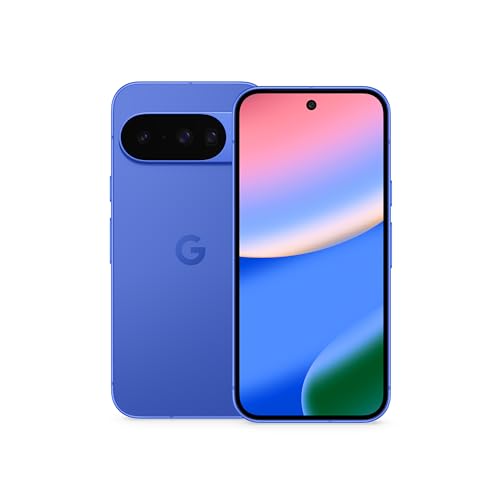
The standard Pixel 10 makes a deliberate trade that this guide regards as a good one for many buyers: it keeps the Pixelsnap magnetic ring built into the phone and accepts the older 15W Qi2 ceiling in exchange for its lower position in the range. The magnet is the feature you interact with every day — the snap onto the stand, the grip of the car mount, the wallet that stays put — while the difference between 15W and 25W is a matter of minutes on partial charges that many owners will never clock. Judged purely as a wireless charging phone rather than as a spec sheet, it delivers the defining experience of this generation at the friendlier price.
The 15W tier also has a practical advantage that rarely gets mentioned: maturity. Qi2 chargers at 15W have been shipping longer and in far greater variety than the 25W tier, so stands, pucks, car mounts and multi-device stations rated for exactly this phone’s ceiling are easy to find at every price level, and Pixelsnap accessories fit it just as they fit the XL. Battery Share is present here too, so the earbud-rescue trick works the same as on the flagship. What you give up, beyond raw ceiling, is headroom: if your routine is built around short, urgent top-ups rather than long dwell time on a pad, the XL’s extra wattage is aimed at you and this phone is not.
It is worth pausing on how unusual this phone’s feature split is. Manufacturers normally ration the desirable hardware from the top of the range downward, and a standard model that keeps the flagship’s defining convenience feature while conceding only a speed tier is a genuinely consumer-friendly cut. The magnet ring is not a decorative extra; it is the interface between the phone and every stand, mount, wallet and station it will ever meet, and Google chose to standardise that interface across the whole Pixel 10 line rather than reserve it for Pro buyers. The consequence for the used and hand-me-down market is real too: this phone will still snap onto whatever magnetic gear a household owns years from now, long after its 15W ceiling has stopped looking modest and started looking normal.
Strengths: built-in Pixelsnap magnets at the range’s lower price position; the mature 15W Qi2 charger market fits it perfectly; Battery Share reverse charging included, unlike the iPhones. Trade-offs: 15W ceiling in a generation where 25W exists; Google’s magnetic charger is still a separate purchase; buyers who later want the faster tier have to change phones, not accessories. Who it suits: Android buyers who charge overnight and at a desk, where dwell time is long and magnets matter more than minutes. If that rhythm sounds like yours, this is the value route to check price on Amazon.

5. Samsung Galaxy S25 Ultra — Qi2 Ready, with the magnets in the case
The Galaxy S25 Ultra requires the most careful reading of any phone here, because its charging label is easy to misread. Samsung certifies it as Qi2 Ready, and it charges wirelessly at up to 15W — but the phone itself contains no magnetic ring. The alignment magnets live in Samsung’s official magnetic cases, and third-party magnetic cases do the same job. In the case, the phone snaps onto Qi2 and MagSafe-style accessories much like the others in this roundup. Out of the case, it is a conventional Qi phone that must be positioned on a pad by eye. Any description of this phone as having built-in magnets is simply wrong, and buyers should treat the magnetic case as part of the purchase price of the charging experience.
Judged with that understanding, the package is coherent. The 15W ceiling matches the mature tier, so chargers are plentiful; Wireless PowerShare reverse charging is present for earbuds and Galaxy watches; and Samsung’s first-party magnetic cases are designed around the phone’s other features, including the stylus, rather than being an afterthought. The frustration is comparative rather than absolute: at the top of Samsung’s range, in a generation where Google builds 25W and a magnet ring into its flagship, a 15W ceiling with case-dependent magnets asks loyal buyers to accept a charging specification a step behind the frontier — and to buy a case to reach even that.
To be fair to Samsung’s engineering choice, there is a defensible logic behind it. Keeping magnets out of the handset avoids any interference questions with the phone’s other systems — the Ultra line carries an active stylus whose digitiser is exactly the sort of component magnets complicate — and it lets the case line carry the alignment hardware instead, where it can be replaced cheaply when a case wears out. Buyers who always case their phones immediately and permanently will experience almost no downside, and Samsung’s clear-view and rugged magnetic cases are built to a standard third-party rings rarely match. The buyers who should pause are the ones who run their phones bare, swap cases frequently, or lend the phone across a household with mixed charging gear — for them the case is not a formality but a recurring dependency.
Strengths: Wireless PowerShare reverse charging; a first-party magnetic case line designed for the phone; full compatibility with the large 15W Qi and Qi2 charger market once cased. Trade-offs: no magnets in the phone — the magnetic experience is case-dependent and the case is an extra purchase; 15W ceiling while rivals offer 25W; bare-phone charging on a pad is old-fashioned place-and-hope alignment. Who it suits: Samsung loyalists and stylus users who will keep the phone in Samsung’s magnetic case permanently and charge at a desk or bedside. If that is your plan and the case will never come off, this is the flagship to check price on Amazon.
Quick note: this pick is currently sold as a renewed model, inspected and refurbished through the seller’s renewal program.
why pinterest drives more long term photography clients than instagram

6. OnePlus 13 — the 50W proprietary sprinter
The OnePlus 13 ignores the standards race and wins a different one. Its AirVOOC wireless charging is published at up to 50W, double the Qi2 ceiling anywhere else in this roundup, and it is not a rounding error or a brief spike figure — it is a designed system built around OnePlus’s own AirVOOC magnetic charger, complete with a cooling fan to sustain the rate. On that charger, at a fixed desk or bedside, this phone charges wirelessly at speeds that make the standards-based phones look leisurely, and for a buyer whose charging happens in one place, that is a decisive advantage.
The qualifications are structural, not incidental. The 50W figure exists only on the brand’s charger; on the generic Qi pads and stands found in cars, offices and hotels, the phone charges at ordinary standard rates. The magnetic alignment likewise runs through OnePlus’s magnetic cases rather than a ring in the phone, so the snap-on experience is, as with the Samsung, a case purchase away. Reverse wireless charging is on the spec sheet for accessory top-ups. The honest summary is that the OnePlus 13 is simultaneously the fastest wireless charger in this guide and the most dependent on a single proprietary accessory — the two facts are the same fact, and which side of it matters depends entirely on whether your charging life is anchored to one spot or spread across many.
The fan in the AirVOOC charger deserves a sentence of its own, because it captures the philosophy of the whole pick. Sustaining 50W through a wireless link generates heat that passive pads cannot shed, so OnePlus engineered the charger like a small appliance — active cooling, a magnetic face, a fixed place in your home — rather than like a travel accessory. Owners who embrace that bargain get something no standards-based phone offers: wireless charging that no longer asks for patience. Owners who wanted a puck to throw in a bag will find the system faintly absurd. Both reactions are correct, which is why this pick polarises more than any other in the roundup, and why its review has stressed location so heavily: the OnePlus 13’s charging story is not really about a phone, it is about a place.
Strengths: published 50W wireless charging on the AirVOOC charger — the highest figure here by a wide margin; reverse wireless charging; standard Qi support as a fallback when travelling. Trade-offs: full speed is locked to one proprietary charger with a fan; magnets live in OnePlus cases, not the phone; away from home base it is an ordinary-speed Qi phone. Who it suits: buyers who charge in one place, will install the AirVOOC charger there, and want wireless top-ups that rival a cable. If your desk is your charging station and speed is the whole argument, this is the phone to check price on Amazon.
Frequently asked questions
Is Qi2 the same thing as MagSafe?
They are close relatives rather than identical twins. Qi2 is the open standard from the Wireless Power Consortium, and its magnetic alignment profile was modelled on Apple’s MagSafe approach. MagSafe is Apple’s own implementation, and current iPhones support both MagSafe chargers and Qi2 chargers, including the Qi2 25W tier. In practice the accessory ecosystems overlap heavily: a magnetic stand built for one will usually hold a phone from the other, though the charging speed delivered depends on which standard and tier both sides of the connection support.
Do I need a new charger to get 25W wireless charging?
Almost certainly, yes. A 25W phone on an older 15W or 7.5W pad charges at the older rate, because the slowest part of the chain sets the speed. To reach the published ceiling you need a charger rated for MagSafe 25W or Qi2 25W and a USB-C adapter strong enough to feed it — Apple’s 25W figure, for instance, assumes a 30W or higher adapter. When shopping, check the charger’s rated tier and whether an adapter is included, since many chargers ship without one.
Will a case stop wireless charging from working?
Ordinary thin cases pass wireless charging through with little penalty, and cases designed for these phones carry their own magnetic ring to keep alignment exact. Very thick cases, metal-backed cases and wallets with cards wedged between phone and pad can slow charging or prevent it. The special case in this roundup is literal: on the Galaxy S25 Ultra and OnePlus 13, a magnetic case is not an obstacle to the magnetic system — it is the magnetic system, since the phones themselves carry no magnets.
Is wireless charging bad for the battery?
Wireless charging converts more energy to heat than a cable, and heat is the long-term enemy of battery health. The phones here manage this actively, tapering their charge rate as temperature rises, which is why published wattages are ceilings. Good magnetic alignment also helps, because a correctly seated phone wastes less energy than one half-off a coil. With ordinary habits — a pad on a desk or bedside, out of direct sunlight — the difference is a modest one, and the convenience is the reason the feature exists.
Can these phones charge my earbuds or another phone?
Four of the six can. The Pixel 10 and Pixel 10 Pro XL offer Battery Share, the Galaxy S25 Ultra offers Wireless PowerShare, and the OnePlus 13 supports reverse wireless charging — all at low wattages suited to earbuds and wearables rather than full phone refills. The two iPhones cannot: Apple offers no reverse wireless charging, so an iPhone cannot rescue a dead earbud case no matter how depleted it is.
Two practical notes govern all of these reverse features. The donor phone gives from its own battery, so the rescue costs the phone a noticeable share of its charge for a modest return in the accessory — it is a feature for getting earbuds through a commute, not for sharing power generously. And the receiving device must be positioned on the centre of the donor’s back, which is exactly where the magnet question returns: a magnetic case on the donor can help or hinder alignment depending on its design, one more small way in which the case decision echoes through a phone’s charging life.
The bottom line
Choose by magnet before you choose by wattage. If you want the standards-based experience exactly as the standards bodies intended — ring in the phone, snap onto anything — the iPhone 17, iPhone 17 Pro Max and Pixel 10 Pro XL deliver it at 25W, and the Pixel 10 delivers it at 15W for less money. If you are committed to Samsung, the Galaxy S25 Ultra joins the same ecosystem the moment its magnetic case goes on, and not before. And if your charging happens at one desk and raw speed outranks standards, the OnePlus 13 and its proprietary charger stand alone. The right phone is the one whose charging conditions match the places you actually charge — everything else is a headline.
One final piece of housekeeping for whichever phone you choose: budget for the chain, not just the handset. A charger of the correct tier, an adapter strong enough to feed it and, for two of these phones, the magnetic case that completes the system are part of the real purchase, and skimping on any of them quietly converts a 25W phone into a 7.5W experience. Buy the chain once, buy it correctly, and the phone’s charging story will match the one on its box for the whole of its life — which is, in the end, the only promise this category has ever really made.