Every iPhone owner knows the exact moment a cheap cable gives up. The white jacket splits near the connector, a braid of fine wire peeks through, charging turns temperamental, and the phone only takes power when the cord is held at one awkward angle. This guide exists because that moment is avoidable. The cables and chargers below were chosen for one quality above all others: they keep working after months of being yanked from sockets, wound around hands, crushed in backpacks and bent sharply beside beds. A quick note on how this site works before we begin: this article contains affiliate links, and if you buy through one of them the site may earn an affiliate commission at no extra cost to you.
Durability sounds like a single trait, but in practice it is a bundle of small engineering decisions. A cable can survive because its outer jacket resists abrasion, because the joint where cord meets connector is reinforced, because the metal shell around the plug does not loosen, or because the manufacturer simply used more copper and thicker insulation than the bargain bin alternative. Chargers fail differently from cables, yet the pattern is similar: heat, loose prongs, cracked housings and ports that wobble after a year of nightly use. Each pick in this roundup attacks at least one of those weaknesses head-on, and most attack several at once.
One complication matters before you choose anything. Older iPhones charge through a Lightning port, while the iPhone 15 generation and everything after it switched to USB-C. A cable that fits one family will not fit the other, so every review below states plainly which phones it serves. Where a pick comes in both connector versions, that is mentioned too, because households with mixed generations of iPhones often need one cable of each type living in the same drawer.
Judging durability claims requires some scepticism, because every cable box in the world promises toughness. Manufacturers quote bend lifespans gathered on laboratory machines that flex a cord at a fixed angle, thousands of times, under controlled conditions. Those numbers are useful for comparing two cables from the same brand, and far less useful across brands, since the angle, speed and clamping force of each test rig differ. This guide therefore weighted construction evidence more heavily than laboratory theatre: visible strain relief length, jacket type, connector housing material, certification status and the length of the warranty standing behind the product.
Owner experience fills the gaps that specifications leave. A cable that survives three years of nightstands across thousands of households has passed a test no laboratory fully reproduces — toddlers, vacuum cleaners, chair castors, spilled coffee and the slow ultraviolet bath of a sunny windowsill. The picks below earned their places through that combination of sound engineering and long, boring, uneventful service in the real world, which is exactly what you want from something whose entire job is to be forgotten.
Why iPhone Chargers Break in the First Place
The overwhelming majority of cable failures happen within two centimetres of a connector. That short section flexes every time the phone is picked up while plugged in, every time the cord droops off a nightstand, and every time someone wraps the cable tightly for travel. Inside the jacket, dozens of hair-thin conductors bend back and forth at the same crease until individual strands snap. The cable rarely dies all at once. It becomes picky first, charging only in certain positions, then it starts dropping the connection when the phone moves, and finally it stops passing power altogether.
Heat is the second quiet killer, and it mostly afflicts wall chargers rather than cables. A compact brick that pushes high wattage through a small body runs warm, and repeated heating and cooling cycles stress solder joints and capacitors inside. Chargers that live permanently behind sofas or under beds suffer worst, because dust and blocked airflow trap warmth around the housing. Well-built units manage this with better internal spacing, gallium nitride components that waste less energy as heat, and housings moulded from plastics that tolerate temperature swings without turning brittle.
The third failure mode is simple mechanical abuse. Prongs get bent in luggage. USB-C tongues get snapped by a sideways knock while plugged into a laptop bag pocket. Lightning tips chip when they are stepped on in the dark. None of these accidents care how good a cable’s electrical design is, which is why physical toughness — thick jackets, metal connector shells, plugs that sit snugly instead of wobbling — earns so much attention in the reviews that follow.
Corrosion plays a supporting role that owners rarely suspect. The contacts inside a connector are exposed metal, and pockets, gym bags and bathroom counters supply a steady diet of lint, moisture and skin oils. Over months, that contamination raises electrical resistance at the contact points, generating tiny amounts of heat with every charge and encouraging the intermittent behaviour people describe as a cable “going bad.” A connector that fits snugly and wipes its contacts clean with each insertion resists this longer, which is another reason precise fit — a theme this guide returns to often — predicts lifespan so reliably.
Finally, there is the slow grind of abrasion. A cable dragged daily across a desk edge, a car seat rail or the zipper teeth of a backpack pocket loses jacket material month by month. Smooth rubberised coatings tend to scuff and then tear. Woven nylon braid handles this better, sliding over rough edges instead of catching on them, and aramid fibre cores add tensile strength so the cord survives being used, accidentally, to fish a phone out from behind furniture. Everyone does it. Better cables forgive it.
There is also a quieter failure that happens inside the phone rather than the cable. A worn connector that fits loosely wobbles in the port thousands of times, gradually wearing the port’s internal contacts and the retaining mechanism that keeps a plug seated. Owners then blame the phone, buy yet another cheap cable, and repeat the cycle with the fit getting worse each time. Starting with a precisely made connector — certified, correctly toleranced, firm without being forced — protects the most expensive component in the whole arrangement, which is the handset itself.
Counterfeit and no-name chargers add a final hazard worth naming. Wall bricks built without proper isolation and regulation can deliver dirty power, overheat under load and fail in ways that take a phone battery’s health with them. Saving a small sum on the device that sits between the mains and a very expensive phone is the worst economy in consumer electronics. Every charger and cable in this guide comes from a manufacturer with certifications to lose and a reputation to protect, and that accountability is itself a durability feature.
In this guide
What to Look for in a Charger That Lasts
Strain relief that actually relieves strain
The tapered collar where cable meets connector is called strain relief, and its job is to spread a bend over several centimetres instead of letting it kink at one point. Short, stiff collars are little more than decoration. Look for long, flexible reliefs that taper gradually, ideally with visible ribbing or a stepped profile, and be suspicious of any cable where the jacket ends abruptly against a hard plastic shell. When you hold a candidate cable, bend it gently near the plug: a good design curves in a smooth arc, while a weak one folds sharply right at the joint.
Jacket material: braid, silicone or fibre core
Double-braided nylon is the workhorse of durable cables. It resists abrasion, shrugs off tangles and adds a layer of cut protection over the inner insulation. Silicone jackets take a different approach, staying soft and flexible in cold weather and tolerating tight bends without cracking, though they can attract lint and dust. The toughest designs hide an aramid fibre core — the same family of material used in protective gear — inside the cable, giving it enormous resistance to stretching and snapping even when the outer jacket looks slim. Any of these three approaches beats the glossy plastic found on pack-in cables from a decade ago.
Connector shells and plug fit
Metal connector housings, usually aluminium, outlast plastic ones because they do not crack when stepped on and they hold their shape so the plug keeps gripping the port properly. Fit matters as much as material. A connector that clicks in with a firm, positive feel puts less side-to-side stress on the phone’s port than a loose one that rocks. For Lightning cables, certification through Apple’s MFi programme is worth insisting on, since uncertified plugs are a common source of both early failure and those irritating accessory warnings.
Charger build: heat, prongs and ports
For wall chargers, judge the housing first. Seams should be tight, the body should feel dense rather than hollow, and folding prongs — convenient as they are for travel — should snap into position with authority instead of flopping. Gallium nitride (GaN) designs run cooler at a given wattage, which is good news for longevity. Ports deserve a squeeze test too: plug a cable in and wiggle it lightly. A port that holds the connector steady will still be holding it steady in three years.
Warranty as a durability signal
Manufacturers reveal what they really think of their own products through warranty terms. A cable backed by a multi-year or lifetime replacement promise has been engineered to a failure rate the company can afford, and that confidence usually shows in the construction. Short warranties are not automatically disqualifying, but when two cables look similar on paper, the one whose maker promises to replace it years later is the safer long-term bet. Keep receipts or register the product, because the best warranty is worthless if claiming it becomes a research project.
Bend-test numbers and what they really mean
Packaging loves a big bend number, and the honest way to read one is as a relative signal rather than an absolute promise. A cable rated for tens of thousands of laboratory bends almost certainly uses better internal construction than one rated for a few thousand, because surviving the rig demands decent conductors, proper strain relief and a jacket that does not crack under repeated flexing. What the number cannot tell you is how the cable handles the insults laboratories skip: being stepped on, shut in a car door, chewed by a puppy or baked on a dashboard. Use bend-test figures to break ties between similar cables, then judge the rest of the design on the physical evidence in front of you.
Conductor quality and cable gauge
Inside the jacket, durability has an electrical dimension that rarely gets discussed. Power conductors made from thicker, higher-purity copper tolerate repeated flexing better than thin, brittle strands, and they carry current with less resistance, which means less heat generated inside the cable during fast charging. Heat inside a cable is doubly bad: it ages insulation from within and it concentrates exactly where the cord bends, softening materials at the point of maximum stress. A cable that stays cool along its whole length during a fast-charge session is telling you something encouraging about the copper inside it, and a cable with a warm stripe near one connector is confessing to a weakness you cannot see.
Gauge also explains why some very cheap cables charge slowly despite fitting perfectly. Thin conductors drop voltage over distance, the phone negotiates a lower rate, and owners respond by keeping the phone plugged in longer and handling the cable more — a slow tax on lifespan paid in extra bending cycles. Buying a properly built cable once is cheaper, in every sense, than cycling through thin ones that underperform from the day they arrive.
Certification and safety marks
For Lightning cables, MFi certification means Apple has licensed the connector and the maker has passed compatibility requirements — uncertified Lightning plugs are a leading cause of both warnings on screen and early connector failure. For USB-C cables and chargers, look for USB-IF certification and recognised safety listings from bodies such as UL or ETL on the charger itself. These marks are not marketing garnish. They indicate that someone independent verified the product will not deliver dangerous power, overheat under rated load or fall apart in ways that expose live parts, and they correlate strongly with the general build quality this guide cares about.
Length, wattage and everyday sanity
A cable that is too short gets bent hard every single night, which is why so many bedside cables die young. Longer cords — two metres rather than one — let the phone rest flat with slack to spare, and slack is the cheapest durability feature of all. Wattage matters for chargers: an iPhone fast-charges from a USB-C power delivery brick of modest output, and buying slightly above what the phone needs leaves the charger loafing rather than straining, which keeps temperatures down and component life up.
best charging station for everyday use under 10
Lightning or USB-C: Picking the Right Camp
Apple’s connector transition split the iPhone world in two, and durability advice splits with it. Lightning, used from the iPhone 5 through the iPhone 14 generation, is a small, reversible plug with a well-earned weakness: the cable’s collar takes nearly all the bending stress in a short distance, which is why reinforced strain relief matters so much on Lightning picks. The connector itself is durable when made to specification, but the market is flooded with uncertified copies whose tips chip, whose contacts corrode and whose fit loosens within months. For Lightning phones, certification and connector quality are the whole game.
USB-C, standard on the iPhone 15 generation onward, moves the fragility around. The plug is sturdier and the standard is universal, so one cable serves phones, tablets, laptops and headphones. The vulnerable point becomes the tongue inside the phone’s port and the cable’s internal latch springs: a connector that fits sloppily can wobble and wear both. Well-made USB-C cables hold their spring tension for years, while cheap ones gradually loosen until the plug falls out under the cable’s own weight. Whichever camp your household occupies, the buying rule is identical — pay for the connector end as much as the cable, because that is where these products live or die.
Mixed households face one extra decision: whether to keep separate cables at each charging spot or to maintain a small shared pool. Separate, labelled cables win easily. Every swap between rooms involves coiling, carrying and re-bending, and cables kept permanently at their station — one Lightning at the bedside for the older phone, one USB-C in the kitchen for the new one — consistently outlive cables that commute around the house in pockets and bags.
The Six Picks, Reviewed
The selection below mixes Lightning and USB-C cables with one wall charger, because most households need both halves of the equation to stop breaking. Every pick is a real, widely sold product with a track record, and each review explains where its strength lies, where it compromises, and who should buy it.
A word about wireless charging, since it promises a world with no cables to break. Magnetic pads eliminate plug wear at the phone, and for a nightstand they are a legitimate way to sidestep this problem. They are slower, warmer and fussier about placement, though, and — the detail nobody mentions — the pad itself is powered by a cable, which then becomes the single point of failure for the whole arrangement. Treat wireless as a complement to one good cord, not a substitute for owning one, and the cord you keep should be among the durable company below.

Top pick
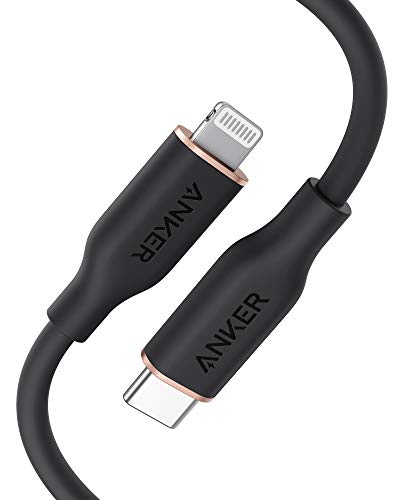
1. Anker PowerLine III Flow USB-C to Lightning Cable
Anker built its reputation on cables that outlast the phones they charge, and the PowerLine III Flow is the clearest expression of that philosophy for Lightning iPhones. Instead of a braid, this variant wraps the cord in a soft silicone jacket that feels almost like suede in the hand — smooth, grippy and strangely pleasant to handle. Silicone is the anti-fray material: there are no woven fibres to split or fuzz where a cord rubs against a desk edge, and the surface shrugs off the scuffs that make ordinary cables look tired within a year. At three feet, in Midnight Black, it is sized and coloured for the bedside and the desk rather than the sofa, and these cords survive years of being coiled into laptop bags, trodden on in hallways and pulled taut across car interiors without the jacket splitting or the connector loosening.
The strain relief deserves specific praise. Instead of the stubby collar found on cheaper cables, the Flow uses an extended, flexible neck that distributes bending over a generous length of cord. Pick up an iPhone while it charges and the cable curves gracefully rather than creasing. That single design choice addresses the number one cause of cable death, and the silicone’s natural flexibility works with it: the cord bends without fighting back, so the connector is not levered sideways in the port every time the phone moves. It is why this model keeps appearing in long-term owner reports long after flimsier rivals have been binned.
In daily use the cable behaves with the kind of predictability that sounds dull and feels wonderful. The silicone surface resists tangling, so it comes out of a bag in a loose coil rather than a knot, and it wipes clean instead of collecting the grey film that woven cords gather. The connector has kept its firm click through the sort of twice-daily plugging that wears cheaper tips smooth within a year. Drivers rate it highly for a specific reason: the soft jacket survives being trapped in centre console lids and dragged across seat stitching, two environments that shred rubber jackets in a single season of commuting.
Strengths: The silicone jacket cannot fray, fuzz or unravel, so the cable looks new long after woven rivals look worn, and it resists tangling into the bargain. Both connectors sit in rigid housings that shrug off accidental knocks. It is MFi certified, which means no accessory warnings and reliable fast charging with a USB-C power delivery brick. The slim connector head fits through most phone cases, an underrated convenience that saves the daily irritation of peeling a case off just to plug in.
Trade-offs: Silicone has a slightly grippy surface that picks up pocket lint more readily than a smooth plastic cord, and it holds a loose coil shape rather than draping limply. Three feet is right for desks and nightstands but short for sofa charging, where the longer Belkin below wins. It is a Lightning cable only, which means it becomes a spare-drawer item the day you upgrade to a USB-C iPhone, and the colour palette is conservative.
Who it suits: Owners of Lightning iPhones who are tired of replacing pack-in cables every year and want one cord for the bedside, one for the desk and no further thought given to the matter. If your current cable is already fraying at the collar, this is the direct, durable replacement.
For a Lightning cord that treats bending as a design problem already solved, the PowerLine III Flow is the safest place to start, so check price on Amazon.

2. Belkin BoostCharge Pro Flex Braided USB-C to Lightning Cable
Belkin approaches durability from the connector backwards. The Pro Flex pairs a double-braided exterior with reinforced connector boots, and the company publishes bend and abrasion testing that puts the cable well beyond the lifespan of a standard cord. In the hand it feels reassuringly substantial without being unwieldy, and the braid has a tight, almost silky weave that slides over furniture edges instead of gripping them.
What separates this cable from the Anker above is refinement in the small touches. The connector housings are shaped with a subtle taper that makes them easy to grip and pull straight out of the port — pulling straight, rather than yanking sideways, is one of the habits that quietly extends the life of both cable and phone. The listing here is a two-pack of the long 6.6-foot (2-metre) version, and that length genuinely helps at sofas and bedsides, where a cord with slack survives years longer than one stretched tight from wall to pillow — while the second cable covers the car or the office without another purchase.
There is a tactile quality to this cable that photographs cannot convey. The braid feels almost woven rather than wrapped, with no loose threads at the seams, and the boots flex in a smooth gradient — firm near the housing, supple further down the cord. That gradient is the game in strain relief design, and Belkin executes it better than most. Owners who charge from wall sockets behind furniture, where the cable must turn a corner immediately after the plug, report the Pro Flex handling that permanent bend without the whitening and cracking that betray stressed plastic.
Strengths: The reinforced boots at each end are among the sturdiest in this roundup, shrugging off the sharp bends that kill lesser cables. MFi certification keeps charging behaviour boring in the best possible way. The braid resists pet chewing better than smooth jackets — not invulnerable, but noticeably tougher for households with a curious cat. Belkin’s retail presence also means replacements and support are easy to reach if anything does go wrong.
Trade-offs: It sits at the premium end of the Lightning cable market, though the two-pack softens that: two charging spots are covered in one purchase, and bargain alternatives rarely survive long enough to work out cheaper in practice. The thicker jacket does not coil as flat as thin cables, which matters in a tightly packed tech pouch. Like every Lightning pick here, it has no role to play once your household moves entirely to USB-C phones.
Who it suits: Anyone who wants the most polished, best-finished Lightning cable available and is happy to pay a little extra for it, especially people whose cables live in high-traffic spots — kitchen counters, shared family chargers, office desks — where cords get borrowed, bent and occasionally stood on.
If your charging spot sees heavy daily traffic and cables there tend to die young, the Pro Flex earns its premium, so check price on Amazon.

3. Nomad Kevlar USB-C to USB-C Cable
Nomad designs gear for people who are hard on equipment, and its Kevlar cable reads like a specification sheet for surviving abuse. An aramid fibre core runs the length of the cord, giving it tensile strength far beyond what charging ever demands, while a double-braided ballistic nylon jacket handles abrasion. The connectors sit in metal housings with a chunky, confident grip. This is the cable you buy when the previous three died in a backpack, a toolbox or the footwell of a work vehicle.
Because it is USB-C at both ends, this pick serves the iPhone 15 and later generations, along with iPads, MacBooks and most modern accessories — one cable for the whole kit bag. The power handling is generous enough for laptop charging, which matters more than it first appears: a cable rated well above an iPhone’s needs runs cool and unstressed in phone duty, and overbuilt electrical headroom is a quiet form of durability insurance.
Nomad’s design choices reveal a company that has read its own warranty claims carefully. The connector housings are long enough to grip properly with cold or gloved hands, the cable’s minimum bend radius is enforced by its own stiffness so it physically cannot kink sharply, and the jacket shrugs off the oily grime of workshop benches that permanently stains lighter cords. It is also one of the few cables that feels at home charging from a wall brick, a laptop or a power bank rattling around in a rucksack, which reduces how often owners swap it for a weaker cord.
Strengths: The Kevlar core makes the cable extraordinarily resistant to stretching and snapping, the failure mode that kills cords used to retrieve phones from behind furniture. Metal connector shells tolerate being stepped on far better than plastic. Length options include long runs for sofas and hotel rooms. It doubles as a laptop cable, so one purchase covers several devices and reduces the total number of fragile cords you own.
Trade-offs: It is the stiffest cable in this roundup, and that rigidity is the price of the armour — it will never drape like a soft silicone cord. The premium positioning means losing one hurts. Owners of Lightning iPhones cannot use it at all without an adapter, and adapters are themselves a weak point worth avoiding. The metal housings add a little weight that ultralight travellers may notice.
Who it suits: USB-C iPhone owners who travel for work, commute with a packed bag, or simply have a long personal history of murdered cables. If your charging cord shares space with tools, boots or gym gear, this is the pick built for that life.
For anyone whose cables perish in bags and boots rather than on nightstands, the Nomad is armour-plated insurance, so check price on Amazon.

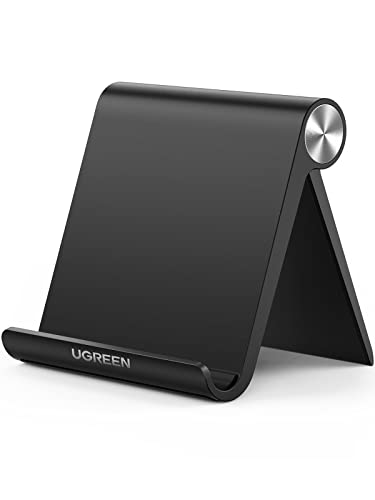
4. UGREEN USB-C to Lightning Cable
UGREEN occupies the sensible middle of the cable market, and its Lightning cable shows how far that middle has come. The aluminium-alloy connector shells feel properly machined rather than stamped, the jacket is finished to resist scuffs and everyday abrasion, and the strain relief is long enough to matter. Nothing about it screams for attention, which is rather the point: it is a cable engineered to be forgotten about, plugged in behind a desk or left in a car for years.
The detail that owners mention most is the connector fit. The Lightning tip seats with a clean, firm click and shows no wobble after extended use, which protects both the cable’s internal contacts and the phone’s port. UGREEN also reinforces the section of cord immediately behind the relief, an area where cheaper cables sometimes separate once the jacket starts to loosen.
Standardising on one cable model across a home brings an unexpected benefit: everyone learns its feel. Family members stop forcing the connector at angles because the correct, easy fit becomes familiar, and a genuinely damaged cord stands out immediately instead of hiding among a dozen lookalike white cables. UGREEN’s quality between batches makes that standardisation realistic — buy two now, two more next year, and all four feel and behave identically, which is more than can be said for the rotating cast of bargain cords most drawers contain.
Strengths: Strong all-round construction at a mid-range position, with MFi certification for worry-free charging. The aluminium shells shrug off the knocks that crack plastic housings. Multiple lengths make it easy to standardise every charging spot in the house on one model. The jacket resists scuffing and stays tidy long into its service life.
Trade-offs: The jacket is a touch less supple than the Belkin’s, so tight coils spring open in a drawer. It lacks the aramid core of the Nomad, so extreme tensile abuse — hanging bags from it, towing phones across desks — remains unwise. Colour choice is limited, and the branding on the housing is more prominent than minimalists might prefer.
Who it suits: Lightning iPhone households that need several durable cables at once — bedside, car, office, spare — without paying flagship prices for each. It is also a sensible gift for the family member who somehow destroys a cable every few months and insists it is never their fault.
Households replacing several tired Lightning cords at once will find the UGREEN hits the durability sweet spot, so check price on Amazon.


5. Apple Woven USB-C Charge Cable
Apple’s own cables were once the punchline of every fraying-cord joke, which makes its woven USB-C cable a genuinely interesting redemption story. The company replaced the old glossy rubber jacket with a tight fabric weave, and the result tolerates the bending and abrasion that destroyed its predecessors. It ships in the box with recent Macs and is sold separately for iPhone 15 and later models, iPads and AirPods cases.
The woven jacket is thinner and more flexible than the third-party braided rivals here, which cuts both ways: it drapes beautifully and coils flat, yet it lacks the sheer armour of a Kevlar-cored cord. Where the Apple cable quietly excels is compatibility certainty. Pairing questions, charging quirks and accessory warnings simply never arise, and the connector tolerances are what the phone’s port was designed around, so insertion feel stays consistent over thousands of cycles.
The woven jacket also solves a small aesthetic problem that turns out to be practical. The old glossy cables yellowed with age and showed every scuff, which made owners treat them as disposable. A fabric weave hides wear gracefully, so the cable keeps looking respectable on a desk long after a rubber cord would have been demoted to a drawer. Looks should never outrank engineering in a durability guide, yet a cable people are content to keep visible is a cable that gets handled gently and stored properly, and gentle handling is half of longevity.
Strengths: Guaranteed perfect compatibility with USB-C iPhones and the rest of Apple’s line-up, with no certification guesswork. The woven jacket is a dramatic durability upgrade over Apple’s old rubber cables and resists the splitting that made them infamous. Slim connectors fit virtually every case. It handles laptop-level power, so the same cord serves a MacBook on the desk and an iPhone overnight.
Trade-offs: It is less armoured than the Nomad or the braided Belkin, so genuinely abusive environments will still find its limits. The light colour shows grime from car footwells and workshop benches. Length is fixed at the standard size in the common version, giving less slack than the long third-party options. There is no Lightning version of the woven design, leaving older iPhones to the other picks here.
Who it suits: USB-C iPhone owners who prefer first-party accessories and want a cable that disappears into daily use — flexible, dependable and exactly matched to their phone. It is the natural replacement for anyone whose drawer holds a museum of frayed white Apple cords from years past.
If you want the official cable without the old fraying habit, Apple’s woven version finally delivers it, so check price on Amazon.

6. Belkin BoostCharge Pro Dual USB-C GaN Wall Charger (65W)
A cable is only half the partnership, and this Belkin brick represents the charger half built to the same philosophy. Its gallium nitride internals deliver high wattage from a compact body while running cooler than older silicon designs, and cool-running electronics age slowly. The housing is a single dense shell with tight seams, the prongs fold away with a firm snap for travel, and both USB-C ports grip connectors with the kind of steadiness that predicts a long service life.
Two ports change the durability maths in an unexpected way. A household that charges an iPhone and an iPad — or two phones — from one brick stops swapping cables in and out of a single port all day, and port wear is driven by exactly those insertion cycles. Sharing the work across two sockets, each used half as often, extends the practical life of everything plugged into the wall. The wattage headroom also means the charger is never straining at its limit for phone duty, which keeps internal temperatures, and therefore component stress, low.
Consider where this charger will live: likely plugged in permanently, behind a desk or beside a bed, drawing standby power and delivering two fast charges a day for years. That duty cycle is precisely where cheap bricks fail — not dramatically, but with a slow decline into buzzing, intermittent output and ports that no longer grip. The Belkin’s dense housing, conservative thermal design and quality port hardware are aimed squarely at that long, unglamorous service life, and its folding prongs mean the one time it does travel, it arrives with its contacts unbent.
Strengths: GaN design runs cool and should age gracefully, with a housing that feels carved rather than assembled. Dual ports charge a phone and a tablet together, halving plug cycles per port. Folding prongs survive luggage without bending or snapping. Belkin’s safety certifications and warranty support are thorough, and the brick pairs cleanly with every cable in this roundup.
Trade-offs: It costs more than single-port budget bricks, as all well-built GaN chargers do. The compact body still gets warm during sustained dual-device fast charging, even if less than rivals. There is no USB-A port, so legacy cables need an adapter or retirement. Its extra capability is wasted on anyone who only ever charges one phone slowly overnight.
Who it suits: Anyone rebuilding a charging setup from scratch, and households tired of flimsy bricks that crack, buzz or develop wobbly ports. Pair it with the Nomad or the woven Apple cable and both halves of your charging chain are engineered to last.
A charging setup is only as strong as its brick, and this Belkin is built like it intends to stay, so check price on Amazon.
best usb c charger for travel under 15
Side-by-Side: How the Picks Compare
| Pick | Connector | Toughness strategy | Best environment |
|---|---|---|---|
| Anker PowerLine III Flow | USB-C to Lightning | Silicone jacket, long strain relief | Bedside and desk, Lightning iPhones |
| Belkin BoostCharge Pro Flex | USB-C to Lightning | Double braid, reinforced boots | High-traffic shared charging spots |
| Nomad Kevlar Cable | USB-C to USB-C | Aramid core, metal shells | Travel bags, work vehicles, rough use |
| UGREEN | USB-C to Lightning | Aluminium-alloy shells, reinforced relief | Whole-house standardisation |
| Apple Woven Cable | USB-C to USB-C | Fabric weave, exact tolerances | Desk and nightstand, Apple-only kits |
| Belkin GaN Charger 65W | Dual USB-C ports | Cool GaN internals, dense housing | One brick for phone plus tablet |
Read the table as a map of failure modes rather than a league ladder. The Anker and Belkin cables defend the bend point, the Nomad defends against outright violence, the UGREEN defends your budget while still defending the cord, the Apple cable defends against compatibility gremlins, and the Belkin charger defends the half of the system most people forget until it starts buzzing behind the sofa.
Mixing and matching across the table is not only allowed, it is the sensible way to build a setup. The Belkin brick pairs happily with the Anker cable at a Lightning bedside, while the Nomad cord and the same model of charger make a travel kit that can be dropped down airport escalators without anxiety. Nothing in charging requires brand loyalty; the standards — USB-C power delivery and MFi — exist precisely so that well-made components from different makers cooperate. Spend your loyalty instead on construction quality wherever it appears, and let each station in the house combine the cable and brick that suit its hazards. If decision fatigue sets in, the shortest honest summary is this: buy the Anker for Lightning, the Nomad for USB-C travel, and the Belkin brick for the wall, and you will not think about chargers again.
Setting Up Charging Spots That Do Not Eat Cables
Walk through most homes and the cable casualties cluster in predictable places. The bedside is the worst station in the house: the socket sits behind the bed, the cable emerges at a hard angle, and the phone is used in bed while plugged in, flexing the collar with every scroll and roll. Fix that station with a longer cable routed with slack, or move the charger to a socket the cord can leave in a straight line, and the same cable that died in eight months will last for years. An adhesive cable clip on the nightstand edge stops the connector end sliding to the floor each morning, where it waits to be stepped on or vacuumed.
The car is the second harshest environment. Temperature swings bake jackets in summer and stiffen them in winter, the cable lives under tension between console and phone mount, and passengers’ feet find it with uncanny precision. A braided cable of generous length, routed once and left alone, survives far better than a short cord stretched taut and re-plugged daily. Coil the spare length loosely in the console rather than winding it around the gear selector or the charger itself.
Desks and sofas reward the same principle: permanence. A cable that is plugged in, routed behind furniture once and never moved experiences almost no mechanical stress, which is why the forgotten cord behind a sofa so often outlives the pampered one in a travel kit. Reserve your toughest pick — the Kevlar Nomad or a fresh braided cable — for the bag, the car and the road, and let mid-priced durable cables hold the static stations. Matching cable toughness to station harshness is how a household stops buying replacements.
Habits That Make Any Charger Last Longer
Even the toughest cable benefits from owners who stop committing the three classic cord crimes. The first is unplugging by the wire: pulling the cord instead of the connector housing puts the full extraction force through the strain relief, the exact joint this guide has spent so long praising. Grip the plug, pull straight, and the relief’s job becomes easy. The second crime is the tight wrap. Coiling a cable hard around a charger brick or a fist creates the sharp bends that fatigue conductors, so coil loosely in large loops and secure with a soft tie instead of elastic tension.
The third crime is the permanent sharp angle: a phone charging on a high shelf with the cable bent double over the edge, night after night, in precisely the same spot. Move the charging spot, add slack, or use a longer cable, and the bend spreads out or disappears. Small environmental choices help too. Keep cables out of direct sun on car dashboards, where ultraviolet light embrittles jackets, and out of the recliner mechanism and office chair castors, which have ended more charging careers than any electrical fault will.
Finally, retire cables at the right moment. A cord with exposed conductors, a connector that runs hot, or a plug that falls out of the port under its own weight has moved from worn to hazardous, and no loyalty to a favourite accessory justifies keeping it in service. The picks above are built to delay that day for years — not to make it optional when it finally arrives.
Shared households add two hazards that deserve their own sentence each. Children treat cables as ropes, ribbons and occasionally teethers, and the only reliable defence is a braided or Kevlar pick at any station within their reach, paired with the house rule that chargers live on surfaces, not floors. Pets, especially puppies and rabbits, regard a dangling cord as an invitation; routing cables behind furniture and denying them anything to dangle removes the temptation and the veterinary bill in one move. Neither hazard is the cable’s fault, but a durability guide that ignored the two most determined cable-destroyers in the home would not be doing its job.
How Long Should a Good Cable Actually Last?
Set expectations by environment rather than by calendar. A braided cable living permanently at a tidy desk, plugged in once and rarely touched, should outlast the phone it serves and move on to the next handset without complaint. The same cable in a family kitchen, plugged and unplugged six times a day by four different people, is doing hard labour; three or four years there is a genuinely good innings. Travel cables live hardest of all, and a Kevlar or heavy braided pick that survives two years of weekly trips has earned its replacement.
Wall chargers follow a different clock because their enemies are heat and time rather than bending. A quality GaN brick in a ventilated spot should serve through several phone generations, and its ports will usually announce the end first — a connector that once clicked in firmly begins to feel vague, or the brick develops a faint whine under load. Treat either symptom as a retirement notice rather than a challenge, and replace the unit while it is still a nuisance instead of a hazard.
The economics deserve one plain paragraph. A household that buys bargain cables replaces each charging spot’s cord every year or so, and multiplies that by four or five spots. The durable picks in this guide cost more per unit and then simply stop appearing in the household budget. Over a single phone’s ownership, the arithmetic already favours buying well; over two phones, it is not close. Durability is not a luxury feature in this category — it is the entire value proposition, and it is why this roundup judged every product on construction first and everything else second.
Frequently Asked Questions
Does a braided cable always outlast a rubber one?
Usually, yes, because braid resists the abrasion and jacket splitting that kill smooth cables, but construction quality matters more than any single material. A well-made silicone cable with long strain relief will outlive a cheap braided cord whose weave loosens and whose collars are decorative. Treat braid as one strong signal among several, alongside connector build, relief length and warranty length. The reverse is also true, and it is the mistake bargain hunters make most often: a thick, aggressive-looking braid wrapped around thin conductors and a two-millimetre collar is costume, not engineering. Judge the whole construction — pick the cable up, bend the ends, seat the connector, read the warranty — and the tough products identify themselves quickly, because every part of them tells the same story.
Will these cables fast-charge my iPhone?
Every cable here supports USB-C power delivery fast charging when paired with a suitable wall charger, which means Lightning models need a USB-C brick rather than an old USB-A one. The Belkin GaN charger in this roundup covers that role for both Lightning and USB-C iPhones. Charging speed is limited by the phone itself, so an overbuilt cable gains you durability, not extra pace. One related point is worth knowing: a cable that has begun to fail internally often announces itself through charging speed before it stops working entirely, because damaged conductors raise resistance and the phone throttles back. If a once-quick charge turns sluggish on the same brick, suspect the cord first — it is the cheapest component in the chain and the one already dying.
Is a Kevlar cable worth it for home use?
For a quiet nightstand, honestly, it is more armour than the job requires, and a silicone Anker, a braided Belkin or a well-made UGREEN will serve for years. Kevlar construction earns its keep where cables travel, get stepped on, share bags with heavy objects or serve in cars and workshops. Match the armour to the environment rather than buying the toughest option by default.
Why did my last charger brick stop working before its cable?
Wall chargers contain active electronics that age with heat, and cheap units run hot in small, sealed housings until a component fails. Ports also loosen from daily plugging until cables stop seating properly. A GaN charger with a dense housing, steady ports and wattage headroom — like the Belkin pick here — attacks both causes, which is why upgrading the brick matters as much as upgrading the cord.
Can one cable serve both my Lightning iPhone and my USB-C iPad?
Not directly, because the phone-side connector differs, and the common workaround — a small adapter tip — introduces a new weak point that undermines the whole durability exercise. The practical answer is one proper cable per connector family, kept in the places each device actually charges. It costs slightly more than an adapter and saves the frustration of a tip snapping off in a bag.
Charging gear should be the most boring purchase you make: buy cables with reinforced collars and honest construction once, pair them with a brick that runs cool, and the nightly ritual simply works — for the life of the phone, and likely for the one after it.