reviewstook.com is reader-supported. When you buy through links on our site, we may earn an affiliate commission.
Where to buy
Start by translating the search itself. When people hunt for the best drone cameras under 100, the hundred is a budget frame — a ceiling in dollars for the whole flying camera, set by the shopper before any brand enters the conversation. This guide honours that frame exactly as a frame: it compares complete, ready-to-fly camera drones that live in that entry-level territory, and it never prints a product price, because prices in this class wander with seasons and bundles while the frame stays useful. What the frame buys is a first aircraft, not a film set. Judged as a first aircraft — forgiving, light, honest about its camera — the class contains some genuinely delightful machines.
Expectation-setting is the real service a guide can offer here. A camera drone at this level will teach you to fly, will record recognisable, shareable video of parks, beaches and back gardens in calm daylight, and will survive the education process because its parts are cheap and its weight is merciful. It will not produce the buttery, cinema-graded aerials of flagship drones costing many times more, and any review pretending otherwise is selling you a disappointment with a propeller on it. The six picks below are therefore ranked by how well they teach, how honestly their cameras perform in good light, and how gracefully they absorb beginner mistakes.
Every pick is a real entry-level model presented without links, because our verified pool for this site contains no drones; specifications are kept qualitative on purpose, since this class is plagued by inflated claims. One clarification belongs here rather than in a footnote: the action cameras elsewhere in our pool — small waterproof cameras from GoPro, DJI and others — are not drones and never appear below as picks. A lightweight action camera can ride along as a passenger on a strong enough airframe or serve on a tripod at the flying field, but it cannot fly itself, and this guide keeps that boundary bright.
- Ryze Tello: prose-only pick, the classroom classic whose camera and stability punch far above its toy-shelf appearance
- Holy Stone HS110D: prose-only pick, the friendly all-rounder with the kind of manual a nervous first owner actually reads
- DEERC D20: prose-only pick, the mini folder for pockets, parks and learning the sticks indoors first
- Potensic A20 Mini: prose-only pick, the smallest-stakes trainer for younger beginners under supervision
- Snaptain S5C: prose-only pick, the gesture-and-voice novelty that gets reluctant flyers airborne
- Syma X500: prose-only pick, the larger foldable frame for breezier days and longer practice sessions
A word about the shopping itself, since this class attracts the wildest listings in consumer electronics. Judge any candidate by its maker’s own page and manual rather than by marketplace superlatives: claimed flight distances that exceed the radio’s physics, camera figures that borrow numbers from phones, and flight times measured in still laboratory air are the dialect of this shelf. The picks below were chosen partly for the modesty of their promises. A manufacturer that tells you plainly what its little aircraft cannot do is telling you, in the same breath, that the things it can do are probably true.
Lightness runs through the whole list as a virtue, not a compromise. Most of these aircraft sit in the featherweight class that regulators in many countries treat most gently — under the well-known 250-gram threshold that often separates registration paperwork from simply flying carefully — and that same lightness is what makes their inevitable meetings with fences and hedges survivable.
Key Takeaways
- The hundred in the keyword is a total budget frame for a ready-to-fly aircraft, not a promise of flagship image quality.
- Calm daylight is this class’s native weather; wind and dusk expose every saving the manufacturers made.
- Featherweight airframes under common regulatory thresholds are easier to own, kinder in crashes and cheaper to repair.
- Spare batteries teach more flying per weekend than any camera feature; budget for flight time, not accessories.
- Electronic stabilisation and modest sensors mean technique — slow pans, low passes, short clips — decides the footage.
- A first drone is a training purchase: the right question is what it teaches, not what it imitates.
In this guide
Quick Picks
| Pick | Badge | Why it earns its place |
|---|---|---|
| Ryze Tello | Classroom classic | Remarkably steady hovering and a camera that flatters beginners in good light. |
| Holy Stone HS110D | Friendly all-rounder | Approachable controls, a readable manual and forgiving flight manners. |
| DEERC D20 | Pocket practice folder | Folds small, shrugs off bumps and invites daily ten-minute practice. |
| Potensic A20 Mini | Smallest-stakes trainer | Tiny, guarded and calm enough for supervised indoor first flights. |
| Snaptain S5C | Novelty that teaches | Gesture and voice controls lower the intimidation of a first take-off. |
| Syma X500 | Bigger-frame option | A larger foldable body that copes better when the park breeze picks up. |
How did we rank drones whose cameras are all modest?
By refusing to rank the cameras first. At this level the differences between sensors matter less than the differences between flight behaviours, because footage from a drone that trembles, drifts and startles its pilot is unusable whatever chip sits behind the lens. Each pick was weighed on hover stability in a light breeze, on how predictably it answers the sticks at low speed, on whether its app or controller explains itself to a person who has never flown, and on the honesty of its camera in the conditions beginners actually fly in — bright weekend afternoons, close to home, at modest heights.
Survivability formed the second layer of judgement. First drones meet the ground, the hedge and occasionally the pond, so propeller guards, replaceable arms or blades, and the availability of cheap spares counted heavily. A model whose manufacturer sells batteries and propellers as ordinary catalogue items will outlive a marginally prettier rival whose first crash ends its career for want of a two-dollar part. Flight time was read the same way: not as a laboratory number, but as how many batteries the box and the aftermarket make it easy to own, since three short flights teach more than one long one.
Owner communities were the quiet fourth witness. Models that beginners still recommend to other beginners a year after purchase — in flying-club conversations, school clubs and family group chats — share a pattern: nothing about them is the best in class, and nothing about them is broken, missing or mysteriously discontinued. In a frame where a vanished spare part can end an aircraft’s life, that boring continuity is a feature worth ranking, and it is ranked here.
The third layer was regulatory kindness. Most picks live in the lightest recreational category, the sub-250-gram world where many jurisdictions ask for care and common sense rather than registration for recreational flying — though rules differ by country and change, and every owner should read their own aviation authority’s current page before the first outdoor flight. A drone that keeps a beginner legal by default, visible by its lights and sounds, and slow enough to command respect without fear, earns its place in a way no specification sheet captures.
What can a camera at this level honestly record?
More than cynics admit, within a clearly lit fence. In calm air and generous daylight, the better picks here record smooth-enough video of landscapes, rooftops, family gatherings and sporting attempts, with colours that look cheerful straight from the camera. Slow, deliberate movements flatter the footage enormously: a gentle forward glide over a beach at golden hour from a budget drone can be genuinely lovely, because the scene supplies the production value the sensor cannot. Beginners who learn to fly the shot — rather than hunt for it at full speed — produce the clips that make friends ask which drone they bought.
The fence posts are equally clear. Small sensors and electronic stabilisation struggle together in low light, so dusk flights grain and smear; fast yaw spins turn horizons into jelly as the stabilisation fights the motion; and wind makes every airframe in this class work visibly harder, tilting into gusts and spending the smoothness budget on staying airborne. Digital zoom, where offered, is a crop wearing a costume and should be ignored. None of this is failure. It is the physics of the price frame, and a guide’s job is to hand you the map of where the good footage lives: low, slow, sunlit and close.
Photographs follow the same logic with one addition — patience. A budget drone that hovers steadily can compose a still far better than its video suggests, because a single frame forgives what thirty frames a second cannot hide. Top-down shots of gardens, patterns in fields, the geometry of a harbour from modest height: these play to the class’s strengths and fill the beginner’s first aerial portfolio with images that need no apology at all.
Why does the 250-gram line matter so much to a first purchase?
Because regulators drew it where the risk changes. An aircraft under that weight carries so little energy that many aviation authorities — the American and European systems among them — place recreational examples in their lightest category, typically excused from registration while remaining bound by the real rules: keep it in sight, stay below the ceiling that local rules set, never fly over crowds or near airports, and yield to anything crewed. The exact paperwork differs by country and evolves, so treat any summary, including this one, as a pointer to your own authority’s current guidance rather than a substitute for it.
For the beginner, the practical blessings compound. A featherweight drone is the one you may carry on a walk without planning the walk around it. It is the one whose crash into a fence is a funny story instead of an insurance conversation. It is also, not coincidentally, the class where this entire budget frame lives, because small motors, small batteries and small sensors are what the money buys. The picks below lean into that identity rather than apologising for it: they are light because light is what makes a first drone lawful, portable and brave.
One caution completes the picture. Lightness is not a licence. A small drone can still invade privacy, startle horses, worry birds in nesting season and wander into controlled airspace near even a modest airfield. The recreational codes exist in plain language for a reason, and the pilots who read them before the first flight are the ones still enjoying the hobby — and welcome at their local flying spots — in the second year.
How should a first weekend of flying actually be spent?
On the ground first, briefly and without embarrassment. Charge every battery, update what asks to be updated, pair the controller or phone, and learn where the return-home, emergency-stop and calibration controls live while the propellers are still. Then choose the classroom properly: a wide, soft, empty space — a quiet playing field early in the day — with no water, no road and no audience of dogs. First flights are for hovering at waist height, for learning that the sticks answer small inputs best, and for landing on purpose rather than by exhaustion of the battery.
The second flight adds geometry. Squares, then gentle circles, then the figure-of-eight that teaches the hands to cooperate, all at walking pace and modest height. Camera work enters last and lightest: one slow forward glide, one careful reveal over a hedge line, then home. Beginners who ration their ambition this way end the weekend with three usable clips and an intact aircraft, which is a better trophy than forty minutes of heroic footage of a tree.
And keep the first flights short on purpose even when the battery allows more. Ten focused minutes with a landing you chose teaches the hands more than a long, wandering flight that ends in a retrieval, and it leaves the pilot hungry for the next session — the appetite on which an entire first season of skill is built.
End each session with the unglamorous liturgy: inspect propellers for nicks, let batteries cool before charging, store them neither brim-full nor empty for long periods, and note what the wind was doing in the same notebook where you record what you learned. That notebook, kept honestly for a season, becomes the real manual for your particular drone in your particular weather — the document no manufacturer could have written for you.
Ryze Tello — Classroom classic
The Tello built its reputation in school halls and coding clubs, which sounds like faint praise until you watch one hover. Its little airframe — powered by flight technology from DJI’s ecosystem and a processor that treats stability as the whole job — sits in the air with a composure that drones twice its size in this class rarely match. For a beginner, that composure is the curriculum: when the aircraft holds still, the pilot’s brain is free to learn the sticks instead of fighting the machine, and lessons compound quickly.
Its camera is the pleasant surprise that keeps the model in this guide. Within its daylight fence — and the fence posts from the earlier section apply in full — it records video with a steadiness helped by electronic stabilisation and a clarity that flatters gardens, school projects and holiday parks. The live view to the phone is part of the experience, so a decent phone and a short distance between pilot and aircraft keep the picture honest. Treat it as a near-field camera that flies, and it will delight you; ask it to scout the far end of a windy valley, and it will file a polite refusal in the form of a struggling feed.
Programmability is the Tello’s second life. Owners who catch the bug can graduate from stick flying to simple coded flight paths, which makes this the rare budget drone that grows sideways into education rather than merely ageing. Spare propellers and batteries circulate widely, the guards come off and on without drama, and the whole aircraft fits a jacket pocket’s ambitions. As a first drone for a curious adult or a supervised teenager, it remains the benchmark the rest of this list is measured against.
- Class: Featherweight mini drone, phone-controlled
- Signature: Unusually composed hover for the class
- Camera habit: Daylight, near-field, slow movements
- Second life: Beginner programming and education
- Carry: Pocket-sized with removable prop guards
Strengths
- Stability that teaches instead of testing
- Camera quality respected across the class
- Huge knowledge base of owner experience
Trade-offs
- Phone control lacks a dedicated controller’s feel
- Short range by design and by physics
- Wind is a firm instruction to land
Best for: learners who value composure and a camera that behaves
Not suited for: anyone whose flying field is a breezy hillside
Learn its party trick properly: the gentle hand launch and catch, practised over grass with the guards fitted. Owners who master the small ceremonies of a drone stop fearing it, and fearlessness at walking pace is exactly the confidence this class exists to build.
Holy Stone HS110D — Friendly all-rounder
Holy Stone sells reassurance as a feature, and the HS110D is where that philosophy meets a camera drone. The packaging, the quick-start guidance and the app all assume a reader who has never owned anything that flies, and the aircraft continues the theme in the air: altitude hold that keeps the vertical problem solved while you learn the horizontal one, headless mode for the disoriented first minutes, and a return function whose button you will press early, often and without shame.
The camera sits in a tilting mount, a small luxury in this class that matters more than resolution bragging. Being able to angle the view downward for a top-down garden shot, then level it for a horizon glide, teaches composition in a way fixed cameras cannot. Footage in kind light is cheerful and shareable; the Wi-Fi live view is happiest at the modest ranges this drone is meant for, which is another way of saying the design is honest about its parish and serves it well.
Ownership is where this pick quietly wins weekends. The brand’s batteries, blades and guards are easy to find, the airframe tolerates the traditional beginner landing — the sideways arrival in soft grass — and customer support has a reputation for answering the questions other brands treat as beneath them. A first drone is partly a relationship with its maker, and pilots who feel accompanied through their first crash tend to still be pilots in the spring.
- Class: Entry camera drone with tilting camera
- Signature: Altitude hold plus beginner flight modes
- Camera habit: Adjustable angle for stills and glides
- Support: Spares and help pitched at first owners
- Control: Controller with phone as the viewing screen
Strengths
- The gentlest onboarding in this list
- Tilting camera teaches real composition
- Spares are ordinary purchases, not quests
Trade-offs
- Live view range is modest by design
- Plastic build prefers grass to gravel
- Advanced flyers will outgrow it within a season
Best for: first owners who want guidance at every step
Not suited for: pilots already fluent and shopping for reach
Use headless mode as training wheels with a removal date. Fly the first sessions with it, then schedule one calm morning to switch it off and learn true orientation, because the rest of the hobby — including every future drone — assumes that skill.
DEERC D20 — Pocket practice folder
The D20’s argument is frequency. It folds into a bundle small enough to live in a coat or a bike bag, its propellers wear guards that forgive furniture and fences, and its whole manner invites the ten-minute practice session on a lunch break or in a quiet garden. Skills in this hobby are built by repetitions, and the drone that is present for daily small repetitions teaches faster than the technically superior drone that only emerges on planned expeditions.
Indoors is its secret classroom. On a wet weekend, a hallway and a living room become a training circuit where the guards earn their keep against door frames, and the pilot learns throttle delicacy at a scale where mistakes cost nothing. The camera, aimed by tilting the aircraft or using its adjustable habits where fitted, records these miniature sorties well enough to review your own smoothness — which is the real footage a beginner needs, however unglamorous.
Outdoors, respect the small frame’s treaty with the weather. Calm mornings and still evenings are its element; a breeze that barely registers on your face is a working condition for something this light. Within that treaty, it performs the class repertoire faithfully: flips for the children, waypoint-ish app tricks for the curious, and steady little orbits of the picnic. Buy the multi-battery bundle logic if you buy in at all, because the D20’s flight time per charge is short enough that a single battery turns practice into a trailer for practice.
- Class: Folding mini drone with full prop guards
- Signature: Daily-practice portability
- Camera habit: Review-your-own-flying footage, near and slow
- Training ground: Indoors in winter, calm gardens in summer
- Power note: Several small batteries beat one long wait
Strengths
- Always-with-you size builds real skill
- Guards make indoor learning safe
- Friendly price of entry and of spares
Trade-offs
- Short flights demand battery rotation
- Light airframe answers every gust personally
- Camera is a diary tool, not a production tool
Best for: would-be pilots whose practice time comes in small pieces
Not suited for: exposed, breezy flying fields
Keep a tiny ritual: same pocket, same pre-flight glance at the guards, same two circuits whenever it comes out. Ritual turns a gadget into an instrument, and this little folder rewards the transformation more than any other pick here.
Potensic A20 Mini — Smallest-stakes trainer
Every hobby needs a doorway wide enough for the truly cautious, and the A20 Mini is this guide’s. It is a palm-sized trainer built around the idea that the first flights should be almost incapable of going wrong: guarded propellers, a gentle altitude hold, take-off and landing handled by a single button, and a top speed that respects the reaction time of a person who met the concept of yaw ninety seconds ago. For younger beginners flying under an adult’s eye, or adults who simply prefer their learning curves shallow, it is the kindest possible start.
Honesty requires naming what it is not. The A20’s camera ambitions are the most modest in this list — think of it as a flying snapshot taker whose stills and clips record the occasion rather than compete with anyone’s holiday film. That modesty is precisely its pedagogical strength. When the camera stops being the point, the flying becomes the point, and the hands learn hover discipline, orientation and landing accuracy without the pilot mourning every wobbly clip.
As a household purchase it also behaves like a toy in the best sense: it charges without ceremony, stores in a drawer, and survives the enthusiastic cousin. Families often discover its real role is diplomatic — the aircraft everyone is allowed to try, which protects the household’s more serious drone from becoming a shared experiment. Graduates leave it with genuine stick instincts and a clear-eyed list of what they want their second drone to do better, which is the finest graduation gift a trainer can give.
- Class: Palm-sized guarded trainer
- Signature: One-button take-off and landing
- Camera habit: Snapshots of the occasion, simply framed
- Audience: Supervised younger beginners and cautious adults
- Storage: Drawer-sized, grab-and-fly manners
Strengths
- Almost impossible to have a frightening first flight
- Teaches stick instincts without camera pressure
- Survives family handling with good humour
Trade-offs
- Camera quality is the list’s most basic
- Strictly an indoor and calm-garden aircraft
- Keen learners will graduate quickly
Best for: the very first flights a household ever makes
Not suited for: buyers whose priority is the footage itself
Make a game of its limits: land on a tea towel, then on a book, then on a coaster, always from a hover you walked the drone to. Accuracy learned at this scale is the foundation every later aerial photograph quietly stands on.
Snaptain S5C — Novelty that teaches
The S5C arrives with party tricks — gesture control for photos, voice commands for basic manoeuvres, trajectory drawing in its app — and a sceptical guide should ask what remains when the party ends. What remains is a competent entry camera drone with altitude hold, a tilting view of the world and flight manners friendly enough that the tricks serve a purpose: they persuade reluctant beginners to take the aircraft up at all. The teenager who would not read a manual will wave at a camera to start a selfie video, and ten minutes later is flying circuits without noticing the education happening.
Gesture control deserves its balanced paragraph. In a calm garden at close range it works as advertised often enough to be fun, and as a way of framing group shots — the whole picnic in frame, nobody sprinting back from a timer — it solves a real little problem. It is not a control system for serious flying, and the sticks remain the truth of the aircraft; the wise owner treats gestures as the doorway and the controller as the house.
The camera follows the class pattern with a cheerful disposition: happiest in daylight, kindest when movements stay slow, and best reviewed on a phone screen at the size its audience will actually watch. Snaptain’s app keeps the experience unintimidating, spares circulate normally, and the airframe’s guards acknowledge the learning process in hardware. Buy it for a household that values invitation over intimidation, and it will be flown more in its first month than a sterner drone would be in three.
- Class: Entry camera drone with gesture and voice features
- Signature: Hands-free selfie and group-shot tricks
- Camera habit: Close-range daylight clips for sharing
- Control: Controller first, gestures as the garnish
- Audience: Social households and reluctant beginners
Strengths
- Lowers the intimidation of a first take-off
- Group selfies without the timer sprint
- Standard spares and a friendly app
Trade-offs
- Novelty controls are weather and range limited
- Serious pilots will want finer stick response
- Camera follows class limits in low light
Best for: families who fly socially and share everything
Not suited for: methodical learners building toward cinematography
Set one rule for the tricks: gestures only inside the garden, sticks everywhere else. Boundaries like that keep the novelty charming and prevent the afternoon a voice command misunderstood the wind for an instruction.
Syma X500 — Bigger-frame option
Syma has built toy-grade aircraft since before drones were a category, and the X500 carries that heritage into the foldable camera class: a larger frame than the minis above, brushless-era manners in its positioning features, and a general sense that the company expects its products to be flown hard by people learning fast. Size is its argument. In a park where the minis are negotiating with every breath of air, the X500’s greater mass and span hold a steadier line, and its camera — aided by an optical-flow style positioning sense at low level on suitable surfaces — delivers the class’s footage with fewer weather apologies.
That size cuts the other way at the regulatory and portability margins, so check the specific variant’s weight against your local lightest-category threshold before assuming the featherweight privileges described earlier apply. Some larger entry folders sit above the line that keeps recreational flying paperwork-free in many places, and registration, where required, is a small chore worth doing properly rather than a reason to avoid the model. The aircraft also asks for a bigger bag and a wider landing zone, which is the honest price of its composure.
For the beginner whose flying field is a breezy coastal park or an open playing field rather than a sheltered garden, this trade can be the right one: a first drone that can actually be flown on the days its owner is free to fly it. Its follow and orbit style app features give early camera moves a rehearsed smoothness, and the airframe’s durability suits the practice-heavy first season. It is the pick for learners who already know they are committed and want the budget frame’s most grown-up interpretation.
- Class: Larger foldable entry drone
- Signature: Steadier line in ordinary park breezes
- Camera habit: Low-level positioning aids help near the ground
- Check first: Exact weight against your local category rules
- Carry: A small bag of its own, not a coat pocket
Strengths
- The class’s best answer to imperfect weather
- Rehearsed orbit and follow moves for early clips
- Built by a maker fluent in beginner punishment
Trade-offs
- May sit above the lightest regulatory category
- Less portable than the mini picks
- Needs a properly wide practice space
Best for: committed beginners with open, breezy flying fields
Not suited for: garden-only flyers who prize pocket portability
Register it if your rules ask, mark it as required, and then fly it like the season’s main instrument: a wind log, a battery rotation and one new camera move a week will carry its owner further than any upgrade bought in haste.
How many batteries does a beginner actually need, and how should they be treated?
Three is the honest answer for anyone who wants flying to become a habit rather than an event. One battery flies the lesson, the second flies the repetition that fixes the lesson in the hands, and the third covers the flight where you simply enjoy the aircraft — the flight that reminds the pilot why the lessons are worth learning. With two, every outing ends just as competence arrives. With one, the hobby becomes a charging ritual punctuated by brief aviation, and many budget drones die of exactly that rhythm, abandoned in a drawer by owners who never flew long enough in one sitting to get good.
Treatment decides whether those batteries survive the year. Lithium cells in this class dislike being stored brim-full for weeks and dislike being run to absolute emptiness even more; the kind routine is to fly them down to a comfortable remainder, let them cool fully before charging, and leave them part-charged when the drone will rest for a while. Heat is the silent enemy — a battery charged in a hot car or flown hard on a summer noon ages in dog years. None of this requires equipment beyond a notebook habit: write the date and the battery number on a rotation, so each cell works in turn rather than the favourite flying every session and dying first.
Charging discipline is also a safety matter, and this class’s small cells deserve the same respect as large ones. Charge on a hard surface, in sight, with the maker’s cable or a reputable multi-charger made for the model; never overnight as a routine, and retire any cell that swells, smells sweet or comes down from a short flight hot and exhausted. A budget drone is a gentle introduction to lithium manners that the whole hobby runs on, and owners who learn the manners here carry them safely to every larger aircraft they will ever own.
Which first drone fits which kind of beginner?
Picture four driveways on the same street. In the first, a parent wants something a careful eleven-year-old can fly under supervision in the garden, where the cost of every mistake must stay trivial and the aircraft must be incapable of frightening anyone: the palm-sized trainer’s parish, where guards, slowness and one-button landings matter more than any camera figure. In the second, a student wants to learn properly — real sticks, real orientation, footage worth reviewing — and values an aircraft that behaves like a small version of the serious hobby: the composed classroom classic or the guided all-rounder, depending on whether they prefer to teach themselves or be accompanied.
The third driveway holds a commuter whose free time arrives in twenty-minute scraps between trains, homework and weather; for them the aircraft’s address matters more than its abilities, and the folding mini that lives in a coat wins against every technically superior rival that lives in a cupboard across town. The fourth holds a walker whose weekends are coastal paths and open moorland, where a sheltered garden is a rumour: they need the larger frame’s steadiness and must accept its bag, its weight checks and its wider landing zones as the price of flying at all on the days they are free.
Notice what none of the four driveways asked about: resolution. That is the deepest truth this guide can offer about the frame. At this level, ownership patterns — where the drone lives, when it can fly, who supervises it, what weather it meets — separate a beloved first aircraft from a returned one far more reliably than any camera comparison. Choose the pick whose life fits your life, and the modest camera will surprise you pleasantly and often.
What does the first season of maintenance really involve?
Less than feared, provided it happens little and often. Propellers are consumables with delusions of permanence: inspect them after every contact with anything solid, because a nicked blade vibrates the camera’s picture and the motor’s bearings in equal measure, and replace in matched sets from the maker’s spares rather than mixing strangers. Motors want a soft brush or a puff of air after beach and field sessions, since grit in a small motor is a debt collected later with interest. The camera lens wants a microfibre cloth and nothing more heroic; a budget lens cleaned with a shirt tail in a sandy wind is a budget lens permanently softened.
Firmware and apps form the invisible half of upkeep. Update at home, on a calm evening, never at the flying field with a queue of cousins watching, because a half-finished update and a flat phone battery can ground an aircraft as thoroughly as any crash. Keep the app logged in, the account details somewhere the household can find them, and a photograph of the drone’s serial label in the same notebook as the wind log. When a budget drone is lost — and the honest phrase is when, for the class — that notebook is the difference between a searchable story and a shrug.
Finally, store the whole kit as one object: aircraft, controller, batteries part-charged, spares, cloth, notebook, in one bag or box that can be carried out of the house in a single motion. First drones die of dispersal — a battery in a kitchen drawer, the controller lent to a nephew, the charging cable adopted by a tablet — far more often than they die of impact. A kit that lives together flies together, and a season of flying together is what turns a hundred-frame experiment into the beginning of a hobby.
How do the six entry drones compare at a glance?
| Pick | Character | Camera truth | First owner it suits |
|---|---|---|---|
| Ryze Tello | Composed classroom hover | Best-mannered daylight clips in class | The methodical learner |
| Holy Stone HS110D | Guided and forgiving | Tilting view, cheerful in kind light | The nervous first owner |
| DEERC D20 | Pocket practice folder | A diary of your improving smoothness | The daily ten-minute practiser |
| Potensic A20 Mini | Palm-sized trainer | Snapshots of occasions | Supervised youngsters, cautious adults |
| Snaptain S5C | Social novelty | Close-range clips made for sharing | The family that flies together |
| Syma X500 | Larger, steadier frame | Class footage with fewer weather excuses | The committed beginner outdoors |
How do you film like you meant it on a camera this small?
By choreographing three moves and refusing the rest until they are dull with competence. The first is the slow push: nose toward the subject, altitude locked by the aircraft’s hold, speed at a crawl, ten seconds of patience. The second is the reveal: begin behind a hedge, a roofline or a dune, then climb gently so the landscape opens like a curtain — the single most cinematic gesture available to any drone at any price, and fully available here. The third is the top-down drift, camera angled to the ground, crossing patterns — field lines, waves, a market’s roofs — that read as abstract art and forgive every weakness a small sensor has at the horizon.
What to refuse matters equally. Fast pans smear, high orbits wobble, chasing subjects at speed turns the stabilisation into soup, and filming into a low sun flares a small lens into milk. Beginners often believe variety is the skill; in truth, restraint is. A thirty-second clip assembled from three slow moves at golden hour will outshine ten minutes of enthusiastic wandering from the same aircraft, and learning that in the first month rewires how a pilot sees every future flight — including the flights of the far more expensive drone this one is preparing them for.
Edit with the same restraint. Cut on movement, keep clips short, let one honest sound bed — wind, gulls, the picnic itself recorded on a phone at ground level — carry the sequence, and resist filters that promise to grade a small sensor into a cinema camera. The audience for a first drone’s footage is family and friends, and what they respond to is the viewpoint itself: their street, their beach, their dog, seen from the air for the first time. That wonder needs clarity and calm, not processing.
When does a beginner outgrow this class, and what should happen then?
The signs are consistent. You plan flights around the aircraft’s weather limits and resent them weekly. Your clips are smooth, your notebook is full, and the remaining flaws in your footage are the sensor’s rather than your own. You have a subject — a coastline, a sport, a property, a channel — asking for reach, low-light manners or a real gimbal’s grace. When two of those three are true for a month, the training purchase has completed its work, and the money it saved you by existing becomes the deposit on the aircraft your skills can now actually use.
The old drone’s retirement should be honourable and useful. It becomes the household’s loaner, the indoor winter trainer, the aircraft a friend learns on before buying their own, or the spare that flies the risky low pass over the allotment while the new flagship stays safe. Sold on, it funds batteries for its successor and starts another beginner’s season. Either way, judge it at the end by the only metric this guide has used from its first paragraph: what it taught, per dollar of the frame it lived in. By that metric the best of these little aircraft are among the finest bargains in all of camera technology.
Which mistakes waste a first drone’s first month?
Flying the maiden flight in the wrong place leads the list: a small garden hemmed by trees, wires and a trampoline is an obstacle course wearing a lawn’s clothing. Take the aircraft to open softness for its first hours, however inconvenient the drive, because confidence built on a playing field transfers home while habits built dodging the washing line do not. Second comes weather optimism. A forecast’s gentle number describes the average; gusts are the truth, and a beginner who launches into a gusty afternoon learns retrieval from trees rather than flying.
Accessory fever is the quieter waste. Cases, filters, landing pads and novelty shells all promise to complete the experience while the only purchase that actually extends it sits unglamorous in the catalogue: spare batteries and spare propellers. A first month with three batteries and a notebook teaches more than a first month with one battery and a aluminium case ever will. Buy flight time first, protection second, decoration never.
The last mistake is filming everything and reviewing nothing. Beginners improve fastest when each session ends with five honest minutes of watching their own footage at full size, naming the wobble, the rushed yaw, the over-high framing. The camera at this level is a mirror before it is a movie maker, and the pilots who use it as one are unrecognisable by the end of their first season.
Final Recommendation
Choose by temperament and flying field, because the cameras are closer than the characters. The Tello is the default recommendation for a learner who wants composure and the class’s most respected little camera. The HS110D wraps a similar promise in warmer guidance, the D20 wins for daily pocket practice, and the A20 Mini opens the door for the most cautious households. The S5C is the social invitation, and the X500 serves committed beginners whose fields come with weather. Whichever arrives, fly it low, slow and sunlit for its first month, keep the notebook, and let the footage improve at the speed of your hands — that improvement, not any specification, is what this budget frame is actually selling, and it is a better bargain than its sceptics believe.
Frequently Asked Questions
Can a drone in this class really record watchable video?
Yes, inside the fence this guide keeps describing: calm air, good daylight, slow deliberate movements and modest distances. A gentle glide over a bright landscape from any of the stronger picks produces clips families happily share and keep. Ask the same aircraft for a fast dusk chase across a windy ridge and it will return grain, jelly and honest evidence of its price frame. The skill is learning to shoot the first kind of scene on purpose.
Do I need to register a drone this small?
Often not for recreational flying in the lightest category, but “often” is doing heavy work in that sentence. Rules differ by country, change over time, and can turn on the exact weight of the variant you bought — which is why the X500’s section tells you to check its figure rather than assume. Spend ten minutes on your aviation authority’s current recreational page before the first outdoor flight; it is the cheapest insurance in the hobby.
Why do all these drones dislike wind so much?
Mass and motor margin. A featherweight aircraft has little inertia to resist a gust and small motors with limited spare thrust to fight it, so the airframe spends its energy staying in place and has none left for smoothness. Larger, pricier drones buy their composure with exactly the things this frame economises on. The beginner’s answer is scheduling: fly the still hours at the ends of the day, when the light is also at its kindest.
Should I buy the bundle with extra batteries?
In this class, yes, almost always. Individual flight times are short enough that a single battery makes every outing a fragment, while two or three turn the same outing into a lesson with a beginning, a middle and a landing you chose rather than one the battery chose for you. Confirm the extras are the maker’s own batteries and a proper multi-charger rather than novelty filler, then spend the rest of the accessory budget on spare propellers.
Can I strap an action camera to one of these drones?
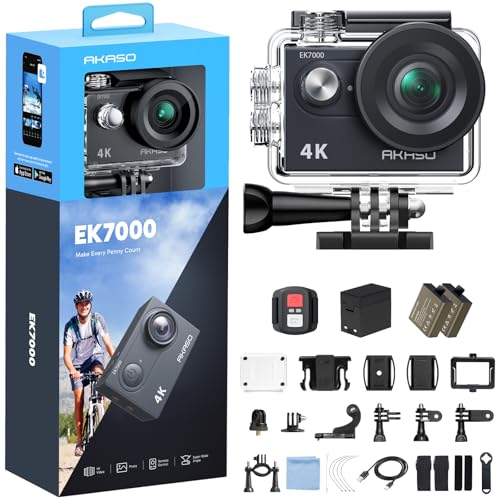
Physically, sometimes; wisely, rarely. A separate action camera — the waterproof kind from our pool, such as a compact GoPro or AKASO model — is an auxiliary device, not a drone, and most airframes in this frame lack the lift margin to carry one without wrecking flight time, balance and manners. One or two larger folders tolerate a very light camera for short hops, but the footage usually loses more to vibration than it gains in sensor quality. Learn on the built-in camera; carry passengers when you own an aircraft built for cargo.
Is a drone in this frame a good gift?
It is one of the better technology gifts, provided the giver does the unglamorous half of the present: check that the recipient has somewhere legal and open to fly, include the spare batteries that turn a novelty into a hobby, and write the local recreational rules’ web address inside the card. A drone given with a flying field in mind gets flown for a season; a drone given as a pure surprise too often meets a garden, a gust and a fence in its first ten minutes. For children, pair the gift with supervision as a stated family rule rather than a hope — the guarded trainers in this list exist precisely so that pairing stays enjoyable — and let the first flights be a shared expedition rather than a solitary experiment.
Related Guides
Continue with the best drones with cameras for beginning adults when the training season ends and a grown-up aircraft beckons, the best drone with cameras for YouTube if the clips are becoming a channel, and the best action cameras for recording for the ground-level cameras that partner a drone kit.


