reviewstook.com is reader-supported. When you buy through links on our site, we may earn an affiliate commission.
Where to buy
Let us start with the sentence this whole guide is built around, because truck owners deserve it unvarnished: if you searched for the best cameras for trucks, you almost certainly mean a dash cam — a camera that lives on the windscreen, powers itself from the vehicle, records the road on a loop, and locks the important seconds away when something happens. Our verified pool for this guide contains no true dash cam. Not one. What it does contain is a set of excellent action cameras, and this article will show you exactly where those can genuinely help a truck driver, exactly where they cannot, and what the purpose-built dash cam you probably need looks like — described honestly, without a link, as prose-only picks.
Why publish a guide with that admission at the top? Because the alternative — dressing an action camera up as a dash cam and hoping you never test the difference — fails at the worst possible moment: the uninsured collision, the disputed delivery, the incident at 2 a.m. on an unlit highway where loop recording, automatic incident locking and a camera that simply wakes with the ignition are not features but the entire point. A truck is a workplace, a liability surface and, for many drivers, a home; its camera should be chosen with a workplace’s honesty.
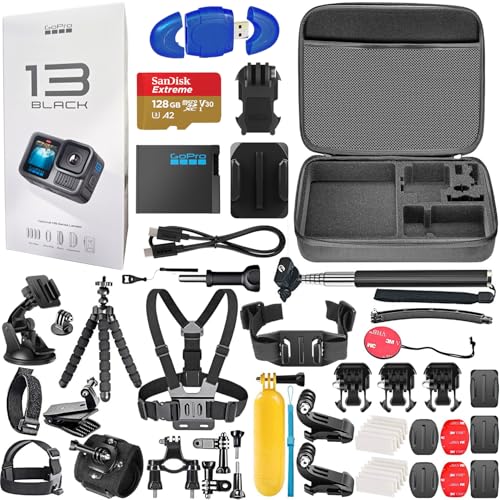
- GoPro HERO13 Black: check price on Amazon
- DJI Osmo Action 5 Pro: check price on Amazon
- Insta360 Ace Pro 2: check price on Amazon
- DJI Osmo Action 4: check price on Amazon
- Dedicated dual-channel truck dash cam (prose-only pick — see its section below): check availability at your preferred retailer
- Hardwired dash cam with parking mode and GPS logging (prose-only pick — see its section below): check availability at your preferred retailer
So the shape of the guide is this. Two prose-only picks describe the dash cams a truck actually needs — the dual-channel system that watches road and cab, and the hardwired unit that guards the parked rig overnight. Four linked action cameras follow as what they honestly are: superb secondary tools for the load, the yard, the route’s story and the occasional evidential clip, each with its limitations stated in plain language. Read the limitations as carefully as the praise; in this guide, they are the most valuable sentences.
Key Takeaways
- Our verified pool has no true dash cam; the two picks that describe real dash cams are prose-only, on purpose.
- A dash cam’s defining jobs — loop recording, ignition-linked power, automatic incident locking — are jobs action cameras are not built to do.
- The GoPro HERO13 Black is the strongest action camera here for load, yard and route documentation.
- DJI’s Osmo Action 5 Pro is the best of the action cameras after dark, within the same honest limits.
- The Insta360 Ace Pro 2 brings low-light polish and a flip screen to walk-around inspections and cab-side clips.
- Buy the action camera for the story and the inspection; buy the dash cam for the evidence.
In this guide
Quick Picks
| Camera | Badge | Why it is here |
|---|---|---|
| Dedicated Dual-Channel Truck Dash Cam | The actual answer for most truck owners — prose-only | Front road view plus cab or rear view, loop recording and incident locking, powered by the truck itself. |
| Hardwired Dash Cam with Parking Mode and GPS | Best for parked-rig protection — prose-only | Watches the truck overnight, logs position and speed, and wakes on impact while the driver rests. |
| GoPro HERO13 Black | Best action camera for load and yard work | Waterproof, stabilised and mountable anywhere for inspections, loading and route footage. |
| DJI Osmo Action 5 Pro | Best action camera after dark | Strong low-light video for night yards and evening deliveries, within action-camera limits. |
| Insta360 Ace Pro 2 | Best for walk-around inspections | Flip screen, low-light strength and Leica-tuned colour for condition reports and cab-side filming. |
| DJI Osmo Action 4 | Best value action companion | A proven low-light action camera that covers the secondary jobs at a gentler cost. |
How were the best cameras for trucks chosen — and what did we refuse to pretend?
We began by writing down what a truck camera must do when nobody is thinking about cameras. It must start with the ignition and stop after it, record on a loop that overwrites the oldest uneventful miles, sense an impact or a hard event and lock that file against the loop, keep time and — for professional use — position accurately, and survive a windscreen’s heat and a winter cab’s cold for years. That list is the dash cam’s job description, and we scored every candidate in our pool against it without sentimentality.
The result shaped the guide. No action camera in the pool performs that job description: they run on batteries rather than the vehicle’s supply, they record until the card fills rather than looping with protected event files, and they wait to be switched on by a human who, at the moment of an incident, has other duties. So the two picks that do perform it are prose-only descriptions of the purpose-built categories, written so you can shop for them anywhere with the right criteria in hand.
The action cameras were then judged on the jobs they can honestly do for a trucker — and those jobs are real. Documenting a load’s condition at pickup and delivery, filming a walk-around inspection, recording a disputed yard manoeuvre you are deliberately capturing, capturing the route for a channel or a family at home: for these, a mounted action camera is not a compromise but the best tool available. Each linked pick below is the strongest in the pool for one of those honest jobs, with its dash-cam limitations repeated in its own section so no reader can miss them.
What does a real truck dash cam do that an action camera cannot?
It disappears into the vehicle’s life. Hardwired or plugged into an always-managed supply, a dash cam wakes when the truck wakes, records without being remembered, and asks for attention only when it has saved something that matters. An action camera, by contrast, is a guest: it must be mounted, charged, started and stopped, and a guest who must be remembered will eventually be forgotten — usually on the one journey that mattered.
It manages evidence as a system. Loop recording means the card never fills with last month’s uneventful motorway while today’s incident goes unrecorded; incident locking means the collision file survives the loop; GPS and time stamps mean the file can argue its case in an insurance office or a courtroom. Action cameras record beautiful video, but beauty is not evidence management, and a stunning clip of the wrong ten minutes — or a card that stopped recording in March — settles no dispute.
And it watches the parked truck. Parking mode, running from the vehicle’s battery with protective cut-offs or from a dedicated pack, records the night yard’s bumps and prowlers while the driver sleeps in the cab or at home. No battery action camera watches a truck for twelve hours; the arithmetic of their batteries forbids it. Owners whose risk concentrates in parked hours — and for many trucks it does — should read the prose-only hardwired pick as the centre of this guide.
Dedicated Dual-Channel Truck Dash Cam — The actual answer for most truck owners — prose-only
This is the pick the search was looking for, and it is prose-only because our verified pool does not carry it — no link, no borrowed ASIN, just the criteria to buy it well anywhere. A dual-channel truck dash cam records the road ahead through the windscreen and a second view at the same time: the cab interior, the view behind the truck, or a side aspect, depending on the kit. For professional driving, that second channel is frequently the one that settles the argument.
Why two channels matter more in a truck than in a car comes down to scale and livelihood. A truck’s blind areas are measured in metres, its stopping distances in seconds of other people’s impatience, and its driver is a professional whose licence and employment ride on the record. Front footage shows the car that cut in; cab or rear footage shows the driver’s own conduct and the trailer’s behaviour in the same seconds. Together they convert an incident from a story contest into a document review, which is why fleets increasingly fit exactly this configuration.
Judge the category by these criteria. Loop recording with protected event files is non-negotiable. The cameras should power from the vehicle and start with it, without driver action. Night performance matters disproportionately, since professional hours are dark hours. The rear or cab channel should be genuinely weatherproof if it mounts outside, and the system should tolerate a large memory card, because a truck’s day is longer than a commuter’s and its uneventful miles are more numerous.
Installation deserves the same professionalism as the driving. Cables routed clear of airbags and controls, the windscreen unit placed where it neither obstructs the driver’s view nor invites theft’s attention, the rear camera aligned with a spotter’s help — an hour of care at fitting returns years of unconsidered service. Many owners use a dealer or auto-electrician for the hardwired elements and consider it money spent on the evidence’s reliability.
There is a fleet dimension individual owners should borrow. Even a single-truck operator benefits from the fleet habit: review the saved events monthly, keep the card healthy by formatting it on a schedule, and confirm the camera’s clock and position lock are honest. A dash cam is a witness, and witnesses should be checked on before they are needed in earnest.
We place this pick first in the detailed sections deliberately, ahead of four excellent linked cameras, because order is a form of honesty. The action cameras below are fine tools for their jobs. This is the tool for the job the searcher actually typed, and a guide that buried it would not deserve the click that brought you here.
A note on cards and heat belongs in this section, because windscreens are hostile real estate. Specify the high-endurance memory cards this category recommends — ordinary cards die young under constant loop writing — and expect the camera itself to be rated for the temperature swing between a summer cab and a winter one. The reputable truck-focused systems publish those tolerances; treat their absence from a specification as information.
There is also the question of who reviews the footage, which should be answered before the first mile. In a fleet it is a safety officer with a policy; for an owner-driver it should still be a named routine — the saved events folder, reviewed monthly, incidents archived with their logs to a computer. Footage that nobody can find, in a format nobody has tested, is a rumour rather than a record, and the small discipline of review is what keeps this pick a witness instead of a hope.
- Format: prose-only specialist — front plus second channel
- Power: vehicle-supplied, starts with the ignition
- Recording: loop with automatic incident locking
- Second channel: cab, rear or side view by kit
Strengths
- Performs the dash cam’s whole job description, not a fragment of it
- Two views settle professional disputes fairly
- Runs for years without daily attention from the driver
Trade-offs
- Sits outside this guide’s linked pool — shop dash-cam specialists
- Fitting deserves care or a professional’s hour
- Footage policies for cab views need thought and, for employers, consent
Best for: professional and owner-driver trucks needing real road evidence, front and second view. Not suited for: filming loads, inspections or content — the action cameras below do those better.
Hardwired Dash Cam with Parking Mode and GPS Logging — Best for parked-rig protection — prose-only
The second prose-only pick addresses the hours when a truck is most vulnerable and least watched: parked. A hardwired dash cam with parking mode keeps a guarded eye on the stationary vehicle, recording impacts and, in better systems, motion near the truck, while drawing power in a managed way that protects the vehicle’s ability to start in the morning. For the driver who sleeps in the cab, parks in unlit yards, or leaves the rig at a depot over weekends, this is not an accessory category; it is the night watchman.
GPS logging is the pick’s other half, and its value is forensic rather than navigational. A recording that carries its own position, speed and time is evidence that can be mapped, timed and believed; a recording without them is an anecdote with pictures. In disputes over routes, delivery times, alleged speeding or presence at a scene, the logged file argues calmly and precisely on the driver’s behalf — including, importantly, when the driver is entirely innocent and entirely unable to prove it any other way.
Power management is the criterion that separates the serious systems. Look for voltage cut-offs that end parking recording before the vehicle’s battery is endangered, or a dedicated battery pack for the camera that charges on the move and spends itself overnight. A camera that guards the truck by stranding it has misunderstood its orders, and the reputable end of this category understands them perfectly.
Consider also what the camera should not do. Continuous recording of a cab’s interior while a driver rests raises consent and dignity questions that employers must handle openly and owner-drivers should handle thoughtfully; many systems let the interior channel be disabled while parked, keeping the watch on the truck’s exterior where the risk actually lives. Buy the configuration that watches the asset, not the sleeper.
Shopping criteria, gathered: hardwired fitting with managed power, parking recording triggered by impact and motion, GPS logging integral to the files, honest night performance, and a manufacturer whose firmware and support treat professional users as the main audience. As with the dual-channel pick, this category lives outside our linked pool, and we would rather describe it plainly than sell you an action camera in its clothes.
Fitted well, this is the least visible and most valuable camera in the guide. It produces no content, headlines no channel, and is noticed only on the worst mornings — when it produces, from the night, the thirty seconds that save the no-claims bonus, the contract or the licence. Trucking runs on margins exactly that size.
Integration with the truck’s other records is where this pick quietly multiplies its value. A logged camera file that agrees with the tachograph, the telematics and the delivery note forms a three-legged stool no single document can be argued off. Operators who archive the three together after any incident find that claims conversations shorten remarkably — the evidence is not louder, it is simply complete.
Finally, buy for the truck you will still own in five years. Hardwired systems outlast leases, liveries and sometimes engines, and a camera specified generously at fitting — the second channel’s wiring run, the larger card, the better mount — avoids the second fitting that penny-wise purchasing so often schedules. The night watchman should be hired once, properly.
- Format: prose-only specialist — hardwired, always ready
- Parking mode: impact and motion recording while parked
- Logging: GPS position, speed and time inside the files
- Power: managed draw with battery protection or a dedicated pack
Strengths
- Guards the truck through the night without stranding it
- Logged files argue precisely in professional disputes
- Exterior watch respects the resting driver’s privacy
Trade-offs
- Sits outside this guide’s linked pool — shop dash-cam specialists
- Hardwiring usually deserves a professional fitter
- Cab-recording configurations need open consent policies
Best for: trucks parked in yards, depots and overnight stops, and drivers who need logged evidence. Not suited for: content, inspections or load documentation.

GoPro HERO13 Black — Best action camera for load and yard work
Now the linked cameras, beginning with the strongest — and with its limitation stated in its first paragraph, as promised. Let the limitation lead, as promised: the HERO13 Black is not a dash cam: it will not loop with protected incident files, wake with your ignition or watch the parked truck, and no driver should rely on it for road evidence. What it is, superbly, is the trucker’s documentation camera — the tool for the load, the yard, the inspection and the journey’s story, used deliberately by a driver who presses record on purpose.
Load documentation is its killer application. Strapped, tarped and sealed loads are photographed and filmed at pickup; the same walk at delivery, filmed in the same order, is a condition report that settles ‘it arrived damaged’ conversations before they begin. The GoPro’s waterproof, glove-friendly, one-button manners suit yard work in February rain, its stabilisation keeps a walking inspection watchable, and its wide view takes in a whole trailer side from the next bay.
Mounted work multiplies its value. On the forklift’s cage, the yard shunter’s dash for a specific manoeuvre, a chest harness during coupling and uncoupling — anywhere a deliberate recording of a deliberate task is wanted, the HERO13’s mount ecosystem and lens options make the shot available. Fleet trainers use exactly this footage to teach coupling, reversing-with-spotter and load-securing technique, because the camera can stand where an instructor cannot.
Then there is the journey itself, which it tells better than any tool here. The mountain pass, the border crossing at dawn, the famous highway’s empty morning — a mounted GoPro gathers the journey’s cinema while the driver drives, for the family at home or the channel that supplements the income. Its 5.3K video crops generously in editing, and its stills serve the journey’s album honestly.
Battery and workflow discipline are the price of admission, and they are manageable precisely because the jobs above are deliberate. Charge at the day’s end with the cab’s other electronics, carry two batteries for the long documentation days, and treat the camera as a tool taken out for tasks — the pattern every other yard tool follows. The failure mode only appears when it is asked to be a dash cam, a job this guide has already assigned elsewhere.
Buy it as the truck’s camera of record for everything a driver chooses to document, and it will earn its mount daily. Just let the prose-only picks above stand guard over the road and the night, where choosing the wrong tool is not an inconvenience but an exposure.
Its time-lapse and photo modes earn a yard-specific mention. A time-lapse of a full loading sequence, reviewed at the depot, shows where minutes leak from the operation — the wait, the reshuffle, the second forklift trip — more clearly than any timesheet. Operators who film their own processes tend to improve them, and a camera that pays for itself in operational honesty has justified its mount without recording a single mile of road.
Durability in the toolbox sense completes its case. This is a camera that can live in a cab door pocket, survive being dropped on concrete during a coupling check, and rinse clean under a tap after a muddy yard. Working trucks are not gentle environments for electronics, and the GoPro’s indifference to that environment is a professional feature, not a lifestyle one.
Insurance conversations deserve a final word in its favour. A driver who can produce, within the hour, a dated film of the load’s condition at handover and a still of the seal intact has changed the temperature of the discussion entirely — not by arguing, but by documenting. That is the action camera’s true professional value in a truck: not witnessing the road, but witnessing the work, in a trade where the work is constantly disputed.
- Format: flagship action camera, 5.3K video
- Build: waterproof, glove-friendly controls
- Mounting: the widest accessory ecosystem available
- Honest limit: no loop recording or ignition-linked power
Strengths
- Load and inspection films that settle condition disputes
- Mounts anywhere a deliberate recording is wanted
- Route footage of genuine cinematic quality
Trade-offs
- Not a dash cam — no loop, locking or parking watch
- Battery discipline required across a long day
- Must be started deliberately for every task
Best for: load documentation, walk-around inspections, training footage and route films. Not suited for: unattended road evidence or parked-truck protection.

DJI Osmo Action 5 Pro — Best action camera after dark
Trucking’s clock is not the sun’s. Night trunking, pre-dawn deliveries, yards lit by a single floodlight and winter afternoons that end at four — the working camera of a trucker’s life must perform after dark, and among the action cameras in our pool the Osmo Action 5 Pro performs best there. Its larger sensor keeps low-light video clean and legible, and that talent defines its role in this guide: the deliberate-recording camera for the dark half of the job.
Its limitation paragraph, as required: it shares the action-camera family’s dash-cam absences in full. No loop recording with protected files, no ignition-linked wakefulness, no parking watch. A driver who mounts it for a night run must start it, mind its battery and stop it, and its footage is a record of a chosen journey, not an automatic witness to every journey. For evidence that must exist whether or not anyone remembered a camera, the prose-only dash cams remain the only honest answer.
Within those bounds, its night documentation is genuinely valuable. The evening delivery’s condition walk, filmed under yard lights, stays readable; the night ferry queue, the illuminated border post and the city at 3 a.m. film with an atmosphere smaller sensors smear away. Subject tracking and a front screen serve the driver-presenter’s pieces to camera — the cab-side update, the delivery-site report — with a professionalism that reflects well on an operator’s business.
Battery endurance, the other half of night work, is a DJI strength here: long recording spans the full delivery sequence without a swap, and efficient charging at the rest stop restores it. For a driver whose camera tasks cluster in long, dark, deliberate sessions, that endurance is worth more than headline resolution.
It is also, simply, a pleasure in the hand: quick to mount, certain in its menus, calm in its stabilisation during the walk-around. Tools used at 2 a.m. in the rain are judged by exactly those virtues, and the Action 5 Pro was plainly designed by people who have operated cameras with cold hands.
Choose it when your documentation lives after dark — night fleets, evening deliveries, winter yards — and pair it, in the complete truck kit, with a real dash cam for the road. Each will make the other look good by never being asked to do its job.
Its colour and dynamic range serve the night report in a subtler way: yard lighting is a patchwork of sodium orange, LED white and honest darkness, and footage that holds all three without turning faces green or shadows to soup reads as professional to the customer or manager receiving it. The Action 5 Pro handles that patchwork with unusual grace, which is why its clips so often end up forwarded rather than merely filed.
Cold deserves a sentence, since night trucking and cold are frequent colleagues. Batteries are the weak point of every action camera in frost, and this DJI’s endurance gives it the largest margin of the linked picks — but the disciplined driver still rotates a warm spare from an inside pocket on the coldest nights, a habit this guide recommends for every battery camera it lists.
Depot mornings make a fitting close for its case. The camera that filmed the night delivery can, minutes later, record the dawn walk-around in the same honest light, its battery unspent and its lens un-fogged — continuity that lets a small operator run one camera across the whole dark shift. In a guide full of specialists, that breadth within its parish is the Action 5 Pro’s distinction.
- Format: action camera with larger sensor for low light
- Endurance: long recording for night sessions
- Screens: front display for cab-side presenting
- Honest limit: battery-powered, manually started, no loop
Strengths
- Night-yard and evening-delivery footage stays legible
- Long battery suits extended dark sessions
- Front screen professionalises driver reports
Trade-offs
- Not a dash cam in any of the ways that matter legally
- Night excellence still needs some light to work with
- Deliberate use only — it will not witness forgotten journeys
Best for: night documentation, evening deliveries and driver-presenters working after dark. Not suited for: automatic evidence or parked surveillance.

Insta360 Ace Pro 2 — Best for walk-around inspections
The Ace Pro 2 brings a different polish to the truck’s secondary camera work. Its 1/1.3-inch-class sensor, dual-chip processing and Leica-tuned colour produce inspection and report footage with a clarity and a low-light confidence that flatter an operator’s professionalism, and its flip touchscreen — a rarity among action cameras — makes the walk-around with commentary a one-person production. Like every linked pick here, it is not a dash cam, and its section will say so again before it ends; but for the deliberate jobs, it has a character of its own.
The walk-around inspection is its signature. Frame yourself with the flip screen for the introduction, walk the rig narrating tyres, lights, seals and load security, flip the screen to check the framing at the trailer’s far end — the resulting film is simultaneously a compliance record, a maintenance diary and, for owner-drivers who publish, content that advertises a careful business. Fleets have paid production companies for worse.
Its low-light strength extends the inspection day into the hours trucks actually keep. The pre-dawn check in a dark yard, the evening delivery’s condition film, the under-trailer glance with the camera on a short grip — the Ace Pro 2 keeps these legible where lesser cameras produce murk, and legibility is the entire point of a record. A condition film nobody can read settles nothing; this one’s can be read.
Waterproofing and a rugged build suit yard reality, and its mounting follows the action-camera standards that truckers already own. Battery manners are respectable rather than remarkable, so the inspection routine should include the same nightly charge as the rest of the cab’s electronics.
And the required honesty, plainly: no loop recording, no incident locking, no vehicle-linked power, no parking watch. If the Ace Pro 2 is the only camera in the truck, the truck has a fine inspection tool and no dash cam, and those are different sentences. This guide keeps them different on purpose.
Choose it when the camera’s main employment is the documented walk-around and the presented report — the operator as inspector and narrator of their own rig — and it will make a small business look like a meticulous one, because it will be recording one.
The flip screen has a second, less obvious employment: evidence of the presenter. A walk-around that begins and ends with the driver on camera, naming the date, the vehicle and the load, is a report with a chain of custody built into its first ten seconds. Insurers and customers both read such films differently from anonymous footage, and the Ace Pro 2 makes that framing a habit rather than a production.
Its still photographs, often overlooked beside its video, serve the maintenance diary well — the tyre’s sidewall code, the seal’s number, the scuff that was already there at pickup. A camera that documents in both media without a mode-change ritual gets used for both, and the truck’s paper trail is the richer for it.
Owner-drivers building a public reputation should weigh its presentation value honestly. Customers choose carriers on trust signals, and a stream of crisp, narrated, low-light-competent condition reports is a trust signal competitors with grainy phone clips cannot match. The camera is, in that sense, marketing equipment as well as documentation — the rare purchase that can argue for itself in the accounts.
- Format: flagship action camera, flip touchscreen
- Sensor: large for its class, strong low light
- Colour: Leica-tuned, presentation-friendly
- Honest limit: manual, battery-powered, no evidence loop
Strengths
- Flip screen turns inspections into presented reports
- Pre-dawn and evening checks stay readable
- Footage flatters a careful operator’s business
Trade-offs
- Not a dash cam — no loop, locking or parking mode
- Battery is respectable, not exceptional
- Premium positioning among action cameras
Best for: narrated walk-around inspections, condition reports and operator content. Not suited for: unattended evidence or overnight watch.

DJI Osmo Action 4 — Best value action companion
The Osmo Action 4 is the elder sibling in this guide’s DJI pairing: a proven action camera whose larger sensor made low-light action footage respectable, offered now at the gentler end of the flagship shelf. For a trucker equipping the secondary jobs — documentation, inspections, route films — without flagship money, it covers the same honest territory as its newer sibling at a friendlier cost, and many operators will find the difference better spent on the dash cam this guide keeps recommending.
Its dash-cam limitation paragraph can be brief because the family resemblance is exact: battery-powered, manually operated, no loop recording with protected event files, no parking watch, no ignition-linked life. It is a camera you use, not a witness that serves unattended, and it should be bought in that knowledge and no other.
Within its role, the virtues are mature ones. Stabilisation that handles the yard walk and the mounted manoeuvre calmly; low-light video that respects the early start; a magnetic mounting system that moves the camera between cab, chest and trailer side in seconds — a small thing that decides whether a busy driver bothers to film the load at all. Convenience is a professional virtue in a working vehicle, and the Action 4 is a convenient camera.
It also makes a sensible second angle beside any main camera here. Mounted at the trailer’s rear for a specific, deliberate reversing demonstration with a spotter — training, not evidence — or fixed in the yard for the loading sequence, it multiplies viewpoints cheaply. Working trucks accumulate cameras the way they accumulate straps and bungees: one honest tool at a time.
Battery and charging follow the family pattern, and its accessories are widely available wherever drivers actually shop. Nothing about it demands a learning project in the middle of a working week, which for its intended owner may be the strongest recommendation in its section.
Buy it as the value route to the truck’s documentation kit, and put the savings where this guide has pointed from its first paragraph: toward the purpose-built dash cam that watches the road when nobody is thinking about cameras at all.
There is a training economy to its value, too. A new driver’s first month generates exactly the footage a mentor wants to review — coupling sequences, yard manoeuvres, load checks — and an inexpensive, unintimidating camera gets carried and used where a flagship would be guarded. The Action 4’s footage is more than good enough to coach from, and coaching is where small fleets quietly become safe ones.
It also forgives the learning curve of the whole documentation habit. Drivers new to filming their work will forget charges, fill cards and frame badly for a fortnight; doing that apprenticeship on the value camera, while the dash cam stands guard regardless, is the correct order of operations — and another reason this guide insists the two systems are bought as a pair, not as rivals.
And when the day is neither evidence nor inspection but simply worth remembering — the mountain route in October, the convoy run with old colleagues — the Action 4 films it gladly and well. A working life deserves its souvenirs recorded as faithfully as its loads, and a value camera that is always along makes sure they are.
- Format: proven action camera, large sensor for its generation
- Mounting: quick magnetic system, cab to trailer in seconds
- Low light: strong for early starts and yards
- Honest limit: no loop, locking, parking or vehicle power
Strengths
- Covers the documentation jobs at a gentler cost
- Magnetic mounts make filming the load effortless
- Mature, widely supported accessory world
Trade-offs
- Not a dash cam — the family limitation in full
- A generation behind the Action 5 Pro after dark
- Battery discipline still applies on long days
Best for: value-minded documentation, second angles and training footage. Not suited for: evidence duty or buyers wanting the newest night performance.
How should a trucker combine a dash cam and an action camera without confusion?
Assign each tool a parish and keep the borders clean. The dash cam owns the road and the night: fitted, powered, forgotten, its footage reviewed only when an event needs it. The action camera owns the deliberate: taken out for the load film, the inspection, the training manoeuvre and the journey’s story, then returned to its mount or case and its nightly charge. Confusion begins when either is asked to visit the other’s parish — the action camera left running ‘as a dash cam’ until its card fills, the dash cam’s footage mined for content it was never framed to provide.
Label the outputs differently, too. Evidence files are kept, unedited, with their logs; documentation films are edited, shared and archived as business records. The two archives serve different masters — one may serve a court, the other a customer — and the tidy operator keeps them as separate as the tools that made them.
What should you check before relying on any camera in a working truck?
Rehearse the failure, not the success. Fill the action camera’s card at home and watch what it does; pull the dash cam’s event file and confirm it plays, with its log, on a computer; leave the parking mode armed overnight and confirm the truck starts with enthusiasm in the morning. Every camera system in this guide is trustworthy only in the version of it you have personally tested, and a working truck is no place for untested trust.
Check the legal and employment frame as carefully as the technical one. Cab-facing recording, audio recording and footage retention all carry rules that vary by jurisdiction and employer, and the professional driver confirms them before fitting, not after an incident. A camera installed with open consent and a clear policy protects everyone it films; the same camera installed carelessly can become the problem it was bought to solve.
How do you keep a truck’s camera evidence trustworthy over years?
Treat the system like the truck’s other safety equipment: inspected on a schedule, documented, and maintained before it complains. A monthly four-minute ritual — play back a recent file and a locked event file, confirm the clock and position are honest, wipe the lenses, check the mount’s grip, format the card if the maker advises it — keeps the witness credible. Fleets write this into the same sheet as lights and tyres, which is exactly where it belongs.
Archive like it matters, because one day it will. Incident files leave the truck for a computer or company system the same week, accompanied by the driver’s own short written note while memory is fresh. The note and the file together are worth twice either alone, and the habit costs less time than a single fuel stop.
What about cameras for the trailer and the load itself?
Beyond the cab, cameras serve the freight. A deliberately placed action camera can watch a loading sequence, document a tarped load’s state at each stop, or ride — where lawful and securely mounted — for a specific manoeuvre’s training film. What it cannot do is serve as a permanent trailer reversing system; that job, like the road’s evidence, belongs to purpose-built, vehicle-powered equipment of the kind described in our travel trailer guide’s prose-only pick, fitted and tested as safety hardware rather than improvised as content gear.
One more honest distinction belongs before the comparison: resolution is the least important number in this entire guide. A modest-resolution dash cam that was running, looping and logging will defeat a cinematic action camera that was charging in the bunk, every single time, in every office where footage is judged. Buy presence first — the camera that is always there — and beauty second, in that order, and the truck is equipped the way professionals equip things.
Comparison Table
| Camera | Badge | Type | Dash-cam duties? |
|---|---|---|---|
| Dedicated Dual-Channel Truck Dash Cam | The actual answer for most truck owners — prose-only | Purpose-built dash cam | Yes — front and second view, loop and locking |
| Hardwired Dash Cam with Parking Mode and GPS | Best for parked-rig protection — prose-only | Purpose-built dash cam | Yes — plus parking watch and GPS logs |
| GoPro HERO13 Black | Best action camera for load and yard work | Action camera | No — documentation and story only |
| DJI Osmo Action 5 Pro | Best action camera after dark | Action camera | No — deliberate night recording only |
| Insta360 Ace Pro 2 | Best for walk-around inspections | Action camera | No — presented inspections only |
| DJI Osmo Action 4 | Best value action companion | Action camera | No — value documentation only |
The right-hand column is this guide in miniature. Two rows say yes and carry no links; four rows say no and carry excellent cameras. A buyer who reads that column honestly will equip a truck properly; a buyer who wishes it away will equip one hopefully, which is not the same thing.
What mistakes do truck owners make when buying cameras?
The founding mistake is the one this guide was written against: buying an action camera to do a dash cam’s job, usually because the action camera’s footage looked better in the advertisement. Evidence is not cinematography. The loop, the locking, the vehicle power and the parking watch are invisible in a product video and decisive in a claim, and they are exactly what the cheaper-looking, purpose-built tool provides.
Second is fitting and forgetting — without the monthly check. Cards wear, clocks drift, lenses film over with yard grime, and a dash cam discovered dead at the incident is worse than none, because it was relied upon. The fleet habit of a scheduled health check — play a file, check the log, wipe the lens — takes four minutes and is the difference between a witness and a decoration.
Third is recording people carelessly. Cab cameras and audio carry consent, policy and legal weight that vary by place and employer; the professional sorts the paperwork before the hardware. The same care applies to sharing incident footage publicly, which can prejudice the very claim the footage was kept to support.
Last is under-buying the unglamorous parts: the large, endurance-rated memory card, the proper hardwire kit, the spare action-camera battery. Cameras fail at their accessories far more often than at their sensors, and a working truck’s camera budget should be allocated accordingly — the evidence chain is only as strong as its cheapest link.
Drivers who have lived through one well-documented incident rarely need this paragraph. Everyone else should imagine the worst morning of their driving year, and then ask which camera, honestly, would have been awake for it, recording, with the file locked safely away.
Final Recommendation
Equip the truck in the order this guide is written. First, from a dash-cam specialist, buy the dedicated dual-channel system for road evidence — and the hardwired parking-mode model with GPS if the truck sleeps anywhere less than perfectly safe. Those two prose-only picks are the answer to the search that brought you here, and no linked camera in our pool can honestly replace them. Then, for the work cameras can document deliberately, add the action camera that fits your hours: the GoPro HERO13 Black for load and yard, the DJI Osmo Action 5 Pro for the dark, the Insta360 Ace Pro 2 for presented inspections, or the DJI Osmo Action 4 to cover the same ground for less. That is a truck equipped without a single pretence — a witness on the windscreen, a watchman over the night, and a storyteller in the toolbox.
The same logic governs the second battery, the spare card and the cleaning cloth in the door pocket: small, cheap readiness, bought before it is needed, is the whole philosophy of equipping a working vehicle — cameras included, and it is the philosophy this guide has followed from its first, deliberately unvarnished paragraph to this one.
Frequently Asked Questions
Can I just use a GoPro as my truck’s dash cam?
You can record journeys with it, but you should not rely on it as a dash cam. It lacks loop recording with protected incident files, ignition-linked power and parking surveillance, and it depends on you remembering to start it. As a deliberate documentation camera it is excellent — see its section — but road evidence deserves the purpose-built prose-only picks.
What is the difference between single and dual-channel dash cams for trucks?
A single channel records the road ahead. A dual-channel system adds a simultaneous second view — cab, rear or side — which, given a truck’s blind areas and a professional driver’s exposure, is often the view that settles a dispute. For most working trucks, the second channel is worth more than any resolution upgrade on the first.
Do I need GPS in a truck dash cam?
For professional use, treat it as close to essential. Position, speed and time embedded in the file turn footage into evidence that can be checked against logs, routes and delivery records. It exonerates the careful driver as powerfully as it documents the incident, which is why fleets specify it.
Will parking mode flatten my truck’s battery?
A properly specified system will not: look for voltage cut-offs that stop recording before the battery is endangered, or a dedicated camera battery pack that charges while driving. Have the hardwiring fitted professionally and test an overnight park at home before trusting it at a remote yard.
Is recording inside the cab legal?
It depends on jurisdiction, employment arrangements and consent, and audio is often more restricted than video. Employers need open policies; owner-drivers should still check local rules before fitting a cab-facing channel. This guide’s advice is to settle the paperwork first — the hardware will wait, and a lawful installation protects everyone.
Which action camera is best for documenting loads?
The GoPro HERO13 Black for its mounting ecosystem, waterproofing and glove-friendly operation in yards; the Insta360 Ace Pro 2 if your documentation is presented to camera; the DJI Osmo Action 5 Pro when the loads move at night. All three are deliberate tools — start them on purpose, charge them nightly, and let the dash cam handle the road.
Related Guides
Keep exploring with our companion guides: best backup cameras for trucks to hitch, best cameras for travel trailer and best cameras for lyft drivers.


