reviewstook.com is reader-supported. When you buy through links on our site, we may earn an affiliate commission.
Where to buy
Most guides answering the best digital cameras under 200 dollars quietly redefine “camera” until the answer fits: a toy compact here, a doorbell-adjacent gadget there. This one keeps the word honest. Under 200 dollars is the keyword’s budget frame — no product prices are printed in this guide — and within that frame we went looking for real digital camera bodies: used DSLRs and mirrorless cameras with interchangeable lenses, premium compacts from the used shelf, and two current action cameras from our verified pool that genuinely live in this territory. If it cannot take a photograph you would print, it did not get in.
The used market is not a consolation prize at this level; it is the main event. Camera bodies depreciate like cars and age like lenses — a five-year-old enthusiast body is a superb instrument whose only crime is having a successor. The picks below split deliberately: four prose-only used-market recommendations to hunt with the inspection method this guide teaches, and two linked current models for buyers who want a warranty with their adventure footage. Either route buys a real camera. Neither requires pretending a toy is one.
- Canon EOS Rebel T6 (used): prose-only pick, the DSLR starter whose lens mount opens the largest used-glass library in photography
- Sony a6000 (used): prose-only pick, the mirrorless classic whose autofocus and compact body still embarrass newer budget rivals
- Nikon D3500 (used): prose-only pick, the lightweight DSLR with battery stamina measured in days and a guide mode that teaches
- Canon PowerShot SX740 HS (used): prose-only pick, the premium pocket travel zoom for buyers who refuse interchangeable lenses
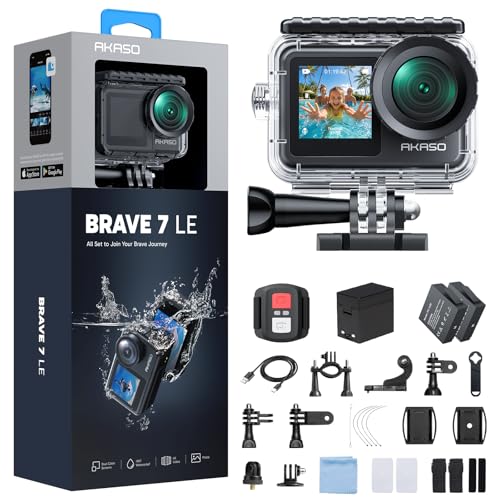
- AKASO Brave 7 LE: linked pick, current action camera with a touchscreen and stabilisation for the video-leaning buyer
- GoPro Hero: linked pick, the compact current GoPro for waterproof stills and video inside the frame
A note on hunting grounds: every used pick here was chosen partly for supply. These models sold in the millions, which means listings are constant, prices are honestly set by competition, and a buyer inside this budget can inspect several examples and choose — the used market’s real luxury.
Key Takeaways
- At this budget, a used enthusiast body is a better camera than any new toy wearing a famous badge.
- Interchangeable lenses are the budget’s multiplier: a cheap body today becomes a system as used glass accumulates.
- Shutter count, sensor cleanliness and battery health are the three numbers that decide a used body’s real value.
- Premium used compacts suit buyers who want quality without a system; action cameras suit video-first buyers.
- Keep part of the frame back for a card, a spare battery and a case — a camera kit, not a camera, takes photographs.
- Buy from sellers who let you test; the inspection ceremony in this guide takes five minutes and prevents most regrets.
In this guide
Quick Picks
| Pick | Badge | Why it earns its place |
|---|---|---|
| Canon EOS Rebel T6 (used) | DSLR system starter | A real optical-viewfinder DSLR opening the deepest used lens library that exists. |
| Sony a6000 (used) | Mirrorless classic | Fast autofocus and a viewfinder in a jacket-pocket body that still feels modern. |
| Nikon D3500 (used) | Lightweight teacher | Guide mode tuition plus battery life that shrugs at weekend trips. |
| Canon PowerShot SX740 HS (used) | Premium pocket zoom | A long stabilised zoom and 4K video in a coat pocket, no lens decisions ever. |
| AKASO Brave 7 LE | Current action value | Touchscreen, stabilisation and waterproofing for the movement-first buyer. |
| GoPro Hero | Current compact GoPro | The name-brand action camera in its smallest, simplest current form. |
What did we require before calling a sub-frame camera “real”?
A real sensor with documented size, a real lens — optical zoom or interchangeable — and a real manufacturer’s support trail: manuals that exist, batteries that can be bought, a repair ecosystem that has seen the model before. Those three requirements, unglamorous as they sound, deleted most of what this price band advertises and left the cameras that working photographers actually recognise.
For used picks we added a survivability test. The model had to be common enough that a buyer can compare examples, new enough that its batteries and cards remain standard, and simple enough in its failure modes that a five-minute inspection catches the important ones. Exotic bargains that fail any leg of that tripod were excluded however tempting their specifications read.
Current models faced a different bar: they had to be cameras a professional would accept as a tool rather than a toy — which is why the linked picks are action cameras, the one category where honest engineering genuinely reaches this frame today. A buyer whose life is stills should hunt used; a buyer whose life is motion can buy new. The guide respects both by refusing to blur them.
Canon EOS Rebel T6 (used) — DSLR system starter
The Rebel T6 is where a generation of photographers started, and the used market is now full of them at prices that make the specification sheet read like a misprint: a proper DSLR with an optical viewfinder, an APS-C sensor far larger than any compact’s, full manual control, and the EF/EF-S mount — which is to say, access to the largest library of affordable used lenses ever made. The body is the ticket; the mount is the destination.
As a learning instrument it is close to ideal. The controls teach the exposure triangle without abstraction, the viewfinder shows the scene with zero lag or battery cost, and the files reward proper technique visibly enough that a beginner can watch themselves improve month by month. Kit zooms bundled with most used examples cover the everyday range while the owner discovers which focal lengths their eye prefers — knowledge that makes the second lens purchase an informed one.
Video is the honest weakness: this generation’s movie mode is a courtesy rather than a craft, with autofocus that predates Canon’s smooth video systems. Stills-first buyers will never care. Hybrid buyers should read the a6000’s section twice before deciding, because the two cameras split this budget’s personality cleanly between them.
Inspection for a Rebel centres on shutter count and sensor. Many examples lived gentle lives — bought for a holiday, shelved for years — and a low shutter count with a clean sensor is common enough to insist on. Fire a plain-sky frame at a narrow aperture to expose dust, check the kit lens for smooth zoom action, and confirm the battery takes a full charge. Passing examples are, hour for hour, the most photography this budget can buy.
- Class: DSLR, interchangeable lenses, APS-C sensor
- Mount: Canon EF/EF-S — deepest used lens library in photography
- Viewfinder: Optical, zero lag, zero battery cost
- Character: Stills-first learning instrument
- Buying route: Used, usually bundled with a kit zoom
Strengths
- A real system camera at a toy camera’s budget
- Used lenses exist for every subject and wallet
- Controls teach photography properly
Trade-offs
- Video autofocus belongs to an earlier era
- Largest and heaviest route in this guide
- Live-view shooting is slow and deliberate
Best for: beginners who want to learn photography as a craft, on a system that grows
Not suited for: video-led buyers or minimalists counting grams
Buy the T6 for its second year, not its first month: the body teaches, then the mount provides. Owners who spend their next small sum on a fast used prime rather than a newer body discover why this camera anchored a decade of photography courses.
Sony a6000 (used) — Mirrorless classic
Few cameras have ever embarrassed their successors like the a6000. A decade after launch its autofocus remains startlingly quick, its 24-megapixel-class files print beautifully, its electronic viewfinder and tilting screen feel contemporary, and the used market prices it inside this frame because Sony sold mountains of them. If the Rebel is the budget’s classroom, the a6000 is its time machine: yesterday’s advanced camera at today’s pocket-money tier.
The E-mount multiplies the value exactly as Canon’s mount does, with a modern accent: compact primes and zooms from Sony and third parties, many designed for this sensor size, many circulating used at friendly prices. The body itself is small enough for a jacket pocket with a pancake lens fitted, which changes how often it gets carried — and carried cameras, as every section of this guide keeps insisting, are the ones that take photographs.
Hybrid shooters get the better of this pick: video with genuinely useful autofocus, focus peaking for manual lenses, and a microphone input’s absence as the one period detail to plan around — external audio solutions exist, but a buyer whose channel depends on sound should know the socket is not there before falling in love. Stills shooters face no such asterisk.
Used inspection should add one Sony-specific check to the standard ceremony: the viewfinder’s eye sensor and the screen hinge, both of which live hard lives on a camera this portable, plus a scroll through the dials for the grit that pocket-carried bodies collect. Shutter counts on a6000s vary wildly — some were family cameras, some were workhorses — so let the count set the price you offer rather than merely filtering the listing.
- Class: Mirrorless, interchangeable lenses, APS-C sensor
- Mount: Sony E — deep modern lens catalogue, strong used supply
- Autofocus: Fast and confident, still competitive today
- Size: Jacket-pocketable with a compact lens
- Note: No microphone input — plan audio accordingly
Strengths
- Performance that shames newer budget cameras
- Small enough to be carried daily
- Files and video both exceed the price’s expectations
Trade-offs
- No microphone socket for video creators
- Battery life is a spare-battery lifestyle
- Menus belong to an earlier Sony generation
Best for: stills and hybrid shooters wanting modern speed in a small used body
Not suited for: creators whose audio setup needs a camera mic input
Pair the a6000 with one compact prime and carry it everywhere for a month before buying anything else. This body’s entire legend rests on being present; owners who honour that discover their “keeper rate” was a carrying problem all along.
Nikon D3500 (used) — Lightweight teacher
Nikon designed the D3500 for exactly the person reading this guide: someone buying their first real camera with real money and no intention of wasting either. Its Guide Mode is a built-in tutor that walks a beginner through photographing portraits, landscapes and moving subjects in plain language, on the camera, at the moment of need. Used examples now sit inside this frame carrying that tuition with them, along with one of the finest sensors ever fitted to an entry DSLR.
The battery is the stuff of forum legend: where mirrorless bodies count their shots in hundreds, the D3500 counts a weekend trip as a rounding error. For a travel-minded beginner, a camera that simply never raises the battery question removes the most common way beginners lose photographs — and removes the spare-battery line from the starter budget entirely.
Nikon’s F mount offers its own deep used-lens library, and the kit zooms bundled with most D3500s are light, sharp and stabilised. The whole outfit — body, kit zoom, card — forms the lightest DSLR kit in this guide, which matters because the D3500’s natural habitat is the day bag of someone walking a new city or a long trail.
What it withholds is connectivity-era convenience and video ambition: the movie mode is basic, the screen neither tilts nor touches, and live view is a tripod tool rather than a lifestyle. Buyers who feel those absences keenly are mirrorless buyers wearing a DSLR budget — the a6000 above is their pick, and this guide is content to say so plainly.
- Class: DSLR, interchangeable lenses, APS-C sensor
- Teaching: Guide Mode built-in tuition
- Battery: Exceptional stamina, weekend-scale
- Mount: Nikon F — deep used lens library
- Kit weight: Lightest DSLR outfit in this guide
Strengths
- Sensor quality far beyond the price tier
- Battery anxiety simply does not exist
- Guide Mode teaches while you shoot
Trade-offs
- Fixed, non-touch screen
- Video is basic transport, not a craft tool
- Live view is slow by mirrorless standards
Best for: travel-minded beginners who want a DSLR that teaches and endures
Not suited for: video creators or screen-first shooters
Let Guide Mode teach for the first month, then switch it off deliberately and shoot the same subjects manually. The D3500’s quiet genius is that graduation plan built into a budget body — few cameras at any price are as honest about being a beginning.
Canon PowerShot SX740 HS (used) — Premium pocket travel zoom
Not every buyer wants a system, and the SX740 HS is the used market’s answer for them: a premium compact with a 40x stabilised zoom in a body that vanishes into a coat pocket, a sensor and processor from Canon’s serious compact line, and 4K video for the family archive. New, it commanded a premium price; used, tidy examples settle inside this frame, carrying specifications no new camera at the tier attempts.
The zoom is the argument and it is a strong one. From wide group shots to a heron across the lake to a performer on a distant stage, one pocketable device covers the focal range that would take a system camera three lenses and a bag to match. For travel — one device, every subject, no decisions — that coverage is not a convenience but a philosophy, and the SX740 executes it with stabilisation that keeps the long end honest.
Canon’s compact colour and a tilting screen for selfies and awkward angles complete a package aimed at real life rather than spec-sheet warfare. It shoots raw stills for the owner who grows curious, yet never forces that curiosity on the owner who does not. Among this guide’s picks it is the one a non-photographer family member will also happily use, which doubles its household value.
Used checks for a big-zoom compact focus on the lens: run it to full extension, shoot the sky, and look for the dust spots these mechanisms can gather; confirm the stabilisation steadies a full-zoom frame rather than hunting. The model’s popularity means examples are plentiful — be the buyer who inspects three and takes the cleanest, because at this tier condition is destiny.
- Class: Premium compact, fixed lens
- Zoom: 40x optical, stabilised
- Video: 4K for family and travel archives
- Screen: Tilts for selfies and low angles
- Buying route: Used examples inside the frame
Strengths
- System-camera reach in a coat pocket
- Raw stills available when curiosity grows
- Every household member can use it
Trade-offs
- Small sensor trails the DSLRs at dusk
- Extending zoom needs a dust inspection
- No upgrade path beyond its own lens
Best for: travellers wanting one pocketable device for every subject
Not suited for: system builders or low-light specialists
Keep the SX740 in the coat it travels in, with a wrist strap as its only accessory. Its value is presence at moments a system camera is still being assembled — the distant performer, the sudden wildlife, the skyline from the train window.

AKASO Brave 7 LE — Current action value
The Brave 7 LE is the stills-sceptic’s answer in this guide: a current, warrantied action camera whose touchscreen, stabilisation and weather resistance deliver the adventure half of photography at a price the used market cannot undercut with a warranty attached. Buyers whose “camera under this budget” really means “camera for the bike, the boat and the trail” should start here rather than with a DSLR they will never risk outdoors.
Its dual-screen arrangement — a front screen for framing yourself, a rear touchscreen for everything else — shows a maker listening to how these cameras are actually used, and the stabilisation smooths the footage of a descent or a paddle into something watchable without a gimbal. Stills are honest action-camera stills: wide, deep-focused, ready for the moment rather than composed for the wall.
Weather resistance without a separate housing simplifies the ownership story for rain and spray, while the mount ecosystem it joins is the industry’s standard, so every chest strap, handlebar clamp and suction mount ever made fits its world. A buyer building an adventure kit on this frame buys into accessories that will outlive the camera itself.
The category’s limits apply in full: the fixed ultra-wide lens is a landscape’s friend and a portrait’s critic, low light is endured rather than enjoyed, and nobody’s wedding album should be entrusted to it. Within the adventure brief it was built for, it is the most complete current answer this budget offers — and the only one here that arrives with a warranty card.
- Class: Action camera, fixed ultra-wide lens
- Screens: Front selfie screen plus rear touchscreen
- Stabilisation: Electronic, for riding and paddling footage
- Toughness: Weather resistant; housing extends its range
- Status: Current model, sold with warranty
Strengths
- New and warrantied inside the frame
- Dual screens suit self-filmed adventure
- Standard mount ecosystem for every accessory
Trade-offs
- Ultra-wide lens distorts close faces
- Low light is endured, not enjoyed
- Stills trail the used system cameras
Best for: riders, paddlers and travellers filming movement in weather
Not suited for: family portrait duty or low-light stills
Buy one accessory first — the mount that matches your main activity — and resist the bundle of twenty. Action cameras earn their keep attached to the thing you love doing; a drawer of alternative mounts photographs nothing but the drawer.

GoPro Hero — Current compact GoPro
The smallest current GoPro distils the brand to its essence: a waterproof brick of a camera with a touchscreen, 4K video, stabilisation and one job — be recording when the moment happens, wherever the moment is. For buyers who want the name, the app ecosystem and the accessory universe without leaving this budget’s frame, it is the straightforward answer, and its stills mode serves adventure documentation with the same one-button honesty.
Simplicity is its engineering statement. Where the used system cameras in this guide offer growth, the Hero offers immediacy: no lenses to choose, no settings worth an evening, a shape that mounts anywhere and survives the mounting. Families splitting one camera between a parent’s trail run and a child’s pool afternoon will use it more in a month than a DSLR would be used in a year — and usage, once again, is the specification that decides albums.
GoPro’s surrounding world is the hidden asset: the app that pulls footage to a phone painlessly, the mounts in every sports shop on earth, the tutorials for every activity ever filmed. A first action camera is partly a membership, and this is the largest clubhouse in the category.
Its boundaries mirror the Brave 7’s, with one addition: the compact body carries a compact battery strategy, so long static recordings are planned around power rather than assumed. As a stills camera it is a wide-lens witness, not a portraitist. Buy it for motion, water and presence, and it will be the hardest-working camera in this guide; buy it for controlled stills and the used DSLRs above are waiting with better answers.
- Class: Compact action camera, fixed ultra-wide lens
- Video: 4K with electronic stabilisation
- Toughness: Waterproof body without a housing
- Ecosystem: App, mounts and tutorials everywhere
- Operation: Touchscreen, deliberately simple
Strengths
- The category’s benchmark brand inside the frame
- Waterproof and mountable anywhere, instantly
- App workflow painless for families
Trade-offs
- Compact battery strategy limits marathon recording
- Fixed wide lens only
- Stills are documentation, not portraiture
Best for: families and adventurers wanting the GoPro ecosystem at its simplest
Not suited for: controlled stills work or long static sessions
Set the Hero’s default mode before the first outing and leave it there — one resolution, one stabilisation setting, ready at a button press. Its genius is the absence of decisions at the moment of use; owners who protect that absence get the footage the camera exists for.
How do you inspect a used camera body in five minutes?
Bring a memory card, a microfibre cloth and a phone torch, and run the same ceremony every time. First the body: check the mount for looseness, the battery door for a firm latch, every dial for gritty resistance. Then the sensor ritual — set a narrow aperture, photograph a plain bright wall or sky, and zoom into the frame on the camera’s screen; dark blobs that stay fixed while the scene moves are sensor dust or worse, and they price the camera or end the meeting.
Shutter count is the odometer, and many bodies report it in file data or menus; a count low for the model’s age confirms the gentle life sellers always claim. Fire a short burst to hear the mechanism’s health — a DSLR’s shutter should sound like a single confident event, not a hesitation. On mirrorless bodies, cycle the viewfinder and screen, and confirm the eye sensor switches between them.
Finish with the lens bundled in the deal: zoom and focus rings should travel smoothly, the glass should show no fungus webs at its edges under the torch, and autofocus should snap to a near object and a far one without hunting. Five minutes, three photographs, one burst — a ceremony that catches nearly everything that matters at this price, and that honest sellers recognise as the mark of a serious buyer worth dealing with.
Why does the lens mount matter more than the body at this budget?
Because bodies are temporary and mounts are permanent. The used DSLR or mirrorless body bought this year will eventually be replaced; the lenses bought for its mount will serve the replacement too, and the one after. A buyer choosing between two similar bodies is really choosing between two libraries of used glass — their prices, their variety, their availability in local shops — and that library decides what the photography of the next five years can even attempt.
This is also why the guide’s two system families were chosen for the depth of their second-hand shelves rather than the glamour of their current flagships. A fast prime for portraits, a long zoom for wildlife, a wide for interiors: on a mature mount, each exists used at prices this budget’s owner can reach in sequence, turning one modest purchase into a growing practice.
Compacts and action cameras make the opposite trade knowingly — the lens is settled forever in exchange for simplicity and size. Neither trade is wrong. The only error is making it accidentally, which is why this section sits in the middle of the guide rather than in a footnote.
What should a first system owner buy after the body?
A card, a spare battery and a bag that fits the life the camera will actually live — then nothing, for a season. The kit lens bundled with most used bodies covers the everyday range honestly, and a season of shooting it reveals the owner’s real frustrations: not wide enough indoors, not long enough at the zoo, not fast enough at dusk. Each frustration names the second lens precisely, and a named lens bought used is money spent once.
For most beginners the second purchase resolves to a fast prime — the lens that delivers the blurred backgrounds and low-light ability that made them want a real camera — because it changes the photographs more than any other single addition. Wildlife and sports leanings reverse the order toward a telephoto zoom. The discipline is identical either way: let the shooting, not the shopping, write the list.
Software completes the kit invisibly. The files these bodies produce reward a real editor, and capable free and bundled editors exist for every system; an hour spent learning to lift shadows and straighten horizons returns more visible quality than an accessory ever will. The budget’s last lesson is that photography’s cheapest upgrades are knowledge-shaped.
How do the DSLR and mirrorless routes diverge after the first year?
The first year feels similar — both routes teach exposure, both reward practice — but the second year reveals different personalities. The DSLR owner has been shooting through an optical finder with a camera that sips battery, and their growth runs toward deliberate crafts: landscapes on a tripod, studio portraits with cheap manual flash, long lenses for the sideline. Their system’s used market keeps feeding those crafts at prices that make experimentation painless, and the camera’s very stubbornness — no live histogram, no eye detection — has been quietly training judgement.
The mirrorless owner’s second year runs toward speed and portability: the compact prime that turns the body into a daily carry, video experiments the DSLR never invited, adapted vintage lenses bought for character at flea-market prices. Their growth is measured in photographs taken because the camera was present, in places a DSLR would have been left behind. Neither route is the correct one; they are different hobbies wearing the same name, and the honest buyer chooses by recognising their own temperament in the descriptions.
By year three the routes can converge in expense — both owners own three lenses and opinions — but they diverge in what a future upgrade means. The DSLR owner’s next body is likely mirrorless, carrying lenses across via adapters; the mirrorless owner simply climbs their own mount. Knowing that the DSLR path eventually emigrates is not an argument against it: the tuition it provides travels with the photographer, and its lenses, adapted, often travel too.
What do shutter wear and sensor dust actually cost a used buyer?
Sensor dust is the cheap problem wearing a frightening costume. The blobs that appear in sky photographs at narrow apertures are usually dust sitting on the sensor’s protective glass, removable with a blower, a careful wet-clean kit or a modest professional cleaning fee at any camera shop. A buyer who finds dust during inspection has found a negotiating point, not a catastrophe — unless the marks prove to be scratches or fungus, which the torch test distinguishes: dust is soft-edged and sits in the image’s plane of focus, damage is sharp, structured and permanent.
Shutter wear is the real odometer economics. A mechanical shutter is a consumable rated for a long but finite life, and replacing one costs enough that a high-count body must be bought at a price that respects the risk. The arithmetic favours the patient: entry bodies were bought by the million and used by the hundred, so low-count examples are genuinely common, and insisting on one costs a week of hunting rather than a premium of money. High-count bodies are not scams — they are professional tools at the end of a working life, priced correctly only when the listing admits it.
Batteries complete the consumable trio, and their economics are the friendliest: a tired proprietary pack is a small, knowable replacement cost, priced into the negotiation at inspection. The used buyer’s whole philosophy fits in one sentence — every flaw you can name, test and price is a discount; the only expensive flaw is the one discovered at home.
How should a buyer choose between the three system picks?
Choose by the hand and the eye before the specification. The Rebel T6 suits hands that like a substantial grip and eyes that prefer looking through glass at the world itself; its owners tend to shoot deliberately, outdoors, in sessions. The D3500 suits the same DSLR temperament in a lighter, thriftier form, with the Guide Mode’s tuition and a battery that suits travellers who measure trips in weeks. Between the two Canons-and-Nikon question, the honest answer is that the used lens shelves in your local shops should vote — the mount with the deeper local stock will serve your second year better than any reviewer’s preference.
The a6000 breaks the tie for a different temperament entirely: the shooter who wants the camera along daily, who values the electronic viewfinder’s preview of the finished exposure, who suspects video will matter. Its compromises — battery rhythm, no microphone socket — are lifestyle facts to accept knowingly rather than flaws to discover. Many buyers resolve the three-way choice by handling all three in one shop visit, because hands vote faster and more honestly than spreadsheets.
And if the handling test produces no winner, let the bundled lens decide. At this level the body often arrives with whatever kit zoom the seller owned, and a clean, smooth, fungus-free kit lens is worth more than a theoretical advantage in the body behind it. Systems are bought one component at a time, and the first component should be the healthiest one on the table.
How do you learn photography fastest on a budget body?
By constraining everything except attention. Shoot one subject category for a month — portraits of willing friends, the street life of one market, the birds of one park — and review every frame asking the same three questions: where was the light, what did the camera choose, what would I change? Budget bodies are magnificent teachers precisely because they do not rescue carelessness; the exposure triangle, focus discipline and composition all announce themselves in the files without a flagship’s automation sanding off the evidence.
Manual mode deserves one honest week of the apprenticeship, not as a lifestyle but as a literacy course: a week of setting aperture, shutter and sensitivity deliberately teaches what the automatic modes have been deciding on your behalf, and photographers who complete it return to automation as its manager rather than its passenger. The D3500’s Guide Mode formalises the same journey, but any of this guide’s system bodies will host it — the curriculum is in the photographer’s notebook, not the camera’s menu.
Print early and cheaply. A handful of small prints each month exposes focus errors, colour habits and compositional tics that screens forgive, and it converts practice into objects friends can react to — feedback being the rarest accelerant in a beginner’s environment. The photographers who improve fastest at this budget are never the ones with the longest lens list; they are the ones whose walls slowly fill.
When is a compact or action camera the smarter system-free choice?
When the photography is a servant of something else — the trip, the sport, the family — rather than the purpose of the day. A premium compact rides along without negotiating for bag space, itinerary time or anyone’s patience, and it returns with ninety percent of the photographs the day actually offered. A system camera, carried reluctantly, returns with none of them, however superior its sensor. The honest question is not which camera is better but which camera will be present, and presence is a property of size, simplicity and the owner’s real life.
Action cameras extend the same logic into environments where presence is otherwise impossible: underwater, mounted, frozen, dropped. For the buyer whose defining photographs happen in those places, the action camera is not the cheap alternative to a real camera — it is the only real camera, and the system bodies in this guide are the impractical ones. Categories are tools; the life being photographed is the specification.
Many households eventually settle the argument by owning both shapes across time: the system body bought in a serious season, the compact or action camera that keeps the record going in busy ones. The budget in this guide buys an honest start in any of the three shapes, and the shape chosen first matters far less than the habit formed around it.
How do you sell or trade up when this camera has done its job?
The used market that supplied your camera will also retire it, and the habits that made you a good buyer make you a credible seller. Photograph the body honestly, state the shutter count you would have wanted stated, include the battery and charger whose absence annoyed you in other listings, and price against the same completed listings you studied when buying. Cameras described truthfully sell to the next beginner at a fair price, and the difference between purchase and sale — often remarkably small for the models in this guide — is revealed as what it always was: the rental fee for a year or two of real photography.
Timing the trade-up is a photographer’s decision disguised as a shopper’s. Sell when the camera’s limits have a list of specific photographs attached to them — the indoor matches lost to noise, the birds lost to reach — because that list is the specification of the next purchase, written in evidence. Sell too early and the next camera is bought on the same guesses as the first; sell at the evidence’s prompting and every dollar of the upgrade lands on a named limitation. The body being sold, meanwhile, loses nothing by having been used hard: the market prices condition and count, not sentiment.
Keep one accessory generation behind you as you climb. Cards, bags, tripods and cleaning kits mostly survive a body change, and mounts — as this guide argued at length — are chosen to survive several. The photographers who climb systems cheaply are the ones whose every purchase was made with its second owner and its next body in mind; in a hobby built on depreciating electronics, thinking like the market is the closest thing to a subsidy.
How do the six routes under the frame compare?
| Pick | Type | Buy it | It grows by |
|---|---|---|---|
| Canon EOS Rebel T6 | DSLR system | Used with kit zoom | The EF/EF-S used lens library |
| Sony a6000 | Mirrorless system | Used, price by shutter count | E-mount lenses, compact primes |
| Nikon D3500 | DSLR system | Used with kit zoom | F-mount lenses and Guide Mode tuition |
| Canon PowerShot SX740 HS | Premium compact | Used, inspect the zoom | Nothing — it is complete as bought |
| AKASO Brave 7 LE | Action camera | New with warranty | Mounts for each activity |
| GoPro Hero | Action camera | New with warranty | The GoPro app and accessory world |
Which sub-frame buying mistakes burn the most money?
Believing the box is the founding one: interpolated resolution, digital zoom arithmetic and video badges without frame rates decorate this tier’s worst listings, and the defence is the three-part test from this guide’s method section — documented sensor, optical lens, a maker whose support pages exist. Second is buying the rarest bargain instead of the common model: the obscure body with no batteries, no charger standard and no second example to compare against converts its discount into a scavenger hunt.
Third is skipping the inspection because the seller seems nice; niceness is not a sensor condition. Fourth is spending the whole frame on the body and photographing the first month on a borrowed, counterfeit or absent card — the kit remainder exists because cameras fail socially before they fail mechanically, at the event with no card and the trip with no spare battery. Fifth is buying a system body for video without checking its era’s video autofocus, a mismatch this guide flagged on the Rebel so that nobody learns it during a wedding.
The quietest mistake is analysis without end: this budget rewards the buyer who inspects three examples this week and starts photographing, over the buyer who researches for a season while the subjects — children, trips, teams, grandparents — keep their own schedule regardless.
Final Recommendation
Decide first whether you are buying a system, a pocket or a witness. System buyers should hunt a Sony a6000 for modern speed in a small body, a Nikon D3500 for tuition and stamina, or a Canon Rebel T6 for the deepest lens library of all — inspecting each with the five-minute ceremony and letting shutter count set the offer. Pocket buyers should find a clean Canon SX740 HS and enjoy a completeness no assembly is required for. Witness buyers — motion, water, weather — should buy new: the AKASO Brave 7 LE for its screens and value, or the GoPro Hero for the ecosystem’s centre. Every route is a real camera, which at this frame is the highest praise a guide can honestly give.
Finally, hold a small reserve back from the frame and refuse to spend it on the purchase day. The first month with any used body writes a short, honest shopping list — the spare battery, the strap that fits, the card reader that works — and the buyer who kept a reserve answers that list without regret, while the buyer who spent everything owns a camera waiting on accessories. A budget honoured in two stages is not indecision; it is how a fixed sum becomes a working kit instead of a promising object.
Then take the camera somewhere unremarkable this week and use it until the handling disappears. The measure of this purchase is not the first impressive frame but the fiftieth ordinary one — the dog, the commute’s light, the friend mid-sentence — because a camera that serves ordinary life at this price has already repaid its frame, and everything spectacular it later catches is interest. Buyers who judge the first week by ordinary photographs choose well and keep what they chose; that contentment, at this budget, is the rarest specification of all.
Frequently Asked Questions
Is a used DSLR really better than a new budget compact?
For image quality, control and growth, yes, and it is not close: the DSLR’s sensor is several times larger, its lenses interchange, and its files reward skill as skill develops. The new compact answers with warranty, size and simplicity. This guide’s position is that a buyer reading a guide — researching, comparing, intending — is precisely the buyer a used system rewards most.
What shutter count should I accept on a used body?
Treat it as mileage. Entry bodies are commonly rated for tens of thousands of actuations beyond what most owners ever use, so a count in the low tens of thousands on a family-owned example is a young camera; a count approaching six figures belongs to a working life and should be priced accordingly. Condition, sensor cleanliness and an honest mechanism sound matter alongside the number — the ceremony in this guide weighs all four together.
Do these cameras still get repairs and batteries?
The picks were chosen so the answer is yes: all four used models sold in enormous numbers, their batteries and chargers remain in production or plentiful circulation, and independent repair shops know them well. This afterlife is a genuine specification at this budget — a camera that cannot be fed or fixed is a rental with an unknown term.
Can a camera in this frame shoot good video?
Good, yes, with the right pick: the a6000’s video autofocus and the SX740’s 4K serve family films, school projects and casual channels respectably, while the two action cameras exist for video outright. What the frame will not buy is a hybrid production tool with microphone inputs and professional codecs — buyers whose video ambitions are commercial should save toward that tier rather than ask this one to pretend.
Why are there no new mirrorless or DSLR cameras in this guide?
Because manufacturers no longer sell new interchangeable-lens bodies at this level; the category’s floor moved upward years ago, and the space below it was filled by compacts, action cameras and listings this guide refuses to endorse. The used market is not a workaround for that reality — it is where the reality’s best cameras went, and they are waiting there in excellent condition.
What is the safest way to pay for a used camera?
Through a channel that leaves recourse: a platform with buyer protection, an established shop with a return window, or in person after the full inspection ceremony, with the camera demonstrated working in your hands before money moves. Distance purchases of uninspected bodies from anonymous sellers are how this budget produces its sad stories; every safeguard in this guide exists to keep your purchase out of that genre.
Should I buy an extended warranty or protection plan for a camera in this frame?
For the new action cameras, weigh the plan against your actual risk: a camera that will live on a helmet or a surfboard meets hazards at a rate that can justify protection, while a desk-bound unit rarely claims. For used bodies, protection plans are seldom offered and the money is usually better held as a repair reserve — at this level, the inspection ceremony plus a small reserve is the warranty, and it has the advantage of covering exactly the failures used cameras actually have. Either way, read what the plan excludes before valuing it; water, impact and wear are the whole point of the question.
Is a camera with a scratched front lens element ever a smart buy?
Sometimes — and the distinction is location. A scratch at the very edge of a front element, outside the area most images use, can be photographically invisible in all but the most backlit frames, while the discount it commands is real. A scratch near the centre, or any scratch on a rear element close to the sensor, writes itself into far more photographs and should end the negotiation. Test with the evidence your shooting involves: shoot into bright light, shoot a plain surface, examine at full size. Bargains live where a flaw is genuine but irrelevant to your subjects; they die where hope substitutes for that test.
How can I tell if a used camera’s battery is still healthy?
Ask the seller to charge it fully, then shoot with it during your inspection as you run the ceremony in this guide — bursts, zoom work, screen review, a short video. A healthy pack shrugs at that workout; a tired one falls off a cliff within minutes, and its gauge often swings dishonestly, showing full and then empty without the courtesy of a middle. Price any doubtful pack as already replaced, because at this level a new battery is a known, modest cost — and a seller confident in their camera will usually accept the arithmetic without argument.
What is the best first photograph to take with a used camera?
A boring one, deliberately: a well-lit still life or a patient portrait in kind light, shot slowly, then examined at full magnification on the biggest screen you own. The first photograph’s job is diagnosis, not art — it confirms focus accuracy, exposes sensor marks, reveals colour habits and proves the whole chain from card to screen while nothing is at stake. Photographers who begin with that honest test frame know their camera before the first occasion that matters; photographers who begin at the occasion learn the same lessons in public, at the occasion’s expense. Art starts on the second frame, better informed.
Related Guides
Grow from here with best first lenses to buy after a kit zoom, compare the neighbouring tier in best digital cameras under 300 dollars, and read best compact cameras for travel photography if the pocket route is still calling.


