reviewstook.com is reader-supported. When you buy through links on our site, we may earn an affiliate commission.
Where to buy
You have never owned a real camera. Your phone has taken every photograph of your life so far, and something about its pictures — the flatness, the sameness, the way it decides everything for you — has started to itch. The best digital cameras for beginners photography are not the cheapest cameras, nor the simplest, nor the ones with the most automatic modes. They are the ones that teach: cameras whose dials make the craft visible, whose mistakes are instructive rather than mysterious, and whose good photographs arrive as your decisions rather than the machine’s luck.
This guide assumes zero experience and treats that as an honourable starting line rather than a problem to hide. Every term is explained where it first matters. Every pick is judged by a beginner’s real first year: the wobbly first month, the month the exposure triangle clicks, the first print, the first time you choose a setting on purpose and the photograph obeys. A camera that is outgrown by spring has failed you; a camera that grows quieter as you grow louder is the one to buy.
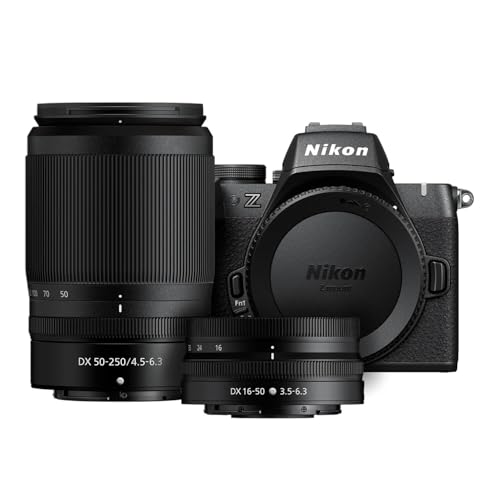
- Nikon Z50 II with Two Lenses: linked pick, mirrorless camera with two zoom lenses — the complete first classroom in one box
- Sony ZV-1F: linked pick, pocket compact with a bright wide lens and phone-simple manners
- OM SYSTEM Olympus Tough TG-7: linked pick, waterproof compact that lets a beginner learn anywhere, including in the sea
- DJI Osmo Pocket 3: linked pick, gimbal camera whose stabilised filming teaches moving pictures from day one
- GoPro Hero: linked pick, compact waterproof GoPro for beginners whose subjects move fast
- AKASO EK7000: linked pick, long-running budget action camera for testing the waters cheaply
One promise before the names: nothing here requires talent. Photography’s opening skills — seeing light, holding still, choosing what to include — are learnable by anyone willing to take a hundred honest photographs and study the ninety that failed. The cameras below differ in how kindly they conduct that education: how clearly their controls explain themselves, how forgiving their automatic modes are while you learn, and how completely their manual modes hand over the keys when you are ready to drive.
Key Takeaways
- Buy the camera that teaches: clear dials, honest automatic modes and manual control that arrives without a fight.
- Your first hundred photographs are tuition, not failures — choose a camera whose lessons you can read in its files.
- A kit zoom plus one camera body is the classic first classroom; add a fast prime lens in your second season.
- Touchscreens and phone-style menus shorten the first month for learners arriving from smartphones.
- Every pick here works fully automatically on day one and fully manually by month six — that arc is the point.
- All six picks are linked from our verified pool, so a first purchase can be checked calmly at the listing.
In this guide
Quick Picks
| Pick | Badge | Why it earns its place |
|---|---|---|
| Nikon Z50 II with Two Lenses | Best first system camera | Real dials, subject-detecting focus that forgives beginners, and two lenses that teach focal length by example. |
| Sony ZV-1F | Gentlest first step | One-inch sensor quality with almost nothing to learn before the first good photograph arrives. |
| OM SYSTEM Olympus Tough TG-7 | Worry-free outdoor teacher | Indestructible enough to remove fear from learning, with macro modes that reward curiosity instantly. |
| DJI Osmo Pocket 3 | Filming-first beginner pick | A mechanical gimbal makes smooth video effortless while its stills introduce real camera craft. |
| GoPro Hero | Simplest action starter | One-button simplicity, waterproof toughness and stills bursts for sporty first photographers. |
| AKASO EK7000 | Lowest-risk first experiment | A complete action-camera starter — mounts, remote and waterproof case — at the gentlest commitment here. |
How did we choose cameras for people who have never held one?
We judged the first hour before judging the first year. A beginner’s camera must produce a pleasing photograph within minutes of its first charge, because early success is the fuel the whole education runs on. Automatic modes were therefore scored as teaching tools in themselves: do they choose sensibly, explain themselves on screen, and — crucially — show the learner which settings the camera picked, so the automation becomes a tutor whose decisions can be studied rather than a chauffeur whose route stays secret?
The second test was the handover. Around month three, a real beginner reaches for control: blur this background, freeze that cyclist, brighten this face against the window. Cameras passed if those reaches land on physical dials and plainly labelled modes, in menus written in human sentences, with the camera remembering the lesson next time. Cameras that bury manual control behind mode-diving, or punish curiosity with incomprehensible errors, were marked down however fine their files.
Finally, we weighed the second year. A first camera should accept the accessories and lenses of a growing hobby — a prime lens, a flash, a tripod plate that fits the world’s tripods — without demanding replacement at the first sign of ambition. The picks below span point-and-shoot simplicity to an interchangeable-lens system, but each was chosen because its ceiling sits well above a beginner’s first-year reach, leaving headroom that motivation, not machinery, gets to fill.

Nikon Z50 II with Two Lenses — Best first system camera
If one camera in this guide deserves the title of first real camera, it is this kit. The Z50 II is a genuine mirrorless system camera — interchangeable lenses, a proper viewfinder, full manual control — scaled and priced for a first purchase, and sold with two zooms that together cover the wide room, the family portrait and the distant stage. It will not be outgrown in a year. It may not be outgrown in five, and that longevity is the highest compliment a beginner’s camera can earn.
Its kindest feature for a novice is the autofocus. Beginners miss photographs in one way above all others: the camera focuses on the wrong thing — the chair behind the child, the fence before the dog. Nikon’s subject detection, inherited from its professional bodies, recognises people and animals and quietly puts the sharpness where a beginner meant it to be. The learner’s early archive fills with successes to study instead of mysteries to forgive, and confidence — the true curriculum of month one — compounds weekly.
The two lenses teach the first great lesson by demonstration. The standard zoom shows how a room compresses as you zoom from a doorway; the longer zoom shows why the school play looked small through a phone and how a face fills a frame from the back row. Focal length stops being a number and becomes a feeling in the feet and the hands. No tutorial teaches it faster than owning both ends of it and swapping at the same scene, which this kit invites on its first afternoon.
Controls respect the student’s stage. Scene modes and Nikon’s colour presets produce shareable photographs immediately — the beginner can send the birthday pictures tonight — while the lettered modes wait on the same dial, in the traditional order, for the month when curiosity arrives. The touchscreen speaks fluent smartphone, the menus use words before abbreviations, and the camera’s help is written for the person holding it rather than for the person who designed it.
The honest cautions are a system’s cautions. The kit zooms dim at their long ends, so evening rooms will teach the beginner about high sensitivity sooner than richer kits would; and a system camera is a commitment to a lens mount, so the second lens, when it comes, will be a Nikon-fit decision. Both are good problems — the problems of a photographer, which is what this camera is quietly in the business of making.
- Class: Mirrorless system camera, two-lens kit
- Teaching gift: Subject detection puts sharpness where you meant it
- Viewfinder: Real electronic finder for sunny-day framing
- Modes: Full automatic to full manual on one honest dial
- Growth: A lens mount with years of headroom
Strengths
- Forgiving focus builds beginner confidence fast
- Two lenses teach focal length by example
- A system that survives the second year
Trade-offs
- Kit zooms struggle in dim evening rooms
- A bigger first step than a pocket compact
- Commits the learner to one lens family
Best for: committed beginners who want one camera for years
Not suited for: dabblers unsure the hobby will survive a month
Spend the first weekend on one exercise: photograph the same chair by the same window at every setting the dial offers, then compare the files at the kitchen table. The Z50 II will have taught you more by Sunday night — about light, sharpness and your own taste — than a term of reading, because it makes every lesson visible in your own pictures.

Sony ZV-1F — Gentlest first step
The ZV-1F is the camera for the beginner whose honest fear is the camera itself. It is a pocket compact with a fixed, bright, wide lens, a touchscreen that behaves like the phone in your other pocket, and a talent for flattering, ready-to-share pictures the moment it leaves the box. Yet beneath the friendliness sits a one-inch sensor — far larger than a phone’s — so the photographs carry a depth and dusk quality that tell a new photographer, immediately and encouragingly, why cameras still exist.
Its teaching style is demonstration rather than instruction. A dedicated control blurs the background behind a face at one press, showing the beginner what aperture does before they ever hear the word; the camera’s product-showcase and portrait touches reveal focus as a choice rather than an accident. Learners absorb the craft’s central ideas — sharpness lives somewhere, light has direction, backgrounds can melt — by playing with results, which is how most people actually learn anything with their hands.
The fixed lens is a curriculum in disguise. With no zoom worth the name, the beginner’s feet become the zoom, and walking toward a subject — the oldest photographic skill there is — gets practised daily without a lecture. Composition improves because it must. Many photography teachers restrict students to one fixed lens for exactly this reason; Sony simply built the restriction into a friendly white box and added a flip screen so the student can appear in their own exercises.
Video and sound, this camera’s design homeland, give the beginner a second art to grow into. The microphone hears a voice kindly, the screen flips for self-recording, and the whole apparatus encourages the diary, the tutorial and the family film. A learner whose photography grows a filming branch will find this little camera was quietly prepared for it all along.
Its ceiling is the honest trade: the lens never changes, the zoom is a polite fiction of cropping, and the manual controls, while present, are a side door rather than the main staircase. A beginner who catches the serious bug will graduate to a system camera within a few years and hand this one down with genuine affection — which, for a first step priced and sized as gently as this, is a perfectly honourable lifecycle.
- Class: Pocket compact, one-inch class sensor
- Teaching gift: Background-blur control demonstrates aperture
- Lens: Fixed and wide; your feet are the zoom
- Screen: Flip touchscreen, phone-familiar manners
- Sound: Kind built-in microphone for diary filming
Strengths
- Good photographs within minutes of unboxing
- Craft ideas taught through playful results
- Small enough to be carried, therefore used
Trade-offs
- Lens never changes; zoom is cropping
- Manual control is present but secondary
- Serious ambition will outgrow it in time
Best for: nervous first-timers and phone photographers stepping up
Not suited for: beginners already certain they want lenses
Give it one rule for the first month: the camera, not the phone, takes the photographs — all of them, even the shopping-list ones. A first camera teaches in proportion to its use, and the ZV-1F’s size makes total use possible. By the month’s end the phone will feel like the backup device, which is the quiet moment the hobby actually begins.

OM SYSTEM Olympus Tough TG-7 — Worry-free outdoor teacher
Fear is a beginner’s silent tax: fear of dropping the camera, wetting it, sanding it at the beach, handing it to a child. The TG-7 abolishes the tax. Waterproof, freezeproof and built to be dropped, it invites its owner to learn photography in the places other cameras are protected from — the rock pool, the ski slope, the rainy festival, the toddler’s bath-time fleet. A camera that cannot easily be broken gets used without flinching, and unflinching use is the fastest teacher there is.
Its macro modes deliver the beginner’s most addictive early wins. Switch to the microscope settings and a garden becomes a continent: a beetle’s armour, a snowflake’s brief architecture, the veins of a leaf lit like stained glass. Close-up photography forgives a beginner everything — no distant travel, no rare subjects, no waiting — and rewards them with photographs friends genuinely cannot take on phones. Many lifelong photographers trace their addiction to exactly this doorway, and the TG-7 holds it wider open than any rival here.
Underwater, it teaches a whole second school. Snorkelling with a camera that belongs there, the beginner learns buoyancy, patience and the etiquette of approaching creatures slowly — lessons in seeing that transfer to every genre above the surface. The camera logs depth and position as it goes, so the evening review becomes a map of the day’s discoveries, and learning to read one’s own photographs starts with unusually rich evidence.
Above water it remains a complete compact: scene modes for the hesitant, aperture control for the growing, raw files for the first editing experiments, and a zoom range suited to family and travel. The small sensor sets its limits in dim rooms, where grain arrives earlier than the Sony’s files would, and its menus carry an enthusiast’s density that rewards a slow first evening with the manual.
For the beginner whose life is outdoors — the swimmer, the gardener, the parent of small explorers — the TG-7 may be the only first camera that never once says be careful. That freedom compounds. Photographs get attempted that a fragile camera would never be risked on, and a beginner’s education is, in the end, nothing but the sum of the photographs they dared to attempt.
- Class: Waterproof, freezeproof compact
- Teaching gift: Microscope macro modes for instant wonder
- Element: Swims and snorkels without a housing
- Files: Raw available for first editing lessons
- Build: Drop-tolerant for children and clumsy weeks
Strengths
- Removes fear, the beginner’s biggest tax
- Macro wins arrive on the first garden walk
- A second school of photography underwater
Trade-offs
- Dim rooms grain earlier than larger sensors
- Menus reward a patient first evening
- Zoom range is modest for distant subjects
Best for: outdoor beginners, swimmers, gardeners and young families
Not suited for: indoor, low-light portrait dreamers
Begin with the macro mode and a single square metre of garden, photographed across one whole week. The TG-7 will teach seeing before it teaches settings — the order every great teacher prefers — and by the week’s end the beginner will be lying in wet grass at dawn voluntarily, which is to say the camera will have done its real work.

DJI Osmo Pocket 3 — Filming-first beginner pick
Some beginners arrive at photography through the moving image: the family vlogger, the travel diarist, the teenager whose phone films wobble like a boat. The Pocket 3 answers them with a trick no other pick here can perform — a mechanical gimbal, a tiny three-axis stabiliser that holds the camera level and smooth while its owner walks, turns and climbs stairs. Footage that would shame a beginner instead looks professionally calm, and early success, once again, fuels the education.
Do not mistake it for a toy, because its sensor is the one-inch class and its lens is bright, giving stills with genuine quality when the gimbal is locked and the photographer stands still to compose. Face and subject tracking keep a moving presenter centred while they learn to talk to a lens — a real skill, taught by immediate feedback — and the rotating touchscreen flips between filming the world and filming oneself with a physical elegance that makes the habit stick.
Its teaching is weighted toward cinema’s grammar: movement, framing in time, the discipline of the slow pan. Beginners learn that a shot begins before it begins, that walking is a camera move, and that sound — served here by good built-in microphones and easy wireless additions — is half the film. These are lessons the stills-first cameras teach later or never, and for the filming-first learner they are the main curriculum rather than an elective.
Stills purists should note the shape of the compromise. The Pocket is a filming instrument that takes fine photographs, not a photographer’s camera that films; its controls, its joys and its community all face the moving image. A beginner whose heart is in the single frame should start with the Nikon or the Sony and let this be the second instrument. A beginner whose heart beats in sequences will find no kinder or more capable first teacher.
Portability seals the case for its audience. The whole apparatus vanishes into a jacket pocket, charges quickly, and is ready before the moment has finished happening — the property that decides what beginners actually record. A first camera’s specifications matter less than its attendance record, and the Pocket 3 attends everything.
- Class: Gimbal-stabilised camera, one-inch class sensor
- Teaching gift: Smooth movement from the first walk
- Tracking: Faces and subjects held while you present
- Screen: Rotating touchscreen for self-filming
- Carry: Jacket-pocket complete system
Strengths
- Professional calm in beginner footage
- Tracking teaches presenting to a lens
- Attends everything because it weighs nothing
Trade-offs
- A filming instrument first, stills second
- Delicate gimbal asks for its case
- Battery is built in, not swappable
Best for: beginners arriving through video and vlogging
Not suited for: stills purists planning a lens collection
Film one short walk daily for the first fortnight — the same route, the same hour — and watch the footage each evening. The Pocket 3 will show the beginner their own progress with unusual clarity: the pans slowing, the framing settling, the narration finding its nerve. Few first cameras make improvement so visible, and visible improvement is the strongest glue a new hobby can have.

GoPro Hero — Simplest action starter
The beginner who skateboards, swims, cycles or skis does not need a camera that sits on a shelf behaving beautifully; they need one that joins the sport. The compact GoPro Hero is the action family’s simplest citizen: small, waterproof, controlled by a button and a touchscreen, and content to be mounted, worn or held while its owner concentrates on not falling off. Its photographs are wide, bright and deep-focused — the whole scene sharp — which flatters a beginner’s unsteady framing enormously.
Its great teaching is viewpoint. Stills cameras teach standing in the right place; this teaches being in the right place — chest-mounted on the bike, board-mounted in the surf, helmet-high on the slope. Beginners learn that photography is mostly geography, a lesson that transfers to every camera they will ever own. The burst mode harvests the jump’s peak without timing skill, letting a novice study a whole sequence and learn what the peak actually looks like, frame by frame.
Simplicity is engineered rather than accidental. Voice commands fire the shutter when hands are gloved or gripping; the waterproof body ends weather anxiety; the lens cover replaces when the inevitable scrape arrives. There are no lenses to choose, no modes to misunderstand, and the phone app delivers the day’s harvest to the group chat before the lift pass expires — the social reward that keeps a young photographer’s habit fed.
The limits define its school. Distant subjects stay distant behind the fixed wide lens; dusk softens its small sensor’s files; and the craft it teaches, while real, is the craft of action rather than of portraiture or landscape. A beginner whose world is the skatepark will call those limits irrelevant. A beginner whose world is the family kitchen should choose a different first teacher and let this be the holiday camera.
As a household’s second camera it earns a final mention: the one handed to teenagers, lent to friends and taken where the good camera may not go. Many photographic educations begin exactly there, with the borrowed action camera on a school trip, and this little Hero is priced and built to be that beginning without a household trembling at the loan.
- Class: Compact waterproof action camera
- Teaching gift: Viewpoint — being inside the scene
- Stills: Bursts that reveal the peak frame by frame
- Control: Voice commands for occupied hands
- Build: Waterproof with replaceable lens cover
Strengths
- Joins the sport instead of watching it
- Deep focus forgives unsteady framing
- Simple enough for the first day of anything
Trade-offs
- Fixed wide lens keeps distance distant
- Dusk files soften quickly
- Teaches action craft, not portrait craft
Best for: sporty beginners and households lending a camera
Not suited for: kitchen-table portrait and landscape learners
Mount it before you are good, and review the bursts like a coach. The Hero’s sequences show a beginner exactly where the peak of a jump lives and how their own body moved through it — sports analysis and photography tuition in the same files. Few first cameras return so much information per photograph, and information, patiently reviewed, is what a beginner is really collecting.

AKASO EK7000 — Lowest-risk first experiment
Every hobby needs its inexpensive experiment: the camera cheap enough that a beginner can discover, without financial drama, whether action photography is truly their country. The EK7000 has played that role for years, a budget action camera sold with the mounts, remote and waterproof housing that turn a box into a first expedition. It will not out-photograph anything else in this guide. It will tell a beginner the truth about their own enthusiasm, which is a different and sometimes more valuable service.
What it teaches is real. Mounting, viewpoint, burst timing, the discipline of charging and card-checking before an outing — the whole ritual of action photography is present, at a scale where mistakes cost nothing. The remote control on a wrist teaches anticipation, because the shutter must be fired a breath before the moment; the waterproof case teaches preparation, because it must be sealed before the wave rather than after. These are professional habits wearing a budget costume.
Photographs from its 20-megapixel class sensor, in good light, are bright and serviceable — the surf day, the bike trail and the holiday pool all come home recognisable and cheerful. Video up to 4K at modest frame rates covers a beginner’s needs. In dim light the files confess their price honestly, and the electronic stabilisation, while willing, is a generation’s politeness rather than the DJI’s sorcery. Buyers should hear the confession and the politeness as the experiment’s terms, not as disappointments.
Its longevity in the market is itself a credential. A camera sold for years accumulates answers: every beginner’s question about it has been asked and answered somewhere findable, every accessory exists cheaply, and every failure mode is documented by owners rather than discovered by you. For a first purchase made without guidance at a kitchen table, that ocean of shared experience is worth more than a marginal specification advantage in an unknown rival.
Choose it as the experiment it is. If the summer ends with the camera dusty, the household has spent little learning that. If it ends with the camera beloved and its limits memorised — the dusk it cannot do, the reach it lacks — the beginner has earned, and can now specify, the upgrade they actually need. That is the EK7000’s finest function: it turns a guess about oneself into knowledge, at the lowest price knowledge is sold anywhere in this guide.
- Class: Budget action camera with accessory bundle
- Teaching gift: The full action ritual at minimal risk
- Kit: Mounts, wrist remote and waterproof housing included
- Stills: 20-megapixel class, bright in good light
- Support: Years of owner documentation to learn from
Strengths
- The cheapest honest experiment in photography
- Bundle teaches mounting and preparation
- Huge owner community answers everything
Trade-offs
- Dim light exposes its price quickly
- Stabilisation is willing, not wonderful
- An experiment, not a destination camera
Best for: uncertain beginners testing action photography
Not suited for: anyone already sure and ready to invest
Set the experiment a deadline and a question: ninety days, and at the end, can you name three photographs this camera made that you love and two it prevented you from making? The loves justify the hobby; the preventions specify the upgrade. A beginner who runs that audit owns their next purchase completely — and owes the little AKASO a debt that finer cameras rarely earn.
What do aperture, shutter speed and ISO actually mean for a total beginner?
Aperture is the size of the hole the light enters through, measured in f-numbers that run backwards in beginners’ heads: a small number like f/2 means a wide hole, lots of light, and a background that melts into blur behind a face. A large number like f/11 means a pinhole, less light, and a landscape sharp from the nearest flower to the far ridge. One control, two gifts — light and depth — and every portrait or landscape you have ever admired is partly a decision about that hole.
Shutter speed is how long the hole stays open. Open it briefly — a two-thousandth of a second — and a cyclist freezes mid-pedal; open it for a whole second and the same cyclist becomes a ghost river flowing past a sharp lamppost. ISO is the camera’s sensitivity, its willingness to amplify what little light arrived: raise it and dusk becomes photographable, at the price of grain creeping into the shadows like static on an old television.
The three trade against each other in a triangle every photographer balances unconsciously within a year. The beginner’s task is not memorising numbers but running experiments the picks above make easy: the same scene at every aperture, the same fountain at every shutter speed, the same dusk street at every ISO. An afternoon of such experiments, reviewed honestly, installs the triangle in the hands — which is why this guide keeps prescribing exercises instead of explanations.
How should a beginner practise during the first month?
Photograph daily, briefly, and near home. The grand expedition teaches little because everything is new at once; the same street at the same hour teaches enormously, because the light changes and the student notices. Carry the camera on the dog walk, the school run and the shopping trip, and set one small assignment per week: only doorways, only hands, only things that are red. Constraints sound like limits and behave like teachers, forcing the eye to hunt rather than graze.
Review weekly with a pencil, not a delete key. Spread the week’s files — on a screen is fine — and mark the three that please you and the three that failed most instructively. For each failure, name the cause in one sentence: too slow, too far, wrong thing sharp, light behind instead of in front. A beginner who can name causes owns a curriculum; a beginner who only deletes owns a smaller card and the same mistakes, scheduled for next month.
Share a little and borrow eyes. One trusted friend, a local club’s beginner evening, or a family member with patience will see your habits before you do — the horizon that always tilts, the heads always centred, the feet always cropped. Accept the seeing gratefully and fix one habit at a time. Photography is learned in public faster than in private, and the first month sets the pattern for every month after it.
Why do your first photographs look worse than your phone’s?
Because the phone has been quietly doing a professional’s post-production on every frame: brightening shadows, sharpening edges, saturating skies and even merging several exposures into one forgiving composite. A real camera, by contrast, shows you what it actually captured — which at first is less flattering and far more honest. The beginner who understands this stops feeling betrayed by their new camera and starts feeling informed by it, which is the exact moment the education begins.
The camera’s honesty is the curriculum. Its files reveal that the light was behind the subject, that the shutter dragged, that the interesting thing was at the frame’s edge all along. Phones conceal those lessons beneath computational varnish, producing pleasant photographs and stationary photographers. Within a few months the honest camera’s keeper rate climbs past the phone’s, because the photographer has been climbing too — and their best frames acquire the depth and deliberateness no amount of varnish can counterfeit.
Meet the camera halfway with its own kindnesses while you learn. The scene modes, colour presets and in-camera processing in the picks above exist precisely to narrow the early gap: use them without shame, study what they chose, and graduate setting by setting. Nobody’s diploma requires suffering, and a beginner enjoying their photographs in month one is a photographer still shooting in year ten.
What should a beginner buy after the camera itself?
Time, mostly, which is free: the standing walk, the weekly assignment, the evening review. Of the purchasable things, a second battery and a fast memory card come first, because a dead camera teaches nothing and a slow card punishes the burst experiments beginners should be running. A small tripod follows for the dusk and self-portrait lessons, then — for system-camera owners — one fast prime lens in the second season, chosen for the subject the first year’s archive kept chasing.
Books and evenings outrank accessories thereafter. One good beginner’s book, read with the camera in hand; one club evening a month; one printed photograph a month, because print exposes what screens forgive. The accessory industry will suggest otherwise at every checkout, in the cheerful voice of a market that profits from beginners believing the next object contains the missing skill. It does not. The missing skill is in the next hundred photographs, and they are already paid for.
Protect the small investment plainly: a strap actually used, a padded pocket in the everyday bag, a lens cloth that lives beside the camera rather than in a drawer. Beginners break cameras through absence of habit rather than violence — the camera left on the car roof, the lens kissed by a swinging door — and habits, once again, are the real equipment being acquired in year one.
How do you photograph people kindly when you are learning?
Ask, and accept the answer. Family will mostly indulge you; strangers deserve the question and the grace of a no received cheerfully. People relax for a photographer who talks while they work — narrating, joking, showing the back of the camera — and tense for the silent sniper at the room’s edge. The beginner’s portraits improve fastest not through lenses but through manners: be the photographer people forget to perform for, and the faces will do the rest.
Light people from the front or the side, never from directly behind unless a silhouette is the intention, and place them where the background flatters rather than prosecutes — away from the cluttered shelf, the bright window, the lamppost growing from a head. These are thirty-second decisions available to any beginner with any pick in this guide, and they separate the family album’s treasures from its apologies more reliably than any specification.
Share the good ones generously and delete the cruel ones quietly. A new photographer’s reputation in a family is built in the first summer: the cousin who only ever publishes flattering frames becomes the holiday’s official historian, welcomed everywhere with the camera; the one who posts every unflattering accident becomes a reason to hide. Kindness is a photographic technique. Practise it with the same deliberateness as the exposure triangle.
When will you know you have outgrown your first camera?
Later than you fear, and the archive will tell you. Outgrowing sounds like a specification — more resolution, faster bursts — and is usually a sentence instead: I photograph X now, and the camera cannot do X. When that sentence can be finished with evidence — the birds too distant for this lens, the hall too dark for this sensor, the prints too large for these files — the second camera has a job description, and buying it becomes a tool purchase rather than a hope purchase.
Until that sentence forms, the limits you feel are mostly your own, and that is wonderful news disguised as frustration, because your limits are free to fix. The beginner who masters their first camera’s every mode, shoots its strengths into the ground and can name its weaknesses from evidence owns something no shop sells: judgement. Judgement makes the second camera choice easy, the third unnecessary for years, and the photography — the actual point — better every single month.
Keep the first camera when you graduate. It becomes the loaner, the beach camera, the one handed to your own beginner someday with the words that started everything: take a hundred photographs, and study the ninety that fail. Cameras that teach deserve successors, not replacements, and the lineage of a family’s photographers is written in such handings-down.
How do you build a simple editing habit without drowning in software?
Start with the editor already in your pocket or your computer, because the first editing skill is judgement, not software. Learn three moves only: straighten the horizon, crop the accident at the frame’s edge, and lift a shadow that swallowed a face. Those three rescue most beginner photographs honestly, and a month of them teaches what editing is for — revealing the photograph you meant — better than a suite of filters teaching what editing can fake.
Resist the preset shelf for the first season. A filter applied to every frame gives a beginner a style the way a costume gives an actor a character: convincingly, and only while it is worn. Shoot plainly, edit sparingly, and let your taste develop from your own decisions, because the photographers whose work lasts are recognisable by their seeing rather than their processing. The cameras in this guide produce honest files precisely so that honesty has material to work with.
Name and file the keepers the same week they are taken, in folders a tired future self can navigate: year, month, occasion. The beginner who builds that small archive habit early owns, within two years, a family treasure that can actually be found; the one who trusts a camera card and a cloud’s mercy owns a rumour. Editing, in the end, is mostly this: choosing, naming and keeping, performed while the memories still know their own names.
What does a beginner owe the people and places they photograph?
Permission, proportion and a little gratitude. Permission for the portrait that lingers, proportion in what is shared beyond the moment’s own circle, and gratitude expressed in the oldest currency: a copy of the good photograph, delivered. Beginners are sometimes shy about the etiquette because they feel their amateur status disqualifies them from courtesies; in truth the courtesies are the amateur’s advantage, unhurried by any deadline, and they open doors that equipment cannot.
Places ask their own version of the same respect. Tripods where tripods are forbidden help nobody’s next visit; the flash in the small chapel, the drone of a shutter through the minute’s silence — a beginner learns quickly that access is a commons, spent by the careless and replenished by the considerate. The cameras here are quiet, small and unobtrusive by design, which makes consideration easy to practise from the very first outing.
And the beginner owes their subjects one thing more: honesty about the learning curve. Tell the family the first portrait sitting is practice, show them the failures with the successes, and let them watch the improvement they are helping to make. People who feel like collaborators forgive a beginner anything; people who feel like targets forgive very little, and the difference decides how many second sittings a new photographer is ever offered.
How do the six first cameras compare for a new learner?
The comparison sorts the six by the kind of beginner they serve: the committed system learner, the nervous phone graduate, the outdoor explorer, the filming-first diarist, the sporty experimenter and the cautious tester. There is no wrong row here — only mismatched ones — so choose by the life the camera must join, not by the longest specification list.
| Pick | Badge | Choose it when | Think twice when |
|---|---|---|---|
| Nikon Z50 II with Two Lenses | Best first system camera | committed beginners who want one camera for years | dabblers unsure the hobby will survive a month |
| Sony ZV-1F | Gentlest first step | nervous first-timers and phone photographers stepping up | beginners already certain they want lenses |
| OM SYSTEM Olympus Tough TG-7 | Worry-free outdoor teacher | outdoor beginners, swimmers, gardeners and young families | indoor, low-light portrait dreamers |
| DJI Osmo Pocket 3 | Filming-first beginner pick | beginners arriving through video and vlogging | stills purists planning a lens collection |
| GoPro Hero | Simplest action starter | sporty beginners and households lending a camera | kitchen-table portrait and landscape learners |
| AKASO EK7000 | Lowest-risk first experiment | uncertain beginners testing action photography | anyone already sure and ready to invest |
Which first-camera mistakes do beginners make most?
Buying complexity to grow into leads the list: the professional body whose menus frighten its owner back to the phone within a month. A first camera should be at most one step ahead of its photographer. Second comes the opposite error — the toy so limited that the first month’s enthusiasm hits its ceiling — which is why every pick here, however gentle, carries real manual control and real files beneath its kindness.
Third is judging the camera by its first weekend. Every beginner’s early files disappoint beside the phone’s varnish, and cameras get returned in week two that would have been beloved by month three. Fourth is accessories before photographs: bags, filters and gadgets bought for a hobby whose shape is still unknown. Fifth, and saddest, is never printing or sharing anything — the archive that stays on a card teaches nobody, delights nobody, and quietly ends more hobbies than any bad purchase ever made.
Sixth is the comparison spiral: measuring your third-month files against a professional’s tenth-year portfolio and concluding the camera chose wrong. It did not; the calendar did, and calendars cannot be purchased. Compare only against your own first month, where the improvement will be waiting, measurable and entirely yours — the one comparison in photography that has ever made a beginner happier and better at once.
Final Recommendation
Start where your life is. The committed beginner buys the Nikon kit and grows for years; the nervous graduate takes the Sony’s gentle hand; the outdoor learner lets the TG-7 remove fear from the curriculum; the filming-first diarist spins the Pocket 3’s screen and begins; the sporty experimenter mounts the little GoPro; and the cautious tester lets the AKASO ask its inexpensive question. Every route is honourable, and every one of these cameras will produce, within a month, a photograph that makes its owner understand why people do this.
Then do the only thing that has ever made a photographer: take the hundred photographs, study the ninety, and take a hundred more. The best digital cameras for beginners photography are not finally the ones with the finest sensors in this guide. They are the ones still in your hands at photograph five hundred, a little worn, entirely familiar, and quietly incapable of keeping up with how much you have learned — at which point you will not need a guide to tell you what to buy next. You will know, and knowing is the graduation this whole guide exists to arrange.
Frequently Asked Questions
Do I need a camera at all, or is a phone enough?
A phone is enough for photographs of record — the receipt, the parking space, the quick snap. A camera becomes worth it when you want the photograph itself to be the point: depth a phone fakes, dusk it cannot gather, and control it will not surrender. If arranging a second walk just to photograph the street sounds like pleasure rather than madness, you are ready, and this guide is your shortlist.
What does “mirrorless” mean, and should a beginner care?
It means the camera has no internal mirror bouncing light to the viewfinder; you compose through an electronic screen that shows the exposure as it will record. Beginners benefit directly: what you see is what you get, focus aids glow where sharpness lives, and the bodies shrink. The Nikon kit here is mirrorless, and its viewfinder is one of the kindest classrooms a first photographer can look through.
How much should a first camera cost?
Enough to carry real controls, a real sensor and a future — and not a penny into specifications you cannot yet name a use for. The picks here span from the AKASO’s experiment money to the Nikon kit’s system investment, and the right figure is the one matched to your certainty: test cheaply if unsure, invest once if committed. Both strategies are respectable; the expensive mistake is investing flagship money on a guess.
Should my first camera shoot video too?
Almost every modern camera films respectably, and beginners often discover their eye through filming family life. If moving pictures are the main dream, the Pocket 3 and the Sony here are built around that dream; if stills lead, any pick serves, with video as a bonus. Decide by which you practise on a rainy Sunday when nobody is watching — that honest preference should drive the purchase.
What is the first setting I should learn to control?
Exposure compensation — the brightness dial, usually marked with a plus and minus. It teaches the beginner that the camera can be argued with: brighten the face against the window, darken the sunset into drama. After that, aperture for backgrounds, then shutter speed for motion. The order matters less than the method: one control at a time, a week of photographs each, reviewed honestly.
Can a beginner buy a used camera instead?
Yes, from a reputable dealer with a returns window, and previous-generation versions of the system cameras here are classic first purchases. Check the shutter count, the sensor for marks, and every dial with your own hands. Avoid unknown action cameras and anything whose battery is swollen or unavailable, and keep enough budget back for the card and spare battery the used bargain never includes.
Related Guides
A first camera raises second questions quickly, and the site answers the natural sequels in the best digital cameras for amature photographer the best compact cameras for travel the best cameras for family photography.


