reviewstook.com is reader-supported. When you buy through links on our site, we may earn an affiliate commission.
Where to buy
Low light is where camera marketing goes to be forgiven and camera physics goes to collect its debts. Every sensor gathers less light after sunset; the only questions are how gracefully the files degrade, how honestly the autofocus keeps hunting, and whether the lens you can afford passes enough light for the sensor to work with. Shoppers hunting the best crop sensor cameras for low light are usually chasing a sensible compromise — APS-C and smaller formats cost less, weigh less and travel easier than full-frame, yet their owners still want birthdays, gigs, night markets and dim church halls to come home usable.
Crop changes the low-light bargain in ways brochures understate. A smaller sensor collects less total light at the same settings, so high-ISO noise arrives earlier; the depth of field at a given aperture runs deeper, which helps group shots and hurts subject isolation; and the fast prime lenses that rescue crop systems are often cheaper than their full-frame equivalents, which quietly returns some of the lost ground. The photographers who thrive on crop after dark are the ones who budget for glass and technique alongside the body, not the ones who expect the body to perform miracles alone.
Honesty about this guide’s shelves matters before the picks. Our verified pool holds exactly one true APS-C mirrorless family — Nikon’s Z50 II, sold as a body and as a two-lens kit — so those two listings anchor the list as the genuine crop-sensor answers. Around them sit clearly labelled neighbours: a one-inch compact and a one-inch gimbal camera for people whose low-light problem is really a carrying problem, and two full-frame step-ups for readers whose budget quietly stretches further than the search term admits. Nothing below pretends to be a crop camera when it is not.
Technique threads through every section because it multiplies whatever hardware you choose. A steady brace, a shutter speed matched to the subject rather than to fear, exposure set for the face rather than the room — these free skills routinely outrun a sensor size. Buy the camera that fits your hand and your bag, then learn to feed it light. That order of operations separates photographers from collectors in every format.
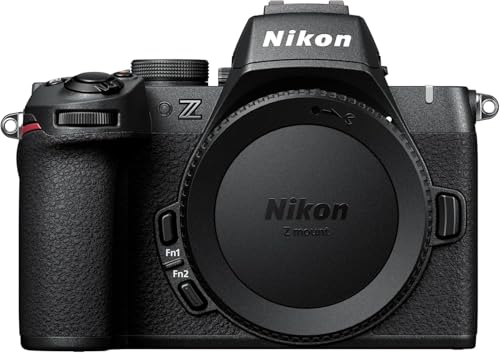
- Nikon Z50 II (body): check price on Amazon
- Nikon Z50 II with Two Lenses: check price on Amazon
- Sony ZV-1F (White): check price on Amazon
- DJI Osmo Pocket 3: check price on Amazon
- Canon EOS R6 Mark II: check price on Amazon
- Panasonic LUMIX S5II: check price on Amazon
Key Takeaways
- APS-C gathers less light than full-frame at identical settings, so plan on fast prime lenses — they return more low-light ability per pound spent than any body upgrade.
- Autofocus behaviour after dark separates modern bodies from older ones more sharply than sensor noise does; a camera that finds faces in dim rooms saves shots a cleaner sensor would have missed entirely.
- Stabilisation helps still subjects, not moving ones. A swaying singer needs shutter speed; a cathedral interior needs steady hands or a support.
- The Z50 II is the only true APS-C system in our verified pool, which is why it appears twice — once bare, once kitted — rather than the guide inventing rivals it cannot link honestly.
- One-inch cameras are not crop cameras, yet for video-led night work their fast fixed lenses make them legitimate smaller-format answers, labelled as such below.
- Judge low-light files at the size you actually share them. Noise that horrifies at full magnification often vanishes in prints and posts, while missed focus never improves at any size.
In this guide
Quick Picks
| Pick | Badge | Why it earns its place |
|---|---|---|
| Nikon Z50 II (body) | True APS-C anchor | The genuine crop-sensor pick: modern processing, subject-detection focus and Nikon’s Z lens road ahead of it. |
| Nikon Z50 II with Two Lenses | APS-C kit start | The same body with everyday glass included, for buyers starting from an empty bag. |
| Sony ZV-1F (White) | One-inch pocket answer | A fixed fast wide lens on a one-inch sensor, built for creators filming themselves after dark. |
| DJI Osmo Pocket 3 | One-inch gimbal answer | Mechanical stabilisation lets video shutter speeds drop where handheld cameras would smear. |
| Canon EOS R6 Mark II | Full-frame step-up | Not a crop camera — the honest upgrade for readers whose low-light ambitions outgrow the format. |
| Panasonic LUMIX S5II | Full-frame video step-up | Phase-detect focus and a video-first design, again clearly outside the crop brief. |
How were these cameras judged for work after dark?
Judging low-light cameras rewards scepticism about single numbers. ISO ranges printed on boxes describe what a camera permits, not what it produces, so we weighed the things owners actually report after dark: how files hold together when shadows are lifted, whether colour stays believable under mixed tungsten and LED, how the autofocus behaves when contrast collapses, and whether the controls can be found by touch when the room is too dark to admire them.
Lens ecosystems counted as heavily as sensors. A crop body is a promise about future glass, and the promise matters most at night, when the difference between a slow kit zoom and a fast prime is the difference between straining at the camera’s ceiling and cruising in its comfort zone. We favoured systems where that fast, affordable prime clearly exists and where the upgrade path does not demand abandoning the mount within a few years.
We also separated stills-led from video-led darkness, because they punish different weaknesses. Stills forgive a hunting autofocus if the final frame lands and reward high-ISO cleanliness above all; video exposes focus breathing, stabilisation wobble and overheating in real time. Picks below declare their allegiance openly rather than claiming both crowns, and the two full-frame guests are flagged at every mention, so nobody buys one by misreading.

Nikon Z50 II — True APS-C anchor
Start with the camera that actually answers the search. The Z50 II is Nikon’s current APS-C mirrorless body, and its low-light case rests less on its sensor — a well-understood size with known limits — than on everything wrapped around that sensor: a modern processor shared with far pricier Nikons, subject-detection autofocus that recognises people and animals, and the processing confidence to lift shadows without the picture dissolving into watercolour. In dim rooms it behaves like a recent camera, which is precisely what older crop bodies fail to do.
Focus deserves its paragraph, because darkness humiliates autofocus before it embarrasses sensors. The Z50 II’s detection keeps an eye or a face locked in reception-hall light where contrast-detection-era bodies would have wandered off to inspect the fairy lights. For the subjects crop buyers actually shoot after dark — children at parties, friends at tables, performers on small stages — a found subject at moderate ISO beats a cleaner file of the wrong face every time, and this body finds subjects.
The lens conversation completes the purchase. Bought as a body, the Z50 II begs for one fast prime to unlock its night work, and Nikon’s Z mount offers that path without exotic spending; owners who add fast glass describe the camera as transformed after dark, while owners who keep only a slow zoom describe it as ordinary. Both are describing the lens. Budget the body and the prime as one decision and the crop compromise mostly evaporates.
Held against the full-frame guests further down this list, the Nikon keeps two structural advantages: the bag stays lighter, and the money saved buys the glass, the spare battery and the trip that gives the camera something worth photographing. Low light rewards the photographer who shows up, and a kit light enough to carry everywhere shows up far more often.
- Sensor class: APS-C (crop) mirrorless — the genuine article for this guide
- Listing form: Body only; pair with fast Z-mount glass for night work
- Focus character: Subject-detection autofocus aimed at people and animals
- Carry note: Compact body that suits an everyday shoulder bag
Strengths
- Modern processing keeps shadow detail and colour believable as sensitivity climbs
- Subject detection finds faces in the dim rooms where birthdays actually happen
- Z-mount fast primes give the system a real growth path for night work
Trade-offs
- Body-only purchase means the low-light prime is a second cheque
- APS-C physics still concedes the top end to full-frame rivals
- Kit zooms, if added later, undo much of the after-dark advantage
Best for: stills-led shooters who want a real crop system that grows with their glass
Not suited for: buyers expecting kit-zoom convenience to solve darkness by itself

Nikon Z50 II with Two Lenses — APS-C kit start
Some buyers arrive with an empty bag and a reasonable wish: one box, everything needed, photographs by the weekend. The two-lens Z50 II kit answers that wish with the same body praised above plus everyday zooms covering the walk-around range and a modest telephoto reach. As a starting system it is coherent in a way pieced-together purchases rarely are — matched, warrantied, balanced on the body, and ready for the family events that fill most albums.
Night honesty must follow immediately, because kit zooms are slow zooms, and no processor repeals that arithmetic. Indoors after dark, this kit works at the edge: sensitivity climbs, shutter speeds sag, and moving children test its patience. The kit is a daylight-and-good-light foundation with low-light competence in still scenes — interiors, posed groups, city streets from a braced position — rather than a licence for candlelit action. Buyers told otherwise by any guide are being set up for a disappointed January.
Where the kit shines strategically is sequencing. It lets a beginner learn the body’s menus, metering and focus with glass that covers everything adequately, discover which focal lengths their life actually uses, and then spend the serious money on one fast prime in exactly that length. That informed prime, bought six months in, transforms the same body after dark — and the kit zooms remain as the travel and daylight set. Few purchases in photography plan their own upgrade this gracefully.
Choose this listing over the bare body when the alternative is a body sitting lensless while funds recover, or when the household shares one camera across many hands and occasions. Choose the body-only route instead when a fast prime is already budgeted and waiting, because duplicating slow glass helps nobody. The camera is identical; the wisdom is in matching the box to the buyer’s next six months.
- Sensor class: APS-C (crop) mirrorless
- Listing form: Body with two kit zoom lenses included
- Focus character: Same subject-detection system as the body-only listing
- Carry note: One-box starter kit; add a fast prime as the planned second step
Strengths
- Complete, matched system from a single purchase
- Lets beginners learn their real focal lengths before buying fast glass
- Same modern body and focus as the anchor pick
Trade-offs
- Slow kit zooms limit genuine low-light action work
- Enthusiasts will duplicate focal lengths when the prime arrives
- Telephoto kit lens is a fair-weather tool after sunset
Best for: first-system buyers who need to shoot this month, not after a savings plan
Not suited for: night-first shooters who should put the whole budget into body plus prime

Sony ZV-1F — One-inch pocket answer
A label first, because this guide keeps its promises: the ZV-1F is not an APS-C camera. Its one-inch sensor sits a size below crop, and its fixed wide lens cannot be changed. It earns its place by serving the reader whose low-light problem is actually about presence — the camera must already be in the jacket when the evening turns interesting, it must film its owner talking in a bar’s corner, and it must do both without a bag, a rig or a second thought.
Within those terms the little Sony is well aimed. Its lens is fast for its class and wide enough for arm’s-length filming, the sensor is large by compact standards, and Sony built the whole interface around a solo creator: product-showcase focus, face-priority exposure that protects skin tones when backgrounds strobe, and controls reduced to what cold fingers can manage. Night street vlogging and dim-room talking pieces are its home ground, and owners’ footage from both looks startlingly assured for a camera this small.
Stills photographers should read the limits plainly. The fixed wide lens frames groups and scenes, not portraits from across a hall; zooming is digital and spends resolution; and the one-inch sensor’s high-ISO ceiling sits below the Nikon’s. This is a video-led pocket tool that takes charming stills, not a shrunken system camera. Judged as the former it delights; judged as the latter it will be returned, and the fault will be the judging, not the camera.
White or black is the only real choice at purchase, and it is cosmetic in the honourable sense — pick the finish your hand prefers to be seen holding. What matters more is the habit the camera asks for: charge it, pocket it, and let it be present for the evenings the bigger kit stayed home. In low-light photography, presence is a specification too.
- Sensor class: One-inch compact — smaller than APS-C, labelled honestly
- Lens: Fixed, fast, wide; built for arm’s-length filming
- Focus character: Face-priority exposure and product-showcase modes for creators
- Carry note: Jacket-pocket camera; the kit that is always with you
Strengths
- Fast wide lens and face-priority exposure suit dim, solo filming
- Genuinely pocketable, so it attends evenings bigger kits miss
- Simple controls that cold or gloved hands can still run
Trade-offs
- Fixed lens rules out reach and portrait compression
- One-inch ceiling shows in ambitious stills at high sensitivity
- Digital zoom spends resolution exactly when light is scarce
Best for: creators filming themselves and their evenings in available light
Not suited for: stills photographers needing interchangeable lenses and reach

DJI Osmo Pocket 3 — One-inch gimbal answer
The Pocket 3 attacks darkness from an angle no ordinary camera can copy: it stabilises mechanically. Its one-inch sensor rides in a three-axis gimbal, so video can be shot at slower shutter speeds without the micro-shakes that turn handheld night footage into soup, and walking shots through night markets or along harbour fronts hold a steadiness that looks budgeted rather than pocketed. Again the label discipline: one-inch, not APS-C — included because for moving images after dark, stabilisation is a low-light feature.
That gimbal changes exposure strategy. A conventional camera fights motion blur with shutter speed and pays in sensitivity; the Pocket can let the shutter linger for the scene while the gimbal erases the operator, reserving its sensitivity for the subject. Faces in its footage keep a calm, well-exposed look in street light, and its subject tracking follows a speaker through a dim room with a patience that borders on the comic. For travel-after-dark video, nothing else in this guide does this trick at any price.
Stills are the honest sacrifice. The Pocket takes them, and the sensor is willing, but the whole design — the rotating screen, the gimbal head, the video-first menus — keeps steering its owner back to motion. Photographers who think in single frames will find it a brilliant second camera and a frustrating only camera. Its battery is built in, too, so long nights are planned around charging breaks or a power bank rather than a pocketful of spares.
Buy it as the night-video specialist in a two-device life: phone for messages, Pocket for the evenings worth keeping. Festival-goers, travel vloggers and parents filming school concerts from the back row all extract more from this small machine after dark than from cameras costing several times more and stabilising several times worse.
- Sensor class: One-inch sensor on a three-axis gimbal — not APS-C
- Lens: Fixed wide lens tuned for video
- Stabilisation: Mechanical gimbal; the low-light video advantage
- Carry note: Pocket-sized; built-in battery shapes long-night planning
Strengths
- Gimbal steadiness permits slower, cleaner night video
- Subject tracking holds speakers in dim rooms reliably
- One-inch sensor is large for a device this small
Trade-offs
- Stills play second fiddle to video throughout the design
- Built-in battery demands a charging plan for long events
- Fixed lens and small body offer little grip for stills discipline
Best for: video-first shooters filming streets, stages and travels after dark
Not suited for: stills photographers shopping for a system camera substitute

Canon EOS R6 Mark II — Full-frame step-up
This is the guide’s first declared guest: a full-frame camera in a crop-sensor roundup, present because some readers typing the search are really asking how much low-light ability their money can buy, and the honest answer may sit one format up. The R6 Mark II gathers roughly twice the light per frame of an APS-C body at the same settings, and it pairs that sensor with autofocus famous for finding subjects in near-darkness and in-body stabilisation that steadies handheld night work. In a blackout-dim hall, it simply sees more.
Canon’s colour and ergonomics explain its professional following at weddings and events — the exact disciplines where low light is the job. Files hold together when pushed, skin tones stay human under mixed venue lighting, and the controls fall under the fingers of someone shooting by feel while watching the room. Paired with one fast Canon prime, it is the kind of camera that retires the low-light question for a decade.
The costs are the format’s usual toll and should be weighed without romance: a heavier bag, pricier lenses, and a purchase that consumes the budget the Nikon route would have spread across body, glass and trips. For a hobbyist whose darkness is the occasional restaurant, that toll buys capability used twice a year. For anyone shooting events weekly, or dreaming of being paid to, the step-up is not extravagance but arithmetic.
We include it, labelled, rather than pretending the crop brief has no ceiling. Readers who choose it should do so with eyes open and this guide’s blessing; readers who stay with the Z50 II lose less than the spec sheets suggest, because light gathered is only half the craft — the other half is being there, lens fast, technique ready.
- Sensor class: Full-frame — a step-up guest, NOT a crop camera
- Listing form: Body only
- Focus character: Low-light subject detection is a headline strength
- Carry note: Heavier system; lenses set the real travel weight
Strengths
- Full-frame light gathering sets the ceiling in this roundup
- Autofocus that keeps working when rooms go properly dark
- In-body stabilisation steadies handheld night stills
Trade-offs
- Price and lens costs leave the crop budget far behind
- Weight discourages the everyday carry that creates photographs
- Capability exceeds what occasional night shooters will ever use
Best for: event, wedding and stage shooters for whom darkness is the workplace
Not suited for: budget-led buyers who need money left for lenses and travel

Panasonic LUMIX S5II — Full-frame video step-up
The second full-frame guest arrives from the video direction. Panasonic’s S5II brought phase-detect autofocus to a line long admired for image quality and long teased for focus hesitation, and the result is a full-frame camera whose low-light video credentials are formidable: clean high-sensitivity footage, serious stabilisation, and recording stamina aimed at people who film whole events rather than clips. If your darkness moves and speaks, this is the step-up to study.
Panasonic’s video heritage shows in the details hybrid shooters treasure — exposure tools that treat footage as footage, colour options that grade gracefully, and a body that keeps recording when lesser hybrids tap out. Weddings, concerts and theatre pieces filmed on S5-series bodies circulate widely for a reason: the files look expensive. Low light flatters the system further, because full-frame sensitivity plus stabilisation lets the operator keep lenses stopped down a touch for deeper focus in unpredictable rooms.
Stills photographers are served honestly too — the sensor is a fine stills sensor — but the camera’s centre of gravity sits in motion, and its lens ecosystem, shared across the L-mount alliance, rewards those building a video kit over time. Pure stills shooters comparing it with the Canon should weigh which medium fills their evenings; the answer usually picks the camera by itself.
Like the Canon, it is labelled a guest because pretending otherwise would corrupt the guide. Its role is to mark the far shore: this is what the next format buys the video-led shooter, at the next format’s prices and weights. Plenty of readers will close this tab and order the Nikon with a fast prime, better informed for having seen the alternative priced and described plainly.
- Sensor class: Full-frame — a step-up guest, NOT a crop camera
- Listing form: Body only, L-mount alliance lenses
- Focus character: Phase-detect autofocus, a first for its line
- Carry note: Video-led hybrid; rigging grows with ambition
Strengths
- Low-light video quality and stamina lead this list
- Phase-detect focus cured the line’s historic weakness
- L-mount gives a broad, shared lens catalogue
Trade-offs
- Full-frame system costs apply to every future lens
- Video-first design is wasted on stills-only shooters
- Larger body ends the pocket-and-go spontaneity
Best for: hybrid shooters filming events, stages and weddings after dark
Not suited for: stills-only buyers or anyone guarding a crop-sized budget
Why does a fast prime lens matter more than a new body?
Do the arithmetic the way light does. A typical kit zoom at its long end might pass light at f/5.6, while an affordable fast prime opens to f/1.8 — roughly three stops more light, which is the same as cutting the required sensitivity to one eighth, or trading an unusable shutter speed for a comfortable one. No sensor generation in living memory has delivered three stops in a single upgrade. The prime is not an accessory to a low-light kit; on crop especially, it is the low-light kit, and the body is its mounting bracket.
Primes also change behaviour in ways that compound their optical gift. A fixed focal length teaches its owner to move — closer for intimacy, back for context — and movement in dim rooms usually means moving towards better light as often as towards better angles. The constraint that beginners fear becomes the discipline that makes their night photographs look intentional within a month.
How should you set the best crop sensor cameras for low light when the light collapses?
Begin with the subject, not the dials. A still subject in a dark interior invites a low shutter speed and modest sensitivity, leaning on stabilisation and a braced stance; a moving subject demands the shutter speed their motion requires, and the sensitivity must follow wherever it leads, because a sharp noisy frame is a photograph and a clean blurred one is a rumour. Photographers who internalise that hierarchy stop fearing high ISO, which is the moment their crop cameras start performing.
Exposure choices refine the bargain. Meter for the face or the lit subject and let backgrounds fall where they may — darkness in a night photograph is not a defect to be corrected but the subject’s natural frame. Shoot raw when you intend to lift shadows later, protect highlights on skin and stage lights from clipping, and review at the magnification you will actually publish at. Most ‘unusable’ crop night files are unusable only at a zoom level nobody else will ever see.
What does stabilisation actually buy after dark?
In-body and in-lens stabilisation steady the camera, not the world. For architecture, interiors, posed portraits and street scenes with cooperative subjects, that steadiness is worth several stops of shutter speed — the difference between a tripod errand and a handheld frame. The gimbal in the Pocket 3 extends the same gift to walking video. Every one of those stops is real, bankable low-light ability that costs no noise at all.
The boundary is subject motion, and respecting it separates sharp archives from hopeful ones. A dancer, a toddler, a guitarist mid-strum all move at their own speeds regardless of your stabilisation, and only shutter speed freezes them. The mature night kit uses both tools knowingly: stabilisation for the room, shutter speed for the life inside it, sensitivity as the honest broker between the two.
How do you judge a low-light file fairly?
Open the file at the size its audience will meet it. A portrait destined for a family album or a phone screen can carry grain that would disgrace a gallery print, and much of the internet’s high-ISO despair comes from inspecting photographs at magnifications no viewer will ever use. Noise also reads differently in print, where it softens into texture, than on a backlit screen at full brightness in a dark room — the harshest possible courtroom.
Judge focus and moment first, because they cannot be rescued, then colour, then noise. Modern processing — including the raw converters’ current noise tools — can renegotiate grain long after the shutter closed, but a missed expression is gone at any sensitivity. Crop files from the bodies in this guide, shot with fast glass and honest expectations, satisfy every audience except the one examining them professionally for flaws.
Which fast prime should a crop owner buy first?
Answer with your feet before you answer with your wallet: look at the photographs you already take after dark and notice where you stand. If most frames happen across a living room or around a table, a moderate wide prime — the length that sees a room without swallowing it — will serve nearly every evening. If your nights are stages, sidelines and faces across halls, a short telephoto prime earns its keep despite costing more, because cropping a wide frame at high sensitivity is the most expensive zoom in photography.
Buy one, not a set. A single fast prime, used exclusively for a month of evenings, teaches its owner its field of view so thoroughly that composition starts happening before the camera rises. Two primes bought together split that apprenticeship and usually leave one of them as drawer furniture by spring. The second prime should be chosen by the gaps the first one exposed — the nights you backed into a wall, the faces that stayed stubbornly small — not by a forum’s idea of a complete kit.
Consider the humble used market without embarrassment. Fast primes are simple, durable objects with few moving parts, and yesterday’s generation focuses nearly as well as today’s on a modern body. The money saved can fund the second battery, the faster memory cards night shooting devours, or simply the train fare to somewhere worth photographing after dark. Glass ages gracefully in a way bodies never do.
How does the genre you shoot rewrite the recommendation?
Weddings and parties are autofocus auditions. The light is mixed, the subjects move unpredictably, and the moments refuse retakes, so detection and eye focus matter more than the last degree of file cleanliness. This is the Z50 II’s strongest parish, and the reason the full-frame guests tempt professionals: a found, slightly grainy kiss beats a pristine blur of one. Shoot wider than the final crop in your head, because dancing subjects exit tight frames without asking permission.
Street photography after dark rewards discretion and speed of handling. Smaller crop kits draw less attention, fast wides suit the distances involved, and zone focusing with a stopped-down prime remains a venerable technique when autofocus hunts in neon and shadow. The one-inch guests join the conversation here — a pocket camera that is present for the scene beats the system camera in the hotel safe, and street history is largely a history of small cameras being present.
Stages and school halls split the difference: distance demands reach, darkness demands aperture, and the budget usually demands choosing. A short telephoto prime on the Nikon is the crop system’s honest answer, accepting sensitivity as the price of the seat you could afford. Astro and landscape nights invert everything again — still subjects, long exposures, support welcome — and there the cheapest stabiliser of all, a sturdy tripod, outperforms every sensor in this guide.
What should you do with the files once the evening ends?
Night files repay a calm, ordered edit. Begin by choosing for expression and focus, ruthlessly and at viewing size, because no slider rescues the wrong instant and every minute spent polishing a mediocre frame is stolen from a good one. Correct white balance next, while the memory of the room’s actual light is fresh; mixed tungsten and LED argue shot by shot, and skin is the referee — when faces look right, the room is allowed to look moody.
Treat noise as a seasoning decision rather than a defect hunt. Current raw converters offer genuinely capable noise reduction, and a light hand preserves the texture that makes night photographs feel like night. Over-smoothed files acquire a plastic sheen that viewers sense without naming, especially in skin and fabric. Export at the size the photograph will live at, and let the grain that remains read as the evening’s honest grain.
Archive the raw files of the keepers, even if storage grumbles. Processing improves yearly, and the birthday, the gig, the last photograph of someone — these are the frames future software will most deserve to revisit. The crop camera’s smaller files are a quiet blessing here: a decade of evenings fits where a full-frame archive would demand a small server and a guilty conscience.
Should you buy an older crop body and spend the savings on glass?
The strategy has real merit and one sharp edge. Bodies two generations old often share sensors not far behind current ones, while their prices have fallen through the floorboards, freeing serious money for the fast primes this guide keeps recommending. For stills-led night work — interiors, street, posed portraits — that trade regularly produces better photographs than a new body behind a slow zoom, and it produces them this month rather than after another season of saving.
The edge is autofocus. Detection systems have improved faster than sensors, so an older body will hunt, hesitate and occasionally surrender in the dim, moving scenes where modern detection shines. Buyers whose nights are weddings, children and stages should weight that heavily; buyers whose nights are cityscapes and still lifes can safely pocket the difference. Know which darkness is yours before choosing which compromise to make.
Whichever route you take, handle the actual camera before committing if you possibly can. Low-light work is tactile — dials found by thumb, menus navigated without looking, a grip that stays kind through a cold evening. Specifications cannot report whether a body feels like an instrument or an obstacle in your particular hands, and after dark, that feeling decides whether the camera comes along at all.
How can you test a camera’s darkness before you own it?
Bring the evening to the shop, metaphorically. If a retailer allows handling, switch the body to its highest sensitivities, focus on the darkest corner of the store, on a face in shadow, on lettering across the room, and review the files at the size your photographs actually live. Better still, rent the finalist for one real weekend — a birthday, a gig, a night walk — because two genuine evenings reveal more than a month of specification comparison, and rental fees are tuition rather than waste.
Test the whole system you would actually own, not the shop’s finest lens on a demo body. Your kit zoom or your intended prime is the honest partner; a flagship lens borrowed for the test flatters every camera equally and teaches nothing. Include the unglamorous trials too: changing a battery in the dark, finding the sensitivity dial without lowering the camera, reviewing a frame while wearing gloves in February.
Finally, test your own response to the files. Some photographers are unbothered by grain and allergic to missed focus; others forgive a soft frame and cannot abide noise in a sky. Neither temperament is wrong, but they should buy different cameras from this list, and only your own evenings can tell you which temperament is yours. The right low-light camera is the one whose compromises you personally stop noticing.
Why do mixed lights fool more photographers than darkness itself?
A modern room after dark is rarely lit by one kind of light. Tungsten bulbs lean orange, cheap LEDs lean green or magenta, screens pour blue across faces, and the candle on the table answers to nobody. A camera set to one white balance must betray some of those sources, and the beginner’s instinct — correct everything to neutral — produces rooms that look like dentists’ surgeries and evenings nobody remembers having. The experienced night photographer protects skin first, lets practical lights keep their warmth, and treats the mixed cast as the scene’s signature rather than its failure.
Shooting raw is the insurance policy for all of this, because white balance in a raw file is a decision postponed rather than a fate accepted. Bracket the tricky frames, keep a grey reference in your head — a white shirt under the room’s main light will do — and resist the in-camera urge to judge colour on a bright screen in a dark room, which flatters saturation and hides casts until the morning. Colour after dark is a post-production craft built on capture discipline.
The cameras in this guide all offer the tools; none can supply the taste. Spend one evening deliberately photographing the same room at several white-balance settings and study what each does to faces, food and lamplight. That single exercise teaches more about night colour than a season of forum threads, and it costs nothing but an evening you were going to spend indoors anyway.
How do you keep people natural when the light is anything but?
Portraits after dark fail in a predictable sequence: the photographer raises sensitivity, the camera sharpens its focus on an ear or a collar, the subject blinks against a burst of test shots, and the resulting file is technically adequate and humanly dead. The remedy begins before the camera rises — conversation, a subject who forgets the lens, light positioned by moving a chair rather than by adding a flash. A face turned three-quarters towards a window or a lamp gains modelling that no slider invents later.
Direct your subjects towards steadiness rather than stillness. Ask for the story again, the laugh’s second half, the pause after the toast; people hold those moments naturally, and a shutter speed that would blur a gesture holds an expression beautifully. Eye detection on the bodies in this guide does the mechanical half of the work, but the photographer’s half — patience, timing, a subject at ease — remains gloriously unreplaced by processing.
Deliver the grainy, alive frame over the clean, vacant one when you must choose, and say so in the album if anyone asks. Families keep the photograph where grandmother is mid-laugh in lamplight, not the sterile frame where she sat to attention. Low-light portraiture on crop is not a compromise awaiting a bigger sensor; handled with this intent, it is a style with a century of film photography behind it.
How should you carry a night kit so it actually gets used?
Carry the kit like you mean to use it, because low-light photographs are disproportionately made in the margins of other activities — the walk home, the pub garden, the station platform — rather than on dedicated expeditions. A body slung cross-body with its fast prime fitted, one spare battery in the coat, and settings left roughly where the evening will need them turns those margins into a portfolio over a winter. The camera packed in a padded cube at the bottom of a rucksack, by contrast, documents almost nothing, however excellent its sensor.
Weather deserves a sentence of respect. Cold drains batteries faster and stiffens fingers, rain tests both seals and resolve, and condensation waits for the photographer who brings a freezing camera straight into a warm room. Keep the spare battery in an inside pocket, give the kit a plastic bag’s humble protection when the heavens open, and let the camera acclimatise in its bag when you come indoors. These are grandparent-grade habits, and they have saved more night photographs than any menu setting.
How do these six cameras stack up against each other?
| Pick | Badge | Choose it when | Think twice when |
|---|---|---|---|
| Nikon Z50 II | True APS-C anchor | stills-led shooters who want a real crop system that grows with their glass | buyers expecting kit-zoom convenience to solve darkness by itself |
| Nikon Z50 II with Two Lenses | APS-C kit start | first-system buyers who need to shoot this month, not after a savings plan | night-first shooters who should put the whole budget into body plus prime |
| Sony ZV-1F | One-inch pocket answer | creators filming themselves and their evenings in available light | stills photographers needing interchangeable lenses and reach |
| DJI Osmo Pocket 3 | One-inch gimbal answer | video-first shooters filming streets, stages and travels after dark | stills photographers shopping for a system camera substitute |
| Canon EOS R6 Mark II | Full-frame step-up | event, wedding and stage shooters for whom darkness is the workplace | budget-led buyers who need money left for lenses and travel |
| Panasonic LUMIX S5II | Full-frame video step-up | hybrid shooters filming events, stages and weddings after dark | stills-only buyers or anyone guarding a crop-sized budget |
Which mistakes do buyers keep making here?
The expensive mistake is upgrading the body while keeping the slow zoom. Owners chase a newer sensor for a half-stop of improvement while the f/5.6 lens on the front throws away three stops nightly, then conclude that crop cannot do low light. It can; their lens cannot. Glass first is not a slogan in this category, it is the physics of the purchase order.
Flash panic comes second. Faced with a dim room, beginners fire the pop-up flash, flatten every face into a passport photo and kill the atmosphere they came to capture. The better first moves are all free: raise sensitivity without fear, open the lens, move the subject nearer the window or the lamp, and let the room’s own light tell the room’s own story. Flash is a tool for later, learned deliberately, not a reflex.
Third is pixel-peeping surrender — deleting noisy frames in-camera at full magnification that would have printed beautifully. Review the moment, not the grain, while shooting; hard drive space is cheaper than a lost expression. Several of the most-loved family photographs in any house are technically noisy and emotionally perfect, and nobody has ever framed the clean file of the wrong instant instead.
Final Recommendation
For the reader who came for a crop camera and wants the search answered directly: the Nikon Z50 II is the pick, bought as a body with a fast prime planned into the same budget, or as the two-lens kit when the bag starts empty and the prime follows within the year. That system, learned properly, covers birthdays, gigs, night streets and dim halls with room to grow, at a weight and price that leave money for the life being photographed.
Let the neighbours serve their niches honestly: the ZV-1F for the creator whose camera must live in a pocket, the Pocket 3 for night video that moves, and the two full-frame guests for readers who discover, reading this, that their ambitions or their work justify the step up in size and spend. Whichever shelf you buy from, spend the first month shooting after dark on purpose. Low light is a skill with a camera attached, and the skill is the part that compounds.
Give the decision a deadline, too. A month spent comparing darkness on paper is a month of evenings unphotographed, and every camera in this guide — crop, one-inch or full-frame — will teach you more in its first winter than a year of deliberation conducted entirely in daylight ever could.
And if the budget stretches to only one indulgence this year, let it be the lens. Bodies will be replaced on a cycle; a fast prime bought well becomes the fixed point every future body in the system is judged against, and the evenings it rescues start accumulating from the very first weekend it arrives.
Finally, remember that every photographer whose night work you admire built it on equipment the internet of their day considered inadequate. Sensors date, lenses endure, and eyes train. Choose from this list with confidence, then go and stand somewhere dark with it, on purpose, while the rest of the street hurries home to brighter rooms and lesser photographs.
Frequently Asked Questions
Is APS-C really good enough for low light?
Yes, with the right lens and expectations. A crop body behind a fast prime produces night photographs that satisfy prints, albums and screens; it concedes the extreme end — very dark venues, heavy shadow-lifting, huge prints — to full-frame. Most household darkness lives well inside crop’s honest range.
Which matters more for night shots, the body or the lens?
The lens, decisively. Moving from a slow kit zoom to a fast prime gains roughly three stops of light, more than any realistic body upgrade offers. Buy the body you can afford, then direct the serious money at fast glass in the focal length your life uses.
Why are two full-frame cameras in a crop-sensor guide?
Because our verified pool contains one true APS-C family, and inventing crop rivals we cannot link would be dishonest. The Canon and Panasonic are labelled step-up guests at every mention, so readers whose budget stretches can see the alternative plainly instead of being misled.
Can the one-inch cameras replace a crop system?
For video-led and pocket-led shooting, they can be the better tool — the ZV-1F for solo filming, the Pocket 3 for stabilised night video. For interchangeable-lens stills, portraits with reach, and long-term system growth, they complement a crop body rather than replacing it.
What ISO should I expect to use on a crop body indoors?
Treat the upper ranges as working territory rather than emergency-only. With a fast prime, ordinary room light usually needs moderate sensitivity; with a slow kit zoom, expect to live near the camera’s ceiling. Judge results at your real output size before deciding the numbers scare you.
Do I need a tripod for low-light crop photography?
Only for subjects that hold still and exposures that run long — interiors, landscapes, city scenes. For people and events, a tripod mostly anchors you to one spot while the evening happens elsewhere. Stabilisation, fast glass and a braced stance cover the majority of handheld night work.
Related Guides
Readers building the Nikon kit should continue to the best compact cameras for low light sports guide for the action side of darkness, while the pocket route is explored in the best compact cameras for concerts roundup. Those stepping up formats will find the best affordable cameras for cinema guide useful for video-led low light.


