reviewstook.com is reader-supported. When you buy through links on our site, we may earn an affiliate commission.
Where to buy
The two-camera bag is dying, and good riddance. Weddings now want a highlights film beside the album, businesses want a reel beside the headshots, families want the birthday in photographs and in motion. The best cameras for still and video are the hybrids that refuse to treat either job as the hobby: stills with the resolution, colour and focusing a photographer demands, video with the codecs, stabilisation and stamina a filmmaker needs, and a switch between the two that costs you nothing in the moment that matters. The six below were judged as double agents — every one of them must be able to carry a whole assignment alone, in both media, without the client ever learning which one it secretly prefers.
- Canon EOS R6 Mark III: check price on Amazon
- Sony Alpha 7 IV: check price on Amazon
- Panasonic LUMIX S5IIX: check price on Amazon
- Nikon Z50 II: check price on Amazon
- DJI Osmo Pocket 3: check price on Amazon
- GoPro HERO13 Black: check price on Amazon
Hybrid work is a workflow before it is a specification. You will switch modes mid-breath — the vows in stills, the kiss in motion, the confetti in both — and the cameras that serve it best are the ones whose stills and video personalities share controls, colour and files, so the album and the film look like they came from the same pair of eyes. That coherence, more than any single feature, is what this list was built to find.
Sizes differ deliberately. Four of these are interchangeable-lens bodies for serious assignments; two are small cameras that extend a hybrid kit into places a body cannot go — the gimbal that floats through the venue, the action camera that rides the day. A complete hybrid practice usually owns one from each half of the list.
What follows is written from the working hybrid’s chair — the person who must hand over an album and a film that agree with each other, from one bag, on one deadline. Every judgement below was made against that delivery, not against the laboratory, because hybrid cameras are not bought to be admired; they are bought to be believed, twice, in two media, by the same client.
Key Takeaways
- The Canon EOS R6 Mark III is the most balanced double agent here: flagship stills manners and video that needs no excuses.
- Sony’s Alpha 7 IV remains the proven hybrid workhorse, with the deepest lens bench for shooters building both crafts at once.
- The Panasonic S5IIX leans furthest toward film — choose it when video pays most of the bills but stills still matter.
- Nikon’s Z50 II proves hybrid competence is not a full-frame luxury; it is the budget hybrid to beat.
- The Pocket 3 and HERO13 Black are not rivals to the bodies — they are the video half of a hybrid kit, specialised for movement and for immersion respectively.
- Judge any hybrid by the switch: how fast and how coherently it changes personality mid-assignment decides its real value.
In this guide
Quick Picks
| Camera | Badge | Why it is here |
|---|---|---|
| Canon EOS R6 Mark III | Best hybrid overall | Top-tier stills and video in one body, with a mode switch that never breaks your rhythm. |
| Sony Alpha 7 IV | Best proven workhorse | The hybrid the industry already trusts, with lenses and accessories for every assignment. |
| Panasonic LUMIX S5IIX | Best video-leaning hybrid | Cinema-grade recording depth that still hands in excellent photographs. |
| Nikon Z50 II | Best budget hybrid | Stills and video competence in a small, affordable body with real growing room. |
| DJI Osmo Pocket 3 | Best movement companion | Gimbal video and grab-worthy stills for the shots a tripod body cannot float through. |
| GoPro HERO13 Black | Best immersion companion | Video and frame-grab stills from inside the action, in any weather, at any speed. |
How do you judge a camera that must be two cameras?
The first test was the switch itself. On a live assignment, changing from stills to video and back had to be a single, confident motion that preserved your exposure thinking and your place in the scene — not a menu expedition. Bodies that treat the two modes as neighbouring countries with a friendly border ranked above bodies that treat them as separate products sharing a shell.
The second test was coherence. Stills and video from the same event must match: colour that cuts between a photograph and a clip without a visible seam, files that live in one editing pipeline, batteries and cards that serve both personalities. A hybrid whose video looks like a different photographer’s work forces double the post-production, and that tax was counted heavily against several famous names that did not make this list.
The third test was stamina in both directions. Video asks for sustained recording without heat tantrums; stills ask for bursts, buffer and focusing nerve. A true hybrid passes both on the same afternoon, in the same heat, on the same battery strategy — because the wedding, the product launch and the family holiday will all demand exactly that, usually within the same hour.
A fourth, less visible test ran through the judging: file manners. Hybrid shooters drown in media — two crafts, one card box — so cameras whose file naming, folder logic and metadata keep stills and clips organised by event rather than by mode scored above cameras that scatter an assignment across a card’s geography. The unglamorous hour of ingest after a long day is part of hybrid work, and the bodies above respect it.
The ingest test produced one upset worth reporting: the smallest cameras here were among the best organised, their apps and file handling plainly designed by people who move footage to phones daily. Prestige counted for nothing in this audit; the bodies were ranked by how an exhausted operator feels at midnight, and any hybrid shooter who has done a midnight ingest will understand why that ranking made the final list.

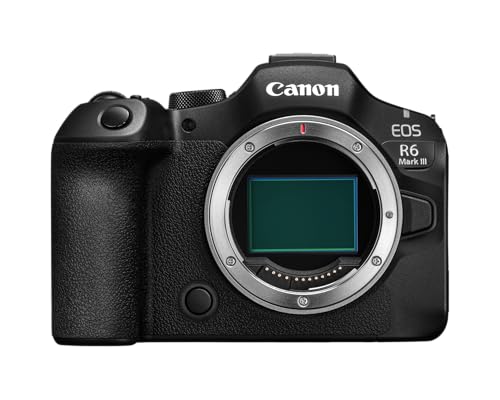
Canon EOS R6 Mark III — Best hybrid overall
Balance is a harder engineering problem than excellence in one direction, and the R6 Mark III is the most balanced camera on this page. As a stills body it has the tracking, the burst manners and the low-light files of a flagship; as a video camera it records the kind of 4K that clients pay for, with colour that matches its own stills so closely that an album and a film from the same day feel like one artefact. Hybrid shooters have waited a decade for a body where neither personality is the apology, and this is the closest the industry has come.
The working rhythm is where it converts sceptics. The mode change is a physical, confident gesture; settings carry across intelligently; the stabilisation serves a photographer’s handheld stills and a videographer’s walking shot with the same composure. During a wedding — the hybrid’s harshest examination — you can cover the processional in stills, the vows in video and the recessional in both, without once thinking about the camera instead of the couple.
Files and infrastructure complete the professional picture: dual slots for the unrepeatable, a lens mount shared with a serious and growing catalogue, and colours out of camera that shorten both the stills edit and the grade. It is the most expensive body here, and for a working hybrid it is also the easiest to justify, because it replaces two bodies’ worth of intent with one body’s worth of bag weight.
There is a subtler hybrid virtue in its files that only editors notice: the stills and the video arrive with the same naming logic, the same colour science and the same tolerance for being pushed, so a single post-production session handles an entire assignment without the mental gear-change that mixed kits impose. Post time is where hybrid margins live — an hour saved per wedding is a weekend a month — and a body engineered for coherence in the edit is quietly engineering its owner’s profitability as well as their pictures.
Weather sealing and build complete the working case. Hybrid assignments are disproportionately outdoors — weddings in gardens, brands on location, families everywhere — and a body that treats rain as a scheduling detail rather than an emergency keeps both crafts running when the day refuses to cooperate. The best hybrid is partly the one still working, in both modes, in the last wet hour of the event, and this Canon’s constitution is built for exactly that hour.
Its learning curve is the final consideration, and it is gentle for a flagship: Canon’s interface logic carries across both modes, so a photographer learning video on it — or a videographer learning stills — finds the second craft arranged like the first. Cross-training is the hybrid’s whole education, and a body that teaches both dialects in one accent shortens it measurably.
Resale logic, finally, favours it in the way it favours all current flagships: a hybrid practice that upgrades bodies every few years recovers real money from a body this desired, and the lenses — the practice’s true capital — carry forward untouched. Buy the system, rent the future, sell the past at a fair price; on that arithmetic the most expensive body here is not obviously the most expensive way to spend five years.
One more working detail separates it in the field: its viewfinder and screen remain legible and truthful when you flip between media under stage light, midday sun or the mixed gloom of a reception hall. Judging exposure consistently across two crafts is a skill; the camera that presents both crafts with the same honesty is the one that teaches the skill fastest, and students of the hybrid trade — which is to say, most working photographers now — feel that honesty in every assignment.
It also handles the hybrid’s least glamorous demand — the talking head, the interview, the piece to camera — with a professionalism that borders on dullness: reliable tracking on a seated subject, clean audio provisions, no thermal clock ticking behind the conversation. Interviews are where hybrid shooters earn their steadiest money, and a body that makes them boring to produce is worth more than a body that makes them exciting to survive.
- Format: full-frame mirrorless
- Stills: subject tracking, deep bursts, strong low light
- Video: high-quality 4K with matching colour
- Stabilisation: in-body for both media
Strengths
- Neither medium is the compromise
- Stills and video that match in the edit
- A switch that preserves your rhythm
Trade-offs
- Flagship pricing, flagship lens costs
- Video depth still trails the Panasonic specialist
- More body than casual hybrids require
Best for: working hybrids — weddings, events, commercial days shot in both media. Not suited for: photographers who only occasionally dabble in video.

Sony Alpha 7 IV — Best proven workhorse
If the Canon is the newest answer, the Alpha 7 IV is the established one — the hybrid that a generation of working shooters has already built businesses on. Its stills are excellent and generously resolved, its video is log-equipped and dependable, and its tracking serves both with the same stubborn intelligence: an eye held through a portrait session is the same eye held through the interview that follows, and that continuity of behaviour is what makes a hybrid feel like one camera rather than two tenants.
The ecosystem argument reaches its peak here. A hybrid shooter needs lenses that serve two crafts — fast primes for portraits, stabilised zooms for events, a macro for the product table — and no catalogue answers that shopping list more completely, at more prices, than Sony’s. Add the cage, monitor and audio accessories that a video practice accumulates, all designed first for this mount, and the Alpha 7 IV is less a camera than a platform a hybrid career is built on.
Age has also made it honest value. It is the body rental houses stock, colleagues lend and insurers understand, and its quirks are so thoroughly documented that no problem you meet will be new to the internet. For a hybrid shooter whose income depends on predictability, that maturity is a feature with a cash value, and it keeps the Sony at the top table despite younger rivals.
Its dual-personality stamina deserves a concrete illustration. A full wedding day — stills through the preparations, video for the ceremony, both for the reception, in summer heat, on a battery strategy you planned once — is the hybrid’s equivalent of a marathon, and this body has run it in thousands of working kits without becoming the story. Reliability at that scale is not a specification; it is a reputation, and reputations in professional equipment are earned one uneventful Saturday at a time.
Its one dated compromise is worth naming plainly: the highest video frame rates ask the sensor to crop, which changes a lens’s behaviour mid-assignment if you are not expecting it. Working hybrids plan around it — the slow-motion lens is chosen with the crop in mind — and the planning is a small tax on an otherwise seamless double life. Know it before the wedding, and it will never surprise you during one.
For the hybrid who prints, its resolution keeps revealing new uses: the album spread cropped from a wider frame, the canvas for the couple’s wall, the commercial crop for a client’s vertical formats — all from stills shot with video in mind. Resolution is often discussed as a vanity; in hybrid practice it is flexibility, the freedom to serve formats nobody specified until after the event, and this body serves them generously.
Colleagueship is its last, unlisted feature: because so many hybrids shoot this body, second shooters arrive fluent in it, rental backups match it exactly, and a borrowed battery at a venue is a realistic hope rather than a fantasy. Professional ecosystems are social systems, and the camera at the centre of the largest one carries an insurance policy no warranty can sell you.
Its age brings one more practical gift: the second-hand market is full of them, in graded condition, from upgraders and rental fleets, at prices that let a growing practice add a matched second body for the biggest days. A two-body hybrid setup — one for stills, one for film, same files, same batteries — is the professional end-state of this entire category, and no body here reaches that end-state more affordably.
And when the day is done, its files ask the least of a tired editor: consistent colour, sensible sizes, metadata that keeps the two media sorted by moment rather than by type. The hybrid’s working day ends at the desk, not at the venue, and the camera that shortens the desk hours has improved the photographer’s life in the place it is actually lived — a virtue no launch event ever mentions and every owner eventually names first.
- Format: full-frame mirrorless, 33MP
- Stills: high-resolution files with crop room
- Video: 4K with log profiles
- Autofocus: real-time tracking across both modes
Strengths
- Proven in thousands of working hybrid kits
- The deepest lens and accessory bench available
- Resolution that serves print and crop alike
Trade-offs
- Video frame-rate options involve a crop
- Menus reward an evening of customisation
- Its successor generation is on the horizon
Best for: established hybrid professionals and serious enthusiasts building a two-craft practice. Not suited for: video specialists who need the Panasonic’s recording depth.

Panasonic LUMIX S5IIX — Best video-leaning hybrid
Every hybrid leans somewhere, and honesty about the lean is a service. The S5IIX leans toward film with its whole weight: recording options that reach into professional territory, open-gate flexibility, streaming provisions, and a constitution that treats a two-hour continuous take as a normal request. If your income arrives mostly as video — the wedding film, the brand content, the event coverage — with stills as the valued sideline, this is the body whose priorities match your invoice.
What saves it from being a video camera with a stills hobby is the quality of the sideline. The photographs are properly good: the same sensor discipline, a colour foundation that grades and edits gracefully, and focusing that now tracks subjects with phase-detect confidence in both media. A client who adds “and some stills for the website” to a video booking is asking for exactly what this camera keeps in reserve, and it delivers them without a second body or a visible seam.
The hybrid tax it does levy is pace. Its stills burst manners and sports-grade tracking are a step behind the Canon and Sony flagships of the craft, and its menu depth reflects its video-first soul. Event photographers who live on motor drives should look up the list; filmmakers who shoot stills should stop here, because no other body at this price takes their primary craft this seriously while keeping the second one this respectable.
Production houses have noticed the same arithmetic. A small crew can send one operator with this body to cover an event’s film and its photography simultaneously, halving the day rate while keeping a single visual author across both deliverables — an aesthetic consistency producers increasingly specify by name. The hybrid is not merely a camera category any more; it is a staffing model, and the S5IIX is the body that model reaches for when the film matters most.
Stills shooters crossing over should know its other kindness: the video interface explains itself. Waveform-style exposure aids, frame guides and recording information are presented as instruments rather than decorations, so a photographer learning film on this body is learning it with proper tools from the first day. Education embedded in equipment is still education, and several self-taught filmmakers trace their competence to a camera that refused to dumb down its video side.
Its stills, examined cold, hold a surprise for sceptics: the files have a softness of rendering — in the complimentary sense — that portraitists describe as forgiving, and the colour science that serves its video serves a headshot equally. A camera bought for the film that turns out to shoot the company’s portraits too has paid its second dividend, and finance departments, like tutors, notice dividends.
Long-form reliability closes its case: the body was built for the sustained, professional end of hybrid work — the conference filmed all day, the performance archived whole, the documentary day that runs to twelve hours — and it behaves across those durations like equipment rather than like a gadget having a long afternoon. Hybrids are bought for exactly those durations, and stamina at scale is this camera’s home advantage.
For the stills-led shooter wondering whether its photographs will feel like a sideline, the answer from the field is reassuring: clients cannot tell which of this list’s bodies made a given portrait, and several working photographers run it as their only body across both crafts for years. The lean is a priority, not a ceiling, and priorities are exactly what a professional is entitled to choose.
- Format: full-frame mirrorless, video-first
- Video: professional recording options, open gate, streaming
- Stills: strong files with a gradeable colour base
- Autofocus: phase hybrid tracking in both modes
Strengths
- The deepest video toolkit among hybrids here
- Records long events without anxiety
- Stills that never embarrass the video work
Trade-offs
- Burst pace trails the stills-led bodies
- Menus speak video first
- Lens shelf still growing on the stills side
Best for: videographers whose clients also need photographs, and filmmakers building a one-body practice. Not suited for: sports and wildlife stills specialists.

Nikon Z50 II — Best budget hybrid
Hybrid used to be a flagship word. The Z50 II is the proof it has become a democratic one: a compact crop body whose stills are sharp, tracked and printable, whose video is clean and properly stabilised in behaviour, and whose price leaves a beginner hybrid room to buy the lens, the microphone and the light that complete the craft. For the creator economy’s actual majority — one person, one bag, every job — it is the most sensible camera on this page.
Its hybrid manners are better than its price suggests. Subject detection serves portraits and pets in stills and holds them in video; the screen and viewfinder make switching between media a glance rather than a ritual; and the files from both personalities share a colour character that cuts together kindly in a simple edit. A young shooter building a channel, a portfolio and a family album on one body will find the seams between its two crafts unusually hard to see.
The compromises are the honest ones of size and class: the smaller sensor asks more of high-sensitivity scenes, the burst and buffer are enthusiast-grade, and professional weather-sealing is not part of the deal. None of those disqualifies it from the work most hybrids actually do — daylight events, indoor content, travel, family, the first paid jobs — and its mount welcomes the serious glass that a growing practice will eventually want.
Creators should note how well it suits the modern solo workflow in particular: face-tracking that holds while you present to camera, a screen arrangement that lets you check framing from in front of the lens, and files that move to a phone or laptop without a ceremony. The distance between shooting a piece and publishing it has collapsed for this class of camera, and the hybrid creator — part photographer, part presenter, part editor — is exactly the professional it was designed around.
Battery and media economy suit that same solo reality: a day of mixed shooting on a small stack of affordable cards, power that lasts the school play and the match and the birthday in one outing, and a body light enough that the second lens — the one that turns a good hybrid kit into a versatile one — actually gets carried. Kits fail by weight more often than by quality, and this little Nikon’s whole design is an argument against that failure.
It is also the natural camera of the hybrid apprenticeship. A young shooter can learn both crafts on it without the system punishing either — real tracking, real manual control, real video — and graduate to a full-frame body later carrying habits, not handicaps. Apprenticeships are judged by what they make easy to learn next, and everything learned on this Nikon transfers upward intact.
Households have discovered the same virtue from the other direction: it is the camera a family can grow into together, one member filming the matches, another photographing the portraits, the camera passing between crafts and hands without anyone needing to relearn it. Shared tools teach shared hobbies, and a hybrid this approachable is often the purchase that turns one enthusiast into a household of them.
Its video ceiling should be stated as plainly as its virtues: this is creator-grade footage, excellent for screens and social platforms, rather than the production depth of the Panasonic. A beginner hybrid will not meet that ceiling for a long while, and by the time they do, the mount beneath them will accept the body that raises it — which is the correct order for limitations to arrive in.
- Format: APS-C mirrorless
- Stills: subject detection and tracking
- Video: clean 4K for content work
- Size: compact body, everyday carry weight
Strengths
- True hybrid competence at a starter price
- Small enough to be the always-carried camera
- A mount with genuine growing room
Trade-offs
- Low-light ceiling below the full-frame bodies
- Buffer and burst are enthusiast class
- Single card slot for paid, unrepeatable work
Best for: creators, families and first paid hybrid jobs on a real budget. Not suited for: professionals whose clients demand dual-slot security and flagship stamina.

DJI Osmo Pocket 3 — Best movement companion
A hybrid kit has a hole in it shaped like movement. The big bodies are superb standing still or panning from a tripod; the walking shot, the venue tour, the float through a market or a wedding’s dance floor belongs to a gimbal — and the Pocket 3 is the gimbal camera that hybrid shooters have adopted as standard. Its video is smooth to a degree that makes tripod footage look nervous, its tracking follows a subject through a crowd, and its sensor is large enough that its clips sit beside the big bodies’ footage without apology.
Its stills are the surprise in the hybrid conversation. They are not a photographer’s main instrument — no one is shooting a portrait session on it — but as frame-worthy grabs and quick stills from a moving camera, they close the loop of a hybrid assignment: the venue walkthrough that yields both the film and the thumbnail, the location scout that returns with video and reference photographs in one pass. Hybrid work is full of these small double duties, and the Pocket 3 was seemingly designed by someone who had done them all.
Carry is its final argument. It lives in a jacket pocket, deploys in seconds and draws no attention in public places where a rigged mirrorless body changes how people behave. For the hybrid shooter, whose whole proposition is being ready for both media at any moment, a camera that is always present is not a compromise — it is the purest expression of the idea.
It has also quietly become the hybrid’s location scout. A shooter recceing a venue with the Pocket 3 returns with a moving plan of the day — where the light falls at four, how the procession route flows, which corridor gives the floating shot — plus reference stills for the shot list. Planning in motion, on the actual ground, is a professional habit that used to require a crew visit; now it requires a jacket pocket and twenty minutes, and the assignments it improves include every other camera on this page.
Its audio upgrade path deserves the same practical note as the bodies’: paired with its maker’s wireless microphones it becomes a respectable interview and presentation tool, which extends the hybrid kit’s reach into talking-head work without a separate recorder. Small cameras earn their place by accumulating these second jobs, and the Pocket 3 has accumulated more of them, faster, than any companion camera in recent memory.
Durability of the concept matters too: the gimbal camera is not a fad purchase but a maturing category, and this is its reference model, supported by accessories and updates that keep it current. A companion camera that stays current protects the hybrid kit built around it, because the small camera’s footage must keep matching the big bodies’ improving output year after year.
Its one-shot stills, finally, deserve a sentence from the stills side of the family: as a pocket camera for the photographer’s own life — the scout, the holiday, the walk — it produces pictures with a polish that phones promise and rarely deliver, because its sensor and lens are a real camera’s, merely folded into a gimbal. The hybrid’s companion turns out to be a photographer’s companion too, which is the neatest summary of the category we can offer.
- Format: gimbal camera, large sensor for its class
- Video: mechanically stabilised, subject tracking
- Stills: capable grabs and quick photographs
- Carry: pocket-sized, ready in seconds
Strengths
- Movement footage no tripod body can match
- Always carried, always ready
- Clips that intercut with the big cameras
Trade-offs
- Stills are a sideline, not a craft
- No interchangeable lens, no real zoom
- Audio needs an external microphone for serious work
Best for: hybrid shooters who need walking, touring and event movement footage. Not suited for: anyone seeking a primary stills camera.

GoPro HERO13 Black — Best immersion companion
The other hole in a hybrid kit is shaped like danger. Rain on the procession, spray on the boat, dust on the rally stage, the camera mounted where the action actually happens — the HERO13 Black is the hybrid’s stunt double, recording video and stills in the places and weather that would retire a mirrorless body. Its stills workflow is the hybrid point: high-quality frames pulled from its video, plus honest photo modes, mean the mounted camera returns both media from a position no photographer could occupy.
For sports and adventure hybrids — the coach who films and photographs, the travel shooter whose trip includes water, wheels and altitude — it is often the most-used camera in the bag, precisely because it asks nothing. Waterproof without a case, stabilised without a gimbal, wide enough to forgive any aim, it converts the chaotic parts of a day into usable footage and frames while the big body waits safely for the formal moments.
Judge it within its physics and it will not disappoint: the small sensor loves daylight and merely tolerates dusk, the lens is fixed and wide, and low-light stills are documentation rather than art. But hybrid practice is a portfolio of tools, and the tool that covers the wet, fast, dangerous fifth of the assignment — in both media at once — earns its small corner of the bag against any rival.
Hybrid families have adopted it for a parallel reason: the holiday that includes rafting, cycling and a beach does not pause for a camera change. The HERO13 documents the action half of the trip in both media while the mirrorless body handles the portraits and the evenings, and the two sets of files merge into one honest record of the same week. A kit divided by conditions rather than by quality is a kit that gets used completely, and completeness of use is the hybrid idea at family scale.
Professionals keep one in the kit for a colder reason: insurance. When the main body is across the venue, on the other assignment, or — the day nobody plans — in for repair, a HERO13 on a clamp still returns a record of the event in both media. It will not match the flagship’s craft, and it will save the delivery. Hybrid practice is a business before it is an art, and businesses buy insurance that fits in a coat pocket.
Its lens-mod ecosystem adds one last hybrid trick: specialist wide and macro attachments that turn the mounted camera into a probe for product films, venue details and behind-the-scenes material. A hybrid kit is partly a bag of perspectives, and no perspective in this guide costs less, weighs less or survives more than the one this little camera provides from the end of a clamp.
And its successor-proofing is simple: mounts, batteries and the app ecosystem persist across generations, so the hybrid who builds a small GoPro shelf today carries it into whatever the line becomes. Companion cameras are bought on trust in a system as much as in a model, and this system’s decade of continuity is the reason it, rather than a newer rival, holds the immersion slot here.
- Format: waterproof action camera
- Video: high-resolution with strong stabilisation
- Stills: photo modes plus frame grabs
- Mounts: an ecosystem for helmets, vehicles and posts
Strengths
- Both media from inside the action
- Survives weather that stops the big bodies
- Frame grabs turn peak moments into stills
Trade-offs
- Low light is a genuine limitation
- Fixed wide perspective only
- Battery life shortens in the cold
Best for: adventure, sports and travel hybrids whose assignments get wet and fast. Not suited for: formal stills work or low-light events.
What separates the best cameras for still and video from a stills camera with a record button?
Three separations matter in practice. The first is colour: a true hybrid’s video picture profiles are designed to sit beside its stills, so a photograph and a clip of the same dress, product or face agree with each other. The second is audio: a microphone input, headphone monitoring and levels you can see are the border between a camera that records video and a camera that makes films, and every body in the top half of this list stands on the right side of it.
The third is thermal honesty. Video is sustained work, and a hybrid that throttles, warns or stops during a ceremony, a speech or a set has failed at the exact moment it was hired for. The bodies above were chosen partly because their recording stamina is a known quantity — tested, documented, boring in the best sense — while several glamorous rivals were left off for treating a twenty-minute limit as a personality trait.
Beneath all three sits the ergonomic truth: hybrid shooters change modes under emotional pressure, at the peak of an event, with no second take. Dials and switches that can be found by touch, and custom settings that restore each mode’s personality instantly, are worth more than a specification point either way. Judge hybrids in your hands, mid-simulated-ceremony, not on a chart.
One more separator is easy to overlook until you have lived without it: custom modes that remember each personality separately. The hybrid who has dialled in a stills setup for the ceremony and a video setup for the speeches should be able to spin between them without the camera averaging the two into a compromise neither craft wanted. Every body in the top half of this list honours that separation; it is, in miniature, the whole philosophy of the category.
How should you build a hybrid workflow that actually works?
Start by unifying everything that can be unified. One lens mount across bodies, one colour approach across modes, one card type, one battery family where possible — every unification removes a decision from the pressured middle of an assignment. Set the stills and video picture styles to be cousins, not strangers, and test the match at home with a willing subject before a client depends on it.
Then choreograph the switch. Decide in advance which moments of your typical assignment belong to which medium — the vows in video, the portraits in stills, the speeches in both — and practise the physical change until it costs two seconds and no attention. Hybrid excellence is mostly this choreography: the audience should never be able to tell, from the work, where one medium stopped and the other started.
Finally, edit as one artefact. The album and the film, the gallery and the reel, should be graded in the same session with the same references open, so the client receives a single visual memory rather than two competing ones. That coherence is the hybrid shooter’s actual product, and it is why clients pay one trusted person instead of two specialists who have never met.
Backups belong in the choreography too, because hybrid work doubles the ways a day can be lost. Dual-slot recording where the body offers it, an ingest routine the same evening rather than the same week, and one drive that never travels in the same bag as the cards — these are the unphotogenic habits that separate a hybrid practice from a hybrid hobby, and they cost less than any lens in this guide.
Rehearse the whole workflow once at home, end to end, before the first paid day: shoot a pretend ceremony in both media, switch on cue, ingest, grade the match, export both artefacts. The rehearsal will expose every friction — the slow card, the mismatched profile, the dial you cannot find blind — while the stakes are a free afternoon rather than a client’s memory. Professionals in every performance discipline rehearse; the hybrid’s performance is no different.
Which hybrid suits which kind of assignment?
Weddings and events, the hybrid’s home ground, reward the balanced bodies: the Canon for its switch and its colour, the Sony for its ecosystem and its proof. Commercial and brand work, where video leads and stills support a campaign, is Panasonic country, with the S5IIX’s recording depth earning its keep in every deliverable. Content creation — the channel, the course, the social presence — belongs increasingly to the Nikon and the Pocket 3 in partnership: one for the considered work, one for the moving and the spontaneous.
Adventure and travel split the difference differently again: a Z50 II or an Alpha body for the considered frames, a HERO13 for everything the weather and the itinerary throw at the trip. The pattern across all of these is the real lesson — a hybrid practice is a small system, not a single purchase, and the cameras above were chosen to combine without friction.
Notice, too, what the pairings share: batteries and cards you can standardise, colours you can match in one grading session, and files that arrive in one ingest. Friction in a hybrid kit is rarely optical; it is logistical, and it compounds across a season of assignments. The combinations above were chosen to minimise the logistics so the crafts can have your attention instead — which is, in the end, the only thing clients in either medium are actually paying for.
Comparison Table
| Camera | Lean | Strongest suit | Watch out for |
|---|---|---|---|
| Canon EOS R6 Mark III | Balanced | Both media at flagship level | Price of body and lenses |
| Sony Alpha 7 IV | Balanced, proven | Ecosystem and resolution | Cropped high frame rates |
| Panasonic LUMIX S5IIX | Video | Recording depth and stamina | Burst pace for stills |
| Nikon Z50 II | Balanced, budget | Everyday hybrid value | Low-light ceiling |
| DJI Osmo Pocket 3 | Video movement | Gimbal footage anywhere | Stills are secondary |
| GoPro HERO13 Black | Video immersion | Both media in harm’s way | Needs light and proximity |
What mistakes do hybrid shooters make?
The founding mistake is buying a stills camera and assuming the video will take care of itself — or the reverse. Hybrid competence is specific: audio provisions, recording stamina, mode-switch ergonomics and matched colour are features you either bought or you did not, and they announce themselves on the first real assignment. The list above exists because each of its bodies was audited on exactly those four points.
Second is neglecting sound while perfecting pictures. A hybrid’s film half is judged by audiences who forgive soft focus and never forgive crackling, distant audio. A microphone and the habit of monitoring it belong in the first budget beside the body, not in the second year. Third is shooting both media at every moment and mastering neither: choreography — deciding which moments belong to which craft — is what separates the hybrid professional from the person with two half-finished coverages.
Fourth is letting the two media drift apart in post. Unmatched colour between the album and the film makes both look cheaper. Grade them together, print and export from the same references, and the whole assignment rises.
A fifth mistake is subtler and increasingly common: delivering the two media on two different schedules, the gallery in a week and the film in a month, so the client experiences them as separate purchases from separate strangers. The hybrid’s commercial magic is simultaneity — one memory, delivered whole — and workflow discipline, not camera choice, is what protects it. Buy the body that makes the discipline easiest, then keep the discipline.
Final Recommendation
Choose the Canon EOS R6 Mark III if hybrid work is your profession and the budget is a business decision: it is the most complete double agent here. Choose the Sony Alpha 7 IV for the deepest ecosystem and a proven balance, the Panasonic S5IIX when video leads and stills follow, and the Nikon Z50 II when the whole hybrid idea must fit a starter budget — it fits astonishingly well. Then complete the kit with the small specialists: a Pocket 3 for movement, a HERO13 for immersion, and you hold a practice that can walk into almost any assignment carrying one bag and both crafts.
One last word for the stills purist reading with suspicion: nobody is asking you to become a filmmaker, or the filmmaker to become a photographer. The hybrid camera simply refuses to make you choose at the moment a scene offers itself in both forms at once — and scenes do that constantly, which is why this category, once a compromise, has become the centre of the camera world. Choose the body whose lean matches your own, and let the other craft surprise you.
Related guides
Frequently Asked Questions
Can one camera really replace a separate stills body and video camera?
For most working assignments, yes — that is the point of the modern hybrid, and the top three bodies here do it without apology. Dedicated cinema cameras still win on large productions with crews and rigging, and dedicated stills flagships still win on pure burst sports. The hybrid’s kingdom is everything between: weddings, events, commercial and creator work, where one operator must deliver both media well.
Which matters more for hybrid work: the body or the lenses?
The lenses, over a career. Bodies cycle every few years; a set of lenses that serves both crafts — fast primes, a stabilised standard zoom, a portrait telephoto — is the practice’s real capital. Every body on this list was chosen partly for the lens shelf behind it, and the Sony’s catalogue depth is the clearest example of why.
How do I keep stills and video colour matched?
Shoot both in the manufacturer’s most neutral matched profiles, expose video with the same care as stills, and grade the two side by side in one session. The bodies here were selected partly because their two media start close; your job in post is to close the remaining distance deliberately rather than discover it at delivery.
Is a crop-sensor camera a real hybrid?
The Nikon Z50 II is the evidence that it is. Its stills track and print, its video is clean and creator-ready, and its size means it attends assignments a bigger kit would skip. What it surrenders — low-light ceiling, buffer depth, dual slots — matters to specific professional niches, not to hybrid competence itself.
Do I need a gimbal as well as a hybrid body?
Only if your video includes walking, touring or floating movement — which most hybrid work now does. The Pocket 3 answers that need at a fraction of a full gimbal rig’s cost, size and setup time, which is why it appears here as a companion rather than a rival. Static and tripod video needs nothing beyond the body itself.
Are hybrid cameras good enough for professional prints and cinema screens alike?
For prints, unambiguously — the stills from the top bodies here hang in galleries and wedding albums without qualification. For cinema screens, the honest answer is that the Panasonic’s footage and the Canon’s colour have both appeared in professional productions, while remembering that cinema is a crew sport: lighting, sound and lenses contribute more to the screen than the badge on the body. A hybrid in skilled hands is not the limiting factor in either medium.
Related Guides
Keep exploring the hybrid shelf with best cameras for starting film students, best cameras for stage with remote control and best cameras for shooting video at night.


