reviewstook.com is reader-supported. When you buy through links on our site, we may earn an affiliate commission.
Where to buy
Night is where video cameras stop quoting specifications and start confessing. The daylight virtues — resolution, frame rates, colour menus — matter less after dark than three unglamorous questions: how much light can the sensor gather before the image dissolves into noise, how honestly does the camera behave when you push its sensitivity, and what does it do with the mixed, orange, flickering light that real nights are made of? The best cameras for shooting video at night are the ones whose footage still looks like the place you remember: faces readable under street lamps, shadows that stay shadows instead of boiling static, and highlights that bloom rather than clip.
- Panasonic LUMIX S5IIX: check price on Amazon
- Sony Alpha 7 IV: check price on Amazon
- Canon EOS R6 Mark II: check price on Amazon
- Insta360 Ace Pro 2: check price on Amazon
- Sony ZV-1F: check price on Amazon
- Sony FX3: check price on Amazon
The list runs from full-frame mirrorless bodies — the natural aristocracy of the dark — down to a pocketable compact and an action camera, because night video is not one job. The wedding videographer chasing a first dance, the traveller filming a night market, the skater documenting a floodlit park and the streamer broadcasting from a bedroom studio all shoot “at night”, and they need very different instruments. Each verdict below says which night its pick owns.
One truth governs all of them: the lens and the light matter as much as the body. A fast aperture is a time machine that buys you clean frames in darkness, and a single small LED panel will do more for a night shoot than a generation of sensor improvements. Buy the camera for its sensor and its manners; budget for glass and light alongside it.
Key Takeaways
- The Panasonic LUMIX S5IIX is the night specialist here: strong high-ISO video, serious recording options and stabilisation for walking shots after dark.
- Sony’s Alpha 7 IV is the dependable all-rounder whose autofocus keeps working when your eyes are struggling.
- The Canon EOS R6 Mark II gives night footage a warmth and skin-tone kindness that flatters people under bad light.
- The Insta360 Ace Pro 2 is the action camera that finally takes night seriously, with a big sensor for its class.
- The Sony ZV-1F’s one-inch sensor and wide lens make it the pocket night-market camera.
- The Sony FX3, listed prose-only here, remains the low-light benchmark the others are judged against.
In this guide
Quick Picks
| Camera | Badge | Why it is here |
|---|---|---|
| Panasonic LUMIX S5IIX | Best for night video overall | Clean high-ISO footage, pro recording features and walk-anywhere stabilisation. |
| Sony Alpha 7 IV | Best autofocus after dark | Eye tracking that holds faces in light other cameras give up on. |
| Canon EOS R6 Mark II | Best for people at night | Flattering colour and stabilisation for events, weddings and street portraits. |
| Insta360 Ace Pro 2 | Best night action camera | A large sensor for the class, with low-light modes that respect the dark. |
| Sony ZV-1F | Best pocket night camera | One-inch sensor, wide bright lens and vlogging manners in a coat pocket. |
| Sony FX3 | Best benchmark, prose-only | The cinema-line low-light standard for those building a dedicated rig. |
How did we judge cameras for the hours after sunset?
By filming the nights people actually film. Not a test chart in a darkened room, but the real curriculum: a street lit by sodium lamps and shop windows, a kitchen lit by one bulb, a fairground, a car interior, a friend’s face across a café table. In those places a night camera is judged on whether skin stays skin, whether the shadows hold still instead of crawling with noise, and whether the autofocus can be trusted when the light gives it almost nothing to hold.
We also weighed honesty of sensitivity. Every camera claims heroic ISO numbers; the question is where the footage stops being usable for your purpose — a family film forgives grain that a client’s wedding film cannot. Dual-gain sensors and well-behaved noise reduction earned their reputation here, as did cameras whose noise looks like film grain rather than digital static when it does arrive.
Finally, the supporting cast: stabilisation for the walking shot, because night video is so often shot on the move; screens and controls you can run by feel; and recording stamina, because the night shoot that ends at the camera’s convenience rather than yours is a story every videographer here has lived once.

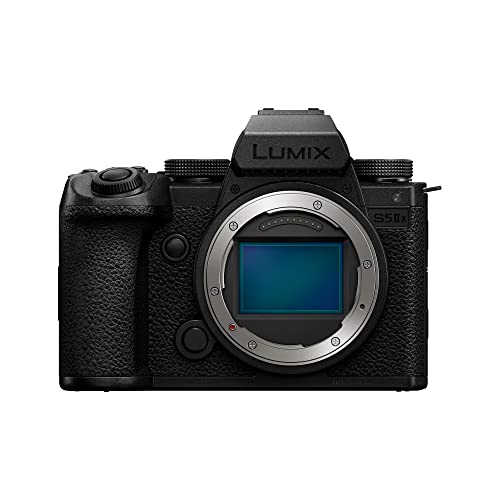
Panasonic LUMIX S5IIX — Best for night video overall
The S5IIX is the camera on this page that a working night videographer would build a kit around. Its full-frame sensor delivers the class’s expected low-light strength, but the details around it are what win the argument: phase-detect autofocus that finally matches the brand’s video heritage, stabilisation good enough to walk a night market without a gimbal, and recording options — including external recording to SSD — that suit long night events and professional delivery.
In the dark, its footage has a composure the spec sheet cannot convey. Push the sensitivity and the noise arrives as a fine, even grain that the eye accepts as texture; colours stay separated under mixed street lighting rather than collapsing into orange soup; and the dynamic range holds a lit shopfront and a shadowed doorway in the same frame without either surrendering. For documentary and event work shot where the light is whatever the location provides, that composure is the product.
It is also a camera that respects the lone shooter: cooling that does not ration your night, a body that balances on fast primes, and audio provisions that treat sound as half the film. If night video is your work rather than your hobby’s edge, start here.
- Format: full-frame mirrorless, video-focused X variant
- Autofocus: phase hybrid system
- Recording: extensive internal options plus external SSD
- Stabilisation: advanced in-body for handheld night walks
Strengths
- Composed, grain-like noise at high sensitivity
- Built for long professional night shoots
- Stabilisation that replaces a gimbal for walk-and-talk
Trade-offs
- Menu depth rewards a setup evening
- Lens ecosystem younger than Sony’s or Canon’s
- Overkill for purely casual night clips
Best for: event, documentary and wedding videographers who work after dark. Not suited for: pocket-carry casual filming.

Sony Alpha 7 IV — Best autofocus after dark
Night punishes autofocus first. Contrast falls, faces turn toward and away from the one lamp, and lesser systems hunt — that visible breathing in and out of focus that ruins a take more completely than noise ever could. The Alpha 7 IV’s answer is the maturity of Sony’s tracking: set it on an eye and it keeps the eye, through gloom that has you squinting, with a tenacity that lets you think about composition instead of focus-pulling.
The sensor behind that focus is a fine night instrument in its own right — 33 megapixels of stills excellence and video that stays clean well into the sensitivities a night shoot demands, with colour science that has learned to be kind to skin under artificial light. The lens range behind it includes the fast primes that are the true low-light purchase, at every price from sensible to solemn.
Choose it when the night shoot involves people moving in poor light and no second takes: the speaker crossing a dim stage, the couple leaving the venue, the busker in the underpass. Where the Panasonic is the technician’s night camera, the Sony is the one that simply refuses to lose the subject.
- Format: full-frame mirrorless, 33MP
- Autofocus: real-time eye tracking, stills and video
- Lenses: the widest native range of fast primes
- Video: 4K with strong colour tools
Strengths
- Focus that survives light other cameras quit in
- Fast glass available at every budget
- Superb stills camera when the night turns photographic
Trade-offs
- Video record limits ask planning on long events
- Crop at the highest 4K frame rates
- Menus take time to make personal
Best for: people-focused night work — events, performance, documentary. Not suited for: set-and-forget static night recording.

Canon EOS R6 Mark II — Best for people at night
Ask night footage to do one thing above all — make the people in it look like themselves on a good evening — and the Canon makes its case. Its colour rendering under mixed artificial light is famously forgiving: skin tones stay warm and separated, white dresses do not turn green under venue LEDs, and faces keep their modelling when the light is a single practical bulb. Wedding and event shooters have built careers on less.
The stabilisation is the other half of the argument. Night events are filmed handheld, in crowds, at the edges of dancefloors; the R6 Mark II’s in-body system working with the lens steadies those shots into something that looks planned. Combined with autofocus that finds faces and eyes in the gloom and a sensor that stays civilised at high sensitivity, it produces the night-event film that clients describe as “just like it felt” — the highest compliment the genre offers.
It is not the technician’s choice — the Panasonic records more ways, the Sony tracks with more stubbornness — but for the night that is about people rather than production, it is the camera whose footage needs the least apology in the edit.
- Format: full-frame mirrorless
- Colour: renowned skin-tone rendering
- Stabilisation: in-body, cooperative with RF lenses
- Autofocus: face and eye detection in low light
Strengths
- People look wonderful under awful light
- Handheld night footage stays graceful
- Fast, quiet operation for ceremonies
Trade-offs
- Fewer pro video recording options than the Panasonic
- Rolling shutter needs care on fast pans
- RF fast primes are a serious investment
Best for: weddings, parties, performances and family nights. Not suited for: technical long-form recording rigs.

Insta360 Ace Pro 2 — Best night action camera
Action cameras were, for years, daylight creatures: glorious at noon, hopeless at nine. The Ace Pro 2’s larger sensor broke that settlement. Its dedicated low-light processing holds a night street, a floodlit skate park or a campfire’s circle together with a steadiness the class never used to manage, and its dynamic range keeps neon and headlamps from blowing the frame’s highlights into white holes.
The flip screen matters more after dark, too: framing a night shot blind is how night footage becomes a rumour, and tilting the screen to check your composition from a tripod or a handlebar mount turns guesswork into intention. Mounted low on a bike crossing a lit city, or carried through a night market on a short grip, it produces the moving night footage that phones attempt and abandon.
It remains an action camera — fixed wide lens, small by mirrorless standards — so its night is the bright, public, neon night rather than the candlelit one. Within that territory, nothing this size films the dark better.
- Format: action camera, 1/1.3-inch sensor
- Video: up to 8K, with dedicated low-light modes
- Screen: flip-up for framing mounted night shots
- Body: waterproof, mountable anywhere
Strengths
- The night action camera, finally
- Highlights behave under neon and headlights
- Mounts where night happens — bikes, boards, helmets
Trade-offs
- Fixed lens; no optical reach in the dark
- Long high-resolution recording warms it up
- Still no match for full-frame in true darkness
Best for: night rides, city filming, travel after dark. Not suited for: candlelit ceremonies or stage work.

Sony ZV-1F — Best pocket night camera
The ZV-1F is the camera you have with you when the night turns interesting, and in night video, presence beats pedigree. Its one-inch sensor is several times the size of a phone’s main camera sensor, the fixed lens is wide and bright, and the whole package slips into the coat pocket that also holds your keys. The night market, the funfair, the walk home through the lit old town — this is its beat, filmed at arm’s length with the subject’s face lit and the background glowing.
Sony tuned it for exactly that arm’s-length work: autofocus that prefers faces and products, a background-defocus mode that separates a speaker from a busy night street, and colour that flatters skin under the mixed lamps of a food stall row. Its microphone arrangement and wind shield take the night’s audio seriously for a camera this small, which matters — night footage lives on its sound, the market’s sizzle and chatter carrying the scene.
Its limits are the class’s: no lens changes, no viewfinder, and darkness beyond the street lamps belongs to bigger sensors. But for the vlogger and the traveller, the best night camera is the one that left the hotel with you, and that is this one.
- Format: compact with one-inch sensor
- Lens: fixed wide-angle, bright aperture
- Focus: face and product priority autofocus
- Audio: directional microphone with wind shield
Strengths
- Pocketable, therefore present
- Faces stay lit and sharp at arm’s length
- Designed for exactly this kind of night
Trade-offs
- Fixed lens, no zoom reach
- True darkness defeats the smaller sensor
- Battery life suits evenings, not all-night events
Best for: vloggers, travellers and night-market wanderers. Not suited for: professional event coverage.
Sony FX3 — Best benchmark, prose-only
Every guide to night video eventually genuflects to the FX3, and this one is no exception — it is listed without a link as the reference point, the cinema-line body whose low-light reputation the rest of this page is quietly measured against. Its sensor’s party trick is a second, higher sensitivity range engineered for exactly the darkness where other cameras begin to negotiate, and footage from it has a cleanliness at night that still startles people seeing it for the first time.
As a tool it is a cinema camera wearing a small body: dedicated video controls, serious audio provisions, mounting points everywhere, and no interest in being your stills camera beyond the competent minimum. Building a rig around it — cage, monitor, audio, fast primes — is a commitment of money and intention that the hybrid bodies above deliberately avoid.
So why include it? Because night videographers shopping this page deserve to know where the ceiling is. If your night work is growing toward paid production, the FX3 is the direction of travel; if it is weddings, travel and family films, the hybrids above will serve you for years without the rig. Knowing the benchmark stops you both under-buying and over-buying, which is a guide’s whole job.
- Format: full-frame cinema-line body
- Low light: dual high-sensitivity design for video
- Build: cage-friendly with pro audio options
- Role: dedicated video rig, stills secondary
Strengths
- The low-light standard for small cinema cameras
- Purpose-built video ergonomics and audio
- A rig platform that grows with productions
Trade-offs
- Rig, lenses and audio multiply the real cost
- Stills are an afterthought by design
- More camera than most nights require
Best for: aspiring night-production professionals. Not suited for: casual or hybrid stills-and-video shooters.
How do you expose for a face lit by one lamp?
Meter the face, not the room. A camera left to its own devices will average the darkness and the lamplight into a compromise that serves neither, so take control: spot-meter or tap-expose on the skin, let the background go as dark as it wants, and lock the exposure before the subject moves. The reward is the classic night portrait — a face modelled by a single source, the world suggested behind it. All three full-frame bodies here make this easy; the skill is remembering that the camera’s average is a suggestion, not an instruction.
What does a small LED panel change after dark?
Everything it touches. A pocket LED at low power lifts a face out of murk without announcing itself, warms or cools to match the practical lights around it, and turns an impossible interior into a shootable one. It is the cheapest image quality in this entire guide — cheaper than any lens, any body, any software — and night videographers who carry one are recognisable by how rarely they complain about their camera. Mount it, dim it until it stops looking like a light, and let the sensor relax two stops it would otherwise have spent on noise.
How do you film a night market without annoying it?
Small camera, short lens, no rig theatre. The ZV-1F at arm’s length or the Ace Pro 2 on a short grip reads as a tourist’s souvenir rather than a production, and markets forgive tourists everything. Work with the stalls’ own light — position your subject where the vendor’s bulbs model their face — buy something before you film someone at length, and let the steam, the neon and the crowd compose the shots. The market at night is the most generous location a videographer gets for free; treat its people as hosts, not extras.
Why do car interiors defeat so many night cameras?
Because a car at night is two exposures fighting: the dashboard’s glow and faces in near-darkness inside, headlights and street lamps strobing past outside. Dynamic range earns its salary here, as does a camera whose noise reduction does not smear the passenger’s face into wax each time a streetlight passes. The Panasonic’s range and the FX3’s sensitivity lead this particular test. Practically: expose for the faces, let the windows blow out as the city streams by, and fix the camera firmly — a car amplifies every handheld wobble into a seasick sway.
How do you shoot video of the night sky honestly?
Slowly, and with managed expectations. Video of the stars is not long-exposure photography: each frame gets a fraction of a second, so the Milky Way in real-time video demands the fastest lens you own, the highest sensitivity you can tolerate and a genuinely dark location. The full-frame bodies here can hint at the sky’s structure on a moonless night far from town; in the city they will give you a handsome gradient and the brighter constellations. For the sky’s full glory, shoot a time-lapse of stills instead — several of these cameras automate exactly that — and let video handle the foreground’s life.
What is noise reduction doing to your night footage?
Trading detail for smoothness, at an exchange rate you should set yourself. In-camera noise reduction at night can turn faces waxy and foliage into watercolour, especially on the smaller-sensor picks; turning it down and accepting honest grain usually looks more expensive. The full-frame bodies give you the choice in detail — shoot a touch cleaner in camera, or shoot flat and let editing software, which is slower but smarter, do the smoothing. Grain is not the enemy of night video. Smearing is.
How do you film rain at night?
Rain is the night videographer’s free production design: every lamp gets a halo, every street doubles itself in reflection, and backlit rain between the camera and a subject turns an ordinary shot into cinema. Position a strong light behind the rain — a shopfront, a street lamp — expose for the lit subject, and let the weather perform. Mind the practicalities: the sealed bodies and action cameras here shrug off a wet evening with a cloth for the front element, while you, the operator, become the least waterproof part of the production.
Why does white balance matter more after dark?
Because night light is never white. Sodium lamps burn orange, fluorescents lean green, LEDs arrive in every temperature from candle to operating theatre, and a single street can hold all three. Auto white balance will wander between them mid-shot, changing the scene’s mood while you watch. The discipline is to set a fixed balance for the dominant light — or shoot in a log profile and decide at the desk — so the night keeps one consistent complexion. The colour reputations of the Canon and Panasonic bodies were earned in exactly this negotiation.
How do you film a stage performance from the audience?
Expose for the lit performer and let the auditorium go black — the camera’s average will beg you to lift the darkness, and you must refuse, because the audience’s murk is the frame’s natural border. Stage light is brighter than it looks from a seat, so sensitivities can stay moderate; the challenges are distance, which argues for the longest lens you can hold steady, and mixed colour, which argues for a fixed white balance chosen during the first number. Check the venue’s filming policy before the house lights fall; the best night footage is the kind you were allowed to take.
What makes handheld night footage look professional?
Restraint. Short moves, begun and ended gently; a wide lens, which forgives shake that a telephoto magnifies into seasickness; and elbows, walls and doorframes borrowed as tripods wherever the location offers them. The stabilisation in the Panasonic and Canon bodies has quietly retired the gimbal for this class of work, provided the operator walks like a person carrying a full cup rather than a person late for a train. Night exaggerates movement the way it exaggerates everything; the professional’s secret is simply moving less.
How do you light an interview at night without a lighting kit?
Steal the location’s light like a professional thief. Seat your subject near the practical sources — the window with the street’s glow, the bar’s warm lamps, the desk light — and turn their chair until a source models one side of the face. Add your phone’s torch through a napkin only if dignity permits and the hour is truly desperate. The S5IIX’s sensitivity means these borrowed lights are enough; the craft is in the chair’s angle, not the wattage. Night interviews filmed this way look like the place, which is what documentary wants.
Why do night city films love the walking shot?
Because the city at night is a river of light and the walking shot swims in it: signs ignite and pass, reflections slide underfoot, faces cross the frame like weather. It is also the shot that tests a camera completely — stabilisation, autofocus in changing light, dynamic range between neon and alley. The Panasonic walking a night market, the Ace Pro 2 rolling through a lit downtown: these are the sequences that sell a place, a vlog or a travel film. Practise the walk itself; the camera can only stabilise what your feet begin.
How do you protect night footage from banding?
Banding is the night editor’s quiet grief: smooth skies and walls breaking into visible steps of tone, made worse by heavy compression and aggressive grading. Prevention lives at the shoot — record in the highest bit depth your camera offers, expose so the shadows are not lifted from nothing in post, and prefer the gentler profiles when you know the grade will be heavy. The S5IIX’s recording options and the FX3’s cinema pipeline exist for this unglamorous battle; on the smaller cameras, a well-exposed frame is the whole defence.
What should a beginner’s first night shoot be?
A walk around your own neighbourhood with one camera and no ambitions beyond learning its behaviour. Film the lit shopfront, the dark alley, the bus stop, a friend’s face under the street lamp; note where the noise became unacceptable, where the focus hunted, which shutter speed killed the flicker. An hour of that teaches more than a month of reviews — including this one. The ZV-1F and Ace Pro 2 make ideal first instruments precisely because they remove every excuse: the camera was in your pocket, and the night was outside.
How do you film fireworks without ruining them?
Expose for the bursts, which are far brighter than intuition suggests, and lock everything: focus at infinity set manually before the first shell, exposure fixed so the camera does not pump between shells, white balance fixed so the colours stay the colours. Include a foreground — a skyline, a crowd’s silhouettes, the river’s reflection — because fireworks alone in a black frame are a screensaver, while fireworks over a place are a memory. The full-frame bodies’ dynamic range will hold the burst’s core and the city’s lights in one frame; the smaller cameras need the exposure discipline even more.
Why is the blue hour a videographer’s accomplice?
The twenty minutes after sunset are the night shoot’s gentle introduction: the sky still holds a deep blue that balances artificial light instead of surrendering to it, faces can be lit by the last daylight and the first lamps together, and sensitivities stay civilised. Productions schedule around it; solo shooters should too. Arrive at your location in daylight, set up as the light falls, and film through the transition — the footage will contain the day’s last generosity and the night’s first glamour in a single sequence, which no amount of grading can fake later.
How do you shoot a candlelit or firelit scene?
By protecting the flame’s illusion. Firelight is dim, warm and flickering, and the camera must be allowed to believe in it: expose for the faces at the fire’s edge, fix the white balance warm rather than letting auto correct the firelight into daylight, and accept the dancing shadows as the scene’s texture rather than a defect. The full-frame bodies film a campfire circle beautifully at sensitivities that would alarm a daylight shooter; the smaller cameras should be moved closer, into the light’s little kingdom, rather than pushed harder. And keep the camera still — fire supplies all the motion the frame needs.
What does log footage buy you at night?
Choices, at the price of work. A log profile records the night’s contrast squeezed flat, preserving highlight and shadow detail that a baked-in look would discard — the neon sign and the doorway in one frame, both recoverable. The bill arrives in the edit, where every clip must be graded before it looks like anything. For the S5IIX and FX3 shooter delivering professional work, that trade is the job itself. For the family film and the vlog, the cameras’ standard profiles, exposed with care, will look better sooner. Log is a promise to your future self; only make it if you keep promises.
How do you film through a window at night?
Defeat your own reflection first: lens close to the glass, a dark cloth or your own jacket hooding the gap, room lights behind you killed. What remains is the layered night shot — the interior’s ghosts faint over the city’s lights — which can be a flaw or a style, and the difference is intention. Focus manually on the outside subject, because autofocus will fall in love with the glass’s smudges and reflections. Rain on the outside of the pane, far from ruining the shot, gives each street lamp a jewel to sit in.
Why do night shoots eat batteries faster?
Because everything works harder in the dark: the sensor’s gain, the screen brightened against the gloom, the autofocus hunting for contrast, the stabilisation correcting a colder, stiffer operator. Add winter and the drain doubles. The night kit therefore includes power as a first-class item — spares in a warm pocket, a USB power bank for the cameras that accept one, and the discipline of switching off between setups rather than letting the camera idle through the conversation. The S5IIX’s external recording and power options are professional answers to a universal problem.
How do you direct subjects who cannot see the camera?
With voice and patience. At night your subject may be lit while you stand in darkness, which makes communication the production’s weak link: agree marks and cues before the light falls, keep instructions short, and use a small light on yourself when you need to be found. It sounds minor until a wedding’s first dance or a documentary’s night walk depends on it. The cameras’ quiet operation helps — none of these picks announces itself with a shutter’s clatter — but the director’s calm is the real low-light equipment.
What is the night skyline shot actually made of?
Patience and a tripod’s honesty. The skyline rewards the static frame: a long, locked shot where the city’s lights twinkle, traffic draws its lines and the sky finishes its colour. Set the camera on a real support, focus once and fix it, expose for the buildings’ lit faces, and record longer than feels necessary — the editor will want the choice of seconds. Every body in this guide can make this shot beautifully, which is the point: at a standstill, with time to expose, the differences between cameras narrow and the differences between photographers widen.
How do you film a night drive or a road at night?
Securely, legally and from the passenger’s story. A mounted action camera — the Ace Pro 2 on a proper vehicle mount — turns a night highway into a ribbon of light, while the driver drives and the filming happens without a hand leaving its job. Expose for the road ahead rather than the dashboard, and let the oncoming lights flare as punctuation. If the journey itself is the subject, stop for the still moments: the lit diner, the fuel station’s island of fluorescence, the town sign at the border of the dark. Roads at night are cinema that somebody else lit for you.
Why do professionals underexpose night footage slightly?
To protect the lights. A night frame’s highlights — lamps, signs, windows — are its jewels, and once clipped to white they are gone for good, while shadows can usually be coaxed a little in the grade. Exposing a touch dark keeps the jewels cut. The discipline has limits: underexpose a noisy small-sensor camera and the shadows you lift will crawl. The full-frame picks forgive the strategy; the compact and action camera are happier exposed honestly and left alone. Know which bargain your camera offers before the shoot, not during the edit.
How do you make a small room look cinematic at night?
Turn off the ceiling light. Overhead light is the enemy of mood in a small interior — it flattens faces and announces the room’s size. One practical lamp at the frame’s edge, a curtain drawn against the street’s spill or opened to borrow it, and the camera low and close: suddenly the bedsit is a film set. The ZV-1F was designed for rooms like this, its wide lens gathering the space without distortion drama, its face priority keeping the vlogger lit by whatever lamp the room provides. Cinematography at this scale is mostly subtraction.
What separates a night camera from a camera used at night?
Intention in the design. A night camera’s sensitivity ranges are engineered rather than extrapolated, its noise is shaped to look like grain, its controls can be run by touch, its recording does not ration the hours after dark, and its colour science has opinions about artificial light. The FX3 is the purest example here, the S5IIX the most complete hybrid expression of it. The distinction matters when night is your subject rather than your circumstance — and the rest of this page exists to help you decide which of those you are.
How do you review a night shoot honestly?
On a decent screen, in a darkened room, at delivery size. Night footage judged on a phone in daylight looks cleaner than it is; judged on a television it tells the truth about noise, focus and flicker. Watch the whole take, not the highlights — night errors hide in the quiet seconds, the focus breathing during a pause, the banding in a wall’s gradient. Keep notes against the next shoot. Every videographer in this genre is self-taught in the end, and the tuition is paid in reviewed footage.
What is the night videographer’s packing list?
The camera, the fastest lens it owns, a small LED panel, a cloth for the front element, spare power in a warm pocket, and headphones for the audio check nobody else will do. A compact tripod earns its place for the static shots; a gimbal only if the production truly walks. Everything else is daylight thinking. The list is short because the night is long, and the shooter who travels light stays out in it — which is where, as every section of this guide has argued from a different angle, the footage is.
How do you film a protest, vigil or public gathering at night?
With the small camera and the long memory. Public night gatherings are filmed best by the unobtrusive — the ZV-1F in a hand, the Ace Pro 2 on a short grip — because a big rig changes the behaviour it came to record and occasionally attracts the wrong attention. Work the edges where the light is: candles, phone torches and placards lit by street lamps compose themselves. Know the local rules, keep your own safety in the frame’s corner of your mind, and remember that the footage’s value is its honesty, which production values cannot improve and can easily dilute.
Why do headlights and neon break weak cameras?
Because they are tiny, intense and coloured — a highlight test and a colour test in the same pixel. Weak processing clips them to white blobs and smears their colour into the surroundings; strong dynamic range holds the sign’s lettering and lets the lamp keep its halo. When you compare night footage, compare the signs and the street lamps first; faces in soft light are easy, but a neon tube rendered with its colour intact is a sensor and a processor telling the truth under pressure. The Ace Pro 2’s showing here is why an action camera earned a place on this page.
How do you shoot video portraits at night?
Find one good light and commit to it. A shop window, a lit doorway, a street lamp with a bench beneath it — the city is full of portrait studios that open after dark. Place your subject at the light’s edge, where it models rather than floods, expose for the skin, and let the background’s darkness do the composition. The Canon’s kindness to faces and the Sony’s eye focus divide this work between them; the technique belongs to anyone willing to walk a subject twenty metres to better light, which is most of portraiture’s secret in any hour.
What frame rate suits the night?
The honest one. Night tempts shooters toward slow motion, but every doubling of frame rate halves the light per frame, and darkness charges full price for the loan. Shoot the night at your delivery frame rate — the classic 24 or 25 frames for a filmic cadence, whose longer shutter drinks more light per frame as a bonus — and reserve high frame rates for the lit set pieces: the floodlit pitch, the fairground, the neon street. The cameras here all offer the fast modes; wisdom is knowing the night rarely pays for them.
How do you keep focus when a subject walks toward you at night?
Give the autofocus a lit face and a steady approach. The tracking systems in the Sony and its rivals are at their best when the subject’s eye stays visible and the light on it stays constant; a subject crossing between lamps will challenge any system as their face falls and flares. Practically: walk backwards on a lit path, keep the subject in the lamp’s pool, and choose the wider lens whose depth of field forgives the small errors. Or embrace the oldest solution — pre-focus on a mark, let the subject arrive into sharpness, and make the arrival the shot.
What is the role of fog and mist after dark?
Fog is the night’s own softbox and depth machine: it turns every lamp into a glow, separates a street into glowing layers, and makes a lone figure under a light into a painting that daylight could not compose. It also eats contrast and autofocus confidence, so work closer than usual and expose for the lit subject rather than the murk. A foggy night with any camera in this guide will produce footage that a clear night with a better camera cannot — atmosphere is the one specification that weather, not money, supplies.
How do you end a night shoot well?
With the dawn, if the story allows it. The night film that closes as the sky pales — the market packing, the city’s lights surrendering one by one, the last train’s passengers surfacing — gains an ending no grade can manufacture. Practically, it means saving a battery and a card against the morning, the mirror image of the blue-hour discipline at the day’s other end. And if dawn is beyond the production’s stamina, end on the strongest lit frame you have and stop; the night, like the film, should finish before its energy does.
How do you film lightning and storms at night?
From shelter, with the camera doing the waiting. A storm’s flashes are too fast to chase and too bright to expose for in advance, so the method is the static wide frame: camera on a tripod under cover, recording continuously through the storm’s heart, exposing for the landscape’s ambient darkness and letting each strike light the frame like a strobe. Review the footage and harvest the seconds where the sky performed. The sealed bodies and the action camera tolerate the weather’s edge best, and the operator’s rule is absolute — the shot is never worth standing in the open with a metal tripod. The storm will perform again; make sure you are there for the encore.
Comparison: all six picks at a glance
| Camera | Form | Character | Choose it if… |
|---|---|---|---|
| Panasonic LUMIX S5IIX | Full-frame mirrorless | The night technician | Night video is your profession |
| Sony Alpha 7 IV | Full-frame mirrorless | The tracker | Subjects move and light is scarce |
| Canon EOS R6 Mark II | Full-frame mirrorless | The portraitist | People must look their best after dark |
| Insta360 Ace Pro 2 | Action camera | The night rider | Your nights move fast and bright |
| Sony ZV-1F | Compact | The pocket witness | You film the night you happen to be in |
| Sony FX3 | Cinema body | The benchmark | You are building toward production work |
What are the most common mistakes in night video?
Demanding that night look like day
The beginner’s night footage is often over-lit, over-gained and grey — a refusal to let the scene be dark. Night has a look: pools of light, true shadows, faces emerging and receding. Expose for the lit subject, let the backgrounds fall where they fall, and resist the sensitivity that turns a café into an operating theatre. The cameras in this guide hold shadows gracefully precisely so you can trust them; footage that honours the darkness will always look more expensive than footage that denies it.
Ignoring flicker until the edit
Mains-powered light pulses, and at the wrong shutter speed your night footage will roll with bands or strobe like a disco. The fix is unglamorous: match your shutter to the local mains frequency — the old 1/50 or 1/100 discipline in much of the world, 1/60 or 1/120 where the grid runs at 60Hz — and test under the actual lamps before the event. Every body here offers anti-flicker help, but the videographer who checks on location is the one whose wedding film does not pulse.
Forgetting that night audio carries the film
In darkness the ear does the eye’s work: the market’s noise, the venue’s room tone, the quiet before the music starts. Camera microphones at night pick up handling noise and wind with nothing visual to excuse them. A small external microphone, a wind shield and thirty seconds spent listening on headphones before the shoot will save more night films than any sensor upgrade. The S5IIX and FX3 treat audio as a first-class citizen; the others accept help gracefully — give it to them.
Final Recommendation
Match the camera to your night. Professionals and serious event shooters should build around the Panasonic LUMIX S5IIX, whose composure in bad light and recording depth suit work that cannot be re-shot; those filming moving people in gloom will love the Alpha 7 IV’s refusal to lose a face, and anyone whose nights are weddings and family celebrations will find the R6 Mark II’s kindness to skin worth the whole price. Travellers should pocket the ZV-1F, riders and city filmmakers should mount the Ace Pro 2, and those aiming at production should study the FX3 benchmark before spending. Then buy the fast lens and the small light. Night video is a partnership between a sensor and a shooter who brings some light of their own.
Related guides
- Best Crop Sensor Cameras for Low Light: Fast Glass, Honest Limits and One True APS-C Pick
- Best Company for Low Light Cameras: Six Makers Compared by Their Night Work
- Best Cell Phones With Cameras for Low Light: Night Stills, Night Video and True-Dark Picks
- Best Compact Cameras for Concerts: Low Light, Venue Rules and Reach from Real Seats
- Best Canon Cameras for Night Shots: Street Light, Fast Glass and Honest High ISO
- Best Cameras Under 5p Bucks, Read as $500: Complete Cameras at a Real Budget
Frequently Asked Questions
How high can I push ISO for night video?
Further than your instincts say, less far than the menu allows. Full-frame bodies in this guide produce genuinely usable video deep into five-figure sensitivities, especially when the footage is exposed carefully — noise explodes when you underexpose and lift later, so give the sensor light at the time of shooting. Judge by your delivery: a cinema screen is stricter than a phone, and a wedding client is stricter than both. Test your own ceiling before the night that matters.
Is a fast lens more important than the camera body?
At night, often yes. An aperture of f/1.8 gathers roughly four times the light of an f/3.5 kit zoom, which is the difference between clean footage and a noise negotiation — no sensor generation gap is that large. If the budget forces a choice, the mid-range body with a fast prime will out-film the flagship wearing a slow zoom after dark. This is why the lens ranges behind the Sony and Canon picks matter as much as the bodies.
Why does my night footage flicker under street lights?
Because the lamps are pulsing with the mains supply and your shutter is sampling that pulse unevenly. Set the shutter to a multiple that matches your region’s frequency, enable the camera’s flicker-reduction if it offers one, and avoid the very fast shutter speeds that slice the pulse thinnest. A ten-second test under the actual lights, reviewed on the spot, is worth an hour of correction attempts in the edit.
Can an action camera really film at night?
The modern ones can film the lit night — streets, venues, floodlit sport, city rides — with a competence that would have been unthinkable for the class a few years ago, the Ace Pro 2 leading the way with its larger sensor. What they cannot do is manufacture light in true darkness or offer the shallow depth and lens choice of a mirrorless body. Choose by which night you inhabit: neon or candlelight.
Do I need a gimbal for night video?
Less than you did. The in-body stabilisation in the Panasonic and Canon picks has reached the point where a careful walking shot is genuinely usable, and at night a gimbal’s smoothness can even work against you — its floating perfection draws attention in a scene that wants a human pulse. Save the gimbal for deliberate cinematic moves, long lenses and commercial work; for events and travel, a steady hand and a wide lens are the night kit.
Related Guides
Keep exploring with our companion reading: best cameras for low light shooting, best cameras for night shots and best cameras for concert videos.


