reviewstook.com is reader-supported. When you buy through links on our site, we may earn an affiliate commission.
Where to buy
Family life does not separate itself into photographs and films; it arrives as both at once, usually at the exact moment your hands are full. The best cameras for picture and video — for the birthday that needs the portrait and the blowing-out-the-candles clip, the holiday that deserves an album and a movie, the school play where Grandma wants a frame for the wall and the whole performance for the family chat — are the hybrids that cross between the two without a pause, a menu expedition or a missed moment. Ranked below are six cameras chosen for that family duty, from the interchangeable-lens bodies that do both crafts properly to the small cameras that make the video half feel like play.
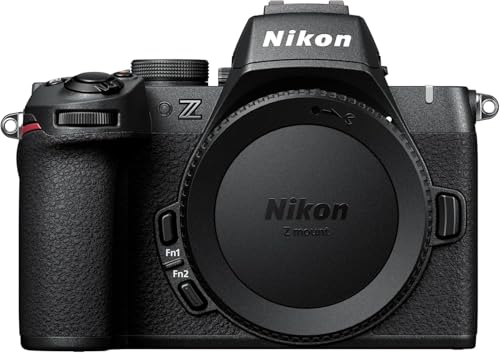
- Nikon Z50 II: check price on Amazon
- Canon EOS R6 Mark II: check price on Amazon
- Panasonic LUMIX S5II: check price on Amazon
- DJI Osmo Pocket 3: check price on Amazon
- GoPro Hero: check price on Amazon
- Sony ZV-1F: check price on Amazon
The family’s hybrid question is different from the professional’s, and this guide grades it differently. What matters at home is not codec menus but forgiveness: autofocus that finds a child’s eye while the child is moving at the speed of childhood, a video mode that starts in one press and focuses by itself, stabilisation that forgives the walk backwards in front of a toddler’s first steps, and files that look good shared straight from the camera, because family footage edited next month is family footage never watched. Every pick below was chosen against that standard of cheerful competence.
The list spans the family’s real range of commitment. At one end, bodies that a photography-loving parent will grow into for a decade, producing albums and films of professional texture. At the other, cameras the size of a snack that live in a pocket or on a pram handle and capture the video half of family life with a joy the big bodies cannot imitate. Most families need exactly one from the first group or one from the second; the happiest, eventually, own one of each, and this guide is arranged to make that eventual logic visible from the start.
Key Takeaways
- For family duty, the crossing is everything: one press from picture to video, with the focus and exposure already right, beats any specification ever printed on a box or a banner anywhere.
- Eye autofocus is the family photographer’s quiet miracle — it keeps children’s faces sharp through motion that defeats every older technology and most parental reflexes.
- Stabilisation is the family videographer’s best friend: it turns walking, following footage from a seasick record into a watchable film that grandparents can enjoy without Dramamine.
- The small cameras — gimbal and action — capture the moving half of childhood from angles and places the big bodies never reach, including, occasionally, from inside the paddling pool itself.
- Buy for sharing: family media that leaves the camera easily gets watched tonight; media that needs a workflow becomes an archive nobody opens at all, however magnificent its resolution may be.
In this guide
Quick Picks
| Camera | Badge | Why it is here |
|---|---|---|
| Nikon Z50 II | Best family hybrid for most homes | Detection autofocus, real lenses and family-proof size at a family-defensible price. |
| Canon EOS R6 Mark II | Best for the photography-loving parent | Full-frame pictures and film with colour that makes family life look like its best memories. |
| Panasonic LUMIX S5II | Best for the filming parent | Serious video tools and stabilisation for families whose home movies have ambitions. |
| DJI Osmo Pocket 3 | Best moving family camera | Gimbal-smooth footage of walks, trips and first steps, from a pocket. |
| GoPro Hero | Best for the rough and wet years | A tiny waterproof camera for the pool, the beach and the bicycle years. |
| Sony ZV-1F | Best simple picture-and-video compact | One-button competence for the parent who wants quality without a hobby attached. |
How did we choose these cameras for family pictures and video?
Each candidate was imagined into the family’s actual calendar: the dim kitchen birthday, the school hall with its merciless lighting, the beach holiday, the sideline of a Saturday match, the quiet video of a sleeping baby that must be filmed without a sound or a flash. The grading weighted the crossing between crafts first — how many operations stand between the photograph you just took and the film of what happened next — because family moments do not repeat themselves for a parent caught in a menu. Autofocus on moving children came second, judged as a parent experiences it: not as a specification, but as the proportion of frames in which the right face is sharp.
Sharing was graded as a feature, because it is one: the speed and simplicity with which a picture or a clip reaches the family chat decides whether the camera’s work is enjoyed or archived. Size and toughness were weighed honestly — a camera that attends is worth two that impress — and the lens question was asked in family terms: does the kit zoom cover the school hall and the holiday beach, and can the system grow when the parent’s own photography does? The six survivors are the cameras that answered those questions in the family’s language rather than the laboratory’s.

Nikon Z50 II — Best family hybrid for most homes
The Z50 II is the family hybrid this guide would hand to most households without a follow-up question. Its subject-detection autofocus — inherited from Nikon’s professional bodies — finds children’s eyes, the dog, the birthday girl mid-laugh, and holds them through the chaos with a reliability that feels, to a parent raised on hunting autofocus, like a small daily miracle. Its video is honest 4K with the same focus intelligence, its size fits the bag that already goes everywhere, and its price leaves room in the family budget for the second lens and the holiday the camera will document.
The family angle is growth without intimidation. A parent can run it as an intelligent point-and-shoot for the first year — the colour and JPEGs are that forgiving — and grow into its manual depths as the hobby takes hold, because the same body teaches aperture on the school play and shutter speed on the sports day without ever making the parent feel examined. The Z mount means the lenses accumulate into a family asset, and the whole kit is small enough that the camera’s attendance record — the statistic that decides family archives — stays high. For the household buying one real camera for the children’s whole childhood, this is the sensible centre of the market.
- Sensor: APS-C, roughly 21 megapixels
- Autofocus: subject and eye detection for people and pets
- Video: 4K with the same focus intelligence
- Mount: Nikon Z, grows with the family
Strengths
- Focus that keeps up with childhood
- Size and price a family can defend
- Teaches photography gently, over years
Trade-offs
- No in-body stabilisation; video walks need care
- Dark halls test its crop sensor sooner than full-frame
- Kit zoom will eventually invite a fast prime
Best for: most families buying one camera for everything. Not suited for: parents who already know they want full-frame depth.

Canon EOS R6 Mark II — Best for the photography-loving parent
Some parents were photographers before they were parents, and the R6 Mark II is the family camera that honours both identities. Its full-frame pictures have the depth and low-light grace that family life — conducted largely indoors, at night, under lamps — rewards daily, and Canon’s colour renders children’s skin with a kindness that makes the family album look like the way the years felt. Its video crosses over with the same detection autofocus and the same colour, so the film of the birthday and the portrait of the birthday girl arrive as one family’s record, in one voice.
The premium buys stamina for the family’s hardest venues: the school hall’s gloom, the evening match, the candlelit everything, where its sensitivity and stabilisation keep producing while lesser cameras apologise. It is more camera than the casual parent needs and exactly the camera the serious one grows into without ever hitting its ceiling — the body that shoots the toddler’s first steps and, a decade later, the same child’s graduation with equal authority. Families buy cars for the decade; the photography-loving family can buy this for the same horizon.
- Sensor: full-frame, roughly 24 megapixels
- Colour: Canon’s skin-first rendering, both crafts
- Stabilisation: in-body, for handheld film and dusk stills
- Mount: Canon RF professional range
Strengths
- Low-light family life is its home ground
- Pictures and film in one flattering voice
- A decade-proof ceiling for a growing hobby
Trade-offs
- Price and size exceed the casual family’s needs
- RF lenses continue the investment theme
- More menu than a set-and-forget parent wants
Best for: photographer-parents and low-light family life. Not suited for: families wanting pocket simplicity.

Panasonic LUMIX S5II — Best for the filming parent
Every family has one archivist, and in the families that film, the S5II is the archivist’s instrument. Its video is the most serious in this guide at its level — phase-detect autofocus that holds a child’s face through a recital, stabilisation that makes handheld footage look deliberate, recording tools borrowed from production cameras — while its stills remain a full-frame camera’s, with colour and files that print the family album without apology. The parent who cuts a real film of every holiday, who grades the Christmas video and means it, will find no ceiling here for years.
The family case rests on the footage’s future value. Children’s films are watched for decades, and the difference between footage that was stabilised, focused and exposed properly and footage that was merely captured compounds with every viewing — the S5II’s film of a first bike ride will still look intentional at the rider’s wedding. Its size and price are a parent’s commitment rather than a family’s casual purchase, and it is ranked for the households where filming is a known passion, not a hoped-for one. For them, it is the complete answer: one body, both crafts, no asterisks that family life will ever find.
- Sensor: full-frame, roughly 24 megapixels
- Autofocus: phase hybrid, for stills and film
- Stabilisation: strong in-body system for handheld footage
- Mount: L-mount, three-brand lens bench
Strengths
- Family films with production texture
- Handheld footage that looks planned
- Stills fully equal to the video’s reputation
Trade-offs
- Size and price are a passion’s, not a casual buy’s
- Video depth exceeds most families’ needs
- Autofocus a shade behind Canon and Sony
Best for: filming families and archivist parents. Not suited for: households that film twice a year.

DJI Osmo Pocket 3 — Best moving family camera
Childhood happens in motion, and the Pocket 3 is the camera that moves with it. Its gimbal turns the walk to school, the holiday market, the backwards shuffle in front of a toddler’s expedition into footage with a smoothness that looks like memory feels — steady, floating, kind. Its tracking holds a child’s face while the parent walks and talks, its 1-inch sensor handles the indoor light family life happens in, and its size means it is in the pocket at the moment, rather than in the bag in the car. For the video half of the family record, it is the highest-yield purchase in this guide.
Its stills are honest snapshots, and its role should be understood as the family’s film department rather than its camera: paired with any stills body here, or even with a phone’s stills, it completes the record. Grandparents operate it after one demonstration, children can be trusted to film with it under supervision — a perspective on family events no adult’s camera ever captures — and its quick vertical formats feed the family chat in the form the chat actually consumes. If your family’s archive is heavier on intentions than on footage, this little gimbal is the correction.
- Sensor: 1-inch on a three-axis gimbal
- Video: 4K with face and subject tracking
- Formats: horizontal and vertical for family sharing
- Size: pocketable, instant-on
Strengths
- Motion footage no handheld body can match
- Operable by every generation of the family
- Present at moments the big camera misses
Trade-offs
- Stills are the junior craft
- Fixed lens; no zooming into the school play
- Gimbal mechanism dislikes drops and sand
Best for: the moving, talking, travelling family film. Not suited for: stills-led family photography.

GoPro Hero — Best for the rough and wet years
There are years in a family’s life — roughly the years of the paddling pool, the learner bicycle and the beach holiday — when the correct camera is the one that can be dropped, soaked and handed to a six-year-old. The compact GoPro Hero is that camera: a tiny waterproof 4K recorder that mounts on the bike, the helmet, the pram and the dog, and survives all of them. Its footage of childhood’s wet and speedy chapters is irreplaceable precisely because no other camera in this guide would have been allowed to attend.
Its pictures are serviceable stills and frames from its footage, and its genius is delegation: it is the camera the family lends to the moment. Clip it on and let the day film itself; give it to the child and receive the world at one metre’s height, which is the documentary perspective every family archive lacks. Battery and simplicity are its operating system — charge it, mount it, forget it — and in a guide full of instruments that reward attention, the Hero’s reward for inattention is its own kind of genius. The rough years are short. This is how they get kept.
- Video: 4K in a compact waterproof body
- Build: waterproof without a housing
- Mounting: the GoPro ecosystem of clips and clamps
- Size: small enough to hand to a child
Strengths
- Attends the wet, rough and speedy chapters
- Delegable to children and moments alike
- Simplicity that guarantees footage exists
Trade-offs
- Stills are basic; low light is not its country
- Fixed ultra-wide view suits action, not portraits
- Footage needs a light edit to become a film
Best for: pools, beaches, bikes and young children. Not suited for: the family album’s formal portraits.

Sony ZV-1F — Best simple picture-and-video compact
The ZV-1F answers the family’s simplest brief: better than the phone, no hobby required. A 1-inch sensor behind a bright wide lens takes pictures with a depth and cleanliness phone processing imitates rather than achieves, its video is a button press away with focus that manages itself, and its whole manner — pocketable, friendly, unintimidating in this white finish — invites the use that family cameras live or die by. It is the camera for the parent who photographs the children constantly and thinks about photography never, and it serves that parent with genuine quality rather than condescension.
Its limits are the honest price of its simplicity: the lens is fixed and wide, so the school play’s stage stays distant, and there is no system to grow into when the hobby bites. But for a large and respectable class of families, those limits never arrive, because the camera’s work is the daily record — meals, walks, grandparents, the light in the kitchen — and at that work it beats the phone on quality and the big cameras on attendance. Buy it as the family’s everyday witness, and let the question of a bigger camera be asked later, by evidence, if it is ever asked at all.
- Sensor: 1-inch, roughly 20 megapixels
- Lens: fixed ultra-wide with bright aperture
- Video: 4K, one-press, self-focusing
- Size: pocketable everyday carry
Strengths
- Quality without a learning curve
- Attendance record of a pocket camera
- Video as simple as the pictures
Trade-offs
- No zoom for stages and sports days
- No viewfinder for bright-day composing
- A finished tool, not a growing system
Best for: everyday family documentation without fuss. Not suited for: distant subjects or a developing hobby.
How do you actually shoot a birthday party in both picture and video?
By deciding the division of labour before the guests arrive. The stills own the set pieces — the portrait of the birthday child in the good light before the chaos, the cake before it is cut, the group photograph that requires everyone’s cooperation exactly once — because those are the frames that get printed, and printing forgives nothing. The video owns everything between the set pieces: the arrival chaos, the games, the singing filmed from the side where the birthday child’s face is visible, the unwrapping with its genuine reactions. Shoot the film in short, intentional clips rather than one long surveillance recording, because twenty good clips edit themselves in the family chat’s attention span, and a forty-minute file is where family footage goes to be forgotten.
The cameras here divide that labour by temperament. The parent with the Nikon or Canon shoots both crafts from one body, crossing at the candle moment — stills of the wish, film of the blowing, stills of the applause — with the detection autofocus holding the right face throughout. The household with the small cameras distributes them: the Pocket 3 with one parent for the moving film, the stills body with the other, the GoPro mounted somewhere joyful for the angle nobody operated. Either arrangement works; what fails is the unplanned middle, where one parent attempts both crafts sequentially and archives a party that feels, in the record, strangely unattended. Plan the crossing, and the party photographs itself.
Why does the family film so often go unwatched, and how do these cameras fix it?
Because it was shot like evidence and stored like homework. The unwatched family film is long, shaky, badly sounded and buried three folders deep on a drive nobody opens; the watched one is short, steady, bright and already on the phone where the family lives. The cameras in this guide attack every term of that equation. Stabilisation — the Panasonic’s body, the Pocket 3’s gimbal — makes footage watchable at the moment of capture. Detection autofocus keeps the subject’s face the sharpest thing in the frame, which is what eyes demand. And the modern transfer habits — quick wireless sending, vertical formats for the chat, files that look finished without an edit — move the film from the archive to the audience while the day is still being talked about.
The parent’s half of the fix is editorial courage: shoot less, in clips with beginnings and ends; delete the failures on the day, while the memory of what mattered is fresh; and share the best minute tonight rather than the perfect film never. Family media’s value is almost entirely in its being seen — by grandparents this week, by the children in twenty years — and a camera’s worth to a family is measurable in watched minutes. That is the standard this guide has quietly applied throughout, and it is why the small, steady, shareable cameras stand so high in a ranking that also contains full-frame bodies of magnificent seriousness.
What changes as the children grow, and which camera grows with them?
The subjects accelerate and recede. The toddler who filled the frame at arm’s length becomes the footballer at the far end of a pitch, the performer at the far end of a hall, the teenager whose cooperation must be negotiated and whose best photographs are candids at a distance. A family camera bought for the pram years faces, within five years, a reach problem and a light problem, and the interchangeable-lens bodies in this guide were ranked partly on how gracefully they meet them: the Nikon’s crop reach and growing lens bench, the Canon’s low-light authority, the Panasonic’s film stamina for the recital years. The fixed-lens and small cameras do not grow — they graduate, into the family’s second-camera roles, the holiday pocket, the child’s own first camera, which is its own kind of growing.
The wise purchase therefore thinks in two horizons. For the next three years, any pick here serves completely. For the decade, the system bodies compound: lenses bought for the school play serve the graduation, and the parent’s own skill, built on one menu language, becomes the family’s permanent asset. This is why the guide leads with the Nikon for most homes — not because the small cameras are lesser, but because the question behind this keyword is usually asked by a family at the start of the story, and the start of the story deserves the camera that can stay for the whole book.
How do you film a school play without becoming a nuisance or a failure?
From the aisle seat you arrived early to claim, with the camera’s manners set before the lights go down: screen brightness lowered, sounds silenced, and no flash under any circumstances, because the play’s own lighting is the atmosphere the children are performing in and your camera must adapt to it rather than assault it. Reach is the first technical problem — the stage is far — and it is solved by the kit telephoto on the system bodies, by the crop sensor’s generosity, or, for the compact cameras, by the oldest technique in theatre photography: sit closer, having asked the school where parents with cameras may sit. Sensitivity is the second problem, and the full-frame pair here earn their ranking in this exact gloom, producing footage and stills at sensitivities where the smaller sensors begin to smear the very faces you came for.
Record the play in movements rather than in one unbroken file: your child’s scenes in full, the ensemble numbers in generous clips, the finale complete. Between them, stills — the bow, the grin that finds you in the audience — which the hybrid bodies take without leaving the video’s settings entirely, and which will be the framed artefacts of the evening long after the footage is a holiday rewatch. Afterwards, share generously with the other parents, whose children share your frames; the school-play photographer who distributes becomes a fixture, and fixtures get the aisle seat without arriving quite so early. It is the family beat in miniature: technique, manners and generosity, in that order of difficulty.
What does the holiday test reveal about a family hybrid?
Everything the laboratory cannot. A holiday compresses a year of family photography into a fortnight — airports, beaches, grandparents, night markets, the rented cottage’s terrible light — and grades the camera on attendance above all: was it there, charged, with space on the card, in the bag that actually left the room? The small cameras pass this test by size; the system bodies pass it by the parent’s commitment, repaid in albums of a different order. Water is the holiday’s second examiner, and it divides this guide cleanly: the GoPro and the splash-respecting compacts go to the pool and the reef, while the mirrorless bodies work the shore and the evening, and the wise family packs the division deliberately rather than discovering it at the water’s edge with the good camera in hand.
The third examiner is the return home. Holiday media that is shared during the trip — the clip sent to the grandparents from the beach, the photograph that becomes the family’s message picture — completes its purpose while it is still news, and the cameras’ transfer habits, praised throughout this guide, are holiday features as much as technical ones. The families whose holidays are remembered best in media are not the ones with the finest equipment; they are the ones whose camera attended everything, feared nothing the itinerary contained, and filed its work to the people who love the travellers before the travellers got home. Choose from this list with the holiday in mind and you will not choose wrong for the rest of the year either.
How should the family archive be kept, across pictures and film together?
As one archive with one logic, because the day the children ask for it, they will ask for birthdays, not for file formats. A folder per event, named with the date and the occasion in the words the family actually uses; pictures and clips side by side inside it; the best of both copied to the shared family place — the album, the drive, the service the grandparents can open without a password ceremony — while the full take rests in backup. Cull with love and without mercy: the forty near-identical frames of the candle moment become the three that carry it, because an archive’s kindness is measured in how findable its treasures are. The cameras here help by producing files that need little rescue; the discipline itself is the family’s to keep, monthly, like a garden.
Back the archive up as if it were the house’s documents, because to the family’s future it is worth more: one copy at home, one copy elsewhere, refreshed on a rhythm that does not depend on memory. And print from it — a book a year, a wall that changes — because the printed photograph is the only family medium guaranteed readable in fifty years, and the film’s equivalent, the holiday movie screened at gatherings, deserves the same ceremonial status. The archive is the real product of every camera ranked above. Buy the camera that feeds it most reliably, feed it without fail, and in twenty years the argument about which model you chose will be conducted, happily, in front of its results.
What do grandparents need from a family camera?
To be in the photographs as well as behind them, and to receive the media without a technical negotiation. The first need shapes the purchase more than grandparents realise: the family camera should be operable by its least technical regular user, because the grandparent who can pick it up and get the picture becomes part of the record instead of its permanent audience. The compacts in this guide — the ZV-1F above all — pass that test in one demonstration, and even the system bodies can be configured with a grandparent mode: full detection autofocus, sensible automatics, one custom setting that a laminated card can explain. Configure it before it is needed, in kindness, and the family’s archive doubles its photographers overnight.
The second need is delivery in their formats: the printed photograph that goes on the fridge without a computer’s involvement, the clip that plays when tapped in the family chat, the album that arrives as an object. A family camera’s sharing pipeline should be judged partly by its longest journey — from the school hall to a grandparent’s kitchen table in another time zone — and the modern transfer habits of every pick here make that journey a minute’s work. Photographers plan for their audience’s best screen; family photographers should plan for their audience’s actual one, and the difference is a measure of love as much as of technique.
How do you protect the family camera from the family?
With systems rather than anxiety. The strap is worn whenever the camera is out of the bag — a rule with no exceptions for anyone, including the photographer, because the family’s most-photographed moments cluster around water, food and excitement, gravity’s favourite conditions. The tough small camera takes the assignments the main body should not: the pool, the beach games, the toddler’s own photographic experiments, which deserve encouragement and a camera that can survive being the subject of them. Cards and batteries live in one known place, charged on a known night, because the family camera that is dead at the school gate has failed at the only moment that cannot be rescheduled.
And accept the patina. A family camera that survives a childhood will carry its scars — the ding from the holiday pavement, the strap worn smooth — and those marks are the archive’s colophon, evidence that the instrument attended. The photographers who keep their equipment pristine and their archives thin have optimised for the wrong museum. Buy the body the budget can replace without tears, crew it with the tough companion for the wild years, and let the record, not the resale value, be the return on the investment. In twenty years nobody will ask what the camera cost or what it is worth; they will ask to see the film of the birthday again, and everything in this guide exists to make sure you can show it.
What does the first year with a family hybrid actually teach?
That the camera was the easy part. The first month teaches the crossing — picture to video and back without thought — and the settings that family light demands, which are fewer than the manual implies: detection autofocus always, exposure entrusted to the camera’s judgement with a finger on the compensation dial, and video treated as a first-class citizen rather than an experiment. The third month teaches the archive, usually by the small tragedy of a lost or unfindable clip, after which the folder discipline in this guide installs itself permanently. By the sixth month the camera has become furniture — present, unremarkable, always ready — and the family’s record has quietly changed its character: fewer posed occasions, more actual life, because the instrument stopped requiring an occasion to justify itself.
The year’s deeper lesson is about the photographer’s eye rather than the equipment’s specification. Families photographed constantly become families who notice — the light on the stairs, the grandfather’s hands, the ordinary Tuesday that will not recur — and the hybrid camera’s gift is that it rewards the noticing in whichever form the moment asks for, frame or film. Parents who complete the year describe the same surprise: they bought a camera for the children and accidentally acquired a way of seeing their own lives. Every body in this guide can be the instrument of that accident. Choose the one whose size, price and temperament fit your household’s real habits, and let the year do the rest.
How do you choose between the system body and the small camera, honestly?
By auditing your last hundred family photographs and asking two questions of them. First: how many were taken somewhere a bigger camera would not have been carried? If the answer is most of them — the walks, the meals, the unplanned afternoons — then attendance is your binding constraint and the small cameras, or the smallest system body, deserve the money. Second: how many failed, and how — too dark, too far, too blurred, too missed? If the failures cluster on light and reach, the system body’s lenses and sensor are the honest answer, and its size is the tax your archive’s quality charges. Most families find their audit argues for the Nikon-class compromise — small enough to attend, systematic enough to grow — which is why it leads this guide; but the audit outranks the guide, and a family whose life is pockets and pools should buy the small cameras without a moment’s deference to the ranking.
Run the same audit for video and the small cameras’ case strengthens further, because family footage’s failures are overwhelmingly failures of presence and steadiness rather than of resolution. The complete family answer, arrived at by most households eventually, is the pairing this guide keeps circling: one system body for the album and the occasions, one small camera for the motion and the mayhem, sharing the archive and the holidays between them. Buy them in the order your audit dictates — the constraint that is costing you photographs today first — and let the second arrive when its absence, rather than a review, makes the argument.
A final word about the phone in the room
Every camera in this guide shares the family with a phone that also takes pictures and video, and the honest relationship between them is partnership rather than war. The phone is the camera of the unplanned second — always present, instantly sharing — and nothing ranked here should pretend otherwise. What the dedicated cameras add is everything the phone’s physics cannot: real lenses for the hall and the pitch, sensors for the candlelit room, focus that follows a child rather than a tap, stabilisation and sound for films that will be watched in twenty years, and the deliberate act of carrying a camera, which changes the photographer’s attention in the way this guide’s readers already suspect. Families do not replace the phone with these cameras; they promote the important moments to them, and the archive that results — phone for the everyday static, camera for the occasions and the films — is richer than either instrument’s alone.
Let that partnership settle the last anxiety of the purchase: you are not betting against your phone’s future improvements, because the gap these cameras hold is optical and physical, not computational fashion. Buy the hybrid your audit recommends, pair it eventually with the small camera your footage asks for, and spend the energy the decision frees on the only part of family media that cannot be bought at any price — being there, camera ready, while it all happens exactly once.
Comparison: all six picks at a glance
| Camera | Sensor | Character | Choose it if… |
|---|---|---|---|
| Nikon Z50 II | APS-C | Family all-rounder | One camera for the whole childhood |
| Canon EOS R6 Mark II | Full-frame | Photographer’s family body | You were a photographer first |
| Panasonic LUMIX S5II | Full-frame | Filming family’s instrument | Home movies are a serious craft at your house |
| DJI Osmo Pocket 3 | 1-inch gimbal | Moving family film | Your archive needs motion, smoothly |
| GoPro Hero | Action sensor | Rough-years witness | Your family is wet, fast and young |
| Sony ZV-1F | 1-inch fixed lens | Simple daily witness | You want quality with no hobby attached |
What are the most common mistakes families make with a hybrid camera?
Filming everything and watching nothing
The archive of unedited hours is the family media equivalent of a junk drawer. Shoot clips with intent, cull on the day, share tonight. A watched minute is worth an unwatched hour at every age, and especially at the ages being filmed. There is a simple household ritual that enforces the whole discipline: the Sunday showing, ten minutes of the week’s best pictures and clips on the big screen, chosen by whoever shot them, watched by whoever is home. Families who keep it find their shooting changes within a month — clips acquire beginnings and endings, stills are composed for the wall rather than the feed — because an audience, even a small and loving one, is the finest camera accessory ever made.
Buying reach later than the children require it
The stage and the pitch arrive on a schedule printed years in advance. If your system body’s second lens is going to be a telephoto, let the school calendar, not disappointment, set its purchase date — and let the crop bodies’ free reach argue their case in the meantime. The same foresight applies to the family’s other predictable emergencies: the second battery before the holiday, the larger card before the tournament weekend, the rain cover before the season of outdoor fixtures. Family photography’s disasters are almost all scheduled; the calendar is a piece of equipment, and the parents who consult it buy calmly, in advance, at leisure prices.
Keeping the camera too precious to attend
A body that fears the beach, the rain and the toddler’s birthday has failed its only family duty. Insure it with habits — strap, bag, a tough second camera for the wild days — and then carry it everywhere, because the family archive is built from attendance, not from specifications. If the anxiety is financial, name it and solve it directly: the household insurance conversation, the second-hand body bought precisely so it can be risked, or the deliberate choice of the guide’s smaller cameras for the dangerous years. What cannot be solved is the photograph that was never taken because the good camera was safe at home; no policy pays out on that loss, and it is the commonest one in family photography.
Final Recommendation
Most families should start with the Nikon Z50 II: it focuses like a professional, films like a friend, and grows like an heirloom. Photographer-parents should step to the Canon for the low-light years; filming families to the Panasonic for the archive’s sake. If the decision still feels difficult after the audit described above, resolve it with the household’s oldest evidence: open last year’s photographs on the largest screen you own, count how many were taken in light your current camera complained about, and let that number, rather than any reviewer’s enthusiasm including this one’s, cast the deciding vote between the sensible centre and the serious summit. Add the Pocket 3 when the footage needs to move, the little GoPro when the children get wet and fast, and the ZV-1F when the brief is simply a better daily witness with no hobby attached. Whichever combination you choose, share tonight’s best minute before bed — the family camera’s work is finished only when the family has seen it. And take one more piece of counsel from the families who have done this well for decades: photograph the ordinary with the same reverence as the occasions. The birthdays will be photographed by everyone, on everything; the Tuesday breakfast, the walk to school in October light, the grandfather asleep with a grandchild on his chest — those are the frames and clips that the future will interrogate you for, and they exist only if the camera was there, charged and unremarkable, on an ordinary day. That is the whole case for every camera on this page, stated one last time: be there, be ready, and let the hybrid do the rest.
Frequently Asked Questions
Can one camera really do both family pictures and video well?
Yes — that is precisely what the modern hybrid generation was built for, and the interchangeable-lens bodies here do both at a level that would have required two professional devices a decade ago, plus a strong bag and a forgiving spouse to carry them. The crossing between crafts, not the quality of either, is the thing to audition before buying. Audition it literally, in the shop, with your own hands: take a picture of the assistant, cross to video, film them walking toward you, cross back, and time the whole manoeuvre against the length of a toddler’s attention span. The camera that performs it inside that window is the family camera; the one that needs a menu and a manual is a hobbyist’s instrument wearing a hybrid’s badge.
Is a dedicated camcorder better for family video?
For very long continuous recording — the whole school play from a tripod, start to finish, without a break for breath — a camcorder’s ergonomics still have a case. For the family’s actual pattern of clips, moments and movement, the hybrids and small cameras here are steadier, sharper and far more likely to be present. Presence deserves the emphasis: the camcorder generation’s family archives are full of ceremonies and empty of Tuesdays, because the camcorder lived in a cupboard and attended only events, while the hybrid lives in the daily bag and attends the life between the events — which is, in the end, most of the life there is.
How much zoom does a family camera need?
Enough to reach across a school hall and a junior pitch, which the kit zooms on the Nikon and Canon cover and the crop sensor extends without asking anything of the lens. The fixed-lens compacts in this guide trade that reach away for size, which is the right trade for daily life and the wrong one for stage and sport — choose by your calendar. If the calendar is genuinely mixed and the budget is genuinely single, the crop system body is the family’s answer, because its one kit zoom, multiplied by the sensor, quietly covers both the kitchen and the hall in a way no compact and no full-frame kit at the price can match.
Should I shoot family video in 4K or HD?
4K, if the camera offers it comfortably, for the archive’s sake: the children will watch this footage on screens not yet invented, in rooms you cannot picture, and the extra detail is the cheapest future-proofing in family life. HD remains fine for instant sharing where file size matters more than posterity. A practical household compromise is to record the occasions in 4K and the everyday in whichever format the camera shares fastest, because the archive’s crown jewels deserve the resolution and the daily record deserves the audience — and confusing those two purposes is how families end up with everything in a quality nothing gets watched in.
What is the best first extra lens for a family system?
A fast prime in the normal range, for the indoor, evening, candlelit majority of family life — it transforms the pictures a family actually takes most, in the rooms where the family actually lives. The telephoto for stage and sport comes second, ordered by the school calendar. Buy the prime before the first winter if you can: the dark months are when family life concentrates indoors, when the kit zoom’s slowness is felt at every meal, and when the prime’s gift — faces rendered kindly in lamp light, backgrounds melted into warmth — teaches the whole household what the camera is for.
How do I get children to cooperate with being filmed and photographed?
By making the camera boring: present daily, never a special event in itself, and quick — the detection autofocus and one-press video in this guide exist so the moment is caught before cooperation is even requested or performance can begin. The best family photographers are furniture with a shutter, and their subjects forget to perform. Two courtesies complete the method: show children the pictures of themselves, which converts the camera from an extraction into a gift, and honour the occasional refusal absolutely, because the child who can say no to the camera today will pose for it willingly for twenty years, while the child who cannot will eventually refuse it altogether.
Related Guides
Keep exploring with our companion reading: best cameras for family photos that everyone keeps, best cameras for photoshoot and videos on directed sets and best cameras for pictures and video for creators and sellers. The family-photos guide takes the stills half of this page’s argument deeper, the photoshoot guide shows the same hybrid cameras at professional work under direction, and the creators’ guide follows the picture-and-video pairing into the studio of the seller and the streamer — three neighbouring answers to the question this page answered for the household.


