Disclosure: As an Amazon Associate, reviewstook.com earns from qualifying purchases. Links on this page are affiliate links; they cost you nothing extra. Prices and availability change often, so check the current Amazon listing before you buy.
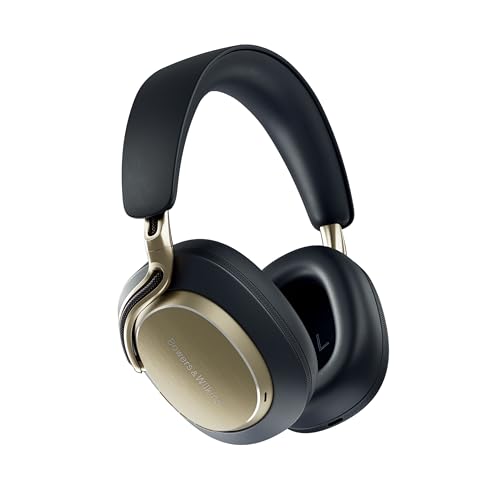
The px8 s2 is Bowers & Wilkins’ flagship wireless headphone revised: an over-ear design in Midnight Blue that pairs active noise cancelling with high-resolution audio support, premium materials, and a thirty-hour battery claim, from a company whose loudspeakers sit in recording studios and whose headphones have always been tuned by people who mix records rather than market them. This review takes the Px8 S2 as its main subject, then sets two relatives beside it with their roles labelled plainly: the original Px8, the previous flagship in Tan, which the S2 refines rather than replaces in spirit, and the Px7 S3, the step-down sibling in Vintage Maroon that carries much of the same technology at a friendlier tier of the range. The question running through all three sections is the one premium headphone buyers actually ask: what does the extra money buy, in sound, in silence, and in the objects themselves?
Bowers & Wilkins occupies a particular corner of the headphone world. The mainstream giants compete on noise-cancelling depth, ecosystem features, and call quality measured in anechoic chambers; the British firm competes on voicing — the belief that a headphone should sound like its speakers do, balanced, articulate, and unhurried — and on building the thing like furniture rather than electronics. The Px8 line is where that philosophy meets the modern wireless brief, and the S2 revision is the company returning to its flagship with a short list of refinements rather than a reinvention. Whether those refinements matter to you depends on what you listen to, where you listen, and how much of the purchase is the object itself. This review will keep returning to those three variables.
Key takeaways
- The Px8 S2 is the subject pick: the current flagship, in Midnight Blue, with active noise cancelling, high-resolution audio support, thirty hours of listed playtime, and USB-C quick charging that promises hours of playback from a fifteen-minute charge.
- The original Px8 remains a legitimate alternative while it is available: the same flagship concept in Tan, with advanced noise cancelling and the same thirty-hour class of battery, for buyers whose ears and priorities fit the first tuning.
- The Px7 S3 is the value route into the family’s sound: high-resolution audio, noise cancelling, transparency mode, and the same thirty-hour playtime class in the listing, in Vintage Maroon.
- At this tier you are buying three things — voicing, materials, and calm — and only one of them appears on a spec sheet; the sections below separate them honestly.
- None of these is a sport headphone, a gaming headset, or a budget buy; each is a seated, listening-first instrument for travel, office, and home.
In this guide
Quick picks: the three Bowers & Wilkins models in this review
- The flagship, revised: Bowers & Wilkins Px8 S2 — Midnight Blue, hi-res audio, ANC, thirty-hour playtime, quick charge. Check price on Amazon
- The original flagship: Bowers & Wilkins Px8 — Tan, advanced ANC, thirty-hour battery, quick charging. Check price on Amazon
- The step-down sibling: Bowers & Wilkins Px7 S3 — Vintage Maroon, hi-res sound, ANC, transparency mode, thirty-hour playtime. Check price on Amazon
How these picks were chosen: each headphone passed this site’s Creators API verification, with its exact listing title matched against its official product image before a link was placed. Rival flagships from other makers are discussed in prose in the buying-guide section, because a flagship review that ignores the field would be a disservice — but the only linked products here are the three verified Bowers & Wilkins models that this article is actually about.
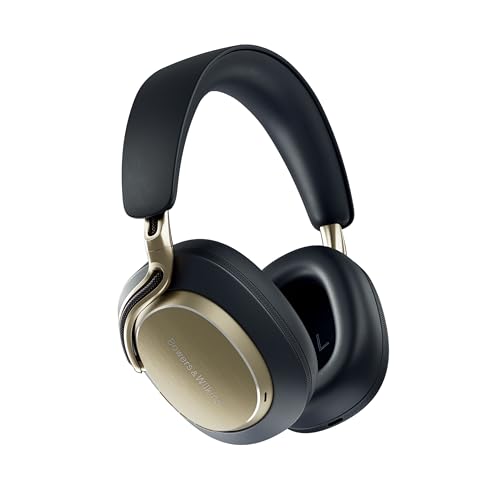
Bowers & Wilkins Px8 S2: what does the revised flagship do best?
Badge: The subject pick — the current flagship.
Mini spec box — Type: wireless over-ear headphones · Colour in listing: Midnight Blue · Noise control: active noise cancelling · Audio: high-resolution audio support · Battery: 30 hours of playtime per listing · Charging: USB-C, 15-minute quick charge per listing · Use brief: travel, office, home listening
Sound first, because with this brand sound is the argument and everything else is the frame. The Px8 family’s voicing is recognisably Bowers & Wilkins: a presentation that prizes clarity through the midrange — where voices, strings, and the body of most instruments live — with bass that is present and shaped rather than swollen, and treble that extends without turning brittle. The S2 revision continues that philosophy; this is a headphone for listeners who want to hear the recording’s decisions, not a headphone that makes its own on every track. Acoustic recordings, jazz, singer-songwriter material, and well-mastered rock reward it immediately. Heavily compressed pop and bass-first electronic genres are handled competently but without the exaggerated low end some rivals use as a signature; if your library’s centre of gravity is sub-bass theatre, know that this flagship’s theatre is a concert hall.
High-resolution audio support matters here in a specific, practical way: paired with a source and a codec path that can carry it, the Px8 S2 can reproduce the detail that hi-res services and files contain, and the headphone’s tuning gives that detail somewhere to go. Wireless listeners should understand the chain honestly — the codec your phone negotiates decides the ceiling, and a wired USB-C connection, where used, removes the negotiation from the question. The point is not that every listener will hear a revelation; it is that the flagship does not become the bottleneck in a good chain.
Noise cancelling on the Px8 line has always been the supporting act rather than the headline, and the S2 keeps that balance. It subdues the steady roar of aircraft cabins, trains, and office air handling into the background where it belongs, and it does so without the pressurised, underwater feeling that aggressive cancelling can impose on sensitive ears. Listeners whose single priority is the deepest possible silence — long-haul regulars who sleep in headphones — may find rivals tuned more single-mindedly for that one metric. Listeners who want silence in service of music, with calls and awareness handled gracefully around it, are the ones this tuning serves. The thirty-hour listed playtime covers a week of commutes or the longest travel day with margin, and the fifteen-minute quick charge is the feature you will bless exactly once, at a departure gate, and remember forever.
The object itself is the third argument. The Px8’s materials — the leathers, the metals, the way the yokes move — are chosen to feel like a luxury good because at this tier they are one, and the Midnight Blue finish of this listing is the discreet version of that statement. Weight and clamp are tuned for seated listening over hours rather than for movement; this is a headphone that rewards a chair, a train seat, a desk. It folds and travels in its case like the premium instrument it is, and it asks to be treated that way.
Strengths
- A voicing with genuine pedigree: midrange clarity and shaped, honest bass that flatter real recordings.
- High-resolution support and a quality wired path mean the headphone never bottlenecks a good source.
- Materials, finish, and build deliver the flagship-object experience the tier promises.
Trade-offs
- Noise cancelling is balanced for music-first listening rather than tuned solely for maximum silence.
- Bass-first listeners may find the low end polite compared with more theatrical rivals.
- It is a flagship-tier purchase that asks to be used seated and looked after, not thrown in a gym bag.
Best for: listeners who buy headphones for sound and substance, and travel or work where calm matters. / Not suited for: gym use, bass maximalists, or buyers seeking the deepest cancelling at any cost to tuning. Check price on Amazon

Bowers & Wilkins Px8: is the original flagship still worth considering?
Badge: The previous flagship — same concept, first tuning.
Mini spec box — Type: wireless over-ear headphones · Colour in listing: Tan · Noise control: advanced active noise cancellation per listing · Battery: 30-hour battery life per listing · Charging: 15-minute quick charging per listing · Position: original Px8 flagship
The original Px8 is not an also-ran that the S2 embarrassed; it is the headphone that established the line’s reputation, and its continued availability creates a genuine decision rather than a clearance footnote. The fundamentals are the flagship fundamentals: the same design language and materials story, advanced noise cancelling, a thirty-hour battery life claim, and quick charging measured in the same fifteen-minute promise. In Tan, it is also the warmer, more traditional-looking of the two flagships — the one that reads as a leather good first and a gadget second.
Where does the original concede ground? In the accumulation of small revisions that define an S2: refinements to the electronics, the tuning, and the details that a manufacturer improves when it revisits a flagship with field experience in hand. None of those refinements overturns the original’s character, and a listener who has heard and loved the first Px8’s presentation is not chasing a phantom if they buy it knowingly. The disciplined way to decide is by tier and availability at the moment you buy: when the original sits meaningfully below the S2’s tier, it is the connoisseur’s value play; when the two sit close, the revised flagship’s updates are the rational choice. Check the current listings and let that gap, honestly assessed, cast the vote.
Strengths
- The full flagship concept — materials, voicing philosophy, and calm — in its original form.
- Thirty-hour battery life and quick charging match the revised model’s headline conveniences.
- The Tan finish is the line’s most classic, leather-goods expression.
Trade-offs
- It is the earlier tuning; the S2 exists because the maker found things to refine.
- Availability of an outgoing flagship can narrow to particular finishes and sellers over time.
- At a small tier gap to the S2, its value argument weakens quickly.
Best for: listeners who know and want the original Px8’s presentation, at a favourable tier. / Not suited for: buyers who want the current flagship’s refinements, or who find the two models closely matched in tier. Check price on Amazon

Bowers & Wilkins Px7 S3: how much of the flagship survives the step down?
Badge: The sibling — the family’s sound at a friendlier tier.
Mini spec box — Type: wireless over-ear headphones · Colour in listing: Vintage Maroon · Noise control: active noise cancelling, transparency mode · Audio: high-resolution sound per listing · Battery: 30-hour playtime per listing · Charging: quick charge support · Fit note in listing: comfortable fit
Every premium range has a model that quietly makes the flagship hard to justify, and in this family that model is the Px7 S3. Read its listing as a checklist of what survived the step down: high-resolution sound, active noise cancelling, a transparency mode for hearing the platform announcement or the colleague at your desk, thirty hours of playtime, quick charge support, and a fit the listing itself describes as comfortable — a word the flagship’s more structured build does not always earn from every head. In Vintage Maroon it also carries the range’s most distinctive finish, a colour with genuine character in a category of blacks and greys.
What the step down actually costs is refinement and materials rather than features: the flagship’s voicing is the more resolved and luxurious presentation, its build the more jewellery-like object, its electronics the newer word. A listener upgrading from mainstream headphones will experience the Px7 S3 as a revelation and may never hear what the Px8 S2 adds; a listener who has lived with flagships will hear the difference in the first track and decide with their wallet whether it is worth the climb. Both listeners are right, which is what a well-built range looks like.
Strengths
- Nearly the whole flagship feature story — hi-res, ANC, transparency, thirty-hour playtime — at a friendlier tier.
- A comfort-forward fit that some heads will prefer to the flagship’s more formal build.
- Vintage Maroon is a finish with real personality in a monochrome category.
Trade-offs
- The flagship’s extra resolution and material richness are audible and tangible once you have experienced them.
- It is a step-down model, and its resale and flagship prestige follow that position.
- Listeners building a hi-res chain around a headphone may eventually want the top model’s ceiling.
Best for: listeners who want the family’s sound and features with sensible restraint. / Not suited for: flagship collectors, or listeners who know they hear and value the last increments. Check price on Amazon
How do the three models divide the range?
Cleanly, as it turns out. The Px7 S3 is the rational enthusiast’s headphone: the sound philosophy and the features, minus the jewellery. The original Px8 is the first flagship, available to be chosen knowingly while stock and tier make it interesting. The Px8 S2 is the current flagship and the subject of this review — the one to buy when the budget reaches and the refinements, the finish, and the knowledge that you own the maker’s present best are part of the pleasure. Readers widening the field beyond one brand will find the landscape mapped in how much sound leak do open backed headphones have for the open-back alternative at home, and in philips fidelio x2hr headphone review for a wired audiophile benchmark, while headsets vs headphones what is the difference settles the microphone question for work calls.
How do you choose a premium wireless headphone without wasting the premium?
Start with your listening, audited honestly. Write down the last twenty tracks you actually played and the places you played them. If the list is audiophile pressings in a quiet room, voicing and hi-res support deserve your money and this flagship earns its tier. If the list is podcasts on a train and calls in an open office, cancelling depth, microphone quality, and comfort over long wear outrank the last degree of resolution — and you should be reading a different shortlist, or this range’s step-down model with fresh eyes. Premium headphones punish vague buying more than budget ones do, because the premium buys specialisation, and specialisation aimed at the wrong target is just expense.
Second, decide what silence is for. Noise cancelling exists on a spectrum from gentle hush to sensory deprivation, and the right point on it is personal: some travellers want the world erased, others want it lowered to a murmur that keeps announcements and a travelling companion’s voice reachable. The Px8 family’s balance — music first, silence in service — is a position in that argument, not a failure to reach its end. Try, if you can, before you commit at this tier; ears and heads differ more than measurements do, a truth is bigger driver size better in headphones explores from the engineering side.
Third, interrogate your source chain. A hi-res-capable headphone fed by a phone’s default Bluetooth path is a sports car in traffic: capable, unbothered, and unproven. If you intend to hear what the flagship offers, plan the chain — a service tier that carries hi-res, a device and codec that pass it, or the wired connection for serious sessions — and if you do not intend any of that, let the Px7 S3’s honesty save you money without saving you from good sound. Fourth, the object test: at this tier you will handle the headphone daily for years, so materials, weight distribution, clamp, and the case it travels in are not vanity metrics. They are the user interface. Buy the one your hands like, because your hands vote every day.
How do you get the best from a flagship headphone day to day?
Fit is the first setup step and the one most listeners rush. The headband should carry the weight across the top of the head with the cups sealing around — not on — the ears; a broken seal costs bass and cancelling performance simultaneously, and glasses arms are the usual culprits, so experiment with position before blaming the tuning. Give the noise cancelling a fair test in the environments you bought it for: an aircraft cabin’s drone, a train’s rhythm, an office’s murmur are different opponents, and the mode that flatters one may not be the one for another. Learn the transparency control until it is reflexive, because the mark of a well-run premium headphone is how gracefully it lets the world back in.
Battery habits at this tier are simple: the thirty-hour class of endurance means charging is a weekly rhythm rather than a nightly anxiety, and the quick charge exists for the exceptions. Keep firmware current through the maker’s app, since codec behaviour and cancelling refinements are exactly what updates carry, and set the app’s equaliser with restraint — the factory voicing is the product you paid for, and EQ is best used as a small correction for a specific recording or a hearing preference, not as a new personality. For storage, the case is not packaging: leather, hinges, and headband mechanisms all age better protected, and a flagship stored in its case keeps both its finish and its resale dignity. The care guidance in how to fix problems with bose quietcomfort headphones generalises surprisingly well to troubleshooting any premium wireless headphone’s connection and reset behaviour.
What mistakes do premium headphone buyers make?
The first is buying the flagship badge for a mainstream job: if your dominant use is calls and commutes, the last increment of resolution is money spent where your life cannot hear it. The second is the mirror error — buying the step-down while knowing you are a flagship listener, and spending the following year auditioning the upgrade you postponed. The third is judging noise cancelling in a quiet room at home, where every model seems adequate, rather than against the drone it was bought to fight. The fourth is neglecting the return-window listening discipline: at this tier, spend the first days with your most familiar recordings, in your loudest real environment, at your longest session length, because fit fatigue at hour three is invisible at minute ten.
Fifth, treating hi-res as a logo rather than a chain, and then concluding the headphone overpromised when the bottleneck was a codec negotiation three links upstream. Sixth, forgetting that a premium object wants premium handling: tossed unprotected into bags, these headphones age like the luggage they are treated as. None of these mistakes is about intelligence; all of them are about matching a specialised instrument to a life, which is the entire skill this category asks of its buyers.
Our final recommendation
The Px8 S2 is the recommendation for the listener this article describes: someone whose library rewards resolution, whose travel or office rewards calm, and who values the object as well as the sound. It is the current flagship, honestly framed — a refinement of a proven design rather than a revolution, bought for voicing, materials, and poise. The original Px8 is the connoisseur’s alternative while its tier and availability cooperate, and the Px7 S3 is the range’s rational heart, the model we would hand to a friend who asked for the family’s sound without the flagship’s ceremony. Choose by your listening, your silence, and your hands, in that order, and any of the three will feel less like a purchase and more like an appointment you keep daily.
How does the Px8 S2 handle different kinds of music?
Genre by genre is the honest way to review a voicing, because a headphone’s character is a set of decisions about what to emphasise when everything cannot be emphasised at once. Classical recordings are this flagship’s home ground: orchestral mass resolves into sections rather than fog, string tone keeps its rosin, and quiet passages stay composed because the noise floor of your environment has been lowered by the cancelling around you. Small-ensemble jazz shows off the midrange honesty — a saxophone sounds like breath and brass before it sounds like a recording — and the bass, while never swollen, has the pitch definition that lets an upright bass be a melody instrument rather than a rhythm of thuds.
Vocal music, from folk to soul to the singer-songwriter canon, sits at the centre of the tuning’s priorities: voices are present, textured, and unexaggerated, which over long listening is the quality that separates a headphone you admire from one you live in. Rock and indie reward the same clarity in guitars and snare, with the caveat that recordings mastered hot and loud will sound exactly that — this headphone declines to add a smoothing fiction of its own. Electronic and hip-hop listeners face the family’s known trade: the low end is shaped and articulate, kick drums have edges, but the sub-bass physicality that some rivals engineer as a signature thrill is deliberately restrained. Film and game soundtracks, with their dynamic swings, suit the headphone well in seated use, and spoken word — podcasts, audiobooks — is quietly superb, because intelligibility lives in the midrange this maker refuses to compromise.
The through-line is trust. A headphone voiced like this assumes the recording was made by people who meant it, and it gets out of their way. Listeners raised on more theatrical tunings sometimes need a week to recalibrate — the first impression can read as restraint — and then find other headphones sounding exaggerated in retrospect. That recalibration arc is the classic flagship experience, and it is worth knowing about yourself before you spend flagship money in either direction.
What is the Px8 S2 like as a travel and work companion?
Travel is where the premium wireless category justifies itself, and the S2’s brief is well aimed: the cancelling turns a cabin into a room of one’s own, the battery covers the longest realistic travel day and the delay that ruins it, the quick charge rescues the forgotten overnight plug, and the case protects an object worth protecting through the indignities of overhead bins. In the seat, the headphone’s seated-tuning is in its element — hours of wear in a fixed posture, films on the seatback screen through the wired path when you want it, your own music when you do not. The controls, physical in philosophy where it counts, work with travel-tired hands better than a panel of gestures memorised in a showroom.
Office life is the second act. In an open plan, the cancelling lowers the murmur to a level where concentration survives, transparency returns the colleague and the announcement without removing the headphones, and the build’s discretion — especially in Midnight Blue — reads as professional rather than performative. Calls are handled capably, with the honest caveat that a dedicated boom or a quiet room will always out-perform any headphone’s beamforming in a gale; for the ordinary run of meetings from ordinary rooms, the flagship is a citizen in good standing. The work-from-home pattern may be its sweetest spot of all: long, comfortable, high-quality listening punctuated by calls, in the chair where the materials and the voicing earn their keep daily rather than at altitude.
What travel and work share is the demand for reliability of ritual: the headphone that pairs without negotiation, charges without anxiety, and folds away without a puzzle. Premium pricing buys that ritual polish as surely as it buys resolution, and owners consistently cite the absence of friction — not any single specification — when explaining why a flagship stayed in their bag for years.
How does the flagship compare with the mainstream alternatives, in prose?
Because this article links only its own family’s verified listings, the wider field gets its due in words. The mainstream flagship rivals compete on a different centre of gravity: cancelling tuned for maximum measured silence, call quality engineered for airport announcements delivered in a wind tunnel, ecosystem features that bind the headphone to a phone brand’s other talents, and tunings with a more pronounced low-end signature for immediate showroom impact. Those are real virtues, and a buyer whose life is calls, cabins, and commutes in equal measure may rationally choose them. The Bowers & Wilkins counter-argument is a hierarchy: sound first, materials second, silence third — and the Px8 S2 is the headphone for listeners who share that ordering and have felt, in other flagships, the faint sense that the music was the feature rather than the point.
There is also the wired audiophile alternative to acknowledge: at home, in a still room, an open-back wired headphone at a similar tier will out-resolve any wireless design and leak sound to prove it. The flagship wireless answer is freedom — the same listening quality philosophy, liberated from the chair and the cable, with silence manufactured around you wherever you sit. Households with both rarely describe them as rivals; they are tools for different rooms of a life, and this review’s linked trio is competing for the wireless chair.
What does long-term ownership of a flagship headphone involve?
Flagships are bought for years, so the ownership ledger deserves a section. The consumables are the ear pads and, eventually, the battery. Pads compress and their covering ages with skin oils and time; a maker at this tier designs them to be replaceable, and a fresh set in year three restores both the seal and the sense of newness more completely than any accessory. The battery’s thirty-hour youth will soften gradually across hundreds of cycles — the chemistry of every wireless headphone — and the quick-charge feature ages gracefully alongside it, shrinking the inconvenience of a shorter endurance rather than hiding it. Treat the hinge and yoke mechanisms with ordinary respect, store the headphone in its case rather than on a hook by the headband’s crown, and the structure will outlast several phones.
Software is the other half of longevity. The companion app is where firmware, codec behaviour, and control customisation live, and a flagship from an established maker carries the reasonable expectation of continued updates — which is part of what the premium buys over an anonymous rival. Keep the app, apply updates in calm moments rather than at departure gates, and re-check your EQ and control settings after major updates, since defaults occasionally move. Owners who do this light admin describe their flagships the way good-tool owners always do: it just keeps working, which is the highest praise in the category and the least visible in a spec table.
Who should not buy the Px8 S2?
The honest non-audience, named plainly. The gym and the run: no fit security or sweat tolerance is claimed, and a flagship’s leather has no business there. The bass maximalist: the low end is honest, and honesty will read as absence to an ear calibrated for theatre. The silence absolutist: cancelling here is a balance, not a record attempt. The budget-led buyer stretching to reach the badge: the Px7 S3 exists precisely so that stretch is unnecessary, and a headphone bought with resentment is rarely loved. The ecosystem loyalist who wants their phone’s assistant, spatial features, and device-switching woven invisibly: a brand-agnostic flagship will always feel a step more manual. And the listener who simply prefers a brighter, more immediate tuning: taste is not an error, and this maker’s voicing is a position you are allowed to disagree with.
What remains, after those honest exclusions, is the audience the flagship was voiced for — and for them, the recommendation in this review stands without asterisks. Knowing which side of the list you are on is the entire purpose of the preceding pages.
How should you audition a flagship before committing?
If you can listen before buying, bring a method, not just a playlist. Choose three recordings you know to the bone — one vocal, one dynamic and complex, one with genuine low-frequency content — and one recording you love despite an imperfect production, because a revealing headphone’s treatment of flawed favourites is where long-term satisfaction is decided. Listen at your real volumes, in an environment with some noise if travel is the purpose, for longer than politeness suggests; comfort is a slow variable. Compare against your current headphone rather than against silence, since the upgrade you are pricing is a difference, not an absolute.
If you must buy unheard — the common case — simulate the audition inside the return window with the same discipline: the same recordings, your loudest real environment, your longest session, and a deliberate evening with the wired connection to learn what the drivers themselves believe. Decide by the end of that window, cleanly, and then stop auditioning and start listening. The flagship habit worth copying from experienced owners is not their gear; it is that they chose, committed, and let the music resume being the point.
Why do materials and build matter to sound, not just to pride?
It is tempting to file the flagship’s leathers and metals under luxury and move on, but build quality is acoustics by other means. A rigid, well-damped cup does not add its own resonances to the music; a headband that distributes weight evenly keeps the cups’ angle — and therefore the tuning you auditioned — stable across a long session; a seal that holds its shape keeps bass and cancelling where the designers put them. The tactile pleasures of a premium object and the sonic virtues of a premium instrument are, at this level, substantially the same engineering wearing two descriptions. That is why the step-down Px7 S3, which shares the philosophy in lighter materials, still sounds like family, and why the flagship’s extra money is not purely jewellery: some of it is silence, structure, and stability you hear.
The corollary is care. Materials chosen for feel and function reward the small rituals this article has mentioned — the case, the gentle wipe, the pad replacement when the time comes — and punish their absence in slow, visible ways. Buyers who enjoy maintaining good objects will find a flagship headphone a satisfying possession in the way a good watch or a leather bag is satisfying. Buyers who want an appliance they can neglect should buy the appliance tier with a clear conscience; the category serves them well, and no flagship’s voicing will compensate for a relationship with the object that was never going to work.
Seen whole, the Px8 S2 is a coherent position in a crowded field: that a wireless headphone can be an instrument and an heirloom-grade object at once, that tuning is a form of respect for recordings, and that calm — acoustic, tactile, operational — is the luxury actually being sold. The preceding sections have tested that position from the angles a buyer can test it: music, travel, work, ownership, and the honest list of who should walk past it to something else. What remains is the simplest summary a flagship review can offer. If the position sounds like yours, the S2 is the current, refined expression of it, and the original Px8 and the Px7 S3 stand as the knowing alternatives at their own points of the range. If it does not, the field is wide, the rivals are capable, and your money deserves the headphone whose hierarchy matches your own.
What should you check on the listing before you buy any of the three?
Premium purchases deserve a calm minute of listing literacy, because at this tier the details are the product. Confirm the exact model name and generation — Px8 S2, Px8, and Px7 S3 are three different headphones, and their finishes are specific: Midnight Blue for the S2 listing verified here, Tan for the original Px8, Vintage Maroon for the Px7 S3. A listing whose photographs, title, and finish disagree with one another is a listing to walk away from regardless of tier. Confirm the seller and the return terms with the care appropriate to a flagship, and keep the packaging and documentation until the headphone has survived your return-window audition described above.
Check what is in the box against the listing’s own description — case, cables, and any adapters are part of the ownership experience and part of what you are paying for — and register the product with the maker if a registration path is offered, since warranty and firmware support both begin there. Finally, a word on timing: flagship headphones are revised on multi-year cycles, and the presence of both the Px8 and the Px8 S2 in this review reflects a range mid-transition. Neither choice is a trap. The S2 is the current word; the original is a known quantity; the Px7 S3 is the standing value. Buy the one your listening, your silence, and your hands have already chosen, and let the calendar be the calendar.
A short history of why this flagship sounds the way it does
Context sharpens judgement, so a brief lineage is in order. Bowers & Wilkins built its name on loudspeakers — the kind installed as reference monitors in famous recording studios — and came to headphones later than the consumer-electronics giants, carrying a speaker-maker’s assumptions with it: that tonal balance is sacred, that a product should be voiced once, carefully, by people with ears and authority, and that materials are part of performance. The Px7 line established the company’s wireless grammar; the original Px8 raised the materials and the resolution to flagship level; the S2 is the sound of a maker returning to that flagship with the confidence to refine rather than chase. Listeners who wonder why this headphone does not chase the loudest bass or the deepest silence on the market have their answer in that history: it was never trying to win those contests. It is trying to be the headphone a recording engineer would pack, and judged by that intention — the only fair standard for any designed object — the Px8 S2 is a remarkably complete piece of work.
One final, practical encouragement for the reader standing at the edge of the flagship tier for the first time: the anxiety is normal, and it dissolves with use. Within a month, the headphone stops being a purchase you evaluate and becomes the way your favourite records sound — the purchase disappears into the listening, which is precisely what the money was for. Choose carefully, using the method this article has laid out, and then grant yourself the owner’s peace of not re-litigating the decision with every new release. Ranges refresh, finishes rotate, and a well-chosen flagship keeps its side of the bargain for years: it makes the music sound like it matters, in whatever chair you happen to be sitting in.
How does the Px8 S2 fit into a wider listening life?
Few households own one headphone, and the flagship’s role among its companions clarifies its value. Alongside a sport earbud that lives in a gym bag and a wired open-back that owns the quiet room at home, the Px8 S2 is the traveller and the all-day companion — the one that flies, commutes, concentrates, and still, in the evening, is good enough that the wired pair is a preference rather than a correction. Alongside a streaming subscription it quietly raises the value of the whole library, because a revealing headphone is a reason to seek out the better master, the live recording, the album you somehow never heard properly. And alongside a phone it restores a small ceremony to listening: case opened, headphone on, world lowered, album played in order. In a decade when music became background, an object that returns it to the foreground is not nostalgia. It is the product working as designed, and it is why — across every section of this review — the recommendation keeps returning to the same simple test: if listening is one of the pleasures your days are built around, the flagship tier is not an extravagance. It is the appropriate tool, bought once and used ten thousand times.
And if, after all of this, you remain torn between the S2 and its own siblings, let the tie be broken by the calendar of your life rather than by specifications. A year of heavy travel ahead argues for the flagship’s fullest expression of calm and craft. A year of desk-bound work in a quiet home argues for the Px7 S3’s comfort and restraint, with the difference banked toward recordings. A found original Px8 at a kind tier, in the finish you prefer, is a gift the range’s transition occasionally offers and needs no apology. The wrong choice, in this family, barely exists — there are only better and worse fits for a particular listener’s next few years, and you now have the vocabulary to tell them apart.
Buy once, listen for years, and let the headphone become part of the furniture of your attention — that is the whole case, and the Px8 S2 makes it as well as any wireless headphone currently can.
Readers who have followed the whole review will notice that its judgements return, again and again, to three questions — what do you listen to, where do you listen, and how do you want the object to feel in your hands — because those questions, answered honestly, predict satisfaction with a flagship headphone more reliably than any measurement yet published. The Px8 S2’s answers are distinctive: recordings taken seriously, environments calmed rather than erased, and an object built to be kept. If those are your answers too, the search that brought you here can end with confidence. If they are not, the same three questions will serve you just as faithfully with whatever headphone you choose next — which is, in the end, the most useful thing a review can leave behind.
Frequently asked questions
What is new in the Px8 S2 compared with the original Px8?
The S2 is a revision of the flagship rather than a reinvention: the same design philosophy and premium build, with the maker’s refinements to electronics, tuning, and details gathered from the first model’s time in the field, presented in finishes including the Midnight Blue of the verified listing. Buyers choosing between them should weigh those refinements against the tier gap on the day they buy.
Is the noise cancelling on the Px8 S2 the strongest available?
It is tuned as part of a music-first balance: it subdues cabins, trains, and offices effectively while avoiding the pressurised feeling aggressive cancelling can cause. Listeners whose overriding priority is the deepest possible silence above all other qualities may prefer a rival tuned single-mindedly for that metric; listeners who want silence in service of sound are this headphone’s audience.
Does high-resolution support matter over Bluetooth?
It matters when the whole chain supports it: the source file or service tier, the device, and the codec negotiated between device and headphone together decide what arrives at the drivers. The Px8 S2’s virtue is that it does not become the bottleneck, and its wired path removes the negotiation entirely for listeners who want certainty. With an ordinary streaming chain it still sounds like itself — the hi-res support is headroom, not a requirement.
How long does the battery last, and how fast does it charge?
All three models in this review carry a thirty-hour class of playtime in their listings, which in practice means a week of ordinary use between charges. The Px8 models list a fifteen-minute quick charge promising hours of playback — the feature designed for the forgotten-charge departure morning. Real endurance varies with volume and cancelling use, as it does for every wireless headphone.
Px8 S2 or Px7 S3: which should I buy?
Buy the Px7 S3 if you want the family’s sound, features, and comfort at a friendlier tier and your listening is broad and everyday. Buy the Px8 S2 if your library and habits reward the flagship’s extra resolution and materials, and the object itself is part of your pleasure. The honest test is a familiar recording heard on both; the difference is real, and only your ears can price it.
Are these headphones suitable for exercise or gaming?
Neither is their brief. They are seated, listening-first instruments without the fit security, sweat tolerance, or microphone-and-chat feature set those activities want. A household is better served by a dedicated sport earbud and a proper gaming headset alongside a flagship for listening — a division of labour the buying-guide section above explains in full.