Disclosure: As an Amazon Associate, reviewstook.com earns from qualifying purchases. Links on this page are affiliate links; they cost you nothing extra. Prices and availability change often, so check the current Amazon listing before you buy.
The vaxee pb is a mousepad, and this guide begins with the same honesty the rest of this maker’s catalogue demands: VAXEE sells its pads directly, no verified marketplace listing for the PB exists, and so this page carries no buy link for its subject. What it carries instead is everything a pad buyer actually needs — because a mousepad is the most under-reviewed, over-influential item on a gaming desk. It decides how every flick starts, how every correction feels, and whether the expensive mouse sitting on it performs like the one in its reviews or like a stranger. This guide explains what the PB is within VAXEE’s small pad family, how to think about glide, base, size, and care when the seller is the maker itself, and how to decide whether a direct-only pad earns its place under your mouse — or whether one of the widely available alternatives surveyed in our other pad coverage serves you better.
Why devote this much attention to a rectangle of fabric and rubber? Because the pad is the one component players replace last and blame never, while it quietly rewrites the behaviour of everything above it. A mouse reviewed on a fast surface and played on a slow one is a different mouse. Sensitivity tuned on a worn pad centre is a different sensitivity at the pad’s fresher edges. The PB enters this conversation as a specialist’s answer: a pad from a company whose entire reputation is shape and surface feel, made to pair with its own mice, and sold through a channel that assumes you already care about the difference between glide characters. This guide is written for exactly that reader.
Key takeaways
- The PB is VAXEE’s own mousepad, sold direct only; there is no verified marketplace listing, so this guide treats it in prose and points purchasing to the maker’s store.
- A pad purchase is a glide purchase: the surface’s balance of speed and control must match your game and sensitivity, and that match matters more than brand or artwork.
- Base grip, edge finishing, and thickness decide whether a pad stays honest across months of play; surface character decides the first week, construction decides the fiftieth.
- Direct buying rewards homework — confirm size, surface description, and care terms on the maker’s page, because returning a pad by post for being the wrong glide is a slow lesson.
- Whatever pad you choose, maintain it: a dirty or worn surface quietly taxes every movement, and most “my aim feels off” mysteries are pad stories in disguise.
In this guide
What is the Vaxee Pb in its maker’s small pad family?
VAXEE’s pad range is deliberately tiny next to the sprawling catalogues of the big peripheral brands, and that smallness is the point: each pad in the family represents a considered glide character rather than a size-and-colour matrix. The PB sits in that family as the maker’s considered answer for players who want a dependable, balanced playing surface from the same hands that shaped their mouse — the pad as part of a system rather than an accessory grabbed at checkout. The company’s design language, inherited from the esports-gear tradition its founders came from, treats the pad as equipment: plain, purposeful, and specified by feel rather than decorated by theme.
That system thinking matters more than it might appear. A mouse’s skates, weight, and sensor height are all tuned against some assumed surface, and a maker selling both sides of the contact patch can tune them against each other. Players who already own a VAXEE mouse will find the PB’s proposition straightforward: this is the surface its designers had under their own prototypes. Players arriving with another brand’s mouse should read the PB on its own merits — as a glide character to be matched against their game and sensitivity using the framework in the next sections — because a pad does not care whose logo the mouse carries, and neither does friction.
A word about what this guide will not do: it will not transcribe dimensions, materials, or construction figures that belong to the maker’s current product page and can change between production runs. Where a fact is the maker’s to state, this guide sends you to the maker. Where knowledge is the category’s — how glide behaves, how bases fail, how pads age — this guide speaks fully and from the general record. That division is deliberate, and it is the same division the rest of this site’s direct-only coverage observes.
How should you think about glide before choosing any pad?
Every pad lives on a spectrum between speed and control, and the spectrum is really two questions wearing one coat. The first question is static friction: how much force does it take to start the mouse moving from rest? High breakaway force makes micro-corrections feel sticky and deliberate; low breakaway force makes them feel free and occasionally slippery. The second question is dynamic friction: how much drag accompanies the mouse once it is travelling? High dynamic friction acts as a brake that helps flicks stop on target; low dynamic friction lets flicks fly and demands the hand do all the braking. A pad’s character is its pair of answers, and two pads with identical “speed” marketing can answer very differently.
Your game chooses your preferred answers more than your taste does. Tactical shooters, with their pre-aim and dead-stop flicks, reward braking — most of their players settle on the control half of the spectrum, in cloth, and our roundup of the best cloth gaming mouse pads surveys that territory widely. Fast tracking games reward freedom of movement and punish drag, pushing their players towards the speed half and sometimes off cloth entirely, towards the hard surfaces compared in our best hard gaming mouse pads guide. Sensitivity mediates the choice too: low-sensitivity players make long strokes and feel dynamic friction across every centimetre of them, while high-sensitivity players live in the breakaway zone, where static friction writes their whole experience.
The PB’s family position — a maker’s own pad, tuned for the tactical-leaning audience its mice serve — should be read in that light, and its current surface description on the maker’s page checked against your own answers to the two friction questions. The method matters more than the model: decide your friction answers first, from your game and your sensitivity, and then let pads audition against them. Players who reverse the order — buy the pad, then adapt the game to it — spend a season wondering why their aim feels translated.
What construction details decide a pad’s second year?
Surface character wins the first week; construction wins the second year, and buyers of a direct-only pad should interrogate construction with special care because the return journey is long. Start with the base. A pad’s underside has one job — never move — and it fails that job in two ways: creeping across the desk during large strokes, which the player unconsciously corrects until the correction becomes an ache, and lifting at a corner, which introduces a tiny ramp the mouse discovers at the worst moments. Natural rubber bases with real grip are the category’s dependable answer; whatever the PB’s current base specification, check on the maker’s page that the base is described in gripping terms and plan to keep the desk beneath it clean, because a dusty desk defeats any base chemistry.
Edges are the second construction story. A cloth pad’s edge is where the surface meets the world, and where your wrist and forearm will meet the pad ten thousand times. Low, stitched edges sit below the playing surface and disappear under the wrist; unstitched or raised edges announce themselves hourly and fray across a season. Neither is automatically right — some players like a defined boundary — but the choice should be made knowingly, and the maker’s photographs are a legitimate inspection tool here: look at how the edge is finished, not at the artwork above it.
Thickness and firmness form the third story, the one players feel without naming. A thin pad over a hard desk transmits the desk’s truth: flat, firm, unforgiving of a heavy hand. A thicker, softer pad adds a cushion the mouse can be pressed into, which some players use deliberately — pressing down to add braking force mid-flick is a real technique — and others experience as inconsistency, because the surface’s friction now varies with hand pressure. There is no correct answer, only a matched one: heavy-handed players usually prefer the firmer confession of a thin pad, while light-touch players can exploit a softer pad’s range. Size, finally, is sensitivity arithmetic wearing a tape measure: your longest in-game stroke, plus margin, plus the keyboard’s territorial demands — and our survey of the best mouse pads across sizes shows how the wider market slices those dimensions if the maker’s sizes leave you between stools.
Strengths of the PB proposition
- A maker’s-own surface tuned alongside its mice, for players who want the mouse-and-pad system designed as one contact patch.
- Specialist, decoration-free design language from a company whose reputation rests on feel rather than features.
- A small, considered family: choosing within it is a genuine decision between glide characters, not a lottery among dozens of near-identical options.
Trade-offs of the PB proposition
- Direct-only availability: no marketplace convenience, no price competition, and returns measured in post rather than hours.
- No verified listing means no marketplace review pool to triangulate; the maker’s description and the community’s word carry the whole evidentiary load.
- One maker’s glide philosophy may not be yours — the pad rewards players who have done the friction homework in this guide and punishes impulse with a slow return loop.
Best for: players — especially VAXEE mouse owners — who know their friction answers, value a pad designed as part of a system, and accept direct-channel patience. / Not suited for: players who need a pad tomorrow, who are still discovering their glide preferences and need cheap experiments, or who want the largest desk-mat formats the wider market offers.
How do you buy a direct-only pad wisely?
The direct purchase has three checkpoints, and this guide recommends treating them as gates rather than advice. Gate one is the friction audit from the sections above: state your game’s demands and your sensitivity’s stroke length in a sentence each, and hold the maker’s surface description against those sentences. If the description’s language — its talk of glide, control, texture — does not clearly answer your two friction questions, write to the maker before ordering rather than after; specialist companies answer such letters, and the answer is cheaper than the return.
Gate two is the size-and-desk audit. Measure your current pad’s used territory — the polished region your mouse actually inhabits tells the truth your intentions do not — and confirm the new pad’s dimensions cover that territory with margin, on your actual desk, alongside your actual keyboard. Gate three is the terms audit: read the current shipping, stock, and returns information on the maker’s store at the moment of ordering. Direct ecosystems run in batches; a pad can be between production runs, and knowing that before paying converts a surprise into a decision. Our broader best gaming mouse pads roundup remains the fallback map if any gate fails: the widely available pads there are not lesser choices, merely differently channelled ones, and several are excellent.
On arrival, audition the pad the way you would a mouse: constant sensitivity, a week of normal play, and notes. Pads have a break-in — surface fibres settle, the base learns the desk — so day one’s glide is a draft, not the text. Judge at day seven, and judge the specific things this guide has named: breakaway feel in micro-corrections, braking at the end of your standard flick, edge behaviour under the wrist, and whether the base has moved a millimetre it should not have.
How do you set up, pair, and maintain a pad like the PB?
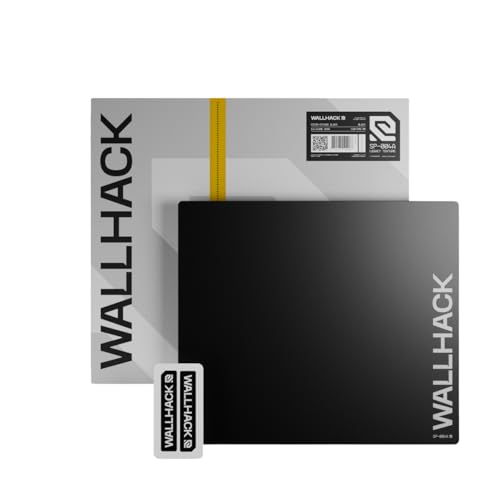
Setup begins under the pad: clean the desk where it will live, because grit under a base becomes a lump under a flick. Position the pad so its centre hosts your neutral mouse position — not where the keyboard pushes it — and give it a day to lie flat before judging any edge curl, which usually relaxes on its own. Pairing with the mouse is a skates conversation: fresh, full-coverage PTFE feet glide truer on any new surface than the worn remnants of the old pad’s era, and fitting new skates when you change pads is the cheapest way to make the comparison honest. Players moving from a very different surface class — from hard to cloth, say, or from the glass world surveyed in our sibling Wallhack SP glass pad review — should expect a sensitivity shadow-period: do not change the number, but expect the hand to recalibrate its braking across a week as the new friction writes new habits.
Maintenance is where pad ownership is won. Dust and skin oils load a cloth surface progressively, slowing its centre into a different pad from its edges; brush the surface weekly with a soft brush or a lint roller, and wash the pad occasionally and gently — cool water, mild soap, air-dried flat — accepting that a washed pad returns slightly changed and settles again within days. Rotate the pad a half-turn every month or two if its shape allows, so wear spreads beyond the centre’s parish. And know the end of a pad’s life when you see it: a centre that stays slow after washing, a base that has lost its grip, an edge that has frayed into the playing field. A pad is a consumable with a long fuse, and replacing one on evidence is maintenance, not extravagance.
What mistakes do pad buyers keep making?
The first is buying the surface their favourite player uses, on a sensitivity nothing like that player’s, in a game with opposite friction demands. Pads are the most context-dependent purchase on the desk; a professional’s choice encodes their stroke length, their game’s braking needs, and their sponsor’s catalogue, in that order of honesty. The second mistake is treating size as a preference rather than an arithmetic result, and discovering mid-flick that the pad’s edge lives exactly where the round’s most important correction needed to land. The third is the opposite of maintenance: replacing a pad that merely needed washing, or — worse — replacing the mouse above a pad that was the problem all along, an error our Valorant mouse guide also warns against from the mouse’s side of the contact patch.
The fourth mistake is unique to the direct channel: ordering in a stock-gap panic from an unverified third-party seller at a markup, with no maker’s warranty behind the parcel. The PB has no verified marketplace listing; a listing that appears under its name should provoke questions, not gratitude. The fifth is subtler and universal: judging a pad in an afternoon. Glide character reveals itself across days, humidity changes, and the settling of fibres and base — a pad auditioned for an hour has only introduced itself.
How does humidity and season rewrite a cloth pad?
Cloth is a plant-and-polymer compromise that breathes its environment, and its glide is therefore a local weather report. In humid weeks the surface drinks moisture from the air and slows — the centre especially, where hand warmth and traffic compound the effect — and players in tropical or summer conditions learn to read a pad’s humid character as its true character, because that is the one they will compete on. In dry, heated winter rooms the same pad quickens slightly and its breakaway feel sharpens. None of this is a defect; it is the physics of the category, and it is why experienced players keep a small repertoire of responses rather than a single complaint: a dehumidified room where that is practical, a spare pad rotated in while the first is washed and dried, or an honest adjustment of expectations between seasons rather than a panicked sensitivity change that the next season will punish.
The practical corollaries are worth stating for a direct-only pad in particular. Buy with your worst season in mind, not your best: the glide you need in August humidity is the purchase criterion, and a pad that only behaves in spring is a part-time employee. Store a spare flat, never rolled tight for months, because a base that learns a curl unlearns it slowly. And if your climate is extreme enough that cloth’s weather-sensitivity genuinely costs you consistency, that is a legitimate reason to look at the surface classes that ignore weather — the hard and glass pads in our other coverage — rather than a reason to declare cloth, or this pad, a failure. Every surface is a bargain with physics; the PB’s bargain is the cloth one, struck by a maker who understands its terms.
What is the pad’s relationship with skates, mice, and wear?
A pad and a set of skates age together like dance partners learning each other’s habits, and replacing one without considering the other produces most of the “this new pad feels wrong” reports in the hobby. Worn skates — their edges rounded, their surfaces scratched by the old pad’s embedded grit — will carve their history into a new surface’s first weeks and glide like a memory of the old pad. Fresh skates on an old pad perform the mirror trick. The disciplined move when adopting a pad like the PB is to start the partnership clean: inspect the mouse’s feet under a lamp, replace them if they show shiny wear-through or nicked edges, clean the sensor lens while you are there, and let the new pair settle together for the audition week before any verdict is allowed.
Mouse weight writes the other half of the relationship. A heavier mouse presses its skates into a cloth surface with more authority, gaining braking and losing freedom; an ultralight skims, freer and harder to stop. Neither is wrong, but the pairing explains why the same pad earns opposite reviews from owners of different mice — and why this guide keeps returning to systems rather than components. If your mouse is at either weight extreme, weight the friction audit accordingly: the heavy mouse wants the freer surface, the light mouse wants the surface with a brake built in. VAXEE’s own mice, designed alongside its pads, sit in the considered middle of that conversation, which is precisely the system proposition the PB makes to their owners.
How do you audition a pad with evidence instead of vibes?
Most pad verdicts are weather reports from a single afternoon. A better method exists, and it costs one week and a notebook. Begin before the new pad arrives: on your old surface, run a fixed routine — fifty flicks at a target at a fixed distance in a practice tool, correcting each landing mentally into one of three buckets: short, on, or long. Record the buckets. This is your baseline distribution, and it describes your current hand-pad system’s braking character more honestly than any feeling you can summon.
Install the new pad, fit fresh skates if the old ones are worn, and change nothing else — same sensitivity, same mouse, same routine time of day. Run the routine on days one, three, and seven. Day one will usually scatter: the hand’s braking map belongs to the old surface. By day three the buckets begin to organise; by day seven they describe the new partnership truthfully. Compare distributions, not highlights. A pad that suits you tightens the “on” bucket without you feeling you are working harder; a pad that does not will show a persistent directional bias — everything long, everything short — that a week of adaptation failed to absorb. That bias, not the pad’s marketing and not your first hour’s impression, is the verdict.
Two confounders deserve naming. Humidity can shift a cloth pad’s character between test days, so note the weather of your room the way sailors note wind; a distribution gathered across a humid week is a humid verdict, and for players in seasonal climates it may be the verdict that matters most. And the centre-versus-edge trap: run some of the routine with the mouse starting from different pad regions, because a pad whose glide varies dramatically across its own surface is telling you something about its consistency that a centre-only test will hide. Evidence-based pad buying sounds excessive until you price the alternative — a season of quietly adapted-to dissatisfaction, purchased one compromise at a time.
Pad or desk mat — which format serves your desk?
The PB belongs to the classic format: a defined playing field for the mouse, with the keyboard living elsewhere. The desk mat — the extended format that runs under both — has become the default aesthetic of the modern setup, and the choice between them is more functional than it looks. A desk mat gives the forearm a continuous, cushioned territory and tidies the desk’s geography into one gesture; it also means your mouse’s surface and your keyboard’s surface are the same product, chosen once, wearing unevenly — the mouse’s parish polishes and slows while the keyboard’s acres stay new, and the whole mat ages at the mouse’s pace.
A dedicated pad separates those fates. The mouse gets a surface chosen purely for glide, replaced on the mouse’s schedule, at a pad’s price; the keyboard can sit on the desk, on a thin mat, on whatever serves the wrists. For competitive players the separation is usually the point: the playing surface is a consumable instrument with its own maintenance and replacement rhythm, and coupling it to the desk’s décor muddies both decisions. For mixed work-and-play desks, the desk mat’s comfort argument is real, and many players compromise knowingly — mat for the day, pad over it for the match. Neither format is a confession of seriousness. What matters is that the surface under the mouse was chosen as a surface, with friction answers in mind — which is the PB’s entire reason for existing, in whichever size its maker offers it.
What does a pad really cost per season?
Pad economics are routinely misjudged because the sticker is small and the influence is large. Spread honestly, a quality cloth pad’s price divides into a modest monthly figure across its service life — less than the skates it will consume, far less than the mouse it serves, and trivially less than the hours it shapes. The real costs hide elsewhere: in the weeks spent adapting to a wrong glide bought cheaply, in the mouse replaced because a dying pad impersonated a dying sensor, in the sensitivity churn that a weather-beaten surface provokes. Against those costs, the direct channel’s frictions — shipping patience, a homework hour — are minor line items, and the premium a specialist maker charges for a considered surface is easier to defend than the premium charged for a decorated one.
The frugal player’s correct strategy is therefore not the cheapest pad but the fewest pads: one right surface, maintained properly, replaced on evidence. That strategy is available in every channel — the widely stocked pads in our roundups include honest workhorses — and the PB’s candidacy within it rests on the system argument and the maker’s feel-first reputation, not on any claim that direct-only automatically means better. Run the audit, price the season rather than the sticker, and let the arithmetic argue with the marketing until one of them wins.
How does the PB conversation change for different games?
A tactical shooter’s pad brief can be written in one line: help me stop. The genre’s aim is a series of arrivals — crosshair placed, flick corrected, target reached and held — and every arrival is a braking event the surface can assist or sabotage. This is the home crowd of a maker like VAXEE, and the reason a pad from this catalogue deserves a tactical player’s first audition: the design heritage assumes your game. If your flicks habitually overshoot on your current surface, the audit points towards more dynamic friction; if your micro-corrections feel like dragging the mouse through honey, it points the other way — and the maker’s surface description should be read as a claim about exactly those two behaviours.
The arena and tracking genres write the opposite brief: never let go. Their aim is continuous pursuit of a strafing target, and drag is a tax levied on every millisecond of the pursuit. Their players migrate towards the spectrum’s free end and often off cloth altogether. A pad like the PB can still serve them if its character sits balanced rather than control-heavy — but the honest guide notes that this is not the congregation the maker preaches to, and a tracking-first player should audition widely, including the hard-surface class, before letting any single maker’s philosophy choose for them.
Between the poles live the hybrid games — battle royales with their mixture of long-range taps and close-range tracking, hero shooters whose roster spans both aim religions — and their players need the spectrum’s middle and the humility to admit it. For them the audition protocol in this guide matters most, because marketing language serves the poles and abandons the middle. Test the buckets, trust the distribution, and remember that a balanced pad slightly misjudged is a smaller error than a pole pad confidently wrong.
What should you know about surface texture and skin?
The least discussed pad variable is the one your forearm votes on nightly: how the surface treats skin. A textured weave that gives a mouse its controlled glide also abrades, gently, the wrist’s heel and the forearm’s edge across thousands of strokes, and players differ enormously in their tolerance — some never notice, some develop a polished tenderness that changes how they rest their arm, which changes their aim, which they then blame on everything except the rectangle responsible. Sleeves, wrist rests, and pad rotation all manage the relationship, but the first management is awareness: when auditioning any pad, include your skin in the jury. A surface your arm argues with will win arguments your scores cannot afford.
Texture also ages unevenly in a way glide tests miss. The centre’s weave flattens under traffic while the edges keep their original tooth, so an old pad is really two pads sharing a border — the mouse’s world changes as it crosses between them, subtly, in the middle of the long strokes that low-sensitivity players depend on. This is the deepest reason the audition protocol samples different starting regions, and the practical reason rotation and timely replacement matter: you are not maintaining a surface’s speed, you are maintaining its uniformity, and uniformity is what muscle memory actually eats.
Why do specialists sell pads direct at all?
It is worth understanding the channel rather than merely enduring it, because the channel explains the product. A pad is a low-ticket, high-feel item: its value lives in properties — friction pairs, weave character, base behaviour — that a marketplace listing communicates badly and a returns bin communicates expensively. A small maker selling through mass channels would watch its considered surface become a thumbnail among ten thousand thumbnails, chosen by artwork and abandoned by algorithm. Selling direct keeps the conversation where the maker can have it: on its own page, in its own vocabulary of feel, to buyers who arrived on purpose. The cost of that control is borne partly by the buyer, in patience and homework — which is why this guide exists in its current shape, doing the comparison and framework work a marketplace page would normally pretend to do.
The same logic explains the family’s smallness. Each additional pad in a direct catalogue must justify itself in the maker’s own language of glide, to an audience that reads that language fluently and punishes decoration. A sprawling range would be a confession that the philosophy had dissolved into retail. When you buy from such a catalogue you are buying the discipline as much as the object — and when you choose a widely stocked alternative instead, you are buying a different and also legitimate discipline, of availability and easy return. Know which discipline your purchase needs, and the channel stops being an obstacle and becomes a specification.
What does a pad change about your mouse settings?
Nothing on paper and everything in practice — which is why pad changes so often trigger false diagnoses. Your DPI and in-game sensitivity multiply into the same effective sensitivity whatever the surface, but the hand’s experience of that number is mediated by friction: the same flick distance that used to end at the target now ends beyond it on a freer surface, or short of it on a grippier one, and the brain’s first hypothesis is that the sensitivity changed. It did not; the braking did. The disciplined response, already stated in the FAQ and worth its own section, is to hold the number constant for a week and let the hand rewrite its braking map — a rewrite it performs quickly and unconsciously when allowed to, and chaotically when the target keeps moving.
There are two legitimate exceptions. Players making a true class change — cloth to glass, say — sometimes find their long-term sensitivity genuinely wants a small step once the new braking character has settled, because the partnership’s optimal point moved. And players whose pad change coincides with a skate change should expect a double adaptation and forgive the first fortnight entirely. Both exceptions share the same protocol: change late, change once, change small, and write down what you changed. The pad did not ask for your settings to churn; it asked for a week of your patience, which is a smaller price than the one churn extracts.
A short history of the mousepad’s fall and rise
The mousepad spent a decade as the hobby’s joke — the free square in the conference bag, the calendar printed on foam — because the ball mouse it served was undemanding and the early optical mouse was easily pleased. Two revolutions rehabilitated it. The first was competitive: as shooters professionalised, players discovered that surfaces differed measurably and that the differences cashed out in landed shots, and the pad became equipment with a vocabulary — glide, stopping power, humidity drift — that this guide has been speaking throughout. The second revolution was material: woven performance cloths, then hard composites, then glass, each opening a region of the friction spectrum the foam square could not reach.
The PB’s maker descends from the first revolution’s priesthood — the esports-gear tradition that treated surfaces as seriously as sensors — and the pad should be read as that tradition’s current statement: unspectacular to look at, opinionated to play on, and sold where its vocabulary is understood. Understanding that lineage helps a buyer calibrate expectations correctly. This is not a lifestyle object that happens to host a mouse; it is a competition surface that happens to be for sale, and its plainness is the credential. Buyers who want their desk to make a visual statement have a thousand decorated options elsewhere; buyers who want their flicks to end where they aim have a shorter list, and this pad’s family is on it by birth.
How do you wash and store a performance pad without ruining it?
Washing a cloth pad is a small ritual with disproportionate consequences, because a bad wash can do in an afternoon what a season of play could not. The gentle method is the category’s consensus: cool to lukewarm water, a little mild soap worked in by hand or with a soft brush following the weave’s direction, patience instead of force on stained regions, and a thorough rinse, because soap residue left in the weave becomes a slow patch with ambitions. Never wring the pad — the base’s bond and the surface’s flatness both resent it — and never apply heat to hurry the drying. Lay it flat, surface up, in moving air, and give it the full day it asks for; a pad returned to service damp plays like a different, worse pad and teaches your hand a lesson it must then unlearn.
Storage follows the same respect for flatness. A spare pad lives flat — under a bed, behind a shelf, anywhere level — rather than rolled in a tube for months, because bases learn curls the way hands learn grips, and unlearning takes days of weights and apologies. Keep it out of sustained sunlight, which ages rubber and fades weave, and away from the garage’s chemical weather. Players with a two-pad rotation — one in service, one resting washed and ready — report the pleasant side effect that pad replacement stops being an emergency purchase and becomes a planned handover, which is the correct emotional register for a rectangle.
One caution belongs to the direct-only context specifically: because a pad like the PB cannot be replaced overnight, its care is not fastidiousness but logistics. The washed spare, the gentle handling, the rotation — these are how a direct-channel owner manufactures the availability that marketplace buyers rent from a warehouse. Treat the pad’s maintenance as part of its price, and the channel’s patience tax shrinks accordingly.
What do you do when the pad is not the problem?
Every pad guide should include its own rebuttal, so here is this one’s: sometimes the surface is innocent. The symptoms that send players pad-shopping — inconsistent flicks, corrections that feel sticky, a glide that changes across the session — have other authors with equal motive. Worn skates impersonate a slow pad perfectly. A sensor lens filmed with dust impersonates a tracking fault. A sensitivity quietly edited by a game update impersonates a personality change in the whole setup. And the hand itself, tired or tense or simply having an honest bad week, impersonates failing equipment better than any component can.
The diagnostic order matters and costs nothing: clean the lens, inspect the skates under a lamp, verify the settings numbers against your written baseline, and play the audition routine on a different region of the pad — a fault that follows the region is the pad’s; a fault that follows the mouse is the mouse’s; a fault that follows you to a friend’s setup is, with love, yours, and its prescription is rest and practice rather than retail. Only when the evidence convicts the surface should the PB — or any pad — enter the story. A guide that talks you out of a purchase the evidence does not support has served you exactly as well as one that talks you into the right purchase, and considerably better than one that cannot tell the difference.
One last pairing thought: the pad and your chair-side habits
It sounds unlikely until you watch yourself play: the pad’s working life is shaped by habits that never touch the mouse. The drink placed at the pad’s corner, condensing onto the weave. The snack hand returning to the keyboard with its evidence. The cat, exercising squatter’s rights on the warm centre of the surface, depositing a fine felt of hair that no brush fully evicts. The window left open through a dusty week. None of these is a moral failing; all of them are line items in the pad’s true maintenance budget, and the players whose surfaces stay honest longest are not the most fastidious but the most realistic — they keep the drink on the other side, the brush in the drawer it is actually opened from, and the spare pad ready for the week the cat wins. A performance surface is a small promise you keep to your future aim, and like most promises it is kept in the unglamorous moments or not at all.
And a note for the player assembling a whole VAXEE desk
Some readers will arrive here mid-project, assembling a matched setup from this one small catalogue — a mouse from the shape lines, a pad from the surface family, perhaps the maker’s other desk pieces in time. The appeal is coherence: one design philosophy, tuned as a system, with no component arguing against another’s assumptions. The risk is the mirror image — a single philosophy’s blind spots, adopted wholesale and uncritically, because the set looks intentional. The mature version of the project buys the system piece by piece, auditioning each against the framework in guides like this one, and lets coherence be the result of several honest yeses rather than a single aesthetic one. If the PB earns its yes on friction, size, and care, the matched desk stops being a mood board and becomes what its maker intended: a contact patch, considered as a whole, under a hand that knows why every part of it is there. That knowledge — unglamorous, measurable, written in a notebook during an audition week — is worth more than the pad itself, because it survives the pad: surfaces wear out, but a player who knows their friction answers can replace one in an afternoon, in any channel, for the rest of their playing life. Keep the notebook, date its entries, and let each new surface be judged against the last one’s recorded evidence rather than against nostalgia’s unreliable recollection of how the old pad felt when it was new.
Frequently asked questions
Why is there no buy link for the VAXEE PB in this guide?
Because the pad is sold through its maker’s own store and no verified marketplace listing for it exists. Linking you to another brand’s pad as though it were the PB — or to an unverified seller trading on the name — would be a disservice dressed as convenience. The maker’s page is where its current sizes, surface description, stock, and terms authoritatively live.
Is the PB a speed pad or a control pad?
Read the maker’s current surface description against the two friction questions in this guide — breakaway feel and travelling drag — rather than trusting any one-word label, including ours. VAXEE’s audience and design heritage lean tactical, which usually implies a balanced-to-control character, but labels drift between production runs and the product page is the authority at the moment you buy.
What size should I choose?
Let your sensitivity do the arithmetic: measure the territory your mouse actually uses on your current pad — the worn, polished region is the truthful map — and choose a size that contains that territory with margin for your longest competitive stroke, while still fitting your desk beside your keyboard. Between sizes, the larger one forgives; the smaller one merely fits until the round that matters.
How long does a cloth pad like this last?
With the maintenance rhythm in this guide — weekly brushing, occasional gentle washing, rotation where shape allows — a quality cloth pad serves a heavy player for a long season of daily use before its centre slows beyond washing’s power to restore. The honest lifespan test is comparative: when the centre’s glide remains stubbornly different from the edges’ after a wash, the pad has given its best and a replacement is maintenance, not indulgence.
Can I use the PB with a non-VAXEE mouse?
Yes — friction does not check logos. The system argument says the pad was tuned alongside its maker’s mice, which may flatter them, but any mouse with healthy skates will behave according to the same physics. Judge the pairing by your friction audit and a week’s honest play, not by brand symmetry on the desk.
Should I change my sensitivity when I change pads?
Not on day one. Keep the number constant through the audition week so the comparison stays interpretable; what changes with a new surface is the braking and breakaway feel around the same sensitivity, and the hand recalibrates to those within days. If, after a full week, your flicks land consistently long or short in one direction, that is a sensitivity conversation — held once, in a small step, with another week allowed to judge it.
What is the final verdict on the Vaxee Pb?
The PB is a specialist’s pad from a specialist’s catalogue: a considered glide surface designed as one half of a mouse-and-pad system, sold direct to players who already know that the rectangle under the mouse is equipment rather than décor. Its strengths are the strengths of its maker’s philosophy — focus, feel, and a family small enough that choosing inside it means something. Its costs are the channel’s costs: patience, homework, and a return loop measured in post. Do the friction audit, measure your desk, read the maker’s page like a contract, and the PB either clearly earns its place under your mouse or clearly excuses itself — and a guide that helps you reach either answer with confidence has done the whole of its job. If the audit points you elsewhere, the wider pad market surveyed in our guide to XL mouse pads and desk mats and the roundups linked throughout this page will catch you; if it points you to the maker’s store, go with your measurements written down and your expectations set by the sections above.