Disclosure: As an Amazon Associate, reviewstook.com earns from qualifying purchases. Links on this page are affiliate links; they cost you nothing extra. Prices and availability change often, so check the current Amazon listing before you buy.
The z 50ii arrives in a market that keeps telling beginners two contradictory stories: that phones have made small cameras pointless, and that only a full-frame body is worth buying. Nikon’s compact mirrorless camera ignores both stories. It is a small, serious, interchangeable-lens camera built around an APS-C sensor, easy colour presets for people who hate editing, and wireless sharing for people who live on their phones — a combination aimed squarely at creators who have outgrown a handset but refuse to carry a brick. This review explains who that combination genuinely serves, how the body-only and two-lens kit listings differ, and what to check before you spend money on either.
Start with the honest summary. The Z50 II is not a cut-down toy and not a disguised professional body; it is a well-judged middle. Its stills and video share the same straightforward menu logic, its colour presets produce likeable images straight from the camera, and its size invites you to actually bring it along, which is the unglamorous trait that decides whether any camera gets used. The two verified listings below cover the sensible ways to buy it: body only if you already own compatible lenses, or the two-lens kit if you are starting from nothing and want a standard zoom plus a longer telephoto zoom from day one.
Key Takeaways
- This is an APS-C mirrorless camera, so expect a real step up in depth, low-light behaviour, and lens choice compared with a phone, in a body still small enough for a jacket pocket with a compact lens fitted.
- Colour presets are the headline convenience: pleasing, shareable images without a raw-editing workflow, while full manual control remains available when you want to learn it.
- Wireless photo sharing matters more in daily life than most specification sheets admit, because an image that reaches your phone in seconds is an image that actually gets posted and sent.
- Body-only suits existing Nikon Z shooters; the two-lens kit suits first-time buyers who would otherwise face a second purchase within months.
- Lenses, cards, and a spare battery shape the real ownership cost, so budget for the system rather than fixating on the body figure alone.
- Creators who mainly film themselves should compare the flip-screen vlogging alternatives linked later before deciding, since screen articulation styles differ between models.
In this guide
Quick Picks: the two ways to buy the Z50 II
| Pick | What is in it | Best suited to | Link |
|---|---|---|---|
| Nikon Z50 II camera body | Compact mirrorless stills and video camera with easy colour presets and wireless sharing | Existing Z-mount lens owners, upgraders | Check price on Amazon |
| Nikon Z50 II with two lenses | The same camera supplied with two lenses for everyday and longer-reach shooting | First-time system buyers who want range immediately | Check price on Amazon |
A two-row table is the correct shape for this product. Inventing extra rows from older models or unrelated bundles would pad the page and muddy the single decision that matters: do you need lenses in the box or not? Everything else — which memory card, which bag, which spare battery — is an accessory conversation that the buying guide below handles in prose, deliberately without links, because those choices depend on habits no roundup can see.
How were these picks chosen?
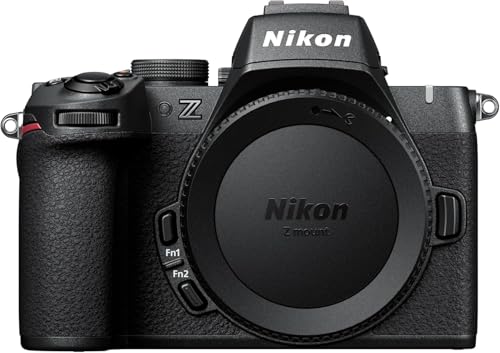
Both listings were confirmed through marketplace data with titles that name the Z50 II explicitly as a Nikon USA model. That last detail matters: an earlier camera with a very similar name circulates widely in bundles, and search results happily mix the generations together. Any listing whose title did not clearly identify the second-generation body was excluded, however attractive its bundle extras looked. Each pick also carries an official product image, placed directly before its review section, so the body you are reading about is the body you can see. Accessories mentioned in this article are discussed generically and never linked, because they were not part of the verified pick set.
Reading guidance, briefly: this page does not claim studio test-chart results or weeks of field shooting that did not happen. Judgements rest on the confirmed listing information, the documented design priorities of the camera — presets, sharing, compactness — and the well-understood behaviour of APS-C mirrorless systems for stills and video. Where a point is about taste, such as how a grip feels in a small hand, the text frames it as something to verify in a shop rather than as a verdict handed down from here.

Nikon Z50 II camera body — for lens owners and deliberate builders
Badge: Best if you already own Z-mount glass. Buying the body alone is the connoisseur’s route: you skip kit glass you would outgrow, put the whole budget into the camera, and pair it with lenses chosen for the subjects you actually shoot. It is also the upgrade route for anyone moving up from an earlier Z body while keeping an existing lens shelf intact.
- Format: APS-C mirrorless interchangeable-lens camera
- Positioning: compact stills and video camera, Nikon USA model
- Colour: easy in-camera colour presets for ready-to-share images
- Sharing: wireless photo transfer to a phone
- In the box focus: camera body; lenses chosen separately
Strengths
- No duplicated kit lens gathering dust if your lens collection already covers everyday focal lengths.
- The compact body keeps a fast prime or a small zoom feeling balanced rather than front-heavy during long handheld days.
- Presets and sharing make the body friendly to hand to a family member, which keeps it useful beyond your own projects.
Trade-offs
- A body without a lens takes no photographs at all, so a first-time buyer choosing this route must fund glass immediately as well.
- Building a lens set one purchase at a time costs more patience and usually more money overall than a kit bought once.
- You must confirm mount compatibility carefully if your existing lenses come from older Nikon systems via adapters.
The body-only route rewards a plan. Write down the two or three subjects you shoot most — children indoors, travel streets, birds at the feeder, products for a small shop — and let that list, not a forum’s enthusiasm, decide your first lens. A bright compact prime teaches composition and low-light craft beautifully; a standard zoom covers family life with the least friction. Either way, the camera’s presets forgive a beginner’s exposure stumbles while its manual modes wait patiently for the month when curiosity arrives.
Best for: existing Nikon Z owners upgrading, and first-time buyers with a clear lens plan and the budget to fund it. / Not suited for: anyone who wants to open the box and shoot the same afternoon with nothing else to buy.

Nikon Z50 II with two lenses — the complete starting kit
Badge: Best first system camera purchase. The two-lens kit answers the beginner’s real question — what do I point it at, and how close can I get? — with a standard zoom for everyday scenes and a telephoto zoom for distance: sports from the sideline, wildlife at respectful range, compressed portraits, and the far end of a school stage.
- Format: APS-C mirrorless interchangeable-lens camera
- Positioning: compact stills and video camera, USA model
- Lenses: two zooms covering everyday through telephoto reach
- Colour: easy in-camera colour presets for ready-to-share images
- Sharing: wireless photo transfer to a phone
Strengths
- One purchase covers the focal range most family and travel photography actually uses, from group shots to distant subjects.
- Learning on zooms teaches framing by moving the lens rather than your feet, which suits beginners still building confidence.
- The kit removes the compatibility guesswork entirely; everything in the box was made to work together.
Trade-offs
- Kit zooms are versatile rather than specialised, so low-light enthusiasts will eventually crave a faster lens for dim interiors.
- Carrying two lenses means a slightly bigger bag and the small discipline of swapping glass outdoors without inviting dust.
- If you already know you only shoot one subject, a body plus one dedicated lens could serve that subject better.
There is a quiet educational gift inside a two-zoom kit: within a month, your own library tells you which lens you reach for and where each zoom spends its life. If the telephoto lives at its long end, your future is longer glass or a teleconverter conversation. If the standard zoom never leaves the camera, your future is a brighter standard zoom or a prime at your favourite focal length. Buying the kit is therefore also buying information about yourself as a photographer, at a gentler price than learning the same lessons through separate purchases.
Best for: first-time system buyers, families, travellers, and anyone upgrading from a phone who wants range on day one. / Not suited for: owners who already hold equivalent Z lenses, or specialists certain of the single lens they need.
Z 50ii in daily life: what the design priorities feel like
Three priorities shape this camera, and each maps to a daily friction that older cameras made you accept. The first is size. A compact APS-C body changes the mathematics of bringing a camera: it fits the bag you already carry, hangs lightly during a full day of sightseeing, and does not make you the most conspicuous person at a family gathering. Cameras earn their keep in proportion to the days they are present, and presence is mostly a weight and volume decision made at the front door each morning.
The second priority is the colour preset system, which deserves respect rather than the snobbery it sometimes attracts. Most photographs taken by most people are shared within the hour and never edited. A camera that produces warm, pleasing colour in the moment — skin that looks like skin, skies that stay believable, food that looks appetising — serves that reality honestly. The presets also function as training wheels with dignity: shoot a scene through several of them and you begin to see how contrast, saturation, and tone curves change a mood, which is the exact intuition raw editing later formalises. Nothing about using presets prevents growth; the manual controls, raw capture, and full exposure triangle remain present for the day you want them.
The third priority is wireless sharing, the bridge between camera quality and phone convenience. The classic failure of beginner cameras was never image quality; it was the photograph stranded on a memory card while the phone shot, worse in every technical way, got posted because it was already in the right place. A smooth transfer habit closes that gap. Shoot the birthday with the real camera, send the best frames to your phone during dessert, and the quality upgrade actually reaches the people it was for. When you compare cameras in this class — including the vlogging-focused models in best vlogging cameras — judge the sharing flow as a headline feature, not a footnote.
How does it handle video and self-filming?
The listing positions the camera for stills and video together, and that dual role is the modern expectation for a creator’s first serious camera. For filmed pieces to camera, interviews, and product demonstrations, the practical questions are about workflow rather than headline resolution: how you frame yourself, how you monitor the shot, how audio gets in, and how clips reach an editor. Plan a small tripod, rehearse your framing marks, and treat the camera as the centre of a tiny studio rather than as a magic box. Creators whose work is mostly self-filmed at arm’s length should study screen design closely across models, since the flip-screen roundup at best vlogging cameras with flip screen exists precisely because articulation styles change how natural self-framing feels.
For family and travel video, the camera’s virtues are calmer ones: consistent colour between clips thanks to the same preset thinking, interchangeable lenses that let a wide zoom swallow a room or a telephoto isolate a stage performance, and a body small enough that filming never becomes a production. Stabilisation strategy, microphone choice, and card speed all deserve a line in your budget, and the how-to section below turns that into a checklist you can execute the week the camera arrives.
What should you check before choosing between body and kit?
Ask four questions in order. Do I own any Z-mount lenses already? A yes makes body-only rational; a no makes it an incomplete purchase. Do I shoot distant subjects monthly or more? A yes argues strongly for the two-lens kit, because telephoto reach is the capability beginners most often wish they had bought earlier. Is low-light indoor shooting my main subject? Then neither box fully answers you, and the honest plan is body plus a bright prime, accepting the homework that route involves. Finally, what will I carry daily? A kit in a drawer photographs nothing, so choose the combination whose bag you will genuinely lift each morning.
Money framing belongs here too, kept deliberately general because listings change. Judge the two routes by total system cost over the first year — body, lenses, cards, a spare battery, a bag that fits — rather than by the sticker on one box. The kit often wins that arithmetic for beginners even before its convenience is counted, while the body route wins for owners whose lens shelf is already an asset. Either way, resist the accessory avalanche on day one; a month of shooting reveals which extras your habits truly need, and the mirrorless explainers such as best mirrorless camera for beginners under 200 can help you sanity-check the class before committing.
How to get great results in your first month
Week one belongs to familiarity. Charge the battery fully, format the card in the camera, set the clock, and shoot your home in every preset at the same hour so the differences teach themselves. Learn where the exposure compensation control lives, because brightening a backlit face is the single most valuable correction a beginner can make. Turn on the grid overlay if faces keep tilting, and review your frames at full zoom on the rear screen weekly to see which habits — camera shake at dusk, missed focus on moving children — deserve practice.
Week two is for deliberate constraints. Spend one outing with only the telephoto fitted, hunting for compressed layers and distant details; spend another with only the standard zoom at its widest, forcing yourself to move closer instead of cropping later. Constraints feel like games and teach faster than freedom does. Week three, practise the sharing habit until it is boring: shoot, pick three frames, transfer, post. Week four, print something. A single decent print on a wall teaches more about sharpness, colour, and what actually matters in a photograph than a month of pixel-peeping on a monitor, and it gives the camera a visible victory in your home that justifies its place in your bag.
Common mistakes new owners make
The classic mistake is shooting everything at the zoom’s extremes — widest or longest, nothing between — because extremes feel like getting your money’s worth. The middle of a zoom’s range is where ordinary life happens and often where the lens performs most sweetly, so audit your first hundred frames and notice the pattern. A second mistake is judging the camera by its first indoor evening, in mixed yellow light, at a birthday, where any camera struggles; judge it across a week of varied scenes before forming a verdict, the same patience this page recommends for mouse pads and mesh routers alike.
A third mistake is neglecting the unglamorous kit: one card, one battery, no plan. A spare battery and a second card are the cheapest insurance in photography, and a simple backup routine — copy the card weekly, keep the copies in two places — protects the images that were the entire point. A fourth is buying a bag that fits the camera with one lens and discovering the second lens stays home forever; if you choose the two-lens kit, size the bag for both from the start. Readers weighing smaller fixed-lens alternatives for travel can compare the class through best compact camera under 200, keeping in mind that fixed-lens simplicity trades away the lens growth this system offers.
How does the Z50 II sit among its alternatives?
| Route | What you gain | What you give up | Suits |
|---|---|---|---|
| Z50 II body only | Budget concentrated on glass you choose | Nothing to shoot until a lens arrives | Existing owners, planners |
| Z50 II two-lens kit | Everyday-to-telephoto coverage immediately | Kit zooms are generalists, not low-light specialists | Beginners, families, travellers |
| Fixed-lens compact camera | Smallest possible package, zero lens decisions | No lens growth, limited reach | Minimalists, travel-light shooters |
| Vlogging-first camera | Self-filming ergonomics prioritised | Stills handling and lens system may narrow | Creators who mainly film themselves — see the sibling guide on ZV 1F |
| Staying with a phone | Zero cost, zero carry, instant sharing | Optical reach, depth, low-light craft, lens choice | Casual capture only |
The table’s lesson is that the Z50 II’s real competition is the drawer — the risk of buying capability you stop carrying. Against that risk, its size, presets, and sharing are not soft features; they are the whole argument. A technically grander camera that stays home loses to this one on every day that matters.
Final recommendation
For most readers, choose the two-lens kit and start photographing life the afternoon it arrives, with a spare battery and a roomy-enough bag as your only immediate extras. Choose the body alone if your lens shelf or your lens plan genuinely justifies it. Either way you are buying into a system that can grow for years, in a body sized for real life, with colour and sharing habits designed for how photographs are actually enjoyed now. That is a defensible, grown-up purchase — the opposite of the gadget churn this camera class is often accused of.
Why does an APS-C sensor change your photographs?
Sensor size is the quiet variable behind most of what people call camera quality. A phone sensor is tiny, so it leans on computation to fake depth and to clean up dim rooms. An APS-C sensor collects far more light per photograph, which buys three tangible things: cleaner images after sunset without the watercolour smearing of heavy noise reduction, more natural separation between a subject and its background when paired with a suitable lens, and files that tolerate cropping and printing with grace. None of that requires you to learn a single menu on day one; it is physics arriving free with every frame.
The format also shapes the lens conversation. APS-C bodies pair naturally with compact lenses designed for the smaller image circle, which is how a system stays genuinely portable instead of slowly inflating into the full-frame bulk many beginners were fleeing. The crop factor that forum threads agonise over is, in practice, a telephoto gift: your longer zoom reaches further than the same lens would on a larger sensor, which sports parents and bird photographers quietly appreciate every weekend. Judged as a whole — size, reach, price tier, and image quality — APS-C remains the sweet spot for a first serious system, and this camera is built exactly on that judgement.
How should you think about lenses over the next two years?
Treat lenses as the long-term relationship and the body as the current chapter. Bodies are replaced on a technology rhythm; good lenses stay useful across generations, which is why the kit-versus-body decision deserves the care given to it earlier. In your first year, resist collecting. Two zooms, or one zoom and one bright prime, will cover nearly everything while your eye develops. Keep a simple note in your phone of the focal lengths your favourite photographs used; that note, written by your own habits, is the most trustworthy lens-buying advice you will ever receive.
In the second year, buy for the gap that actually aches. If school concerts leave you wishing for reach, length is the answer. If restaurant evenings and indoor birthdays dominate, brightness is. If travel is your joy, a single do-everything zoom that lets you leave the second lens at the hotel may be worth more than optical perfection. Notice that none of these purchases is urgent, and none should be made from a forum’s enthusiasm in a moment of boredom. The camera you already own, used weekly, will outperform a shelf of aspirational glass used monthly, in photographs and in pleasure alike.
What does a small video workflow around this camera look like?
Build the smallest rig that removes your known frustrations. For most creators that means the camera on a compact tripod at eye level, a simple microphone positioned closer to the speaker than the camera is, light from a window or an inexpensive panel placed to the side rather than overhead, and a background you have deliberately tidied once and then left alone. Record a test minute, watch it fully, and fix the worst thing you notice — usually audio, then light, then framing, in that order of embarrassment. Repeat twice and your setup will already embarrass most beginner channels.
On the computer side, keep the pipeline boring: copy cards to a dated folder, back it up, edit from the copies, and export in the format your platform prefers. The camera’s consistent colour helps here more than beginners expect, because clips from different days cut together without a wrestling match of mismatched tones. If filming becomes central to your life, the dedicated vlogging guides linked earlier explore models built around that single purpose; if filming is one pleasure among several, this all-rounder’s balance will keep serving you without demanding a second camera for stills.
Frequently asked questions
Is the Z50 II a good first camera for a complete beginner?
Yes, and the presets are a large part of why. A beginner can make pleasing, shareable photographs on the first day using the colour presets and automatic exposure, then peel back layers of manual control over months as questions arise naturally from their own pictures. The two-lens kit version is the friendliest form of the purchase because it removes lens compatibility from the list of things a newcomer must research.
What is the difference between the two listings on this page?
The camera is the same compact mirrorless model in both. The difference is glass: one listing is the body on its own for buyers who already own or separately choose lenses, while the other bundles two lenses covering everyday scenes through telephoto reach. Buy the bundle if you are starting from zero; buy the body if your existing lenses make the bundle redundant.
Can it really replace a phone for everyday photography?
It replaces the phone for photographs you care about — family milestones, travel, portraits, distant subjects — where its sensor, lenses, and optical reach are decisively better tools. The phone remains unbeatable for pure convenience and instant messaging snaps. Most owners settle into a happy division: phone for the disposable moment, camera for the keeper, with wireless sharing moving keepers onto the phone in seconds anyway.
Which accessories are worth buying first?
A spare battery, a second memory card, and a bag honestly sized for the kit you bought. Those three protect your shooting days and your images. After a month, let your own frustrations nominate the next purchase — a tripod if your dusk shots wobble, a brighter lens if interiors dominate, a microphone if video voices disappoint. Accessories bought from experience age far better than accessories bought from anxiety.
Is a USA model listing important?
Both verified listings describe USA models, which matters for warranty and service peace of mind compared with grey-import listings that can complicate support. It is one of the quiet details worth confirming in any camera listing title before purchase, alongside the exact generation of the body, because near-identical names across generations are the most common source of disappointed camera buyers.
How does it compare with a dedicated vlogging camera?
The Z50 II is a stills-and-video all-rounder with a lens system to grow into, while dedicated vlogging models concentrate everything on self-filmed video in the smallest package. If your channel is mostly you talking to a lens at arm’s length, weigh the sibling guide on the Sony ZV-1F approach carefully. If your work mixes photography, family life, and video, the all-rounder’s breadth usually wins.
Which kinds of photographers get the most from this body?
Parents, first, because the camera solves their exact triangle: children move, houses are dim, and nobody has time to edit. Presets deliver warm colour instantly, the telephoto in the kit reaches the school stage, and sharing puts the photograph in the family chat before the moment cools. Travellers, second, because the system rewards packing light while still answering the cathedral interior, the market portrait, and the distant viewpoint from one bag. Third, small sellers and makers, whose product photographs gain enormously from a real lens and controlled light, and who benefit from a camera that can also film a demonstration without a second purchase.
Students of photography deserve a special mention. Learning exposure, focus, and composition on a camera with honest manual controls and a growing lens mount builds transferable craft, while the safety net of good automatic colour keeps early results encouraging. The body is small enough to accompany a student daily, which matters because photography is learned in hundreds of ordinary frames, not in occasional expeditions. Whoever you are, the pattern repeats: this camera rewards presence and frequency, and gently penalises nobody.
What should you do on the day it arrives?
Unbox slowly and inventory against the listing: body, lenses if you chose the kit, battery, charger, strap. Charge fully before the first outing, because a half-charged first day teaches bad habits. Fit the strap — dropped cameras are a heartbreak no specification prevents — and practise lens changes over a bed until the motion is calm and certain. Set the camera to its most forgiving preset, walk your own street, and take fifty unimportant photographs of familiar things. Familiar subjects expose handling questions that exotic ones hide, and by the fiftieth frame your hands will know where the important controls live.
That evening, transfer a handful of frames to your phone and send them to someone. The small ceremony matters: it proves the whole chain — capture, colour, sharing — works in your real life, and it converts an expensive object into a going concern. Then put the camera where you will see it tomorrow, not in a cupboard. Cameras kept visible get carried; cameras kept stored become guilt. Your first month plan earlier in this guide does the rest.
How do you care for a mirrorless system so it lasts?
Mirrorless cameras are hardy but not indifferent. Keep a soft blower in your bag and use it before wiping any glass, because grit dragged across a front element by a cloth is how coatings acquire their first scars. Change lenses with the body facing downward, away from wind, and cap everything promptly; the exposed sensor of a mirrorless body collects dust more eagerly than the mirrored designs it replaced, and spots that appear in skies are usually a housekeeping issue rather than a fault. A sensor-cleaning routine in the menu, used as the manual directs, handles most of it.
Batteries prefer moderation: avoid storing them fully drained for months, keep a rotation between your main and spare pack, and replace any pack that swells or misbehaves without sentimentality. Cards prefer formatting in the camera rather than deletion sprees on a computer, and they prefer being copied promptly rather than serving as long-term archives. None of this is glamorous, and all of it is the difference between a system that feels trustworthy in year three and one that develops small mysteries. Photographers who build these habits early rarely think about them again; the habits simply become how the bag is packed.
What separates a satisfying purchase from a regretful one here?
Regret in this category rarely comes from the camera. It comes from a mismatch between the purchase and the buyer’s actual week. The buyer who needed a camera for Saturday football bought a body with no long lens. The buyer who films themselves daily bought a stills-first grip and fights it forever. The buyer who hates carrying things bought capability that lives in a cupboard. Every section of this guide has been quietly steering around those three ditches: name your subjects, name your filming habits, name your carrying tolerance, and let the honest answers choose between the body, the kit, or a different style of camera entirely.
Satisfaction, by contrast, has a recognisable shape. The camera is present for ordinary Tuesdays, not only for holidays. Its images reach people quickly. Its controls stop being a subject of thought. Months pass and the owner is thinking about photographs — light, timing, the expression a half-second before the shutter — rather than about equipment. That is the destination the Z50 II’s design priorities point toward, and it is achievable on either listing here, provided the choice between them was made with your real life in view rather than a showroom’s.
How does it behave at the subjects beginners actually shoot?
Consider the school play, the acid test of family cameras. The stage is bright, the seats are far, the light is theatrical and strange. The telephoto in the kit earns its place here, letting you fill the frame with your child instead of a sea of heads, while the presets keep stage colours from sliding into the orange soup that phones produce. Shoot during the dress rehearsal if one exists, learn where the exposure wants brightening, and on the night itself you can watch the performance like a parent instead of troubleshooting like a technician.
Consider the holiday apartment in a new city. Mornings are bright, museums are dim, dinners are candlelit, and the standard zoom plus presets cover the arc without a bag of primes or a laptop of edits. The camera’s size means it comes to breakfast, which is where the unposed photographs everyone later treasures tend to happen. Consider, finally, the garden bird feeder in winter: short light, quick subjects, long lens, and the patience to let the camera’s autofocus do its work while you keep the frame composed. In each scene the same virtues recur — reach, forgiving colour, and a body that was actually there.
What about printing, albums, and the long life of images?
A camera purchase is secretly a decision about what your family’s archive will look like in twenty years. Phone photographs live in feeds and cloud rolls, enjoyed intensely for a week and then buried under ten thousand successors. Camera photographs, especially when a household develops the small ritual of choosing favourites, tend to become prints, albums, and framed walls — objects that survive platform changes and account passwords. The Z50 II’s files have the resolution and cleanliness to print generously, and its colour presets produce a consistent family look across years of albums, which future relatives will experience as a style without ever knowing a preset was involved.
Start the ritual small. Once a month, pick three frames, print them inexpensively, and put them where life happens — a fridge, a hallway, a desk. The practice changes how you shoot within a season, because a photographer thinking about the wall composes differently from one thinking about the feed: fewer, better frames, taken with more patience. If this guide persuades you of nothing else, let it persuade you that the camera’s value compounds through rituals like this, and that choosing the kit you will actually carry is what makes the compounding possible.
How do you learn the exposure triangle on this camera without tears?
The exposure triangle — aperture, shutter speed, and sensitivity — frightens beginners because it is usually taught as mathematics. Learn it instead as three trades you can see. Set the camera to aperture priority on a bright day and photograph the same plant while changing only the aperture: watch the background melt or sharpen, and you have learned depth of field with your eyes. On another day, photograph a fountain or a cyclist while changing only shutter speed: watch motion freeze or smear, and the second trade becomes physical. Indoors at dusk, raise the sensitivity setting in steps and watch the image brighten while its cleanliness slowly thins; that is the third trade, and on an APS-C sensor you have generous room before the thinning bothers anyone.
The reason this camera suits the learning process is that its automatic modes are good enough to fall back on mid-lesson. A student can experiment for an hour, then hand the camera to automatic colour presets for the family dinner without anxiety. That alternation — study, then safety — keeps photography pleasurable during the clumsy months, which is when most hobbies are abandoned. Keep a tiny notebook of the settings behind your favourite frames. Reviewing it quarterly, you will watch your own understanding consolidate, and the camera will gradually transform from a purchase into an instrument you play.
Should you buy now or wait for a successor?
Camera generations arrive on a rhythm, and there will always be a next body with a newer processor and a longer feature list. The photographs available to you this year, however, are only available this year: the child is this age once, the trip happens once, the family gathers in this configuration once. A camera bought and used beats a marginally better camera bought later for any subject that involves people you love, which is most subjects. Buy when your need is real and your choice is considered — both conditions this guide has tried to help you verify — and then stop reading camera news for a year. Your attention is the scarcest component in the whole system, and it belongs on light and moments, not on launch calendars.
If you already own the earlier generation and it serves you weekly, the calculus differs: bodies are the depreciating chapter, lenses the enduring one, and an upgrade should answer a specific frustration — sharing speed, video habits, handling — rather than a general itch. Name the frustration in one sentence. If the sentence survives a week, the upgrade is a tool purchase. If it dissolves, it was weather, and your existing camera remains the right one. Either conclusion is a success of the same honest method this page has applied to the body-versus-kit question from the start.
What does the second year of ownership ask of you?
By the second year the camera has stopped being equipment and become a habit with a strap, and the questions change character. You will know your favourite focal length the way you know your favourite walking route. You will have opinions about light that would surprise your first-month self. The system’s growth path then becomes a pleasure rather than a research burden: a lens chosen from lived evidence, perhaps a better tripod, perhaps nothing at all for a long while. The healthiest camera collections grow slowly, one justified piece at a time, and this system’s breadth means the growth never requires starting over.
It is also worth planning one deliberate project in that second year — a season of portraits, a documented street, a year of one tree photographed monthly — because projects convert a camera from a recorder of occasions into a maker of them. The Z50 II’s portability and forgiving colour make it an unusually suitable project camera: small enough to accompany a monthly ritual without negotiation, capable enough that the results reward the ritual’s discipline. Whatever you choose, the project will teach you more than any further purchase, and it will leave behind a body of work that justifies every decision traced in this guide, from the first question about lenses to the last line of the FAQ.
How do you photograph moving subjects — children, pets, and sport — with it?
Movement is where beginners feel a real camera earn its place over a phone, and the technique is kinder than its reputation. Put the camera in a continuous focusing habit rather than a single-shot one, keep the shutter speed brisk enough to freeze the gesture you care about, and let the burst mode be your friend at the decisive moments — a school goal, a dog’s leap, a candle being blown out. Review the burst honestly afterwards and keep the frame where the expression, not merely the action, peaked. The telephoto in the kit lets you stand back where you do not disturb the scene, which is a creative advantage as much as an optical one: the best family photographs are almost always taken by the person the subjects forgot was holding a camera.
Practise on the forgiving subjects first — a pet in the garden, a partner’s five-a-side game — so the habits are loaded before the unrepeatable day arrives. Learn how your own hands introduce blur at dusk, and what the camera’s sensitivity settings cost in cleanliness as you raise them, by shooting the same evening scene at several settings and comparing at full size. That single experiment, done once, teaches the exposure trade more durably than a chapter of theory, and it is the kind of experiment this camera’s forgiving presets make painless: shoot the lesson in manual curiosity, then shoot the birthday in automatic confidence.
What does it mean to grow with a system, in plain terms?
It means the second year costs less than the first and teaches more. Your lenses fit the next body. Your habits transfer without translation. Your eye, trained on a consistent colour palette and a familiar control layout, spends its attention on the world instead of on the tool. Growth also means the second-hand market works for you in both directions — lenses hold their usefulness and much of their value, and a body upgraded in year three funds itself partly from the body it replaces. None of that appears on a specification sheet, and all of it is why experienced photographers answer beginners’ questions with the word system so often that it sounds like a dodge. It is not a dodge; it is the whole economics and pedagogy of the craft in one word, and this camera is a sane, sized-for-real-life way to start pronouncing it.
Closing note: the camera that gets carried
Every camera review ever written is secretly about one variable: presence. The best photograph of your year will be taken by whichever camera was in your hand when the light, the people, and the moment briefly agreed, and the Z50 II’s entire design — its size, its forgiving colour, its instant sharing, its lens system that grows without intimidating — is an argument that it intends to be that camera, often, for years. Choose the kit if you are starting, the body if you are building, fund the spare battery before the second lens, and then go and be present for things. The camera will handle the rest, which is exactly what it was built, at exactly this size, to do.
One last consideration: buying for the photographer you are becoming
First cameras are bought by beginners and inherited by intermediates, and the wisest first purchases are the ones the intermediate does not resent. The Z50 II passes that inheritance test on every axis this guide has examined: the mount grows, the controls deepen, the files reward skill as skill arrives, and the body stays small enough that the intermediate — busier, choosier about what they carry — still reaches for it. Buy it, use it weekly, let it teach you, and accept its final lesson when it comes: that the camera was never the point, and was always, faithfully, the way to the point.
A parting checklist for the day you order
Answer the four questions in order — lenses owned, distant subjects, low-light priorities, daily carrying — and let the answers choose between the body and the kit without a showroom’s assistance. Add the spare battery, the second card, and the honestly sized bag to the same order of thinking, if not the same order. Clear the first evening for the slow unboxing and the fifty unimportant photographs, and put the camera where tomorrow can see it. Then begin the month this guide laid out, week by week, and let the pictures themselves take over the teaching from there.