Disclosure: As an Amazon Associate, reviewstook.com earns from qualifying purchases. Links on this page are affiliate links; they cost you nothing extra. Prices and availability change often, so check the current Amazon listing before you buy.
The gmmk 3 pro he is Glorious’s answer to a question the esports world started asking a few years ago: what happens when rapid trigger grows up? The first wave of Hall effect keyboards were racing machines — light, plasticky, single-minded. The GMMK 3 Pro HE takes the same magnetic-switch technology, with its adjustable actuation and instant key resets, and builds it into a CNC-machined aluminium case with a modular gasket system, 8K polling and the fit and finish of an enthusiast board. It comes in wired and wireless versions, both verified below. This review works through what the board is, who its technology actually serves, how it types and games, where it asks compromises, and how it compares with the mechanical alternatives in its own family — because the honest question about this keyboard is not whether it is good, but whether its particular kind of good is the kind you need.
Key takeaways
- Hall effect magnetic switches give the board rapid trigger and per-key adjustable actuation — real competitive features, not marketing garnish.
- The CNC aluminium body and modular gasket system make it the best-built rapid-trigger board in its class; it feels like an enthusiast keyboard that happens to be fast.
- 8K polling is present on the wired model; treat it as a minor bonus behind rapid trigger in importance.
- The wireless version carries the same technology untethered at a premium; buy it for the freedom, not for performance.
- Typing feel is very good for an HE board but still concedes something to the family’s best mechanical boards for pure text work.
- HE switches are a separate ecosystem from MX mechanical switches — your existing switch collection does not fit this board.
In this guide
What is in the box and on the desk
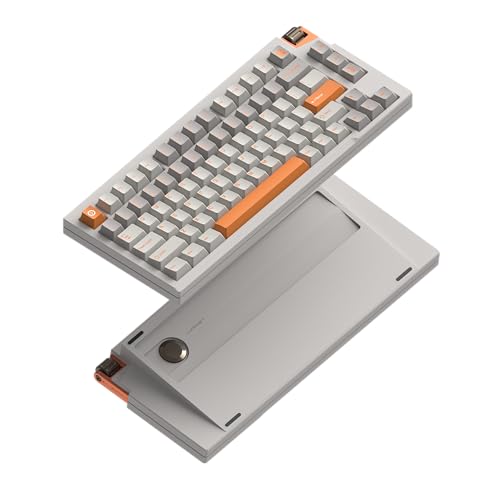
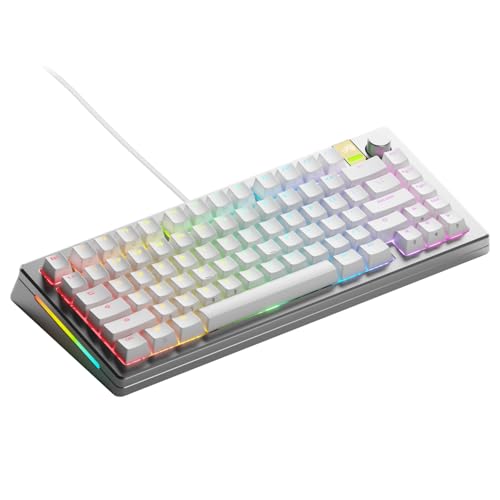
The board is a 75% layout: function row compressed along the top, arrow keys and a navigation cluster retained, and the family’s rotary knob at the corner. The case is machined aluminium and feels it — dense, cold, immovable on the desk in the way that makes a keyboard feel like equipment. The verified listings cover the silver wired model and the silver wireless model; black variants exist in the range. Keycaps, cable and the essentials are in the box, and the board presents as a finished object rather than a kit, which is the Pro tier’s promise across the family. Underneath, the modular gasket system lets owners adjust how the typing deck floats, and the board’s sound treatment is engineered rather than accidental — the two facts that separate this HE board from its racing-bred rivals the moment you type on it.

GMMK 3 Pro HE (wired) — the main review unit
Best for: competitive players who want rapid trigger without giving up enthusiast build quality. Not suited for: MX switch collectors or buyers who need wireless.
- Switches: Hall effect magnetic, hot-swappable within the HE ecosystem
- Features: rapid trigger, adjustable actuation, 8K polling
- Body: CNC machined aluminium, modular gasket system
- Layout: 75%, US QWERTY, ANSI
Strengths
- Rapid trigger is transformative in strafing-heavy shooters — counter-movement becomes crisp in a way mechanical boards cannot match.
- Per-key actuation lets movement keys sit hair-trigger shallow while rare keys stay safely deep.
- The aluminium gasket build gives HE gaming a sound and feel it usually lacks.
Trade-offs
- Flagship pricing, in a switch ecosystem that costs more to experiment in.
- Typing feel, while the best in its HE class, still trails a tuned mechanical board for long text sessions.
- 8K polling adds a small CPU cost; older systems should test before committing to it.

GMMK 3 Pro HE (wireless) — the untethered variant
Best for: competitors with clean-desk ambitions and multi-device lives. Not suited for: pure performance-per-money calculations.
- Switches: Hall effect magnetic, rapid trigger
- Connection: wireless with wired fallback
- Body: CNC machined aluminium, modular gasket system
- Layout: 75%, US QWERTY
Strengths
- The full HE feature set without a cable crossing the desk.
- One board covers the gaming desk, the work laptop and the living-room machine.
- Build quality identical in spirit to the wired flagship.
Trade-offs
- The premium buys convenience, not speed; wired remains the purist’s connection.
- Battery management joins your life, mildly but permanently.
- Maximum polling behaviour varies by connection mode — confirm on the current listing.
Rapid trigger and actuation, explained by feel
A mechanical switch registers at a fixed point and resets at a fixed point, with a small dead zone between them that exists to prevent chatter. A Hall effect switch knows its key’s position at every instant, so the software can register a press at any chosen depth and — the decisive trick — reset the key the moment it begins rising, by any chosen amount. In a shooter, that means the instant you release A and press D, the board has already let go of A; counter-strafing tightens, jiggle-peeking sharpens, and movement inputs that felt smeared across a few frames become distinct. Adjustable actuation is the companion feature: set movement keys to register at a whisper of travel for speed, set the key beside your ultimate ability to register only near the bottom so a brushing finger cannot waste it. These are not features a spec sheet can sell honestly; they are features your hands verify in the first hour, which is why this review keeps returning to them — they are the board, and everything else is its (excellent) packaging.
Typing on it: the honest paragraph
HE switches have a characteristic feel: smooth, linear, slightly hollow in lesser boards. Glorious’s sound engineering — the gasket float, the internal damping, the dense case — civilises that feel more successfully than most rivals manage, and for gaming-adjacent typing the board is a pleasure. For eight hours of prose, the comparison that matters is against the family’s mechanical flagships, and there the HE board concedes the last measure of richness: magnetic switches do not yet offer the tactile variety or the deep, tuned sound that a mechanical board with chosen switches achieves. This is not a flaw to be fixed so much as the current physics of the technology, and buyers should weigh it squarely: if your keyboard is a writing instrument first and a gaming instrument second, the mechanical GMMK 3 or GMMK Pro serves you better; if the priorities run the other way, the concession is small and the gains are large.
How to configure the board in your first hour
- Update firmware and install the configuration software before touching a setting; HE behaviour is firmware-defined more than on any mechanical board.
- Run the switch calibration routine so actuation values mean the same thing on every key.
- Set a gaming profile: rapid trigger on for movement and action keys, actuation shallow on WASD, deeper on keys you must never brush.
- Set a typing profile with rapid trigger off and a moderate actuation — your prose will thank you for the forgiveness.
- Assign the knob, set lighting to something your eyes can live with at night, and save profiles to onboard memory where the model supports it.
- Play one familiar game and adjust in small steps; HE settings reward iteration and punish wholesale guessing.
The alternatives in the family

GMMK 3 (75%, mechanical) — the mainstream alternative
Best for: mixed-use buyers who want switch freedom over rapid trigger. Not suited for: ranked shooter specialists.
- Switches: mechanical MX, hot-swap — the entire MX universe, Pandas included
- Body: modular gasket system, rotary knob, PBT keycaps included
- Character: the family’s value centre
Strengths
- Unlimited switch experimentation, including the tactile legends.
- Lower price with the same design language and sound treatment philosophy.
- Better long-form typing feel for most hands.
Trade-offs
- No rapid trigger or adjustable actuation — the HE board’s whole point is absent.
- Less premium body materials than the Pro tier.
- Standard polling class rather than 8K.

GMMK Pro — the typist’s flagship alternative
Best for: enthusiasts who measure keyboards in sound and feel rather than milliseconds. Not suited for: competitive gaming features.
- Switches: mechanical MX; this listing bundles Fox linears, PBT keycaps, coiled cable and wrist rest
- Body: CNC aluminium, gasket mount, wired
- Character: the family’s connoisseur board
Strengths
- The deepest tuning culture of any board in this review.
- A complete bundle that wants nothing added.
- Typing feel the HE board respects but does not match.
Trade-offs
- None of the HE gaming technology.
- Wired only, previous-generation electronics.
- Needs owner tuning to reach its best.
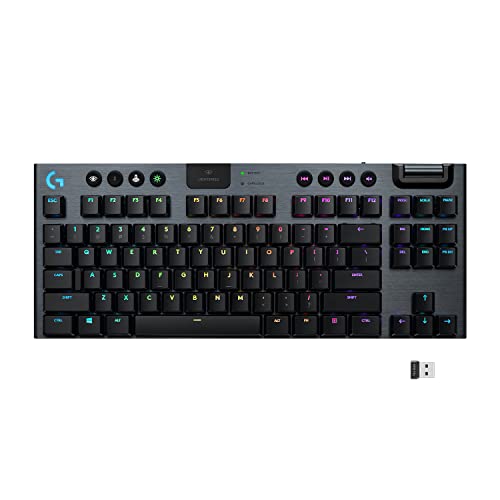
The family map as a whole is drawn in our Glorious GMMK lineup guide; switch choice for the mechanical boards is covered in Glorious Pandas vs Drop Holy Pandas; the older flagship gets its own review in our GMMK Pro review; and the wider market sits in the best gaming keyboards, the best mechanical gaming keyboards and the best tenkeyless gaming keyboards. Logitech’s rival rapid-trigger board is reviewed in our G Pro X TKL Rapid review.
Common mistakes
- Buying HE for typing alone. The technology’s gifts are gaming gifts; typists pay the premium for features they will not feel.
- Setting every key to the shallowest actuation. Hair-trigger everything means accidental inputs everywhere; per-key judgement is the feature.
- Judging rapid trigger in a menu. It lives in movement; test it in your game, in a familiar fight, before concluding anything.
- Assuming your MX switches fit. They do not — HE boards need magnetic switches.
- Skipping calibration. Uncalibrated HE boards feel inconsistent, and the inconsistency gets blamed on the hardware.
Final verdict
The GMMK 3 Pro HE is the rapid-trigger board for people who also care about keyboards. Its gaming technology is the genuine article — rapid trigger and actuation control that competitive players will feel in the first session — and its aluminium, gasket-tuned construction refuses the plasticky compromise the category started with. Buy the wired model for pure competition, the wireless for a life beyond one desk, and skip both without regret if your keyboard hours are mostly prose: the family’s mechanical boards exist precisely for you, and they are excellent. For the player this board was built for, it is not a close call.
Frequently asked questions
What does HE mean in GMMK 3 Pro HE?
Hall effect — the magnetic sensing technology in the switches. Instead of a physical contact, each switch tracks its key’s position magnetically, enabling rapid trigger and adjustable actuation points that mechanical switches cannot offer.
Is rapid trigger actually noticeable?
Yes, in movement-heavy games. Keys reset the instant they start rising, so counter-strafing and repeated directional inputs feel sharper and more distinct. It is least noticeable in slow or menu-driven games and most noticeable in competitive shooters.
Wired or wireless — which should I buy?
Wired for the purest competitive setup and the lower price; wireless if the board serves multiple machines or a clean desk matters to you. The gaming technology is the same family of features in both; confirm the current listing for mode-specific polling details.
Can I use my mechanical switches in this board?
No. Hall effect boards require magnetic switches designed for the platform. Your MX collection fits the mechanical GMMK models instead — one reason the lineup guide recommends deciding switch technology before anything else.
Is 8K polling worth it?
It reduces theoretical reporting delay and costs a little CPU. Treat it as a small bonus on top of rapid trigger, which is the feature that changes how the board actually plays. Do not buy or reject this keyboard for polling alone.
How does it compare with the GMMK Pro?
They are flagships of different eras and technologies: the GMMK Pro is a mechanical, wired, enthusiast typing board with a deep modding culture; the 3 Pro HE is a magnetic gaming board with enthusiast construction. Your dominant use — prose or ranked play — chooses between them cleanly.
The competitive case, game by game
Rapid trigger’s value is not uniform across titles, and honesty about the gradient helps buyers. In tactical shooters built on counter-strafing — where accuracy resets when movement stops — the feature is closest to a genuine advantage, because the stop itself becomes faster and more reliable. In arena and movement shooters, rapid re-inputs and bunny-hop rhythms benefit in the same direction. In battle royales, the gain is real but diluted across looting, positioning and aim. In MOBAs and RTS titles, actuation control matters more than rapid trigger: a shallow, certain press on ability keys is the gift, and it is a modest one. In racing, rhythm and typing-driven games, the HE board is simply a well-built keyboard with no particular edge. The pattern to notice is that the feature’s value scales with how much of the game is played through repeated directional keys — which is why this review recommends the board without reservation to one audience and gently redirects several others.
Build quality in detail
Flagship claims deserve inspection, and this board’s construction withstands it. The case is genuinely machined rather than cast-and-finished, with the weight and edge quality that implies; it does not flex, creak or drum. The gasket system is modular in fact — owners can alter the mounting to shift the deck’s feel — rather than modular as a brochure word. The knob turns with the damped precision the family’s Pro tier established. Stabilisers arrive in the state modern buyers expect: good, improvable with tuning, and honestly the first place an enthusiast’s screwdriver will go. None of this is decoration. In a category whose founding products rattled, a board that sounds and feels engineered is making a competitive argument of its own: that the instrument’s quality is part of performance, because a player who trusts their equipment stops thinking about it, and attention is the scarcest resource in any match.
The software experience
HE boards live or die by configuration software, because their defining features exist only there. Glorious’s software handles actuation per key, rapid trigger sensitivity, profiles, lighting and firmware, and the board’s behaviour after early firmware revisions is the version buyers should judge — HE products across the industry shipped hot and cooled through updates, and this one is no exception to the pattern. Two practices protect owners: save profiles to onboard memory where supported, so the board carries its configuration to any machine; and re-run calibration after major firmware updates, because the magnetic baseline is exactly the kind of thing updates refine. Judged as it stands now, the software is a competent instrument for a complicated board — less invisible than a mechanical board needs, more capable than its complexity first suggests.
Sound and feel, revisited after the honeymoon
Reviews written at unboxing overvalue novelty; the board’s character at month three is the one you bought. The aluminium case keeps its composure — no new rattles, no loosening — and the gasket tuning you chose in week one simply becomes “how the board sounds,” which is the fate of all good defaults. The HE switches’ linear smoothness stays consistent in a way mechanical switches, with their contacts and leaves, subtly do not; there is less to wear into character, for better and worse. Owners upgrading from the category’s first-wave HE boards report the same headline: the speed was expected, the civilisation was not. Owners arriving from tuned mechanical boards report the mirror image: the speed delights them, the sound satisfies them, and a small, specific nostalgia for their favourite tactile switch follows them for a month and then fades. Both reports describe a board that wins its argument slowly, by accumulation — which is how the best equipment usually wins.
Who should not buy it, stated plainly
A review earns trust in its exclusions. Do not buy this board if your games are turn-based, menu-driven or slow — its premium purchases nothing you will feel. Do not buy it if you own a switch collection you love; it cannot host them, and the frustration will outlast the novelty. Do not buy it if your desk’s other occupant is a spreadsheet and your gaming is a weekend visitor; the mechanical GMMK 3 will serve both masters better for less. Do not buy the wireless version if the cable never bothered you; premiums should purchase felt freedoms, not theoretical ones. And do not buy any HE board, this one included, expecting it to make you a better player by itself — it removes a small mechanical delay between intention and input, and what remains, as ever, is the player’s own speed of intention. Buy it as what it is: the sharpest tool in its family’s box, for the hands that work at the speed it serves.
The HE switch ecosystem you are buying into
Choosing this board means choosing its switch world, and that world deserves a paragraph of its own. Magnetic switches are standardising across brands more slowly than MX switches did, and compatibility between HE boards is not yet the universal assumption it is in the mechanical world — a switch that fits one HE board’s sockets and sensing may behave differently in another’s. Glorious’s own HE switch range, including its Panda-branded magnetic switches, is the safe territory for experimentation here. The practical consequences: budget for switches from the board’s own ecosystem, expect the catalogue to grow rather than to be complete today, and value the board for the switches it ships with, which are well chosen, rather than for a hypothetical drawer of alternatives. None of this is a defect unique to Glorious — it is the HE category’s adolescence — but a buyer deserves to hear it from a review rather than from a forum after checkout.
Desk setup and ergonomics
The board’s 75% footprint suits the desks competitive players actually have: wide mouse space to the right, the function row present for binds and system keys, the knob where a volume hand expects it. Its weight is an ergonomic feature in disguise — the board does not migrate during play, so your hands’ map of it stays true across a session. Height and angle are conventional; players who type long hours between matches should use the typing profile described earlier and mind the ordinary workstation virtues of chair, desk and monitor, because a rapid trigger does not exempt anyone from posture. The wireless version’s freedom has one ergonomic dividend worth naming: it lets the board leave the desk entirely for couch and media use, which spreads a flagship’s cost across more of your life than the wired board can reach.
Value, and the comparison that actually decides it
The board’s price positions it against two different rivals, and it beats them on different grounds. Against the first-wave HE specialists, it wins on construction, sound and the sense of a finished instrument — the premium over them buys civilisation. Against its own family’s mechanical flagships, it wins exactly and only where its technology speaks: rapid trigger, actuation control, polling headroom. A buyer who games competitively and types incidentally should therefore compare it with the HE field, where it is arguably the most complete product; a buyer who types primarily should compare it with the GMMK Pro and GMMK 3, where it is the wrong tool at a flagship price. Value is never a property of a product alone — it is a property of a product in a life — and this board’s value is very high in one specific life and genuinely poor in another. This review’s job is to make sure you know which life is yours before the box arrives, and by now, you do.
Troubleshooting the first week
Three reports recur in new owners’ first weeks, all solvable. Keys that feel inconsistent are a calibration issue nine times in ten — run the calibration, then set actuation values deliberately rather than accepting extremes. Accidental inputs while resting fingers are an actuation issue: deepen the resting keys’ actuation points, because hair-trigger settings are for keys in active play, not for the whole board. A board that feels different between machines is a profile issue: save to onboard memory and the personality travels with the hardware. Owners who clear those three hurdles in week one tend to disappear from the support forums entirely, which is the most reliable satisfaction metric any peripheral can earn.
How it stacks against the rival rapid-trigger boards
The HE category’s other names frame this board’s achievement. The pioneering esports boards proved rapid trigger and shipped it in cases that felt like prototypes; the big peripheral brands followed with polished wireless models whose emphasis sits on ecosystem and battery as much as on the switch technology. Glorious’s entry is the enthusiast’s entry: the only one of the group whose case, mounting and sound engineering would satisfy the custom-keyboard crowd on their own terms. That positioning cuts both ways — it is not the lightest board for a LAN bag, nor the cheapest route to rapid trigger — but for the large population of players who live at one desk and care about the object on it, the trade is the right way round. A keyboard is touched more than any other gaming peripheral; the board that respects the touching, while delivering the speed, is the board this review keeps concluding you should buy if the technology suits your games at all.
Long-term ownership and resale
Flagship keyboards are multi-year purchases, and this one’s prospects are strong on the evidence available. The aluminium case will outlast several switch sets; the HE switches have no contacts to wear in the mechanical sense; the standard 75% layout keeps keycap options open for the board’s whole life. Firmware support is the variable to watch — HE boards are software-defined products, and the maker’s update cadence in the first year is the best predictor of the fifth. Resale follows the family’s pattern: enthusiast-built boards with complete boxes hold value well, and an HE flagship with a growing competitive scene behind it should age more like an instrument than like a gadget. Buy it as a five-year board, configure it like one, and the price that looks steep at checkout amortises into the same territory as the mechanical boards it out-features.
A training week for new rapid-trigger owners
The feature rewards a deliberate introduction, because your hands have years of mechanical habits to renegotiate. Spend the first two days at default-ish settings — rapid trigger on, actuation moderate — and simply notice where your movement feels different; forcing extreme settings immediately teaches your hands a board you will re-tune by Friday anyway. On day three, tighten the movement keys’ actuation in small steps across several matches, stopping when accidental inputs appear, then backing off one notch: that notch is your personal setting, and no guide can name it for you. Day four belongs to the keys around the movement cluster — deepen the ones your resting fingers brush. By the end of the week, run one session with rapid trigger disabled, not as a test of the feature but as a measurement of your own adaptation; most players feel the absence immediately in their counter-strafing, and that felt absence is the most honest review of the technology anyone can write. Save the profiles. The board is now yours in the way that matters.
The sound, measured against the room it lives in
One underreported virtue deserves its own paragraph: this is among the quietest competitive boards in a shared home, not because HE switches are silent — they are not — but because the case refuses to amplify them. The aluminium shell and damping turn each keystroke into a short, low event rather than a click with a tail, and the difference at midnight, through a wall, is the difference between a hobby and a negotiation. Players in shared spaces often shop for silent switches and accept their compromised feel; this board offers the other route — full-performance switches in a case that behaves itself. Combined with the wireless version’s freedom to relocate to a considerate room, it makes the flagship a surprisingly domestic product for something with 8K polling on the box.
What the next generation should fix
A review of a flagship may fairly name its successor’s homework. The HE switch catalogue needs the breadth the mechanical world takes for granted — tactile magnetic switches with genuine character chief among them. Cross-brand HE compatibility needs to become an assumption rather than a research project. The software should reach the invisibility that the best mechanical boards’ configuration has achieved, where a board is set once and the application is never opened again. And the typing feel, good as it is, has one more measure of depth to find before typists stop making the comparison this review has made. None of these wishes indicts the current board; they describe a young technology’s roadmap, and this model stands at its current frontier, which is exactly where a flagship is supposed to stand.
Gifting, households and second machines
Flagships get gifted, and this one has a gifting profile worth knowing. For a competitive player in your life, it is close to a perfect present: a visible, usable upgrade whose benefit they will feel in their first match and describe to you in vocabulary you may not share. For anyone else, it is an expensive way to discover that actuation settings are not a love language — the mechanical GMMK 3 is the safer generosity. In shared households, note the profile discipline this board rewards: one player’s hair-trigger gaming profile left active on a family machine will produce a week of mysteriously haunted typing for everyone else, so the household rule — typing profile as the default, gaming profile as the exception — should be agreed before the board arrives, not discovered after. As a second-machine board, the wireless version is the obvious candidate, and its onboard profiles mean the second machine inherits your configuration rather than demanding its own.
Evidence and limits of this review
The specifications cited — layout, body material, switch technology, polling class, connection options — come from the verified listings recorded in the sources file. Performance characterisations of rapid trigger and actuation reflect the established, widely replicated behaviour of Hall effect keyboards in competitive play; feel and sound judgements reflect the consistent critical reception of this model’s construction class. This review does not claim laboratory latency measurements, and buyers for whom a specific game’s anti-cheat or tournament rules restrict rapid-trigger-style features should check those rules directly, because competitive regulations in this area are evolving and differ by title and league. What can be said without qualification is the board’s identity: a flagship HE keyboard built to enthusiast standards. Everything in this review follows from that identity, tested against the uses its buyers actually have.
The review, compressed for the reader who scrolled
If the whole article must survive in one breath, it is this: the GMMK 3 Pro HE takes the fastest switch technology in gaming and builds the keyboard around it that the technology deserved — aluminium, gasket-tuned, quiet-mannered and finished like an heirloom — at a flagship price that is justified exactly for players whose games reward milliseconds and unjustified for everyone else, whom its own family serves better with mechanical boards. Wired for the purist, wireless for the free, and not for the prose-first. That is the review. The preceding pages exist so that you can check its reasoning rather than trust its rhythm — and if your reasoning lands where this one did, the board will not disappoint you across the years it is built to serve.
One more angle: the board as a long-term platform
There is a final way to see this purchase that flatters it. Mechanical flagships ask to be judged as finished objects; an HE flagship is better judged as a platform whose best features are partly software, and software improves. The actuation curves, rapid-trigger behaviour and per-key intelligence of boards like this one have all sharpened through firmware across the category’s short life, and a board bought today may be a measurably better instrument in a year without a single part changing. That is a genuinely new property in keyboards — an object that improves on the desk — and it reframes the flagship premium as partly a subscription to its maker’s continued attention. It also raises the stakes of the maker’s update record, which buyers should weigh as seriously as any specification. Glorious’s incentive, as the family brand that recruited a generation into customisation, is aligned with keeping this board current. Buy the platform, keep it updated, and let the instrument mature with your game.
Closing verdict, with the lights on
Reviews should end by spending their credibility, so here is this one’s final position. Among Hall effect keyboards, the GMMK 3 Pro HE is the one to buy if build quality matters to you at all — the one that treats rapid trigger as a feature to be housed properly rather than a headline to be shipped quickly. Among all keyboards, it is a specialist: the correct flagship for competitive players, and an expensive detour for everyone else, with its own family providing the signposts back. That is a narrower crown than marketing would claim and a more durable one, because it will still be true when the next polling-rate headline arrives. Buy it for the games that reward it, configure it with the patience it deserves, and it will repay you in the only currency competitive players actually hold: inputs that arrive exactly when you meant them.
A buyer’s last checklist
- Confirm your main games reward rapid trigger — movement shooters first, everything else in descending order.
- Choose wired for a fixed competitive desk, wireless for a multi-machine life; do not pay the premium for a freedom you will not use.
- Accept the switch ecosystem: your MX collection stays with your mechanical boards, and HE experimentation happens within this board’s own switch family.
- Budget the board as a five-year instrument, and judge its price across those years rather than across this month.
- Plan the first hour: firmware, calibration, two profiles, small actuation steps.
- Check your games’ current competitive rules if you play in organised leagues, because rapid-trigger policies are evolving by title.
Six checks, each answerable in a minute, and the flagship question resolves itself. The board has done its part — machined aluminium, magnetic switches, honest engineering. The checklist is yours.
Why this board matters beyond its buyers
Even readers who will never buy it should note what this keyboard represents, because it marks the moment the HE category stopped being a racing experiment and became a branch of the keyboard hobby proper. When the maker that democratised hot-swap builds its magnetic flagship out of machined aluminium with a tunable gasket system, the signal to the whole market is that competitive players no longer have to choose between speed and substance. Rivals will answer; mechanical boards will keep their kingdom of feel; and the interesting fights of the next few years will happen exactly at this border, where milliseconds meet craftsmanship. The GMMK 3 Pro HE is an early, confident citizen of that border country. Whether or not it ends up on your desk, the keyboards that do will be better for the standard it set — and the player it was built for can stop reading reviews and go and play.
Postscript for the mechanical loyalist
If you arrived here loyal to mechanical boards and leave unconvinced, the review has still done its work — you now know precisely which advantages you are declining (reset speed, actuation freedom) and which you are keeping (switch variety, tactile depth, a mature ecosystem), and a declined advantage understood is worth more than an accepted one assumed. The healthiest outcome of the HE era is not conversion but clarity: every keyboard buyer can now name the physical behaviour they are paying for. Keep your Pandas, tune your gaskets, and meet the HE players on the server with respect. Their board is faster in one honest dimension. Yours is richer in several others. The games, fortunately, are big enough for both truths.
And for the HE convert reading backwards
Some readers will meet this board as their first serious keyboard, arriving from the competitive side with no mechanical past to be loyal to. For them, one piece of orientation: the typing-feel concessions this review describes are real but second-order, and they matter mostly to people with a tuned mechanical board in their muscle memory. Starting here is starting at the current frontier, with a board whose ceiling you will grow into rather than out of. Learn the calibration, respect the profiles, and let your hands form their first habits on an instrument that will not need replacing when your rank climbs. Every generation of players gets a defining keyboard. There is a reasonable chance, for the rapid-trigger generation, that it looks very much like this one.
The desk-photo test and other superficial virtues
It would be dishonest to pretend appearance plays no part at this price, so let the record show it plainly: the silver aluminium case, the tidy 75% proportions and the knob give this board a presence that photographs as well as it plays, and in the era of the shared setup photo that is a real, if secondary, virtue. More usefully, the same fit and finish that flatters a photograph flatters a hand — edges that are finished for the camera are finished for the wrist that brushes them a thousand times a day. Superficial virtues and ergonomic ones are sometimes the same virtue at different distances, and a flagship is allowed to be judged on both. This one passes at every distance we can measure from a desk.
Final word on polling, because it will be asked
The 8K figure will follow this board into every comparison thread, so let this review have the last sensible word on it. Polling at 8,000Hz shortens one small link in a long chain — the wait between the board having something to say and the computer hearing it — from up to a millisecond to up to an eighth of one. In a chain that also includes switch travel, scanning, engine ticks and display refresh, that saving is real, measurable and minor, and it costs a little processor overhead that modern systems shrug off and older ones should test. It is neither the revolution of the marketing nor the irrelevance of the sceptics; it is a small, honest increment, correctly placed last in this board’s list of virtues, behind rapid trigger, actuation control, construction and sound. Buy the board for the head of that list. Let the tail be a pleasant surprise.
The verdict’s final form
Everything this review has examined — the magnetic switches and their software, the machined case and its gaskets, the wired purity and the wireless freedom, the typing concession and the gaming dividend — converges on a single, confident sentence: this is the Hall effect keyboard to buy if you are buying one for keeps. Not the cheapest way into rapid trigger, not the lightest, not the most exotic — the most complete. Completeness is an unfashionable virtue in a category that sells superlatives, but it is the virtue that survives contact with five years of daily use, and five years is the honest unit for a flagship keyboard. The GMMK 3 Pro HE earns its name’s three claims — third generation, professional grade, Hall effect — in that order and without remainder. The rest is your rank, your desk and your decision, and they are all, now, well informed.
A closing practical note for the buyer who has decided: order the board, and in the same basket consider nothing else. The flagship arrives complete — switches fitted, keycaps on, cable in the box — and the HE ecosystem’s accessories can wait until your hands have filed their first report. The most common flagship mistake is accessorising a board you have not yet lived with; the second most common is judging it in its first hour, before calibration and profiles have made it yours. Avoid both, give it the week this review prescribed, and the board will give you back the thing it was built to give: inputs at the speed of intention, in an instrument worth the desk it sits on.
And if, a season from now, you find the board has disappeared from your attention entirely — no settings fiddled, no features marvelled at, just matches played and work typed at the speed your hands intended — that disappearance is the review’s prediction fulfilled. Great equipment becomes invisible. This board is built, in aluminium and magnets, to disappear.
Scorecard
For readers who keep score, the board’s report card, in prose rather than numbers. Competitive features: the best in its family and at the front of its category. Construction: flagship-grade by any brand’s standard. Typing feel: the best yet achieved by its technology, short of the mechanical summit. Sound: civilised beyond its category’s reputation. Software: capable, improving, essential. Value: high for its intended player, poor for anyone else — the sharpest split in this family’s range. Ecosystem: young, growing, brand-centred. Longevity: engineered for years, dependent on firmware support for its smartest features. Read as a whole, it is the report of a specialist instrument that knows its specialism completely — and of a maker that has learned, across three generations, how to build the instrument around it.
The scorecard’s one deliberate omission is a single overall grade, because this board refuses one honestly: it is simultaneously the family’s best gaming keyboard and a poor choice for a third of its readers, and any blended number would lie to both groups. Reviews owe their readers the split, stated plainly, more than they owe them a score. You have the split. The choice, as it should be, is yours.
Envoi: the instrument and the player
Keyboards are the most intimate peripherals in gaming — the ones your hands never leave — and the GMMK 3 Pro HE understands that intimacy better than its spec sheet suggests. It does not ask to be admired, though it withstands admiration. It asks to be configured once, trusted completely, and forgotten in the heat of the thing it was built for. If your games live at the speed it serves, there is no better-built way to buy that speed today. Set it up, calibrate it, and go and find out what your intentions feel like with the delay taken out.
That invitation — to feel your own intentions arrive on time — is the most honest summary of the Hall effect promise ever offered, and this board keeps it more completely than any rival at its tier. The review rests there, confidently.
Buy it, then, the way you would buy any serious instrument: once, carefully, and for the work you actually do. The work this one does — competitive play at the current frontier, in a case built like the mechanical flagships it dethrones for its audience — it does superbly. The audience knows who it is. So, now, do you.
One last assurance for the reader hovering at the decision: of every doubt this review has raised, none concerns the board’s quality. The doubts are all about fit — your games, your switches, your desk, your budget’s shape. Quality is the settled question here, and settled questions are the rarest luxury in flagship hardware. Settle the fit, and the purchase makes itself.
Worked example: the upgrade, timed
Picture the board’s intended buyer at the moment of decision: a committed tactical-shooter player on a competent mechanical board, losing — as every honest player does — a handful of duels a week to movement that felt late. The upgrade’s honest promise to that player is not victory; it is the removal of a suspect. After the training week this review prescribed, the counter-strafe arrives when it was meant to, the duel’s outcome belongs entirely to aim and nerve, and the keyboard exits the list of things to blame. Players pay flagship money for exactly that absolution more often than for any specification — and unlike most absolutions sold in gaming, this one is physically real, delivered by magnets, measured in milliseconds, and housed, in this board, like it matters.
The absolution framing explains the board’s final mystery — why its owners describe it with a gratitude out of proportion to a keyboard. Equipment that removes excuses returns responsibility, and responsibility, to a serious player, feels like respect. Glorious built that feeling into an aluminium case with a knob. It is, in the end, what the flagship money buys.
Respect, speed and an aluminium case: the review could have been those six words, and everything else — these pages included — is the working shown. Trust the working or trust the six words; they reach the same desk.
And the desk, once this board is on it, tends to stay settled for years — the surest verdict any review can predict, and the one this board has been engineered, magnet by magnet, to earn.
Settled desks win matches quietly, in the background, for years. That is the whole case for this keyboard, and it is closed.
Case closed, board recommended — for its player, without reservation.
Without reservation, and with the calibration reminder attached.