Disclosure: As an Amazon Associate, reviewstook.com earns from qualifying purchases. Links on this page are affiliate links; they cost you nothing extra. Prices and availability change often, so check the current Amazon listing before you buy.
Few switch comparisons carry as much history as glorious pandas vs drop holy pandas. The original Holy Panda — a frankenswitch built by hand, combining a Halo stem from one switch inside the housing of an Invyr Panda — became the most famous tactile switch in the keyboard hobby, then a commercial product when Drop began manufacturing it, then a small controversy when Glorious released its own Panda with a strikingly similar feel and a name close enough to start arguments. Today’s buyers meet the descendants: Glorious Panda switches, sold in lubed and unlubed forms, and Drop’s Holy Panda X, the current evolution of the original recipe. Both promise a strong, rounded tactile bump. They are not the same switch, they do not sound the same, and the right choice depends on whether you lube your own switches, how much bump is too much, and what your board does to a switch’s voice. This guide compares them properly — history, internals, feel, sound, modding and value — with both switches verified and reviewed below.
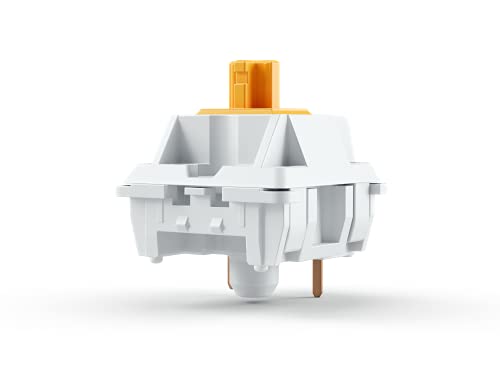
Key takeaways
- Both switches chase the same target: a pronounced, rounded tactile bump with minimal pre-travel and a firm bottom-out.
- Glorious Panda (67g, sold unlubed in the verified listing below) is the modder’s version: consistent, widely available, and designed to be lubed and filmed by the owner.
- Drop Holy Panda X (65g) is the current factory evolution of the original — smoother stock, quieter and more refined out of the box, with a slightly gentler presentation of the bump.
- Stock for stock, the Holy Panda X is the easier recommendation; switch for switch after lubing, the Glorious Panda closes most of the gap at a friendlier price per switch.
- Both are 3-pin/5-pin hot-swap friendly in their respective listings — check the pin count in each listing below, because it differs and it matters for some boards.
- Your board’s plate and case will change both switches’ sound more than the differences between them; buy a small pack and test in your own board before committing to a full set.
In this guide
Glorious Pandas Vs Drop Holy Pandas: the short answer
If you want the famous bump with the least work, buy the Holy Panda X and type. If you enjoy the ritual of lubing and filming, or you are populating a full board on a budget, buy the Glorious Panda unlubed, spend one evening with a brush, and end with a switch that stands honestly beside its rival. If you want the bump and truly no work at all, note that Glorious also sells a factory-lubed Panda variant — it appears in this guide as prose context, because the verified listing below is the unlubed version most modders actually buy.
| Trait | Glorious Panda (unlubed) | Drop Holy Panda X |
|---|---|---|
| Character | Strong rounded tactile bump | Strong rounded tactile bump, quieter |
| Spring | 67g bottom-out | 65g class |
| Mount | 3-pin, hot-swappable | 5-pin PCB mount |
| Factory state | Unlubed in this listing (lubed variant exists) | Factory-lubricated |
| Pack size in listing | 36 switches | 35 switches |
| Best owner | The modder | The plug-and-play buyer |
The history both names carry
The Panda name began with Invyr’s Panda, a linear switch whose housing had an unusual property: fitted with a Halo tactile stem from Input Club’s switches, it produced a huge, rounded bump unlike anything sold at the time. Enthusiasts built these “Holy Pandas” by hand, two switches sacrificed for every one built, and the frankenswitch became legend. Drop (then Massdrop) commercialised the combination with the original makers’ involvement, and the Holy Panda became a product. Glorious later released its own Panda, engineered to deliver a similar bump from a single purpose-made switch, and the community argued — about names, about homage versus imitation, about feel — in the way communities do when something they love becomes a market. The current Holy Panda X is Drop’s refinement of the lineage: new materials and factory lubrication aimed at the smoothness the hand-built originals achieved only with effort. The current Glorious Panda is the democratised descendant: one switch, no donor required, priced for full boards. You are not choosing between a real and a fake; you are choosing between two legitimate heirs with different philosophies.
The two switches, reviewed
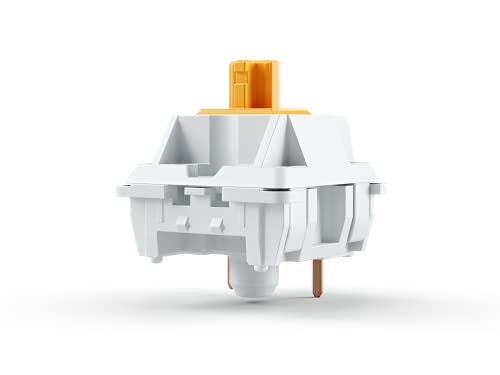
Glorious Panda, unlubed (36 pack)
Best for: modders and full-board builds — the bump is all there, waiting for your lube to civilise it. Not suited for: buyers who will never open a switch; stock, it is the rawer of the two.
- Type: tactile, strong rounded bump
- Spring: 67g bottom-out
- Mount: 3-pin, hot-swappable
- Materials: polycarbonate top, nylon bottom (per the verified listing)
- State: unlubed — a lubed variant is sold separately
Strengths
- The bump is the real article: immediate, round and unmistakable.
- Consistency across the pack is the modern manufacturing dividend.
- Per-switch cost suits populating a full-size board without flinching.
Trade-offs
- Stock, there is audible spring and leaf character that lube exists to remove.
- 3-pin mounting is fine for hot-swap boards but less planted in plateless builds.
- The bump’s strength will bully light typists; this is a committed tactile.

Drop Holy Panda X (35 pack)
Best for: buyers who want the lineage’s refined, quieter bump straight from the box. Not suited for: bargain full-board builds; the per-switch cost adds up across 100-plus keys.
- Type: tactile, strong rounded bump, quiet presentation
- Spring: 65g class
- Mount: 5-pin PCB mount
- State: factory-lubricated
- Lineage: Drop’s current evolution of the original Holy Panda recipe
Strengths
- The smoothest stock experience of the two — open the pack and the switch is finished.
- Quieter operation suits shared rooms and offices better than its rival.
- 5-pin legs sit rock-solid in compatible boards and plates.
Trade-offs
- Premium per-switch pricing, and 35-switch packs mean multiples for big boards.
- Factory lube, while good, is not your lube; perfectionists will redo some of it.
- The slightly softer presentation may read as less “holy” to original-recipe purists.
Feel: two dialects of the same bump
Both switches put their bump at the very top of the stroke — there is almost no free travel before the resistance arrives, which is the family trait that makes Pandas feel so decisive compared with the mid-stroke bump of a Cherry-style tactile. The Glorious Panda’s bump reads slightly sharper and more energetic, with a firmer return from its 67g spring; the Holy Panda X reads rounder and calmer, its factory lubrication smoothing the bump’s edges and its sound. On the way down they are cousins; on the way up and in the noise floor they are individuals. Heavy-handed typists tend to prefer the Glorious switch’s extra spring and attack. Touch typists who live on their boards eight hours a day tend to land on the X’s calmer manners. Neither preference survives contact with a badly matched board unchanged, which is why the test-pack advice in this guide’s takeaways is not boilerplate.
Sound: what your board will do to them
A switch’s sound is a duet with its case. In a dense aluminium gasket board — the GMMK Pro and 3 Pro class — both switches deepen: the Glorious Panda’s bump becomes a low, rounded thock once lubed, the Holy Panda X a softer, quieter version of the same note. In a light plastic board, both brighten, and the Glorious switch’s stock spring character becomes the loudest difference between them. Films (thin shims that tighten the housing) help the Glorious Panda more, because its housing tolerances leave more for a film to correct; the X arrives tighter. If your board is already quiet and your room is shared, the X’s restraint is worth money. If your board is a project and your desk is your own, the Glorious switch plus an evening of tuning reaches a very similar peace for less.
How to lube and film the Glorious Panda (and whether to bother)
If you buy the unlubed Glorious Panda, this is the ritual that closes the gap — about ninety unhurried minutes for a 75% board’s worth of switches:
- Open each switch with a switch opener; keep housings, stems and springs in separate trays so matched parts stay matched.
- Apply a whisper of switch lubricant to the stem’s side rails and the bump’s contact faces — the goal is a film you can barely see, not a coating.
- Lube the spring’s ends lightly, or bag-lube springs with a drop of oil, to silence spring ping at its source.
- Add a switch film if the housing closes with any play; if it snaps shut tight, skip the film — unnecessary films change feel for the worse.
- Reassemble, test three switches in the board against three unlubed ones, and adjust your lube weight before committing to the full set.
- Seat the finished switches, then live with them a week before judging; fresh lube settles and the sound evens out.
Should Holy Panda X owners lube too? The factory job is good enough that the honest answer is: only the switches that audibly differ from their neighbours, and only if that difference bothers you. Uniformity, not lubrication itself, is what your ears are asking for.
Compatibility and buying quantities
Both switches fit standard MX hot-swap sockets and MX keycaps. The pin difference is the one physical gotcha: the Glorious Panda’s 3-pin legs suit the overwhelming majority of hot-swap boards, while the Holy Panda X’s 5-pin legs add two stabilising pins that some plates and PCBs accept natively and others require you to clip — a ten-second job per switch with flush cutters, and a permanent one, so check your board first. Quantities: a 65% board needs roughly 68 switches, a 75% about 82–84, a full-size 104–108. Against the pack sizes above — 36 and 35 — that means two packs for compact boards with spares left over, and three packs for full-size. Buy the extra pack’s worth of headroom if the board is large; a switch set that matches itself matters more than the small saving, because switches from different production runs can differ by a shade.
Which boards flatter which switch
Pairing guidance from the family’s own ecosystem: the GMMK 3’s foam-rich case flatters the Glorious Panda’s energy, and its mainstream price matches the switch’s value story. The GMMK Pro’s aluminium gasket chassis is the Holy Panda X’s natural home — the board the original frankenswitch culture grew up around, now with a switch that needs none of their surgery. HE boards, including the GMMK 3 Pro HE, are out of this conversation entirely: neither Panda fits a magnetic board, a fact worth repeating because the names invite the error. The full family context is in our Glorious GMMK lineup guide, the boards themselves in our GMMK 3 Pro HE review and our GMMK Pro review, and the wider switch market in the best mechanical switch sets. If you are still deciding on a board, the best mechanical gaming keyboards and Gateron Yellow vs Cherry MX Red compared cover the neighbouring territory.
Common mistakes
- Buying a full set untested. Tactile strength is the most personal variable in keyboards; a 10-switch test in your own board prevents an expensive mismatch.
- Over-lubing the bump. Heavy lube on the tactile legs rounds the bump toward linear — the exact feature you paid for, dissolved.
- Clipping 5-pin legs before checking the board. Many boards accept 5-pin switches natively; clipped pins cannot be unclipped.
- Judging sound in the wrong case. A switch filmed and lubed for an aluminium board will sound different in plastic; tune for the board you own.
- Mixing production runs across the alpha cluster. Keep one run for the keys your fingers compare constantly.
Final verdict
Glorious Pandas vs Drop Holy Pandas ends, fittingly, the way the frankenswitch era began: with the understanding that the bump is the thing and the path to it is a matter of temperament. The Holy Panda X is the better switch out of the box — smoother, quieter, more finished — and the right buy for anyone who wants the legend without the labour. The Glorious Panda is the better value and the better project, and after an evening of honest lubing it stands close enough to its rival that the remaining difference is taste, not quality. Choose by whether your hobby includes a lube brush. Both switches reward the choice with the same thing their ancestor promised: a bump you can feel thinking about.
Frequently asked questions
Are Glorious Pandas the same as Holy Pandas?
No. They are different switches from different companies chasing a similar feel. The Holy Panda lineage descends from the original hand-built frankenswitch commercialised by Drop; the Glorious Panda is Glorious’s own purpose-built design with a comparable strong, rounded bump.
Which is better for typing all day?
Most all-day typists prefer the Holy Panda X’s calmer, factory-lubed presentation, or a lubed Glorious Panda if budget matters. Both switches have strong bumps and firm springs, so light-touch typists should test before committing to either for full-time work.
Do I need to lube the Glorious Panda?
Need is strong, but the unlubed version is plainly designed with owner-lubing in mind: lubing removes spring and leaf noise and brings it close to its rival. If you will never lube, buy the Holy Panda X or Glorious’s factory-lubed Panda variant instead.
Will these switches fit my keyboard?
They fit any board with MX-style hot-swap sockets or an MX plate/PCB for soldering. Check pin count: the Glorious Panda is 3-pin, the Holy Panda X is 5-pin, and some boards require clipping the extra two legs. Neither fits Hall effect boards.
How many switches do I need?
Roughly 68 for a 65% board, 82–84 for a 75%, and 104–108 for full-size. With 35–36 switches per pack, that is two packs for compact boards and three for full-size, with a few spares — which you will eventually be glad to have.
Why is the Holy Panda X described as quiet?
Its materials and factory lubrication damp the stem and spring noises that give tactile switches their background chatter, and Drop markets this generation as the quieter evolution of the recipe. It is quiet for a strong tactile switch — it is not a silent switch, which is a different category with dampened stems.
Inside the switches: stems, housings and springs
The bump’s character is manufactured in three places. The stem’s legs — the shaped ramps that push the contact leaf aside — set the bump’s size and roundness, and both switches use aggressively shaped legs to get their signature top-of-stroke resistance. The housing’s materials set the sound: the Glorious Panda’s polycarbonate-over-nylon construction, per its listing, gives a slightly brighter top-out and a solid bottom-out, while the Holy Panda X’s materials and tighter assembly aim for a duller, quieter return. The spring sets the weight and the return speed: 67g in the Glorious switch, a 65g class spring in the X, both firm by mainstream standards, which is why both switches feel decisive rather than soft and why both fatigue very light typists over long days. Understanding the three parts converts the comparison from brand loyalty into engineering: you are choosing a leg shape’s dialect, a housing’s voice and a spring’s temperament, assembled by two competent factories with different priorities.
The lubed Glorious Panda variant, and the Panda HE footnote
Two relatives deserve explicit mention so buyers are not confused by listings. Glorious sells the Panda in a factory-lubed version alongside the unlubed one reviewed here; it narrows the stock gap to the Holy Panda X considerably and suits buyers who want the Glorious price with less labour, though a careful hand-lube still edges it. Separately, Glorious’s Panda name now also appears on magnetic switches for its HE boards — a different technology sharing a mascot, covered in the lineup guide, and not interchangeable with anything in this article. When a listing says Panda, check three words before anything else: lubed or unlubed, mechanical or magnetic, three pins or five. Those three checks prevent every mistaken Panda purchase the community has ever documented.
What the bump does to your typing and gaming
A strong tactile bump is not a neutral feature; it reorganises technique. Typists who bottom out every keystroke gain a clear confirmation signal and often type faster for it, at the cost of more finger work per word. Typists who learn to ride the bump — pressing just past actuation and releasing — get the Panda family’s best experience: fast, quiet-ish, and strangely addictive, because the switch tells your fingers exactly where they are. In gaming, the bump’s value splits by genre: it is superb for ability keys and anything you press deliberately, and mildly divisive for movement keys, where many players prefer a linear’s featureless travel for repeated strafing. A common and sensible arrangement is Pandas on the alphas and modifiers with linears under WASD — one of hot-swap’s quiet superpowers, and a configuration neither switch’s maker will ever advertise because it involves buying both kinds of switch.
Longevity and consistency over a board’s life
Both switches are rated in the tens of millions of presses by their makers’ category standards, and in practice the relevant ageing is not failure but drift: springs relax almost imperceptibly, lube migrates over a year or two, and the most-used keys — space’s neighbours, the vowels — soften a shade ahead of the numpad’s exiles. Owners who care rotate switches between high-use and low-use positions annually, a five-minute ritual unique to hot-swap boards that keeps a set feeling uniform for years. The Holy Panda X’s factory lube delays the first re-lube; the Glorious Panda’s owner-applied lube makes its owner the kind of person who will simply do it again. Either way, a set of either switch is a multi-year purchase, and the per-switch price difference that looms at checkout amortises into irrelevance across the hours these switches will actually serve.
How to test switches honestly before the big order
Switch testers — little acrylic grids — are better than nothing and worse than your board. The honest protocol: order the smallest pack of each switch, populate one full row plus the spacebar’s neighbours in your actual keyboard, and type real work and play real games for three days, swapping the two switches’ positions halfway so the board’s acoustics do not rig the result. Listen in your room, at your hours, through your desk’s resonance. Then decide, and keep the losing pack: it becomes your spares, your numpad set, or the beginning of a second board, because in this hobby a switch you tested and rejected is still worth more than a switch you never tried. What you are testing for is not which bump is bigger — they are both big — but which bump’s manners you want to live with ten thousand times a day. That is a question only your fingers, given three honest days, can answer.
The community argument, adjudicated
Because this comparison began as an argument, it deserves an adjudication. On naming: the Panda word belonged to a housing first, a frankenswitch second, and two product lines third, and the community’s protectiveness toward the original builders is honourable even where the legal and commercial realities have moved on; buyers honour the history best by knowing it, which this guide has tried to ensure. On feel: the claim that either switch is simply the other, copied, does not survive a side-by-side — they are dialects, distinguishable blind by most experienced typists within a row of keys. On value: the Glorious switch’s price is a genuine service to the hobby, and the Drop switch’s refinement is a genuine product of the lineage’s longer R&D story. The mature position, and this guide’s, is that the argument was the hobby enjoying itself; the switches are both good; and the only losing move is buying either one uninformed. You are now informed.
Sound recordings and why to distrust them politely
Most buyers meet these switches first through sound tests, and those recordings deserve a calibrated scepticism. A microphone inches from a switch in a bare tester captures a sound your ears, at desk distance, in your case, will never hear; the same switch records as thocky in one video and thin in another depending on the plate beneath it and the room around it. Use recordings comparatively — the same channel, the same board, both switches — where they reliably reveal the X’s quieter noise floor and the Glorious switch’s brighter attack. Ignore them absolutely, as in any conclusion about how loud a switch will be in your home. The deeper truth the recordings accidentally teach is the one this guide keeps returning to: a switch is a component, and its character emerges only inside a system. Buy the small pack. Be the system.
Alternatives if neither Panda is your bump
Intellectual honesty requires the exits. If both switches’ bumps feel like hard work, the tactile category continues downward in intensity through the brown-switch class and its modern, better-made descendants, which trade drama for all-day ease. If the bump delights you but the sound does not, silent tactile switches damp both ends of the stroke and suit offices in a way neither Panda attempts. If you conclude the whole tactile idea is a distraction and your fingers prefer a clean line, the linear world — including the Gateron and Cherry comparison elsewhere in this cluster — will receive you without judgement. The Pandas, both of them, are for people who want to feel the actuation happen. Knowing that sentence is true or false about yourself is worth more than the rest of this article combined, and the test-pack protocol exists to help you learn it cheaply.
Price and value, stated carefully
This guide prints no prices, because switch pricing moves with sales and pack configurations, but the value structure is stable enough to describe. The Glorious Panda is the less expensive switch per unit in its common listings, and the gap widens across a full-size board’s three packs. The Holy Panda X charges its premium for factory finishing — the lube, the tighter assembly, the quieter result — which is labour you either pay Drop to do or pay yourself in an evening. Framed that way, the choice is not cheap versus dear; it is money versus time, the oldest trade in every hobby. Buyers with more money than evenings should not feel virtuous about the X, and buyers with more evenings than money should not feel second-class about the Glorious switch and a brush. Both arrive at a keyboard that makes typists grin at a bump — the destination the frankenswitch builders were chasing with their donor switches and their patience, all along.
The spacebar, the enter key and other special cases
Whole-board verdicts hide the keys where switch choice matters most. The spacebar is a long lever struck by a thumb, and a strong tactile under it feels different from the same switch under a fingertip — some owners run a heavier or filmed switch there, or return to a linear, because the bump through a stabilised bar can read as mush rather than definition. The enter and shift keys, stabilised and struck hard in punctuation’s heat, reward the X’s quietness in shared rooms. Arrow keys and the navigation cluster, used in deliberate bursts, are where the Panda bump feels most itself and where a test row should live during your trial days. None of this requires buying three switch types; it requires noticing that a keyboard is not one switch repeated but a small orchestra of levers, and that the two switches in this comparison can even share a board — Glorious Pandas under the alphas for their attack, Holy Panda X units under the big keys for their calm — if your ears prefer the arrangement. Hot-swap’s promise, kept properly, is exactly this granularity.
What changes with keycap profile and plate material
Two variables outside the switch move the comparison’s needle. Tall keycaps lengthen the lever and deepen both switches’ sound, flattering the X’s refinement; low-profile caps quicken the feel and expose the Glorious switch’s spring character sooner. Plate material is the other lever: a rigid aluminium or brass plate sharpens both switches and separates them — the X stays composed, the stock Glorious gets louder — while a flexible polycarbonate or POM plate rounds everything toward similarity. Buyers who already own a board should read their plate before they read switch reviews, because a flexible-plated board will make these two switches feel like siblings and a rigid-plated board will make them feel like rivals. The comparison you are buying is never switch versus switch; it is switch-in-your-board versus switch-in-your-board, and this section is the guide’s attempt to make that sentence impossible to forget.
A note for the original-recipe romantics
Some readers arrive here chasing a ghost: the exact feel of a hand-built Holy Panda from the frankenswitch years. Honesty requires saying that neither modern switch is that object, because that object was never one thing — it varied with donor batches, with the builder’s lube hand, with the board it landed in. The Holy Panda X is the lineage’s official continuation and the closest sanctioned descendant; the Glorious Panda is the bump’s popularisation, the version that let a hundred thousand typists feel what the fuss was about without sacrificing two switches per key. Chasing the ghost with either purchase leads to the same healthy place: a strong, rounded bump under your fingers, today, from stock. The hobby’s golden ages have a way of being prologues. Buy the descendant that suits your temperament, type something worth writing on it, and let the legend do what legends are for — sending you to a keyboard you love, not keeping you from one.
Care, cleaning and the five-year view
Switches ask little: a keyboard kept dust-covered when idle, an occasional blast of air, and no drinks defying gravity above the alphas. Lube is the one consumable, and its lifespan sets the maintenance calendar — expect a lubed set to feel its best for a year or two of heavy use before the keen-eared notice the sound opening up again, at which point a refresh lube restores it in the same evening ritual as the first. Spare switches from your original packs are the best insurance in the hobby: a single damaged stem or a spring lost to the carpet becomes a non-event instead of a mismatched replacement order. Store spares in their pack, note the production period if the packaging shows one, and your future self — mid-rebuild, one switch short — will be grateful in a way that is difficult to overstate. Both switches in this comparison reward that small foresight equally, which is fitting: they are, in the end, two well-made answers to the same beautiful question, and the years treat them both kindly.
The verdict, restated for the undecided
If you have read this far without deciding, the tie-breakers are these. Choose the Holy Panda X if your keyboard lives in a shared space, if your evenings are spoken for, or if the words “factory-lubed” read as relief. Choose the Glorious Panda if your desk is your own, if an evening with a brush sounds like pleasure rather than chore, or if a full-size board’s worth of switches makes the X’s premium multiply past comfort. Choose both, in test quantities, if your budget allows the experiment — it is the only tie-breaker that has never once produced a regret in this hobby, because the losing pack becomes the next board’s beginning. And whichever name ends up under your keycaps, you will own a piece of keyboard history that started as two switches sacrificed to make one better one. The bump abides.
Gaming on Pandas: a genre tour
Because this site’s readers game, the bump deserves a genre-by-genre accounting. In MOBAs and RTS titles, where ability keys are pressed with intent and timing is measured in deliberate clicks, the Panda bump is a genuine asset — the switch confirms the press so completely that glance-checking the ability bar becomes rarer. In fighting games on keyboard, the decisive actuation suits players who strike keys like buttons. In rhythm games, opinions split sharply: the bump gives timing a tactile anchor some players swear by and others find exhausting across long charts. In shooters, the settled wisdom of the earlier section holds — linears under movement, tactiles welcome everywhere else — with the footnote that the strongest Panda partisans run the bump under everything and post excellent scores, because familiarity beats theory at high level. In typing-heavy games and visual novels, you are simply a typist again, and the all-day analysis applies. The switches do not know what a genre is; your hands, after the three-day test, will.
Terminology, for readers new to the hobby
This comparison uses a handful of words worth pinning down. The bump is the resistance peak you feel as the stem’s legs pass the contact leaf. Pre-travel is the distance before that bump — near zero here, which is the Panda signature. Bottom-out is the stem reaching the housing’s floor, and its weight (67g, 65g class) is the force needed to get there, not the force of the bump itself. Spring ping is the faint metallic ring of an unlubed spring; leaf noise is the contact’s own chatter; both are what lubrication exists to quiet. A film is a thin shim that tightens a loose housing. A frankenswitch is any switch assembled from other switches’ parts — the Holy Panda’s origin and the hobby’s favourite genre of invention. With those six terms, every review, sound test and forum thread about these two switches becomes readable, including the ones that disagree with this guide.
Evidence, limits and a confession of method
The specifications in this guide — spring weights, pin counts, pack sizes, materials — are taken from the verified listings recorded in the sources file, and where the two listings phrase a figure differently (a precise 67g against a class-level 65g), the guide has preserved that difference rather than inventing symmetry. Feel and sound characterisations synthesise the unusually deep community record on these two switches: few products in the hobby have been measured, filmed, recorded and argued over as thoroughly, and the consensus contours — the X’s quieter refinement, the Glorious switch’s rawer energy and modding headroom — are stable across that record. What no guide can synthesise is your board, your keycaps, your desk and your fingers, which is why the test-pack protocol appears in this article three times in different clothing. It is not indecision. It is the correct epistemology for a product you will touch ten thousand times a day, and both makers, to their credit, sell the small packs that make it possible.
One board, both switches: the hybrid experiment worth trying
End with the experiment this guide most wants you to run, because it teaches more than any verdict. Take your test packs and build one keyboard deliberately mixed: Glorious Pandas under the letters, Holy Panda X units under the modifiers and the navigation cluster, and your preferred of the two under the spacebar after a day each way. Type on it for a week. What most experimenters discover is that the comparison dissolves into placement — the attack they loved was a letters thing, the calm they loved was a big-keys thing — and that the final board keeps both switches, each where its manners serve best. The hobby’s founding object was itself a hybrid, two switches married into one. It should surprise nobody that its descendants, given a hot-swap board and an open mind, still prefer each other’s company to a verdict.
Resale, scarcity and the collector angle
Switches occupy a curious corner of the second-hand market: they are small, durable, standardised and produced in runs, which makes them liquid in a way few peripherals are. Both switches here hold their value respectably, with the Holy Panda X’s lineage giving it a collector premium in complete, single-run sets, and the Glorious Panda moving in larger volume at friendlier prices. Practical counsel follows for buyers rather than speculators: purchase quantities with spares while your run is current, because matching a set two years later means trusting a stranger’s storage; and if you sell, sell honestly by run and by lube state, since a lubed set and a stock set are different products wearing one name. The collector framing should never govern a first purchase — switches are for typing on, and both of these repay use far better than they repay shelving — but it explains why the test-pack experiment is never wasted money. In this hobby, even your second choice remains somebody else’s first, at a fair price, indefinitely.
For the office, the dorm and the night desk
Context rounds the comparison out. In an open office, the Holy Panda X is the only one of the pair to consider without a conversation with your neighbours — and even it is a strong tactile, not a silent switch, so the truly considerate office answer may be a dampened silent tactile from outside this comparison. In a dorm room with a roommate’s sleep schedule in play, the same logic applies at night and relaxes by day, which is an argument for owning the test packs and swapping by semester. At a night desk in a family home, the X’s quieter floor wins again, narrowly, over a well-lubed Glorious set. At a solo desk with the door closed — the modder’s natural habitat — the Glorious Panda’s rawness is not a cost at all, and its price becomes the whole argument. Notice how the verdict rotates with the room while the switches stay exactly themselves: that is the signature of a comparison between two good products, and the reason this guide has refused, from its first table onward, to crown one of them for everybody.
The last word belongs to your fingers
Every comparison in this hobby ends the same way, and the honest ones admit it: with a recommendation to stop reading and start pressing. You now know the lineage, the internals, the springs, the pins, the pack sizes, the lube rituals and the rooms each switch suits. What remains unknowable from text is the precise shape of delight your own hands take in a bump — and both of these switches exist because a community of typists discovered, to its own surprise, how much delight a bump could hold. Order the small packs. Run the three days. Build the hybrid board if curiosity insists. Then populate your keyboard with the winner and write something long on it, because a switch comparison that ends in writing has done its job better than one that ends in another comparison. The Pandas — glorious and holy alike — would approve of being used.
Shipping, storage and other unglamorous wisdom
A closing parcel of practicalities, earned by the community the expensive way. Switches ship in packs that protect them adequately and store best in those same packs, away from heat that can warp a housing over years. Bent pins on arrival are normal in ones and twos — straighten them with tweezers rather than returning a pack, because a pin bends back exactly once without complaint and the switch is none the worse. When seating switches in a hot-swap board, support the socket from beneath where the design allows, press straight down, and stop at resistance: most “dead switch” stories are unseated switches, and most dead sockets are switches forced at an angle. Keep one known-good switch aside as your diagnostic unit; when a key misbehaves, swapping in the diagnostic switch separates board faults from switch faults in ten seconds. None of this is glamorous, and all of it is the difference between a hobby that feels charmed and one that feels cursed. The bump deserves the small courtesies.
And finally: what this comparison teaches about the hobby
Step back from the two packs on the desk and the comparison becomes a small parable of how enthusiast markets mature. A community invents something wonderful by hand; a company makes it buyable; a rival makes it affordable; both refine it past the original in the directions their customers ask for; and the argument about authenticity continues happily in the background, because the argument is part of the product. The typist wins every stage of that story. Your part in it is the simplest: know the history, test the descendants, and type on the one that makes your fingers certain. Certainty, delivered sixty-five grams at a time, is what both of these switches were always selling.
A truly final practical note, because it has saved more buyers than any other in this guide: whichever switch you choose, order it for the board you own today, not the board you are imagining. Pin counts, plate cuts and socket styles are facts of the present tense, and a switch set that fits your current keyboard teaches you everything you need to choose for the next one. The hobby rewards the concrete. So, in the end, does the bump.
Postscript: the sound of a decision
There is a moment, familiar to everyone who has finished this exact deliberation, when the new switches are seated, the keycaps are back, and the first sentence gets typed just to hear it. Whatever you chose, that sentence will sound like a decision — the bump arriving where your fingers expected it, the board suddenly more yours than it was an hour before. Guides like this one exist to make that moment likelier to please. The rest — the history, the springs, the pins, the prices — was scaffolding. Type the sentence.
One more consideration belongs in the record, because it decides real purchases in this hobby more often than any specification: availability rhythm. Both of these switches are stocked in waves, and the pack size you need may be the one temporarily missing. The disciplined response is to buy test quantities whenever they appear, decide at leisure, and order the full set when your chosen switch next surfaces — rather than switching allegiance to whichever pack is in stock on a given Tuesday. A keyboard is a five-year object; its switches deserve a decision made at the speed of your fingers, not the speed of a warehouse.
And if the waves strand you entirely — both packs gone, a board waiting empty — the correct interim move is the humble one: fit whatever decent tactile you can get, type on it, and notice what you miss. Absence is the finest switch reviewer ever employed. What you miss, precisely, is the switch you should buy when the packs return, and you will never again need a guide to tell you its name.
That discipline — test, notice, decide, commit — is the whole method of this guide compressed into four verbs, and it transfers to every switch comparison you will ever read after this one. The names will change; the bumps will vary; the method will not. Keep it, and the keyboard hobby becomes what it was for the people who built the first Holy Panda out of two lesser switches: a place where your own hands are the highest authority, and every product is just a proposal.
Proposals, in this case, with excellent bumps. Whichever pack is on its way to you now, the first keystroke will tell you the comparison was worth the reading — not because a guide chose correctly for you, but because you will finally know, in the only language switches speak, what the argument was about.
Worked example: two desks, two decisions
Watch the method decide two real-shaped cases. The first desk belongs to a technical writer in a flat with thin walls, working on an aluminium 75% board, whose partner sleeps one room away from her night-deadline typing. Her test week is unambiguous: the Holy Panda X’s quieter floor keeps the peace, its factory finish suits her deadline-driven evenings, and the premium across eighty-odd switches prices out to less than one disturbed week is worth. She buys the X and never thinks about switches again, which for her is the entire point. The second desk belongs to a student-gamer with a plastic hot-swap board, a free Sunday, and a budget counted in textbooks. His test week is equally clear: the Glorious Panda’s attack delights him, the lube ritual turns out to be the most relaxing hour of his month, and the saving across his full-size board buys the keycap set he actually wanted. He buys the Glorious pack and a brush. Neither desk made an error, and neither verdict transfers to the other — which is the whole content of this article, demonstrated. Your desk is the third case. Run its test.
The third desk, of course, is the one this sentence is being read at — and its verdict is now a matter of a small order, three days and an honest listen. Everything else has been said, by this guide and by the decade of typists whose argument made these two switches worth comparing in the first place.
Run it well, and whichever Panda ends up under your keycaps will have been chosen the way the original was built: by hand, on purpose, for the feel of the thing.
That is the comparison, complete: two switches, one bump, and a decision your fingers are ready to make.