Disclosure: As an Amazon Associate, reviewstook.com earns from qualifying purchases. Links on this page are affiliate links; they cost you nothing extra. Prices and availability change often, so check the current Amazon listing before you buy.
The phrase exclusive audeze maxwell 2 anc arrives with a promise built into its wording: a second generation of Audeze’s Maxwell gaming headset, this time with active noise cancelling. Separating what is actually established from what the wording merely suggests is the entire job of this article, because headset launches attract a weather system of rumour — recycled specifications from the first generation, retailer placeholders, and confident summaries of documents nobody has read. Here is the confirmed core, stated once and then examined in detail. A verified listing for an Audeze Maxwell 2 Wireless Gaming Headset for PlayStation states, in its own title, that it includes active noise cancellation ANC and works with PC, Mac, and Switch. A second verified listing, for an Audeze Maxwell 2 for PC, PlayStation, Mac, and Switch, describes a new version for 2026 with 80 hours of battery life and low-latency Bluetooth in dark gray — and its title says nothing about ANC at all. Everything else circulating about this headset should be treated as unconfirmed until a listing or the manufacturer states it.
That asymmetry between the two listings is not a pedantic detail; it is the story. One Maxwell 2 variant advertises ANC in its name. The other, aimed substantially at the same platforms, does not mention it. Until clearer information exists, the honest positions are these: ANC is a confirmed feature of the PlayStation-listed Maxwell 2; ANC on the PC-listed Maxwell 2 is unconfirmed, neither promised nor denied; and the performance of the ANC — how much noise it removes, at what cost to battery and sound — is unmeasured by anyone whose measurements this article can cite. Readers deciding whether to buy, wait, or keep a first-generation Maxwell will find the decision framework in the final sections, built only on the confirmed facts plus the established character of the Maxwell line: planar magnetic sound, a substantial build, and a reputation earned among players who prioritise audio over everything.
Key takeaways
- ANC is confirmed for the Maxwell 2 in exactly one place: the verified PlayStation listing’s own title, which also confirms PC, Mac, and Switch compatibility.
- The verified PC listing confirms a 2026 version, 80 hours of battery life, low-latency Bluetooth, and a dark gray finish — and does not mention ANC, so ANC for that variant remains unconfirmed.
- No verified source available to this article states the ANC’s strength, the headset’s weight, its microphone performance, or its price; treat any figure you see elsewhere as unverified.
- The established alternative with confirmed ANC today is SteelSeries’ Arctis Nova Pro Wireless, whose listing states ANC, a two-battery system, and multi-system support outright.
- Owners of the original Maxwell lose nothing by waiting for confirmed details; the first headset’s strengths do not expire because a successor has been listed.
In this guide
The compact verdict on Exclusive Audeze Maxwell 2 ANC
If you need a gaming headset with ANC now and want the feature guaranteed by the seller’s own words, the confirmed route today runs through the PlayStation-listed Maxwell 2 or through the SteelSeries alternative covered below. If your interest is specifically the PC-listed Maxwell 2, the correct action is patience: its listing confirms an appealing core — the battery figure, the low-latency wireless, the platform breadth — while leaving the headline feature of this article’s title unaddressed. Buying that variant for its ANC today would be buying a hope. If you already own the original Maxwell and it works, nothing confirmed so far obliges an upgrade; ANC addresses the room around the game, not the game audio itself, and whether your room needs addressing is a question only your household can answer.
A word about the word “exclusive” in the search phrase itself, because it sends some readers hunting for a limited edition that the confirmed record does not describe. Nothing in either verified listing presents the Maxwell 2 as a limited, numbered, or retailer-exclusive product; the listings describe platform variants of a new model, which is the ordinary shape of a headset launch. Search phrases accumulate adjectives from headlines, bundles, and retail promotions, and a phrase’s wording is not evidence about the product it names. Readers who arrived expecting a special edition should recalibrate to the plainer and better-supported story: a second-generation Maxwell, sold by platform, with cancellation confirmed on one variant — interesting enough without a limited-edition mythology attached to it.
Tools and items that genuinely aid
| Item | Status | Entry |
|---|---|---|
| Audeze Maxwell 2 with ANC (PlayStation) | Checked page | Check price on Amazon |
| Audeze Maxwell 2 (PC) | Verified entry | Check price on Amazon |
| SteelSeries Arctis Nova Pro Wireless | Checked entry | Check price on Amazon |
The table is ordered by evidentiary status, not by enthusiasm. The first row is the only Maxwell 2 whose ANC a buyer can point to in the seller’s own words. The second row is a Maxwell 2 whose confirmed specifications stand on their own merits and whose ANC status a buyer must not assume. The third row is the control in the experiment: an established flagship from a rival whose listing confirms ANC, a swappable two-battery system, and broad platform support in plain language — the benchmark against which the Maxwell 2’s confirmed offering should be measured until Audeze’s own documentation fills the gaps. Reading the table that way — as three different levels of certainty — is the habit this whole article is trying to teach.
How the selection was chosen
An explainer about an incompletely documented product has to be stricter about its sources than a review of a settled one, so the rule here was absolute: a product is linked only if it was verified through the site’s own Amazon data at preparation time, and a fact is stated only if the verified listing title states it or it belongs to the established, uncontroversial character of the product line. That is why the Maxwell 2’s confirmed biography in this article is short — two listing titles are what exists — and why the article spends its length on interpretation, decision frameworks, and the rival benchmark rather than on invented specification tables. Where the first-generation Maxwell is discussed, it is discussed for what it demonstrably was: the planar-magnetic gaming headset that made audio quality a flagship gaming feature, heavy for the category, long-lived per charge, and aimed at players who listen critically.
The SteelSeries earns its place by being the honest comparison the market actually offers: a buyer cross-shopping ANC gaming flagships today will meet it, its listing confirms the features the Maxwell 2’s coverage speculates about, and its design answers — swappable batteries, a base-station ecosystem, a retractable broadcast-style microphone lineage — illuminate by contrast what Audeze has and has not yet said about its own new model. No other headset is linked, because adding more speculation-adjacent products to an article about verification would defeat its purpose.
Detailed reviews

Audeze Maxwell 2 with ANC (PlayStation)
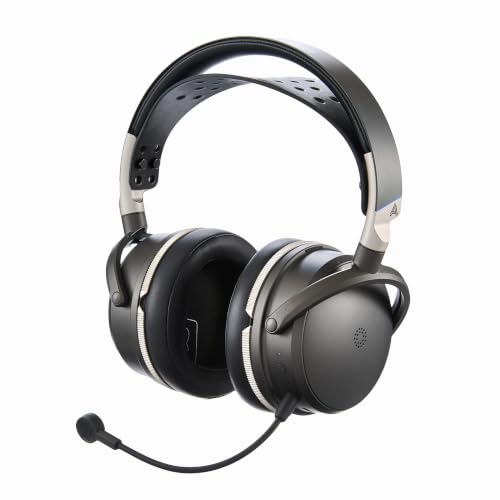
The confirmed-ANC Maxwell 2, as its listing states it. The verified title reads: Audeze Maxwell 2 Wireless Gaming Headset for PlayStation, includes active noise cancellation ANC, works with PC, Mac, and Switch. Four facts live inside that sentence, and this review will not smuggle in a fifth. The product exists as a listed retail item. It is wireless. Its headline platform is PlayStation, with PC, Mac, and Switch compatibility stated. And ANC is included — stated by the seller, in the title, as a selling point. For a buyer whose requirement list begins “Maxwell sound, with cancellation, for my PlayStation and my PC,” this listing is the whole requirement list answered in the manufacturer’s retail language.
| Item | Audeze Maxwell 2 with ANC (PlayStation) |
|---|---|
| Category | Gaming Headsets |
| What its entry leads with | wireless operation, active noise cancelling |
| Price | Check price on Amazon |
What the listing does not state is equally instructive, and a careful buyer should inventory the silence before ordering: no battery figure appears in this title, no weight, no driver description, no microphone claim, no statement of how the ANC behaves or what it costs in battery life when engaged. Some of those facts will live in the listing’s full description and in Audeze’s own materials; until they are read there, they are not facts for this article. The Maxwell lineage supports reasonable expectations — the line’s identity is planar magnetic sound quality — but expectations are not specifications, and the history of headset launches includes enough quietly revised drivers, weights, and battery claims that this page declines to print the expected numbers as if they were the confirmed ones. Buy this variant for what its title guarantees, and you cannot be disappointed by what it never promised.
Because so much rides on the full listing, a buyer of this variant should read that listing with a checklist rather than a glance. Confirm, in the seller’s or manufacturer’s own text: the battery figure and whether it is quoted with cancellation engaged; the weight, and whether it includes the microphone; the microphone’s type and whether it detaches; what the cancellation does to wireless range or latency, if anything; which platforms the ANC itself works on, since a feature can exist on a headset and still be limited to certain connections; and the return terms that apply if the answers disappoint in person. Every item on that list is a fact the manufacturer possesses today. A listing that answers them is a listing ready to be bought from; a listing that leaves several open is telling you, in its own way, to wait — and waiting, on a product whose documentation is visibly still arriving, is a decision with evidence behind it.
Strengths
- ANC confirmed in the seller’s own title — the only Maxwell 2 variant that offers that certainty today.
- Platform breadth stated outright: PlayStation as the headline, with PC, Mac, and Switch all named.
- Carries the Maxwell line’s established reason to exist — a gaming headset bought for sound quality first.
Trade-offs
- Key specifications a flagship buyer expects — battery, weight, microphone, ANC depth — are not stated in the verified title and must be confirmed in the full listing before purchase.
- ANC performance is entirely unmeasured in any source this article can rely on; confirmed presence is not confirmed quality.
- Early-listing products carry early-listing risks: details can be revised, and early buyers underwrite that uncertainty.
Best for: PlayStation-centred players who want Maxwell sound with cancellation guaranteed in writing, and who are comfortable verifying the remaining details in the full listing at purchase time. Not suited for: buyers who need every specification documented before ordering, or PC-first players, whose variant’s ANC status is a separate question. Check price on Amazon

Audeze Maxwell 2 (PC)
The confirmed core without the confirmed cancellation. The verified title reads: Audeze Maxwell 2 for PC, PlayStation, Mac, and Switch, new version 2026, 80 hours battery life, low-latency Bluetooth, dark gray. This is a substantial set of confirmations. An 80-hour battery figure, if it holds in use, places the headset in the charge-it-monthly class that the original Maxwell helped define for gaming. Low-latency Bluetooth addresses the standing complaint about Bluetooth audio in games — delay between action and sound — by name. The platform list is complete for a modern household. And the finish is specified, which matters more than it should to people who keep a desk aesthetic. What the title does not contain, in a listing otherwise happy to enumerate features, is any mention of active noise cancellation.
| Whole | Audeze Maxwell 2 (PC) |
|---|---|
| Line | Gaming Headsets |
| Headline functions from its listing | Bluetooth connectivity |
| Expense | Check price on Amazon |
How should a buyer read that silence? With discipline in both directions. A title’s silence does not prove a feature absent — titles are compressed, and features are sometimes detailed only in descriptions, bullet points, or manuals. But silence in a feature-listing title, beside a sibling listing that trumpets the same feature, is evidence a careful buyer weighs rather than waves away. The rational positions are two: if ANC is essential to you, this variant cannot currently be chosen for it; if ANC is a bonus you would welcome but not require, this variant’s confirmed core — battery, latency, platforms — can be judged on its own considerable merits while the ANC question resolves itself in fuller documentation. What is not rational is the third position, common in launch threads: assuming the feature must be present because the product’s name and its sibling suggest it. Names are marketing. Titles are evidence. Buy on evidence.
Strengths
- An 80-hour battery figure stated in the title, continuing the line’s charge-rarely character.
- Low-latency Bluetooth named explicitly, answering gaming’s standing objection to Bluetooth audio.
- The broadest platform statement of the three listings here — PC first, with PlayStation, Mac, and Switch all included.
Trade-offs
- ANC unconfirmed for this variant — the single most important unknown for readers of this article.
- As with its sibling, weight, microphone, and driver details are not stated in the verified title.
- A 2026-version listing invites the early-adopter’s usual bargain with possible revisions and scarce early stock.
Best for: PC-first players who value battery life and low-latency wireless above cancellation, and who can treat ANC as a question to confirm at checkout rather than a reason to buy. Not suited for: anyone whose purchase is motivated by ANC itself — for them, this variant is currently a promise without the words. Check price on Amazon

SteelSeries Arctis Nova Pro Wireless
The established flagship whose listing confirms everything this article has had to leave open. The verified title describes the SteelSeries Arctis Nova Pro Wireless multi-system gaming headset in black, with neodymium magnetic drivers, ANC, a two-battery system, a ClearCast Gen 2 microphone, and support for PC, PS5, PS4, Switch, and mobile. Read against the Maxwell 2 listings, the contrast is the review: here is a flagship whose seller states the cancellation, the battery architecture, the microphone generation, and the platform list in one breath, because the product is established and its documentation is complete. For a buyer who needs ANC gaming audio now, with no unresolved questions, this is what “confirmed” looks like when it is finished.
| Variant | SteelSeries Arctis Nova Pro Wireless |
|---|---|
| Class | Gaming Headsets |
| What its entry leads with | wireless operation |
| Entry price | Check price on Amazon |
The two-battery system deserves its own analysis because it represents a different philosophy from the Maxwell line’s enormous single charge. Where Audeze’s confirmed figure promises weeks between charges, SteelSeries’ answer is to make charging disappear differently: one battery in the headset, one in the base, swapped in seconds, so the headset is never tethered and never dead. Neither philosophy is wrong; they suit different desks. The Maxwell approach suits the player who hates infrastructure and wants the headset to be the whole system. The SteelSeries approach suits the player whose setup is a station — the base station also anchors the multi-system switching its title advertises — and who plays daily enough that even a monthly charge is a rhythm they would rather not keep. Against both, weigh the character difference the Maxwell line is bought for: Audeze’s following is built on planar sound quality as the first priority, and listeners who have chosen Maxwell once for that reason should confirm, from full Maxwell 2 documentation, that the second generation keeps the faith before treating the SteelSeries’ completeness as the deciding factor.
Strengths
- ANC confirmed in the listing title, with no ambiguity for a buyer who needs cancellation today.
- Two-battery hot-swap system removes charging downtime entirely for daily players.
- Microphone and platform support stated in full — the documentation of a settled, established flagship.
Trade-offs
- Its sound signature serves a different priority than Audeze’s planar-first approach; committed Maxwell listeners are a distinct audience.
- The base-station ecosystem asks for desk space and a more elaborate setup than a headset-only solution.
- As the established model, it offers no launch novelty — what you see documented is the whole story.
Best for: buyers who need confirmed ANC and complete documentation now, and multi-system households that will use the base station’s switching daily. Not suited for: listeners whose allegiance is specifically to the Maxwell sound, who should wait for the Maxwell 2’s full documentation instead. Check price on Amazon
Buying walkthrough: what actually decides Exclusive Audeze Maxwell 2 ANC
What is confirmed regarding the Maxwell 2 so far
It is worth assembling the confirmed record in one place, because in launch coverage the confirmed and the rumoured are usually stirred together until neither can be tasted. Confirmed by verified listing titles: a Maxwell 2 exists as a retail listing in at least two variants. The PlayStation-headed variant includes active noise cancellation and works with PC, Mac, and Switch. The PC-headed variant is a new version for 2026, offers 80 hours of battery life, uses low-latency Bluetooth, comes in dark gray, and works with PC, PlayStation, Mac, and Switch. That is the whole of it. Not confirmed by anything this article can cite: ANC on the PC variant; ANC performance on any variant; the driver configuration of the new model; its weight; its microphone; its price; its release timing in any region; and every comparison with the first generation that assigns it a percentage improvement in anything. A reader who holds those two lists apart has understood the launch better than most of the coverage of it.
The confirmed record also has a shape worth noticing. Both listings lead with platform breadth, which suggests Audeze knows the Maxwell’s audience plays across systems and has kept the one-headset household as the design brief. The PC variant’s confirmed battery figure suggests the line’s endurance identity survives the generational change. And the PlayStation variant’s ANC confirms that cancellation has joined the line’s vocabulary at least once, in at least one variant — which makes the PC variant’s silence read less like a technology’s absence from the programme and more like a documentation gap or a variant difference, two possibilities with opposite buying implications that only fuller information can separate. Until it does, the gap itself is the fact to buy around.
Readers who want to verify all of this themselves — a habit this article endorses without reservation — should know the order in which sources deserve trust during a launch. The manufacturer’s own product page and manual sit at the top, because they are the documents the company is legally and reputationally bound to. The retail listing title comes next: compressed, but seller-stated, and the source of every confirmation in this article. The listing’s bullet points and description follow, useful but more prone to copy inherited from a previous model. Below those sit retailer Q&A sections, forum summaries, and video coverage, in descending order of reliability, with social posts at the bottom — valuable as a map of what people are asking, worthless as a record of what is true. When two sources conflict, the higher one wins, and when the top two sources are silent, the correct conclusion is not the loudest lower source; it is that the fact is not yet public.
How ANC would change the planar gaming formula
The original Maxwell’s formula was a bargain: accept a heavier, more serious headset than the gaming mainstream, receive sound quality that belonged to the audiophile shelf. ANC changes that bargain’s terms in ways worth thinking through before any measurements exist. Cancellation microphones and processing add components competing for the same internal space and power budget as the drivers and battery. Engaged cancellation draws power continuously, so a headline battery figure and an ANC-engaged battery figure are two different numbers, and only one of them will describe a noisy-household player’s actual week. Cancellation also interacts with sound: the processing that erases a room can, in lesser implementations, press on the music’s own low frequencies or add a faint sense of pressure, and a line whose entire reputation is sound quality has more to lose from a mediocre implementation than a line bought for features. These are not predictions — they are the questions a reviewer should carry into the first measurements, and the reasons “includes ANC” is the beginning of an evaluation rather than its conclusion.
What ANC genuinely offers a gaming headset, when it works, is equally concrete. It removes the steady noises that leak under every closed-back seal — computer fans, air conditioning, a household’s daytime machinery, aircraft cabins for the travelling player — and by removing them it lowers the volume the game itself needs to be intelligible, which is a hearing-comfort benefit across long sessions. It does much less against voices, doorbells, and the irregular sounds of a shared house, because cancellation is at its best against the predictable and the continuous. A player whose problem is a loud PC beside the desk is ANC’s ideal customer. A player whose problem is a toddler in the next room will find cancellation a partial answer at best, and should weigh the confirmed-ANC purchase accordingly.
One further implementation question will matter to exactly the buyers ANC attracts: what happens when the cancellation is off, and what happens when it cannot keep up. Headsets differ in whether disabling ANC returns them to a purely passive state with its own sound signature intact, and in whether they offer a transparency mode that pipes the room back in for a conversation. Neither behaviour is confirmed for the Maxwell 2 in any source available here, and both shape daily life with the product — the transparency question especially, for the household player who must remain reachable. These are the questions to put to the full documentation and to early owner reports, ahead of any fascination with cancellation depth figures, because a headset’s modes are used every day while its maximum attenuation is used on the worst day of the month.
Battery and weight queries ANC creates
The PC variant’s confirmed 80 hours is the only battery number in this story, and it arrives with questions attached that the listing title cannot answer. Is that figure measured with ANC engaged, disengaged, or — for a variant whose ANC is unconfirmed — not applicable at all? Which wireless mode does it describe, since low-latency gaming wireless and Bluetooth rarely draw power identically? A careful buyer treats the number as a claim about the variant’s endurance class, which it establishes convincingly, rather than as a schedule for their own usage, which it cannot yet be. The original Maxwell built its reputation partly on endurance measured in weeks of play; the successor’s confirmed figure says the ambition survived, and the ANC-era refinement of the figure awaits the full documentation.
Weight is the other open query, and for this line it is not a trivial one. The first Maxwell was famously substantial — the cost of its build and its drivers, accepted by its audience as the tax on its sound. ANC hardware, additional microphones, and any structural changes for a second generation all push on that figure in one direction or another, and no verified source states where it landed. Players who found the original at the edge of their comfort across long sessions should treat the new model’s weight as a must-confirm item before purchase, in the full listing or the manufacturer’s specifications, rather than assuming a generational diet. Comfort over four hours is a specification too; it simply happens to be one that launch titles rarely print.
What original Maxwell owners should do now
Nothing — yet — and that is a considered recommendation rather than a shrug. The original Maxwell’s virtues are intact: its sound has not been diminished by a successor’s listing, its battery has not shortened, and the feature the successor adds addresses the room, not the recording. The rational triggers for an upgrade are specific. Your household noise genuinely interferes with play, and the confirmed-ANC variant matches your platforms. Your original is failing — a battery fading, a yoke worn, a microphone retired. Or the full Maxwell 2 documentation, when it arrives, confirms a change you can name as worth the money in a single sentence. Absent one of those triggers, the owner’s correct move is to keep the headset that made this line’s reputation, watch the documentation complete itself, and let early adopters fund the discovery of whatever the launch units teach. Selling a working Maxwell now, against unconfirmed successor details, converts a known excellent present into an unknown future at a loss — the one trade this article advises against without qualification.
Exclusive Audeze Maxwell 2 ANC in tangible routines
Situation: a Maxwell owner deciding whether to wait
The owner’s dilemma has a structure worth naming: every month of waiting costs nothing but novelty, because the current headset keeps performing, while every week of early adoption buys information at launch prices. Waiting also has a finish line — the arrival of complete documentation, independent measurement of the ANC, and the first revision cycle’s lessons — after which the decision can be made on evidence. The owner who frames it that way usually finds the anxiety drains out of the question. Their Maxwell is not the old model awaiting replacement; it is the control against which the new model’s confirmed facts must prove themselves, and a control that sounds this good can wait a long time.
Scene: a shopper who needs ANC for a booming household
For the shopper whose gaming happens inside a loud life — a flat with thin walls and thinner quiet, a desk beside the household’s machinery, a partner whose calls occupy the same room — ANC is not a luxury feature but the difference between hearing the game and hearing the house. Their decision path is the article’s clearest: the feature must be confirmed, so the candidates are the PlayStation-listed Maxwell 2, after reading its full listing for the details its title omits, and the SteelSeries, whose documentation is complete today. Between those, the deciding factors are platform centre of gravity and sound allegiance: PlayStation-first with a taste for the Maxwell character points one way; multi-system daily switching with a preference for hot-swap batteries points the other. What this shopper should not do is buy the PC-listed Maxwell 2 on the assumption that its silence about ANC is an oversight that will resolve in their favour.
Scene: a competitive player weighing planar sound next to extras
The competitive player’s priorities run in a specific order: positional audio they can trust, latency that does not tax their reactions, a microphone their team hears clearly, and comfort that survives a long session — with ANC somewhere below all four, useful against room noise but irrelevant to the match itself. For this player, the confirmed facts cut interestingly: the PC variant’s low-latency Bluetooth is named outright, which speaks to their second priority, while the microphone — their third — is undocumented in every Maxwell 2 title available, and the SteelSeries’ title names its microphone generation explicitly. A competitive player buying today on documented evidence has a genuine dilemma between a name they trust for sound and a rival whose card is fully face-up; a competitive player who can wait for the Maxwell 2’s complete documentation loses nothing by waiting, because tournaments are not scheduled around headset launches.
Setup and initially-spell how-to
Step 1 for Exclusive Audeze Maxwell 2 ANC: test the model on your worst typical morning
When the headset arrives, judge its cancellation in the conditions you bought it for — the household at full volume, the PC fans spun up, the street outside at its loudest — not in a quiet room at midnight where every headset sounds serene. ANC bought for a noisy life must be evaluated inside that life, inside the return window, with the game’s dialogue and your own voice chat both running.
Stage 2 for Exclusive Audeze Maxwell 2 ANC: connect or match the item only as its manual describes ahead of changing any setting
Set the headset up exactly as its documentation directs — pairing order, firmware updates, default audio modes — before adjusting anything. Launch headsets often receive early firmware that changes behaviour materially, and a first impression formed on shipping firmware, with settings improvised, is an impression of a product that may no longer exist a week later.
Step 3 for Exclusive Audeze Maxwell 2 ANC: display the arrangement to the following user who shares your room
If the headset will be shared — a household PC, a family console — walk the other users through its modes, especially what ANC does to their ability to get your attention. A player sealed in cancellation cannot hear a voice from the doorway, and households that agree a signal in advance avoid the shouting that otherwise becomes the headset’s reputation.
Stage 4 for Exclusive Audeze Maxwell 2 ANC: write the return deadline on the box the date it arrives
Launch purchases carry launch uncertainty, so the return window is part of the product. Write its closing date on the box on day one, and schedule your noisy-room test, your long-session comfort test, and your microphone test with teammates before that date — not after it, when the answers become expensive.
Relocate 5 for Exclusive Audeze Maxwell 2 ANC: run one ordinary session at default controls and write down what bothers you
Play one completely ordinary session at defaults and note the specifics: where the weight settles, whether the cancellation presses, how your voice sounds to your team, what the battery reports afterwards. Written specifics are what firmware settings, fit adjustments, and — if it comes to it — a return decision can actually act on.
Common mistakes with Exclusive Audeze Maxwell 2 ANC
Treating unconfirmed specifications as final
Launch coverage recycles numbers — a weight from the first generation, a driver size from a forum, a price from a placeholder listing — until repetition makes them feel established. They are not. The discipline this article has applied is available to any buyer: a specification is final when the manufacturer’s own documentation or the retail listing states it, and everything else is a rumour with good posture. Acting on recycled numbers — selling existing gear, committing a budget, promising a team an upgrade date — converts other people’s guesses into your consequences.
Assuming ANC improves game audio sooner than the room
Cancellation subtracts the room; it does not add to the game. A buyer expecting ANC to make footsteps clearer in the mix itself, or to upgrade the drivers by association, will be disappointed by a feature working exactly as designed. What ANC changes is the noise floor beneath the game, which can make quiet game audio easier to hear in a loud space — a real benefit, correctly understood, and a smaller one than the marketing grammar of “now with ANC” tends to imply.
Selling a working Maxwell prior to retail facts land
The original Maxwell holds real value, in use and in resale, and both are thrown away by selling in the gap between a successor’s announcement and its documentation. The gap is precisely when the old model’s price dips on launch excitement and the new model’s unknowns are at their widest. Owners who wait for the facts keep both options alive; owners who sell early have made an irreversible decision at the moment of minimum information, which is the definition of a bad trade.
One scenario the head-to-head should not skip is the gift purchase, because launch products are disproportionately gifted on the strength of their headlines. A giver buying for a PlayStation player can rely on the confirmed-ANC variant’s title and give with confidence. A giver buying for a PC player faces the open ANC question in its sharpest form, because the recipient’s delight may depend on a feature the listing never promised — and a gift receipt, plus the honesty of saying “check the cancellation question in the full listing while the return window is open,” converts that risk into a shared, manageable errand rather than a silent disappointment discovered in month two.
Head-to-head: separating the shortlist
The three listings separate cleanly once certainty is treated as a feature. The PlayStation Maxwell 2 offers the line’s sound with cancellation guaranteed in writing and documentation still completing itself. The PC Maxwell 2 offers the line’s endurance and latency story fully stated, with cancellation an open question that its own title raises by omission. The SteelSeries offers completeness: every headline feature documented, an established ecosystem, a battery philosophy of swaps rather than marathons, and a sound character that serves a broader brief than Audeze’s audiophile one. A buyer who ranks certainty first buys SteelSeries or waits. A buyer who ranks the Maxwell sound first buys the variant whose platform matches their desk and confirms the remaining details in the full listing before paying. A buyer who ranks ANC first, above brand, buys only where ANC is written down — which today means one Maxwell 2 variant and the rival, and not the other Maxwell 2, however likely its eventual documentation is to please.
There is a platform dimension to the head-to-head that deserves one paragraph of its own. The two Maxwell 2 variants divide the world by headline platform while each claiming the other’s territory in its compatibility list, which raises a practical question the titles cannot answer: whether the variants differ in hardware, in bundled receivers, in firmware tuning, or only in packaging. Households with both a PlayStation and a gaming PC should not assume the two listings are interchangeable until that question is answered in the full documentation — the price of guessing wrong is a return, and the cost of reading first is ten minutes. The SteelSeries, by contrast, states its multi-system design as its identity, base station and all, which is the documented answer for the genuinely mixed household today.
Living with the pick: care and longevity
Whichever headset a reader lands on, flagship gaming headsets reward the same stewardship. Batteries last longest when the headset is neither stored flat for months nor cooked on a charger indefinitely; the manufacturer’s guidance in the full documentation governs, and following it is the cheapest longevity available. Ear pads are the wear item that changes sound as they age — compressed pads alter both seal and tuning — so their condition belongs in any “my headset sounds different” investigation before the drivers are suspected. Firmware should be kept current on a launch product especially, since early updates commonly refine exactly the features this article had to leave unconfirmed. And the box, the receipts, and the return paperwork of a launch purchase should be kept until the documentation and the ownership agree — a small archive that costs a shelf corner and settles arguments.
Care has one ANC-specific addition for whichever confirmed-cancellation headset a reader chooses. Cancellation depends on microphones that listen to the room, and those microphones live on the ear cups’ outer surfaces, exposed to dust, rain, and the inside of bags. Keeping the cups clean and the headset cased preserves the feature’s calibration in a way that has no analogue in a passive headset, and a cancellation system that seems to weaken over a year is often a dirty or obstructed microphone array rather than failing electronics. The same applies to the seal the cancellation builds on: pads that have flattened with age leak low-frequency noise past the electronics’ ability to erase it, so pad condition and cancellation performance decline together and should be investigated together, pads first, because they are the cheaper and likelier culprit.
Final recommendation
Buy on what is written, wait on what is not, and keep a working Maxwell without a flicker of doubt in the meantime. The confirmed record supports real enthusiasm: a Maxwell 2 exists, one variant guarantees ANC in its own title, the other guarantees endurance and low-latency wireless in its own, and the line’s founding virtue — sound quality taken seriously in a gaming headset — is the premise both listings are built on. The unconfirmed record supports equal patience: cancellation quality, the PC variant’s ANC status, weight, microphone, and price are all knowable soon and none are knowable today. A launch read this way stops being a gamble. It becomes what it should have been all along — a short wait for a complete sentence, from a company whose previous sentence was worth hearing.
Frequently asked queries
What matters most when choosing for exclusive audeze maxwell 2 anc?
Certainty about the feature you are actually buying for matters most. If that feature is ANC, only listings that state it count — today, the PlayStation-headed Maxwell 2 and the SteelSeries. If the feature is endurance or low-latency wireless, the PC-headed Maxwell 2 states its case in full. Matching your primary requirement to a variant that confirms it in writing is the whole decision; everything else is refinement.
How much should a beginner outlay for exclusive audeze maxwell 2 anc?
A beginner should first decide whether they are a flagship buyer at all: these are premium-tier headsets whose virtues — sound quality, endurance, cancellation — are wasted on occasional play through a television’s speakers’ worth of attention. If the tier is right, budget for the headset as a system: the confirmed variant for your platform, replacement pads in due course, and nothing spent on accessories until the headset itself is understood. No verified price is quoted in this article because no verified listing available to it stated one — check the current listing, and treat any price quoted elsewhere with the same scepticism as any other unconfirmed figure.
Which mistake do customers of exclusive audeze maxwell 2 anc regret most?
The launch-window mistakes cluster around assumption: assuming the PC variant’s ANC, assuming recycled specifications, assuming the first generation must be sold immediately. Each regret has the same shape — an irreversible action taken on reversible information. The buyers who report the least regret, in every launch cycle, are those who matched a confirmed feature to a real need and let the rest of the documentation arrive in its own time.
How long until a new Audeze Maxwell 2 headset feels automatic?
A flagship headset’s configuration — wireless modes, platform switching, cancellation behaviour, fit — typically takes a week of ordinary sessions to become automatic, with the fit question, as with any substantial headset, decided across the first long session rather than the first hour. Launch products add one more curve: early firmware updates may change behaviour in the first weeks, so the configuration you settle into at a month old is the stable one to judge.
When is the premium option in exclusive audeze maxwell 2 anc genuinely worth it?
The premium in this comparison is the flagship tier itself, and it is worth it when sound quality is the buyer’s first priority and the headset will be used for music and media as well as games — the dual life where the Maxwell line’s character earns its keep daily. For game-only use at a desk in a quiet room, the premium buys refinements the situation mutes, and a simpler headset serves honestly. Premium spent on confirmed features is defensible; premium spent on unconfirmed ones is a donation to a launch.
What should I verify at the outset if my exclusive audeze maxwell 2 anc purchase disappoints?
Verify the disappointment against the listing you bought from. If the headset lacks a feature its title never claimed, the gap is in the expectation, and the remedy is a return within the window or a recalibration — not a complaint the product can answer. If it lacks a feature its title did claim, document that immediately and use the return or support channel while the paperwork is fresh. Either way, check firmware and fit first: launch headsets disappoint most often through an un-updated unit or an unadjusted headband, both curable in minutes.
Linked guides
The Soundcore Aerofit 2 Pro Are Open Earbuds That Transform In to ANC Earbuds
Anne Pro 2 vs Rk61 vs Gk61 Budget 60 Percent Compared
One more angle: how ANC would change the planar gaming formula, revisited
When independent measurements of the Maxwell 2’s cancellation eventually appear, read them against the noises of your own rooms rather than against a laboratory ideal. Cancellation is a curve across frequencies, not a number, and a headset that erases fan hum superbly and voices modestly is perfect for one household and pointless for another — the measurement only becomes information when it meets your noise.
One more angle: what is verified about the Maxwell 2 so far, revisited
Recheck the confirmed list before any purchase, however soon. Launch documentation completes itself in stages — a manual posted, a specification page filled in, a listing title quietly amended — and the variant whose ANC is unconfirmed as this article is written may be confirmed, or definitively not offered, by the time you read it. The article’s method outlives its snapshot: trust titles and manuals, in that order, and let everything else wait.
One more angle: what original Maxwell owners should do now, revisited
Owners should also resist the subtler pressure of the upgrade conversation — the teammate’s new purchase, the forum’s consensus, the sense that ownership has an expiry date. The original Maxwell was bought, by most of its owners, as a long-term instrument rather than a seasonal accessory. Instruments are replaced when they fail or when a successor proves a specific superiority in the owner’s own hands, and neither event is scheduled by a listing appearing online.