Disclosure: As an Amazon Associate, reviewstook.com earns from qualifying purchases. Links on this page are affiliate links; they cost you nothing extra. Prices and availability change often, so check the current Amazon listing before you buy.
The news behind earfun updates air pro 4 plus is easy to state and harder to evaluate: EarFun has revised its Air Pro 4 into an Air Pro 4 Plus, adding dual drivers, Bluetooth 6.0, a translation feature and a longer quoted battery life to a pair of earbuds that was already the company’s codec flagship. Mid-cycle revisions like this one create a specific kind of reader confusion — owners of the original wondering if they have been leapfrogged, shoppers wondering whether the Plus premium or the original’s discount is the smarter money, and gift buyers wondering which box is simply the current one. This explainer exists to answer those three readers separately and honestly, using the verified listings of both models and the class rival that keeps them honest.
A word about why revisions like this are becoming the industry’s rhythm, because it helps a buyer stay calm inside it. The core technologies of wireless earbuds — cancelling, codecs, battery density — are maturing, which means progress now arrives as refinements and features rather than as revolutions, and manufacturers package those refinements as Plus models, second generations and quiet mid-cycle updates. A buyer who expects revolutions will feel perpetually leapfrogged; a buyer who understands the rhythm sees each revision for what it is, a small step on a path their current product is already walking. The Air Pro 4 Plus is a textbook step of that kind, and it deserves a textbook reading rather than a headline one.
What can be confirmed is stated as confirmed: the Plus exists, its listing specifies dual drivers where the original specifies its single-driver design, its Bluetooth version steps from 5.4 to 6.0, its quoted total playtime rises from 52 to 54 hours, and its headline additions include AI translation features alongside the aptX Lossless, LDAC and Snapdragon Sound credentials both models share. What cannot be confirmed from a listing — how the dual drivers actually sound against the original, whether the translation delights or disappoints in a real conversation — is labelled as unconfirmed wherever it appears, because a revision announcement is a manufacturer’s opening argument, not a verdict, and this page will not launder the one into the other.
The three products below were each verified against their current listings: the Plus, the original Air Pro 4, and Soundcore’s Liberty 4 NC as the value reference. Read the verdict first if you are in a hurry; read the whole page if your money is involved, because the difference between a revision bought well and a revision bought badly is rarely the product — it is the timing, the gap, and the honesty of the buyer’s own audit, and those take a page to teach.

Key takeaways
Four questions organise everything known and not-yet-known about this revision. They are the explainer’s agenda, and the product sections answer to them.
- What the Plus revision actually changes
- Codec and driver differences versus the base unit
- Code update path for existing owners
- Which claims come from the maker versus reviewers
In this guide
The brief reply on Earfun Updates Air Pro 4 Plus
The short version: the Plus is a genuine revision, not a relabel — the dual-driver change alone guarantees that — but it is a revision of degree for most listeners. Existing Air Pro 4 owners gain little by upgrading immediately; new buyers should let the price gap decide, because at a small gap the Plus is the current, better-specified box, and at a large gap the discounted original remains the value champion of the line. The translation feature is the one true novelty, and it should be bought only by readers whose lives include the conversations it is for. Everyone else is choosing between two excellent versions of the same idea, at two prices, on two dates — a much calmer decision than the launch headlines suggest.
Tools and models that genuinely assist
Three listings carry the whole story between them: the revision, the original it revises, and the rival that prices them both. The table compresses the comparison; the detailed sections unpack it.
| Product | Status | Entry |
|---|---|---|
| EarFun Air Pro 4 Plus | Checked entry | Check price on Amazon |
| EarFun Air Pro 4 | Verified entry | Confirm cost on Amazon |
| Soundcore Liberty 4 NC | Verified listing | Check price on Amazon |
How the lineup was chosen
An explainer about an update needs the before and the after on the same page, so the lineup is the revision, the original, and one outsider. The outsider matters more than it might seem: without the Liberty 4 NC standing nearby at its friendly price, the Plus-versus-original argument happens in a vacuum where both EarFun models look inevitable. With it, the reader can see the actual market shape — a value champion, a discounted flagship, and a revised flagship — and locate their own budget inside it. Every claim in this explainer that rests on a listing is drawn from the three verified listings; every claim that rests on the manufacturer’s announcement is attributed to it; and the gap between those two kinds of claim is maintained visibly throughout, because in a revision story the gap is where the reader’s money is safest.
The criteria follow the same discipline: what the revision changes in hardware, what it changes in software and features, what it does not change at all, and what remains unknown until independent reviewers and owners have lived with it. That fourth category is the one most update coverage omits, and it is the one this explainer treats as a first-class citizen.
There is a fifth, quieter criterion that shoppers in a revision season should apply to themselves: how long they actually keep earbuds. A two-year keeper and a five-year keeper should read the same price gap differently, because the Plus’s platform runway and newer battery are worth more across five years than across two, while the original’s discount is worth the same on day one regardless. Revision arithmetic is personal arithmetic. The explainer can supply the figures; only your keeping habits can supply the denominator, and supplying it honestly is the difference between a calculation and a rationalisation.
Detailed reviews

EarFun Air Pro 4 Plus
Best for new buyers who want the line’s current specification, and travellers who will use the translation
| Unit | EarFun Air Pro 4 Plus |
|---|---|
| Range | Wireless Earbuds |
| Page highlights | wireless operation, Bluetooth connectivity, active noise cancelling |
| Price | Confirm cost on Amazon |
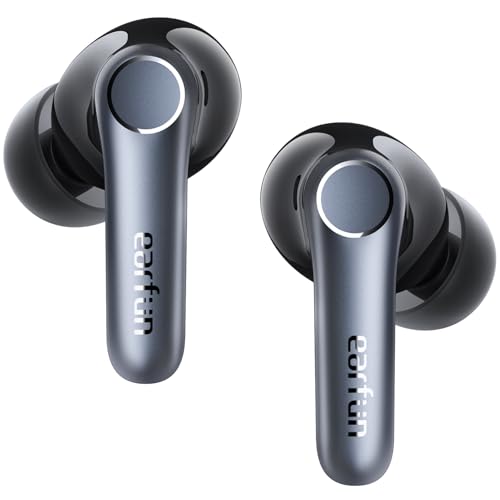
Start with what the listing confirms. The Plus moves to dual drivers — a genuine architectural change from the original’s design, and the strongest evidence that this is a revision rather than a re-badge, because driver architecture is the one thing a manufacturer cannot fake with firmware. Bluetooth steps to 6.0, the newest version, which principally promises connection refinements and future-proofing rather than a transformation you will hear. The quoted total playtime rises to 54 hours. The codec crown is retained in full: aptX Lossless under Snapdragon Sound, LDAC for high-resolution listening, and the six-microphone AI call system continues. And the headline novelty arrives: translation earbuds functionality, pitched at travellers and cross-language conversations, whose real-world quality is the single largest unconfirmed claim in this entire explainer.
Reason carefully about the dual drivers, because they are the purchase’s core. Two drivers dividing the frequency labour can deliver cleaner separation and a more composed top end than one driver doing everything — that is the honest promise. What they cannot guarantee is a tuning you will prefer: driver count is an architecture, not a flavour, and the Plus will have its own voicing that only listening can judge. The confirmed facts justify calling the Plus the better-specified product; they do not justify calling it the better-sounding one, and this explainer declines to. Buyers who need that judgement should wait for the independent measurements and owner reports the mistakes section counsels patience for — or use a return window as their personal measurement lab.
The translation feature deserves its own paragraph of disciplined reasoning. Earbud translation lives or dies on its software pipeline — speech recognition, translation quality, latency, language coverage, and whether a phone and an app must mediate every exchange — and none of that is visible in a listing’s headline. For a traveller with regular cross-language needs, even a good-enough implementation is a small miracle at this price class, and the Plus is currently the line’s only way to get it. For everyone else, it is a demo to enjoy twice. Buy it as the former or ignore it as the latter, but do not let it arbitrate the purchase from the middle ground, where most buyers’ lives actually sit.
Strengths
- Dual drivers and Bluetooth 6.0 make it the line’s current, best-specified model
- The full codec suite retained: aptX Lossless, LDAC, Snapdragon Sound
- Translation functionality that no other model in this lineup offers
Trade-offs
- Its sound against the original’s is unconfirmed until independent listening exists
- Translation quality, latency and language coverage are manufacturer claims at this stage
- It launches at the premium the discounted original no longer commands
Best for: the new buyer choosing the current box, and the traveller with real translation needs. Not suited for: the Air Pro 4 owner seeking a reason to upgrade today, or a bargain hunter while the original’s discount lasts. Check price on Amazon
If you do buy the Plus in its early window, run one verification in the first week that this explainer cannot run for you: a real conversation through the translation feature, in your actual language pair, in a real environment. That single test converts the product’s largest claim from marketing into knowledge, and it does so while the return window can still act on the answer. Early adopters who test the headline claim early are the ones who never feel ambushed by it later.
One more early-window duty belongs to Plus buyers specifically: check the app and firmware state on day one and again at the week’s end. Launch-window products receive their fastest corrections in their first weeks, and an owner who updates promptly experiences a measurably better product than the one the first reviews described — while an owner who never updates may spend a year blaming the hardware for a software draft that was replaced in the first fortnight. In a revision story, the changelog is part of the product; read it like one.
EarFun Air Pro 4
Best for anyone chasing the flagship experience at the revised model’s expense of nothing but novelty
| Label | EarFun Air Pro 4 |
|---|---|
| Family | Wireless Earbuds |
| Headline extras from its entry | wireless operation, Bluetooth connectivity, active noise cancelling |
| Page price | Check price on Amazon |
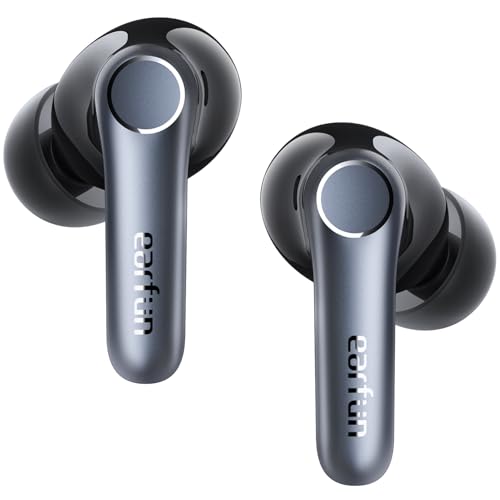
The original’s position after the Plus launch is the classic, enviable one: yesterday’s flagship at today’s discount, with a specification that remains formidable in absolute terms. Adaptive hybrid noise cancelling, aptX Lossless and LDAC, the six-microphone call system, 52 hours of quoted playtime, Bluetooth 5.4, in-ear detection — read without the Plus beside it, that list describes one of the most complete earbuds in its class, and nothing about the revision makes any line of it worse. What the revision changes is relative standing, not absolute quality, and shoppers should hold that distinction firmly while the discounts do their psychological work.
The original also holds one advantage the Plus cannot yet match: it is a known quantity. Its sound has been measured, reviewed and lived with; its quirks are documented by owners rather than discovered by pioneers; its firmware has had its adolescence in public. A buyer who values certainty — the gift buyer, the commuter replacing a dead pair tonight — is buying that certainty along with the hardware, and it is worth real money. The Plus will acquire the same certainty over the coming months, at which point this explainer’s balance of advice will shift; today, the known flagship at a discount against the unknown revision at a premium is a legitimate contest, not a formality.
Strengths
- A complete, proven flagship specification at post-revision pricing
- Measured, reviewed and owner-documented — the known quantity of the line
- The same codec suite and call system that headline the Plus
Trade-offs
- Single-driver design where the Plus now offers dual drivers
- Bluetooth 5.4 rather than 6.0, and no translation feature
- Its discount depends on stock and season; the window will not stay open forever
Best for: the value-led flagship buyer and anyone who needs certainty today. Not suited for: the traveller who specifically wants translation, or the buyer who keeps products long enough that the newest platform matters. Check price on Amazon
Owners of the original should read their position plainly: you hold the product this explainer still recommends to new buyers on value grounds, which is an odd kind of obsolescence. The Plus’s arrival changes your pair’s resale arithmetic more than its performance, and the rational owner’s move is to keep listening, let the Plus’s reputation form without your money, and revisit the question at your pair’s natural replacement time — by which point the revision will be the discounted known quantity, and the cycle will have paid you for your patience.
There is also a small, practical consolation owners rarely notice: a revision’s launch is the moment the original’s accessory and support ecosystem is at its richest. Cases, tips, replacement parts and community knowledge for the Air Pro 4 platform are abundant precisely because the platform is now shared with a current model. Owners who stock a spare set of tips or a second case during the revision season are buying insurance at its cheapest, for a product the market has just agreed to keep supporting.

Soundcore Liberty 4 NC
Best for buyers whose budget or phone makes the EarFun codec contest irrelevant
| Spot | Soundcore Liberty 4 NC |
|---|---|
| Family | Wireless Earbuds |
| What its page leads with | wireless operation |
| Tag | Check price on Amazon |
The Liberty 4 NC stands in this explainer as the market’s gravity: a noise-cancelling earbud from Anker’s Soundcore house, engineered around the commuter’s core needs at a standing that undercuts both EarFun models. Its role is to ask the question every revision story needs asked — what does the extra money, for either EarFun, actually buy you? The answer, honestly assembled, is codec breadth, call hardware and (for the Plus) drivers and translation. A buyer whose phone cannot speak the premium codecs, whose calls are indoor affairs, and whose commute is the main event will find the Liberty’s gravity hard to escape, and this explainer will not pretend otherwise for the sake of the headline product.
Its presence also disciplines the Plus-versus-original debate by pricing certainty: the Liberty is a known quantity too, from a house with a large support operation, and it competes with the discounted original for the value crown from below. Shoppers should therefore run the comparison as a three-way, in the order budget dictates — Liberty if the core brief is the brief, original if the flagship features are worth their discounted premium, Plus if the revision’s specific novelties map onto your life. That ordering, from your needs outward, is the whole method of this page.
Strengths
- The value anchor of the comparison, with commuter-grade noise cancelling
- A known quantity from a large house with a mature support ecosystem
- Needs no special phone or settings work to deliver its best
Trade-offs
- Neither EarFun’s codec breadth nor the Plus’s translation and dual drivers
- Calls are competent rather than a headline feature
- It answers the value question, not the flagship one
Best for: the budget-led commuter and the iPhone owner for whom the codec contest is moot. Not suited for: the codec maximalist, or the traveller buying translation. Check price on Amazon
A final word in the Liberty’s favour that revision seasons tend to bury: products like it are why the flagships must keep improving. The Plus exists, with its dual drivers and its translation ambitions, partly because the value tier keeps absorbing yesterday’s flagship features at friendly prices. Buying the Liberty is not opting out of progress; it is funding the pressure that produces the next revision — a thought worth the small comfort it brings when the newer box is the one you did not choose.
Buying guide: what truly settles Earfun Updates Air Pro 4 Plus
What the Plus revision genuinely changes
Sort the revision into three piles, because manufacturers prefer them blended. Pile one, hardware changes that cannot be undone by software: dual drivers in place of the original’s design, and Bluetooth 6.0 in place of 5.4. Pile two, feature additions that live in software and service: the translation functionality, with its dependence on an app, a phone and presumably a maintained language pipeline. Pile three, specification increments: two more quoted hours of total playtime, the kind of change that is real and also beneath most owners’ ability to notice. A revision is worth its premium roughly in proportion to pile one, discounted by how much of pile two you will actually use, with pile three as a tiebreaker at most. By that accounting the Plus is a real revision with a modest centre of gravity — which is a more useful sentence than either “all-new” or “pointless refresh”, the two verdicts the internet will offer you.
Notice what did not change, because continuity is also information: the codec suite, the microphone count, the adaptive cancelling concept, the in-ear detection, the general design language. EarFun revised the engine and added a feature; it did not reconsider the product. Owners of the original should read that continuity as a compliment to their purchase — the platform was worth revising rather than replacing — and shoppers should read it as a promise that the Plus inherits a mature foundation rather than a first draft.
Codec and driver differences versus the base variant
The codec story is continuity: both models carry aptX Lossless under Snapdragon Sound and LDAC, which means the phone-side arithmetic from this site’s other EarFun coverage applies identically — a compatible Android phone unlocks the crown jewels, an iPhone renders them decorative, and most listeners on most commutes will hear the two models’ codec behaviour as the same. Do not let any comparison table convince you the Plus advanced the codec position; it defended it, which at this level is enough.
The driver story is the change, and it deserves a listener’s framing rather than an engineer’s. A single driver voices the whole range with one character; dual drivers divide the labour, typically letting a dedicated unit handle the top with less strain while the other owns the lows and mids. The audible promise is composure at complexity — dense passages staying separated, treble staying clean at volume. The audible risk is a voicing that trades the original’s known character for a new one you may or may not prefer. Architecture tells you the kind of difference to listen for; it cannot tell you the direction of your preference, and any source that claims otherwise from a specification sheet is selling you a graph as an ear.
Code update path for existing owners
The question owners actually type into search boxes deserves a plain answer: a firmware update will not turn an Air Pro 4 into a Plus. The defining changes are hardware — drivers and radio — and hardware does not arrive by download. What firmware can do for existing owners is narrower and still worthwhile: refinements to cancelling behaviour, call processing, battery reporting and app features have historically arrived for products in this line, and keeping the app updated is the owner’s way of collecting whatever of the revision’s software thinking proves portable. Expect maintenance, not metamorphosis, and be pleasantly surprised if a feature crosses over — some platform-level additions do, when the hardware allows.
The practical corollary concerns resale and timing. An original bought today at its discount will be supported on the same app platform as the Plus, which protects its useful life; an original owned since launch has already delivered most of its value in listening, which reframes the upgrade question from “is the Plus better” to “is the Plus better by enough, over the original’s remaining life, to justify resetting the clock” — a much higher bar, and the correct one. Most owners who run that arithmetic honestly will wait, and waiting, in revision economics, is usually the winning move.
Which claims come from the maker versus reviewers
Learn to hear the two voices in any update story. The maker’s voice speaks in capabilities: dual drivers, Bluetooth 6.0, translation, 54 hours — statements about what the product contains and is designed to do, verifiable against the listing and, mostly, true as far as they go. The reviewer’s voice speaks in experiences: how the drivers sound against the original, whether the translation survives a train-station conversation, whether the extra hours materialise in a real week. At the moment this explainer is written, the first voice has spoken fully and the second has barely begun, and the honest page says so. Treat any source that reports the second voice’s conclusions already — in either direction — as a source that has confused the two, and discount it accordingly.
Your own first week can supply the missing voice for your specific case, if you structure it: the translation conversation, the side-by-side album against your old pair, the commute at your levels. The how-to section below sequences exactly those tests. A revision bought on the maker’s voice alone is a speculation; a revision kept after your own tests is a decision, and the return window is the mechanism that converts one into the other.
Earfun Updates Air Pro 4 Plus in actual routines
Scene: an Air Pro 4 owner deciding whether the Plus counts
The owner’s calculus is the coldest of the three readers’, and it should be. Your current pair already holds the codec suite, the call system and the cancelling concept; the Plus offers you drivers you have not heard, a radio version you will not perceive, two hours you will not notice, and a translation feature your life may not contain. Unless that last item is your daily bread, the rational owner’s answer is to wait — not forever, but until the Plus is the discounted known quantity and your current pair is genuinely ageing. Owners who upgrade at every revision pay the pioneer’s premium repeatedly for increments; owners who skip one revision per cycle collect the same progress at half the lifetime cost. Be the second kind, and let this scene’s bluntness save you the money it was written to save.
Scenario: a shopper choosing among discounted stock and the revision
The shopper’s decision is a price-gap decision, and it should be made with the gap in hand rather than in the abstract. At a narrow gap, buy the Plus: the newer platform, the dual drivers and the longer support runway are worth a small premium to a buyer who will keep the product for years. At a wide gap, buy the original: its absolute capability is barely diminished by the revision, and the saving buys the accessories, the spare tips, or simply stays saved. The error to avoid is deciding by generation rather than by gap — paying a pioneer’s premium out of a reflex that newer is worth any difference, or refusing a genuinely better platform over a trivial one. Name your gap threshold before you open the listings, and let the number, not the moment, decide.
One refinement for the disciplined shopper: the gap moves. Revision launches depress the original’s price in waves — an announcement dip, a stock-clearing dip, a sale-season dip — and the same shopper can rationally buy the Plus in one month and the original in another without inconsistency, because the arithmetic changed underneath a constant preference. Checking the gap twice, a few weeks apart, is not indecision; it is the strategy itself, and it is available only to shoppers whose need is not urgent. Urgency is the most expensive feature in this entire comparison, and it is the one no manufacturer sells.
Situation: a gift customer who wants the safe, current entry
The gift buyer’s priorities invert the shopper’s: certainty outranks value, and the current box outranks the discounted one, because a gift should arrive as the present, not as a lesson in revision economics. For that buyer the Plus is the correct purchase almost regardless of the gap — it is the model the recipient can exchange, accessorise and read about without encountering the word “previous” — with one exception: if the recipient’s phone is an iPhone and their needs are a commute, the Liberty’s simplicity is the safer gift, because its virtues need no ecosystem to unlock. Gifts fail by being almost right for the recipient’s actual life; buy for their phone and their Tuesdays, not for the headline.
The gift scenario has a second, underappreciated virtue in the Plus’s favour: it is the model the recipient’s own research will find. A recipient who looks up their gift — most do — meets the current product, its current reviews and its current accessories, and the gift reads as chosen rather than as remaindered. That social arithmetic is not vanity; it is part of what a gift is for. The one discipline the gift buyer must keep is the receipt: a current box with a gift receipt respects both the gesture and the recipient’s ears, which may have their own opinion about fit that no giver can overrule.
Configuration and initially-spell how-to
Whichever of the three you buy, the first week should be run as a set of tests with a verdict at the end. These steps are written for the Plus buyer and adapt to the others by removing the claim-testing steps.
Stage 1 for Earfun Updates Air Pro 4 Plus: compare against the old gear one final period before selling it
If you have a previous pair — the original, or any predecessor — keep it for the full first week and run the comparison deliberately: the same album, the same commute, the same call route, alternating days. A revision’s value lives entirely in that comparison, and memory is too kind to old gear and too dazzled by new boxes to be trusted without the alternation. Sell or gift the old pair only after the comparison has been made in both directions, because the day the new pair disappoints is the day you will want the old pair’s evidence, not its absence.
Step 2 for Earfun Updates Air Pro 4 Plus: display the setup to the second user who shares your space
Let your most regular caller hear the new pair early, and ask the comparative question — how do I sound against the old ones — because call quality is a property of the other end of the line, and your callers are its only instruments. If the Plus is a household purchase, also settle the sharing practicalities in week one: whose phone pairs first, whose settings govern, whether a second pair is the honest solution. Earbuds are personal in fit and settings, and households that negotiate that early avoid the slow resentment of the borrowed-and-reset pair.
Move 3 for Earfun Updates Air Pro 4 Plus: unbox slowly and hold each accessory until the arrangement survives a full week
Keep the box, the full tip selection, the cable and the paperwork together until the setup has survived seven real days. A revision purchase carries a specific risk the accessories insure against: the headline claim that fails its first-week test — the translation that does not survive your language pair, the driver voicing that is not to your taste — sends the whole product back, and a return with its full bundle is a refund rather than an argument. After the week, the box can go to storage; before it, the box is part of the product.
Step 4 for Earfun Updates Air Pro 4 Plus: test the piece on your worst typical morning
Schedule the hardest ordinary use inside the first week: the windy call route, the loudest commute, the longest listening session. A revision bought on claims must meet reality at its least flattering, and the worst morning is where adaptive cancelling, call isolation and battery behaviour stop being specifications. Note the results against your baseline expectations while they are fresh; that note, read at the week’s end, is the most honest review of the Plus that will ever be written for your specific life.
Shift 5 for Earfun Updates Air Pro 4 Plus: save or photograph the configuration that finally operates
When the settings settle — codec choice, cancelling levels per context, EQ if any, the app preferences — record them: a screenshot set or a note, stored with the box. Earbud apps update, phones change, and a configuration that took a fortnight to evolve can be reset by either in seconds. The photographed setup converts that accident from a re-derivation project into a two-minute restoration. It also becomes your evidence at any future revision: the next Plus-style question will be answered faster by an owner who knows exactly what their current setup is.
Common mistakes with Earfun Updates Air Pro 4 Plus
Treating a mid-cycle refresh as a new generation
The Plus is a revision — same platform, same concept, better engine, one new feature — and pricing it in your head as a generation change leads to two symmetric errors: the owner who feels betrayed that their year-old flagship has been “replaced”, and the shopper who pays a generation-sized premium for revision-sized progress. Generations change what a product is; revisions change how well it does it. Calibrate your emotions and your money to the second, and the Plus takes its correct place: a better version of a known good thing, worth a modest premium to new buyers and a patient wait to owners.
Paying a premium prior to independent measurements exist
The early window of any revision is when its price is highest and its evidence is thinnest — the worst combination a buyer can accept voluntarily. The disciplined alternatives are to wait for the measurements and owner reports that convert claims into knowledge, or to buy inside a return window generous enough to run your own tests, which the how-to section sequences. What does not work is paying the pioneer’s premium on the maker’s voice alone and then defending the purchase against the evidence as it arrives. If your need is not urgent, let other people’s first months educate your purchase; the product will still be there, usually cheaper and always better understood.
Assuming code functions transfer betwixt units
Software features feel portable in a way hardware is not, and owners routinely assume the Plus’s translation and refinements will arrive on their original pair by update. Some app-level features may indeed cross; the defining ones cannot, because they ride on the new hardware’s capabilities and the new model’s commercial logic alike. Read update notes for what they actually promise your model, and never let an assumed future update justify a present purchase — of either model. Buy the product whose confirmed specification serves you today, and treat any later addition as a windfall rather than an entitlement.
Head-to-head: separating the lineup
Plus against original resolves, unusually for a head-to-head, into a calendar rather than a contest. Today, with the original discounted and the Plus unmeasured, the value argument favours the original for most new buyers and patience for all owners. In a few months, with the Plus measured, reviewed and itself discounting, the same argument will favour the Plus for most new buyers — the products will not have changed, only the evidence and the prices will. A reader who understands that they are choosing a moment as much as a model has understood the revision economy entirely, and can safely ignore every louder voice in it.
Either EarFun against the Liberty is the standing contest of the class: specification against value, with the phone as referee. Let the referee decide. A codec-capable Android phone in your pocket makes the EarFun premium a working asset; anything else makes the Liberty’s simplicity the rational flagship. There is no third answer hiding in the specification tables, and shoppers who accept the referee’s verdict early save themselves the most expensive habit in consumer audio — buying the specification and then shopping for a life that uses it.
Living with the pick: upkeep and longevity
A revised model carries one longevity advantage worth collecting deliberately: the support runway. The Plus, as the current platform, will receive the app’s attention, the firmware refinements and the accessory ecosystem’s focus for longest, and an owner who keeps products for years should price that runway into the comparison — it is part of what the premium buys. Collect the advantage by keeping the app installed and the firmware current in the first year, when updates arrive fastest and matter most, and by registering or saving the purchase documentation while it is fresh.
The physical upkeep is the class’s usual liturgy, repeated because it works: tips washed or replaced on schedule, case contacts cleaned, the case kept in its designated place, the battery spared from heat and from long storage at empty. A pair maintained this way will still be serving when the next revision arrives to tempt you — at which point this explainer’s owner-scene advice will apply to you, and you can reread it with the authority of someone it was written for.
Final recommendation
New buyers: let the price gap arbitrate, with a bias toward the Plus at a narrow gap for its platform runway and dual drivers, and toward the discounted original at a wide one for its proven completeness. Owners: wait, with the single exception of the traveller whose translation needs are real and current. Gift buyers: the Plus, for its currency, unless the recipient’s phone and commute make the Liberty the more certain kindness. And everyone: treat the translation feature and the dual-driver sound as claims to be tested in your first week, inside the return window, rather than as facts to be assumed from this or any other page.
The Plus is a good revision of a good product, announced in the dialect all revisions speak. This explainer’s whole service is translation of that dialect into the three readers’ own languages — owner’s patience, shopper’s arithmetic, gift buyer’s certainty — and a reader who now knows which of the three they are has everything the launch coverage was never going to give them.
One last assurance for the reader who came here anxious about having bought the original last month: you bought a flagship at the moment its value peaked, weeks before a revision made it cheaper still and called it previous. That is not bad timing; it is the normal weather of a maturing category, and your pair will sound exactly as good tomorrow as it did on the day you chose it. The Plus changes the catalogue. It does not change your ears, your commute, or the music — and those were the purchase’s actual contents all along.
Frequently asked prompts
What counts most when choosing for earfun updates air pro 4 plus?
Which reader you are. The same two products are a patience test for the owner, a price-gap calculation for the shopper, and a certainty purchase for the gift buyer, and importing another reader’s answer is the most common way this decision goes wrong. Establish your category first — it takes ten seconds of honesty — and then apply that category’s rule from the scenarios section. The product facts are identical for everyone; the correct conclusion is not, and a page that pretends otherwise is selling rather than explaining.
How much should a beginner funds for earfun updates air pro 4 plus?
A beginner should usually buy the discounted original or the Liberty, and let the Plus be the second pair they choose with experience. First earbuds teach fit, commute demands and codec reality; the original teaches all three while being a flagship, which is a rare educational bargain created entirely by the revision’s timing. The beginner who starts with the Plus pays the pioneer’s premium for lessons the original teaches at a discount — and the lessons, not the drivers, are what a beginner is actually short of.
Which slip do shoppers of earfun updates air pro 4 plus regret most?
Paying the launch premium on announcement day for claims they never tested, then watching the same product discount as the evidence arrived. The regret is doubled by its avoidability: the return-window tests in this explainer take a week, and the patience alternative takes only a calendar. Revision products are the class where timing is a feature of the purchase itself, and shoppers who treat the calendar as part of the specification almost never join the regret statistics.
How long does it take to get used to the new Air Pro 4 Plus?
For an upgrader from the original, days — the platform, app and fit philosophy carry over, and only the new voicing and the translation workflow are genuinely new. For a first-time buyer of the line, the usual fortnight: fit in the first days, level habits across the first commutes, settings settled by the second week. The translation feature has its own learning curve measured in conversations rather than days, and it should be judged after several real exchanges, not after one demo sentence spoken to an empty kitchen.
When is the premium choice in earfun updates air pro 4 plus really worth it?
When the premium buys something with a date on it: the traveller departing into a season of cross-language work, the long-keeper buying the platform’s full support runway, the new buyer facing a narrow price gap. It is not worth it as a reflex — newer as a synonym for better — because revisions reward timing and fit-to-life rather than loyalty to the calendar. Price the premium against your own departure dates and keeping habits, and it will usually price itself.
What should I verify at the outset if my earfun updates air pro 4 plus purchase disappoints?
Verify which claim disappointed you, because the remedy differs. If the sound disappoints against your old pair, run the alternating comparison at matched volume before concluding — new voicings often lose first impressions and win fortnights. If the translation disappoints, test it in your second language pair and a quieter environment to separate the feature’s limits from the conditions’. If the fit disappoints, it is the tip ritual from this site’s other earbud coverage, unchanged by revisions. Only after the specific claim has been fairly tested should the return be filed — and filed it should be, inside the window, if the test was fair and the answer was no.
Related guides
- Dji Air 3s vs Dji Mavic 4 Pro
- Dji Mini 4 Pro vs Dji Air 3s
- Dji Air 3s vs Dji Mavic 3 Pro
- Dji Mavic 4 Pro vs Autel Evo Ii Pro V3
- Dt 1990 Pro Mkii
- Earfun Free Pro 3 Review
- Elecom Deft Pro Review
Companion reading: the Free Pro 3’s full story, the studio headphone desk, and the wider earbud coverage for other budgets and briefs.
One more angle: codec and driver differences versus the base unit, revisited
Run the driver comparison as a listening diary rather than a shootout. Live with the Plus alone for three days, noting the passages where its composure surprises you; then return to the original for a day and note what you miss and what you do not. Shootouts reward the dramatic difference of the moment; diaries reveal the difference you will live with for years, which is usually smaller, subtler, and located in exactly the dense, complex passages the dual drivers were built for. Your diary, not a graph, is the measurement that predicts your satisfaction — keep it for the week and let it vote.
One more angle: what the Plus revision truly changes, revisited
Step back from the specification for the strategic picture: the Plus tells you where EarFun believes its flagship’s future lies — in driver architecture and in services like translation, rather than in cancelling strength or battery headlines, both of which have plateaued across the industry. Reading revisions this way turns a product page into market intelligence: the categories a maker revises are the categories still moving, and the ones it leaves untouched are the ones it considers solved. For a buyer choosing a platform to keep for years, that signal — where the maker’s own investment is flowing — is worth as much as any single specification in this explainer.
One more angle: which claims come from the maker versus reviewers, revisited
Keep a small claims ledger for any revision you buy: three columns — claimed, confirmed by others, confirmed by me — filled in across the first month. It sounds bureaucratic and takes four minutes total, and it converts the fog of launch coverage into a personal evidence base that will serve you at every future launch, in every category, for years. Owners who keep the ledger stop experiencing revisions as weather and start experiencing them as information. That shift, more than any single product judgement, is the durable gift an explainer like this one can offer.