The DJI Mavic 4 Pro and the Autel EVO II Pro V3 are both larger folding camera drones, but they come from different makers and different design generations. The Mavic 4 Pro is a newer flagship with a multi-camera system, while the EVO II Pro V3 is an older single-camera design built around a large main sensor. Confirm all details on DJI’s and Autel’s own pages.

What each drone is for
The Mavic 4 Pro is DJI’s flagship in the Mavic line, aimed at photographers and filmmakers who want a capable camera system, strong sensing and a polished app and accessory ecosystem.
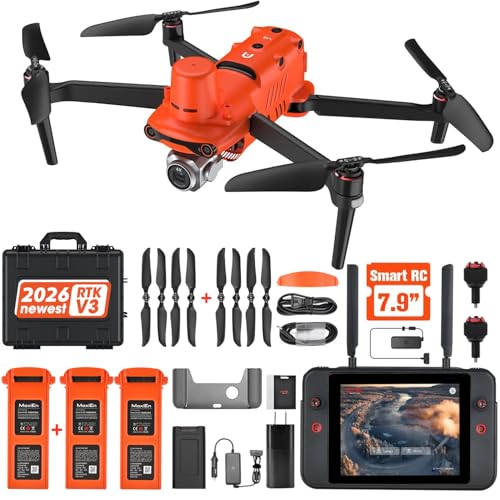
The EVO II Pro V3 is a drone from Autel, built around a large-sensor main camera and aimed at users who want high-quality aerial footage from a different brand. It belongs to an earlier design generation, so it may lack some features that newer drones offer.
In this guide
Key differences in general terms
- Camera layout: The Mavic 4 Pro uses several cameras at different focal lengths. The EVO II Pro V3 centers on one main camera. More lenses means more framing options without moving.
- Design generation: The Mavic 4 Pro is the newer machine. That often brings improvements in sensing, transmission and handling.
- Ecosystem: DJI has a large range of accessories, software and community support. Autel’s ecosystem is smaller, so check what you need is available.
- Availability and support: Policies and availability can differ by country and over time for both brands. Check current local availability and support before buying.
- Size and weight: Both are in a larger folding class, so verify weights and local rules.
How to decide
- List the shots you need. If telephoto framing matters, a multi-camera system is useful.
- Check how each app and controller works with your phone or tablet.
- Look at accessory availability: batteries, filters, cases and spare parts.
- Check local rules about brands and weight classes, which can vary.
- Compare what each maker provides for warranty and support in your region.
Practical notes
Whichever drone you choose, learn its return-to-home behavior and sensing limits before flying near trees, wires or buildings. Sensing aids the pilot but does not replace watching the aircraft. Keep spare batteries charged and update firmware only when you are not about to fly.
Image Quality Beyond Sensor Size
It is tempting to treat a large sensor as the whole story, but aerial image quality depends on several linked parts. The lens, the processing, the video formats, the stabilization and the way the camera handles bright skies against dark ground all shape the result. A large sensor can help in dim light and give smooth tonal transitions, yet a poor match with the processing can waste that advantage. Compare the full imaging chain for each drone instead of one headline number.
Look at what each drone can record. Check the resolution and frame rate options, the video codecs, the color profiles and the bit depth listed on each maker’s page. If you plan to grade footage heavily, a flat profile with more tonal information gives you room to adjust. If you want to share clips quickly, a ready-to-use look may matter more. Check also whether you can shoot raw stills, as that is a major benefit for landscape and real estate work.
- Fixed or adjustable aperture, which affects depth of field and exposure control.
- Whether the camera supports manual exposure and filters for smooth motion blur in video.
- How well the gimbal holds the horizon and resists vibration in wind.
- How the files transfer, by card, cable or wireless link.
Watch independent sample footage for both drones in the same type of light, and judge for yourself. Be careful about comparisons that mix different conditions, because light changes everything.
Range, Transmission and the Controller Experience
How you see the camera feed while flying shapes your confidence and your shots. Transmission systems differ in how well they hold a clear image at distance, in urban areas with radio interference, or around obstacles. Maker figures for range usually describe ideal conditions, so treat them as upper limits rather than guarantees. In practice, you should always keep the aircraft in sight where the rules require it, regardless of what the link could technically handle.
The controller matters too. Some come with a built-in screen, which avoids the need for a phone, while others use your phone or tablet mounted on the controller. A built-in screen is often brighter in sunlight and simpler to set up. A phone offers a familiar interface but can overheat or run low on battery. Check how the app displays flight data, and whether you can customize the screen to show what you need.
Also look at app stability and update habits. A drone is only as pleasant as its software. Read about how often each maker releases updates, how those updates are delivered, and whether older drones continue to receive support. Updates can add features and fix bugs, but they can also change behavior, so read the notes and update at home. Test the app on your own phone or tablet before you rely on it, since compatibility can vary with device and operating system.
Batteries, Charging and Field Logistics
Real-world shooting is limited by battery management. A drone that can stay in the air for a while still needs extra batteries if you plan to shoot for more than a short session. Compare how many batteries come in each bundle, how fast they charge, and whether a charging hub is included or sold separately. Check the price of spares in your region, and whether they are available in stock. Third-party batteries may exist for some drones, but check the maker’s guidance on compatibility and warranty before using them.
Good battery habits extend life and improve safety. Store batteries at a moderate charge level if you will not use them for a while, and follow the manual on discharge. Do not charge a battery that is swollen or damaged. Let a hot battery cool before charging, and keep batteries warm in cold weather, since cold reduces their output and can cut a flight short.
- Carry batteries in a fire-resistant bag if the manual or local rules recommend it.
- Check airline rules for lithium batteries before traveling, as limits can apply.
- Label batteries with numbers to track which ones age faster.
- Plan a car charger or power bank if you shoot far from an outlet, and check that it is compatible.
Also consider the case. A larger folding drone needs a robust case, and the difference between a snug fit and a loose one affects how well the drone survives travel.
Buying an Older or Used Drone: What to Inspect
If you are considering the older Autel design, or any used drone, extra checks are needed. Ask for the flight history if the app shows it, and ask how the drone was stored. Inspect the body for cracks, the arms for play in the hinges, and the propellers and motors for damage. Spin the motors by hand if the manual permits and listen for grinding. Check the gimbal and camera for smooth movement and no cloudiness on the lens.
Verify that the drone binds with the controller and records video and photos correctly. Check the battery health in the app, and ask how many charge cycles the batteries have had. A drone with tired batteries may need replacements soon, which adds to the total cost. Confirm the drone is not locked to someone else’s account, and ask the seller to remove it from their app before the sale.
Think about parts and support. For an older model, spare propellers, batteries and repair services may become harder to find over time. Ask yourself whether you can accept that risk. Also check whether the firmware and apps still receive updates, and whether any features have been withdrawn. A newer drone costs more to buy but may carry a warranty and ongoing support. A used one costs less but demands closer inspection and a seller who allows returns. Neither choice is wrong. Match the risk to your experience level and to how you plan to use the drone.
Matching the Drone to the Job
The better drone is the one that suits your work. A real estate photographer may care most about stable, sharp stills and quick setup. A travel filmmaker may value compact packing and long battery life. A landscape photographer may focus on dynamic range and raw files. Think about the shots you take most, and rank features by how often you will use them.
Consider a few typical situations. If you need to frame distant details without moving closer, extra focal lengths are valuable. If you shoot in tight spaces among trees or buildings, reliable obstacle sensing and a compact body help. If you work in mixed light, strong dynamic range matters. If you produce content for clients, check the license and rules around commercial use in your country, and confirm that the drone is approved for what you plan to do.
- Write down your three most common shots, then check how each drone handles them.
- Ask which drone has the accessories you need, such as filters, spare parts and cases.
- Consider how long you will keep it, and whether software support will last.
- Think about resale value, which tends to follow brand popularity and age.
Budget tiers are simple to describe. Newer flagship drones sit at the top, with the most features and the longest expected support. Older high-end designs can offer strong image quality at a lower buying cost but with trade-offs in features and support. Choose where you sit in that range based on your needs, not on prestige.
A Pre-Purchase Checklist for a Camera Drone
A drone is part camera, part aircraft, and part legal responsibility. Before you compare two models, work through the questions below so your choice rests on how and where you will fly.
- Find out the registration and licensing rules for your country or region, and check them on the official aviation authority page.
- Identify where you plan to fly, and confirm whether the area has restrictions, such as airports, parks or crowded events.
- Decide what you want to capture: travel clips, property pictures, landscapes or inspections.
- Check the weight of each aircraft against the thresholds that matter for registration in your region.
- Read about the controller, the screen options and whether you can use a phone.
- Look at battery counts, charging methods and what is included in the combo package.
- Think about how you will carry the drone, and whether the case fits your travel plans.
- Check the maker support, software updates and repair options in your area.
Many new pilots rush to buy and later discover that local rules limit where they can fly. A little research up front prevents wasted time and unwelcome fines.
Mistakes New Pilots Often Make
Responsible flying matters as much as image quality. These slips are common among beginners.
Skipping the manual and practice flights
Read the manual, update the firmware as instructed and practice in an open, safe area before attempting complex shots.
Flying without checking conditions
Wind, rain and low visibility can create hazards. Follow the maker limits and local forecasts, and land if conditions change.
Ignoring battery warnings
Battery life varies with wind, temperature and flying style. Land with a comfortable margin, not at the last moment.
Flying over people or restricted places
Follow the regulations that apply to your location and stay clear of people, roads and sensitive sites unless the rules explicitly allow it.
Forgetting about line of sight
Many regions require you to keep the aircraft in view. Do not rely only on the screen.
Comparing the Two by Real-World Priorities
Rather than relying on a single number, line up the factors that influence how you will actually use each drone. The table frames them in general terms and points you toward the official specification pages.
| Priority | What to compare | Where to verify |
|---|---|---|
| Image quality | Sensor, lens and video options | Maker specification page |
| Flight time | Stated battery duration and real use | Maker figures and flying conditions |
| Portability | Folded size and weight | Dimensions and case details |
| Controller | Built-in screen or phone-based display | Package contents |
| Safety features | Obstacle sensing and return functions | Maker manual, including limitations |
| Support | Software updates and service | Maker support pages in your region |
Obstacle sensing and automatic return functions are aids, not replacements for attention. Read the manual to understand when they might not work, such as in poor lighting or around thin branches.
A Short Glossary for New Pilots
- Gimbal: a stabilized mount that keeps the camera steady as the drone moves.
- Return to home: a function that brings the drone back to a recorded location.
- Line of sight: keeping the drone visible to you without relying on a screen.
- Geofence: a virtual boundary used to limit flights near restricted areas.
- Telemetry: data sent from the drone, such as altitude, speed and battery level.
- Sensor size: the physical size of the camera chip, which influences image characteristics.
- Dynamic range: the span of tones the camera can record.
- ND filter: a filter that reduces light so that you can use slower shutter speeds in video.
Learning these terms also makes the maker tutorials much easier to follow.
Decision Guide by Type of Flying
- Travel and hiking: prioritize weight, folded size and quick setup.
- Landscape and real estate: look at image quality, flight time and the ability to plan clean shots.
- Small commercial jobs: check regulations, insurance requirements and data handling policies.
- Learning to fly: favor intuitive controls and clear safety features.
- Older or used models: inspect the airframe and battery carefully, and confirm software support.
Used Drone Inspection and Care Notes
If you consider a used aircraft, ask for the serial number and confirm that it is not tied to another account. Examine the propellers, arms, gimbal and camera for damage. Check battery condition and ask how many charge cycles it has seen. Make sure the aircraft powers on, updates its firmware and shows a clear camera feed. Store batteries according to the maker instructions, avoid heat, and never charge a swollen or damaged battery. Transport lithium batteries following airline and carrier rules. For repairs, contact the maker or an authorized service center instead of opening the aircraft yourself.
How to Read a Drone Listing Carefully
Drone product pages often highlight the most impressive numbers, so read the fine print too. Look at the maximum flight time and see whether it was measured in ideal conditions, since wind, cold and fast flying reduce it. Read the transmission range description and remember that real range depends on local interference and legal limits on distance. Check the camera description, including video formats and photo modes, and see which features need extra accessories. Look at the list of sensors for obstacle avoidance, and read where they point and what they cannot see. Notice what the package includes, such as spare propellers, extra batteries and a carrying case. Finally, see whether any features depend on subscriptions or app accounts, and make sure you are comfortable with the data and privacy terms.
Image Quality Questions Beyond the Sensor
A larger sensor can help in dim light, but it does not decide everything. Ask how the lens performs at the edges, how the camera processes files, and how well the gimbal holds the image steady in wind. Look at the video options and check whether the files suit your editing software. Think about the dynamic range you need for sunsets and bright skies. Compare sample files made by other users in conditions similar to yours, and keep in mind that editing style changes how images look. Raw files give you more room for adjustment, but they need storage and processing time. Match the camera to your workflow, not just to the specification sheet.
Flight Planning Habits Worth Building
Good flights begin on the ground. Check the weather forecast, wind speed and sunset time. Walk the location first to spot trees, wires and people. Plan your shots so that each battery covers a specific set of images, and keep a spare in reserve. Check the return home altitude and set it above nearby obstacles. Tell people nearby what you are doing, and keep the aircraft within sight. After landing, check propellers and the gimbal, copy your files and note anything you would change next time.

Ready to Buy? Start Here
If this guide helped you decide what to look for, these products are a place to start.


As an Amazon Associate we earn from qualifying purchases. Prices and availability are shown on Amazon.
A Deeper Decision Framework: DJI Mavic 4 Pro vs Autel EVO II Pro V3
Specifications start the conversation between the DJI Mavic 4 Pro and the Autel EVO II Pro V3, but they rarely finish it. A more reliable approach is to decide in layers. The first layer is the work you actually do most weeks, not the ambitious project you imagine once a year. List your three most common uses, in order, and judge both options against that list. A drone that wins on your everyday tasks will make you happier than one that wins on a task you may never attempt.
The second layer is the surrounding system. Consider the accessories you already own, the computer or phone you pair with the drone, the software you prefer, and whether parts and support are easy to reach where you live. Switching systems can quietly cost more time and money than the headline difference between the two models. The third layer is growth: ask which option leaves you room to develop over the next few years, and which one you are likely to outgrow or, just as importantly, never fully use.
Questions to answer honestly before you choose
- Which of my regular tasks would each option make noticeably easier, and which would stay exactly the same?
- What do I already own that works with one option but would need replacing with the other?
- How much setup and learning time am I genuinely willing to invest in the first month?
- If my main use changed in a year, which option would adapt better, and which would I probably sell?
- Have I handled or tested either option in person, or am I deciding only from written descriptions?
Write the answers down, even briefly. Deciding on paper exposes vague reasoning, such as choosing a feature because it sounds impressive rather than because it solves a problem you have. If both options answer your list equally well, choose the one with the simpler ownership experience: clearer menus, easier support, and accessories you can actually obtain. In close decisions, day-to-day convenience beats a marginal specification advantage almost every time.
Ownership Over Time: Costs, Care, and Staying Power
The purchase is only the start of owning either the DJI Mavic 4 Pro or the Autel EVO II Pro V3. Budget mentally for the ongoing side: consumables, spare parts, protective cases, extended cover where it is offered, and the software or services you may want alongside the drone. Neither option is unusually demanding, but the owner who plans for upkeep keeps their equipment ready, while the owner who does not tends to face a flat battery, a worn part, or a full card at exactly the wrong moment.
Care habits are simple and shared. Keep the equipment clean and dry, store it away from heat and damp, update firmware or software only when you have time to test afterwards, and keep a small record of settings you have personalized so you can restore them after a reset. Check wearable parts on a schedule rather than waiting for a failure, and keep receipts and serial numbers somewhere safe. These habits protect resale value too, since a well-kept example with its accessories and records is far easier to sell or trade in later.
Staying power deserves a thought as well. Both the DJI Mavic 4 Pro and the Autel EVO II Pro V3 sit in product lines that are revised over time, so judge the support picture: how long the maker tends to supply parts and updates, how active the user community is, and how easily you can find trustworthy advice. A lively community is an underrated feature, because a searchable pool of real owner experience often solves a problem faster than an official manual.
Scenario Guide: Matching the DJI Mavic 4 Pro and the Autel EVO II Pro V3 to Real Situations
You prioritize camera quality for landscape work
Compare sample files in the light you love, especially high-contrast scenes at the edges of the day. Look at how each handles bright skies and shadow detail after a normal edit, not a heroic one. The better landscape tool is the one whose files need the least rescue in your hands, with your software, on your computer.
You value an open ecosystem and fewer restrictions
Some pilots prefer a maker whose approach to updates, geofencing, and third-party support feels more open, while others prefer the larger accessory and advice ecosystem of the biggest brand. Neither preference is wrong; they reflect how you like to own equipment. Research current owner experience for both, since policies and software change over time.
You fly commercially and need dependable support
Downtime costs money, so weigh parts availability, service turnaround, and how easily you can hire or borrow compatible help locally. A slightly less exciting specification with a strong support network often beats the reverse for working pilots. Keep a written maintenance log for whichever you choose, because clients and insurers both appreciate records.
Read the scenarios as patterns rather than verdicts. Your own situation will blend elements of several, and the option that fits the blend is your answer. If you remain torn after this exercise, that itself is information: it usually means both options are capable for your needs, and you should decide on price, availability, warranty terms, and which one you simply enjoy using more. Enjoyment is a legitimate criterion, because equipment you like gets used, and used equipment improves your results.
Buying Carefully: New, Bundles, and Used Examples
Whether you choose new or used, buy methodically. For a new purchase, confirm exactly what is in the box, since bundle contents vary and a missing cable, battery, or adapter can spoil the first day. Compare the total cost of the configuration you actually need rather than the starting configuration. Keep the packaging until you have tested everything thoroughly, and run your checks during the return window rather than after it closes.
- Inspect the body, screen or lens surfaces, ports, and moving parts for damage or unusual play.
- Power on and run through the main functions, including any calibration or setup routine the maker recommends.
- Test with your own phone, computer, or accessories, since compatibility surprises usually appear there first.
- Check consumables such as batteries for swelling, damage, or unexpectedly short running time.
- Confirm firmware or software versions and update only when you can test the result straight away.
For a used example, add history questions to that list: why it is being sold, how it was stored, whether it has been repaired, and whether the original accessories are included. A careful seller with complete accessories is usually a better sign than a small extra saving from a vague listing. Whichever route you take, verify the exact model name on the device itself against the listing, because similar names within a range are easy to confuse.
Mistakes People Make When Choosing Between These Two
A common mistake in the DJI Mavic 4 Pro versus Autel EVO II Pro V3 decision is overweighting the newest feature and underweighting the basics you touch every day: handling, menus, reliability, and how the drone fits your existing kit. Another is assuming the more capable option automatically produces better results. Capability only helps when it matches the task; unused capability is just weight, cost, and complexity carried for no benefit.
People also underestimate learning time. A new system means new menus, new habits, and a short period of slower work while everything becomes familiar. That investment is worthwhile when the new option genuinely fits better, but it should be counted honestly. Finally, avoid deciding from a single dramatic comparison clip or post. Sample material reflects the maker’s skill and conditions as much as the equipment, so weigh consistent owner reports and your own written priorities more heavily.
Living With the Choice: The First Ninety Days
However carefully you decide, the first weeks with new equipment involve adjustment. Menus feel foreign, familiar tasks take longer, and it is tempting to blame the product for what is really unfamiliarity. Give any choice a fair trial: use it for your real work, several times, across the situations you bought it for, before forming a verdict. Keep a short list of genuine friction points as they occur, because after a month you will misremember which annoyances were daily and which happened once. Most early friction fades; the items still on your list after ninety days are the true character of the product, and they are what should shape any future change.
Use those ninety days to build your personal setup deliberately. Save your preferred settings, learn the two or three shortcuts you will use constantly, and write down anything you had to look up twice. Set up your storage, charging, and backup routine while the equipment is new, since routines formed early tend to persist. By the end of the period you should be able to prepare, use, and pack away the equipment without conscious effort, and at that point the comparison that matters is no longer between two products on a page, but between the work you are making now and the work you made before.
Finally, resist the pull of the next announcement. Product lines refresh constantly, and chasing each refresh turns ownership into a subscription of dissatisfaction. Judge your equipment against your needs and your results, not against a launch event. The photographers and pilots producing the strongest work in any category are usually those who know one system deeply, maintain it well, and spend their comparison energy on locations, light, and ideas instead.
Handling and Day-to-Day Feel: The Part Specifications Hide
Two products can measure almost identically and still feel completely different across a month of use. Notice how the DJI Mavic 4 Pro and the Autel EVO II Pro V3 behave in the small moments: how quickly each is ready, how confidently you can change settings without looking, how the weight or size feels at the end of a long session rather than the start, and how much attention each demands while you are trying to concentrate on the subject in front of you. These qualities decide satisfaction far more than a marginal difference in a headline feature, because you experience them every single time you use the equipment.
If you can handle both, even briefly, run the same small routine on each: power on, change the settings you change most, perform the main task, and pack away. Time yourself informally and note every moment of hesitation or annoyance. Then imagine that moment repeated hundreds of times across a year. Owners forgive a missing feature they rarely wanted; they rarely forgive a daily irritation. This is also why borrowing from a friend or a local club can be worth more than another evening of reading, since your hands learn things your eyes cannot.
Who Should Skip Both the DJI Mavic 4 Pro and the Autel EVO II Pro V3 for Now
Sometimes the wisest conclusion of a careful comparison is to wait. Skip both for now if your current equipment still does the work you actually do, if the real bottleneck is your skill, time, or access to good subjects, or if a purchase would consume the budget you need for the accessories that make any system usable. Waiting is not indecision when it is based on evidence: set a clear trigger for revisiting the choice, such as a specific project, a failing battery, or a kind of assignment your current kit genuinely cannot handle.
When that trigger arrives, this comparison will still be here, and you will read it with sharper questions. Many owners who delayed a purchase report that the delay itself clarified what they needed, because months of real work reveal priorities that speculation cannot. If, on the other hand, your trigger has already arrived and one of these two clearly matches it, decide with confidence and put your energy into learning the equipment deeply. Depth of knowledge about one system beats shallow familiarity with two, in results and in enjoyment alike.
More Questions, Answered
How important is the local service network for these drones?
For anyone flying often, very important. Ask local pilots where repairs actually happen, how long they take, and whether loaner or rental aircraft exist nearby. A flagship that spends a month traveling for service may serve you worse than a slightly different choice with a workshop in your region. This practical layer rarely appears in comparisons, yet owners mention it constantly.
Which drone holds its value better?
Resale values follow demand, condition, and how complete the kit is. Popular models with many accessories usually sell faster, while rarer models can hold value among enthusiasts who specifically want them. Keeping batteries healthy, retaining the box and accessories, and documenting careful ownership help either drone. Buy for your own use first, and treat resale as a bonus.
Do I need different skills for each ecosystem?
The flying fundamentals are identical: smooth inputs, situational awareness, planning, and respect for conditions. What differs is menu layout, app behavior, and the small print of each system automated features. Expect a short adjustment when switching, and budget a few practice flights in a safe area before judging the new system or using it for anything important.
What is the wisest first purchase alongside either drone?
Batteries and a proper charging setup, because flight time governs practice and output more than any creative accessory. After that, a case that protects the exact kit you carry, and spare propellers. Learn the aircraft thoroughly before adding filters or modifications, so that when you do add something, you can feel precisely what it changed.
How to run a fair head-to-head test yourself
If you can access both options, test them on the same day, in the same conditions, on the same tasks, and judge the outputs side by side without knowing which produced which where that is practical. Write your impressions immediately, because memory edits itself within days. Pay special attention to the moments of friction: setup, menus, transfers, and the small delays that specifications never mention. A fair test also includes the boring parts, such as charging, updating, and packing away, since ownership is mostly boring parts done repeatedly. The option that frustrates you less across a whole ordinary day is usually the right one, even when the headline results look equal.
Planning for the second year of ownership
The first month with new equipment is novelty; the second year is the truth. Think about which option you will still enjoy maintaining, updating, and carrying when the excitement has faded. Consider how your interests might develop and whether the ecosystem around the product supports that direction with accessories, advice, and a used market if you change your mind. Also consider the simple question of service: when something wears out or breaks in year two, how quickly and locally can it be resolved. Equipment that stays usable stays valuable, and that staying power is worth real money in any comparison.
A final sense check before you commit
Before ordering, restate your decision in one sentence that names your main use, the reason this option serves it better, and the compromise you are accepting. If you cannot write that sentence, the decision is not ready yet, and another day of thought is cheaper than a return. Check the exact model name once more, confirm what the box contains, and keep your receipts and packaging until you have tested everything. Then stop researching. Endless comparison after a sound decision only manufactures doubt, and the energy is better spent learning the equipment you chose.
Learning from other owners without copying them blindly
Owner communities, forums, and local clubs are full of hard-won knowledge about both options: the settings that actually help, the accessories that disappoint, and the faults worth checking. Read widely, but weigh advice by how closely the adviser work matches yours. A tip from someone shooting the same subjects in the same conditions is worth ten from someone with different needs. Ask specific questions, share your own findings once you have them, and remember that confident voices are not always experienced ones. Over time you will learn which sources to trust, and that judgment becomes one of the most valuable accessories you own, because it improves every future decision as well as this one.
Protecting your purchase in the first week
The first week decides whether a problem becomes a quick exchange or a long regret. Test everything the product promises to do, in the order you will actually use it, and keep a dated note of anything odd, however small. Photograph serial numbers, save receipts digitally, and register the product if the maker offers registration. Charge and use batteries through a full cycle, update software only when you can test immediately afterwards, and store the packaging flat rather than discarding it. If something is wrong, you will discover it while remedies are simple, and if everything is right, you begin ownership with the quiet confidence that your equipment has already proven itself once.
Thinking about cover and accidental damage
For equipment that travels, works outdoors, or earns money, consider how you would respond to a loss in the first year. Some owners rely on household policies, some on maker care plans, and some simply keep a repair reserve. There is no universal answer, but there is a universal mistake: never thinking about it until the day something breaks. Compare what each option covers, especially accidental damage and turnaround time, and factor your honest working conditions into the choice. Peace of mind has real value when it lets you use the equipment fully instead of protecting it from the work it was bought to do.
Setting up a maintenance calendar that you will actually keep
Good ownership runs on a calendar, not on memory. Note a monthly moment to clean, inspect, and exercise the equipment, a seasonal moment to check batteries, firmware, and wearable parts, and a yearly moment to review whether the setup still matches your work. Keep the routine short enough that you never skip it, and store the supplies it needs in one place. A product that is maintained on schedule fails less often, holds its value better, and is always ready when an opportunity appears without warning. That readiness, repeated over years, is worth more than most specification differences debated at purchase time.
Teaching someone else to use your equipment
A revealing test of any purchase is whether you can teach it to someone else in ten minutes. Equipment with logical controls and forgiving automation passes easily, and that matters if family members, colleagues, or clients will ever share it. Walk a willing volunteer through the basics and notice where they hesitate: those hesitation points are the true complexity of the product, whatever the brochure claims. If you will always be the only user, file this under minor considerations. If sharing is likely, let it weigh properly in the decision, because equipment that only its owner can operate has a hidden limitation.
FAQ
Is the older Autel drone still useful?
It can still make good footage, especially in decent light. The question is whether its features and support match what you need today.
Why does ecosystem matter?
Accessories, spare batteries, software updates and community tips make a drone easier to live with over years of use.
Do I need a filter set for aerial video?
Neutral density filters help keep shutter speed lower in bright light, which gives smoother motion in video. Check which filters fit your drone and whether the maker offers compatible ones.
Is a larger folding drone harder to fly?
Not necessarily, but it is heavier and more affected by regulations in some places. Practice in open areas, learn the sensing behavior and follow local rules on weight classes.
Can I shoot raw photos from a drone?
Many camera drones support raw stills, but check the maker's page for your exact model. Raw files give more editing flexibility, though they take more storage space.
How do I protect footage from card errors?
Use a card type that matches the drone's requirements, format it in the drone before use, and back up files soon after each flight.
Should I buy an extended warranty or care plan?
It depends on your risk tolerance and how often you fly in tricky conditions. Read what the plan covers, such as crash damage, and compare that to the cost of repairs.
How do I know whether a drone is supported in my country?
Check the maker's regional site for availability, service centers and any rules on features. Also check your aviation authority's guidance on the drone's weight class.
What should I do before a long trip with a drone?
Update firmware at home, charge all batteries, pack spare propellers, check airline rules for batteries, and research the local drone regulations at your destination.
The Short Version
Choose the Mavic 4 Pro if you want a newer multi-camera flagship and a broad ecosystem. Consider the EVO II Pro V3 if its single large-sensor camera meets your needs and it is available and supported where you live. Confirm everything with the makers.
