Disclosure: As an Amazon Associate, reviewstook.com earns from qualifying purchases. Links on this page are affiliate links; they cost you nothing extra. Prices and availability change often, so check the current Amazon listing before you buy.
Every new PC build since DDR5 arrived has faced the same fork: ddr4 vs ddr5 ram for gaming, a choice that is really about platforms, because the memory generation is welded to the motherboard and CPU socket. DDR4 is the mature, inexpensive incumbent with a decade of optimised kits; DDR5 is the faster-on-paper successor whose prices have fallen from absurd to arguable. Framing it as a memory question understates it — ddr4 vs ddr5 ram for gaming decides your upgrade path for years.
This comparison does the honest arithmetic for gamers: what the generations deliver in frame rates today, what the platform costs look like whole rather than per-stick, and the three buyer profiles the answer splits into — the new builder, the DDR4 owner considering a jump, and the budget builder eyeing the older platform’s bargains. Verified kits for both generations appear in this series’ memory guides, and this comparison links to them rather than pretending one size of advice fits both sides of the fork.
Key takeaways
- DDR5’s gaming lead is real but modest at matched quality — single digits in most titles, more in CPU-bound and simulation games
- The decision is a platform decision: motherboard and CPU compatibility are decided with the memory
- DDR4’s case is total platform cost and maturity; DDR5’s case is longevity and the current sweet spots
- Capacity first in both generations: 32 GB is the comfortable gaming standard now
In this guide
Ddr4 Vs Ddr5 Ram For Gaming: what the numbers actually say
Compare quality kits at each generation’s sweet spot — DDR4 around 3600 MT/s with tight timings, DDR5 around 6000 with its own — and DDR5 wins most gaming comparisons by margins that need a graph to see: low single digits in GPU-bound titles, rising toward ten percent and occasionally beyond in CPU-bound games, simulators, and high-refresh competitive play where the processor feeds frames as fast as memory allows. The 1% lows, the figures that govern felt smoothness, often favour DDR5 slightly more than the averages do, which is the honest core of its case.
The counterweight is that ‘most titles, most of the time’ is doing heavy lifting in that paragraph. A gamer at high resolution with a strong graphics card is GPU-bound in nearly everything, and for that gamer the generations are functionally tied while the DDR4 platform costs less. A gamer chasing 240 Hz in competitive titles, or feeding a flight simulator’s appetite, lives in the CPU-bound world where DDR5’s lead is real money’s worth. As ever in this series, the workload signs the cheque; the memory just cashes it.
Platform economics: the whole bill, not the sticks
Memory is the smaller line in this decision. The DDR5 platform historically carried premiums on its motherboards as well as its kits, and while both have fallen, the whole-platform comparison — board, CPU, memory — is the only honest one. DDR4’s ecosystem is fully depreciated: boards are cheap and excellent, kits are bargains, and a builder can pour the savings into the graphics card, where a tier jump returns more frames than any memory generation ever has. That arithmetic built a million sensible gaming PCs and still does.
DDR5’s counter-arithmetic is time. A DDR5 platform bought today sits on current sockets with upgrade paths — future CPUs on the same board, memory that carries forward — while a new DDR4 platform is a finished sentence: excellent, complete, and going nowhere. Buyers who upgrade in place should price that path honestly. Buyers who replace whole machines every five years can ignore it entirely, and for them the DDR4 bargain, where it still exists, is genuinely rational rather than merely cheap.
The three buyers, and their different answers
The new builder with a mainstream budget should generally build DDR5 now: prices have normalised, the sweet-spot kits are excellent, and the platform’s future is worth the small remaining premium in most markets. The DDR4 owner with a healthy system should almost never jump for memory alone — the platform swap costs a board and usually a CPU to buy single-digit frames, and the same money in a graphics card transforms the machine instead. The budget builder is DDR4’s remaining constituency: where used and discounted DDR4 platforms are plentiful, a build that puts its money in the GPU and accepts the platform’s finality is not a compromise but a strategy.
Notice that none of the three answers is ‘DDR5 is faster, buy DDR5’. Speed is a property; value is a relationship between speed, price, and the buyer’s situation. The memory market’s marketing works hard to collapse that relationship into the property, and the entire point of a comparison like this one is to expand it back out. Your answer is in your profile, not in the benchmark chart — the chart merely tells you the size of the prize each profile is arguing about.
Capacity and configuration, in both generations
Whatever generation you choose, choose 32 gigabytes in two sticks for a gaming machine you intend to keep. Sixteen still runs today’s games, but the comfortable margin, the background applications of a real desktop, and the trajectory of game requirements all argue for the larger kit, and in both generations the price step is the best-value line in the build. Two sticks rather than four keeps memory controllers happy at rated speeds — a stability truth that has survived the generational change intact, as this series’ timing comparison details.
And buy the kit as a kit, matched and verified, from listings that state frequency and timings together. The verified DDR4 and DDR5 kits discussed across this series’ memory guides — the LPX DDR4 line and the Vengeance DDR5 line among them — exist as examples of the form: named, specified, confirmable. Memory is the component where vague listings go to thrive, and the discipline of buying exact models is worth more than a timing step either way.
The used-market dimension of the generational choice
DDR4’s maturity has a second-hand consequence worth pricing: a vast used market in kits, boards, and bundles whose depreciation has already happened, letting a patient buyer assemble a platform for a fraction of its launch cost. DDR5’s used market is younger and thinner, its bargains rarer and its listings more often optimistic. For the budget profile in this comparison, the used DDR4 ecosystem is not a compromise but the main event — provided the buyer applies this series’ discipline to it: matched kits, stated specifications, sellers whose descriptions survive questions, and memory tested on arrival with the tools the troubleshooting guides describe.
The risk ledger is honest too: used platforms carry unknown histories and expiring warranties, and a dead board costs more than its saving. The middle path many budget builders take — new DDR4 where it remains stocked, used for the case and peripherals — prices the risk where it is cheapest to carry. Generational debates are usually conducted in launch prices; ownership is conducted in real ones, and the real ones currently flatter the older generation more than the charts admit.
Looking ahead: DDR5’s second half and DDR4’s long tail
DDR5’s story is mid-chapter: speeds will climb, prices will soften further, and its platform advantages will compound as DDR4’s stock thins and its boards leave production. A buyer choosing DDR4 today should do so expecting a finished ecosystem — no new boards, no new CPUs, a used market as the upgrade path — which is a perfectly good expectation to buy into knowingly and a poor one to discover later. Conversely, DDR5’s buyers are purchasing into a moving standard whose sweet spot will migrate upward; today’s 6000 kit will be tomorrow’s baseline, and it will still be running, which is all a memory kit is ever asked to do.
The generations will coexist in gaming PCs for years, as their predecessors did, because games are built for the installed base and the installed base changes at the speed of household budgets. That coexistence is the final argument against generational anxiety: whichever side of the fork you build on, you are inside the market games are made for, and the frames this comparison has been counting will remain, for most players in most titles, a smaller number than the ones their graphics card and their monitor are arguing about.
The two kits that embody the choice
Abstract comparisons end where shopping begins, so here are the two verified kits that represent each generation at its sensible best — both checked through the Creators API against the manufacturer’s listings — with the honest ledger for each.

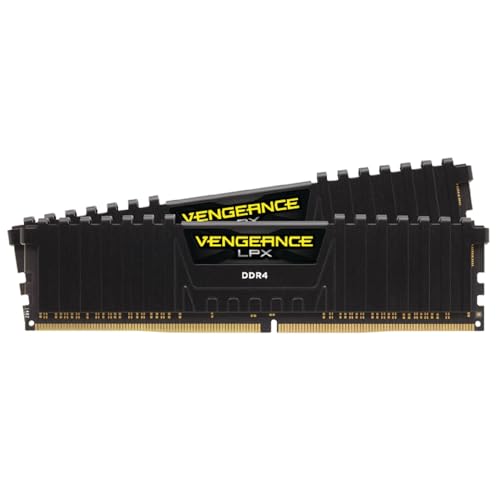
Corsair Vengeance LPX DDR4 32GB 3200 CL16
For the enormous installed base of DDR4 platforms, this kit is the mature end-state: 32GB in a matched pair, the platform’s favourite frequency, the tightest common timing, and a low-profile heatspreader that respects large coolers. A DDR4 owner whose board and processor still serve well buys this and closes the memory question for the platform’s remaining life, which for many machines means years of perfectly good gaming.
- Capacity: 32GB as two matched 16GB sticks
- Speed and timing: 3200 MT/s, CL16 headline latency
- Profile support: Intel XMP and AMD EXPO as listed
- Form: low-profile heatspreader
Strengths
- The definitive DDR4 specification, bought once and forgotten
- Low profile clears the coolers that tall kits collide with
- Keeps a good DDR4 platform competitive without a platform rebuild
Trade-offs
- The investment dies with the platform; nothing carries forward
- Bandwidth ceiling is the generation’s, whatever the timings say
- No lighting for windowed-case builders who want it
Best for: DDR4 owners upgrading capacity and speed in one move / Not suited for: new builds, which should start on DDR5

Corsair Vengeance DDR5 32GB 6000 CL30
The DDR5 representative sits at the frequency and timing the current platforms reward most reliably, delivering first-word latency equal to the good DDR4 kit above with roughly double the bandwidth behind it. This is what the generational premium actually purchases when it is spent well: not a bigger number on a box, but a memory system whose ceiling sits years further away.
- Capacity: 32GB as two matched 16GB sticks
- Speed and timing: up to 6000 MT/s, CL30 headline latency
- Profile support: AMD EXPO and Intel XMP 3.0 as listed
- Generation: DDR5 platforms only
Strengths
- Latency parity with good DDR4 plus a far higher bandwidth ceiling
- The sweet-spot specification current boards train most happily
- Carries forward conceptually: the platform around it has years of life
Trade-offs
- Demands a new motherboard and processor from DDR4 owners
- Costs more than the DDR4 kit before the platform bill is counted
- Four-stick configurations at this speed remain platform-dependent
Best for: new builders and platform upgraders who want the settled DDR5 choice / Not suited for: anyone whose current board takes DDR4
Testing the difference on your own machine
If you own a platform from the overlap era — boards were sold in both memory flavours for the same processors — you possess a rare laboratory, and an afternoon in it teaches more than a month of reviews. Benchmark the games you actually play, in the scenes that actually strain them, at your real settings, and record frame times rather than averages. What owners consistently discover is a distribution rather than a verdict: a few titles with genuine, repeatable gains from the newer memory, a larger set where the difference hides inside run-to-run variance, and the occasional older title that prefers the older platform’s latency character. That distribution, measured on your shelf of games, is the only version of this comparison that should be allowed to spend your money.
For everyone else, whose board takes one generation only, the laboratory is hypothetical and the decision is really about timing a platform change. The useful question is never whether DDR5 is faster — it is, in the ways described — but whether your current platform’s remaining life justifies one more memory purchase inside it, or whether the money should wait in the platform fund earning interest in the form of patience. Builders who frame the question that way rarely regret the answer, whichever way it falls, because they bought a plan rather than a component.
Resale, hand-me-downs, and the household ecosystem
Memory generations ripple through a household’s machines for years after the headline build moves on. A DDR4 kit retired from a gaming machine becomes the upgrade that revives a parent’s desktop or a child’s first computer, and that second life has real value that a pure benchmark comparison never counts. DDR5’s ecosystem is younger: the hand-me-down destinations are fewer today and will multiply as the installed base grows. None of this should decide a purchase by itself, but in a household with several machines it legitimately softens the platform-change bill, because the DDR4 you stop gaming on does not become waste — it becomes the reason an older machine stops paging and starts serving. Count the whole household when you count the cost, and the generational choice often looks kinder in both directions than the forums suggest.
The motherboard is the real border between the generations
Every discussion of these two memory types eventually stops being about memory, because the sticks themselves are the cheapest part of the crossing. The border is the motherboard: a board speaks one generation or the other, physically, with slots keyed so that the wrong stick cannot be seated by any amount of optimism, and crossing therefore means a new board, which usually means a new processor decision, which drags the cooler, sometimes the power supply, and always a full afternoon of rebuilding into what began as a question about RAM. Honest accounting for the generational choice must price the whole caravan, not the item that started it. A DDR4 owner comparing a memory kit’s price against a DDR5 kit’s price is comparing a train ticket against the cost of moving house, and the conclusions drawn from that comparison will be wrong in proportion to everything left off the ledger.
This is also why the overlap-era boards — the same processor sold with a choice of either memory — occupy such an outsized place in the debate. They are the only machines for which the memory question exists in isolation, the only laboratory where the generations can be swapped like-for-like, and the results from that laboratory, honest as they are, describe a decision almost nobody else gets to make. Everyone else’s decision is bundled: keep the platform or replace it. Bundled decisions should be made on the bundle’s merits — the processor’s remaining years, the board’s features, the household’s other machines waiting for hand-me-downs — with the memory generation treated as a consequence rather than as the cause. Builders who reverse that order, choosing a platform because of its memory sticker, regularly end up with the wrong machine for the right-sounding reason.
What DDR5 actually changed, translated into ownership
The newer standard’s engineering — split subchannels, longer bursts, on-stick power management, higher native frequencies — can be read in the explainer article in this cluster, but its ownership translation is shorter. DDR5 machines feel their memory less. The generation’s bandwidth headroom means the memory system recedes from the list of things a demanding game can expose, the way a wide road recedes from a journey’s story. DDR4 at its best-tuned could reach a similar invisibility in many titles, but it reached it nearer its ceiling, with less room for the next title, the next mod pack, the next year of a live game’s growing appetite. Buying DDR5 is therefore less like buying speed than like buying distance: distance from the ceiling, measured in years of software growth the machine can absorb without the memory becoming the conversation again.
DDR4’s ownership translation is equally honourable. It is the known country: a decade of boards whose memory behaviour is mapped, kits whose characteristics are documented to the last sub-timing, prices that reflect maturity rather than novelty, and a second-hand market deep enough to furnish a machine from other people’s upgrades. A builder who values the mapped country — who wants every question about their machine to have an answer already written somewhere — is not behind the times; they are expressing a preference about risk that the industry itself expresses whenever it ships a server or a workstation on the older, proven standard. The generations differ in temperament as much as in bandwidth, and temperament is a legitimate axis on which to choose the machine you will live with.
Game-by-game honesty: the library test
Aggregate charts conceal the only distribution that matters, which is the one across your own shelf. Spend an evening classifying the games you actually play into three honest piles. The first pile holds titles that are processor-and-memory sensitive by design: the grand strategy games with their endgame calculations, the simulators streaming worlds, the sprawling multiplayer titles whose worst moments are their most populated. The second pile holds the great middle: action games, shooters, and adventures that scale with the graphics card until they are beautiful and smooth on either memory. The third pile holds the older and lighter library — the back catalogue, the indie shelf, the games kept for comfort — where both generations are so far beyond the requirement that the comparison dissolves.
Now weigh the piles by hours, not by titles. A library whose hours concentrate in the first pile is a library that will feel the generational difference weekly, and its owner’s platform timing should be governed accordingly. A library weighted toward the second and third piles can ride a good DDR4 platform for years without the memory ever entering the experience, and its owner who upgrades platforms for memory’s sake has bought a benchmark result rather than a better evening. This test is unfalsifiable advice-proof: nobody can argue with your own hours, and the forums’ universal verdicts — in both directions — dissolve on contact with them. It is also the test that explains why two honest reviewers can disagree about this comparison for a decade: they are describing different libraries and calling both of them gaming.
The upgrade calendar: when each generation’s owners should move
For the DDR4 owner, the calendar question has a clean structure. Move when the processor, not the memory, becomes the limit you feel; when a game you love names a requirement your platform cannot meet; or when the platform’s other parts — board features, storage speeds, connectivity — fall behind your life. Until one of those triggers fires, the correct memory purchase inside DDR4 is the definitive kit described in the picks section, bought once, at the platform’s maturity discount, and the correct emotional posture toward DDR5 is interest without urgency. The generation will keep getting cheaper and better documented while you wait, which makes waiting a strategy rather than a failure.
For the new builder, the calendar points the other way with equal clarity. A platform bought today should be bought for the years it will serve, and those years belong to DDR5’s ecosystem: its kits, its boards’ successors, its hand-me-down destinations multiplying as the installed base grows. The only new-build exception is the deliberate budget build assembled from the used DDR4 ecosystem’s abundance, a legitimate genre of machine whose entire economics depend on the older generation’s maturity. Such a build should be assembled knowingly, as a value instrument with a planned horizon, rather than drifted into by a configurator’s default. Either way, the decision is a calendar decision — a statement about how long this machine is for — and builders who say the horizon out loud before they shop almost always buy the right generation, because the right generation is mostly a function of time.
Power, heat, and the small print of daily running
Two practical footnotes close the comparison. The first is power: DDR5’s lower operating voltage is real but trivial at the scale of a gaming machine’s total draw, and no household’s electricity bill will ever testify about which generation its memory belonged to. Claims in either direction — the new standard as an efficiency revolution, the old one as a power hog — belong to data-centre arithmetic, where ten thousand sticks multiply small numbers into budgets. The second footnote is heat. DDR5’s on-stick regulation makes its kits active little heaters in a way DDR4 owners did not have to consider, and in small cases with indifferent airflow the memory’s temperature can become a stability variable at aggressive profiles. Neither footnote decides a purchase. Both belong in a complete account, because a comparison that only counts frames has not finished counting, and the machines these kits live in are physical objects in rooms, with temperatures and constraints, long after the benchmark charts have been forgotten.
Small-form-factor and laptop echoes of the generational choice
The desktop’s clean generational border blurs at the edges of the market, and the blur is instructive. Small-form-factor desktops inherit whichever generation their compact boards speak, and their thermal constraints argue, within either generation, for the calmer memory specifications — a reminder that the generational question is sometimes the least important memory question a given machine asks. Laptops crossed to the newer standard earlier and more completely, driven by efficiency and by the soldered economics of thin machines, so a laptop buyer today rarely faces the choice at all; their version of this article is the capacity warning, to buy for the final year rather than the first, because the factory’s decision is the only one they get.
That asymmetry — desktops debating, laptops decided — is a preview of the desktop’s own future, and it should temper the debate’s temperature. Within a few product cycles the generational question on desktops will be equally settled, the older standard will occupy the honourable retirement this article describes for it, and the energy the forums spend on the border will move to the next one. Owners deciding today are therefore choosing a position on a moving walkway, and the wise position is the one that serves the machine’s actual years rather than the debate’s current volume. Both generations, bought with that horizon in mind, serve well; the walkway only punishes those who stand still arguing while their own machine’s needs go unmet.
A final accounting template for the undecided
For the reader who has followed the whole comparison and still stands at the border, here is the decision as a worksheet rather than a verdict. Write down your current platform’s age and its processor’s remaining relevance to the games you play. Write down your library’s centre of gravity, using the three-pile test, weighted by hours. Write down the full caravan price of crossing — board, processor, memory, and the afternoon — beside the price of the definitive kit inside your current generation. Write down the household cascade: which machine inherits what, in each scenario. Then write down the horizon, in years, that this machine is for. The five lines, answered honestly, decide the question with a reliability no review can match, because they are the variables the answer actually depends on — and a reader who completes the worksheet will notice that the memory generation, the supposed subject of the entire comparison, appears in only one of the five lines. That is the comparison’s final and most useful finding.
Environmental and economic weather: buying memory in a moving market
Memory is a commodity with weather, and the generational comparison is partly a forecast. Prices for the older standard fall as its production winds down, then, in the pattern every mature component follows, the remaining supply concentrates in fewer hands and the bargain era ends without an announcement. The newer standard’s prices fall with its manufacturing maturity and rise with the industry’s capacity moods, which are influenced by buyers far larger than gamers. A household planning a platform change within a year should therefore treat the memory line of the budget as a range rather than a figure, buy the platform’s other parts on their own merits and schedules, and let the memory be purchased last, closest to the build day, when its weather is known rather than forecast. The same discipline serves the DDR4 owner buying the definitive kit: maturity bargains are real but not eternal, and a kit identified as the platform’s final memory should be bought when it is found at its honest price rather than after a season of watching the chart, by which time the chart may have turned.
None of this turns a memory purchase into an investment strategy, and the article’s tone should not suggest otherwise. It turns it into what every component purchase actually is — a decision made under mild uncertainty, with incomplete information, for a machine that must serve in the real world of prices as they are. The generations will keep their characters regardless of the weather: one mature and mapped, one ascendant and roomy. Choose by horizon, by library, and by the household’s cascade, buy at the weather you find, and the market’s moods become background noise in a decision that was always about your own machine.
The two generations at work: content creation’s different verdict
Gaming dominates this comparison’s title, but the same two standards serve the creator’s desk, where the verdict rearranges itself instructively. Video timelines, photo catalogues, and code builds are bandwidth-and-capacity workloads with long attention spans: they reward the newer standard’s throughput in renders and previews, they punish insufficient capacity without appeal, and they are nearly indifferent to the latency subtleties that gaming argues about. A creator choosing between the generations is therefore really choosing a platform’s remaining years and its capacity ceiling, and the gaming article’s hierarchy — capacity first, generation as platform consequence — applies to them with even less resistance. The interesting exception is the hybrid desk, gaming by night and rendering by day, whose owner must weight two different verdicts by their hours, exactly as the library test prescribes for games alone. The method survives the change of workload, which is the sign that the method, rather than any single verdict, was the article’s actual content.
The verdict, stated for the three readers who remain
Every long comparison owes its final page to the readers who scrolled for a sentence, so here are the three sentences, one per reader. To the owner of a healthy DDR4 platform: buy the definitive kit in the picks, at the reference specification, and let this be the last memory article you read until your processor, not your memory, asks for a new platform. To the new builder: start on DDR5 at its sweet spot, in two sticks, at the capacity your whole horizon needs, and let the generational debate be one you witnessed rather than one you funded. To the owner standing at the border with a working machine and an itch: run the worksheet, weight your library by hours, and let the household’s cascade cast the deciding vote — then close the question for a year, whichever way it falls, because a decision revisited monthly is not a decision but a hobby, and there are better hobbies in this very cluster of articles, several of them involving keyboards. The generations will both be here next year, cheaper and better documented; your machine’s needs, answered honestly today, are the only part of the comparison that was ever urgent.
Noise from the forums, filtered: the three loudest claims examined
A comparison this long should end by disarming the slogans its readers will meet elsewhere, because the slogans will out-shout the article in every comment thread. The first claims the older generation is obsolete, full stop — a word that dissolves on contact with the millions of machines playing current games beautifully on it, and with the server and workstation worlds that continue to specify it for its maturity. The second claims the newer generation is a marketing exercise, a charge the bandwidth figures and the platform roadmaps answer without assistance. The third, subtlest and most expensive, claims that whichever generation a reader already owns is the wrong one — a claim whose convenience for sellers should be noted before its content is weighed. Against all three, the article’s evidence stands in its accumulated form: two real standards, with different maturities, different ceilings, and different correct buyers, separated less by their silicon than by the horizons of the people choosing between them. A reader who has followed the argument this far owns the filter the slogans cannot pass, and applying it — to this subject and to the next one the forums take up — is the comparison’s final transferable yield.
A coda for the machine that started the argument
Somewhere behind every generational debate sits a specific machine — the one its owner was actually looking at when the question first arose — and comparisons serve it best when they end by returning to it. That machine has a workload, a household, a remaining lifespan its owner can estimate better than any reviewer, and a owner who now owns something more useful than a verdict: the worksheet, the library test, the cascade, and the horizon, four instruments that convert the forums’ loudest argument into a quiet afternoon of arithmetic. Run them once, write the answers down, and the machine’s memory question closes — not because an article closed it, but because its owner finally asked it in the machine’s own terms. The two generations will continue their long handover in the market’s background, unbothered. Your machine, decided and documented, has already moved on to the only thing it was ever for.
The shelf card for a generational choice
Carried into a shop, the whole comparison fits on one card, and the card is honest enough to print. Same platform as today, years left in it, games that still sing: the older standard’s definitive kit, bought once, ends the question. New platform, long horizon, a library that leans on the processor: the newer standard at its sweet spot, in two sticks, sized for the machine’s final year rather than its first. Standing between the two with a working machine: decide by the worksheet, not by the weather in the forums, and then do not re-decide for a year. The card omits the bandwidth curves, the subchannel architecture, and the nanosecond arithmetic — not because they are untrue, but because they were never the decision. They were the evidence, and evidence’s job is to be available when a verdict is challenged, as the pages above remain available. The verdict itself was always about time: how long the machine is for, and which standard’s years match it.
The contract each generation signs with its buyer
Terms, to close. The older standard promises knowledge: every behaviour mapped, every kit documented, every price at its maturity discount, in exchange for a ceiling the buyer agrees not to test against the future. The newer standard promises distance: headroom measured in years of software appetite, an ecosystem still widening, in exchange for a platform bill paid in full and a memory subsystem that runs warm and asks to be verified. Both contracts are honoured daily in millions of machines, and both are broken only by buyers who signed the wrong one — the horizon of two years written into a five-year machine, the flagship appetite funded inside a platform at its end. Read your own horizon before you sign, as this article has asked from its first table to its last card, and either generation will keep its word. That reliability, in the end, is the real finding: the memory was never the risk. The signature was.
The signature in the platform record
File the decision, finally, in the machine’s record, with the worksheet’s five lines attached. Future owners of the machine — including the future self who has forgotten this entire debate by next spring — deserve to know not merely which generation was chosen but why: the horizon that was assumed, the library that was weighed, the cascade that was planned. That record converts a purchase into a policy, and policies survive the personnel. It also protects the machine from the comparison’s afterlife, because a documented decision, revisited, reads as a decision, while an undocumented one reads as an accident awaiting correction by the next forum thread. Sign it, date it, and let the platform serve under a settled government. The generations will go on being compared, loudly, by people whose machines are not yours; yours, recorded and reasoned, has left the debate — which was always the destination the whole comparison was driving toward.
The last line of the platform’s record
Mark, finally, the date the memory question closed — the week the machine’s owner last read a thread about generations, the month the kit’s presence was last consciously noticed, the season the platform settled into simply being the computer. That date is the comparison’s true verdict, whichever generation earned it, because it measures the only outcome either standard was ever selling: a memory subsystem that has left the conversation. Owners reach it at different speeds — the definitive-kit buyer in an evening, the platform crosser in a month of verification, the worksheet’s careful student somewhere between — but they recognise it identically, by its silence. Guard the date in the record, beside the worksheet that produced it, and let the machine serve under its settled government for the years the horizon promised. The generations will hand over, in time, to a third party neither article nor reader has met yet. Your machine, decided and documented, will meet that day the way it met this one: on evidence.
Envoi: the machine, mid-game, unbothered
The comparison’s final image is not a chart but a machine, mid-game, on an ordinary evening — its memory, whichever generation the worksheet chose, doing its work so completely that its owner could not say, without checking, which standard is inside. That unbothered evening is what both generations were always selling, beneath the bandwidth curves and the launch presentations, and it is available on either side of the border to the buyer who chose by horizon, library, and cascade rather than by slogan. The debate will continue without that machine, in forums its owner no longer visits, between partisans of two standards that will both, in time, be the older one. It does not matter to the machine. It has a game to run, a record that explains it, and years of evenings ahead in which the memory — the subject of this entire long comparison — will not be mentioned once. That silence is the verdict, and it is unanimous.
Coda: two machines, one year on
A year after the worksheet was run, its two households can be revisited, and the comparison’s method can be audited against their calendars. The DDR4 machine, given its definitive kit and its reprieve, has played its library’s whole rotation without a single memory-shaped incident, and its owner — who came within one evening of a platform rebuild — now describes that evening as the most expensive bullet they never fired. The DDR5 machine, built new on the sweet spot, has absorbed a graphics upgrade and a doubling of its owner’s ambitions without its memory entering a single conversation, exactly as the headroom argument promised. Neither owner can recall the other’s specification without checking, which is the audit’s cleanest possible result.
Set side by side, the two machines refute the debate that produced them more completely than any chart in this long comparison. Both are right. Both were right for reasons that had names — horizon, library, cascade — before they had prices, and both owners, interviewed a year on, give the same advice in different words: decide once, from your own evidence, and spend the saved year playing. The generations will keep their border and their partisans. These two machines have left the border country entirely, and their silence, a year deep, is the comparison’s final exhibit.
Postscript: the border, crossed quietly at last
One last visit, to the household that stayed — because staying, in this comparison, was a decision with an expiry date, and theirs arrived the way the article said it would: not through the memory, but through the processor, years later, when a beloved game finally named a requirement the old platform could not meet. The crossing, when it came, was calm in the way the worksheet had rehearsed: the cascade assigned in an afternoon, the old machine demoted whole to the household’s second desk where it serves still, its definitive kit unremembered and unregretted, and the new platform specced in one sitting by an owner who had been ready, on paper, for years. Nothing about the day felt like the forums’ drama, because it was not a defection. It was a schedule, kept. The generations, in the end, are not teams. They are tenures — and this household, having served one fully and entered the next deliberately, got the best of both.
Questions readers ask about this topic
How much faster is DDR5 than DDR4 for gaming?
At each generation’s quality sweet spot, DDR5 leads by low single digits in most GPU-bound games and by up to roughly ten percent, occasionally more, in CPU-bound titles, simulators, and high-refresh competitive play, with the 1% low frame rates often favouring it slightly more than averages. It is a real lead that many gamers will never see, because their bottleneck is the graphics card. Your resolution, refresh target, and game library decide whether the lead exists in your house.
Can I use DDR4 memory on a DDR5 motherboard?
No. The generations are physically and electrically incompatible — different notch positions, different signalling, different controllers — and motherboards are built for one generation only. Some CPU generations span both, with different boards for each memory type, which is the only sense in which the choice is flexible. Once the board is chosen, the memory generation is chosen, which is why this comparison treats the decision as a platform decision from the start.
I have a good DDR4 system. Should I upgrade to DDR5?
Not for the memory’s sake. The jump requires a new motherboard and usually a new CPU, and the gaming return on that whole expense is small next to what the same money buys in a graphics card. Upgrade platforms when the CPU itself is the reason — a generational processor jump you actually want — and let DDR5 arrive as part of that decision. Memory alone has never justified a platform swap in either direction.
Is DDR4 still worth buying for a new budget build?
Where the platform economics still favour it, yes — a discounted DDR4 board, CPU, and kit can free enough budget for a graphics card tier that returns more frames than DDR5 would. The cost is finality: no upgrade path, and a platform at the end of its life. For a builder who replaces whole machines rather than upgrading them, that cost may never be collected, which makes the DDR4 bargain a strategy rather than a compromise.
How much RAM should a gaming PC have in either generation?
Thirty-two gigabytes, in two matched sticks, is the comfortable current standard for a machine meant to last: enough for any current game plus a real desktop’s background load, at a price step that is the best value in most builds. Sixteen remains workable for esports and older titles. Sixty-four belongs to creators and simulator enthusiasts with specific appetites. Capacity first, then frequency and timings — the order this series repeats because the evidence keeps confirming it.
What DDR5 speed should I buy for gaming?
The platform sweet spot: around 6000 MT/s with the tightest common timings for current AMD and Intel systems, in a two-stick 32 GB kit — the territory of the verified Vengeance DDR5 kits discussed in this series’ DDR5 explainers. Faster kits buy instability risk on many controllers; slower ones surrender the generation’s point. The sweet spot is a consensus earned by thousands of builds, and a new builder should need a specific reason to leave it.
My board came in both versions. Which should I have bought?
The one that matched your horizon. A builder planning to keep the processor for many years and upgrade around it bought future options with DDR5; a builder extracting maximum value from a mature, discounted ecosystem bought DDR4 with open eyes. Both decisions were defensible at the time, and the used market’s continued appetite for both proves the question never had a universal answer.
Will DDR5 prices fall enough to change the verdict?
They have been falling throughout the generation’s life, and each fall moves marginal builders across the line. What does not change is the structure of the decision: the memory is one line in a platform bill, and a falling kit price helps only the buyers whose boards already speak DDR5 or whose platform purchase was imminent anyway.
How much does capacity matter compared with generation?
Capacity is the ruder variable. A DDR4 machine with enough memory defeats a DDR5 machine that pages to storage in any workload that exceeds the smaller capacity, because storage is slower than either generation by orders of magnitude. Settle capacity first, in whichever generation your platform speaks, and let the generational argument have whatever money remains.
Related guides
CL16 versus CL18 versus CL20 RAM
DDR5 4800 versus 6000 for gaming