Disclosure: As an Amazon Associate, reviewstook.com earns from qualifying purchases. Links on this page are affiliate links; they cost you nothing extra. Prices and availability change often, so check the current Amazon listing before you buy.
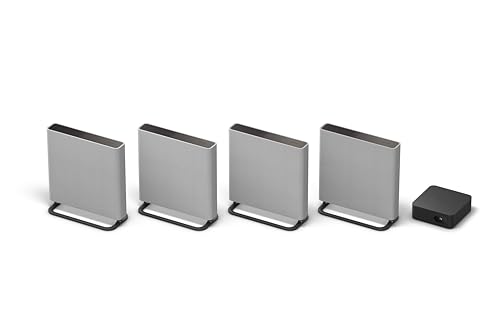
The bravia theater quad — Sony’s HT-A9M2 system — replaces the soundbar with four identical wireless speakers that map themselves to your room and build a Dolby Atmos sound field around your seats. This review covers how the system works, what it needs from your room and TV, and who should choose four speakers over a bar.
The Quad’s idea is freedom of placement: because each speaker is wireless and the system calibrates with its microphones, the four units do not need the symmetrical arrangement a traditional surround system demands. That promise — real surround from forgiving placement — is what this review tests the logic of, along with the system’s known appetite for a subwoofer partner.
Key takeaways
- Four wireless speakers plus room mapping replace the soundbar-and-satellites formula
- Placement freedom is the system’s real product; calibration makes odd rooms workable
- A subwoofer is effectively a required partner for film weight — budget for it
- The system suits film lovers whose rooms defeat conventional surround layouts
Where to buy
Every linked pick in this guide is sold through Amazon, and each product section below carries a plain link to its listing so you can check price on Amazon and confirm the current configuration, colour, and bundle contents before ordering — those details change between listings under the same product name more often than readers expect, and for bravia theater quad the configuration is half the decision. If a pick is out of stock in your region, the prose-only alternatives named in this guide cover the same roles without a link, deliberately, because they could not be verified to the same standard.
In this guide
Quick picks at a glance
| Product | Best for |
|---|---|
| Sony Bravia Theater Quad (HT-A9M2) | The four-speaker wireless Atmos system under review |
How these picks were chosen
Each linked product below was checked against Amazon’s own catalog data for this site before the guide was written: the exact listing title, the configuration it describes, and an official product image all had to be present and consistent. Products that failed that check — wrong generation, ambiguous bundles, or listings whose titles did not match the product being discussed — were either dropped or demoted to prose-only mentions. That process matters for bravia theater quad because this is a category where near-identical names hide meaningfully different products, and a link to the wrong generation is worse than no link at all.
What this product is — and what it is not
Start with the situation you actually face, not the spec sheet, when you think about bravia theater quad. Worth underlining: 360 Spatial Sound Mapping builds a phantom centre and surrounds from the four real speakers’ measured positions. That one fact explains a surprising amount of the disagreement you will find in owner discussions and review comments. None of this appears in a specification table, which is precisely why it belongs in a guide rather than a listing. If that matches your situation, weight it heavily; if it does not, you can safely care about the next section more.
It helps to separate what bravia theater quad promises on paper from what changes in practice once it is part of your day. This is also where expectations need adjusting, because support length and software updates decide how a modern display ages in its second five years. Going in with that understood prevents the most common disappointment with this category. That is not a footnote for bravia theater quad; it is the kind of detail that quietly decides whether owners recommend a product or quietly replace it. Hold onto that thought; the FAQ at the end answers the follow-up questions it usually raises.
Design and the details you touch every day
Start with the situation you actually face, not the spec sheet, when you think about bravia theater quad. The detail that matters here is that each speaker connects wirelessly for audio but needs mains power, so ‘wireless’ means four power cables to plan. Readers often skip past it because it is not glamorous, but it is exactly the sort of thing that separates a good outcome from an annoying one. Readers who internalise this point about bravia theater quad tend to make one purchase and keep it, rather than cycling through alternatives. The sections that follow keep returning to this idea from different angles, because it is the one most likely to change what you buy or do.
Start with the situation you actually face, not the spec sheet, when you think about bravia theater quad. In practice, a small change in viewing distance can matter as much as a change in screen size. That sounds like a small point, yet it shapes comfort, reliability, or cost every single time you use the product or follow the advice. Readers who internalise this point about bravia theater quad tend to make one purchase and keep it, rather than cycling through alternatives. Keep that in mind as the later sections narrow the choice down, because it filters out options that look strong in isolation.
Performance in the situations that matter
A useful rule for bravia theater quad: the detail you notice every day matters more than the detail that impresses you once. The detail that matters here is that the control box handles HDMI and the TV connection, including centre-channel duties on compatible Sony TVs. Readers often skip past it because it is not glamorous, but it is exactly the sort of thing that separates a good outcome from an annoying one. The effect compounds over time, so its importance grows the longer you own or live with the choice. That is the lens to carry into the buying guidance below, rather than treating every criterion as equally important.
The ownership experience: app, updates, accessories
Treat bravia theater quad as a system of small trade-offs that add up, because no single headline feature decides the experience. Consider how this plays out over months rather than minutes: rooms with asymmetric seating or a corner TV are exactly the layouts this system was designed to rescue. Long-term behaviour is where cheaper or simpler options quietly win or lose. If you take one practical habit from this section, let it be checking this point before money changes hands. Hold onto that thought; the FAQ at the end answers the follow-up questions it usually raises.
How it sits against its closest rivals
It helps to separate what bravia theater quad promises on paper from what changes in practice once it is part of your day. The detail that matters here is that bass from four compact speakers is limited by physics, which is why Sony’s subwoofers pair with the system. Readers often skip past it because it is not glamorous, but it is exactly the sort of thing that separates a good outcome from an annoying one. None of this appears in a specification table, which is precisely why it belongs in a guide rather than a listing. None of this requires expert knowledge — it requires being honest about your own habits for about five minutes.
The picks in detail

Sony Bravia Theater Quad (HT-A9M2) — The four-speaker wireless Atmos system under review
The four-speaker wireless Atmos system under review
This is not the choice for everyone, and the trade-offs below are written to make that plain.
According to its catalog listing, this is four wireless speakers using 360 Spatial Sound Mapping for Dolby Atmos and DTS:X, with room calibration and HDMI 2.1 per the manufacturer listing. For bravia theater quad, translate that into practical questions before you buy: does it fit the space, ears, desk, room, or system it has to live with; does its control scheme suit how you actually work or play; and does its support story — firmware, parts, warranty handling — look like something you can live with for years. Those answers, not the headline feature, decide whether this is the right pick for you.
Included in this guide because of its role in the bravia theater quad decision: the four-speaker wireless atmos system under review. Its verified listing describes four wireless speakers using 360 Spatial Sound Mapping for Dolby Atmos and DTS:X, with room calibration and HDMI 2.1 per the manufacturer listing, and the sections around this pick explain where that specification set helps and where it does not.
Strengths
- Scales sensibly — works in a simple setup and a more ambitious one
- A mature product line with predictable behaviour and support
- Clear, well-defined role in this category rather than a vague all-rounder promise
Trade-offs
- The case, mount, or accessories you want may be a separate purchase
- Its strengths are quiet ones, so it rarely wins a five-minute first-impression test
- Firmware or app behaviour can change details after launch, for better or worse
Best for: readers whose bravia theater quad decision turns on the four-speaker wireless atmos system under review
Not suited for: readers who have already ruled out this style of product for reasons covered in the criteria sections above
How to judge bravia theater quad properly
Picture quality in real rooms
When two options look identical on paper, Picture quality in real rooms is usually where the real difference hides. Here is the version that matters for bravia theater quad: dialogue clarity depends on the phantom centre’s calibration, so running setup carefully matters. It is not the most exciting line in any listing, but it is the one your future self will care about. Score each candidate on this before you look at anything else, and be suspicious of any option that is vague about it.
Size and viewing distance
Of all the criteria in this guide, Size and viewing distance is the one readers most often misjudge in both directions. In the context of bravia theater quad, the deciding detail is that music playback is competent and spacious, though stereo purists will still prefer dedicated speakers. Once you know to look for it, product pages become much easier to read critically. Score each candidate on this before you look at anything else, and be suspicious of any option that is vague about it.
Motion handling
When two options look identical on paper, Motion handling is usually where the real difference hides. Applied to bravia theater quad, that means paying attention to a concrete point: the system expands a Sony TV’s own speaker as centre on supported models, a neat trick for dialogue. Options that get this right feel effortless; options that miss it create friction you will notice daily. Score each candidate on this before you look at anything else, and be suspicious of any option that is vague about it.
Sound and system expansion
Sound and system expansion sounds abstract until you map it onto a real routine, so map it before you rank any option. In the context of bravia theater quad, the deciding detail is that latency and eARC behaviour depend on the TV, so the TV’s audio settings are part of the installation. Once you know to look for it, product pages become much easier to read critically. Readers who get this right rarely return products; readers who guess are the ones writing frustrated comments later.
Smart platform and inputs
Judge Smart platform and inputs by what it changes in daily use, not by how it reads in a feature list. For bravia theater quad specifically, the working detail is this: against a flagship soundbar, the Quad trades single-box simplicity for a wider, more convincing sound field. Build your shortlist around whether an option handles that well, and treat everything else as secondary polish. Score each candidate on this before you look at anything else, and be suspicious of any option that is vague about it.
Placement and mounting
Do not let a marketing label settle Placement and mounting for you; the implementation matters more than the label. Here is the version that matters for bravia theater quad: keeping purchase records and panel details matters because display support is variant-specific. It is not the most exciting line in any listing, but it is the one your future self will care about. Readers who get this right rarely return products; readers who guess are the ones writing frustrated comments later.
Value over the product’s life
Judge Value over the product’s life by what it changes in daily use, not by how it reads in a feature list. Here is the version that matters for bravia theater quad: the room is half the product: light, distance, and seating shape the experience more than small specification differences. It is not the most exciting line in any listing, but it is the one your future self will care about. If a listing cannot tell you this clearly, that vagueness is itself useful information about the option.
Real situations, worked through
Picture (‘a film lover with a corner TV and no symmetrical wall’, ‘the calibration-first design is aimed at this exact room’). The temptation in this situation is to overbuy, but the better move is to match the option to the actual demand, which is that accurate picture modes and disabled processing transform most displays more than any accessory can. Anything beyond that is money spent on headroom you may never use. Readers in this position should ignore most of the comparison table and focus on the two rows that map to this scenario.
Take a concrete case: (‘an apartment viewer who cannot run speaker wire’, ‘wireless audio with only power cables to place solves the landlord problem’). What decides success here is not the headline feature but the fit between the option and the routine, and the routine has a fixed shape: sound deserves a planned share of the budget at any serious screen size. Choose for that shape and the rest tends to fall into place. That scenario is common enough that it gets its own mention in the mistakes section below as well.
Now a specific situation rather than a general one: (‘a soundbar owner upgrading to real surround’, ‘the step is genuine: separated speakers place effects where bars simulate them’). The temptation in this situation is to overbuy, but the better move is to match the option to the actual demand, which is that mounting, furniture, and delivery logistics are specifications too, and they are the ones that surprise buyers. Anything beyond that is money spent on headroom you may never use. If that is your situation, the recommendation in this guide narrows to one or two options very quickly.
Picture (‘a music-first listener’, ‘a dedicated stereo system remains the better spend’). What decides success here is not the headline feature but the fit between the option and the routine, and the routine has a fixed shape: judge a display with the content you actually watch, because demo material flatters every panel. Choose for that shape and the rest tends to fall into place. If that is your situation, the recommendation in this guide narrows to one or two options very quickly.
A practical walkthrough
The sequence matters more than speed here, so resist the urge to skip ahead.
Step 1: Plan four power points first
At this stage the goal is simple: the speakers are wireless for signal only; sockets decide placement. Do it slowly the first time, check the result before moving on, and write down anything that behaves unexpectedly so you can compare later.
Step 2: Place wide and roughly at ear height
Do not treat this as a formality. The point of the step is that the mapping forgives asymmetry, not carelessness, and skipping the check is how small setup errors turn into weeks of vague dissatisfaction.
Step 3: Run the calibration with the room quiet
This is the step people rush, and rushing it is expensive later. The substance is that the microphones are building your sound field; give them clean data. Verify it in the most boring, literal way available before you continue.
Step 4: Set the TV’s eARC and audio output correctly
At this stage the goal is simple: most ‘no sound’ reports are TV settings, not the system. Do it slowly the first time, check the result before moving on, and write down anything that behaves unexpectedly so you can compare later.
Step 5: Add the subwoofer before judging bass
This is the step people rush, and rushing it is expensive later. The substance is that the system is designed to be heard with one. Verify it in the most boring, literal way available before you continue.
The mistakes that cause most regrets
It is an understandable mistake, because the marketing points exactly the wrong way. The underlying issue is that expecting cinema bass from the four speakers alone. Correcting it takes minutes at the decision stage and is nearly impossible to correct afterwards.
Nothing wastes money in this category quite like the following pattern. The underlying issue is that placing all four speakers on the TV unit and calling it surround. Correcting it takes minutes at the decision stage and is nearly impossible to correct afterwards.
Nothing wastes money in this category quite like the following pattern. The underlying issue is that skipping calibration because sound came out. Correcting it takes minutes at the decision stage and is nearly impossible to correct afterwards.
It is an understandable mistake, because the marketing points exactly the wrong way. In concrete terms, forgetting each speaker needs mains power when planning the room. Once you see the pattern, you will spot it in forum advice everywhere — and learn to discount that advice accordingly.
It helps to separate what bravia theater quad promises on paper from what changes in practice once it is part of your day. The detail that matters here is that measure cable runs and port access before the furniture is final, not after. Readers often skip past it because it is not glamorous, but it is exactly the sort of thing that separates a good outcome from an annoying one. The effect compounds over time, so its importance grows the longer you own or live with the choice. That single clarification removes most of the noise from the decision, leaving a short list that genuinely fits.
A useful rule for bravia theater quad: the detail you notice every day matters more than the detail that impresses you once. This is also where expectations need adjusting, because ambient light control is the cheapest picture upgrade that exists. Going in with that understood prevents the most common disappointment with this category. None of this appears in a specification table, which is precisely why it belongs in a guide rather than a listing. That is the lens to carry into the buying guidance below, rather than treating every criterion as equally important.
The honest way to judge bravia theater quad is to picture a normal week of use rather than a single exciting first hour. The practical test is simple to describe and hard to fake: if the display anchors a growing system, inputs and audio return support decide how gracefully it grows. If an option handles that well, it usually handles the rest of the routine well too. Readers who internalise this point about bravia theater quad tend to make one purchase and keep it, rather than cycling through alternatives. The sections that follow keep returning to this idea from different angles, because it is the one most likely to change what you buy or do.
The honest way to judge bravia theater quad is to picture a normal week of use rather than a single exciting first hour. Worth underlining: keeping purchase records and panel details matters because display support is variant-specific. That one fact explains a surprising amount of the disagreement you will find in owner discussions and review comments. If you take one practical habit from this section, let it be checking this point before money changes hands. That single clarification removes most of the noise from the decision, leaving a short list that genuinely fits.
Before any comparison makes sense, pin down what bravia theater quad has to do well in your own routine. There is a second layer worth naming: the room is half the product: light, distance, and seating shape the experience more than small specification differences. Once you see it, several otherwise confusing differences between options start to make sense. Readers who internalise this point about bravia theater quad tend to make one purchase and keep it, rather than cycling through alternatives. That is the lens to carry into the buying guidance below, rather than treating every criterion as equally important.
Start with the situation you actually face, not the spec sheet, when you think about bravia theater quad. There is a second layer worth naming: accurate picture modes and disabled processing transform most displays more than any accessory can. Once you see it, several otherwise confusing differences between options start to make sense. None of this appears in a specification table, which is precisely why it belongs in a guide rather than a listing. None of this requires expert knowledge — it requires being honest about your own habits for about five minutes.
Living with it: care, costs, and the long term
It helps to separate what bravia theater quad promises on paper from what changes in practice once it is part of your day. This is also where expectations need adjusting, because the room decides more than the panel does: window light, viewing distance, and seating layout will shape your experience every day. Going in with that understood prevents the most common disappointment with this category. Readers who internalise this point about bravia theater quad tend to make one purchase and keep it, rather than cycling through alternatives. Decisions about bravia theater quad get much easier once this point is settled, and much harder when it is left vague.
When readers ask about bravia theater quad, the useful answer almost always depends on context they have not stated yet, so this section builds that context deliberately. None of this is obvious from a product photo or a headline, which is why it is worth stating plainly: calibration need not be professional to help; simply choosing the accurate picture mode and disabling aggressive processing transforms most sets. Readers who internalise this point about bravia theater quad tend to make one purchase and keep it, rather than cycling through alternatives. That single clarification removes most of the noise from the decision, leaving a short list that genuinely fits.
The honest way to judge bravia theater quad is to picture a normal week of use rather than a single exciting first hour. The practical test is simple to describe and hard to fake: sound is the half of the experience buyers under-budget, and even a modest external speaker changes film nights more than a small panel upgrade. If an option handles that well, it usually handles the rest of the routine well too. If you take one practical habit from this section, let it be checking this point before money changes hands. The sections that follow keep returning to this idea from different angles, because it is the one most likely to change what you buy or do.
When readers ask about bravia theater quad, the useful answer almost always depends on context they have not stated yet, so this section builds that context deliberately. In practice, mounting and stand decisions should be made with the room’s studs, glare, and cable routes in mind, not after the box is open. That sounds like a small point, yet it shapes comfort, reliability, or cost every single time you use the product or follow the advice. If you take one practical habit from this section, let it be checking this point before money changes hands. Decisions about bravia theater quad get much easier once this point is settled, and much harder when it is left vague.
It helps to separate what bravia theater quad promises on paper from what changes in practice once it is part of your day. The detail that matters here is that streaming quality from your actual services is the content the display will show most, so judge it with that rather than demo loops. Readers often skip past it because it is not glamorous, but it is exactly the sort of thing that separates a good outcome from an annoying one. The effect compounds over time, so its importance grows the longer you own or live with the choice. If that matches your situation, weight it heavily; if it does not, you can safely care about the next section more.
Treat bravia theater quad as a system of small trade-offs that add up, because no single headline feature decides the experience. In practice, keeping the purchase record and panel details matters for warranty, because display support is variant-specific. That sounds like a small point, yet it shapes comfort, reliability, or cost every single time you use the product or follow the advice. It also explains why opinions about bravia theater quad polarise: people are often reporting different situations as if they were the same one. If that matches your situation, weight it heavily; if it does not, you can safely care about the next section more.
When readers ask about bravia theater quad, the useful answer almost always depends on context they have not stated yet, so this section builds that context deliberately. In practice, a viewing-distance change of half a metre alters which size is correct more than any specification difference between rival models. That sounds like a small point, yet it shapes comfort, reliability, or cost every single time you use the product or follow the advice. It also explains why opinions about bravia theater quad polarise: people are often reporting different situations as if they were the same one. Hold onto that thought; the FAQ at the end answers the follow-up questions it usually raises.
The honest way to judge bravia theater quad is to picture a normal week of use rather than a single exciting first hour. In practice, households with mixed content — sport, film, games, news — should weight motion and upscaling more than peak brightness headlines. That sounds like a small point, yet it shapes comfort, reliability, or cost every single time you use the product or follow the advice. It also explains why opinions about bravia theater quad polarise: people are often reporting different situations as if they were the same one. That is the lens to carry into the buying guidance below, rather than treating every criterion as equally important.
The honest way to judge bravia theater quad is to picture a normal week of use rather than a single exciting first hour. There is a second layer worth naming: cable length and port placement are mundane until the day they are wrong, so measure the run before the furniture is final. Once you see it, several otherwise confusing differences between options start to make sense. That is not a footnote for bravia theater quad; it is the kind of detail that quietly decides whether owners recommend a product or quietly replace it. Decisions about bravia theater quad get much easier once this point is settled, and much harder when it is left vague.
When readers ask about bravia theater quad, the useful answer almost always depends on context they have not stated yet, so this section builds that context deliberately. There is a second layer worth naming: ambient light control, even simple curtains, is the cheapest picture-quality upgrade that exists. Once you see it, several otherwise confusing differences between options start to make sense. Readers who internalise this point about bravia theater quad tend to make one purchase and keep it, rather than cycling through alternatives. That is the lens to carry into the buying guidance below, rather than treating every criterion as equally important.
Most people meet bravia theater quad through one specific frustration, and that frustration should drive every later decision. In practice, if the set will anchor a growing system, input count and audio return support decide how gracefully it can grow. That sounds like a small point, yet it shapes comfort, reliability, or cost every single time you use the product or follow the advice. The effect compounds over time, so its importance grows the longer you own or live with the choice. The sections that follow keep returning to this idea from different angles, because it is the one most likely to change what you buy or do.
Before any comparison makes sense, pin down what bravia theater quad has to do well in your own routine. The detail that matters here is that second-year ownership is about software: app support and updates separate the sets that age well from those that merely age. Readers often skip past it because it is not glamorous, but it is exactly the sort of thing that separates a good outcome from an annoying one. It also explains why opinions about bravia theater quad polarise: people are often reporting different situations as if they were the same one. None of this requires expert knowledge — it requires being honest about your own habits for about five minutes.
Beyond the headline specifications
Before any comparison makes sense, pin down what bravia theater quad has to do well in your own routine. The practical test is simple to describe and hard to fake: a bias light behind the screen is the cheapest comfort upgrade for night viewing and costs less than a film rental habit. If an option handles that well, it usually handles the rest of the routine well too. That is not a footnote for bravia theater quad; it is the kind of detail that quietly decides whether owners recommend a product or quietly replace it. Decisions about bravia theater quad get much easier once this point is settled, and much harder when it is left vague.
When readers ask about bravia theater quad, the useful answer almost always depends on context they have not stated yet, so this section builds that context deliberately. None of this is obvious from a product photo or a headline, which is why it is worth stating plainly: the accurate picture mode is the manufacturer’s own confession of what the panel does best. That is not a footnote for bravia theater quad; it is the kind of detail that quietly decides whether owners recommend a product or quietly replace it. If that matches your situation, weight it heavily; if it does not, you can safely care about the next section more.
Before any comparison makes sense, pin down what bravia theater quad has to do well in your own routine. None of this is obvious from a product photo or a headline, which is why it is worth stating plainly: sports viewers should judge motion with the fastest content they watch, not with film. That is not a footnote for bravia theater quad; it is the kind of detail that quietly decides whether owners recommend a product or quietly replace it. Decisions about bravia theater quad get much easier once this point is settled, and much harder when it is left vague.
The honest way to judge bravia theater quad is to picture a normal week of use rather than a single exciting first hour. This is also where expectations need adjusting, because a soundbar or speaker plan made at purchase time avoids the common second purchase made in frustration. Going in with that understood prevents the most common disappointment with this category. The effect compounds over time, so its importance grows the longer you own or live with the choice. That single clarification removes most of the noise from the decision, leaving a short list that genuinely fits.
When readers ask about bravia theater quad, the useful answer almost always depends on context they have not stated yet, so this section builds that context deliberately. The practical test is simple to describe and hard to fake: for gaming, the television’s game mode settings deserve the same care as the console’s. If an option handles that well, it usually handles the rest of the routine well too. It also explains why opinions about bravia theater quad polarise: people are often reporting different situations as if they were the same one. That single clarification removes most of the noise from the decision, leaving a short list that genuinely fits.
The honest way to judge bravia theater quad is to picture a normal week of use rather than a single exciting first hour. In practice, children and pets are part of a living-room specification: stability and screen care are real criteria. That sounds like a small point, yet it shapes comfort, reliability, or cost every single time you use the product or follow the advice. Readers who internalise this point about bravia theater quad tend to make one purchase and keep it, rather than cycling through alternatives. That is the lens to carry into the buying guidance below, rather than treating every criterion as equally important.
It helps to separate what bravia theater quad promises on paper from what changes in practice once it is part of your day. There is a second layer worth naming: a television’s second five years are governed by software, so update history is a buying criterion today. Once you see it, several otherwise confusing differences between options start to make sense. None of this appears in a specification table, which is precisely why it belongs in a guide rather than a listing. That is the lens to carry into the buying guidance below, rather than treating every criterion as equally important.
The honest way to judge bravia theater quad is to picture a normal week of use rather than a single exciting first hour. Worth underlining: viewing angles matter exactly as much as your seating is wide — measure the room, not the advertisement. That one fact explains a surprising amount of the disagreement you will find in owner discussions and review comments. It also explains why opinions about bravia theater quad polarise: people are often reporting different situations as if they were the same one. That is the lens to carry into the buying guidance below, rather than treating every criterion as equally important.
Treat bravia theater quad as a system of small trade-offs that add up, because no single headline feature decides the experience. In practice, calibration by eye with familiar content beats copying settings tuned for a different room. That sounds like a small point, yet it shapes comfort, reliability, or cost every single time you use the product or follow the advice. The effect compounds over time, so its importance grows the longer you own or live with the choice. Hold onto that thought; the FAQ at the end answers the follow-up questions it usually raises.
The honest way to judge bravia theater quad is to picture a normal week of use rather than a single exciting first hour. Worth underlining: the stand or mount decision locks in viewing height, and height errors are felt in the neck within a week. That one fact explains a surprising amount of the disagreement you will find in owner discussions and review comments. Readers who internalise this point about bravia theater quad tend to make one purchase and keep it, rather than cycling through alternatives. Hold onto that thought; the FAQ at the end answers the follow-up questions it usually raises.
A useful rule for bravia theater quad: the detail you notice every day matters more than the detail that impresses you once. The detail that matters here is that reflections move with the sun; a room judged at noon may behave entirely differently at dusk. Readers often skip past it because it is not glamorous, but it is exactly the sort of thing that separates a good outcome from an annoying one. If you take one practical habit from this section, let it be checking this point before money changes hands. The sections that follow keep returning to this idea from different angles, because it is the one most likely to change what you buy or do.
Treat bravia theater quad as a system of small trade-offs that add up, because no single headline feature decides the experience. There is a second layer worth naming: streaming device choice can rescue an ageing smart platform without replacing the panel. Once you see it, several otherwise confusing differences between options start to make sense. If you take one practical habit from this section, let it be checking this point before money changes hands. Decisions about bravia theater quad get much easier once this point is settled, and much harder when it is left vague.
Treat bravia theater quad as a system of small trade-offs that add up, because no single headline feature decides the experience. None of this is obvious from a product photo or a headline, which is why it is worth stating plainly: for film lovers, black-level behaviour in a dark room is the specification that survives every demo. The effect compounds over time, so its importance grows the longer you own or live with the choice. None of this requires expert knowledge — it requires being honest about your own habits for about five minutes.
When readers ask about bravia theater quad, the useful answer almost always depends on context they have not stated yet, so this section builds that context deliberately. The detail that matters here is that a larger screen reveals source quality mercilessly, which is an argument for feeding it well. Readers often skip past it because it is not glamorous, but it is exactly the sort of thing that separates a good outcome from an annoying one. The effect compounds over time, so its importance grows the longer you own or live with the choice. If that matches your situation, weight it heavily; if it does not, you can safely care about the next section more.
Treat bravia theater quad as a system of small trade-offs that add up, because no single headline feature decides the experience. The detail that matters here is that keeping the panel’s exact model details recorded makes every future support conversation shorter. Readers often skip past it because it is not glamorous, but it is exactly the sort of thing that separates a good outcome from an annoying one. The effect compounds over time, so its importance grows the longer you own or live with the choice. That single clarification removes most of the noise from the decision, leaving a short list that genuinely fits.
Treat bravia theater quad as a system of small trade-offs that add up, because no single headline feature decides the experience. Worth underlining: guests judge a television by its worst seat, so walk the room before you commit to a layout. That one fact explains a surprising amount of the disagreement you will find in owner discussions and review comments. None of this appears in a specification table, which is precisely why it belongs in a guide rather than a listing. Decisions about bravia theater quad get much easier once this point is settled, and much harder when it is left vague.
Frequently asked questions
Does it need a subwoofer?
It can, but only if you set it up the way described in the how-to section. The reason is that for film weight, effectively yes — the system is designed to pair with one. Rushed setups are the single biggest cause of the complaints attached to this topic.
Will it work in an odd-shaped room?
Only in a specific sense. What is true is that that is its strength; the calibration maps the speakers you actually placed. That is narrower than the marketing version of the claim, but it is the version you can actually rely on when deciding.
Does it work with non-Sony TVs?
Plan on it being a gradual difference rather than a dramatic one. Because yes via HDMI eARC, though the TV-as-centre feature needs a compatible Sony set, the improvement shows up as fewer small annoyances across a week, not as a single obvious moment — which is exactly why it is worth having.
Are the speakers truly wireless?
Not necessarily, and this is where generic advice misleads. The deciding factor is that for audio, yes; each still needs a mains power cable. Readers whose situation matches that description should follow the main recommendation; everyone else should look at the alternative flagged in the scenario sections.
Soundbar or Theater Quad?
It can, but only if you set it up the way described in the how-to section. The reason is that bars win simplicity and price; the Quad wins sound-field realism and placement freedom. Rushed setups are the single biggest cause of the complaints attached to this topic.
What does it do for dialogue?
Plan on it being a gradual difference rather than a dramatic one. Because the phantom centre (or a Sony TV’s own speaker) anchors dialogue to the screen, the improvement shows up as fewer small annoyances across a week, not as a single obvious moment — which is exactly why it is worth having.
Final verdict: Bravia Theater Quad
Buy the Bravia Theater Quad if your room defeats conventional surround — odd angles, no wire runs, asymmetric seats — and you want genuine Atmos immersion with forgiving placement. Budget for the subwoofer, plan four power points, and calibrate carefully. If your room is a simple rectangle and your needs are modest, a good soundbar remains the rational spend; the Quad earns its price where rooms get difficult.