Disclosure: As an Amazon Associate, reviewstook.com earns from qualifying purchases. Links on this page are affiliate links; they cost you nothing extra. Prices and availability change often, so check the current Amazon listing before you buy.
If you are wondering how much sound leak do open backed headphones have, here is the honest short version: a lot, by design. An open-back headphone has ear cups that are deliberately open to the air, usually behind a mesh or grille, so sound travels outward into the room almost as freely as it travels inward to your ears. At a normal listening volume in a quiet room, someone sitting next to you will usually be able to follow the melody of what you are playing, make out vocals on louder passages, and hear the rhythmic ticking of drums and cymbals even from across a small room. Turn the volume up and an open-back headphone can sound, to everyone else, a bit like a small speaker playing quietly on your head. That is not a defect or a sign of a cheap product. It is the direct trade-off for the wide, natural soundstage that makes open-back headphones so popular for home listening, mixing, and gaming.
This guide answers the question properly rather than with a single made-up number. There is no universal leakage figure for open-back headphones, because leakage depends on your volume, your distance from other people, the kind of content you play, the design of the specific model, and how quiet the room already is. Anyone who quotes you one precise measurement for every open-back model is inventing precision that does not exist. What we can do — and what this article does — is explain the factors that control leakage, describe realistically what people around you will hear in common situations, show you how to test leakage yourself in two minutes, and help you decide whether an open-back, a closed-back, or a noise-cancelling model actually fits your life. Where specific headphones are mentioned, the linked models have been checked against Amazon’s own catalogue data, and we are straightforward about which ones leak and which ones keep your listening private.
How Much Sound Leak Do Open Backed Headphones Have? The Short Answer First
Think of leakage in three practical bands. At low volume — background listening while you work, quiet evening listening, podcasts at conversational loudness or below — an open-back headphone leaks a faint, tinny version of your audio that is mainly noticeable within arm’s length in a quiet room. The person next to you on a sofa will hear it; a person in the next room with the door closed almost certainly will not be bothered by it. At moderate volume, which is where most people actually listen to music, leakage becomes clearly audible across a typical living room or shared office desk cluster. Melodies are recognisable, lyrics on choruses are often intelligible, and percussive sounds carry surprisingly well. At high volume, leakage is unmistakable anywhere in the room and can be audible through a lightweight internal door, especially the high-frequency content — cymbals, snare hits, sibilant vocals — which escapes most easily.
Leakage also runs in both directions, and this half of the story is just as important. The same open grille that lets your music out lets the room in. Open-back headphones provide essentially no isolation from your surroundings: conversation, traffic, a television in the next room, and household noise all reach your ears almost unimpeded. That is why open-backs are a poor choice for commuting or open-plan offices even before you consider the people around you — you will keep turning the volume up to compete with the room, which makes the leakage worse and is hard on your hearing over long sessions. In a quiet home environment, though, that openness is exactly the point: the sound feels less trapped inside your head, voices and instruments get room to breathe, and long sessions feel less fatiguing for many listeners.
One more framing point before we go deeper. Leakage is not a quality ranking. A premium open-back headphone leaks roughly as much as an affordable one at the same volume, because the openness is the design. Models differ in the details — how directional the escaping sound is, how much high-frequency energy escapes, how the pads and housing shape the sound that leaves — but no open-back headphone is private, and no honest buying guide should pretend otherwise. If privacy is a hard requirement, the answer is a different type of headphone, not a more expensive open-back.
In this guide
Why Open-Back Headphones Leak: The Physics in Plain Language
A headphone driver is a small vibrating surface that moves air to create sound. In a closed-back headphone, that driver sits in a sealed or mostly sealed cup, so most of the sound energy that travels backwards, away from your ear, is contained, absorbed, or reflected inside the housing. In an open-back design, the back of the cup is a grille or mesh. The rear wave from the driver passes straight through it into the room. Designers do this on purpose: letting the rear wave escape prevents pressure build-up and internal reflections that can make closed headphones sound boxy or congested, and it produces the airy, spacious presentation open-backs are known for. The cost of that airiness is that the rear wave is, quite literally, music playing into your room.
Frequency matters here. Low frequencies — bass notes and kick drums — radiate in all directions and pass around obstacles easily, but at headphone volumes they carry relatively little energy into the room beyond a soft thump at close range. Midrange and high frequencies, where voices, guitars, snare drums, and cymbals live, are the content other people notice most. This is why leaked audio sounds thin and tinny to a bystander: they are hearing mostly the mid and treble skeleton of your music, with the bass foundation missing. It is also why a podcast or a video call recording can be more intrusive than music at the same volume — speech sits right in the frequency band that leaks most clearly and that human hearing is most sensitive to, and intelligible speech is far more distracting to other people than an unrecognisable melody.
Fit and seal play a smaller role than many people expect. With closed headphones, a poor seal — glasses arms breaking the pad seal, worn-out cushions — can noticeably increase leakage. With open-backs, the dominant leak path is the open grille itself, so fit changes the sound you hear more than the sound others hear. Pad material and clamp force still matter at the margins, and a headphone that sits loosely will leak a little more around the edges, but no adjustment turns an open-back into a considerate neighbour in a quiet library. Accept the design for what it is, and manage leakage with volume, distance, timing, and room choice instead.
The Five Things That Actually Control How Much You Leak
Top pick
1. Your listening volume
Volume is the single biggest variable, and it is not close. Leakage rises directly with how loudly you listen: every step up in volume is a step up in what the room hears. This is why two owners of the same headphone can report completely different experiences — one listens quietly at a desk in the evening and never gets a complaint, the other listens loud in a shared flat and is asked to turn it down nightly. It is also why the listening environment matters so much: in a noisy room you will push the volume up to compensate, and the leakage climbs with it. If you take one habit from this article, make it this one: with open-backs, set your volume for the room you are in, not just for yourself.
2. Distance and room layout
Sound weakens quickly with distance, especially the higher frequencies that make leakage recognisable. A colleague at the next desk, roughly an arm’s length to a metre away, hears far more than someone across a room. Soft furnishings — sofas, curtains, carpets, bookshelves — absorb some of the escaping sound, while hard, bare rooms reflect it and make leakage seem worse. A door between you and other people helps more than any headphone feature: even a lightweight closed door cuts the intelligibility of leaked speech dramatically. When people ask whether open-backs will disturb a partner in bed, the honest answer is that at low volume, in the dark, at pillow distance, they will hear a faint shimmer of your music; whether that is charming or annoying is a relationship question, not an audio question.
3. What you are listening to
Content type changes leakage more than most buyers expect. Bright, dense, loud material — pop with prominent vocals, metal, electronic music with constant high-frequency energy — leaks conspicuously. Quiet, sparse material — acoustic recordings at low volume, ambient music, calm spoken word turned down — leaks far less. Gaming is a special case: explosions and gunfire are loud, transient, and attention-grabbing, and voice chat through an open-back microphone setup can leak your teammates’ speech into your room as well. Mixing and production work sits at the loud end too, because engineers routinely check balances at healthy volumes and repeat short sections — and a four-second loop leaking into a shared space fifty times in a row is uniquely irritating to everyone else.
4. The specific model’s design
Not all open-backs leak identically. The size and openness of the grille, the angle of the drivers, the depth of the cups, and how much damping material sits behind the driver all shape how much sound escapes and in which directions. Some models project more sound directly sideways; others disperse it. Planar magnetic open-backs, with their large, flat drivers and wide-open housings, have a reputation for leaking generously. Compact or semi-open designs leak less, though they also give up some of the spaciousness. These are differences of degree, not of kind: treat any fully open model as a headphone your room will hear, and treat semi-open models as a middle step rather than a solution.
5. The noise floor of the room
Leakage is only a problem when other people can hear it above everything else. In a room with a running fan, an open window onto a busy street, or a television playing, modest open-back leakage disappears into the background. In a silent room at night, the same leakage is the loudest thing present and carries to everyone nearby. This is why open-backs can be perfectly civilised in a family living room during the day and completely antisocial in a quiet shared bedroom at midnight. Judge leakage against the quietest situation you will actually use the headphones in, not the average one.
What People Around You Hear, Situation by Situation
At a home desk, alone in the room. Leakage is a non-issue. This is the environment open-backs were made for: quiet, private, stationary. Shut the door and even loud listening rarely troubles anyone beyond a muffled trace in the hallway.
On the sofa next to a partner. At moderate volume they will hear your music clearly enough to recognise songs and follow choruses. If they are reading or watching something of their own, expect it to be distracting. At low volume it fades to background texture that many people tolerate easily. This is the single most common real-world complaint about open-backs, so if sofa listening is your main use, weigh it seriously.
In a shared bedroom at night. The quietest common environment, and therefore the worst case. Even modest volume leaks into a silent room, and high-frequency detail — the part that survives — is exactly the kind of sound that keeps a light sleeper aware. Low volume helps, but a closed-back or earbuds are the considerate tools here.
In an open-plan office. Two problems at once: your music leaks to the desks beside you, and the office leaks into your ears, pushing your volume up. Speech content is the worst offender because colleagues can half-follow it. Most shared offices and open-backs are simply a poor match; this is closed-back and noise-cancelling territory.
In a library or quiet study space. Do not. A silent room full of strangers is precisely where leakage is most audible and least welcome, and staff will treat your open-backs like a small speaker, because functionally that is what they are.
While recording vocals or instruments. Leakage has a technical consequence here beyond politeness: sound escaping your headphones can be picked up by a sensitive microphone and bleed into the recording. This is why studios track with closed-back headphones and mix with open-backs. If you record with a microphone in the room, choose closed-back for the recording session itself.
On public transport or a plane. Open-backs fail in both directions — your audio leaks to the passenger beside you while engine and cabin noise floods in, tempting you to raise the volume to levels that are bad for your hearing and worse for your neighbours. Leave open-backs at home; travel is what sealed and noise-cancelling designs exist for. For general fault-finding when any headphone misbehaves on the move, see what to do when your headphones stop working.
How to Test Leakage Yourself in Two Minutes
You do not need instruments or anyone’s permission to get a realistic picture of leakage — you need a phone and, ideally, one honest friend. Here is a simple method that works before you buy (with a display model or a friend’s pair) and after.
Step 1: Set your real volume. Play the loudest, brightest track you regularly listen to, at the volume you actually use — not the volume you think you should use. Leakage tests done at polite test volumes tell you nothing.
Step 2: Take the headphones off and hold them at arm’s length. With the pads facing you and the cups roughly where your head would be relative to a neighbour, listen. What you hear is close to what a person sitting beside you hears, minus a little absorption from your head. If the lyrics are clear to you at arm’s length, they are clear to your sofa partner too.
Step 3: Use the phone test. Put the headphones on a cushion or over a rolled towel to simulate a head seal, play your test track at your normal volume, and record a short voice memo from one metre away, then from across the room. Play the memo back. This is a fair, slightly unforgiving picture of your leakage footprint in that room.
Step 4: Test the quiet-room case. Repeat the test at night or in the quietest room you use. If it is acceptable there, it is acceptable everywhere you listen. If it is not, no setting will fix it — you need a second, sealed pair for those hours, which is a very common and sensible two-headphone setup.
Step 5: Check the reverse direction. While wearing them with nothing playing, hold a conversation or listen to the television. If you can follow it easily, remember that the room is hearing your audio on the same terms. Openness is symmetrical.
Headphone Designs Compared: How Much Each Type Leaks
The table below is deliberately qualitative. Leakage varies by model and volume, so honest bands beat invented measurements.
| Design | Leakage out | Outside noise in | Sound character | Best environment |
|---|---|---|---|---|
| Open-back over-ear | High — room hears a thin version of your audio | High — almost no isolation | Wide, airy, natural staging | Private, quiet rooms at home |
| Semi-open over-ear | Moderate — less than open, more than closed | Moderate | A step toward openness, still fairly contained | Home use with some company nearby |
| Closed-back over-ear | Low at sane volumes; rises if you listen very loud or the seal is poor | Moderate — pads block some noise | More contained, punchier bass emphasis on many models | Shared rooms, offices, recording |
| Closed-back with active noise cancelling | Low — and ANC lets you listen quieter, which cuts leakage further | Low — electronics cancel steady noise | Convenient, travel-focused tuning | Travel, commuting, open-plan offices |
| In-ear earbuds | Very low when sealed well | Low to moderate — seal-dependent | Intimate, in-head presentation | Shared bedrooms, travel, anywhere public |
Two lessons fall out of that comparison. First, the biggest leakage reduction comes from changing design category, not from spending more within a category. Second, noise cancelling helps leakage indirectly: because the headphones quiet the room for you, you listen at lower volume, and lower volume is the strongest leakage control there is. If you are choosing between form factors more broadly, our explainer on headsets versus headphones and what actually differs covers the wider landscape.
Three Headphones That Show the Leakage Spectrum Honestly
The three models below were verified against Amazon’s catalogue data for this guide. Two are open-backs chosen to demonstrate what you gain in exchange for the leak; the third is the closed-back alternative we point shared-room listeners to. None of them hides its nature, and that honesty is the point.
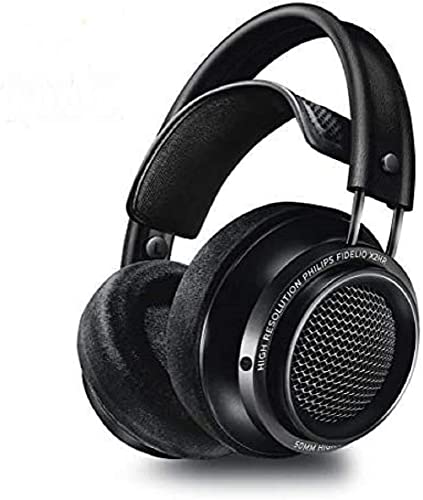
Best open-back all-rounder — Philips Fidelio X2HR

Philips Fidelio X2HR
- Type: Open-back, over-ear, wired
- Driver: 50mm, per the manufacturer’s catalogue listing
- Cable: Detachable
- Leakage profile: Fully open — expect the room to hear you
The Fidelio X2HR is the classic example of the open-back bargain: a broad, relaxed soundstage, warm and generous bass for an open design, and comfort that suits long evening sessions — paid for with total openness. Everyone in the room will hear a thin, bright sketch of your music at normal volumes. The detachable cable is a practical plus for a headphone meant to live at home, and the build feels like a product designed for a desk and a favourite chair rather than a commute. If your listening is private, this is exactly the kind of headphone that makes people fall for open-backs. If it is not private, no feature on it will save you.
Strengths
- Wide, easygoing soundstage that flatters most music
- Comfortable fit for long home sessions
- Detachable cable extends working life
Trade-offs
- Leaks freely in both directions, like every true open-back
- Wired only — no Bluetooth convenience
- Too bulky and open for travel or shared offices
Best for: home listeners with a room of their own who want spacious sound. Not suited for: shared bedrooms, offices, or any public space.
For a deeper look at this model on its own, see our full Philips Fidelio X2HR review.
Best open-back for a lighter, vocal-focused sound — Sennheiser HD 599

Sennheiser HD 599
- Type: Open-back, over-ear, wired
- Fit: Lightweight with plush pads
- Leakage profile: Fully open — plan on being overheard nearby
The HD 599 takes the same open bargain and tunes it differently: a lighter touch, a clear and natural way with voices, and a fit that disappears over long listening sessions. It leaks just as honestly as any open-back — the person beside you will hear your album — but in a private room its easygoing character makes it a favourite for music, films, and relaxed gaming where hearing your surroundings is a benefit rather than a flaw. Parents who want to hear a child stir, or anyone who dislikes the sealed-in feeling of closed headphones, often land on a model like this precisely because it does not isolate.
Strengths
- Natural, comfortable presentation for voices and acoustic music
- Light, low-fatigue fit for long sessions
- You stay aware of your surroundings at home
Trade-offs
- Open design leaks in both directions
- Bass is polite rather than powerful
- No isolation for noisy households during loud hours
Best for: home listeners who value comfort and staying aware of the room. Not suited for: anyone who needs privacy or quiet from the room.
Best closed-back alternative when the room must not hear you — beyerdynamic DT 770 Pro (80 Ohm)

beyerdynamic DT 770 Pro (80 Ohm)
- Type: Closed-back, over-ear, wired
- Impedance: 80 Ohm version — plays from a phone or laptop, and benefits from an amp
- Cable: 3m, fixed
- Pads: Velour ear pads
- Leakage profile: Low at normal volumes — the considerate choice
The DT 770 Pro is what we suggest when the real requirement is not openness but peace in a shared home. Its sealed cups keep your music largely to yourself at sane volumes and keep a useful amount of the room out, which is why it has been a recording-studio fixture for tracking work for years. The 80 Ohm version is the friendly one for everyday sources. You give up the airy width of the open-backs above; in exchange you can listen at midnight, record near a microphone, and share a room without negotiating. For many households, that trade is the right one — and plenty of enthusiasts own one of each style and swap by situation.
Strengths
- Keeps music private at normal listening levels
- Blocks a useful amount of household noise
- Proven studio build with comfortable velour pads
Trade-offs
- Soundstage is narrower than open-back models
- Long fixed cable suits a desk better than a sofa across the room
- Can leak a little at very high volumes or with a poor pad seal
Best for: shared homes, recording, and late-night listening. Not suited for: listeners chasing the widest, airiest staging.

How to Reduce Leakage Without Giving Up Your Open-Backs
If you already own open-backs and love them, you are not powerless — you just have to manage the variables you control. Start with volume discipline: find the lowest volume that still feels satisfying in your quiet room, and treat anything above it as a deliberate choice with an audience. Many listeners discover they were listening louder than they needed simply out of habit, especially with engaging material. Next, manage distance and doors: a few extra metres and one closed door transform the social footprint of the same headphone at the same volume. Soft furnishings near your listening spot help a little too, absorbing some of the escaping high frequencies before they bounce around a hard room.
Timing is an underrated tool. Loud, bright, repetitive listening — mixing the same chorus, grinding a ranked match with voice chat — belongs in your private hours, while late-night shared-room listening can drop to low volume or move to a sealed second pair. A modest closed-back or a set of earbuds as a “night pair” is one of the most common setups among experienced headphone owners, and it costs far less than replacing a beloved open-back with a compromise that serves neither situation well. Also consider content: at pillow distance, a calm podcast at low volume leaks far less annoyingly than a bright pop playlist, so save the loud favourites for when the room is yours.
What does not work: stuffing material into the grilles, covering the cups with your hands or cushions while listening, or buying accessories that claim to seal an open-back. Blocking the grille changes the tuning the designers intended, usually for the worse, and still leaks around the pads. Semi-open models reduce leakage somewhat but sit in an honest middle — less spacious, less private than the extremes. And turning a closed-back up to extreme volume defeats its seal advantage; every design leaks if you push it hard enough. Manage the situation, not the physics. If driver design itself fascinates you, whether a bigger driver actually makes headphones better is the natural next read.
Buying Guide: Choosing Around Leakage
Start from your room, not from a review score. Ask where you will listen most, who is within a few metres during those hours, and how quiet that space is at your usual listening time. If the honest answer is “alone, in a quiet room, mostly at a desk,” open-backs are not a compromise at all — they are the best-sounding tool for the job, and leakage is an abstract worry that will never materialise. If the answer involves a partner, housemates, colleagues, or fellow passengers, leakage is not a footnote; it is the deciding feature, and a sealed design will make you and everyone around you happier regardless of what any sound-quality ranking says.
Then consider your catalogue. Open-backs flatter spacious, well-recorded music, films with natural dialogue, and games where positional width matters. Closed-backs flatter bass-driven genres, recording work, and any situation where the room is loud. Noise-cancelling models are the travel and office specialists: their electronics attack steady low noise — engines, air conditioning, train rumble — while their sealed cups handle the rest, and the volume reduction they allow is itself a leakage feature. Earbuds are the discreet all-rounders for shared beds and public spaces, trading soundstage for near-total privacy. Newer features keep blurring these categories, as covered in real-time audio translation coming to ordinary headphones, but the leakage physics in this guide will outlast every feature cycle.
Budget framing, in tiers rather than prices: capable examples of every design exist at entry, midrange, and premium tiers, and leakage behaviour does not improve meaningfully as you climb within a design. Spend your money on comfort, build, and the tuning you enjoy — and on a second pair in the opposite design if your life genuinely has two listening situations. A two-pair household setup, one open and one sealed, satisfies more people than one expensive attempt to find a headphone that is somehow both.
Common Mistakes People Make About Sound Leak
Assuming expensive open-backs leak less. They do not, in any way that matters socially. Openness is the design, at every price.
Judging leakage in a noisy shop or office. A high noise floor hides leakage during the test and reveals it at home at midnight. Judge against your quietest real situation.
Forgetting the inward direction. Buyers fixate on disturbing others and forget the room will disturb them — traffic, television, and conversation pour straight in, and the volume creep that follows makes the outward leak worse.
Testing with gentle music at gentle volume. Your loudest, brightest regular listening is the test case. A whispered acoustic track tells you nothing about your Friday-night volume.
Buying open-backs for recording. Leakage into a live microphone is a genuine technical problem, not a courtesy issue. Track with closed-backs; mix with open-backs if you like.
Expecting accessories to seal an open design. Covers and pads cannot repeal the grille. If you need privacy, change category, not accessories. Product naming does not help either — as what the Headphone Pro name does and does not tell you shows, labels are marketing, while design type is physics.
Leakage in Gaming, Calls, and Voice Chat
Gaming deserves its own discussion because it combines every leakage factor at once. Game audio is dynamic: long quiet passages invite you to raise the volume, and then explosions, gunfire, and shouted cues arrive at full level and project straight through the open cups into the room. Late-night sessions in a shared flat are where open-back gaming headsets and headphones generate the most complaints, and the problem is doubled by voice chat — your teammates’ speech leaks out of your headphones while your own voice, raised because you cannot hear yourself well through open cups, carries further than you think. Many players also find that an open-back’s lack of isolation makes it harder to hear subtle in-game cues when the household is awake and active around them.
The practical fixes mirror the rest of this guide. Keep a sealed headset or closed-back pair for late sessions and chat-heavy games, and reserve the open-back for solo play when the house is yours. If you use a desk microphone, position it close to your mouth so you can speak at a natural level instead of projecting, and check whether your microphone is picking up your headphone output — open-back leakage into a live mic is the same bleed problem described for recording, and your teammates will hear their own voices echoing back if it is severe. Push-to-talk, unfashionable as it is, solves more shared-household gaming friction than any equipment upgrade.
The Middle Grounds: Semi-Open, Open-Ear, and Bone Conduction
Between the fully open over-ear and the sealed earbud sit several designs that negotiate the trade-off differently, and they are worth understanding before you decide the spectrum has nothing for you. Semi-open over-ear headphones partially restrict the rear of the cup. They leak noticeably less than true open-backs and keep a hint of the spacious presentation, but they are a compromise in both directions — nobody buys one because it is the most private or the most open option; they buy one because their room is mostly private and a moderate leak is acceptable. Judge them as their own category, not as quiet open-backs.
Open-ear and clip-on earbuds take a different approach: a small speaker sits at or just outside the ear without sealing the canal. You stay fully aware of your surroundings, which is the point for runners, cyclists, and parents, and because the drivers are tiny and close to the ear, the absolute amount of sound they can project into a room is smaller than a full-size open-back at the same perceived loudness. They still leak — a quiet office neighbour will hear a faint shimmer at high volume — but the scale is different. Bone-conduction models leak least among the open family because much of their output travels through the cheekbone rather than the air, though at high volumes their housings vibrate audibly too. None of these designs matches a full-size open-back for sound quality at home, and none matches a sealed design for privacy; they exist for awareness, and judged on awareness they are excellent.
Three Evenings: What This Looks Like in Real Homes
Evening one — the solo desk. A listener in a spare room, door closed, plays a favourite album at a comfortable level on an open-back. A partner down the hall hears nothing worth mentioning. This is the majority use case for open-backs sold today, and in it, leakage is a theoretical property, not a lived problem.
Evening two — the shared sofa. The same listener, same album, same volume, sits beside a partner who is reading. The partner can name most of the songs, follows the choruses, and eventually asks for the volume to come down twice. Nothing about the headphone changed; the room did. This is why advice about leakage that ignores context is useless, and why the two-minute test in this guide is run in your real room at your real volume.
Evening three — the midnight mix. A hobbyist producer checks a mix at a healthy level on open-backs in a flat with thin walls and a sleeping housemate. The repeated chorus loop — the most irritating possible leakage pattern — carries through the wall clearly enough to wake them. The fix the following week is not a different open-back; it is a closed-back for night checks and a rule that loud passes happen before ten. Situation, timing, and a second sealed pair: the same three tools, every time.
Final Verdict
Open-back headphones leak a lot — audibly, recognisably, and by design. In a private, quiet room that leak costs you nothing and buys you the most natural, spacious sound in the headphone world. In shared, quiet, or public spaces it costs you goodwill, privacy, and often usability, because the room leaks right back in. There is no single number that captures it, and you should distrust anyone who offers one: volume, distance, content, model, and room decide the outcome together. Test with the two-minute method above, choose the design that fits your actual rooms, and consider the classic two-pair setup if your life has both a private desk and a shared sofa. Do that, and the question answers itself every time you sit down to listen. New clip-style and open-ear designs are exploring yet another point on this spectrum — see EarFun’s clip earbuds and what open designs are doing next — but the trade-off they negotiate is the same one described here.
One last perspective is worth keeping. Leakage bothers people out of proportion to its volume because leaked sound is somebody else’s content, arriving uninvited and half-intelligible — and half-intelligible speech or a familiar chorus is far harder for a brain to ignore than a steady, meaningless background noise at the same level. That is why a faint leak can generate a complaint while a louder fan generates none, and why the considerate question is never “how loud is it, really?” but “can the person beside me follow it?” If they can follow it, it is too much for that setting, whatever any meter might say. Designing your listening around that simple test — recognisability, not raw level — will keep you accurate in every new room, headphone, and household you meet.
A Note on Measurements, and Why We Do Not Quote a Single Figure
Readers sometimes ask why this guide avoids giving one tidy leakage number for open-back headphones as a class. The reason is methodological, not evasive. A leakage measurement only means something when the test volume, the test signal, the microphone distance, the simulated head, and the room are all specified — change any of them and the number moves. A figure measured at one metre with a test tone tells you little about your partner hearing lyrics at pillow distance over three hours, which is the question people actually have. Laboratory measurements of individual models absolutely exist and are useful for comparing two specific headphones under identical conditions; what they cannot honestly do is collapse a whole design category into one figure that predicts your evening. That is why this guide works in situations, bands, and a self-test you run in your own room: those stay true when a borrowed number would quietly stop applying. When you read leakage claims elsewhere, check what was actually measured and at what volume before letting the number steer a purchase.
Choosing your listening volume like a good neighbour: a practical etiquette guide
Everything in this article reduces, in daily life, to one skill: judging how loud your listening actually is from the outside. You cannot hear your own leakage the way others do, because your ears are occupied and your brain discounts the sound it expects. These habits close that gap.
The arm’s-length self-test
On a quiet evening, play your usual music at your usual volume, take the headphones off, and hold them at arm’s length, then set them on the desk and walk to the doorway. What you hear is roughly what a person nearby hears, minus the softening effect of walls and distance. Repeat at the volume you use when a favourite track pulls you upward. Most listeners are surprised once, adjust their habits slightly, and never have a problem again — which is the entire point of the test.
Volume creep, and why your evenings get louder
Leakage problems rarely come from a single loud session; they come from volume creep. Background noise earlier in the day, tired ears in the evening, and one engaging track after another each nudge the dial upward, and open-backed designs give no isolation to warn you how loud you have become. A useful discipline is to set your volume at the start of a session in a quiet room and treat that as the ceiling, re-checking when you move rooms or when others come home.
Rooms, doors, and the physics you can use
Soft furnishings are your allies: curtains, carpets, upholstered chairs, and bookshelves all absorb the mid and high frequencies that carry furthest and annoy most. A closed door does more than any other single change, and listening with your back to a soft surface beats listening facing a bare wall that reflects sound toward the door. If you share thin walls with a neighbour rather than a household member, late-evening sessions at modest volume, or a closed-back alternative for the night hours, will keep the peace more reliably than any apology.
Talking about it before it becomes a complaint
Households solve leakage best in advance and in the abstract: agree the quiet hours, agree which room is the loud room, and let the listener choose how to comply — lower volume, a door closed, or a different headphone after a certain time. Framed that way, open-backed listening survives happily in most shared homes. Framed as a midnight confrontation about a specific song, the same conversation tends to end with the headphones in a drawer, which serves nobody, least of all the music.
When to simply own both
Many long-term open-back owners quietly keep an inexpensive closed-back or a set of earbuds for travel, offices, and late nights, and regard the pair as one system rather than a duplication. The open-back remains the pleasure listening tool at home at civilised hours; the sealed alternative covers every situation where the room is shared, public, or asleep. If leakage is your only hesitation about open-backed sound, this two-tool arrangement is usually the honest answer, and it costs less than replacing a great headphone with a compromised one.
Frequently Asked Questions
Can people hear open-back headphones in another room?
Usually not at normal volumes with a door closed — a door is a surprisingly effective barrier, especially for the intelligibility of speech and lyrics. At high volume, some high-frequency content can carry through lightweight doors and open doorways, and in the same room there is no question at all: people will hear a thin, recognisable version of your audio. Judge by your quietest, closest situation.
Do open-back headphones leak more than regular earbuds?
Far more. Sealed in-ear earbuds keep nearly all of their sound in your ear canal when the tips fit properly, which is why they are the default recommendation for shared bedrooms and public transport. Open-backs sit at the opposite end of the spectrum: they are the leakiest mainstream headphone design, ahead of open-ear and semi-open designs, which leak moderately, and closed-backs, which leak least among over-ear styles.
Is there an open-back headphone that does not leak?
No — not in any meaningful sense. Reduced-leak variants exist on a spectrum: semi-open designs leak less, and some open models direct or damp the escaping sound slightly better than others. But a headphone whose cups are open to the air will always be audible to people nearby at normal listening volumes. If a listing or salesperson suggests otherwise, treat it as marketing and choose a sealed design for shared spaces instead.
How can I make my open-back headphones leak less at night?
Lower the volume first — it is the strongest control you have — then add distance and a closed door where you can, and choose calmer content for the small hours. If someone sleeps in the same room, the genuinely considerate answer is a second sealed pair or earbuds for nighttime, rather than trying to muffle an open design with covers or pads, which spoils its sound and still leaks around the edges.
Do open-back headphones leak enough to ruin a recording?
They can. A sensitive microphone in the room will pick up the click track, guide vocal, or backing track escaping from open cups, and that bleed is baked into the take. This is why recording sessions use closed-back headphones for tracking. For mixing and editing without a live microphone, open-back leakage is harmless — which is why so many home studios keep both types on the desk.
Are open-back headphones bad for your hearing because they leak?
The risk is indirect. In quiet rooms, open-backs are no riskier than any other headphone at the same volume. The danger appears in noisy environments, where the lack of isolation tempts you to keep raising the volume to compete with the room. If you regularly listen somewhere loud, choose a sealed or noise-cancelling design so you can keep the volume moderate — your ears and your neighbours will both benefit.
Do open-backed headphones leak more as they get older?
The design leaks by intention, and that does not change with age, but two ageing effects can make leakage more noticeable. Pads compress over years of use, which changes the seal against your head and can let a little more sound escape at the sides, and listeners whose pads have flattened often turn the volume up slightly to recover the sound they remember, which leaks more again. Fresh pads restore the original fit and usually the original volume habit with it. If a household member says your music has become more audible lately, check your pads before you argue.
Is leakage worse with certain kinds of music?
Yes. Leakage is most noticeable where the music is brightest and most detailed: vocals, acoustic instruments, cymbals, and dialogue carry clearly through the open backs and are recognisable — even intelligible — to a nearby listener. Bass-heavy music at the same measured level often seems less intrusive in the next seat because low frequencies read as a murmur rather than a melody, though they travel through walls and furniture surprisingly well. Podcasts and audiobooks deserve special care: speech is the easiest sound of all for a bystander to follow, and the hardest to ignore.
Will a quieter source help — podcasts at low volume, for example?
It helps more than most owners expect, because leakage scales directly with how loud you listen, and a great deal of open-back listening happens louder than it needs to. Speech content in particular is intelligible at surprisingly low volumes in a quiet room, since your ears need far less level when nothing competes with the words. Try setting evening listening by comfort in silence rather than by habit carried over from a noisy afternoon, and you may find your comfortable level — and therefore your leakage — drops meaningfully without any sense of sacrifice. The cheapest leakage fix in this entire article is the volume control you already own.