Disclosure: As an Amazon Associate, reviewstook.com earns from qualifying purchases. Links on this page are affiliate links at no extra cost to you; prices and availability change frequently, so check Amazon for the latest.
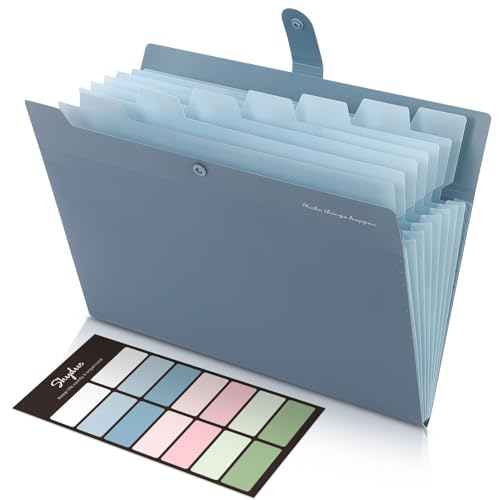
Where to Buy the Best Document Organizer for Students Under $20
Each pick below links to the same Creators API-verified Amazon listing from its name link and its check link, so you can confirm pocket counts and sizes against your course load before spending anything. Purchases made through links on reviewstook.com support our testing and writing at no extra cost to you.
- Best Overall for Students: SKYDUE Expanding File Organizer with 8 Pockets — Check on Amazon
- Best for Term-by-Term Coursework: Sooez Accordion File Organizer, 13-Pocket — Check on Amazon
- Best Budget All-Rounder: Amazon Basics Expanding Accordion File Organizer — Check on Amazon
- Best for a Full Course Archive: Sooez 24 Pockets Expanding File Folder — Check on Amazon
- Best Dorm Desk Tray: SUPEASY 5 Trays Paper Organizer Letter Tray — Check on Amazon
- Best for Shared Study Desks: Marbrasse 6 Tier Paper Organizer Letter Tray — Check on Amazon
Surviving the Semester With the Best Document Organizer for Students Under $20
Student paper has a life cycle that defeats good intentions. Handouts arrive daily, marked work returns in bursts, forms for housing, loans and placements appear twice a year with deadlines attached, and everything important seems to be required again, without warning, in the final week of term. Shopping for the best document organizer for students under $20 is really shopping for a system small enough to live in a dorm room or a shared flat, cheap enough to replace without tears when you move, and simple enough that you will still be using it in week eleven, when motivation is gone and the exams are close enough to touch.
This tier offers two formats, and most students need exactly one of them, chosen honestly. Accordion folders travel: they go to lectures, to the library, home for the holidays and back, holding subjects in labelled pockets. Desk trays stay: they sit on the one small desk a student actually owns and sort the week’s incoming paper into visible piles with jobs attached. A student whose problem is losing handouts between buildings needs the folder. A student whose problem is a desk that disappears under paper needs the tray. A student with both problems — which is most students by mid-term — should split this small budget across one of each rather than buying a single larger product that does neither job where the problem actually happens.
One boundary deserves stating before the picks, because students hold more irreplaceable paper than they realize: enrolment letters, loan agreements, tenancy contracts, certificates and identity documents. Nothing in this tier locks and nothing here is a fire product, and we will not dress these folders up as protection. Keep working copies in the systems below and keep the originals themselves in the safest place your housing offers, stepping up to the lockable options in Best Document Organizer For Students Under $150 when a document would be genuinely hard to replace. Everything else — the ninety-five percent of student paper that is coursework, handouts and admin copies — is exactly what this tier is for.
In this guide
Quick Picks
- Best Overall for Students: SKYDUE Expanding File Organizer with 8 Pockets — Eight labelled pockets match a typical subject load and travel in a backpack without becoming the backpack.
- Best for Term-by-Term Coursework: Sooez Accordion File Organizer, 13-Pocket — Monthly divider tabs and deeper pockets suit courses that run on a calendar of deadlines.
- Best Budget All-Rounder: Amazon Basics Expanding Accordion File Organizer — Thirteen waterproof-covered compartments for students who file admin and coursework in one place.
- Best for a Full Course Archive: Sooez 24 Pockets Expanding File Folder — Twenty-four pockets hold subjects plus admin, certificates and a year of statements in one shelf folder.
- Best Dorm Desk Tray: SUPEASY 5 Trays Paper Organizer Letter Tray — Five handled trays turn a small dorm desk into a visible in, revise, file and forms flow.
- Best for Shared Study Desks: Marbrasse 6 Tier Paper Organizer Letter Tray — Six mesh tiers give housemates and study groups one labelled tier each on a shared desk.
How These Picks Were Chosen
Every linked product in this guide was verified against the Creators API pick sheet for this cluster — brand, exact listing title and ASIN in agreement — before it could be recommended. Colour variants of a single model count once, never as separate picks, and products from other classes, such as locking boxes, fire-oriented cases and binder folio systems, were held back for the tiers where their construction belongs rather than squeezed into a student budget on the strength of a sale price. This site never prints fixed prices, because they change; the tier describes the class of organizer a student should be shopping, and the links exist so you can check the current figure yourself in seconds.
The student-specific filter came next. A pick had to survive the geography of student life: carried between rooms and buildings, stored on a shelf or in a crate during moves, and used in shared spaces where other people’s paper constantly tries to join yours. That favoured compact expansion over maximum capacity, labels included in the box over labels sold separately, and designs with no parts to lose. It also favoured systems a tired student can operate half-asleep in week eleven — because a filing system that needs energy will be abandoned precisely when the paperwork peaks before exams.
Ranking within the class weighed retrieval under pressure. Students do not browse their files; they raid them, usually looking for one specific handout, form or marked assignment while a deadline breathes down their neck. Label visibility and pocket logic therefore scored as heavily as raw pocket count, and the tray picks were judged on how honestly they support a weekly flow rather than how much paper they can stack. The result is a deliberately mixed list: four folders for four different filing personalities, and two trays for the two desk situations students actually live in.
Detailed Reviews: Six Organizers Sized for Student Life
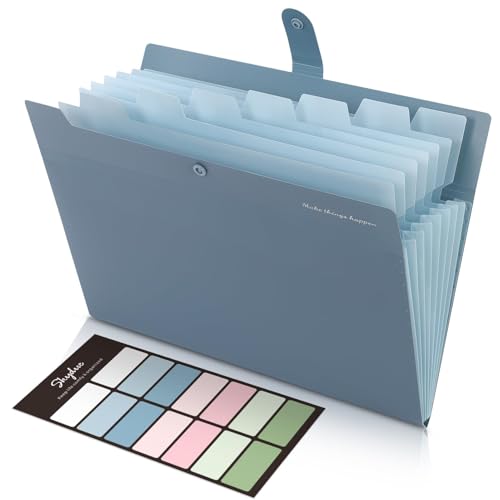
Best Overall for Students — SKYDUE Expanding File Organizer with 8 Pockets, Letter Size
Strengths
- Eight pockets match a real subject load — most students run five to eight courses, modules or subjects at once
- Labels are included, so the system works the day it arrives, mid-term, with no second purchase
- Slim expansion travels daily in a backpack and survives being pulled out on library desks and café tables
Trade-offs
- Eight pockets leave no room for a monthly admin scheme alongside subjects; admin needs its own plan
- Capacity strains on print-heavy courses where weekly handouts run to dozens of pages
- The verified sheet lists one colourway for this model, so personalizing means adding your own tape or stickers
| Format | Expanding accordion file organizer |
|---|---|
| Pockets | 8 |
| Paper size | Letter size |
| Included | Labels, per listing title |
| Colour in title | Blue |
The SKYDUE folder wins the student brief by being the right size for the actual job. Most students are not running a household archive; they are running a term. A pocket per subject, with perhaps one pocket given to admin — enrolment letters, timetable printouts, the forms that accumulate around housing and loans — is a complete description of a student’s active paper, and eight pockets describe it without waste. Because the folder is small, it lives in the backpack rather than on a shelf across the room, and proximity decides everything in student filing: paper gets filed when the folder is already in your hand at the end of the lecture, not when you remember it during a Sunday tidy that may never come.
The listing title names bills and receipts alongside school use, which points at the folder’s second student job: the paper of part-time work and independent living. Payslips, shift rotas, tenancy paperwork copies and bank letters fit the same eight-pocket logic if your course load is light, or justify a second folder if it is not — and at this tier, a second folder for life-admin is a sane purchase rather than an extravagance. Students living away from home for the first time consistently underestimate how much official paper adult life generates; giving it its own small folder, separate from coursework, is the cheapest organizational insight in this entire guide.
Its limit is the term’s end. Eight pockets hold a term’s active paper well, but a full year across two or three terms will burst it, and the correct response is archival, not force: at each term’s end, empty the folder into a labelled envelope or box file per subject, keep the marked work and the syllabus, recycle the duplicate handouts, and start the new term with the same folder, empty and familiar. A folder that is ritually emptied lasts for years of study. A folder that is never emptied becomes a brick by Christmas of the first year.
Best for: subject-per-term filing that travels daily between lectures, library and home / Not suited for: year-long archives or print-heavy courses in a single folder

Best for Term-by-Term Coursework — Sooez Accordion File Organizer, 13-Pocket Expanding File Folders, Letter A4
Strengths
- Monthly divider tabs match deadline-driven courses, placements and part-time work rotas that run on a calendar
- Deeper pockets keep tab labels visible above the paper, so finding a month never means fanning every section
- Thickened cover gives the folder enough structure to stand on a dorm shelf between uses
Trade-offs
- Subject-based filers will relabel some monthly tabs, which is fine but worth knowing before you buy
- Slightly bulkier than the slimmest eight-pocket designs when carried every day
- Overlaps the Amazon Basics pick in role; choose one thirteen-pocket folder, not both
| Format | Accordion file organizer, expanding |
|---|---|
| Pockets | 13 |
| Paper size | Letter / A4 |
| Dividers | Monthly divider tabs, per listing title |
| Cover | Thickened cover, per listing title |
Some students think in subjects; others think in weeks. If your course runs on a calendar — coursework deadlines, placement blocks, lab rotations, monthly assessments — this Sooez folder’s monthly skeleton will feel like it was designed around your timetable. File by month and retrieval becomes trivially easy, because student questions are so often date-shaped: the handout from the October lectures, the feedback returned in November, the form due in January. The deeper pockets are the detail that makes the scheme survive contact with real paper, since the tabs stay visible above the sheets instead of drowning beneath them, which is the exact failure that makes students abandon monthly filing in other folders.
The A4 compatibility in the listing title matters for students more than for almost any other group. Coursework, exchange-programme paperwork, international admissions documents and many universities’ printed materials come in A4, while US-based students default to letter. A folder listed for both swallows the mixture without the taller sheets peeking out, catching and folding — a small daily friction that reliably trains students to leave the international paperwork in a separate, doomed pile. If any part of your study life crosses a border, treat dual sizing as a requirement, not a bonus.
Choose between this and the Amazon Basics folder by asking how you search. Search by “when” and this is your folder. Search by “what” — subject, topic, document type — and the plainer Basics design or the eight-pocket SKYDUE will serve you better. There is no wrong answer, but there is a wrong purchase: buying both thirteen-pocket designs to hedge, then splitting the year across two systems and being able to find things in neither. Pick the skeleton that matches your brain and commit for the academic year.
Best for: calendar-driven courses, placements and students who retrieve paper by date / Not suited for: strict subject filers who will fight the monthly tabs all year

Best Budget All-Rounder — Amazon Basics Expanding Accordion File Organizer, Letter Size, 13 Compartments
Strengths
- Thirteen compartments cover subjects plus admin in one folder for students who refuse to run two systems
- Waterproof cover forgives the realities of student housing: shared kitchens, damp rooms and bag leaks
- Generous expansion still closes over a heavy month of handouts and returned work
Trade-offs
- No handle is named in the listing title, so a full folder is a two-handed carry
- Plain styling gives no visual cue separating this folder from a housemate’s identical one without added labels
- Thirteen sections invite over-categorizing; students with five subjects should leave pockets empty rather than inventing splits
| Format | Expanding accordion file organizer |
|---|---|
| Compartments | 13 |
| Paper size | Letter size |
| Cover | Waterproof, per listing title |
| Colour in title | Black, 1-pack |
The Amazon Basics folder is the one-folder answer for the student who wants coursework and life-admin in a single place and is honest enough to maintain one system well rather than two systems badly. Thirteen compartments divide naturally: a pocket per subject for the typical load, then the remainder for the machinery of student life — housing, money, work, health, and one pocket for the unclassifiable paper that every adult accumulates and every filing system must forgive. Set up that way, the folder becomes the single answer to “where is it?” for an entire academic year, which is a genuinely calming thing to own during exam season.
Student housing is hard on paper. Rooms are damp, kitchens are shared, bags get rained on between buildings, and drinks get knocked over desks with statistical certainty. The waterproof cover in the listing title is therefore not a luxury specification; it is the difference between a spilled coffee being an annoyance and it being the loss of a term’s marked work. The folder also stands upright on a shelf when reasonably filled, which matters in a dorm room where the shelf is above the desk and a folder that must lie flat will end up under the laundry pile, filing nothing, for weeks at a time.
Its discipline is restraint. Thirteen compartments tempt students to split subjects by topic, then by week, until retrieval requires remembering a taxonomy invented in September by a more optimistic person. Resist. One pocket per subject, one per life area, labels in the words you actually use when panicking — because retrieval always happens while panicking — and this plain folder will outperform cleverer systems for the whole degree. Pair it with a term-end emptying ritual like the one described for the SKYDUE, and graduate it to archive duty only when a course genuinely outgrows it, the case the twenty-four-pocket pick below exists for.
Best for: one-folder students combining coursework and life-admin for a full academic year / Not suited for: students who want the lightest possible daily carry

Best for a Full Course Archive — Sooez 24 Pockets Expanding File Folder, Letter/A4
Strengths
- Twenty-four pockets hold a subject per pocket plus admin, certificates and statements without any section doubling up
- Expandable cover keeps the folder shelf-friendly even as final-year project paperwork swells some pockets
- Letter and A4 sizing covers mixed domestic and international study paperwork in one archive
Trade-offs
- A loaded twenty-four-pocket folder is a shelf resident; nobody carries this to lectures
- Labelling twenty-four pockets up front is a real sitting-down task, and skipping it wastes the format
- The desktop accordion stands best with some contents, so a first-term student may find it emptier than its promise
| Format | Expanding accordion file folder |
|---|---|
| Pockets | 24 |
| Paper size | Letter / A4 |
| Cover | Expandable cover, per listing title |
| Colour in title | Black |
Some students genuinely outgrow the term-sized folder: final-year projects with a year of drafts and data, professional courses with placements and portfolios, postgraduate study where last year’s material is this year’s foundation. The twenty-four-pocket Sooez is the archive those students graduate into. Run it as the shelf master — subjects in the front run of pockets, then admin, certificates, statements and the growing folder of achievement paperwork that students accumulate and employers later ask about — and let a slimmer folder do the daily carrying. Two-tier student filing, working folder plus archive folder, mirrors how professionals separate active files from records, and learning it during study is a quiet career skill.
The A4-and-letter sizing earns its keep here for the same reason as in the thirteen-pocket pick, amplified: archives are where international paperwork ends up. Exchange semesters, overseas placements, foreign-language certificates and admissions correspondence for the next stage of study all arrive in A4 and all need keeping for years. An archive folder that takes both sizes without folded corners is the difference between an archive and a pile with dividers. Label the pockets for the long term — subject names and life areas, not this term’s module codes — because archive labels are read by a future you who has forgotten the codes entirely.
The honest warning is about timing. First-term students should not start here; an archive bought before there is anything to archive becomes a wide, slumping temptation to keep everything, and keeping everything is just hoarding with labels. Buy this folder when a smaller one is demonstrably full of paper you still need — usually in the second year, or when a project course begins — and transfer the system, labels and all, rather than redesigning. Archives reward continuity above every other virtue.
Best for: final-year, project-heavy and postgraduate students building a multi-year shelf archive / Not suited for: first-term students or daily carrying

Best Dorm Desk Tray — SUPEASY 5 Trays Paper Organizer Letter Tray with Handle
Strengths
- Five trays fit the small desk that is the entire office of most dorm rooms and shared flats
- Handled mesh design survives termly moves between rooms, halls and home better than rigid plastic rivals
- Open tiers make the week’s paper visible: to do, in progress, to file, forms and finished
Trade-offs
- Open trays display your paperwork to anyone in the room, so personal and financial documents must bypass them
- Five trays is one fewer live category than the six-tier pick, which shared desks may miss
- Trays sort paper in motion only; nothing here is stored, protected or private
| Format | Mesh desk letter tray with handle |
|---|---|
| Trays | 5 |
| Paper size | Letter |
| Settings named in title | Office, home, classroom, school |
The tray picks in this guide are the incoming-paper layer of a student’s system — the sorting surface paper crosses before it becomes filed coursework — and the SUPEASY is the right size for where students actually work. A dorm desk is typically also the dining table, the vanity and the charging station, and a sorter that respects that scarcity earns its place. Five trays run a complete student flow: new handouts in, work in progress, revision material, forms and admin awaiting action, and finished paper awaiting the weekly filing pass into a folder. Because the tiers are open, the desk itself reports your workload at a glance, and an empty “forms” tray the night before a deadline is a small, earned pleasure.
The handle is a student feature in disguise. Student desks get cleared constantly — for a friend’s laptop, for a group project, for the termly move when everything you own must fit into a car. A sorting station that lifts away as one unit, contents intact, survives those clearances; one that must be emptied tray by tray gets emptied exactly once, into a bag, forever. The listing title’s classroom and school settings also hint at the build’s tolerance for being wiped down and knocked about, which shared student housing will test thoroughly by November.
Privacy is the standing rule for this layer. Tenancy documents, bank letters and anything with personal data should travel straight from envelope to folder, never resting in an open tray in a shared room — not because housemates are villains, but because paper left visible becomes paper read, borrowed or binned by helpful tidiers. Used for coursework flow, where its contents are handouts and drafts, the SUPEASY is the best small-desk investment in this tier, and it pairs naturally with the SKYDUE: tray for the week, folder for the term.
Best for: dorm rooms and small desks running a visible weekly coursework flow / Not suited for: personal documents in shared housing, or any long-term storage

Best for Shared Study Desks — Marbrasse 6 Tier Paper Organizer Letter Tray, Mesh Desk File Organizer with Handle
Strengths
- Six tiers give a shared desk one labelled tier per housemate, subject group or study project
- Rigid mesh build wipes clean and shrugs off the sunlight and knocks of communal rooms
- A handle lets the whole station move between desk, table and shelf when the room changes purpose
Trade-offs
- Six tiers on a small solo desk crowd out working space; solo students should take the five-tray pick
- Open tiers protect nothing and display everything, so sensitive paper must never land here
- Shared tiers collapse into shared mess unless the labelling rule is agreed by everyone using the desk
| Format | Mesh desk letter tray / paper sorter |
|---|---|
| Tiers | 6 |
| Paper size | Letter / A4 |
| Carrying | Handle, per listing title |
| Colour in title | Black |
Shared housing creates a paper problem no folder solves: other people’s documents land on your desk, and yours land on theirs, and the household’s shared paperwork — bills, tenancy letters, the router contract — belongs to everyone and therefore to no one. The Marbrasse six-tier tray is the peace treaty for that desk. Assign tiers by person for a study group or a flat’s shared workspace, or run it solo in a bigger room as a six-stop flow with a spare tier for the group project. Either way, the rule that makes it work is printed nowhere on the product and matters more than the mesh: a tier is a name, not a shelf, and paper in the wrong tier is worse than paper in no tier.
The letter-and-A4 sizing in the listing suits the mixed paperwork of student houses, where course handouts, printed articles and household admin arrive in both sizes and previously ended up in one curling stack. Six open tiers also serve revision season surprisingly well for a solo student with the desk space: one tier per exam subject turns the tray into a countdown you can see, each tier thinning as its exam passes. That visibility is the tray format’s whole argument — folders hide progress, trays display it — and during revision, displayed progress is a morale feature, not an aesthetic one.
Set the same boundary as with every open sorter in this guide, stated once more because shared houses test it: nothing personal, nothing original, nothing financial rests in these tiers. The Marbrasse is the front door of a student paper system, excellent at receiving and routing, and the folders reviewed above are the rooms the paper actually lives in. Houses that also need to protect the tenancy and identity originals should route those through Best Document Organizer For Students Under $75 rather than improvising with desk furniture.
Best for: shared study desks, flat workspaces and revision-season subject sorting / Not suited for: small solo desks or any private and original documents
Comparison Table
| Pick | Format | Capacity | Paper | Link |
|---|---|---|---|---|
| SKYDUE 8-Pocket | Carry folder | 8 pockets | Letter | Check on Amazon |
| Sooez 13-Pocket | Term folder | 13 pockets, monthly tabs | Letter / A4 | Check on Amazon |
| Amazon Basics Accordion | All-round folder | 13 compartments | Letter | Check on Amazon |
| Sooez 24-Pocket | Archive folder | 24 pockets | Letter / A4 | |
| SUPEASY Letter Tray | Dorm desk sorter | 5 trays | Letter | |
| Marbrasse Letter Tray | Shared desk sorter | 6 tiers | Letter / A4 |
How to Choose the Best Document Organizer for Students Under $20 for Your Study Style
Start with how you search, because retrieval style predicts satisfaction better than any specification. If you look for paper by subject — the biology handout, the contract-law notes — buy pockets per subject: the SKYDUE for a normal load, the Amazon Basics if admin must live in the same folder. If you look by time — last month’s feedback, the October lab sheets — buy the monthly skeleton of the Sooez thirteen-pocket. If you already own a term of paper you cannot throw away and a course that keeps building on it, skip to the archive logic of the twenty-four-pocket folder. Students who choose against their own search habit spend the year translating between the system they bought and the brain they have, and translation is where filing goes to die.
Next, be honest about where your paper problem physically happens. Losing handouts between buildings is a carrying problem, solved by a folder that lives in the bag. A desk buried under paper is a sorting problem, solved by a tray that lives on the desk. Buying a bigger folder for a desk problem, or a tray for a carrying problem, is the classic student error, usually made in a September stationery enthusiasm that November quietly corrects. The general version of this guide, Best Document Organizer Under $20, works through the same choice for household paper, and the home-desk version at Best Document Organizer For Home Office Under $20 suits students whose study space doubles as a workplace.
Finally, plan the system’s year, not its first week. A student organizer must survive three predictable events: the mid-term paper surge, the exam-season raid, and the end-of-term move. Mid-term tests capacity, exams test retrieval, and the move tests whether the system can be emptied, archived and restarted in an afternoon. Any pick in this guide passes all three if it is set up with labels on day one and emptied ritually at term’s end. The product is the easy part; the ritual is the degree-level skill hiding inside a twenty-dollar purchase.
What Does a $20 Budget Actually Buy a Student?
It buys a working system for active paper and nothing beyond that: no locks, no fire-oriented construction, no furniture-grade durability. What it buys surprisingly well is behavioural leverage at the exact moments students lose documents — the end of a lecture, the night before a deadline, the move out of halls. A labelled pocket is a decision made once in September that saves a hundred small decisions all year, and a visible tray tier is a reminder that works in a shared kitchen at midnight without an app, an account or a charged phone.
Set durability expectations like a student, not like an office manager. A folder in daily service will typically last several terms before its expansion tires; a mesh tray, having no moving parts, will outlast several folders and several tenancies. Treat the folder as a renewable part of a permanent system: when it wears out, transfer the labels and the pocket logic to its replacement rather than redesigning, because the system — not the plastic — is the asset you have been building since the first term. Students who internalize that distinction stop shopping for organizers entirely by their second year, which is the surest sign the twenty dollars did its job: the purchase disappears, and the habit remains, quietly compounding through every term, placement and first job that follows.
How Do You Set Up a Student Filing System in One Afternoon?
Do the whole setup in one sitting, before the term’s paper arrives. Label every pocket or tier in the words you will use while stressed, write a one-line index on a card kept in the front pocket — what lives where, and what never belongs here — and then hold one sorting session for every loose sheet you currently own, filing or recycling each one. Starting complete matters: a system launched beside an existing unsorted pile competes with the pile, and the pile, being easier, wins. An afternoon in September is the cheapest insurance a student can buy against a panicked floor-spread of paper in May.
Maintain it with a weekly ten-minute pass attached to something that already happens — the Sunday reset, the laundry run, the weekly shop. Move tray paper into folders, thin the current subject pockets of duplicates, and file the week’s admin before it breeds. Problem: one subject’s pocket is bursting while others sit empty — fix by splitting that subject by term or by topic, not by cramming. Problem: paper is landing on the desk instead of the tray — fix by moving the tray to the landing spot, because the landing spot is where your system actually lives. Problem: you cannot find a handout you know you filed — fix the label, not your memory; the pocket name failed, so rename it in the words you searched with.
How Should Students Handle Coursework, Certificates and Money Paperwork?
Coursework divides into three kinds of paper with three different fates, and mixing them is what makes student folders swell. Reference paper — syllabi, reading lists, key handouts — lives in the subject pocket all term and is the first thing revision reaches for. Working paper — drafts, worksheets, practice problems — should be thinned ruthlessly at each term’s end, keeping samples that show your working and recycling the rest without ceremony. Returned paper — marked work and feedback — is the most valuable of the three and the most often lost; it deserves its own run of pockets or its own folder, because feedback is what the next assignment is marked against and what a grade appeal, if it ever comes, is built from.
Certificates and achievement paperwork follow the opposite rule from coursework: keep everything, forever, in one place. Degree certificates, transcripts, award letters, reference letters and completion records are the documents adult life requests at the worst moments — job applications, further study, visa processes — usually with a deadline. Working copies can live in the archive folder’s standing pockets; the originals themselves deserve the protection step described in Best Document Organizer For Students Under $200, because replacing a certificate is a slow correspondence with an institution that has no reason to hurry.
Money paperwork — loan letters, tenancy agreements, payslips from part-time work, bank correspondence — should be filed by academic year rather than by month, because student money questions are almost always year-shaped: this year’s loan, this year’s tenancy, this summer’s job. One pocket per year-area, emptied into a labelled envelope each summer, keeps the whole financial story of your studies retrievable in minutes. Students who also scan — and scanning money paperwork is the highest-value scanning a student can do — should mirror the pocket names in the scan folders, following the backup habit in How To Back Up Scanned Documents, so paper and digital tell the same story when a landlord or a loan company asks a question.
A final student-specific habit ties the paper system to the digital one most students already half-maintain. Course materials increasingly arrive as PDFs, portal downloads and photographed whiteboards, while the paper layer holds handouts, marked work and official letters. The two layers help each other only if they share names: a scan folder per subject that mirrors the folder’s pockets means a missing handout can be reprinted from the digital copy, and a lost file can be re-scanned from the paper one. Photograph marked work the day it is returned — the workflow in our phone-scanning guidance makes this a two-minute job — and file the photograph in the same subject folder as its paper original. By exam season, that mirrored habit quietly becomes the most valuable study asset you own: a complete, searchable-by-eye record of everything the course actually gave you, immune to the single lost folder or dead laptop that ruins an unmirrored student’s revision week. It costs nothing but the naming discipline, which is precisely the discipline this whole guide has been asking for in physical form.
Common Mistakes
The first mistake is buying the biggest folder in September enthusiasm
and inventing categories to fill it, then abandoning the taxonomy by November. The second is filing by a scheme you do not search by — months for a subject-thinker, subjects for a calendar-thinker. The third is resting personal and financial documents in open trays in shared housing, where visible paper gets read, moved and occasionally recycled by other people. The fourth is never emptying the folder, so three terms of paper compress into an unsearchable brick. The fifth is keeping originals — certificates, signed tenancy agreements — in the same flimsy working layer as handouts, when those few documents deserve genuinely safer storage. The sixth is buying a second organizer instead of finishing the setup of the first: labels, index card and one complete sorting session are where the value was hiding all along.
Final Recommendation
For most students, the SKYDUE eight-pocket folder is the right single purchase: one pocket per subject, labels included, small enough to live in the bag where filing actually happens. Add the SUPEASY tray if your desk, rather than your bag, is where paper goes to disappear, and graduate to the Sooez twenty-four-pocket archive only when a course or a final-year project has honestly outgrown term-sized storage. Calendar-driven students should take the monthly Sooez instead of the SKYDUE and never look back. Whichever you choose, spend the first afternoon on labels and one complete sort, and the last afternoon of each term on the emptying ritual — those two afternoons, repeated yearly, are worth more than any upgrade. When you are ready to protect the certificates and contracts the system has collected, the next step is mapped in Best Document Organizer For Students Under $50.
Frequently Asked Questions
Should a student file by subject or by month?
By whichever you search by. If you think “the biology handout”, file by subject with a pocket per course. If you think “the October feedback”, file by month with a tabbed folder. Mixed loads can run subjects in a carry folder and months in an archive folder, but one folder should only ever have one skeleton.
How many pockets does a student really need?
One per subject plus one or two for admin covers most loads: eight pockets for a typical term, thirteen for coursework plus housing, money and work in one folder. Twenty-four is archive territory for final-year and postgraduate students. Extra pockets beyond your real list create ambiguity, not capacity.
Is a tray worth it in a tiny dorm room?
Yes, if your desk is where paper piles up, because a five-tray sorter occupies roughly one textbook’s footprint and converts a pile into a flow. No, if your problem is losing paper between buildings — that is a folder problem, and the tray will simply give the pile shelves.
What should students do with paper at the end of each term?
Hold a thirty-minute emptying ritual: keep marked work, feedback, syllabi and anything a future course builds on; recycle duplicate handouts and routine worksheets; move the keepers into a labelled envelope or the archive folder by subject. Start the new term with the same folder, empty, labels intact.
Where should certificates and official letters live?
Working copies can live in a standing pocket of your archive folder. Originals deserve safer storage than this tier provides — no pick here locks — so keep originals in the most secure place your housing offers and consider the lockable tiers as your collection of originals grows.
Can one organizer handle coursework and part-time job paperwork?
Yes, at thirteen pockets: subjects in one run, then housing, money and work in the rest. If both loads are heavy, two smaller systems beat one bursting one — a subject folder for study and an admin folder for life — because retrieval speed is the whole point of filing.
How do I stop housemates’ paper mixing with mine?
Give shared paper its own visible home — one tier of a shared tray or one labelled folder for the house — and keep your personal system closed and in your room. Most mixing is not malice; it is paper landing where there is space. A labelled house tier removes the excuse.