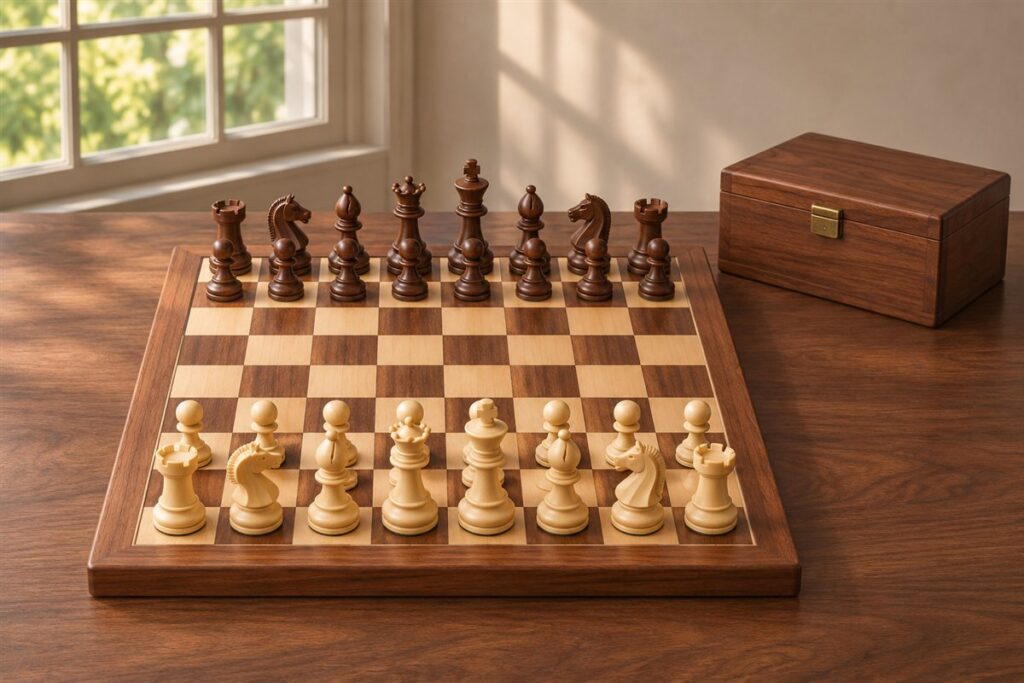
A good tournament bag holds the chess items your child needs, a few comforts for long days, and quiet things to do between rounds. Pack it the night before using a checklist so the morning stays calm.
The Chess Essentials
- Set and board: only if the event asks players to bring their own. Check the announcement first.
- Chess clock: same rule. If you bring one, practice setting it at home and pack spare batteries.
- Pens: two or three, since writing moves may be required, and one always seems to run out.
- Score sheets or a notebook: some events provide sheets, but a small notebook is a useful backup.
- Entry details: a printed confirmation, membership information if the event asks for it, and the event address.
Comfort and Food
- A refillable water bottle.
- Light snacks that are not messy, such as fruit, crackers or sandwiches. Check whether the venue allows food in the playing hall.
- A packed lunch if the schedule has a short gap between rounds.
- A sweater or light jacket, since playing halls can be cool.
- Tissues, hand wipes and a small bag for rubbish.
Things for Between Rounds
Waiting is part of every event, and a bored child can lose focus before the next game. Pack items that are calm and quiet.
- A small book or magazine.
- A pocket puzzle book or a few printed puzzles.
- A deck of cards or a small travel game.
- A drawing pad and pencils.
- Headphones, if the venue allows personal devices in the waiting areas.
Avoid loud toys, and ask your child before the day about what they would like to bring, so the bag feels like theirs.
Parent Extras
- Cash or a card for venue snacks and parking.
- A phone charger or power bank.
- A folding chair or cushion if seating is limited.
- A comfort item or a small treat for after the last round.
Label the bag and the bigger items with your child’s name, because many families bring similar gear.
A last tip: let your child carry and pack the bag with you. Knowing where each item lives makes the day calmer, and it gives them a small sense of ownership before the first round.
Reading the Event Notice Before You Pack
The most useful packing step happens before you touch the bag: read the event announcement carefully. Organizers usually say whether boards, sets and clocks are provided, what time check-in closes, how many rounds there are and whether spectators may enter the playing hall. They may also state rules about food, devices and parent seating.
Make a short list of anything the notice asks you to bring or avoid. Some events limit what players can carry into the playing area, so a smaller bag may be handy for the hall, with the larger bag left in a designated area. If the notice is unclear, email the organizer a day or two ahead rather than guessing.
- Note the start time, round schedule and breaks.
- Check the rules on notation: pen and paper, or electronic devices.
- Look for guidance about food and drinks in the playing area.
- Confirm parking, entry and where parents can wait.
Photograph or print the key details and keep them in the bag. If your phone battery runs low, a paper copy still tells you the room number and schedule.
Clothing and Comfort Planning
Comfort helps concentration. Dress your child in layers, since playing halls can be warm when crowded or cold when air conditioning runs strongly. Choose comfortable shoes, because many children walk between rooms and stand often. Avoid clothes with itchy tags or stiff fabrics that distract during a long game.
Think about the extremes of the day. A spare shirt can rescue a spill, and a light jacket helps in a cold room. Some events have a dress expectation, though many are casual, so check the notice. For hot weather, include a hat or sun protection if you will walk outdoors between rounds.
- Pack one spare top in a plastic bag.
- Include socks if the weather is wet.
- Bring tissues and a small pack of wipes.
- Add any personal items your child needs, such as glasses or a case for them.
Let your child try the outfit in advance, so you can fix any discomfort before the day.
Food and Hydration Strategy
Long events can stretch across many hours, and hunger affects mood and focus. Plan steady, simple food rather than a big meal at once. Light snacks every couple of hours keep energy even. Choose food that is neat, does not need refrigeration for long and will not trigger allergy rules at the venue.
Water is the main drink. A refillable bottle with a secure lid prevents spills near boards and clocks. Sugary snacks and drinks may give a quick lift followed by a drop, so balance them with more filling items. Pack what your child already likes and tolerates, and avoid trying new foods on tournament day.
- Fruit, crackers, sandwiches, cheese or plain bars are easy choices, subject to allergies.
- Use a small insulated bag if food needs to stay cool.
- Pack napkins and a bag for waste.
- Check venue policy on outside food and nut restrictions.
Plan lunch timing around the schedule, and have a quick option ready if rounds run late.
Managing Nerves and Downtime
Tournaments can be exciting and stressful, especially for a child’s first events. Bring items that help your child feel settled. A familiar book, a favorite small toy or a quiet game can ease nerves before a round. Talk through the routine of the day so there are fewer surprises, such as where to sit, how to report results and whom to ask for help.
Between rounds, offer a short walk, a snack and a chance to relax, rather than a long review of the last game. Avoid dissecting results while emotions are high. Encourage your child to shake hands, say thank you and move on to the next round with a clear mind.
- Agree on a simple signal for when your child needs a break or help.
- Keep post-game talk short and kind.
- Offer a quiet space to rest if one is available.
- Remind them that learning counts as much as results.
The aim is for the day to feel manageable and even enjoyable, regardless of the scores.
After the Event: Restock and Review
When you get home, empty the bag and note what worked. Wash the bottle, remove food waste and replace used items such as pens and tissues. Make a quick list of what you wished you had and what you never used, then adjust the packing list for the next event.
This is also a good moment to talk with your child. Ask what they enjoyed, what felt hard and what they would like to try differently. You may discover that a favorite snack was not needed or that a quiet activity made a big difference. Over several events, the checklist becomes personal and quick to follow.
- Check batteries in the clock and replace them if needed.
- Count pieces in the set to be sure none are missing.
- Keep a printed checklist in the bag pocket.
- Store the bag in one place so it is ready to grab.
A ready bag also lowers stress when a last-minute event comes up.
FAQ
Should my child bring a phone to the event?
Many events ask that phones stay off or out of sight during games. Read the rules, and if a phone comes along, keep it in the bag.
How much should we bring for a one day event?
Think in terms of one bag. Chess items, a layer, water and snacks, and two or three quiet activities cover most days.
Should my child bring their own set and clock?
Only if the event notice asks for it. Many tournaments provide equipment, so check before packing to avoid carrying extra items.
What snacks are best for a long tournament day?
Simple, neat items your child already enjoys, such as fruit, crackers or sandwiches. Check allergy rules and avoid trying new foods that day.
Can parents stay in the playing hall?
This depends on the event. Many restrict the hall to players and officials, so read the rules and find the parent waiting area.
How early should we arrive?
Aim to arrive well before check-in closes, so you have time to find the room and settle. The event notice should give the time.
What should I do if my child is nervous?
Keep routines familiar, bring a calming activity and talk through the day beforehand. Offer reassurance and keep conversation after games short.
Is a separate small bag useful for the playing hall?
It can be if the venue limits what players carry in. Keep essentials like pens and water in the small bag and leave the rest in the parent area.
What if I forget something?
Ask the organizers, as they often have spare pens or score sheets. A short list kept in the bag helps prevent most gaps.
The Short Version
Pack the chess items the event requires, add water, food and a layer, and bring a few quiet activities for the waiting time. Check the event notice for what is provided, and pack the evening before.