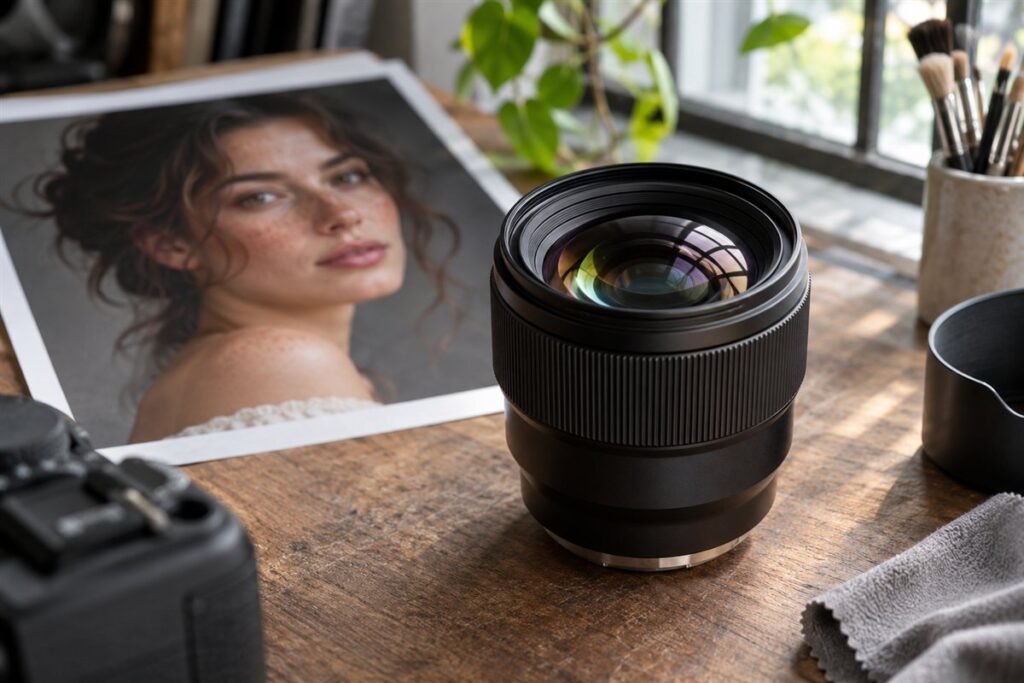
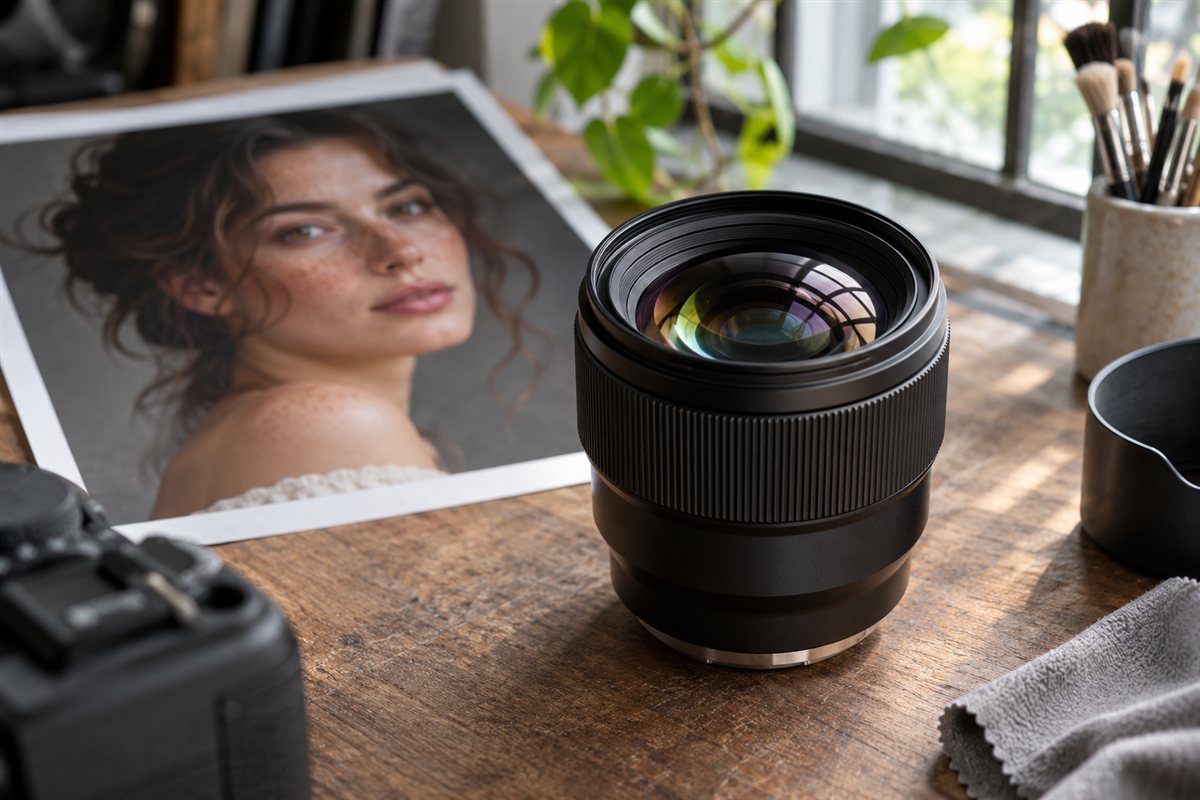
An Art lens is a lens from Sigma’s Art series, one of three product lines the company uses to organize its photo lenses. The Art label signals a focus on optical quality and creative control over small size or low weight. This guide covers what the label means in general terms and how to decide whether such a lens fits your shooting.
The Three Sigma Lines
Sigma groups its modern lenses into lines named Art, Contemporary and Sports. Each line has a different goal, and the names help buyers sort the catalog quickly.
- Art: aimed at image quality, often with wide maximum apertures and a more substantial build.
- Contemporary: aimed at a balance of size, weight and performance.
- Sports: aimed at action work, usually with longer focal lengths and weather sealing claims from the maker.
Specific features differ lens by lens, so treat these as general descriptions and read the maker’s page for the exact model.
In this guide
What Art Lenses Tend To Offer
Art lenses are often prime lenses with wide apertures, such as f/1.4 designs, though some zooms carry the label too. Photographers usually look at them for sharpness across the frame, smooth background blur and solid construction.
The tradeoff is size. A lens that is designed around optical performance usually needs more glass, and more glass means more weight. If you carry gear all day, test how a lens feels in your hands at a shop before deciding.
Who Might Choose One
- Portrait shooters who want shallow depth of field and detail in the subject’s eyes.
- Landscape and astro shooters who value wide, fast lenses for night skies.
- Studio and product shooters who work from a tripod, where weight matters less.
- Photographers moving between mounts, since Sigma offers many designs for several systems.
Things To Check Before Buying
- Mount: confirm the version matches your camera system.
- Autofocus behavior: compare how the lens works with your body, since third-party lenses can behave differently from the brand’s own.
- Weight and balance: make sure your body and bag handle it comfortably.
- Filters: check the front thread size so you can plan accessories.
- Firmware: some lenses can be updated through a dock or adapter, so look at what the maker offers.
The Size and Weight Trade-off in Practice
Lenses built around optical performance tend to be larger because the designer uses more glass elements, larger elements and sturdier mechanics. A wide-aperture design also needs a big front element to gather light. The result is a lens that can feel substantial in the hand, particularly on smaller mirrorless bodies.
Think about how that plays out in daily use. A heavy prime can make a light camera feel front-heavy, tire your wrist on a long day and take up more bag space. On a tripod, studio stand or gimbal, weight matters less, though a gimbal may have a payload limit. For travel, you might weigh each lens against the shots it makes possible.
- Check the weight and length on the maker’s page, then compare to lenses you already own.
- Test the lens on your camera in a shop and walk around with it for a few minutes.
- Consider a camera grip, a better strap or a hand strap to improve balance.
- Think about whether you would leave it at home when you want a lighter bag.
Some photographers accept the weight because they prefer the rendering. Others find that a smaller lens gets used more often, and therefore produces more pictures. Honest thought about your habits helps more than any general rule.
Wide Apertures and Depth of Field
Many lenses in this line have wide maximum apertures, and these give two main benefits: more light and a shallower depth of field. More light allows faster shutter speeds and lower ISO in dim places. A shallow depth of field allows you to isolate a subject from the background.
The same feature has costs. At a wide aperture the in-focus area is very thin, so focus errors are more obvious. Portraits need accurate placement on the eyes, and moving subjects are harder to keep sharp. Many photographers stop down a little to get better sharpness across the frame, and to improve the depth of field on the subject. Test your lens at several apertures, and learn which works best for your style.
Also think about how often you will use the widest setting. If you rarely shoot below f/2.8, a lens with a much wider maximum aperture may add weight and cost without much gain. If you frequently shoot portraits, events and night scenes, it can be a major advantage. Be careful with marketing language, and focus on how you shoot.
Autofocus and Camera System Fit
An Art lens is a third-party lens for many camera systems, so its autofocus depends on how well it communicates with your camera. Older designs for DSLRs rely on the camera’s focus module, and calibration may be needed. Newer mirrorless designs use the camera’s sensor for focusing, which tends to be more consistent, though behavior still varies by body and firmware.
Before buying, check the maker’s page for compatibility with your body. Look for notes on supported features such as eye detection, subject tracking, continuous shooting speeds and in-body stabilization. Some features may be limited or unavailable on certain bodies, so verify instead of assuming. If you use an adapter to connect a lens from one mount to another, check what functions remain.
Firmware updates matter. A lens may need an update to work with a new camera, and some makers provide a dock or a USB connection for this. If you do not want to update lenses yourself, ask how the process works and whether it is simple. For a DSLR, learn how to use autofocus microadjustment, if your camera has it, because wide-aperture lenses show focus errors more clearly. The right match between lens and body makes the real difference in daily use.
Used and Older Art Lenses
The Art series has run for years, so many lenses are available second-hand. A used lens can be a good way to reach a high level of optical performance at a lower cost, but it needs a careful check.
Look at the front and rear glass for scratches, haze and fungus, using a bright light and viewing from different angles. A little dust inside is common and rarely matters, but heavy haze or cloudy patches reduce contrast. Check the aperture blades for oil, and test the aperture by stopping down and looking from the front. Turn the focus ring and listen for noises. Check that any switches work and that the mount is not worn.
- Test autofocus at near, middle and far distances.
- Shoot a flat target at the widest aperture to look for softness on one side.
- Confirm that the mount version matches your camera, because some lenses can be converted by the maker and others cannot.
- Ask about the warranty, return policy and service history.
Be aware of the difference between older DSLR designs and newer mirrorless designs. An older lens may need an adapter for a mirrorless body, which can change size and function. Compare the total cost and weight with a native option.
Art Versus Contemporary and Sports Choices
Understanding the three lines helps you place an Art lens in your own plans. If you value image quality and are happy with a larger lens, Art is a sensible starting point. If you prefer a lighter setup for travel and walking, a Contemporary lens may fit better. If you shoot sport and wildlife and need long reach and robust handling, look at the Sports line.
These are tendencies, not strict rules. The lines share design ideas, and some lenses blur the boundaries. Read the product page for each lens and note its weight, aperture, construction and features, instead of relying on the line name alone.
Ask yourself a few questions. What do I shoot most? How far do I carry gear? Do I work from a tripod? How important is weather resistance? What is my budget tier: modest, mid-range or high-end? Write down your answers and use them to narrow the choice. For a first purchase, a single well-chosen lens that matches your main subject is more valuable than a bag of lenses you rarely use. Over time, add lenses where your current kit falls short. This approach keeps spending sensible and gives you the experience to judge what suits you.
Reading the Name on the Barrel
Lens names look like code, but they follow a pattern once you know what to look for. A typical Art lens name lists a focal length, a maximum aperture, a line name and a few letters about its design or mount type. The focal length tells you how wide or narrow the view is. The aperture figure, such as f1.4, tells you how much light the lens can gather when wide open. The line name, Art, tells you which of the three families the lens belongs to. Extra letters often point to whether the lens was designed for a mirrorless camera or for a traditional SLR system.
Learning to read these labels helps you avoid buying the wrong version. Two lenses with the same focal length and aperture can differ in mount, size, weight and optical layout. Always check that the listing names your exact camera mount, and read the maker’s own description before you order.
What to confirm on any listing
- The mount that matches your camera, not just the brand family.
- Whether the lens covers a full-frame sensor or a smaller one.
- The filter thread size, if you plan to use protective or creative filters.
- Whether a hood and a case are included.
Where Wide Apertures Pay Off
Many Art lenses are built around large maximum apertures, and that has practical meaning. A wide aperture lets in more light, so you can use lower sensitivity or faster shutter speeds in dim places. It also produces a shallower depth of field, which isolates subjects from the background. Portraits, street scenes at night, small events and still life are classic uses.
Wide apertures bring challenges too. The zone of sharp focus becomes very thin, so a small focusing mistake can ruin a frame. Many photographers stop down a little from the maximum for important pictures, trading a bit of light for greater consistency. Learn how your own lens looks at its widest setting and one or two steps smaller, and choose according to the job.
- Shoot a subject at the widest aperture and note how sharp the eyes or key detail appears.
- Repeat at one stop smaller, then two, and compare.
- Decide on a default setting for general work.
- Keep the widest setting for moments when light or background separation matters most.
Matching Focal Length to Your Subject
Choosing an Art lens begins with the picture you want to make, not with the label. Wide lenses suit landscapes, architecture and interiors. Standard focal lengths feel natural for everyday scenes and documentary work. Short telephoto lengths flatter faces and compress backgrounds. Longer focal lengths bring distant subjects close and are valuable for sports and wildlife.
| Shooting type | Typical focal length range | Why |
|---|---|---|
| Landscapes and interiors | Wide | Fits more into the frame |
| Street and travel | Wide to standard | Natural view, easy to handle |
| Portraits | Standard to short telephoto | Flattering proportions and blur |
| Events in low light | Standard with a wide aperture | Light gathering and subject isolation |
| Distant subjects | Telephoto | Brings the subject closer |
If you own few lenses, a versatile standard prime or a quality zoom may serve you better than a specialist optic. Consider what you shoot most, not what looks impressive in a bag.
Ergonomics and Daily Handling
Large, optically ambitious lenses are heavy, and that affects how often you carry them. Before buying, think about your usual outings. A lens that stays at home because it is too bulky gives you nothing. Consider your strap, your bag and your comfort holding the combination for an hour at a time.
Balance also matters. A heavy lens on a small camera body can feel front-heavy, making steady handheld shooting harder. Some photographers add a grip to improve handling, while others accept the weight as the cost of image quality. If possible, handle the lens in a shop with your own camera to feel the combination, and check how the focus and zoom rings turn.
Features worth testing in person
- Smoothness and size of the focus ring
- Presence of switches and whether they are easy to reach
- Hood fit and how easily it reverses for storage
- Lens cap grip and ease of removal
Looking After a Precision Lens
A good lens can last for many years with simple care. Keep both caps on when not in use, store in a dry place with moderate temperature, and use the hood when shooting, which protects against stray light and minor bumps. Avoid changing lenses in dusty or windy places, and point the camera down during changes to reduce the chance of debris entering.
For cleaning, use a blower first to lift away loose particles, then a soft brush and a clean microfiber cloth with an approved lens cleaning fluid applied to the cloth, never directly to the glass. Follow the maker’s guidance for any weather resistance claims, since sealing differs between models. If you hear grinding noises, notice persistent focus errors or see fungus inside the lens, ask a qualified service center for advice rather than opening the lens yourself.
Optical Qualities in Plain Language
When photographers praise a lens, they usually mean a handful of qualities. Sharpness is the ability to resolve fine detail, and it is judged both in the center and toward the corners. Contrast describes how clearly tones are distinguished and how crisp the image feels. Color rendering covers how natural or neutral the hues look. Distortion measures how straight lines bend, and chromatic aberration shows as color fringes along high-contrast edges.
Modern cameras can correct some of these flaws automatically through profiles, which is why a lens that is optically ambitious on paper may still look clean in your files. Keep in mind that sharpness charts and sample photos rarely tell the whole story. Look at how a lens handles bright lights at night, how it renders out-of-focus highlights, and how it behaves when you shoot into the sun. Those traits shape the character of your pictures as much as any test chart.
Questions to ask about any sample image
- Was it shot wide open or stopped down?
- Has it been heavily edited or sharpened?
- What camera and settings were used?
- Does it show the kind of scene I actually shoot?
Using an Art Lens for Video
Many people shoot video as well as stills, and a lens with a wide aperture and attractive background blur appeals to them. Consider a few practical points. Smooth, quiet focusing helps when recording with built-in microphones. Focus breathing, where the view shifts slightly as you change focus, can be distracting in video. A stable, balanced lens helps when shooting handheld or on a gimbal, where weight matters.
Check whether your camera supports the lens autofocus features during recording, and whether any firmware updates are required. Manual focus lenses with a long, smooth throw can be wonderful for deliberate video work, but they need practice.
Thinking About Total Cost and Value
A lens is often kept longer than a camera body, so think of it as a long-term investment. Optical quality tends to hold its worth across several camera generations, while bodies change quickly. Buying a quality lens can therefore improve your results on whatever camera you use next, provided the mount remains compatible.
Weigh this against your actual needs. If you rarely shoot in low light or need little background blur, a more modest lens may deliver nearly the same pictures at lower cost and weight. Buying the most ambitious option is not always the smartest choice. Rent a lens first if a rental service exists in your area, and compare the experience against the one you own.
Common Buying Mistakes
One mistake is purchasing for specifications alone, without considering how often the lens suits real situations. Another is ignoring mount compatibility, particularly when buying used. A third is expecting a single lens to cure every image problem. Lighting, technique and processing matter as much as optics.
People also sometimes forget the extra equipment that a new lens may need, such as a bigger bag, new filters, or a firmware update. Check what accessories you will need, and consider whether your camera body can take full advantage of the lens.
Glossary
- Prime lens: a lens with a fixed focal length.
- Zoom lens: a lens that covers a range of focal lengths.
- Aperture: the opening in the lens that controls light and depth of field.
- Vignetting: darkening toward the corners of the frame.
- Focus breathing: a slight change in view as focus moves.
- Bokeh: the look of out-of-focus areas.
A Short Decision Checklist
- Write down the three subjects you photograph most.
- Pick the focal length that suits them best.
- Confirm the mount and sensor coverage.
- Think honestly about weight and daily carrying.
- Compare the listing details with the maker’s own pages.
- Check the return window and the warranty terms.
FAQ
Does Art mean the lens is for artistic photography only?
No. It is a product line name. Art lenses work for any genre, from portraits and weddings to landscapes and product work.
Are Art lenses better than the camera brand’s own lenses?
Not automatically. Each maker has strong and weak designs. Compare specific models on size, features and compatibility with your body rather than relying on a line name.
What do the letters DG, DN and DC mean in Sigma lens names?
They usually describe the sensor coverage and design type. DG is generally for full-frame and DC for crop-sensor cameras, while DN indicates a mirrorless design. Check the maker's page for the exact meaning.
Do Art lenses work on both full-frame and crop bodies?
Many full-frame lenses can be mounted on crop bodies, where the view narrows. Lenses designed only for crop sensors may not suit full-frame bodies, so check the listing.
Do I need a dock for my lens?
A dock is an optional accessory used for firmware updates and some adjustments on certain lenses. Check whether yours supports it and whether you want it.
Are Art lenses weather sealed?
It varies by model. Read the maker's page for any statement about dust and splash resistance, and do not assume it applies to every lens.
Is an Art lens a good choice for video?
It can be, but check autofocus smoothness, focus breathing, noise from the focus motor and weight for your rig. Test footage on your own camera if possible.
How do I clean a large front element?
Use a blower to remove dust, a soft brush for particles and a clean microfiber cloth with a small amount of lens cleaner for marks. Avoid pressing hard on the glass.
Should I buy a protective filter?
It is a personal choice. A filter protects against scratches and splashes, but a poor one may add reflections, so choose quality and remove it when shooting into bright lights.
Living With an Art Lens: A Season in Practice
The first week with an Art lens is usually about the specifications: the wide aperture, the crispness, the glow of a new tool. The first season is about the habits it quietly rewrites. Photographers find themselves planning shoots around the lens’s strengths, choosing the hour when its wide aperture turns a dull room into a stage, or the location whose background will melt the way this particular lens melts backgrounds. They also learn its demands. The shallow focus that flatters a portrait punishes casual technique, so focusing discipline sharpens: placing the point deliberately, checking the eye at full magnification, taking the extra frame when a subject sways. Many owners report that an Art lens made them slower and more deliberate photographers, not because the lens is difficult, but because it rewards intention so visibly that careless shooting starts to feel like a waste of its abilities.
Weight writes its own chapter. A lens that feels reassuringly solid in a shop can feel different at the end of a wedding, a city walk or a mountain path. Seasoned owners adapt rather than complain: a better strap that carries the load across the body, a bag that lets the lens ride close, a decision made at the door about whether today’s photography justifies today’s weight. Some keep a smaller lens for the days when it does not, and this two-lens honesty is a sign of experience rather than disloyalty. The Art line promises optical ambition without much compromise, and the photographer’s part of the bargain is to organise their carrying, their technique and their expectations around that ambition.
How Art Lenses Behave Across Subjects
Portrait photographers prize these lenses for the combination of a sharp focal plane and a calm background, which separates a subject without the nervous rendering that distracts from a face. The same qualities serve product and food photography, where a detail must sit crisp against a soft suggestion of context. Landscape photographers use the wider Art lenses differently, stopping them down and valuing their even performance toward the corners, which shows that a lens designed for wide-aperture excellence does not forfeit its manners at the apertures landscapes demand. Street photographers are the divided camp: some love the rendering and accept the size, others find that a conspicuous lens changes the behaviour of strangers and costs more photographs than its quality gains. None of these verdicts is the lens’s fault. They are the sound of one design philosophy meeting different photographic lives, which is why the guide’s insistence on matching the lens to your subjects matters more than any general ranking.
Focus Breathing, Video and Other Fine Print
Photographers who also shoot video should test one behaviour stills shooters can ignore: focus breathing, the slight change in framing as focus travels. Some Art lenses, designed primarily for stills, breathe noticeably, which can distract in a focus pull, while others in the line are commendably restrained. Similarly, the smoothness and sound of the focus ring and the behaviour of autofocus during recording vary by model and generation. None of this diminishes the lenses for stills work; it simply means a hybrid shooter should audition the exact model with their own camera, recording the kinds of shots they actually deliver, before assuming the stills reputation transfers whole. Fine print is only disappointing when it is discovered after the purchase rather than before it.
More Questions From Readers
Are Art lenses too heavy for travel?
It depends on the journey and the photographer. For travel built around photography, where the lens is the point of the trip, many owners happily carry one Art lens as their main tool and leave the rest at home, finding that one superb lens they know deeply beats a bag of compromises. For travel where photography shares the day with family, markets and museums, the same lens can become the stone in the shoe by the third afternoon. Judge by your itinerary’s walking hours and by your honest history: the best travel lens is the one still on the camera at the end of the day, not the one with the finest test results.
Do Art lenses hold their value?
Well-kept examples of popular models tend to sell steadily on the second-hand market, because the line’s reputation travels with each lens and because optical quality does not date the way camera electronics do. Condition, a clean mount, smooth rings and complete accessories matter more to the price than age alone. Buy any lens primarily to use rather than to resell, but it is fair to count the line’s durable demand as one of its practical comforts.
How do I choose between two Art lenses of similar focal length?
Generations and versions within the line differ in size, focusing behaviour and small rendering choices, so handle both if you can and shoot the same subjects with each. Compare the files at the apertures you actually use, not only wide open, and weigh the handling honestly, because a lens you enjoy carrying gets used more and therefore produces more good photographs. Where the optical difference is small, let ergonomics and price decide without guilt; the photographs will not reveal which of two good lenses made them.
Can an Art lens be my only lens?
For photographers whose work lives at one focal length, yes, and many portrait and documentary shooters do exactly that, pairing the lens with movement, cropping discipline and a clear sense of their distance from subjects. A single-lens practice sharpens seeing in the way this guide’s companion pieces describe for focal length generally. If your subjects range from interiors to distant details, one lens will eventually frustrate you, and the honest answer is a small system built around the Art lens you love most rather than a pretence that one lens must do everything.
What should I check on a used Art lens?
Test focus accuracy on your own body at your working distances, since a lens and body pair can be individually misaligned even when both are within their makers’ tolerances. Inspect the glass under a bright light for cleaning marks and internal dust beyond the ordinary, work the focus and zoom or aperture rings through their full travel, and confirm the mount contacts are clean and the lens reports itself correctly to the camera. Buy from sellers who accept returns, because an afternoon of real testing is worth more than any listing description.
Art Lenses in the Studio and on Location, Compared Honestly
In a studio, an Art lens is on home ground. The pace is deliberate, the light is yours, the camera often sits on a stand, and the lens’s weight stops mattering while its rendering takes centre stage. Product photographers value the even sharpness and the controlled way these lenses handle bright edges against darker backgrounds, because studio work is examined closely and forgives nothing. Portrait studios value the wide apertures for the opposite reason: one plane of perfect focus, everything else dismissed gracefully. If most of your photography happens in controlled light at a considered pace, the Art proposition is at its strongest, and the compromises discussed in this guide mostly evaporate.
On location, the negotiation returns. Travel, documentary and event work add weather, haste and hours of carrying to the equation, and the same lens must now justify its weight against every kilometre. Many photographers solve this by assigning the Art lens a role rather than a monopoly: it comes out for the portraits, the details, the hero frames, while a smaller lens handles the walking and the waiting. Others find that one Art lens as their sole companion simplifies decisions and deepens their knowledge of a single tool. There is no professional consensus to copy, only a question to answer with your own back, your own subjects and your own last fifty photographs as evidence. Look at those photographs and ask how many would have been better with the Art rendering and how many would simply not exist if the camera had been left at home for weight. The ratio is your answer.
Sigma’s Wider Family and the Upgrade Path
Understanding the Art line fully means seeing it as one branch of a deliberate family. The Contemporary line optimises for size and value, the Sports line for reach and speed of focus in demanding action, and many photographers mix branches without any sense of contradiction: an Art prime for portraits, a Contemporary zoom for travel, each chosen for the job’s real priorities. This mixing is the mature way to build a kit. Brand lines are a maker’s attempt to organise decisions, not teams to join, and the photographer who buys across the lines according to need usually ends up with the most capable bag for the money. If an Art lens is your first serious purchase, let it be because your favourite subjects want what it offers, and let the rest of the kit grow by the same honest rule.
How to Audition an Art Lens Properly Before You Buy
Because these lenses ask a real commitment of money and carrying, they deserve a proper audition rather than a shop-counter impression. Rent or borrow the exact model for a weekend built around your real subjects, not around test charts. Shoot your portraits, your streets, your still lifes, at the hours you actually shoot them, and carry the lens the way you would carry it on a working day, in your own bag, on your own strap. At the end of the weekend, review the files at the sizes you actually deliver or print, and ask the only questions that matter. Did the rendering please you on your subjects, not on the internet’s? Did the focus behave on your body at your distances? Did the weight change what you attempted by the second day? Did you reach for it eagerly or negotiate with yourself? A lens that passes those four tests is not a gamble; it is a tool you have already begun to learn, and the purchase merely makes the arrangement permanent.
Include one deliberate comparison in the audition: the same scene, the same hour, with the Art lens and with the lens you currently own for that work. The difference you can see in your own files, at your own sizes, is the entire case for the upgrade, stated in your own evidence. If the difference is small, you have saved yourself a great deal of money and learned something flattering about your current kit. If the difference is the difference you hoped for, you can buy with the calm of a person who has already seen the results. Either outcome is a success, which is the mark of a well-designed test.
The Rendering Question: What People Mean by the Art Look
Talk of a house look can sound mystical, but in practice it names a handful of observable tendencies: how abruptly or gently focus falls away from the sharp plane, how out-of-focus highlights are drawn, how the lens treats bright edges against dark backgrounds, and how its colours lean before any editing. Sigma’s Art designs tend toward a modern, high-clarity rendering, with backgrounds that stay calm and a focal plane that arrives decisively. Photographers who love it describe decisiveness; photographers who prefer older glass sometimes describe the same quality as strictness. Both are describing the same rendering from different tastes, which is why no verdict about the look can be outsourced. Your subjects and your history decide whether decisiveness flatters your work. A portraitist whose clients want polished, confident images and a documentary photographer whose work feeds on softness and accident can look at the same file and reach opposite, equally correct conclusions.
Caring for Resale, Warranty and Long Ownership
Serious lenses are long possessions, so buy them like one. Keep the box, the hood, the caps and the paperwork together in one place, because a complete kit commands trust and value if you ever sell, and because the hood you stored carefully is the hood you will need the week the original is lost. Register the warranty where the maker offers it and note the purchase details in your gear records. Have the lens serviced if focus behaviour changes rather than adapting your technique around a fault, since a lens that is slightly out of adjustment quietly taxes every photograph you make with it. Treated this way, an Art lens is not a consumable but a decade-scale instrument, and its cost, divided by the years and the frames, usually turns out to have been one of the more reasonable numbers in your photographic life.
Art Lenses and the Discipline of the Single Focal Length
Many Art lenses are primes, and owning one often becomes an education in the discipline of the fixed focal length. Without a zoom to hide behind, the photographer must solve framing with position, which changes the photographs themselves: you approach subjects you would have cropped toward, you discover foregrounds you would have zoomed past, and your distance from the subject becomes a deliberate, repeatable choice rather than an accident of where you happened to stand. Over a season, this produces a body of work with a consistent spatial character, the quiet coherence viewers feel without being able to name. It also exposes, honestly, whether the focal length suits your seeing. A prime that fights you for a season is not a discipline problem; it is information, and selling it toward the length your feet keep choosing is wisdom, not defeat. Sigma’s line spans enough lengths that most photographers can find the one their feet vote for, and the audition advice elsewhere in this guide exists precisely to let your feet cast that vote before your money does.
The prime discipline has a social dimension too. Subjects relax differently before a photographer who settles into one place and works calmly than before one who constantly reframes from a distance, and portraitists often credit their Art prime with the intimacy of their results for exactly this reason: the lens made the photographer stay, and staying made the pictures. Equipment shapes behaviour, behaviour shapes access, and access shapes photographs more than sharpness ever will. When you evaluate a lens in this class, you are therefore evaluating a way of working, and the right question is not only whether you like its rendering, but whether you like who you become while using it.
When an Art Lens Is the Wrong Purchase
Honesty about the wrong cases protects the right ones. If your photography is defined by movement, weather and unpredictability, a lens whose virtues need deliberation may serve you less than a tougher, lighter, faster-focusing tool of humbler optical ambition. If your subjects are distant and fast, the Sports philosophy answers needs the Art line was not built around. If you are early in your photography and still discovering your subjects, a demanding, expensive prime can freeze your development around one focal length chosen before you knew your own seeing, where a modest zoom would have let you explore. And if the purchase would consume the budget that should have funded the trips, the workshops or the time in which photographs actually happen, the lens is too expensive at any price. The Art line’s excellence is real, and so is the list of photographers it would not improve. Knowing which list you are on is the entire purpose of this guide.
The Lens as a Long Conversation With One Maker’s Idea
There is a final, quieter pleasure in this class of lens that deserves naming: using one is entering a long conversation with a design philosophy. Across the line, the same priorities recur, optical ambition first, size and weight negotiated honestly, rendering with a modern clarity, and living with several Art lenses teaches you that philosophy the way reading several books by one author teaches you their mind. Some photographers find that coherence deeply satisfying and build their kit inside it; others prefer to mix philosophies, choosing each lens as an individual. Neither is a more serious photographer. But the conversation is there to be had, and recognising it turns a purchase into the start of an education, which is the best thing any piece of equipment can offer.
The Art Lens in the Bag You Actually Carry
One last practical meditation, because more photographic decisions are made by bags than by benches. An Art lens changes the geometry of a day: it decides which bag comes out, whether the second lens joins it or stays home, how the load rides on a shoulder across a city afternoon. Photographers who thrive with these lenses tend to build the day’s kit around the one lens deliberately, accepting its terms the way you accept the terms of travelling with a large-format camera or a small child: the experience narrows, and in narrowing, deepens. Photographers who suffer with them tend to have added the lens to an unchanged kit and an unchanged day, where it competes with everything instead of leading anything. If you buy one, give it the courtesy of reorganising around it for a season. Let it be the reason for the walk, the portrait session, the hour in good light. A lens designed without compromise asks, fairly, for a photographer willing to meet it halfway, and those who do rarely describe the arrangement as a burden. They describe it as the point.
What Owners Say a Year Later
Ask photographers who have lived with an Art lens for a year what surprised them, and the answers rarely mention sharpness, which they expected. They mention the photographs they attempted because the lens made them feel possible, the portrait session scheduled for the difficult room, the evening walk taken in light they would previously have dismissed. They mention, too, the discipline that crept in uninvited: the checking of focus that became a habit, the patience that became a style. A tool that changes what its owner attempts has done something no specification can promise, and it is the real content of the Art proposition when it succeeds. When it does not succeed, the same year produces a different sentence, about weight and dust and a lens too good for the life it was bought into. Both sentences are honest reviews. This guide exists so that yours, a year from now, is the first one, and so that you can tell in advance, from your subjects and your habits, which sentence your year is likely to write.
The Short Version
An Art lens is a Sigma lens from the line focused on optical quality, often with wide apertures and a heavier build. Choose one when image detail and background blur matter more than carrying a light kit, and confirm mount and features on the maker’s page.