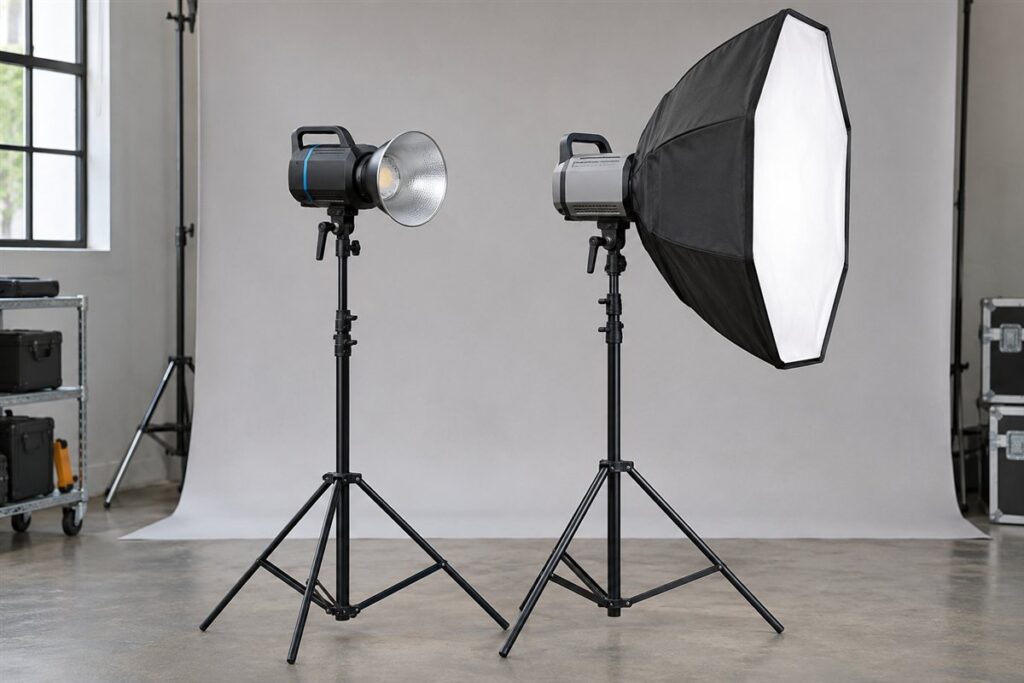
Choose the Westcott FJ400 if you want a battery powered strobe built around a clean, simple workflow with its own wireless system, and choose the Godox AD400Pro if you want a light that fits into the broad Godox ecosystem of triggers and modifiers. Both are portable, high-powered strobes for location work and studio use.
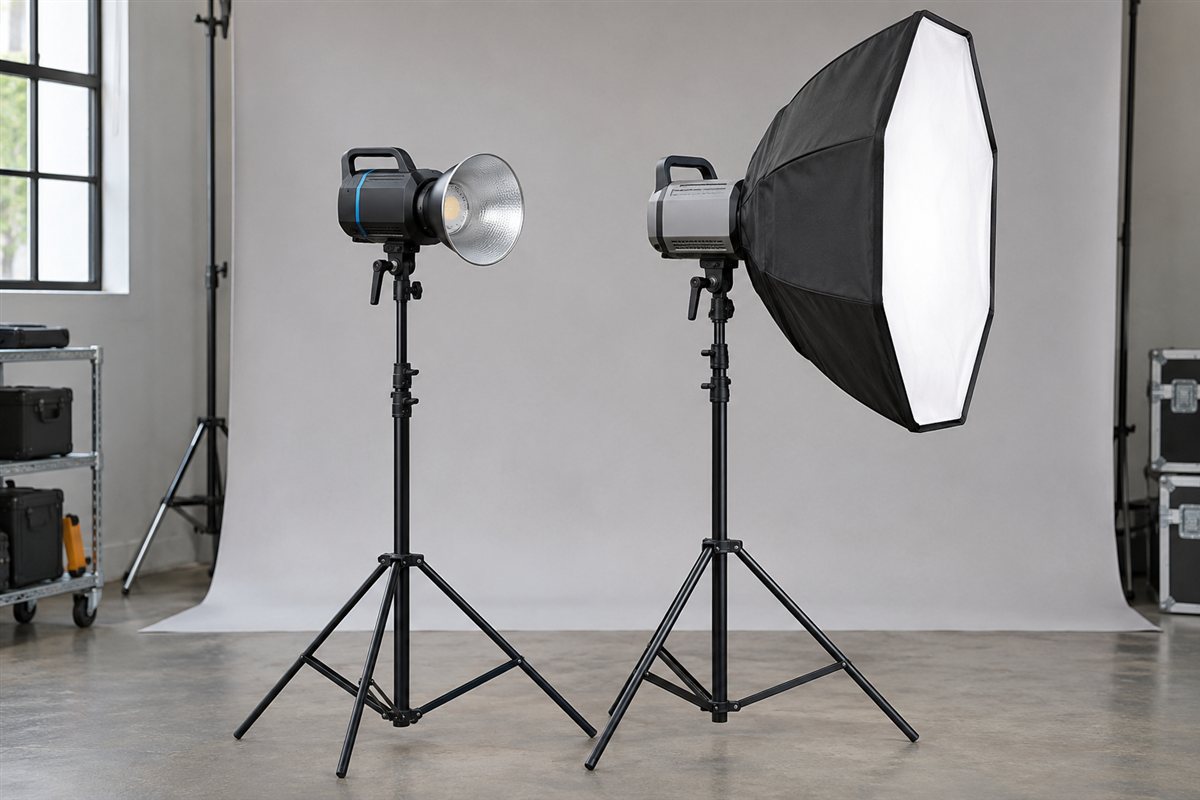
What Each Light Is For
These are battery capable strobes that bring studio style flash power outdoors. They suit portraits in bright sun, events, and fashion work, where you need enough output to balance or overpower ambient light.
Key Differences
| Trait | Westcott FJ400 | Godox AD400Pro |
|---|---|---|
| Class | Portable battery strobe | Portable battery strobe |
| Wireless system | Westcott’s own FJ line | Godox X system |
| Accessory ecosystem | Westcott modifiers | Very wide third-party support |
| Modeling lamp | Check the maker’s page | Check the maker’s page |
Exact power output, recycling time, battery capacity and weight differ by version and are best confirmed on the makers’ pages.
Ecosystem and Triggers
The wireless system is often the deciding factor. The Godox X system works with a large range of triggers, flashes and accessories from many makers, which is helpful if you own or plan to own several lights. The FJ system is built around Westcott’s own trigger and flashes, which keeps things tidy if you commit to that line.
- Already own Godox gear: the AD400Pro slots in easily.
- Building a new kit with Westcott modifiers: the FJ400 pairs neatly.
- Mixing brands of lights: check trigger compatibility first.
Practical Use on Location
- Place the light on a sturdy stand and weigh it down with a sandbag.
- Attach a modifier such as a softbox or umbrella to soften the light.
- Set your camera shutter speed near the maximum sync speed of your body, often around 1/200 or 1/250, as a rough guide.
- Choose an aperture for depth of field, then set the flash power to balance exposure.
- Use high speed sync if you need faster shutter speeds, remembering it reduces effective power.
Choosing Between Them
Think about the modifiers you own, the mount type used, the triggers you already have and how often you will travel. Consider how the controls feel, because a clear menu helps when working quickly. Test the light with your camera if you can.
Battery and Power Logistics on Location
A portable strobe is only as useful as its power plan. Both lights are described as battery-capable, so start by reading each maker’s page for the battery type, how it attaches, how long a charge is said to last and how many full-power flashes the maker claims. These figures depend on the power setting, so a battery that seems to last all day at low output may run down much faster when you fire at full power in bright sun. Treat any number on a listing as a guide and test it in your own conditions.
Think through a full day of shooting. How many batteries will you need, how long do they take to charge, and can you charge them in a vehicle or at a venue? Some photographers carry one or more spare batteries for each light and label them to keep track of which are fresh. If the light can also run from mains power, check what accessories you need and whether the cable and plug suit the countries where you work.
- Keep batteries cool and dry, and avoid leaving them in hot cars.
- Do not rely on a single battery for a paid job; carry a spare or a second light.
- Watch for warning signs such as slower recycling, which can mean the battery is running low.
- Follow the maker’s guidance for charging, storage and travel, especially for air transport rules on lithium batteries, which you should check with your airline.
Good battery habits prevent most failures on location, and they cost much less than a missed shoot.
Mounts and Light Shaping Tools
What you attach to the front of the strobe shapes the light as much as the strobe itself. Before choosing, find out what modifier mount each light uses and whether it matches the softboxes, reflectors and grids you already own or want to buy. Some mounts are widely used by many makers, which gives you a large choice of modifiers, while others suit a smaller set of accessories or require an adapter. Check the product pages and your modifier’s specifications rather than assuming that they fit.
Think about the kind of light you want. A large softbox gives soft, flattering light on faces and works best when it can be positioned close to the subject. An umbrella is quick to set up and folds small, which suits travel. A reflector with a grid creates a tighter beam for dramatic or rim lighting. A beauty dish gives a crisp but flattering look, popular in portrait and fashion work. Each modifier loses some light, so a larger modifier at a distance demands more power.
Weight and balance are practical concerns. A large softbox on a battery strobe can act like a sail in wind, so use a sturdy stand, sandbags and, if possible, an assistant who holds it steady. Check the maximum load of your stand and the grip of the stand head. Carry spare thumb screws or adapters, and keep modifiers in a bag that protects the fabric. Practice assembling and disassembling your setup before a job so that you can move quickly when time is short.
Wireless Features, TTL and High Speed Sync
Features that save time at a shoot are not always obvious from a spec sheet. TTL metering lets the system adjust output automatically, which can be useful when distances change quickly, as at events. Manual mode gives consistent results for planned portraits. High speed sync lets you use shutter speeds above the normal sync limit, which helps in bright light with a wide aperture, though it reduces the flash power available. Not every light, trigger and camera combination supports every feature, so verify support for your exact camera body.
Ask which functions you expect to use. Do you need to adjust power remotely from the camera position? Do you want to group lights and control each group separately? Do you plan to use several lights, and if so, can the system handle that smoothly? Does the trigger work well with the camera menu, or will you need to learn a new interface? Check whether firmware updates are available and how they are applied, since updates can fix bugs and add compatibility with newer cameras.
Radio reliability matters. In crowded venues, other signals can interfere, so test range and consistency in your usual places. Know how to change channels and groups quickly, and keep notes on your settings. If you ever need to share lights with another photographer, make sure you both understand the channel setup. Carry a backup trigger or a sync cable in your bag, and practice using the light in manual mode in case the wireless link fails during an important moment.
Handling, Weather and Field Durability
Location work exposes strobes to dust, damp, bumps and temperature swings. Compare the build of the two lights as described on the makers’ pages, and read the manuals for guidance on water and dust. Many strobes are not weather sealed, so do not assume they tolerate rain. A clear plastic cover or a simple rain sleeve, along with a tarp for gear, can protect the light during unexpected weather. If a light gets wet, power it off, remove the battery and let it dry thoroughly before use.
Think about transport. A light that fits in your usual bag is more likely to come with you. Padded cases protect the head and the flash tube from knocks, and a rolling case helps with heavy kits. Keep the flash head cap on when moving, and avoid touching the tube. Allow the light to cool before packing it away, as hot modeling lamps and tubes can damage cases and modifiers.
- Inspect the stand, clamps and cables before each shoot.
- Do not leave the light in direct summer sun or a hot vehicle.
- Keep a small tool kit with a hex key, tape and spare screws.
- Learn what the indicator lights and beeps mean, so you can diagnose problems quickly.
Handle the strobe gently, and it should serve for many jobs. Always follow the maker’s safety notes, since flash units contain high voltage components that should only be serviced by qualified technicians.
A Buying Checklist Before You Commit
With two capable lights, the choice often comes down to what you already own and how you work. Make a short list of your requirements before you compare, and check each against the makers’ current pages. If you can, rent or borrow each light and try it on a real session, with your camera and your modifiers. A trial shows how the controls feel and how the light behaves in your style of work.
Ask yourself these questions.
- Which triggers, flashes and modifiers do I already have, and will they work with this system?
- How many lights might I want in the future, and does the system make adding them simple?
- What is my camera system, and is full feature support confirmed for it?
- How often will I carry the light, and does the weight suit me?
- What are the warranty terms, and where would I send the light for service?
- Does my local dealer stock replacement batteries, parts and accessories?
Buy from an authorized seller to protect your warranty, and check the return policy. Register the product, keep the receipt and test everything as soon as it arrives. If you are a beginner, consider whether a smaller, lower-cost light would meet your needs first, since high-powered strobes are best when you truly need their output. If you are a professional, think about backup: owning two matching lights lets you continue working if one fails. The best choice is the system you will understand thoroughly and use with confidence.
FAQ
Do I need a trigger for either light?
Typically yes, a compatible trigger on the camera lets you control power remotely. Check which one the maker recommends.
Can I use a speedlight instead?
For close portraits a speedlight can be enough. A strobe offers more power for overcoming bright sun or shooting through large modifiers.
Do I need two lights?
One light can handle many portrait situations. A second adds options for fill, rim light or backgrounds, and it also acts as a backup. Start with one and add more as needs appear.
Can I use these lights indoors?
Yes. Strobes work well in studios and venues, and you can lower the output for small spaces. Check ceiling height and color if you plan to bounce the light.
What is a modeling lamp for?
It provides continuous light so you can preview shadows and focus in dim rooms. Brightness varies between models, so check the maker's page.
How do I avoid color shifts between flashes?
Use consistent power settings and let the light recycle fully. Some lights change color slightly at different outputs, so test your setup and check a few frames before the important shots.
How should I carry a battery strobe on an airplane?
Rules for lithium batteries differ by airline and country. Read the maker's guidance and the airline's policy before travel, and keep batteries in your carry-on if required.
Can I use a reflector instead of a strobe?
In some situations, yes, particularly for simple fill. A strobe gives control and power that a reflector cannot, especially against bright sun.
How can I tell if the flash tube is aging?
Look for uneven output, longer recycling or visible discoloration, and consult the maker's service guidance. Have a qualified technician check the unit if you suspect a problem.
The Short Version
Both lights deliver portable, strong flash. Choose the Godox AD400Pro for the wide accessory ecosystem and the Westcott FJ400 for a focused system with matching modifiers. Confirm specifications on the makers’ pages.