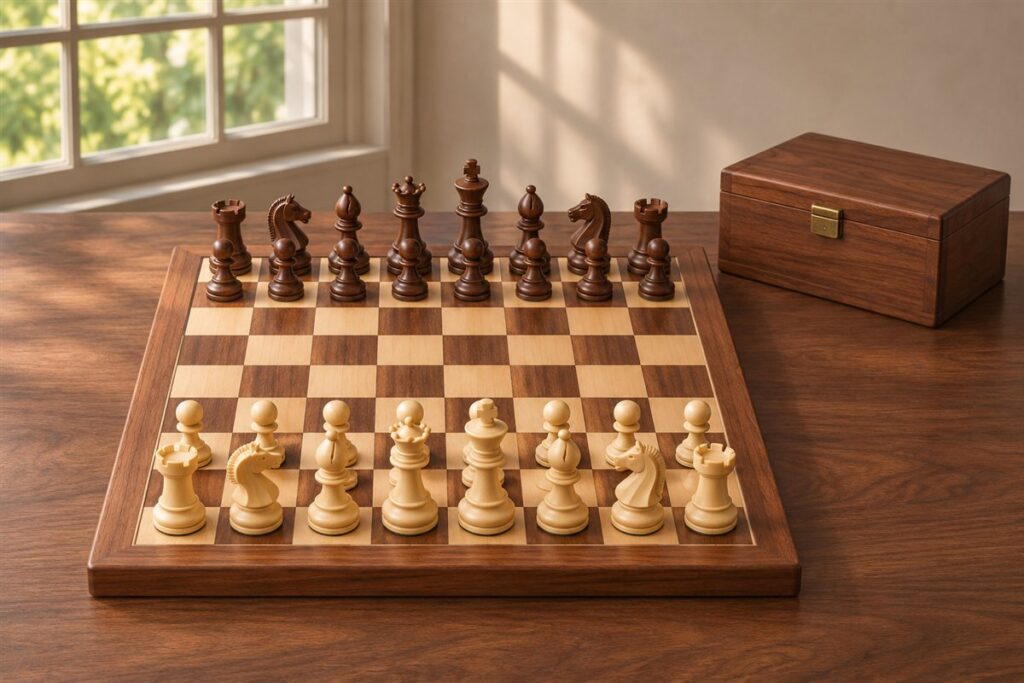
Chess has inspired fiction for a long time, and two well-known entry points are Walter Tevis’s The Queen’s Gambit and Vladimir Nabokov’s The Defense. Which one to read first depends on whether you want a fast, character-driven story or a more literary, psychological one.

Two Well-Known Anchors
The Queen’s Gambit, by Walter Tevis, follows a young chess prodigy and is widely known today thanks to its screen adaptation. It is generally described as a readable, plot-driven story about talent and obsession, and you do not need to play chess to follow it.
The Defense, by Vladimir Nabokov, tells of a gifted player whose mind becomes consumed by the game. It is a more literary book, with dense language and an inward focus, and readers who enjoy style and psychology often value it most.
Other Chess Fiction to Explore
- Stefan Zweig’s novella The Royal Game (also known as Chess Story), a short, tense tale set largely aboard a ship, and a good choice for a single sitting.
- Works of literary fiction where chess serves as a metaphor for strategy, rivalry or control, found across many countries and eras.
- Children’s and young adult stories that use chess as a gentle way into the game.
Titles and editions vary by region, so check your library or bookseller for what is available in your language.
How to Choose Where to Begin
| You want | Consider |
|---|---|
| A page-turning story | The Queen’s Gambit |
| A short read | The Royal Game |
| Literary depth and style | The Defense |
| Chess as a light theme only | Younger readers’ fiction featuring the game |
Reading Chess Fiction If You Do Not Play
Many chess scenes in novels are written to be understood without a board. Still, a few habits make the experience richer.
- Do not worry about move notation. Authors usually describe the mood of a game, not each move.
- Learn the basic piece names if you are curious; it takes only a few minutes.
- Notice how the author uses a game to reveal character, such as patience, pride or fear.
- If a scene mentions a famous opening or historical match, look it up afterward for extra context.
Reading Chess Fiction If You Do Play
Players often enjoy spotting where an author gets chess details right or slightly wrong. That can be part of the fun, but it helps to remember that novelists serve drama first. A scene that is not accurate move by move can still capture what it feels like to sit across from an opponent.
How Chess Works as a Literary Device
Chess suits fiction because it is a contest with clear rules, limited pieces and visible consequences, yet it is played inside the minds of two people. That gap between a rigid board and a restless mind gives writers plenty to use. A game can show patience, vanity, obsession or fear without any need for long explanations.
Authors tend to use the game in a few ways. Some treat it as a mirror of a character, so that the style of play matches the personality: cautious, reckless or calculating. Some use it as a metaphor for war, politics or family conflict, where each person is a piece in someone else’s plan. Others treat chess as a trap, a world that swallows a character until nothing else remains.
Understanding which approach a book takes helps you pick one you will enjoy. If you prefer plot and growth, look for stories where the game drives a personal journey. If you like psychological tension, look for stories where the game closes in on a mind. If you enjoy ideas, seek books where the board stands for something larger. Knowing this before you start also helps you read with less frustration, because you know what the author is trying to do with the game.
Choosing by Mood and Reading Time
Different readers have different circumstances, and the best chess novel for a weekend flight may not be the best for a slow winter. Think about time and mood before you pick.
- A single sitting: A novella such as The Royal Game is short and tense, which suits an evening or a train journey.
- A steady, absorbing read: The Queen’s Gambit has a clear plot and an easy pace, which works for reading in short sessions over several days.
- A slower, literary read: The Defense rewards close attention, so give it quiet time and do not rush through it.
- A light introduction: Younger readers’ stories that feature chess are a gentle way in, especially for those who want to see how a game feels before reading about obsession.
Length is also a factor. Short books are easy to finish, which builds the habit of reading chess fiction. Longer books give more time with the characters, but ask more of you. If you are unsure, borrow a copy from a library or read a sample page first. The first few pages usually reveal whether the voice suits you. Check which translation or edition you are borrowing for translated works, since different translators produce different prose.
Understanding Translations and Editions
Several well-known chess novels were written in languages other than English, so the edition you pick matters. Translators make choices about rhythm, vocabulary and tone, and two translations of the same book can read quite differently. A dense literary style in the original may be rendered in a smoother or a more faithful way, depending on the translator’s approach.
When you choose an edition, look at the translator’s name and the publication details on the listing. Read the first page or the sample if one is offered, and compare. Some editions include an introduction or notes, which can help with historical context, though you may prefer to read them after the story to avoid spoilers.
Titles can differ by region. A book may appear under more than one name, so check the author and the plot summary instead of relying on the title alone. If you read in a language other than English, ask a librarian or a bookseller what is available. Audiobooks are another option, and a good narrator can make a dense text easier to follow. Whatever format you choose, check what the listing says about the version, because abridged editions exist for some books.
What Chess Fiction Gets Right and Wrong
Readers who play often enjoy comparing the page with the board. Authors who know the game may include real openings, recognizable tactics or the habits of tournament life, such as quiet rooms, clocks and post-game analysis. Others write chess scenes more loosely, focusing on mood over accuracy.
Both approaches can succeed. A scene that gets the moves right but lacks tension is dull, while a scene that bends the game but captures the pressure of a deciding moment can be memorable. Keep in mind that a writer has to make a game readable to people who do not play, which means simplifying and compressing.
It helps to notice the small human details: the way a player stares at a position without moving, the discomfort of a long game, the mix of pride and shame after a loss. These tend to ring true even in books with loose chess details. If you play, you may enjoy checking positions on a board when the author gives enough information, but it is optional. If you do not play, you lose nothing by skipping the diagrams and notation and following the emotion instead.
Building a Reading List and Sharing It
Once you have read one or two chess novels, you can build a list that grows with your interests. Start with the anchor books and note what you liked: a fast plot, a dark mind, a historical setting or a coming-of-age arc. Then look for books that share those qualities, whether or not they feature chess as the central theme.
A reading group or a club can help. Chess novels spark good discussions about talent, discipline, isolation and the cost of winning. If you belong to a chess club, a short book discussion can be a pleasant change from regular play, and it may bring in members who do not enjoy competition.
- Keep a short note of each book: what it was about, what you liked and who you would recommend it to.
- Ask librarians and booksellers, who often know lesser-known titles.
- Pair a novel with a short chess lesson, such as learning the basic rules or a famous opening named in the story.
- Pass your copy to a friend, and ask them what they thought of the game scenes.
Treat the list as a living document. Tastes change, and a book that did not suit you last year may feel right later.
FAQ
Do I need to know chess to enjoy these books?
No. The best-known titles are written for general readers, and the human story carries them.
Should I read the book or watch the adaptation first?
Either works. Many readers like the book first for its inner thoughts, then watch the screen version for the visuals.
Which chess novel is best for someone who has never played?
The Queen's Gambit is a common starting point because the plot carries the story. The Royal Game is also easy to follow, since the emotions matter more than the moves.
Are chess novels realistic about tournaments?
Some include true-to-life details like clocks and quiet playing halls, while others bend them for drama. Read them as fiction, not as guides to how tournaments work.
Is The Defense hard to read?
It is dense and inward-looking, and some readers find it demanding. A slower pace, a quiet setting and a good edition can make it more enjoyable.
Can I find these books in audio format?
Many popular titles are available as audiobooks, but availability varies by region and edition. Check your library or bookseller for what is offered.
Are there chess books for children?
Yes, there are stories and puzzle books written for younger readers. Browse the children's section of a library or ask a librarian for current recommendations.
Should I learn chess before reading?
It is not needed. Learning the piece names and how they move takes a few minutes and can make the scenes clearer, but it is optional.
Do I need to read these in a certain order?
No. They are separate works by different authors, so you can start with whichever suits your mood.
The Short Version
Begin with The Queen’s Gambit for an accessible story, The Royal Game for something brief, or The Defense for a literary challenge. You do not need to play chess to enjoy any of them, and your library is a good first stop.