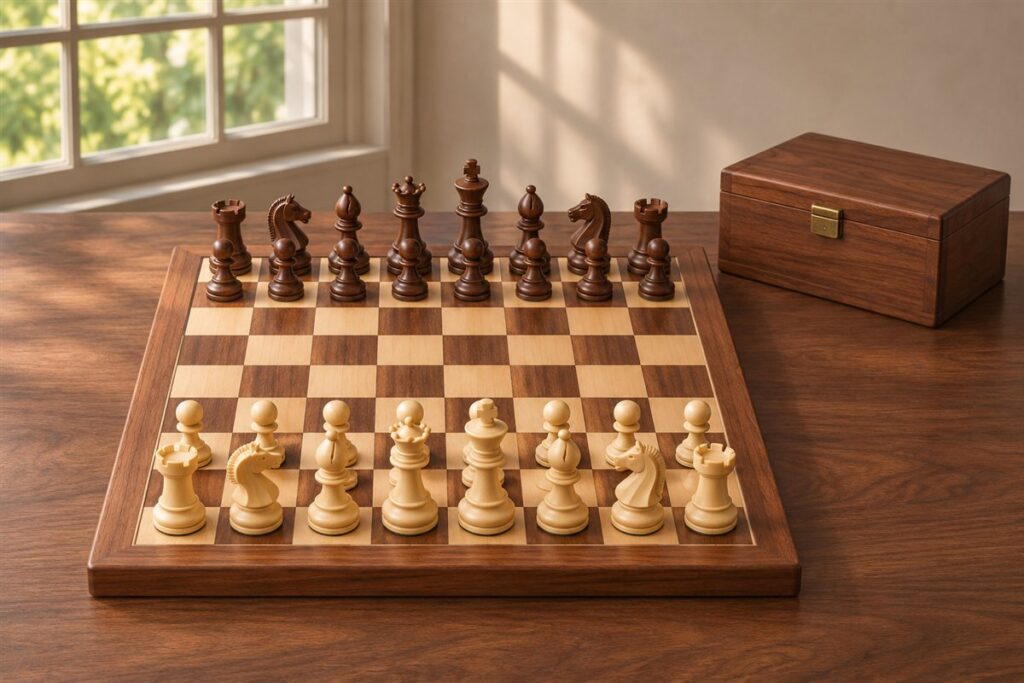
Choose a pawn storm when the kings are on opposite sides of the board and your pieces are not needed on defense. Choose a piece attack when your pieces are active, the enemy king has few defenders and you can create threats quickly. The best plan depends on where the kings stand and how ready your pieces are.

What Each Plan Means
A pawn storm pushes pawns toward the enemy king to open files and diagonals, so rooks and queens can reach it. A piece attack uses knights, bishops, rooks and the queen directly, often with sacrifices or forcing moves, without relying on pawn advances first.
Signs That Favor a Pawn Storm
- The kings castled on opposite sides, so your pawns can advance without exposing your own king.
- The enemy king has a pawn shelter that you need to break open.
- Your pieces are already well placed, and the pawns are the last missing piece.
- The center is closed or stable, so the opponent cannot easily counterattack there.
Signs That Favor a Piece Attack
- The enemy king is stuck in the center or has lost pawn cover.
- You are ahead in development, and quick threats can come before the opponent consolidates.
- Your pieces can reach the king area at once, such as a queen and knight working together.
- A sacrifice opens the position in a way that pawns could not do in time.
Comparison
| Topic | Pawn storm | Piece attack |
|---|---|---|
| Speed | Slower, takes several moves | Faster, often forcing |
| Risk | Weakens your own pawn cover | May lose material if it fails |
| Best with | Opposite-side castling | Open or unsettled kings |
| Needs | Patience and pawn support | Precise calculation |
A Simple Decision Check
- Locate both kings. Same side or opposite sides?
- Count the attackers you can bring to the king within three or four moves.
- Look for the opponent’s counterplay. If it is faster than yours, defend or change plan.
- If your pieces are ready, calculate a direct attack. If they are not, improve them or advance pawns to prepare lines.
- Keep checking. A plan that was right ten moves ago may not suit the position now.
King Safety and Your Own Pawn Cover
Before launching any attack, check how safe your own king is. A pawn storm moves pawns forward, and each advance leaves squares behind that can never be covered again. If your king is castled on the same wing as the pawns you plan to push, you may be weakening your own shelter. If it is on the opposite side, those pawns are free to advance, because they are not part of your king’s protection.
A piece attack carries a different kind of risk. Your pieces leave defensive duties to join the attack, and if the attack fails, your king may be exposed to a counterattack. Before committing, ask which of your pieces are guarding important squares, and whether the opponent has threats that your attacking pieces would no longer cover. Count the tempi: if the opponent needs one move less than you to create real threats, defense should come first.
- Check the open files and diagonals near your king before starting an attack.
- Note which of your pieces are the only defenders of key squares.
- Think about the opponent’s best counter-sacrifice before launching your own.
- Keep a minimum of defenders near your king until the attack reaches a decisive stage.
Strong attackers are often careful defenders, because they know exactly how much risk they can afford.
Timing the First Pawn Moves
When you choose a pawn storm, timing is everything. Advancing too early means your pieces are not ready to use the lines you open, and the opponent can close the position or counterattack in the center. Advancing too late gives the opponent time to prepare defenses or to start their own attack. A good practice is to bring your pieces to useful squares first, then advance the pawns to open the files in order to give them targets.
Choose the right pawns to push. In opposite-side castling positions, pushing the pawns in front of the enemy king, such as the knight, rook and bishop pawns, aims to open a file or diagonal. Each push should have a purpose, such as forcing an exchange, gaining space or creating a target. Avoid pushing pawns randomly, which gives the opponent targets and free squares.
- Check that the center is stable before pushing on the wing, since a central break can punish a neglected center.
- Use exchange sacrifices or pawn levers to open lines, once pieces are ready.
- Count the moves to open a line against the moves your opponent needs.
- Be ready to change plans if the opponent closes the line.
A pawn storm is a race, and the player who is better prepared usually wins it.
Coordinating Pieces for a Direct Attack
A piece attack depends on cooperation. A lone queen rarely checkmates a king that has defenders, so look for ways to bring several pieces to the target at the same time. Knights close to the king and bishops aiming along open diagonals add pressure. Rooks on open or semi-open files and a queen that supports them all create threats that are hard to defend.
Look for the weak points in the enemy position. Squares near the king that no pawn can defend are ideal outposts for knights. Pinned pieces and overloaded defenders are targets for tactics. Consider forcing moves such as checks, captures and threats first, because they limit the opponent’s options and make calculation easier. Check that each forcing move improves your position or wins something, instead of simply releasing pressure.
- Identify the defenders of the king and think about which one you can remove or distract.
- Calculate carefully any sacrifice, and check the opponent’s best defense.
- Bring the last attacker, often a rook, into the game before starting the final blow.
- Keep an eye on what happens if the attack stops, such as material and king safety.
When the pieces work together, the attack often wins quickly.
Recognizing When to Change Plans
Good players do not commit to a plan forever. A pawn storm may stall if the opponent closes lines with timely counterplay, and a piece attack may fail if the defender finds a resource. Recognizing this early saves material and points. Ask yourself regularly whether your attack is still faster than the opponent’s, and whether your threats are real or just wishful.
Signs to rethink include an opponent who ignores the attack and builds a strong counterattack, a closed line that you cannot reopen, or exchanges that remove your attacking pieces. In those cases, consider switching to a different plan, such as exploiting a weakness elsewhere, improving the pieces or heading into a favorable endgame. A small advantage, like a better pawn structure, can be enough to win slowly if you stay safe.
- Reassess after every exchange of pieces.
- Do not throw good moves after bad, and avoid continuing an attack only because you started it.
- Look at the position from the opponent’s side and ask what they want to do next.
- Consider offering exchanges to reduce the opponent’s attacking chances if you are the defender.
Flexibility is a strength in chess, and it often separates the stronger players from the rest.
Training Ideas to Improve Attacking Judgment
Attacking judgment comes from practice and study. Work on tactics regularly, since many successful attacks depend on spotting combinations such as forks, pins, discovered attacks and mating patterns. Practice basic checkmate patterns until you recognize them at a glance, because knowing them helps you find a route for an attack.
Study classic games with attacks on the king, both pawn storms and piece sacrifices, and try to guess the moves before you see them. Review your own games, especially those where an attack failed or succeeded, and ask what you missed. Play longer games when you can, so that you have time to calculate. Annotate key moments: what were the signs for attack, what did the opponent do, and what would you change?
- Set up positions from your games and replay them with different plans.
- Solve a few puzzles a day, with a focus on attacking themes.
- Practice calculating variations without moving the pieces, and check your results afterward.
- Ask a stronger player or a coach to review your attacking games.
Over time, you will build a feeling for when an attack is ready and when to wait.
Keep a notebook of your attacking games and the lessons from each, which makes patterns easier to recognize at the board.
FAQ
Is a pawn storm dangerous for my own king?
It can be when the kings are on the same side, since advancing pawns removes your own cover. With opposite castling, the risk is much lower, because the pawns move away from your king.
Can I combine both plans?
Yes. Many strong attacks begin with a pawn advance that opens lines, then bring in pieces with direct threats.
How do I know if the enemy king is weak?
Look for missing pawn cover, open files and diagonals near the king, and few defenders. Squares that pawns can no longer protect are signs of weakness.
Should I castle on the opposite side to attack?
Opposite castling leads to sharp games where both sides attack. It suits players who like tactics, but it is risky if you are slower than your opponent.
When should I stop a pawn storm?
If the opponent has closed the lines or has a faster counterattack, rethink your plan. Continuing without a clear target often loses material.
Are sacrifices necessary in an attack?
Not always. Sometimes quiet moves build pressure, but sacrifices can open lines quickly when calculation shows they work.
What is the biggest mistake in attacking?
Attacking without enough pieces nearby, or ignoring the opponent's counterplay. Check that your attack is faster and well supported.
How can I defend against a pawn storm?
Strike back in the center, trade off attacking pieces and keep your king's shelter solid. Counterattacks are often the best defense.
Is it better to attack or to defend in a close position?
It depends on the position. If your threats are faster, attack. If the opponent's are faster, defend first or find a counter-plan.
The Short Version
Use pawn storms when kings are on opposite wings and you have time, and use piece attacks when the enemy king is exposed and your pieces are ready. Check the position again after every few moves and change plans when needed.