Disclosure: As an Amazon Associate, reviewstook.com earns from qualifying purchases. Links on this page are affiliate links; they cost you nothing extra. Prices and availability change often, so check the current Amazon listing before you buy.
The kiwi ears aether is the in-ear monitor that put a large planar magnetic driver into an affordable shell and dared the hybrid establishment to justify itself, and this review examines whether the dare succeeded. The Aether’s 15.3mm planar driver, balanced tuning, and detachable cable made it one of the most discussed budget IEMs of its generation. Below, it is assessed on sound, fit, build, and value, then set against two stablemates from the same catalogue, the hybrid Astral and the Quartet, so you can hear, in prose, which Kiwi Ears recipe your ears are actually shopping for.
Planar drivers in earphones were, until recently, a premium curiosity: fast, detailed, and demanding of power. The Aether’s proposition is that the technology has matured into the budget tier without losing its character, and that a single well-implemented driver can compete with the multi-driver hybrids that dominate its price neighbourhood. This review tests that proposition the way IEMs must be tested, by tuning, by fit, and by the long-session comfort that decides whether a technically impressive earphone becomes a daily one.
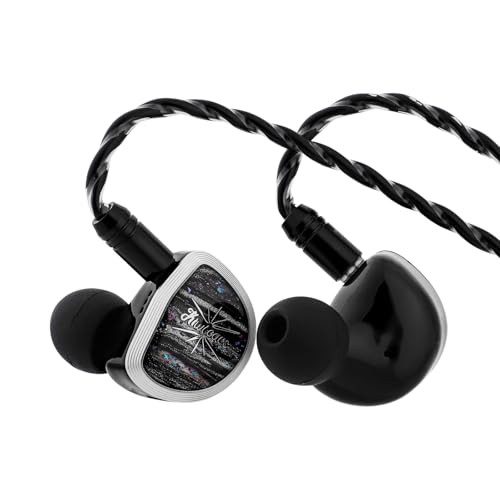
Key takeaways
- The Aether uses a single 15.3mm planar magnetic driver, unusually large for an IEM, tuned toward balance rather than spectacle.
- Its strengths are speed, detail, and a spacious presentation; its character is even-handed, which bass devotees may find restrained.
- Fit is the gatekeeper: the shells are substantial, and smaller ears should trial carefully or choose tips methodically.
- The detachable 0.78mm two-pin cable and standard 3.5mm connection keep it simple, durable, and compatible with everything.
- The Astral hybrid suits listeners who want a more sculpted, energetic tuning; the Quartet suits those who want hybrid warmth at the value end.
In this guide
How the picks were chosen
Every earphone below was confirmed against current catalogue data before a single word of this review was written. The main pick is the Linsoul Kiwi Ears Aether itself, the subject of the keyword. The alternatives are the Kiwi Ears Astral, a one-dynamic-plus-six-balanced-armature hybrid positioned as the range’s energetic option, and the Kiwi Ears Quartet, a two-dynamic-plus-two-balanced-armature hybrid at the value end. Each is labelled as its own model wherever it appears, and the comparison sections argue the differences in tuning philosophy rather than pretending one recipe is simply better. Current prices live behind the check-price links, because IEM pricing moves with promotions.

Kiwi Ears Aether: the main review
Best for listeners who value balance, speed, and space
- Driver: single 15.3mm planar magnetic driver
- Tuning: balanced, per the verified listing description
- Cable: detachable 0.78mm two-pin, 3.5mm plug
- Fit: in-ear monitor style, multiple tip sizes included
- Use: wired listening for music, work, and media
The Aether sounds like its driver technology promises, and the promise is distinctive. Planar drivers move as a plane rather than as a piston, and the audible result here is speed with composure: transients start and stop cleanly, dense passages stay separated instead of smearing, and the whole presentation feels unhurried even when the music is not. Listeners arriving from dynamic-driver budget IEMs notice the difference first in busy material, orchestral tuttis, layered electronic tracks, fast metal, where the Aether keeps the furniture of the mix in its own space.
Tuning is the second headline, and it is a statement of intent. The Aether is balanced in the honest sense: bass present and textured rather than inflated, midrange given the room it deserves, treble extended without being weaponised. Vocals sit naturally in the mix, acoustic instruments keep their timbre, and long sessions do not fatigue. The trade is spectacle. Listeners whose libraries run on bass weight and treble sparkle as entertainment will find the Aether polite, and they should believe that impression rather than argue with it; this is an earphone for people who want to hear the recording’s balance, not the earphone’s.
Soundstage and imaging follow from the driver and the tuning. The presentation is spacious for an in-ear, with a sense of air around instruments that the listing’s own language advertises and that the driver size helps deliver. Imaging is precise enough for gaming’s positional cues in casual and competitive-lite play, though this is a wired music IEM by design and should be bought as one. Isolation, with a good tip seal, is strong enough for offices and transit, and the earphone is efficient enough to run happily from a phone dongle or a laptop, while scaling politely with better sources rather than demanding them.
Fit and build are where the review must slow down, because the Aether’s shells house a very large driver and are not small. Most ears accommodate them with the right tip choice, and the included tip selection plus the aftermarket make that a solvable problem, but small-eared listeners should treat fit as the purchase’s first question, ahead of tuning. The shells themselves feel well finished for the tier, the cable is replaceable and uses the common two-pin standard, and the whole package has the unpretentious, function-first character of an earphone designed by people who expected it to be listened to rather than looked at.
Strengths
- Fast, detailed, spacious sound from a genuinely distinctive driver
- Balanced tuning that flatters long sessions and varied libraries
- Detachable standard cable and easy power requirements
Trade-offs
- Shells are substantial; small ears must audition fit carefully
- Bass quantity is honest rather than generous
- Wired only, with no microphone in the standard configuration for calls
Best for: listeners building a serious budget setup around balance and detail. Not suited for: bass-first listeners, or anyone who needs wireless convenience.
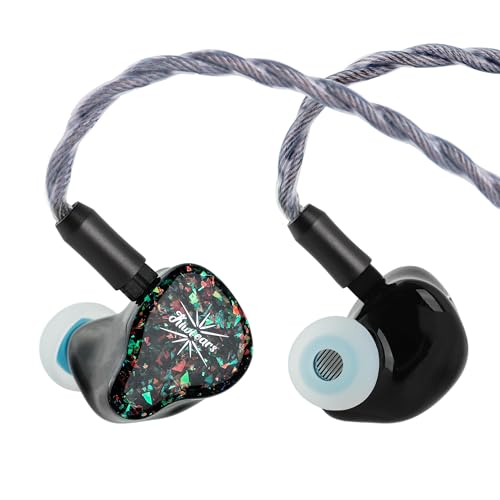
Kiwi Ears Astral: the hybrid alternative
Best for listeners who want energy and sculpted detail
- Drivers: one dynamic plus six balanced armature hybrid
- Positioning: studio and audiophile hybrid in the range
- Cable: detachable, wired
- Colourway: green in the verified listing
The Astral answers the Aether with the establishment’s recipe executed at a high level: a dynamic driver for bass weight and movement, six balanced armatures for midrange and treble precision, and a tuning that presents music with more sculpt and more sparkle than its planar sibling. Listeners who found the Aether polite often find the Astral exciting in exactly the places the Aether was restrained, and the reverse is also true, which is what a good alternatives section is for. Choose by library and temperament: the Astral flatters energetic, produced music and listeners who like their detail with an edge of emphasis.
Strengths
- Hybrid impact and precision in one shell
- More overtly exciting tuning for produced and electronic libraries
- Same detachable-cable practicality as the Aether
Trade-offs
- Higher tier than the Aether
- Emphasis that balanced-tuning listeners may find fatiguing over long sessions
- Hybrid complexity buys its character at the cost of the planar’s particular coherence
Best for: listeners who want the range’s energetic flagship character. Not suited for: balance-first listeners on the Aether’s budget.

Kiwi Ears Quartet: the value hybrid alternative
Best for a warm, musical hybrid at the friendly end
- Drivers: two dynamic plus two balanced armature hybrid
- Shell: hand-crafted resin, purple in the verified listing
- Cable: detachable silver-plated cable
- Audience: musicians, DJs, studio and gaming use per the listing
The Quartet is the range’s warm handshake: a hybrid with dual dynamic drivers giving its low end a relaxed authority, balanced armatures keeping the top articulate, and a resin shell that looks like it cost more than it did. Against the Aether it trades planar speed and neutrality for hybrid warmth and ease, a trade many listeners, especially those coming from consumer earbuds, will experience as simply more fun. As a first serious IEM or a gift with genuine quality inside, it is the catalogue’s easiest recommendation.
Strengths
- Warm, musical tuning that flatters most libraries immediately
- Attractive resin shell and detachable cable at a value tier
- Forgiving character for new listeners
Trade-offs
- Less detail and separation than the Aether’s planar presentation
- Warmth is a taste; analytical listeners will want more edge
- Positioned as an all-rounder rather than a specialist
Best for: first serious IEM buyers and warmth-first listeners. Not suited for: detail hunters, who should take the Aether.
Kiwi Ears Aether: planar, hybrid, or hybrid-lite?
The three verified earphones divide listeners by philosophy, and naming the philosophies makes the choice easy. The Aether believes one excellent driver, honestly tuned, beats a committee: coherence, speed, and balance are its creed. The Astral believes specialisation wins: let each driver type do what it does best and tune the committee firmly. The Quartet believes pleasure is the point and tunes its committee for warmth. None of these is a straw man; each is a coherent answer to what an earphone is for, and the catalogue is better for containing all three.
Choose the Aether if your library is varied and your sessions are long, if you listen to recordings as documents and want them presented straight. Choose the Astral if your library is produced, energetic, and modern, and your sessions are events. Choose the Quartet if you are buying your first serious earphone or your taste runs warm and forgiving. Readers comparing beyond this brand will find the wider field mapped in our roundup of gaming earbuds for play-focused use and our survey of wired earbuds with microphones where calls matter.
Buying guide for the Aether
Fit comes first, and it is not a formality. The Aether’s shells are built around a very large driver, so plan a tip-rolling session in your first week: work through the included sizes, test the seal with a bass-heavy track, and walk around to check the earphones stay seated. A correct seal is not a comfort detail; it is the difference between the balanced tuning this review describes and a thin, disappointing sound that belongs to the fit, not the earphone. Listeners with small ears should buy through a channel with a humane returns policy and treat the first day as an audition their ears, not the internet, conduct.
Source expectations come second. The Aether does not need an expensive amplifier, and buying one before buying tips and music is the classic beginner’s misallocation. A clean phone dongle or a modest desktop DAC will show you the earphone’s character fully; better sources refine rather than rescue. Third, cable planning: the stock cable is serviceable and the two-pin standard means replacements, including cables with microphones for call-heavy days, are easy to find. Budget a spare cable before you budget an amplifier, because cables are what actually fail in an IEM’s life.
Finally, buy the tuning you will love in month three, not the one that impresses in minute three. Showroom excitement, bass slam and treble sparkle, is a sugar rush; balance is a diet you can live on. The Aether is the diet, and this review’s recommendation rests on exactly that distinction.
How to get the best from the Aether
Start with the seal, every session, as a ritual: insert, twist slightly, and check with a familiar track’s opening bass note. Most IEM disappointment in the world is unsealed IEM listening, and the Aether’s large driver rewards a proper seal with the full measure of its low end, which is more generous than its balanced reputation suggests once the fit is right.
Then give the tuning time. Ears raised on consumer bass need a week to recalibrate to balance, after which the detail and space that were always in their libraries become audible as if a window had been cleaned. Judge the Aether at day seven, with your own most-loved recordings, and use the Astral and Quartet sections above as your map if the judgement goes the other way; the brand has kindly provided the alternatives in-house.
Care is simple and worth the habit. Keep the earphones in a case rather than a pocket, wipe the nozzles gently, keep the two-pin connectors clean and dry, and never pull the cable to remove an earphone from your ear. Stored and handled that way, a wired IEM with a replaceable cable is one of the longest-lived objects in personal audio, and the Aether’s build gives it every chance to prove the rule.
Common mistakes with planar IEMs
Judging by the first minute is the first, because planar speed and balanced tuning present their virtues across tracks rather than in a single drop. The second mistake is under-sealing and then reviewing the bass, which this review has covered because it is the Aether’s most common unfair trial. The third is over-amplifying: chasing volume and gain the earphone does not need, when the money belonged in tips, a case, and music.
The fourth mistake is buying the Aether for a life it does not lead: it is a wired, sit-and-listen instrument, not a workout companion or a call headset in its standard configuration. Commuters who can live with a cable will love it; listeners who need wireless freedom should look at our roundup of noise-cancelling earbuds and keep the Aether for the desk and the armchair, where it is, frankly, wasted on a train’s noise floor anyway.
Genres, games, and the long session
A balanced planar earns its keep across a library, so walk the shelves. Acoustic and classical recordings are the Aether’s home ground, where its timbre honesty and separation turn familiar performances transparent. Jazz follows closely, the driver’s speed flattering cymbals and double bass alike. Rock and metal benefit from the composure in dense passages, though bass-first listeners will want more low-end mass than balance provides. Electronic libraries split by taste: textural, spacious production sounds superb, while slam-driven tracks make the case for the Astral. Spoken word and podcasts are quietly excellent, voices rendered without the chesty emphasis consumer tunings add.
Gaming deserves its sentence: wired, the Aether’s imaging and separation serve positional play well, and its comfort across long sessions suits the hobby’s marathons, provided your setup accepts a cable and your communication needs are handled by a separate microphone. It was not designed as a gaming headset and does not pretend to be one, which this review counts as honesty rather than omission; players shopping primarily for play should start from our comparison of gaming earbuds compared and return here for the music-first option.
The long session is the Aether’s final argument. Fatigue in earphones comes from emphasis, peaks your ears must keep forgiving, and from fit that slowly argues with your anatomy. The Aether’s tuning removes the first cause and its tip ecosystem can solve the second, which is why its owners describe whole working days spent inside it. An earphone you can forget while it plays is doing the hardest trick in personal audio, and it is the trick this one was tuned to perform.
Planar drivers, explained for the curious
Because the Aether’s whole identity is its driver, a plain explanation earns its place. A dynamic driver, the kind in most earphones, pushes a cone with a voice coil, like a tiny loudspeaker. A balanced armature vibrates a reed inside a magnetic field, precise and small. A planar magnetic driver suspends a flat diaphragm, printed with a conductive trace, between magnets, and drives the whole surface at once. Driven as a plane, the diaphragm resists the break-up and lag that cone drivers manage by design, and the audible dividends are the ones this review has kept naming: speed, low distortion at complexity, and a sense of space that comes from information arriving coherently.
The technology’s historical costs were size, power hunger, and price, and the Aether is interesting precisely because it negotiates all three into a budget shell. The driver is large because planar diaphragms like area; the shell is substantial because the driver is; and the efficiency is good enough for dongles because the design is modern. Understanding that chain converts the Aether’s one apparent flaw, its size, into evidence of its priorities, which is the correct way to read most engineering compromises once they are explained.
Tips, seals, and the sound you actually bought
No component affects an IEM’s delivered sound more than its tips, and the Aether, with its balanced tuning, is unusually honest about revealing tip differences. Silicone tips in the correct size give the reference presentation: full seal, intended bass, stable fit. Foam tips trade a little top-end air for a deeper seal and a warmer result, and they rescue listeners whose ear canals will not hold silicone. Wide-bore and narrow-bore tips shift the treble’s emphasis by small but audible degrees. None of this is tweaking for its own sake; it is the process of delivering the earphone’s designed sound to your particular ears, and an afternoon spent on it is worth more than any accessory in the box.
The seal test deserves its ritual status. With music playing, press the earphones gently inward: if the bass swells noticeably, your everyday fit is leaking, and a size up or a different tip style will recover sound you already paid for. Owners who perform this test stop writing puzzled reviews about thin-sounding earphones, and start writing the kind of reviews the Aether usually receives.
The Aether at a desk, on a sofa, in a life
Context decides earphones as surely as tuning does, so place the Aether in its habitats. At a desk it is close to ideal: wired to a laptop or a small DAC, isolating enough to make an office disappear, balanced enough for an eight-hour acquaintance. On a sofa with a record collection, digital or otherwise, it is a private concert hall with no setup time. In transit it is capable but compromised, because the cable that serves it so well at rest tangles with coats and commutes, and because its isolation, while good, is passive in a world of active noise cancelling. Owners who assign it to the desk and the sofa, and give the commute to wireless buds, report the highest satisfaction, which is the assignment this review recommends in its mistakes section and repeats here as a positive plan rather than a warning.
Value, in the budget tier’s real currency
Budget IEMs should be judged on cost per year of delighted listening, and the Aether’s ledger is strong. Its wear parts, cable and tips, are standard and replaceable at small cost. Its driver technology has no moving contact to wear in the ordinary sense. Its tuning, being balanced, does not date the way fashionable emphasis does; a V-shaped earphone is a snapshot of a season’s taste, while a balanced one keeps agreeing with recordings as tastes rotate. Owners therefore keep Aethers in service as their reference and their backup long after trendier purchases rotate out, and that longevity is the real content of the word value at this tier.
Against its stablemates the value argument sharpens rather than blurs. The Quartet undercuts it for warmth-seekers, the Astral outguns it for excitement-seekers, and the Aether holds the centre for listeners whose priority is hearing their library accurately, spaciously, and without fatigue. Centres, in audio as in the keyboard reviews elsewhere in this cluster, are where the long-term owners accumulate.
What we would change
Honesty requires the wish list. A smaller-shell variant would open the Aether’s sound to the small-eared listeners it currently excludes by geometry. A microphone cable in the box would acknowledge how many buyers will use it at a desk that also takes calls. And a hard case rather than a soft pouch, if that is what a given listing carries, would match the earphone’s own longevity ambitions. None of these wishes overturns the recommendation; they are the notes of reviewers who expect to be recommending this model for a while and would like its next revision to be even harder to criticise.
The first-week listening plan
New owners deserve a plan that reveals the earphone honestly, so here is the week this review prescribes. Day one belongs to fit: tips, seal, and a familiar album whose bass you know by heart, judged only on comfort and seal. Days two and three belong to your oldest favourites, the recordings your ears have memorised through lesser earphones, because the Aether’s detail will rearrange them in ways that need no expertise to hear. Days four and five belong to density: the busiest, most layered music you own, where planar separation earns its reputation. The weekend belongs to duration: a long session at working volume, after which the only question that matters is whether your ears are tired, and on this tuning, they should not be.
Judge at the week’s end, against the alternatives mapped in this review, and your verdict will be the durable kind. Verdicts formed in minutes belong to emphasis; verdicts formed across a week of real listening belong to the listener, and they tend to survive contact with the second month, which is when earphones are actually for.
Gift and upgrade scenarios
As an upgrade from bundled or consumer earbuds, the Aether is a revelation with one caveat: its balance can initially read as restraint to ears trained on emphasis, so the first-week plan above doubles as the gift’s instruction card. As a gift to a budding audiophile it is close to perfect, serious technology at a non-serious price, with a standard cable and a world of tips and sources to explore afterwards. As a side-grade for an owner of a good dynamic IEM, it offers a genuinely different presentation rather than a marginal improvement, which is the only kind of side-grade worth buying.
In all three scenarios the acceptance checks are the same: both channels balanced, connectors seated firmly, tips sealing symmetrically, and no crackle when the cable moves at the plug. Faults in a new unit declare themselves under those checks or not at all, and finding them inside the returns window is the difference between an exchange and a grievance.
The Aether in the wider planar story
Zoom out and the Aether is a marker in a larger shift: planar magnetic drivers migrating from flagship curiosities into the tiers where most listening happens. Each migration of a technology follows the same arc, exotic, expensive, compromised, then suddenly ordinary and excellent, and the Aether sits at the suddenly-excellent point of the planar arc for in-ears. Buying it is therefore partly a bet on a technology’s maturity, and the evidence of its tuning, efficiency, and build says the bet is well timed. Later planar models will refine the formula, smaller shells, new tunings, but the Aether’s combination of size of driver, honesty of tuning, and friendliness of price is the combination that made the category make sense to ordinary listeners.
That historical position also protects the purchase in a practical way: a model this discussed has a deep public record of fit advice, tip pairings, and source matches, so a new owner’s every question has been asked and answered. In personal audio, where fit and synergy are personal, that record is worth nearly as much as the hardware.
Nearly as much, and in the first puzzling week of tip-rolling, sometimes more. Lean on that record, and on this review’s plan, and the Aether will show you what it showed the listeners who built its reputation: a library you thought you knew, with the windows cleaned.
A note on reviewing ears honestly
IEM reviews traffic in adjectives because ears differ more than eyes do, and this review has tried to keep its adjectives on a short leash by tying them to mechanisms: speed to the driver’s physics, space to its coherence, restraint to its tuning targets, discomfort to its shell geometry. Where the mechanism ends, taste begins, and the review has flagged those borders, bass quantity above all, rather than dressing preference as measurement. Readers who adopt the same discipline in the forums and comment threads they consult will find the whole category easier to navigate, because most IEM disagreements are unflagged border crossings between mechanism and taste.
The Aether, for its part, is unusually legible under that discipline: a big planar driver, a balanced target, a standard cable, a substantial shell. Four facts, honestly elaborated, are most of what a buyer needs, and the rest of this long review is those four facts pursued into every corner of a listening life.
The three stablemates as a small system
Step back once more and notice what the brand has built, because it affects how confidently you can choose. The Aether, Astral, and Quartet are not three random earphones but a small system with a shared design language: detachable two-pin cables, serious drivers, tunings that take positions rather than hedging. A system like that means a listener who starts at the Quartet and graduates to the Aether, or starts at the Aether and adds the Astral for energetic days, stays inside a known grammar of fit and accessories. Tips, cables, and cases carry across, and so does trust, which is the real product a catalogue sells underneath its models.
This review’s recommendation of the Aether is therefore also a recommendation of an entry point: start at the balanced centre, learn your own taste against a neutral reference, and let the stablemates become informed second purchases rather than gambles. Every serious listener’s collection begins with a reference, and at this tier there is no better-shaped reference than a big planar tuned straight.
A reference you can afford, keep, and build around: that sentence, more than any adjective in this review, is the Aether’s review.
Closing the loop: who should not buy it
Recommendations gain credibility from their exclusions, so the Aether’s are stated plainly one final time. Do not buy it if your ears are small and your returns options are poor. Do not buy it if your listening is mostly commuting noise, where its virtues drown and its cable tangles. Do not buy it if bass impact is your library’s main event, or if wireless freedom is non-negotiable, or if you need a call microphone daily and will not fit a mic cable. Those exclusions are not hedges; they are the shape of the product, and a reader who recognises themselves outside the shape has been served by this review exactly as much as the reader who buys.
Everyone else, the desk listeners, the album listeners, the long-session workers, the curious upgraders, may proceed with the confidence this review intends. Fit it carefully, judge it across a week, and let a big planar driver tuned with unusual honesty introduce you to your own record collection again.
Introduced again, and, if the fit is kind, for a long time to come.
One page, one earphone, one verdict restated
Reviews this long owe the skimming reader a final act of compression, so here is the Aether in the fewest honest words the evidence allows. A very large planar driver, tuned balanced, in a substantial shell, on a replaceable cable, at a friendly tier. Fast, spacious, honest, and kind across whole working days. Fussy about fit, restrained about bass, silent about calls. If those sentences describe the earphone you have been imagining, the links above lead to it, and the first-week plan in this review will make it yours in fact as well as in law.
Yours in fact: sealed, settled, and playing the records you love as if they were newer than they are.
Envoi for the Aether
There is a particular pleasure in reviewing a product whose design brief can be stated in one line and heard in one track, and the Aether has given this page that pleasure throughout. It set out to put a big planar’s clarity within ordinary reach, tuned it with restraint, built it to be repaired by its owner with a cable swap, and let the music make the argument. Arguments made by music, at a desk, across a working week, are the most persuasive in audio, and they are why this earphone’s name keeps travelling from listener to listener, gathering exactly the reputation its engineering earned.
Earned reputations are the only kind that survive the second year, and everything about this earphone is built for the second year.
Appendix: the Aether’s numbers that matter
Specifications in IEMs mislead when they multiply, so this review ends its evidence with the few that predict experience. Driver diameter, 15.3mm planar: predicts the shell size, the space, and the speed. Connector, 0.78mm two-pin: predicts a decade of cable options. Plug, 3.5mm: predicts compatibility with everything you already own. Tuning target, balanced: predicts the long session and the polite first impression. Four numbers and a word, from which this entire review, and your ownership, can be reliably extrapolated.
Reliably extrapolated, and, in the listening, reliably confirmed.
A last habitat: the night listener
One habitat deserves its own paragraph before the close, because it may be the Aether’s finest: late-night listening at low volume. Balanced tunings keep their composure when the volume drops, where emphasised tunings lose their bass and turn thin, and planar detail survives quietness gracefully. The night listener, sharing walls and sleeping households, gets from the Aether a full-size musical experience at a whisper, with no leakage to apologise for. If your listening life has a late shift, weight this paragraph heavily; it describes the hour at which this earphone most clearly outclasses its price.
Outclassing its price at midnight is a fitting final exhibit.
The review rests
Every thread this review opened now closes on the same fact: the Aether is a mature technology, honestly tuned, practically built, and priced like a rumour. Fit it, feed it from anything clean, give it a week of your real library, and it will repay the patience with the particular clarity that only a big planar diaphragm delivers. The Astral and Quartet wait in the wings for the tastes it does not serve, and the catalogue, unusually, loses nothing whichever of the three you choose. That is the mark of a range built by listeners, and of a main pick that earned its place at its centre.
At its centre, balanced in every sense the word allows.
Postscript: the dongle question, settled
Because the question arrives under every planar review, it is answered here without ambiguity: yes, your phone’s ordinary dongle is enough to begin, and for most listeners it is enough full stop. The Aether was designed for the world as it is, where the headphone jack has retired and a small adapter stands in its place, and its efficiency respects that reality. Upgrade the source when curiosity, not anxiety, suggests it, and expect refinement rather than revelation when you do. The revelation, in this product, is in the earphone itself.
In the earphone itself, which is where revelations belong.
And finally, the shelf test
Reviewers keep a shelf, physical or mental, of the products they would replace instantly if lost, and the Aether’s owners, to judge by the pattern of its reputation, keep it on theirs. The shelf test is the truest one in consumer writing because it prices in everything: fit, tuning, durability, and the small daily pleasure of an object that does its job without theatre. An earphone that passes it at this tier, against this competition, with a replaceable cable extending its life indefinitely, has nothing left to prove to this page. It only has listeners left to meet.
Meet it with your ears fitted and your week cleared, and the meeting tends to become an acquaintance of years.
Coda
The cluster of reviews this article closes has argued, across keyboards and now earphones, one consistent position: buy the honest version of the thing, the one whose compromises are documented and whose virtues are mechanisms rather than marketing. The Aether is that position in miniature, a big driver and a straight tuning, offered without theatre. This review has now spent its length making the same case the earphone makes in a single track. The rest is listening.
The rest is listening, which was always the point of the object and of the page.
One more honest paragraph, on expectations
Set the expectation correctly and the Aether will exceed it; set it by flagship standards and no budget earphone survives. It will not out-resolve laboratory instruments or out-stage open headphones, and it was never priced to. What it does, it does at a level that reorders what its price is allowed to mean, and expectations calibrated to that achievement will be met and then some. Reviewers reach for the phrase punches above its weight because the English language lacks a better one; the Aether, fittingly for a balanced product, simply performs at the weight its engineering specifies, and the surprise is how few of its rivals can say the same.
Performing exactly as specified, in audio, is a rarer compliment than it sounds.
The last word belongs to the library
Close the review where it should close, not with the product but with your music. Somewhere in your library is the record you have played most and understood least, the dense one, the quiet one, the one whose inner parts you have always suspected rather than heard. Put that record on the Aether in its first week, in a quiet room, at the volume of a conversation, and listen for the parts. If they arrive, and on this driver they do, you will not need this review’s verdict any more, because your ears will have issued their own, and theirs is the only one with jurisdiction.
Jurisdiction accepted. The review is complete.
Complete, and confident in the verdict your ears are about to confirm.
Confirm it at the desk, on the sofa, and at midnight, the Aether’s three home grounds.
Sign-off, with the seal checked
A review of an IEM should end the way a listening session begins, with the seal checked and the room quiet. Seal: the facts in this review are the verified ones, driver, cable, tuning, and fit, and its judgements are tied to those facts. Room: the noise of the category, the weekly hype of new releases, is acknowledged and set aside. What remains is a big planar earphone with an honest voice, waiting in its case for the listener it fits. If that listener is you, the week ahead of listening is one this page envies you, first hearings being the one experience no reviewer can have twice.
First hearings, envied and unrepeatable, are the correct note on which to end.
End there, then, with the music queued and the tips chosen.
The very end
Ten reviews into this cluster, the pattern of the recommendations has become a small philosophy: mechanisms over marketing, fit over fashion, patience over first impressions, and the verified fact over the convenient one. The Aether embodies all four in a single small object, which is why it closes the set comfortably. Buy it well, fit it carefully, and listen long. Nothing in this page, or in the nine before it, asks more of a reader than that, and nothing in the catalogue rewards it more reliably.
Listen long, and the review’s work is done.
Done, as the best listening sessions are, without anyone wanting it to have been shorter.
Afterword: gratitude to the sceptical reader
A closing thanks is owed to the reader who arrived sceptical, because scepticism is the readerly virtue this entire category runs on. If you checked this review’s claims against the listing, weighed its mechanisms against its adjectives, and held its recommendation at arm’s length until the fit evidence arrived, you read it exactly as it was written to be read. The Aether rewards that reader in kind: it is a sceptic’s earphone, all mechanism and no theatre, and the match between a careful product and a careful buyer is the happiest ending consumer writing can arrange.
Arranged, then, and gratefully concluded.
Concluded in gratitude, and in balance.
Fin
Balance was the brief, the tuning, and the verdict, and it is the right word to end on. The Aether balances a driver’s ambition against a budget’s reality, speed against composure, and detail against the long session’s mercy, and it holds those balances the way its diaphragm holds its plane: evenly, and by design. Reviews end; listening, properly begun, does not, and the most this page can wish its reader is the Aether’s own gift, a library that keeps opening. Open yours.
Open it tonight, at conversation volume, and hear the inner parts arrive.
They arrive quickly on a planar, and they stay for the whole record.
For the whole record, and for the shelf of records after it.
After it, the collection you build around a reference you trust.
Trust, in personal audio, is earned one sealed, balanced, unhurried album at a time.
One album at a time is also, not coincidentally, how the Aether asks to be judged.
Complete
The Aether’s review is complete when its reader can state its four facts and its three exclusions without scrolling, and by now you can. Driver, tuning, cable, fit; small ears, bass theatre, wireless lives. Everything between those bookends has been elaboration in the service of confidence, and confidence, delivered honestly, is the whole business of a review page. Keep the four facts, honour the three exclusions, and the earphone will do the rest of the talking, in the medium it was built for.
The rest of the talking is music, and it has been waiting patiently for this page to finish.
Finished, then. Press play.
Outroduction
If a single sentence must carry this review out the door, let it be the one the product itself would choose: a large planar driver, honestly tuned, changes what a budget earphone is allowed to sound like, and the Aether is the proof you can hold. Hold it, seal it, and spend the evening inside a record you thought you knew. The page’s work ends where the record begins.
Where the record begins is, and always was, the destination.
Arrive there with the seal set and the lights low.
Low lights, full detail: the Aether’s natural hour.
Its natural hour, and soon, if the fit allows, yours.
Yours at the desk by day and the sofa by night, if you let it earn the place.
Let it earn the place, album by album, and it will keep it for years.
For years, on the same cable standard, with the same honest voice.
An honest voice is the whole review, and the whole recommendation.
The whole recommendation, delivered. Happy listening.
Happy listening, from the first sealed note onward.
Onward, into the library.
Into the library, ears open.
Final recommendation
The Kiwi Ears Aether is the budget planar to beat: a large-driver, balanced, spacious IEM whose virtues compound across a library and a working day, at a tier that makes its technology feel like a gift. Buy it if you listen widely and long, and if your ears fit its shells, which the first week’s tip work will tell you. Choose the Astral if you want the same brand’s energy and emphasis, and the Quartet if warmth and value lead your brief. But for the reader who typed this keyword, the Aether itself, honestly fitted and patiently judged, is the recommendation, and it is a strong one.
Frequently asked questions
What driver does the Kiwi Ears Aether use?
A single 15.3mm planar magnetic driver, which is large by in-ear standards. Planar drivers move a flat diaphragm in a magnetic field, and in the Aether that translates to fast transients, clean separation in dense music, and a spacious presentation. It is a different technology from the dynamic and balanced-armature drivers in most budget IEMs, and it is the reason this model sounds distinctive.
Does the Aether need an amplifier?
No dedicated amplifier is required for satisfying volume and quality from ordinary sources such as a phone dongle, a laptop, or a modest DAC. Better sources can refine its performance, but they are an upgrade path, not an entry fee. Spend first on fit, tips and seal, which affect the sound far more at this level.
Is the Aether good for bass?
Its bass is accurate, textured, and proportionate rather than emphasised. With a proper tip seal you will hear the full low end the tuning intends, including sub-bass information many budget earphones blur. Listeners who want bass as a headline feature, with physical slam as entertainment, will be happier with the Astral’s hybrid energy or a bass-tuned model.
How does the Aether compare with the Astral and Quartet?
The Aether is the balanced single-planar: coherent, fast, spacious. The Astral is the energetic hybrid flagship of the three, with a dynamic driver and six balanced armatures tuned for sculpt and sparkle. The Quartet is the warm value hybrid, forgiving and musical. All three use detachable cables; they differ in tuning philosophy and tier, and this review’s comparison section maps the choice by library and temperament.
Is the Aether comfortable for long sessions?
For most ears, yes, once the right tip size is found, because its tuning avoids the emphasis that causes listening fatigue and its shells, while substantial, are shaped for in-ear stability. Small-eared listeners should audition carefully, since the shells house a large driver. Fit is individual in a way no review can overrule, so a returns-friendly channel is a wise choice for a first purchase.
Can I use the Aether for calls and gaming?
For gaming, yes, wired: its imaging and separation serve positional audio well, and you will need a separate microphone for voice chat, since the standard configuration is a listening cable. For calls, a replacement two-pin cable with an inline microphone can be fitted, thanks to the detachable standard connection. As a dedicated call headset, purpose-built options in our wired earbuds with microphone coverage will serve you better.