Disclosure: As an Amazon Associate, Reviews Took earns from qualifying purchases. Links to Amazon on this page are affiliate links; they cost you nothing extra.
Cheap suitcase players can wear records faster.
This guide is built from Amazon product listings and maker specs, not our own testing, so confirm size, contents and current price on each product page. Health products are for general information and are not medical advice.
Check the current price on Amazon.com for each pick.
Last updated: November 2, 2026.
In this guide
Quick Picks
| Product | Type | Best for |
|---|---|---|
| Audio-Technica AT-LP60XBT-BK Fully Automatic Wireless Belt-Drive | Record player | vinyl listening |
| Retrolife Vinyl Record Player with Speakers Bluetooth Vinyl Player | Record player | vinyl listening |
| Philips Record Player All-in-One Bluetooth Turntable | Record player | vinyl listening |
| Retrolife 10-in-1 Record Player with Speakers | Record player | vinyl listening |
| Retrolife Vinyl Record Player with Speakers Bluetooth Vinyl | Record player | vinyl listening |
| Seasonlife Vinyl Record Player with Speakers Wood Black Vintage | Record player | vinyl listening |
| Audio-Technica AT-LP60X-BK Fully Automatic Belt-Drive Stereo | Record player | vinyl listening |
Our Picks

Top pickBest for vinyl listening
1. Audio-Technica AT-LP60XBT-BK Fully Automatic Wireless Belt-Drive
An Audio-Technica AT-LP60XBT-BK Fully Automatic Wireless Belt-Drive (record player), per the listing. Check price on Amazon.
Good for: vinyl listening. Watch out: Check speakers vs external audio.


Best for vinyl listening
2. Retrolife Vinyl Record Player with Speakers Bluetooth Vinyl Player
A Retrolife Vinyl Record Player with Speakers Bluetooth Vinyl Player (record player), per the listing. Check price on Amazon.
Good for: vinyl listening. Watch out: Check speakers vs external audio.

Best for vinyl listening
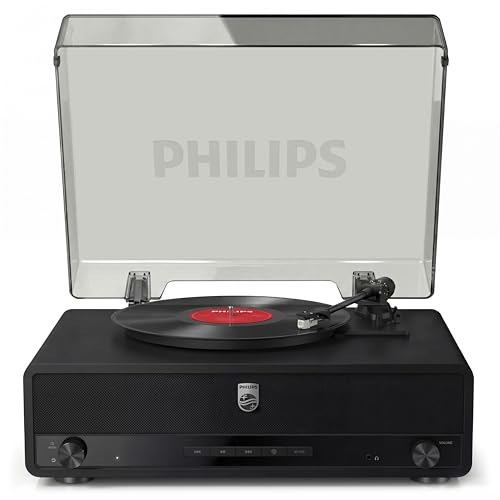
3. Philips Record Player All-in-One Bluetooth Turntable
A Philips Record Player All-in-One Bluetooth Turntable (record player), per the listing. Check price on Amazon.
Good for: vinyl listening. Watch out: Check speakers vs external audio.

Best for vinyl listening
4. Retrolife 10-in-1 Record Player with Speakers
A Retrolife 10-in-1 Record Player with Speakers (record player), per the listing. Check price on Amazon.
Good for: vinyl listening. Watch out: Check speakers vs external audio.

Best for vinyl listening
5. Retrolife Vinyl Record Player with Speakers Bluetooth Vinyl
A Retrolife Vinyl Record Player with Speakers Bluetooth Vinyl (record player), per the listing. Check price on Amazon.
Good for: vinyl listening. Watch out: Check speakers vs external audio.

Best for vinyl listening
6. Seasonlife Vinyl Record Player with Speakers Wood Black Vintage
A Seasonlife Vinyl Record Player with Speakers Wood Black Vintage (record player), per the listing. Check price on Amazon.
Good for: vinyl listening. Watch out: Check speakers vs external audio.


Best for vinyl listening
7. Audio-Technica AT-LP60X-BK Fully Automatic Belt-Drive Stereo
An Audio-Technica AT-LP60X-BK Fully Automatic Belt-Drive Stereo (record player), per the listing. Check price on Amazon.
Good for: vinyl listening. Watch out: Check speakers vs external audio.

How to Choose
Size and fit
Check dimensions for your space or vehicle.
Build and materials
Durable materials last longer.
Ease of use
Simple setup and cleaning help.
Belt-Drive, Direct-Drive and All-in-One Designs
Record players are built in a few basic ways, and the design affects both sound and convenience. A belt-drive turntable uses a rubber belt between the motor and the platter. The belt helps keep motor vibration away from the record, which is why belt-drive designs are popular for listening at home. The belt is a wear part, and it stretches over time, so check whether replacements are available.
A direct-drive turntable puts the motor under the platter. It starts up quickly and holds speed steadily, and it is common among turntables meant for DJs. For ordinary listening either approach can work well, so read the listing rather than assuming one is better.
All-in-one or suitcase-style players package the platter, tonearm, amplifier and small speakers in a single case. They are simple to set up and easy to move. The trade-off, noted at the top of this post, is that lightweight arms and basic styluses can press harder on the groove, which may wear records faster. Their small built-in speakers also limit bass and clarity.
- Choose a belt-drive component player if you want to add better speakers later.
- Choose an all-in-one if your priority is easy, casual play and gifting.
- Check the listing for how the tonearm and cartridge are described.
Cartridge, Stylus and Record Wear
The cartridge and stylus are the parts that touch the record, so they matter more than their size suggests. The stylus (the needle tip) rides in the groove, and the cartridge turns its movement into an electrical signal. A worn or poorly shaped stylus can distort sound and wear the groove walls over time.
Two points are worth checking before you buy. First, whether the cartridge and stylus can be replaced. Some turntables have a replaceable stylus that the maker sells, while others use a fixed or unusual unit that is hard to replace. Second, whether the tracking force, which is how hard the stylus presses, is adjustable or stated in the manual. Too much force speeds wear, and too little can make the stylus skip.
Styluses are consumable. Wear depends on how many hours you play and how clean your records are, so the maker’s manual is the best guide to when to replace one. Warning signs include fuzzy or distorted sound, a harsh edge on loud passages, and mistracking on records that used to play well.
Keep the stylus clean with a soft brush, moving gently from back to front, and never touch it with a finger. A bit of care protects both the needle and your collection.
Speeds, Record Sizes and What the Player Handles
Most records are played at 33 1/3 or 45 revolutions per minute, and some older discs use 78. A few turntables offer only two speeds, while others add the third. Check the listing, because playing a record at the wrong speed makes it sound too slow or too fast, and a 78 record needs a suitable stylus.
Records come in different diameters. Twelve-inch records are the standard album size, seven-inch discs are singles, and ten-inch discs also exist. Some players have an adapter for seven-inch records with the large center hole, or a spindle insert you place on the platter. Make sure the adapter is included if you own singles.
Automatic and manual operation is another choice. A fully automatic player lifts and returns the arm at the end of a side, which is convenient and reduces the risk of leaving the needle in the run-out groove. A manual player makes you lift and place the arm yourself, giving more control and sometimes a simpler mechanism.
- Match the speeds to the records you own.
- Check whether the cueing lever is damped, so the arm lowers gently.
- Confirm that the platter mat and any adapters are in the box.
Bluetooth, Built-in Speakers and Upgrades
Bluetooth turntables send the sound wirelessly to a speaker or headphones, which cuts down on cables. Look at what the listing says about the direction: some units send audio out to Bluetooth speakers, while others can also receive audio from a phone. Pairing steps and range are in the manual, and walls or distance can interrupt the signal.
Wireless links compress audio, so some listeners prefer a wired connection with an amplifier for the best quality. If a turntable offers both, you can start with Bluetooth and move to a wired setup later. Look for line or RCA outputs and for a switch that turns the built-in preamp on or off.
Built-in speakers are convenient, and many of the players here include them. They suit casual listening in a small room. If you care about fuller sound, the simplest upgrade path is a player with an output that you can send to a pair of powered speakers or a stereo receiver.
Think about the whole system, not only the turntable. A modest turntable with good speakers often sounds better than a fancy turntable played through weak speakers, and extras like a headphone jack or USB output can add flexibility. Always check the listing for exactly which outputs are included.
Setup, Troubleshooting and When to Replace Parts
When you unpack a turntable, follow the manual in order. Typical steps include removing the shipping lock or transit screw, fitting the platter and belt, adding the mat, attaching the counterweight if there is one, and setting the arm. Take your time with the belt, which should sit around the motor pulley and the platter’s rim without twists.
Common problems have simple causes:
- Skipping or repeating often means dust on the stylus, a warped record or an arm that is not balanced.
- A low hum can come from a missing ground wire, a poor cable, or placing the player near other electronics.
- Wrong pitch usually means the wrong speed setting or a stretched or slipping belt.
- Very quiet sound can mean the signal needs a phono preamp, or the preamp switch is set incorrectly.
- Crackling may be a dirty record or stylus rather than a fault in the player.
Replace the belt if the platter slows or wobbles, and replace the stylus when playback turns harsh. Check whether your model uses a standard stylus before you buy, and keep the maker’s guidance about replacement parts handy.
If a player will not start, check the power adapter and the lock screw before assuming the motor has failed. Many problems that look serious turn out to be setup steps that were missed.
Tonearm Basics: Tracking Force and Anti-Skate
Two settings decide how kindly a turntable treats your records: tracking force and anti-skate. Tracking force is the downward pressure the stylus puts on the groove, measured in grams. Too light and the stylus can skip or mistrack, chattering against the groove walls. Too heavy and it presses harder than it should, which can speed up wear on both stylus and vinyl. Every cartridge has a recommended range, usually printed in its manual or on the manufacturer’s site, and the best practice is to stay inside it.
Anti-skate counters the inward pull that a spinning record creates on the tonearm. Without it, the stylus can lean against the inner groove wall, which may cause uneven wear and slightly distorted sound in one channel. On many entry-level players, these settings are preset at the factory and cannot be changed, which is part of why they are easy to use. On adjustable models, a small counterweight and a dial let you fine-tune both.
- Check whether the arm has a fixed or adjustable counterweight.
- If it does, set the tracking force with a small stylus scale rather than guessing.
- Level the turntable first, because a tilted platform changes how the arm behaves.
If you buy a fully automatic model, most of this is handled for you, and the trade-off is less room for later adjustment.
Placement, Vibration and Isolation
A turntable is sensitive to vibration, and the usual enemy is the speaker sitting nearby. When bass from a built-in or adjacent speaker shakes the surface, the stylus picks it up and feeds it back as a muddy rumble or even a skipping groove. This is a common complaint with all-in-one players that put speakers right beside the platter.
A few simple choices reduce the problem:
- Put the player on a solid, level piece of furniture rather than a thin shelf or a wobbly table.
- Keep any separate speakers on their own stand or at least a foot or two away.
- Avoid placing the record player on top of a speaker or a refrigerator.
- Close the dust cover while playing if the lid is hinged, since it lowers airborne vibration and keeps dust off the stylus.
- Walk softly near the turntable if your floor is springy.
If the player has adjustable feet, use them to level the plinth, and check with a small bubble level rather than by eye. A stable, quiet location does more for sound than almost any accessory.
Hum, Grounding and Cable Problems
A low, steady hum is one of the more annoying setup problems. It often comes from a missing or loose ground wire between the turntable and a phono preamp or amplifier. If your player has a thin ground lead, usually a small wire ending in a spade connector, attach it to the ground terminal on the amp or preamp. Leaving it loose invites hum.
Other causes are worth checking too:
- Power adapters and cables lying across the signal cables can induce noise, so separate them.
- A phono preamp placed right next to a power transformer can pick up interference.
- Damaged or low-quality RCA cables may cause crackle or channel dropouts.
- If the player has a switch for phono or line output, confirm that it matches what you plugged into.
Bluetooth models avoid some of these wiring issues, though they can still pick up vibration. If the hum goes away when the stylus is lifted, the problem is in the turntable or its wiring; if it persists, look at the amp or the cables.
Starting a Record Collection Sensibly
A good player is only half of the hobby; the records matter as well. New pressings usually arrive clean and flat, but they cost more. Used records are cheaper and give you access to older albums, though condition varies widely. Look for records that are flat, with glossy grooves, no deep scratches, and no warps. Sleeves with ring wear or water damage often hide poor discs.
When you buy used, inspect the vinyl under a bright light, tilt it to see surface marks, and ask about return policies for online purchases. Seek out cleaned and graded copies if you are unsure. Store records upright rather than stacked, away from heat and sunlight, and keep them in clean inner sleeves. Handle discs by the edges and label so fingerprints stay off the grooves, and give the stylus a gentle brush before each side. A small, cared-for collection will sound better, and last longer, than a large pile of neglected records.
It also helps to keep a small cleaning kit near the player: a carbon-fiber brush for records, a soft stylus brush, and a microfiber cloth for the platter mat. Brush records before each play and the stylus after, always moving from back to front. Ten seconds of routine care keeps surface noise down and extends the useful life of the stylus.
Finally, write down the date you start using a new stylus. Most are rated for a few hundred hours, and a note on the plinth makes the replacement decision easy rather than a guess.
Your First Records: Buying Vinyl Without Wasting Money
A new turntable creates an immediate hunger for records, and the way you feed it in the first months decides whether a collection grows into a library or a pile of regrets. Start with the music you already love in other formats, because a familiar album teaches your ears what your system sounds like faster than any test record, and it guarantees the record will actually be played. Buy the best pressing you can reasonably afford of the albums that matter most, rather than a larger number of cheap pressings of music you half like; a small shelf of loved records beats a crate of maybes every time, and vinyl rewards commitment because each purchase is physical, priced accordingly and played deliberately.
Learn the vocabulary of condition before you buy secondhand. Sleeves and media are graded separately, descriptions vary between sellers, and a record that looks clean can still play with crackle if it was played for years on worn equipment. Inspect under strong light for scratches that catch your fingernail, warps that will make the tonearm ride like a boat, and labels that show heavy spindle wear from a hard previous life. Clean every used record before its first play on your machine, with at least a proper brush and ideally a wet clean for anything with a dusty past, because grit in the grooves is ground into the vinyl by your stylus on the first pass and the damage is permanent.
New records need a lighter version of the same care: a brush before and after play, storage upright in a cool place away from heat and sun, and inner sleeves that do not shed or grip. Handle every record by its edges and label, return it to its sleeve immediately after play, and never leave one leaning on a radiator of the modern world, which is to say near a heater, a sunny window or a hot amplifier. A collection cared for this way sounds as good in ten years as it does today, which is the entire point of owning music in a format built to last.
Placement and Setup: The Hour That Decides Everything
Where the turntable lives matters more than most accessory purchases. It needs a surface that is level, rigid and away from the vibration of footsteps and speakers, because the stylus reads microscopic groove movements and cannot tell them from the tremor of a bouncy floor or a speaker’s bass arriving through the shelf. A heavy, stable stand or a wall shelf in a room with lively floors transforms a modest deck’s performance, while the same deck on a wobbling bookcase will mistrack, skip and disappoint. Keep the player away from direct sun and heat, level it with a small spirit level or a phone app, and route its cables away from power supplies where hum breeds, following the grounding guidance in the earlier sections.
For the automatic Audio-Technica decks in this guide, setup is mercifully short: place, level, remove the stylus guard, let the machine handle the arm. For all-in-one players with built-in speakers, placement carries an extra tension, because the speakers and the turntable share a body, and volume becomes a setup variable: feedback and vibration arrive sooner at high volume on a shared chassis, which is one reason the upgrade path in this guide leads toward separate speakers. Whatever you own, finish setup with a record you know well, played at your normal volume, and walk the room listening for hum, rattle and imbalance while the music is familiar enough to reveal them.
Bluetooth pairing deserves its own setup minute. Pair the turntable with your chosen speaker or headphones deliberately, check for the delay that wireless adds if you also plan to watch the record spin in time with anything, and remember that Bluetooth convenience trades a measure of the fine detail that made you buy vinyl in the first place. Many owners settle into a pattern: wired listening for albums that deserve attention, Bluetooth for background and for rooms the cables cannot reach. That pattern is not a compromise to apologize for; it is the format being used with its eyes open.
The Turntables in This Guide, Compared by Listener
The two Audio-Technica listings anchor the serious end of this beginner list: the same respected automatic belt-drive design, one with Bluetooth and one without. They suit the listener who expects to grow, because the deck works beautifully on day one with no setup skill and still rewards better speakers, a better cartridge path and a growing collection years later. Choose the wireless version if your listening space or your household’s habits genuinely call for it; choose the wired one if your amplifier sits beside the deck and you would rather spend the difference on records. Either way, you are buying the platform the rest of your system will be built around.
The all-in-one players, from Retrolife and Seasonlife and the Philips design, answer a different brief: music today, in one box, with speakers included and the record experience complete the moment it is unboxed. They suit first homes, bedrooms, gifts and anyone whose priority is the ritual and the music rather than a hi-fi journey, and the multi-format designs that also play other media suit households clearing out mixed collections of discs and tapes. Their honest limit is the ceiling: built-in speakers and fixed components cap how far the sound can grow, and the listener who catches the upgrade bug will replace the whole unit rather than improve it in stages.
Neither family is the wrong answer; they are answers to different questions. The mistake is buying an all-in-one while secretly wanting a system, or buying a component deck while secretly wanting a self-contained music box for the kitchen. Name your actual intention before you choose, and the right pick from this list becomes obvious: platform for the grower, completeness for the settler, and in both cases a machine that will be used daily, which is the only specification that never lies.
Stylus Care and the Habits That Protect Records
The stylus is a tiny, hard point dragged through a groove at real speed, and it wears even as it plays your records correctly. A worn stylus does not announce itself dramatically; it begins by softening detail and adding distortion on loud passages, and it ends by damaging the records you love. Learn your cartridge’s expected life from the maker, inspect the stylus under magnification if you have the means, and replace on schedule rather than on suspicion. Keep it clean with the proper brush or pad, always moving in the direction the maker directs, because a dirty stylus sounds dull and grinds collected grit through every groove it meets.
Dust is the daily enemy, and the defense is ritual: brush the record before play, brush it again before it returns to the sleeve, keep the turntable’s lid down when it is idle if it has one, and never touch the playing surface with fingers whose oils attract and hold the dust you are fighting. Anti-static habits help in dry rooms and heating season, when records crackle with charge and pull dust from the air as they spin. None of this takes more than seconds per side, and it is the difference between a collection that ages gracefully and one that slowly sands itself down.
Store the whole system with the same care: records upright and neither leaning nor packed tight, the turntable covered, the stylus guard used when the machine is moved or cleaned around. Children and pets can absolutely live with vinyl, provided the deck sits out of casual reach and the household rule is clear that the spinning disc is watched, not touched. A system treated as furniture with manners, rather than as a fragile shrine, survives real life and keeps its welcome in the room.
More Questions About Beginner Turntables
Do I need an amplifier with a phono stage?
Only if your turntable and speakers require one. Many beginner decks, including the designs in this guide, include a built-in phono stage with a switchable output, which lets them connect to ordinary powered speakers or amplifier inputs without a dedicated phono input. Check which mode your deck is set to and match it to the input you use, because the wrong pairing is the most common cause of a new system sounding whisper-quiet or harshly loud and distorted. The fix is a switch and the right socket, not a new purchase.
Why do some records skip on my new player when others play fine?
Start with the boring causes: the record itself may carry damage or heavy bass passages that test tracking, the deck may not be level, or vibration may be reaching it through the surface. Play the same passage at lower volume and on a more solid surface as a test. Lightweight all-in-one players are more sensitive to these factors than heavier component decks, which is physics rather than fault. A record that skips on every system is a damaged record; a system that skips on many records needs its placement and level revisited before its parts are blamed.
Is Bluetooth from a turntable still really vinyl?
The record is genuinely being played, and then its sound is converted and sent wirelessly, which adds the conveniences and the small compromises described earlier. Purists wire everything; most households mix. The honest answer is that the ritual, the collection and the music remain vinyl in every way that matters to most listeners, and the listener who later wants the last measure of detail can add a wired path without replacing the deck, if the deck offers one. Choose based on how you will actually listen on a tired Tuesday, not on how you listen in theory.
How many records should I own before upgrading anything?
More than feels sensible, because records are the part of the system you keep forever while equipment rotates around them. A useful discipline is to let the collection lead: upgrade speakers when your records deserve to be heard better, upgrade the cartridge when your records are being played often enough to deserve protection and detail, and upgrade the deck when its limits are the ones you actually hear. Money spent in that order is almost never regretted, and money spent in the reverse order almost always is.
Building the Listening Habit: Why Vinyl Asks More and Gives More
Vinyl changes behavior before it changes sound. An album side is a commitment of unbroken attention that streaming never asks for, and most new owners find the ritual, choosing, cleaning, placing, listening through, becomes the pleasure rather than the price. Protect that ritual in how you set up: keep the records where the player is, keep the brush where your hand expects it, and make starting a record a two-minute pleasure instead of a five-minute expedition through cupboards. Systems that are easy to start get played on weeknights; systems that require a ceremony wait for weekends and then for holidays, and a turntable that is not played is furniture with a power cord.
Share the habit deliberately. Records are unusually social media: guests browse a shelf in a way they never browse a playlist, children understand an object that makes music in a way that demystifies sound itself, and a household that listens together argues happily about sides and pressings for years. Let people handle records with the one rule taught kindly, edges and label only, and the collection becomes part of the home’s life rather than a fragile exhibit. The owners who keep vinyl for decades are almost never the ones with the most expensive decks; they are the ones whose records stayed in the middle of their lives.
What should I do about records that arrive warped or noisy when new?
Contact the seller promptly, because a new record should play cleanly and sit flat, and reputable sellers replace pressing faults without drama. Distinguish a pressing fault from a setup symptom first, using the checks in this guide: play another record that you trust, confirm the deck is level and the stylus is clean, and only then conclude the disc itself is at fault. Keep receipts and buy new vinyl from sellers whose returns process you have read, since the occasional faulty pressing is a normal cost of the format and a fair seller is part of the equipment.
Should I keep the box and packaging?
For the turntable, yes, if you have any storage corner at all. The original packaging is the only genuinely safe way to move a deck with a tonearm and a platter, and homes move, rooms change and decks get serviced. Flatten what can be flattened, keep the transit pieces and the manual with the box, and future you, carrying the machine down a staircase, will be grateful. For records, the equivalent kindness is keeping spare inner and outer sleeves in the house, so a torn sleeve is replaced the day it fails rather than at some later date that never arrives.
Start with the music you love, keep the stylus clean and the records upright, and the system will grow with you for as long as you keep listening.
Enjoy the first side.
Frequently Asked Questions
Is it easy to install?
Check the manual.
Is it worth the price?
Budget options cover basics.
How do I care for it?
Clean as directed.
What is the difference between belt-drive and direct-drive?
A belt-drive turntable uses a rubber belt between the motor and platter, which helps isolate vibration. A direct-drive turntable puts the motor under the platter. Both can play records well, so check the listing and your needs.
Do I need an amplifier or speakers for a record player?
Not if the player has built-in speakers. Players without them need powered speakers or a receiver, and some also need a phono preamp. Check the outputs listed.
What is a phono preamp?
It boosts the very small signal from the cartridge to a level that normal audio inputs can use. Some turntables include one, and some receivers have a phono input, so check which you need.
How often should I replace the stylus?
It depends on how much you play and how clean your records are. Follow the maker's guidance, and replace it when the sound turns harsh or begins to skip.
Can a cheap record player damage my records?
Players with heavy tracking force or worn styluses can wear grooves faster. Look for a player with a replaceable stylus and a lightweight arm, and keep both the records and the stylus clean.
Why does my record sound too fast or too slow?
Most likely the speed setting is wrong, or the belt is stretched or slipping. Check the speed switch against the record label, then inspect the belt.
Can I connect Bluetooth headphones to a turntable?
Some models can send audio to Bluetooth headphones or speakers. Check the listing for output support and pairing instructions.
Do I need to clean new records?
A brush before each play helps remove loose dust. Deeper cleaning is useful for second-hand records, following guidance for the cleaning method you choose.
What is tracking force on a record player?
Tracking force is the downward weight, measured in grams, that holds the stylus in the groove. Too little can cause skipping and distortion, while too much adds wear. Each cartridge lists a recommended range, so check the manual. Many beginner players come preset and need no adjustment.
Why does my turntable hum?
The most common cause is a loose or unattached ground wire between the turntable and the amplifier or preamp. Power cables lying across signal cables, a nearby transformer, or a faulty RCA cable can also cause it. Try attaching the ground wire and separating the cables.
Should I buy used or new records as a beginner?
Both work. New records are clean and consistent but cost more, while used records are cheaper and offer variety but need inspection for scratches, warps and dirt. Start with a few used records in good condition, and consider buying new copies of favorites you play often.
How should I store vinyl records?
Store them upright, not stacked, in a cool, dry place away from direct sunlight and heat. Keep each record in a clean inner sleeve and outer cover, and avoid leaning them at an angle. Stacking can cause warps and ring wear on the jackets.
Questions to Ask Before You Buy
- Do you already own speakers or an amplifier, or do you need sound built in?
- Which outputs does your other gear accept: RCA, headphone, or wireless?
- Does the unit play only the common record sizes, or the less usual ones too?
- Do you want to lift the arm yourself, or have it cue automatically?
- Is there a flat, vibration-free surface for it in the room?
- Can the stylus be swapped when it wears out, and are replacements sold by the maker?
Compatibility Checks
Before ordering, match the connections on the turntable to what sits on your shelf. Some players include a preamp that boosts the signal, while others expect your receiver to supply one with a dedicated phono input. Plugging a mismatched set together can leave you with very quiet or distorted sound. If you plan to listen through a wireless speaker or headphones, confirm the wireless standard listed by the maker.
Also check physical fit. A lid, a wide base, or a tall dust cover needs clearance above and behind the cabinet.
Storage and Care Notes
Keep records upright in sleeves, away from heat and direct sunlight, since warmth can bend vinyl. Brush each disc with a soft carbon-fiber or velvet brush before playing to lift loose dust. Handle discs by the edges and label so fingerprints stay off the grooves.
Keep the dust cover closed when the turntable is idle, and clean the stylus gently according to the maker’s instructions. Level the surface so the platter spins evenly, and avoid placing the unit right beside a loud speaker, where vibration can feed back into the needle. Replace a worn stylus on schedule, since an old one can damage your collection over time.
Bottom Line
Basic players with speakers are cheap; belt-drive models sound better.
More Audio & Video Guides
- Best Bluetooth TV Adapters
- Best Karaoke Speakers with Microphones
- Best Foldable and Stand Projector Screens
- Best Full-Motion TV Mounts
- Best HDTV Antennas for Local Channels
- Best Roku and Google TV Streaming Devices
- Best Voice Recorders for Meetings and Classes
- Best Bedside Clock Radios with Bluetooth