The best mirrorless aps cameras are the cameras that give a beginner or an enthusiast a large sensor, interchangeable lenses, and fast autofocus, without the size, weight, and cost of a full-frame body. APS-C is the sensor size in the middle: larger than a phone or a compact camera sensor, smaller than a full-frame sensor, and the right balance for most photographers. This guide covers six APS-C mirrorless cameras: the Sony a6400, the Canon EOS R50, the Fujifilm X-T30 II, the Nikon Z 30, the Sony ZV-E10, and the Fujifilm X-S20, with kit lenses and body-only options among them.
A mirrorless APS-C camera is a different purchase from a phone camera or a compact camera, even though the pictures can look similar on a small screen. A mirrorless camera has a sensor that gathers far more light, a lens that can be changed for a different view, and an autofocus system that tracks a face or an eye across the frame, and those three things show in the picture when the light is low, the subject moves, or the print is large. A phone is convenient, but a mirrorless camera is the tool for a photograph that matters.
The six cameras in this guide cover the main ways people shoot. The Sony a6400 is the compact all-rounder with real-time Eye autofocus and a 16-50mm kit lens. The Canon EOS R50 is the beginner pick with a 24.2MP sensor and an RF-S 18-45mm kit lens. The Fujifilm X-T30 II is the classic-styled pick with an XC 15-45mm lens. The Nikon Z 30 is the compact pick for stills and video with a wide-angle zoom. The Sony ZV-E10 is the vlogging pick with a 24.2MP sensor and a vari-angle screen. The Fujifilm X-S20 is the body-only pick for a buyer who already owns lenses. Every pick states its brand, its model, and its sensor in the listing title, so a buyer can tell exactly which camera is in the box.
This guide covers six best mirrorless APS-C cameras, and every one of them is a genuine APS-C mirrorless camera with interchangeable lenses, which is the definition the keyword sets. The comparison table below gives the short version, and the sections after it give the detail for each camera, including who each one fits and where each one falls short. The buying guide after the picks explains how to choose between a kit and a body, how to think about lenses, and what to check before ordering.
An APS-C camera also deserves a word about lenses, because the camera body is only half of the system. A kit lens covers everyday shooting, from a wide view of a room to a short portrait, and it is the right lens to learn on. A second lens, such as a longer zoom or a fast prime, is the purchase that follows, and it is the reason to choose a camera system with a lens range that fits the photography the buyer wants to do. The right camera is the one whose lenses match the pictures the buyer wants to take, and this guide is built around that idea.
In this guide
Quick picks: best mirrorless aps cameras
| # | Product | Where to buy |
|---|---|---|
| 1 | Sony Alpha a6400 Mirrorless Camera | Check on Amazon |
| 2 | Canon EOS R50 Mirrorless Camera | Check on Amazon |
| 3 | FUJIFILM X-T30 II Mirrorless Camera | Check on Amazon |
| 4 | Nikon Z 30 Mirrorless Camera | Check on Amazon |
| 5 | Sony ZV-E10 APS-C Mirrorless Camera Body | Check on Amazon |
| 6 | Fujifilm X-S20 Mirrorless Camera Body | Check on Amazon |
How the picks were chosen for the best mirrorless aps cameras
The picks were chosen from the product listings returned by the site product search, and only genuine APS-C mirrorless cameras made the list. Each listing title was checked for the brand, the model, and the APS-C sensor, and a camera was only linked when all three matched the listing. Full-frame cameras, compact cameras with fixed lenses, and accessories such as cases, straps, and memory cards were not counted as picks, because the article is about APS-C mirrorless cameras, not about camera gear in general.
Sensor and mount were the first filter, because an APS-C camera is defined by both. Every pick in this guide has an APS-C sensor stated in its title, and every pick takes interchangeable lenses on its own mount: Sony E-mount, Canon RF-S, Fujifilm X-mount, or Nikon Z-mount. A camera whose title did not state the sensor size was not chosen, because the buyer should not have to guess, and a camera with a different sensor size was excluded even when the model name looked similar.
Kit or body was the second filter. A kit lens suits a buyer who owns no lenses yet, because the camera is ready to shoot from the box, and the a6400, R50, X-T30 II, and Z 30 picks in this guide are all kit options. A body-only camera suits a buyer who already owns lenses, because it costs less and avoids a duplicate lens, and the ZV-E10 and X-S20 picks in this guide are both body options. The guide includes both kinds so that a buyer at either stage can find a fit.
The third filter was the listing itself. Every pick is a new listing from a known camera brand: Sony, Canon, Fujifilm, or Nikon. Listings for used or renewed cameras were excluded, and listings whose titles named a different model, a different sensor, or a different lens were excluded too. The result is six cameras that a buyer can order with confidence that the camera in the box matches the camera in the title.
What makes a mirrorless APS-C camera good
A good APS-C camera is first of all good in low light, because the sensor is the part that gathers light, and an APS-C sensor gathers far more than a phone sensor. A camera that shoots cleanly indoors, at dusk, or in a dim restaurant will take the pictures a phone cannot, and that is the first reason to own one. The 24.2MP sensors in the Canon R50 and the Sony ZV-E10, and the 26MP sensor in the Sony a6700 class, are the standard for this size, and the cameras in this guide all sit at or near that standard.
Autofocus is the second quality that matters, because a camera that cannot find the subject cannot take the picture. Modern APS-C cameras track a face or an eye across the frame, and the Sony a6400 in this guide is known for its real-time Eye autofocus, which locks onto an eye and follows it as the subject moves. A camera with fast, reliable autofocus lets the photographer think about the picture instead of the focus, and that is the difference between a camera that is used and a camera that stays in a bag.
Lenses are the third quality, because a mirrorless camera is a system, not a single purchase. A buyer should choose a camera whose mount has the lenses they want: a wide zoom for travel, a portrait lens for people, a long zoom for wildlife, or a fast prime for low light. Sony E-mount, Canon RF-S, Fujifilm X-mount, and Nikon Z-mount all have growing lens ranges, and the kit lens that comes with four of the picks in this guide is the right lens to learn the system on before buying a second one.
Finally, a good APS-C camera is one the buyer will actually carry. A camera that is small and light goes on walks, trips, and evenings out, while a camera that is heavy stays at home, and the best pictures are the ones that are taken. The Nikon Z 30 in this guide is described in its title as the most compact and lightweight mirrorless camera in its range, and the Sony a6400 is described as compact too, and that size is a real part of why these cameras are good: they are there when the picture happens.
Kit lenses, body-only cameras, and how to choose between them
A kit lens is the lens that comes in the box with the camera, and it is the right choice for a buyer who owns no lenses yet. The Sony a6400 comes with a 16-50mm lens, the Canon EOS R50 comes with an RF-S 18-45mm lens, the Fujifilm X-T30 II comes with an XC 15-45mm lens, and the Nikon Z 30 comes with a 16-50mm wide-angle zoom lens, and each of those lenses covers a wide view for rooms and landscapes and a short view for portraits. A kit lens is not the sharpest lens a system offers, but it is the lens that lets a buyer start shooting on the first day.
A body-only camera is the camera without a lens, and it is the right choice for a buyer who already owns lenses for the same mount. The Sony ZV-E10 body and the Fujifilm X-S20 body in this guide are both body options, and they cost less than the same camera with a kit lens, because the buyer is not paying for a lens they do not need. A body-only camera also suits a buyer who wants to choose their first lens deliberately, rather than accepting the kit lens that comes in the box.
Video is the other decision, because every camera in this guide shoots video as well as stills, but they are not equal at it. The Sony ZV-E10 is built for vlogging, with a vari-angle screen that flips to face the presenter, a directional microphone, and 4K video, and it is the pick for a buyer whose main work is video. The Canon EOS R50 and the Nikon Z 30 also shoot 4K video and suit a buyer who mixes stills and video, while the Fujifilm X-T30 II and X-S20 suit a buyer who values the film-like colours Fujifilm is known for.
Brand is the final decision, and it is really a decision about lenses and colours. Sony offers the widest lens range and the fastest autofocus, Canon offers a simple menu and a friendly beginner experience, Fujifilm offers classic controls and distinctive colours, and Nikon offers compact bodies and a growing Z-mount range. There is no wrong brand here, only a preference, and the buyer who already owns lenses for one mount should stay with that mount, because lenses cost more than bodies over time.
Quick picks at a glance
| Camera | Sensor | Lens | Best for |
|---|---|---|---|
| Sony a6400 | APS-C | 16-50mm kit | All-round shooting |
| Canon EOS R50 | 24.2MP APS-C | RF-S 18-45mm kit | Beginners |
| Fujifilm X-T30 II | APS-C | XC 15-45mm kit | Classic styling |
| Nikon Z 30 | APS-C | 16-50mm wide zoom | Stills and video |
| Sony ZV-E10 | 24.2MP APS-C | Body only | Vlogging |
| Fujifilm X-S20 | APS-C | Body only | Lens owners |
The best mirrorless APS-C cameras

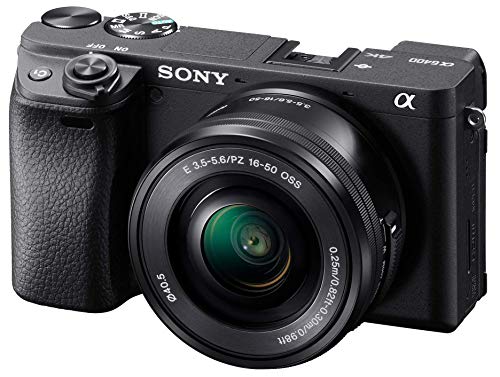
Sony Alpha a6400 Mirrorless Camera (ILCE-6400L/B)
The Sony Alpha a6400 is the compact all-rounder in this guide, and it is the camera to choose when the buyer wants one APS-C camera for everything. The listing title states the brand, the Alpha a6400 name, the compact APS-C design, the interchangeable lens mount, the real-time Eye autofocus, the 4K video, the flip screen, and the 16-50mm lens, with the model code ILCE-6400L/B, in black. Real-time Eye autofocus is the feature that sets it apart, because it locks onto an eye and follows it as the subject moves.
An all-round camera has to do many things well, and the a6400 does: the APS-C sensor gathers enough light for indoor shooting, the Eye autofocus keeps portraits sharp, the 4K video covers family films, and the flip screen helps with selfies and low-angle shots. The 16-50mm kit lens covers a wide view for rooms and landscapes and a short view for portraits, so the camera is ready to shoot from the box. The compact size is the other reason to choose it: it goes on walks and trips where a larger camera would stay at home.
Key specs:
- Sensor: APS-C
- Model: ILCE-6400L/B
- Lens: 16-50mm kit lens
- Video: 4K
- Autofocus: real-time Eye autofocus
Strengths:
- Real-time Eye autofocus tracks faces and eyes
- Compact size is easy to carry
- 4K video and flip screen cover video too
Trade-offs:
- Kit lens is a starter lens, not a fast prime
- No in-body stabilisation stated in the title
- Small body means a small grip for large hands
The Sony a6400 fits the buyer who wants one camera for photos and video. It is the pick for travel, family, portraits, and everyday shooting, and for a beginner who wants a camera that will still be useful in two years time.
Best for: all-round photos and video in a compact body. Not suited for: a buyer who needs a larger grip or a faster kit lens.
Check price on Amazon: Sony Alpha a6400 Mirrorless Camera

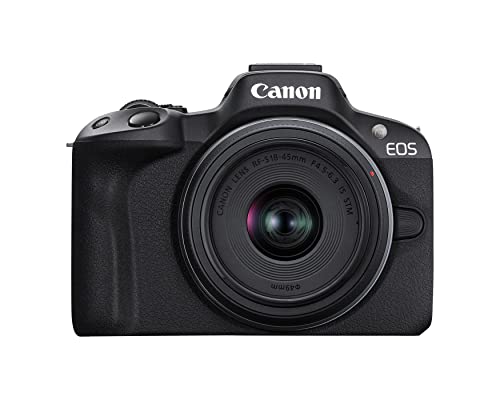
Canon EOS R50 Mirrorless Camera with RF-S 18-45mm Lens Kit
The Canon EOS R50 is the beginner pick in this guide, and it is the camera to choose when the buyer is moving from a phone to a first real camera. The listing title states the brand, the EOS R50 name, the RF-S 18-45mm F4.5-6.3 IS STM lens kit, the 24.2MP CMOS APS-C sensor, the 4K video, and the uses for vlogging, content creation, photography, and digital camera work, in black. The 24.2MP sensor is the standard for this class, and the kit lens covers everyday shooting.
A beginner camera has to be easy to learn, and the R50 is built for that: the menu is simple, the autofocus finds faces and eyes without fuss, and the 4K video covers the vlogging and family films that a new photographer will want to try. The RF-S 18-45mm kit lens is a light, compact zoom that covers a wide view for rooms and a short view for portraits, and the image stabilisation in the lens helps with indoor shooting. The R50 is the camera for a buyer who wants to learn photography without fighting the camera.
Key specs:
- Sensor: 24.2MP CMOS APS-C
- Lens: RF-S 18-45mm F4.5-6.3 IS STM kit
- Video: 4K
- Use: vlogging, content creation, photography
- Colour: black
Strengths:
- 24.2MP APS-C sensor suits stills and video
- Kit lens covers everyday shooting
- Simple to learn for a first camera
Trade-offs:
- Kit lens is slow at the long end
- Beginner focus means fewer manual controls
- No second lens included
The Canon EOS R50 fits the beginner who is buying a first mirrorless camera. It is the pick for learning photography, for vlogging, and for family pictures, and for a buyer who wants Canon colours and a simple menu.
Best for: a first mirrorless camera and learning photography. Not suited for: an experienced photographer who wants more manual controls.
Check price on Amazon: Canon EOS R50 Mirrorless Camera
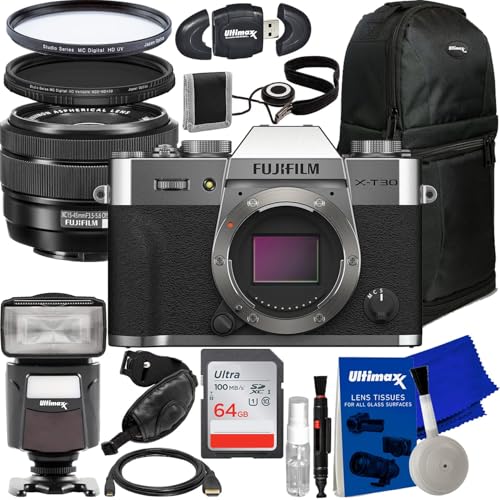
FUJIFILM X-T30 II Mirrorless Camera with XC 15-45mm Lens (Silver)
The Fujifilm X-T30 II is the classic-styled pick in this guide, and it is the camera to choose when the buyer wants a camera that looks and feels like a film camera. The listing title states the brand, the X-T30 II name, the XC 15-45mm OIS PZ lens, the silver colour, and the bundle extras: a 64GB Ultra SDXC memory card, a sling backpack, a variable neutral density filter, and more, as a 23-piece bundle. The camera itself is the X-T30 II with the XC 15-45mm lens, and the bundle extras are the card, the bag, and the filter that come with it.
A Fujifilm camera is chosen for its controls and its colours as much as for its sensor. The X-T30 II has dials for shutter speed and exposure that a photographer can set by hand, and Fujifilm film simulations that give pictures a distinctive look straight from the camera, without editing. The XC 15-45mm lens is a compact power zoom that covers a wide view for landscapes and a short view for portraits, and the silver finish is the classic look that makes the camera pleasant to carry and to use.
Key specs:
- Brand: FUJIFILM
- Model: X-T30 II
- Lens: XC 15-45mm OIS PZ
- Colour: silver
- Bundle: 64GB card, sling backpack, ND filter
Strengths:
- Classic dials and Fujifilm film simulations
- Compact XC 15-45mm lens covers everyday shooting
- Bundle includes a memory card and bag
Trade-offs:
- Bundle extras add bulk to the purchase
- XC lens is a starter lens, not a fast prime
- Classic controls take a day to learn
The Fujifilm X-T30 II fits the photographer who loves the look and feel of a classic camera. It is the pick for street photography, travel, and portraits, and for a buyer who wants distinctive colours straight from the camera.
Best for: classic-styled travel and street photography. Not suited for: a buyer who wants a plain black body or a simple automatic camera.
Check price on Amazon: FUJIFILM X-T30 II Mirrorless Camera

Nikon Z 30 Mirrorless Camera with Wide-Angle Zoom Lens
The Nikon Z 30 is the compact pick in this guide, and it is the camera to choose when the buyer wants the smallest and lightest mirrorless camera for stills and video. The listing title states the brand, the Z 30 name, the wide-angle zoom lens, and the description of the camera as the most compact and lightweight mirrorless stills and video camera in its range, with a 16-50mm zoom lens, as a Nikon USA model. Compact and lightweight is the whole point of this camera.
A compact camera goes where a larger camera does not, and the Z 30 is built for that: it slips into a small bag, it is easy to hold up for a whole day of shooting, and it is ready for both stills and video without a change of settings. The 16-50mm wide-angle zoom lens covers a wide view for rooms, streets, and landscapes, and a short view for portraits, and the Nikon Z-mount gives the buyer a growing range of lenses to add later. The Z 30 is the camera for a buyer who wants Nikon quality in the smallest body Nikon makes.
Key specs:
- Brand: Nikon
- Model: Z 30
- Lens: 16-50mm wide-angle zoom
- Type: compact, lightweight mirrorless
- Model: Nikon USA model
Strengths:
- Most compact and lightweight in its range
- Wide-angle zoom covers everyday shooting
- Suits both stills and video
Trade-offs:
- No viewfinder stated in the title
- Kit lens is a starter lens
- Small body means a small grip
The Nikon Z 30 fits the traveller and the vlogger who want the smallest camera that still takes interchangeable lenses. It is the pick for a day bag, a holiday, or a buyer who wants Nikon quality without Nikon weight.
Best for: compact travel and video in a small body. Not suited for: a buyer who wants a viewfinder or a larger grip.
Check price on Amazon: Nikon Z 30 Mirrorless Camera


Sony ZV-E10 APS-C Mirrorless Camera Body (Black)
The Sony ZV-E10 is the vlogging pick in this guide, and it is the camera to choose when the main work is video of a person talking to a camera. The listing title states the brand, the ZV-E10 name, the APS-C sensor, the body-only design, the 24.2MP Exmor CMOS sensor, the Sony E-mount, the 4K30 and 1080p120 video, the 3-capsule directional microphone, and the 3.0-inch vari-angle touch LCD, in black. The vari-angle screen and the directional microphone are the features that mark it as a vlogging camera.
A vlogging camera has to do three things well: show the presenter what the camera sees, record clear voice, and keep the face in focus, and the ZV-E10 does all three. The vari-angle screen flips to face forward, so the presenter can check the framing, the 3-capsule microphone records voice clearly without an external mic, and the Sony autofocus keeps the face sharp while the presenter moves. The body-only design means the buyer adds the lens they want, which is the right choice for a vlogger who already owns an E-mount lens or who wants to choose a wide lens for talking to camera.
Key specs:
- Sensor: 24.2MP APS-C Exmor CMOS
- Mount: Sony E-mount
- Video: 4K30 and 1080p120
- Screen: 3.0-inch vari-angle touch LCD
- Audio: 3-capsule directional mic
Strengths:
- Vari-angle screen faces the presenter
- Directional mic records clear voice
- 4K video with Sony autofocus
Trade-offs:
- Body only: no lens included
- Built for video first, stills second
- No viewfinder stated in the title
The Sony ZV-E10 fits the vlogger and the content creator who films themselves. It is the pick for YouTube, social video, and talking-to-camera work, and for a buyer who already owns a Sony E-mount lens.
Best for: vlogging and talking-to-camera video. Not suited for: a buyer who wants a kit lens in the box or a viewfinder.
Check price on Amazon: Sony ZV-E10 APS-C Mirrorless Camera Body


Fujifilm X-S20 Mirrorless Camera Body
The Fujifilm X-S20 is the body-only pick in this guide, and it is the camera to choose when the buyer already owns Fujifilm X-mount lenses and wants a newer body for them. The listing title states the brand, the X-S20 name, and the mirrorless camera body design, with no lens included. That is a short title, and it tells the buyer exactly what is in the box: the camera body, and nothing else.
A body-only camera is the economical choice for a photographer who already owns lenses, because it costs less than the same camera with a kit lens and avoids a duplicate lens. The X-S20 is the newer Fujifilm body in this guide, and it suits a buyer who owns an X-mount lens and wants Fujifilm colours and controls in a body that will serve for years. The buyer should check that their lenses are X-mount before ordering, because the body is useless without a lens that fits it.
Key specs:
- Brand: Fujifilm
- Model: X-S20
- Type: mirrorless camera body
- Lens: body only, no lens included
- Mount: Fujifilm X-mount (lenses sold separately)
Strengths:
- Body-only price suits lens owners
- Fujifilm colours and controls
- Newer body for an existing lens collection
Trade-offs:
- No lens included: useless without an X-mount lens
- Few details stated in the listing title
- Not a first camera for a beginner
The Fujifilm X-S20 fits the photographer who already owns Fujifilm X-mount lenses. It is the pick for upgrading a body while keeping the lenses, or for a second body in a Fujifilm kit.
Best for: Fujifilm lens owners upgrading a body. Not suited for: a beginner who owns no lenses.
Check price on Amazon: Fujifilm X-S20 Mirrorless Camera Body
Buying guide for mirrorless APS-C cameras
Choose the system, not just the body
A mirrorless camera is a system, and the lenses matter more than the body over time, because bodies are replaced every few years while lenses last for a decade. Check the lens range for the mount before buying: Sony E-mount has the widest range, Canon RF-S is growing fast, Fujifilm X-mount has a strong range of compact primes, and Nikon Z-mount is growing steadily. A buyer who already owns lenses for one mount should stay with that mount, because the lenses are the investment.
Decide kit or body before ordering
A kit lens suits a buyer who owns no lenses, because the camera is ready to shoot from the box, and the kit lenses in this guide all cover everyday shooting. A body-only camera suits a buyer who already owns lenses, because it costs less and avoids a duplicate. The wrong choice is easy to spot: a body-only camera for a beginner is a camera that cannot take a picture until a lens is bought, and a kit for a lens owner is money spent on a lens that will sit in a drawer.
Think about video as well as stills
Every camera in this guide shoots video, but they are not equal at it, and the buyer should think about how much video they will shoot. A vlogger needs a vari-angle screen, a good microphone, and reliable face autofocus, which is why the Sony ZV-E10 is the vlogging pick. A buyer who shoots mostly stills should weigh the sensor, the autofocus, and the stills controls more heavily, and treat video as a bonus. The right camera is the one that fits the mix of stills and video the buyer actually shoots.
Hold the camera before buying, if possible
A camera is held for hours, and the grip, the weight, and the button layout decide whether it is a pleasure or a chore. A small body like the Nikon Z 30 suits small hands and a day bag, while a larger body suits large hands and long lenses. If a shop nearby stocks the camera, hold it, raise it to the eye, and press the buttons, because a camera that feels wrong in the hand will stay in the bag no matter how good its sensor is.
Budget for a memory card and a spare battery
A camera body and a lens are not the whole purchase. A fast memory card is needed for 4K video and for burst shooting, and a spare battery is needed for a full day out, because mirrorless cameras use more power than a phone. The Fujifilm X-T30 II bundle in this guide includes a 64GB card, but the other picks do not, so the buyer should add a card and a battery to the budget before ordering.
Using and caring for a mirrorless camera
Protect the sensor when changing lenses
The sensor is the most delicate part of a mirrorless camera, because it is exposed when the lens is off. Change lenses with the camera pointing down, in a sheltered place away from wind and dust, and put the rear cap on the lens and the body cap on the camera at once. Never touch the sensor, and never blow on it with the mouth, because moisture and dust will mark it. A clean sensor is the difference between a clean picture and a spotted one.
Keep the battery charged and the card formatted
A mirrorless camera uses power quickly, so charge the battery the night before a shoot and carry a spare for a long day. Format the memory card in the camera before a shoot, not on a computer, because the camera formats the card the way it expects, and always copy the pictures to a computer before formatting again. A card that is formatted in the camera is a card that will not fail at the worst moment.
Store the camera dry and safe
A camera lasts longest when it is stored in a cool, dry place, in a bag or a case that protects it from knocks. Do not leave it in a hot car, a damp basement, or a bathroom, because heat and moisture damage the electronics and fog the lens. A small bag of silica gel in the camera bag helps in humid weather, and a lens cap on the lens and a body cap on the body keep dust out when the camera is not in use.
Clean the lens gently
A lens that is wiped with a rough cloth will scratch, and a scratched lens will soften every picture it takes. Blow loose dust off with a blower, then wipe with a soft microfibre cloth made for lenses, using a circular motion from the centre outwards. Never use a shirt, a tissue, or a household cleaner on a lens, and never breathe on the lens in cold weather, because the moisture will fog the coating.
Common mistakes when buying a mirrorless APS-C camera
Buying a body without a lens
The most common mistake for a beginner is ordering a body-only camera and discovering it cannot take a picture until a lens is bought. The Sony ZV-E10 body and the Fujifilm X-S20 body in this guide are body-only, and they suit a buyer who already owns lenses, not a beginner. A first camera should be a kit, with a lens in the box, so it is ready to shoot on the first day.
Choosing by megapixels alone
A higher megapixel count does not make a better picture, because the lens, the autofocus, and the light matter more than the pixel count. The cameras in this guide range around 24MP, which is plenty for large prints and for cropping, and a buyer who chases megapixels will often end up with a worse lens or a worse autofocus system for the same money. Judge a camera by its pictures, not by its numbers.
Ignoring the lens range
A camera body is replaced every few years, but lenses last for a decade, so the lens range matters more than the body. A buyer who chooses a mount with few lenses will run out of options when they want a longer zoom or a faster prime, and will face the cost of changing systems. Check the lens range for the mount before buying, and make sure the lenses the buyer wants actually exist.
Forgetting the memory card and battery
A camera without a memory card cannot take a picture, and a camera with a flat battery cannot take a picture either, yet buyers often forget both. The Fujifilm X-T30 II bundle in this guide includes a 64GB card, but the other picks do not, so the buyer should order a fast card and a spare battery with the camera, because a camera that cannot shoot is a camera that stays in the box.
Final recommendation
For most buyers, the Sony a6400 is the best mirrorless APS-C camera to buy first, because it is compact, it has real-time Eye autofocus, it shoots 4K video, and it comes with a 16-50mm kit lens that covers everyday shooting. It is the all-rounder that suits travel, family, portraits, and video, and it is the camera that will still be useful in two years time.
Buyers who are learning photography should choose the Canon EOS R50, because it is simple to learn and the 24.2MP sensor and RF-S 18-45mm kit lens cover stills and video. Buyers who vlog should choose the Sony ZV-E10, because the vari-angle screen and directional microphone are built for talking to camera. Buyers who love classic cameras should choose the Fujifilm X-T30 II, and buyers who want the smallest camera should choose the Nikon Z 30.
Whatever the choice, the rule is the same: choose the system first, decide kit or body before ordering, and budget for a memory card and a spare battery. A camera is a purchase that lasts for years, and the right one is the one that is carried everywhere and used every week.
Related reading on Reviewstook: see our guides to best mirrorless cameras, best mirrorless cameras under 1000, best Fujifilm cameras for more on this topic.
Frequently asked questions about mirrorless APS-C cameras
What is an APS-C sensor, and why does it matter?
APS-C is a sensor size in the middle of the range: larger than a phone or compact camera sensor, smaller than a full-frame sensor. It gathers far more light than a phone sensor, which means cleaner pictures indoors and at dusk, and it keeps the camera and the lenses smaller and cheaper than full-frame. For most photographers, APS-C is the right balance of quality, size, and cost.
Should I buy a camera with a kit lens or body only?
Buy a kit if you own no lenses, because the camera is ready to shoot from the box, and the kit lenses in this guide all cover everyday shooting. Buy body only if you already own lenses for the same mount, because it costs less and avoids a duplicate lens. A beginner should always buy a kit, because a body-only camera cannot take a picture until a lens is bought.
Can I use a full-frame lens on an APS-C camera?
In most systems, yes, with an adapter or directly, because the mount is often shared, but the effective focal length changes: a 50mm full-frame lens behaves like a longer lens on an APS-C sensor, because the smaller sensor crops the view. Check the mount and the crop factor for the system before buying, and remember that full-frame lenses are usually larger and heavier than lenses made for APS-C.
Do I need a full-frame camera instead of APS-C?
Most photographers do not. Full-frame cameras gather more light and cost more, with larger and heavier lenses, while APS-C cameras are smaller, lighter, and cheaper, with image quality that suits large prints and professional work in most cases. A buyer should choose full-frame only when the work demands it, such as very low-light photography or very large prints, and otherwise APS-C is the better value.
What memory card and battery do I need for a mirrorless camera?
A fast memory card is needed for 4K video and for burst shooting, and a spare battery is needed for a full day out, because mirrorless cameras use more power than a phone. The Fujifilm X-T30 II bundle in this guide includes a 64GB card, but the other picks do not, so order a fast card and a spare battery with the camera, and format the card in the camera before the first shoot.