Disclosure: As an Amazon Associate, reviewstook.com earns from qualifying purchases. Links on this page are affiliate links at no extra cost to you; prices and availability change frequently, so check Amazon for the latest.
Where to Buy the Best Graphic Drawing Tablet Under $1000
Every model below links to its verified Amazon listing, name link and check link alike, so you can confirm the current bundle and the latest price on Amazon before deciding. The reviews further down explain which of the six fits which desk. Purchases made through links on reviewstook.com support our testing and writing at no extra cost to you.
- Best Overall: XPPen Artist Ultra 16 — Check on Amazon
- Best Budget: HUION Kamvas 22 (Gen 3) — Check on Amazon
- Best for Beginners: HUION Kamvas 22 Plus — Check on Amazon
- Best for Small Spaces: XPPen Artist Pro 16 (Gen 2) — Check on Amazon
- Best Premium: Wacom Cintiq 16 — Check on Amazon
- Best Value: GAOMON PD2200 — Check on Amazon
Finding the Best Graphic Drawing Tablet Under $1000 Without Buying the Wrong Family
The search for the best graphic drawing tablet under $1000 starts with a trap: half the results are pen tablets with no screen at all, and the other half are pen displays that act as a second monitor. Every pick here was cross-checked against its official listing information, stripped of accessories and standalone Android tablets that pad out search results, and judged on the pen experience first. Two of the most useful neighbouring reads are Best Graphic Drawing Tablet For Small Business Under $500 and Best All In One Printers, which cover the closest alternative budgets and setups.
Why organise by budget at all? Because in this category the budget quietly chooses the class for you. This ceiling covers the flagship class outright: 4K OLED pen displays, 2.5K 21.5-inch panels and the pro models studios standardise on. Naming that openly, as this guide does, is what keeps a ranking honest.
For anyone buying a first serious drawing setup, or replacing a mouse for artwork, retouching and handwritten input, the practical questions come first. Will it share a desk with a keyboard and a notebook? Will it work with the laptop you already own? Does the pen ask for charging at the worst moment? The six reviews answer those questions model by model.
In this guide
Quick Picks
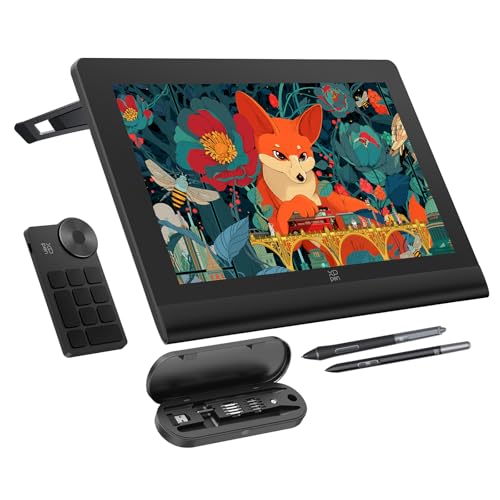
- Best Overall: XPPen Artist Ultra 16 — the 15.6 in screen, 4K OLED touchscreen pen display whose mini keydial controller and battery-free pen suit retouching photographs with pressure-sensitive brushes.
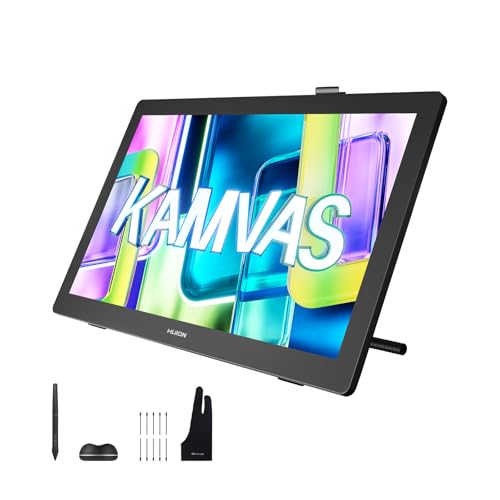
- Best Budget: HUION Kamvas 22 (Gen 3) — the pick whose verified sheet reads like a checklist for tracing reference images and building line art: a 21.5 in screen, 2.5K at 90Hz area, not stated in the listing title, and a battery-free pen whose maker does not publish a pressure figure.
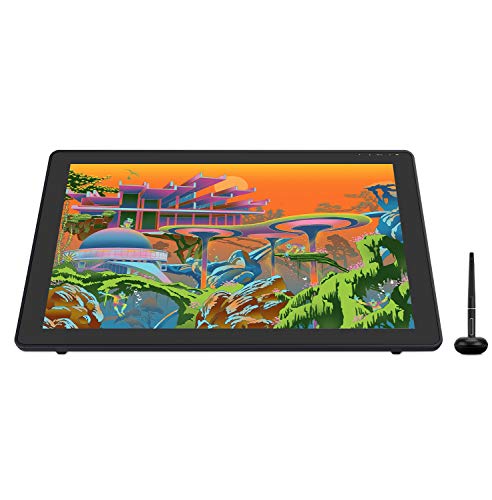
- Best for Beginners: HUION Kamvas 22 Plus — the 21.5 in screen, FHD QLED pen display whose not stated in the listing title and battery-free pen suit retouching photographs with pressure-sensitive brushes.
- Best for Small Spaces: XPPen Artist Pro 16 (Gen 2) — the pick whose verified sheet reads like a checklist for tracing reference images and building line art: a 16 in screen, 2.5K QHD area, mini keydial controller, and a pen rated at 16384 levels.
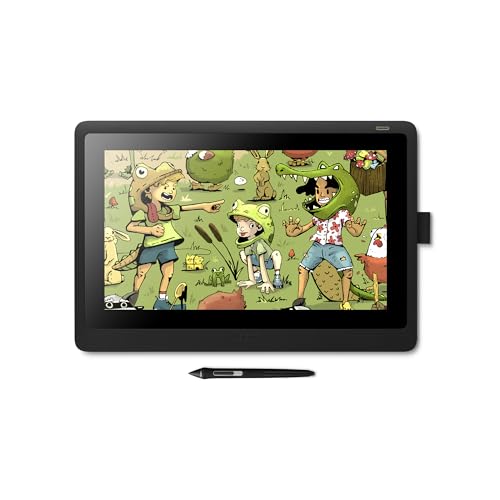
- Best Premium: Wacom Cintiq 16 — Wacom’s entry in this class, picked because its 15.4 in screen (Full HD, as stated in the listing title) surface and battery-free pen need no babysitting.
- Best Value: GAOMON PD2200 — the 21.5 in screen pen display whose 8 touch shortcut keys and battery-free pen suit retouching photographs with pressure-sensitive brushes.
How These Picks Were Chosen
Each candidate had to pass the same three questions: is it really a drawing tablet, does its class belong in this tier, and does its verified pen specification justify a place over the models cut? What did not survive the filter matters as much as what did. Gone are the Android tablets that run their own apps, the LCD boards aimed at children, the replacement pens sold alone, and every second listing of a model already counted once.
A note on evidence: every number in this guide traces back to a verified listing line for that exact model. Cross-model borrowing, where a big sibling’s spec quietly decorates a smaller product, is how bad buying guides happen, and it is banned here. Two architectures share this category’s name. In one, a plain pad sends pen strokes to a computer that shows them elsewhere. In the other, the surface is the screen. Your hand does the same work in both; your eyes and your desk feel the difference.
Detailed Reviews: Each Pick for Best Graphic Drawing Tablet Under $1000

Best Overall — XPPen Artist Ultra 16, dual 16K styli (16384 levels)
Strengths
- The stated colour gamut (RGB) is wide enough for photo work and print-minded projects
- The XPPen Artist Ultra 16’s battery-free pen design: nothing to charge before sketching and inking in a drawing app
- Shortcut hardware (mini keydial controller) keeps undo, brush size and zoom off the keyboard
Trade-offs
- The XPPen Artist Ultra 16’s bigger panel demands real desk depth and a monitor arm or stand routine
- The XPPen Artist Ultra 16 is a single-purpose device that still needs a computer with a free port and a driver install
- The XPPen Artist Ultra 16’s display shows tool panels small at this size; expect to zoom for detailed retouching
| Type | Pen Display |
|---|---|
| Shortcut keys | mini keydial controller |
| Connection and compatibility | 4K OLED touch panel, 99% Adobe RGB, 1.07 billion colours, works with Mac, PC, Chromebook and Android |
| Working area / screen | 15.6 in screen, 4K OLED touchscreen |
| Pen pressure | dual 16K styli (16384 levels) |
| Tilt | not stated |
The XPPen Artist Ultra 16 earns its place here on the simplest ground: it is a real pen display with a verified specification, in a tier where listings love to blur that. Its 15.6 in screen, 4K OLED touchscreen working area and dual battery-free 16K styli (16384 levels) put it in the direct-draw class, and for most buyers that combination covers sketching and inking in a drawing app and retouching photographs with pressure-sensitive brushes without drama. At $1000, the XPPen Artist Ultra 16 is the upgrade that ends the search for buyers whose retouching photographs with pressure-sensitive brushes has outgrown a mouse.
Where the XPPen Artist Ultra 16 fits the working week is in repeatability. The pen wakes instantly, the 15.6 in screen, 4K OLED touchscreen surface gives just enough drag to control a line, and the shortcut hardware, mini keydial controller, covers the handful of commands that dominate handwriting notes and annotating documents. Nothing about it asks for attention, which is high praise for a tool built around dual battery-free 16K styli (16384 levels).
The terms of ownership are equally clear in the other direction with the XPPen Artist Ultra 16: you gain drawing directly on the image, and you accept a device that occupies the desk like a monitor, because it is one. For artwork-first buyers that trade is the whole point; for markup-first buyers it can be money spent on a 15.6 in screen, 4K OLED touchscreen screen their workflow never needed.
Ownership details round out the picture for the XPPen Artist Ultra 16. Nibs wear smooth gradually rather than failing suddenly, so the spares in the box are a maintenance plan, not an accessory. Keep the pen in its holder or a desk pot instead of loose in a drawer, because a dropped battery-free pen usually survives, yet the nib that lands first may not. After a month of retouching photographs with pressure-sensitive brushes on its 15.6 in screen, 4K OLED touchscreen surface, most owners stop thinking about the tablet entirely, and that invisibility is the strongest endorsement a pen display can earn.
Best for: anyone whose week is built on handwriting notes and annotating documents, working at a normal desk at home / Not suited for: buyers who need a much larger working area than 15.6 in screen, 4K OLED touchscreen for full-arm illustration
Best Budget — HUION Kamvas 22 (Gen 3), 21.5 in screen, 2.5K at 90Hz
Strengths
- The HUION Kamvas 22 (Gen 3) works across the major desktop systems, so it survives a switch between machines
- The HUION Kamvas 22 (Gen 3) gives you a screen you draw directly on, which removes the hand-eye learning curve of a plain pad
- The HUION Kamvas 22 (Gen 3)’s battery-free pen design: nothing to charge before retouching photographs with pressure-sensitive brushes
Trade-offs
- The HUION Kamvas 22 (Gen 3) is a single-purpose device that still needs a computer with a free port and a driver install
- The HUION Kamvas 22 (Gen 3)’s listing does not state a pressure figure, so pen feel cannot be compared on numbers alone
- Shortcut provision on the HUION Kamvas 22 (Gen 3) is modest, so keyboard shortcuts still carry part of the workflow
| Type | Pen Display |
|---|---|
| Working area / screen | 21.5 in screen, 2.5K at 90Hz |
| Connection and compatibility | Canvas Glass 2.0, colour accuracy stated as delta E under 1.2, ambient lighting |
| Tilt | not stated |
| Shortcut keys | not stated in the listing title |
| Pen pressure | PenTech 4.0 (level count not stated in the listing title) |
What defines the HUION Kamvas 22 (Gen 3) is focus. HUION built a pen display around a 21.5 in screen, 2.5K at 90Hz surface and a battery-free pen whose maker does not publish a pressure figure, skipped the decoration, and aimed it at people who draw, annotate or retouch every day. For this tier that restraint is exactly right. At $1000, the HUION Kamvas 22 (Gen 3) is the upgrade that ends the search for buyers whose retouching photographs with pressure-sensitive brushes has outgrown a mouse.
The honest workflow note is that the HUION Kamvas 22 (Gen 3) rewards a tidy desk routine: pen within reach, its not stated in the listing title bound to undo and brush size, and the driver set to your main monitor. Do that and sessions of retouching photographs with pressure-sensitive brushes stop feeling like a fight with settings and start feeling like drawing, with the 21.5 in screen, 2.5K at 90Hz surface quietly doing its share of the work.
Its ceiling is the panel itself. The HUION Kamvas 22 (Gen 3)’s stated gamut and lamination serve drawing and retouching well, but this remains a drawing-first display rather than a colour-critical reference monitor, and the pen, not the panel, is the reason to buy it.
Consider the HUION Kamvas 22 (Gen 3) over a season rather than a session and its choices make sense. The 21.5 in screen, 2.5K at 90Hz footprint either fits your permanent desk layout or it does not, and its pen asks for nothing but a nib change now and then. Owners who set the driver once and leave the not stated in the listing title alone report the calmest experience; owners who rebind keys weekly are usually fighting a workflow problem the tablet cannot solve. For handwriting notes and annotating documents, the hardware simply holds up its side of the bargain.
Best for: sketching and inking in a drawing app and retouching photographs with pressure-sensitive brushes, at a normal desk at home / Not suited for: anyone who needs a colour-critical reference monitor for final print proofing
Best for Beginners — HUION Kamvas 22 Plus, 21.5 in screen, FHD QLED
Strengths
- A 21.5 in screen, FHD QLED working area that suits a normal desk at home without crowding the keyboard
- The HUION Kamvas 22 Plus’s battery-free pen design: nothing to charge before handwriting notes and annotating documents
- Tilt support on the HUION Kamvas 22 Plus lets its pen shade like a real pencil on angled strokes
Trade-offs
- The HUION Kamvas 22 Plus is a single-purpose device that still needs a computer with a free port and a driver install
- The HUION Kamvas 22 Plus’s pro controls reward setup time: the first hour goes on binding keys and dials, not drawing
- The HUION Kamvas 22 Plus’s display shows tool panels small at this size; expect to zoom for detailed retouching
| Type | Pen Display |
|---|---|
| Pen pressure | not stated in the listing title |
| Connection and compatibility | full lamination, anti-glare glass, PW517 battery-free pen, 140% sRGB |
| Working area / screen | 21.5 in screen, FHD QLED |
| Tilt | plus/minus 60 degree tilt |
| Shortcut keys | not stated in the listing title |
Strip the marketing away and the HUION Kamvas 22 Plus is easy to place: a pen display offering a 21.5 in screen, FHD QLED surface and a battery-free pen whose maker does not publish a pressure figure, aimed at sketching and inking in a drawing app and built to be forgotten during retouching photographs with pressure-sensitive brushes. In a tier full of inflated claims, that plainness is a recommendation in itself. Within the $1000 class, the HUION Kamvas 22 Plus is the safe centre: the specification against which this tier’s compromises are measured during sketching and inking in a drawing app.
The honest workflow note is that the HUION Kamvas 22 Plus rewards a tidy desk routine: pen within reach, its not stated in the listing title bound to undo and brush size, and the driver set to your main monitor. Do that and sessions of retouching photographs with pressure-sensitive brushes stop feeling like a fight with settings and start feeling like drawing, with the 21.5 in screen, FHD QLED surface quietly doing its share of the work.
Its ceiling is the panel itself. The HUION Kamvas 22 Plus’s stated gamut and lamination serve drawing and retouching well, but this remains a drawing-first display rather than a colour-critical reference monitor, and the pen, not the panel, is the reason to buy it.
Compare the HUION Kamvas 22 Plus against its nearest sibling in this list and the difference is temperament, not quality: one leans toward control density with its not stated in the listing title, the other toward simplicity across its 21.5 in screen, FHD QLED surface. Temperament matching is underrated in tool buying. Choose the one whose daily habits mirror yours and the specification argument resolves itself.
Best for: anyone whose week is built on handwriting notes and annotating documents, working at a normal desk at home / Not suited for: shoppers whose real budget belongs to the tier above and who would only resent the compromise

Best for Small Spaces — XPPen Artist Pro 16 (Gen 2), 16384 levels
Strengths
- Verified 16384 levels pen response, so line weight follows your hand instead of a software guess
- The XPPen Artist Pro 16 (Gen 2) gives you a screen you draw directly on, which removes the hand-eye learning curve of a plain pad
- The XPPen Artist Pro 16 (Gen 2)’s battery-free pen design: nothing to charge before tracing reference images and building line art
Trade-offs
- For the XPPen Artist Pro 16 (Gen 2), colour and resolution claims come from the maker; a calibrator is still the honest route for print work
- The XPPen Artist Pro 16 (Gen 2)’s bigger panel demands real desk depth and a monitor arm or stand routine
- The XPPen Artist Pro 16 (Gen 2) is cable-connected only, which keeps the desk tidier in theory but tethered in practice
| Type | Pen Display |
|---|---|
| Shortcut keys | mini keydial controller |
| Working area / screen | 16 in screen, 2.5K QHD |
| Connection and compatibility | full-laminated anti-glare screen, X3 Pro stylus (PD21D), 99% sRGB |
| Pen pressure | 16384 levels |
| Tilt | tilt support |
The XPPen Artist Pro 16 (Gen 2) earns its place here on the simplest ground: it is a real pen display with a verified specification, in a tier where listings love to blur that. Its 16 in screen, 2.5K QHD working area and a pen rated at 16384 levels put it in the direct-draw class, and for most buyers that combination covers sketching and inking in a drawing app and retouching photographs with pressure-sensitive brushes without drama. Judged as a $1000 product, the XPPen Artist Pro 16 (Gen 2) looks restrained from above and complete from below, its mini keydial controller and a pen rated at 16384 levels covering handwriting notes and annotating documents without apology.
In daily use the detail that matters is how the XPPen Artist Pro 16 (Gen 2)’s pen behaves at low pressure, because sketching and handwriting live there. The delicate end of its range is exercised most in those first millimetres of a stroke across the 16 in screen, 2.5K QHD surface. A battery-free pen also removes the small daily friction of charging, so the tablet is ready when a call starts or an idea lands. Map the active area to your full monitor at first, then shrink the mapping if small hand movements feel too jumpy for handwriting notes and annotating documents.
There is a ceiling of colour ambition to name for the XPPen Artist Pro 16 (Gen 2) as well. Its panel serves drawing, streaming and screen-first design beautifully, while final print proofing still belongs on a calibrated reference monitor. Knowing which side of that line your work sits on is the whole decision.
Compare the XPPen Artist Pro 16 (Gen 2) against its nearest sibling in this list and the difference is temperament, not quality: one leans toward control density with its mini keydial controller, the other toward simplicity across its 16 in screen, 2.5K QHD surface. Temperament matching is underrated in tool buying. Choose the one whose daily habits mirror yours and the specification argument resolves itself.
Best for: buyers who want a verified pen display for tracing reference images and building line art without leaving this tier / Not suited for: buyers who need a much larger working area than 16 in screen, 2.5K QHD for full-arm illustration
Best Premium — Wacom Cintiq 16, 15.4 in screen (Full HD, as stated in the listing title)
Strengths
- The Wacom Cintiq 16’s battery-free pen design: nothing to charge before sketching and inking in a drawing app
- The Wacom Cintiq 16 works across the major desktop systems, so it survives a switch between machines
- The Wacom Cintiq 16 gives you a screen you draw directly on, which removes the hand-eye learning curve of a plain pad
Trade-offs
- The Wacom Cintiq 16’s listing does not state a pressure figure, so pen feel cannot be compared on numbers alone
- For the Wacom Cintiq 16, colour and resolution claims come from the maker; a calibrator is still the honest route for print work
- The Wacom Cintiq 16’s bigger panel demands real desk depth and a monitor arm or stand routine
| Type | Pen Display |
|---|---|
| Pen pressure | not stated in the listing title |
| Tilt | tilt response (Pro Pen 2) |
| Shortcut keys | not stated in the listing title |
| Connection and compatibility | Full HD display for Mac and PC |
| Working area / screen | 15.4 in screen (Full HD, as stated in the listing title) |
What defines the Wacom Cintiq 16 is focus. Wacom built a pen display around a 15.4 in screen (Full HD, as stated in the listing title) surface and a battery-free pen whose maker does not publish a pressure figure, skipped the decoration, and aimed it at people who draw, annotate or retouch every day. For this tier that restraint is exactly right. Within the $1000 class, the Wacom Cintiq 16 is the safe centre: the specification against which this tier’s compromises are measured during sketching and inking in a drawing app.
Setup follows the usual rhythm for this class: install the driver before plugging in, restart the drawing app so it sees the pen, then bind the keys you actually use, starting with the not stated in the listing title this model gives you. Spend those ten minutes once and the Wacom Cintiq 16 disappears into the routine of sketching and inking in a drawing app, which is the real test of any input device with a 15.4 in screen (Full HD, as stated in the listing title) working area.
What the Wacom Cintiq 16 will not do is disappear. A pen display is furniture as much as electronics, present in your sightline and your cable management every day. Buyers who want their desk back when the drawing stops should weigh the pads in this guide with equal seriousness.
One scenario test clarifies the Wacom Cintiq 16 better than specs do. Imagine the busiest hour of your week: sketching and inking in a drawing app under time pressure, an interruption, then straight back in. A tablet passes that test when the pen is where your hand expects it on the 15.4 in screen (Full HD, as stated in the listing title) surface, the shortcut for undo is under your thumb among the not stated in the listing title, and nothing needs waking, pairing or charging. That is the standard this pick was ranked against, and it passes on the strength of its verified basics.
Best for: sketching and inking in a drawing app and retouching photographs with pressure-sensitive brushes, at a normal desk at home / Not suited for: buyers shopping for a standalone tablet that works without a computer
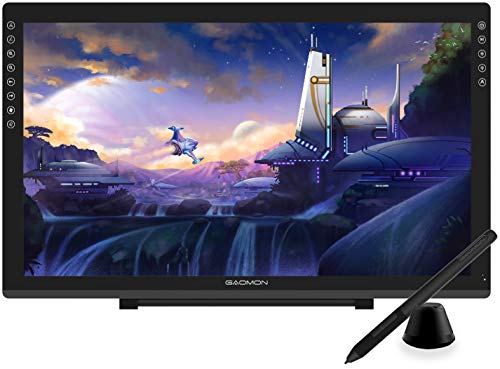
Best Value — GAOMON PD2200, 21.5 in screen
Strengths
- A 21.5 in screen working area that suits a normal desk at home without crowding the keyboard
- The GAOMON PD2200’s battery-free pen design: nothing to charge before retouching photographs with pressure-sensitive brushes
- The GAOMON PD2200 works across the major desktop systems, so it survives a switch between machines
Trade-offs
- The GAOMON PD2200 is a single-purpose device that still needs a computer with a free port and a driver install
- The GAOMON PD2200’s listing does not state a pressure figure, so pen feel cannot be compared on numbers alone
- For the GAOMON PD2200, colour and resolution claims come from the maker; a calibrator is still the honest route for print work
| Type | Pen Display |
|---|---|
| Pen pressure | not stated in the listing title |
| Connection and compatibility | full-laminated panel, 130% sRGB, adjustable stand, Mac and Windows |
| Shortcut keys | 8 touch shortcut keys |
| Tilt | tilt support |
| Working area / screen | 21.5 in screen |
The GAOMON PD2200 is the pick we would hand to someone who asked for a pen display and meant it. The verified facts, a 21.5 in screen area and a battery-free pen whose maker does not publish a pressure figure, describe a tool for sketching and inking in a drawing app first and everything else second. For $1000 shoppers, the GAOMON PD2200 tests whether the tier itself is right: if its 21.5 in screen surface feels sufficient for tracing reference images and building line art, the tier is sufficient.
In daily use the detail that matters is how the GAOMON PD2200’s pen behaves at low pressure, because sketching and handwriting live there. The delicate end of its range is exercised most in those first millimetres of a stroke across the 21.5 in screen surface. A battery-free pen also removes the small daily friction of charging, so the tablet is ready when a call starts or an idea lands. Map the active area to your full monitor at first, then shrink the mapping if small hand movements feel too jumpy for handwriting notes and annotating documents.
Its real rival is the high-end pad you did not buy: for the same commitment, a top pen tablet offers a bigger drawing area and leaves your monitor choice open. If your eyes are happy working apart from your hand, that rival wins; if they are not, the GAOMON PD2200 justifies itself every single session.
Ownership details round out the picture for the GAOMON PD2200. Nibs wear smooth gradually rather than failing suddenly, so the spares in the box are a maintenance plan, not an accessory. Keep the pen in its holder or a desk pot instead of loose in a drawer, because a dropped battery-free pen usually survives, yet the nib that lands first may not. After a month of retouching photographs with pressure-sensitive brushes on its 21.5 in screen surface, most owners stop thinking about the tablet entirely, and that invisibility is the strongest endorsement a pen display can earn.
Best for: buyers who want a verified pen display for tracing reference images and building line art without leaving this tier / Not suited for: buyers who need a much larger working area than 21.5 in screen for full-arm illustration
Comparison Table
| Model | Type | Area / Screen | Pen pressure | Shortcuts | Badge |
|---|---|---|---|---|---|
| XPPen Artist Ultra 16 | Pen Display | 15.6 in screen | dual 16K styli | mini keydial controller | Best Overall |
| HUION Kamvas 22 (Gen 3) | Pen Display | 21.5 in screen | PenTech 4.0 | not stated in the listing | Best Budget |
| HUION Kamvas 22 Plus | Pen Display | 21.5 in screen | not stated in the listing | not stated in the listing | Best for Beginners |
| XPPen Artist Pro 16 (Gen 2) | Pen Display | 16 in screen | 16384 levels | mini keydial controller | Best for Small Spaces |
| Wacom Cintiq 16 | Pen Display | 15.4 in screen | not stated in the listing | not stated in the listing | Best Premium |
| GAOMON PD2200 | Pen Display | 21.5 in screen | not stated in the listing | 8 touch shortcut keys | Best Value |
Two patterns stand out in the table. Within the pen tablets, area and shortcut count separate the field more than pressure numbers do. Within the pen displays, lamination and stated gamut do the separating, because the drawing feel follows the glass as much as the pen.
How to Choose the Best Graphic Drawing Tablet Under $1000
The first decision is not brand, it is architecture. Pen tablets plug into the computer you already own and lean on its screen; pen displays are screens. Everything else, size, keys, pressure, refines that first choice, so make it on how you actually work through handwriting notes and annotating documents.
Connectivity sounds dull until it decides your mornings. Wired models are ready the instant the computer wakes; Bluetooth models free the desk but ask for pairing discipline and the occasional charge of the tablet itself, never of the battery-free pen. Choose based on whether your desk or your patience is scarcer.
Leave room in the plan for the unglamorous extras that are genuinely useful: a spare nib supply, a glove if your hand sticks to a screen, and a stand angle that keeps your neck honest on long sessions. None of them change the ranking above, but all of them change how the winner feels after a month. Neighbouring budgets change this answer in predictable ways, which is why we also keep Best Graphic Drawing Tablet Under $150 and Best Graphic Drawing Tablet For Students Under $75 current alongside this guide.
What the $1000 Budget Actually Buys in a Drawing Tablet
There is a quiet fifth thing money buys here: time. A tablet that sets up once and stays set up returns minutes every week, and over a year those minutes outvalue any single feature on any box in this tier.
If the vocabulary still blurs, use the cable test: a pen tablet needs one connection to your computer and borrows its screen, while a pen display needs a video connection as well because it is a screen. The extra cable is the visible sign of the extra capability. One more framing point for most buyers: the tablet budget and the software budget are separate decisions. Every pick here works with the mainstream free and paid drawing, photo and notes apps, so the tier does not lock you into a software ecosystem.
Pen Tablet or Pen Display: Which Fits Most Buyers Better?
Budget honesty helps here as well. A pen display spends a large share of its price on the panel, so at equal money a pen tablet usually carries the better pen and the larger area. You are not choosing better or worse; you are choosing where the money works. History explains the split, incidentally: pads came first because screens were expensive, and displays exist because screens stopped being expensive. Neither made the other obsolete, which is why both fill this guide.
Size is the second decision, and it is about stroke mechanics, not status. Small areas suit handwriting, signatures and photo retouching, where strokes are short. Illustration and inking reward a 10-inch-class area or a 13-inch-plus screen, because long lines drawn from a cramped area wobble. Match the tablet’s active area to your monitor in the driver, and prefer a similar aspect ratio so circles stay circles.
Picture the workflow the tablet joins. A session of sketching and inking in a drawing app might run twenty minutes or three hours, and the tablet’s job in both cases is identical: stay mapped, stay responsive, and never be the reason the session stops. That is why this guide ranks verified pen behaviour above novelty features, and why the detailed reviews spend more words on drivers, mapping and keys than on packaging.
How Do You Set Up a Drawing Tablet So It Feels Right on Day One?
Manufacturers write quick-start cards that skip the steps causing most returns. The sequence below is the fuller version support teams wish every buyer followed.
- Install the driver before connecting anything. Start on the maker’s support site, not with the cable. Find your exact model, install its current driver, restart if it asks, and connect the tablet only after the software is waiting for it. This single ordering decision prevents the majority of first-day faults, because the computer meets the tablet with the right instructions already loaded.
- Restart the apps, not just the computer. Pen support is negotiated when an app opens, so an app that was running during the driver install may never see the tablet properly. Close your drawing, notes and whiteboard apps completely, reopen them, and test pressure again before changing any setting.
- Set the pen mapping deliberately. Aspect honesty matters more than area greed: a slightly smaller, correctly proportioned mapping draws truer than a full-surface mapping that quietly turns circles into ellipses.
- Bind three shortcuts before you draw. Label your bindings while you learn them, on a sticky note on the monitor bezel if pride allows. A week of glancing beats a month of guessing, and the note comes off the day your thumb stops asking questions.
- Calibrate your grip with a test page. Open a blank canvas and draw slow lines, fast lines, light lines and circles for five minutes. Adjust the pressure curve in the driver until a light touch marks reliably and a firm press does not feel like a workout.
- For pen displays, set the screen as an extended display first. If the driver offers a pen-only mode or a mouse mode, leave the default until the test page is done. Defaults are the maker’s most-tested path, and setup day is not the day to be interesting.
- Save the profile and export your settings. Finally, name your profile after the machine and the date. Profiles multiply quietly across updates and computers, and a named, dated profile is the difference between restoring your setup and reconstructing it.
Problem: lines feel laggy in one app only. Fix: the app is adding its own smoothing or the canvas is enormous. Lower the app’s stabilisation setting a notch, test on a fresh mid-size canvas, and only blame the tablet if the lag follows you into a second app.
Problem: the pen draws but pressure never changes line weight. Fix: the app did not pick up the pen service. Quit the app completely, confirm the driver shows the tablet as connected, then relaunch. In stubborn cases, toggle the Windows Ink or equivalent pen setting inside the driver and test again.
Once the setup holds for a week, the routine around sketching and inking in a drawing app stops involving the tablet at all, which is the goal. Readers printing finished work may also want Best Portable Printers, and the closest sibling guide is Best Graphic Drawing Tablet For Home Office Under $50.
Keeping a Drawing Tablet Working for Years
Nib discipline is the cheapest performance upgrade in the category. A worn, flattened nib drags and skips; a fresh one glides. Swap at the first sign of a scratchy feel rather than pressing harder to compensate, because pressing harder is how surfaces get scored.
On pen displays, treat the top film as the consumable it is: replace it when the centre goes glossy and the pen starts to skate, and the panel underneath stays new for years. On pen tablets, rotate the active area mapping every few months if you draw in one small zone, which spreads wear across the surface. Your hands are part of the equipment list as well. Shake them out between sessions, keep the pen grip loose enough that a second person could pull the pen free, and let micro-breaks be a habit rather than a remedy.
Common Mistakes
- Buying a screen when the work is signatures and markup. Or buy the display and use it as a very expensive signature pad; the strokes will be lovely and the economics indefensible. The tier system exists to keep the tool matched to the task, and this is the mismatch it catches most often.
- Buying the smallest pad for full illustration. Manufacturers photograph small pads beside enormous monitors for a reason: relative size flatters. Judge by your stroke, not by their staging.
- Judging a pen tablet in the first twenty minutes. The screenless hand-eye split feels wrong at first for almost everyone. Give it several real sessions of sketching and inking in a drawing app before deciding the family is not for you.
- Ignoring the driver because the hardware looked good. A tablet is half software. Check your operating system and your main apps against the maker’s support pages before ordering, not after unboxing.
- Chasing the highest pressure number as the whole decision. Treat 8192 levels as the professional baseline and 16384 as refinement, then spend your attention on size, tilt and controls. Buyers who reverse that order own impressive specifications and ordinary drawings.
- Skipping the stand and posture question on pen displays. Chair height is part of the same system: a display angled for drawing wants the chair a touch lower than a display set for reading. Adjust both, not one.
- Treating a standalone Android tablet as a drawing tablet. The category error also runs in reverse: a pen display cannot do a standalone tablet’s job at a café table, because it is a monitor that needs your computer. Each family is incomplete in the other’s world.
Final Recommendation
If you buy one pick from this page, make it the Best Overall: it is the model whose verified specification, size and pen best match the centre of this tier’s work. Whichever of the six you land on, set it up in the order the how-to section lays out, bind three shortcuts before your first real session, and judge it after a week of real work rather than a first impression.
If you take one habit from this page, take the setup order. Driver first, mapping second, three bindings third, judgement after a week. Buyers who follow it rarely return tablets; buyers who skip it often return good ones.
One comparison remains worth your time before ordering: Best Graphic Drawing Tablet For Home Office Under $200, where the adjacent budget’s six picks show exactly what the step up or down buys and what it quietly takes away.
Frequently Asked Questions
Will these tablets work with my existing software?
In almost every mainstream case, yes. Pen input flows through the driver and the operating system’s pen services, so drawing, photo, notes and whiteboard apps recognise these tablets once the driver is installed. The checks that matter are your operating system version and, for pen displays, a free video output on your computer. Test in the app you use most, not the app that demos best. Budget-wise, nothing in this answer requires leaving the tier; it is about matching the pick to the work, not about spending more.
Is it worth stretching to the next tier up?
If the sentences come easily, stretch. If they come out as adjectives, stay. Preference upgrades are legitimate, but they should be bought with preference money, knowingly, not mistaken for necessity. The neighbouring guides in this cluster exist so the comparison is one click away rather than a new research project. Budget-wise, nothing in this answer requires leaving the tier; it is about matching the pick to the work, not about spending more.
Is a pen tablet or a pen display better for sketching and inking in a drawing app?
One more consideration settles most ties: your main monitor. A strong monitor makes a pad feel premium; a weak one makes a display feel like an upgrade to the whole desk. Retouchers, annotators and note-takers historically land on pads; illustrators and inkers land on displays, and both groups are right about their own work. Buy the family once, learn it properly, and the question rarely needs asking again. The detailed reviews above flag the specific models where this answer changes, so check the pick you are leaning toward before deciding.
Can I use one of these tablets with a Chromebook or a phone?
Compatibility is model-specific rather than category-wide. The listings we verified name their supported systems, and the spec box for each pick repeats exactly what its maker claims. Small pen tablets are the travellers here; several in the floor and entry tiers were designed with phones and Chromebooks in the maker’s own description. If your setup mixes a laptop and a Chromebook, pick a model whose listing names both and keep one cable with each machine. The detailed reviews above flag the specific models where this answer changes, so check the pick you are leaning toward before deciding.
What wears out, and what should I keep as spares?
A labelled envelope in the desk drawer outperforms any filing system you have to remember. On pen displays, the surface film is the second consumable; when the centre polishes glossy and the pen starts skating, a fresh film restores the paper-like drag. Keep the original box if you can; it remains the safest transport case the tablet will ever have. If your situation sits between the two cases, default to the option that keeps the tablet plugged in and used daily; an used mid-tier tablet beats an avoided perfect one.
How long does the screenless hand-eye adjustment take?
For most people, a few focused sessions. Handwriting and markup adapt fastest because the shapes are familiar; drawing takes longer, and tracing exercises speed it up. If a week of daily sketching and inking in a drawing app still feels like writing with the wrong hand, that is real information: your next tablet should be a pen display. If it has not clicked after a committed week, believe the evidence of your own hand and plan a pen display next. If your situation sits between the two cases, default to the option that keeps the tablet plugged in and used daily; an used mid-tier tablet beats an avoided perfect one.
What size should a beginner actually buy?
For those spaces, the entry tiers of this cluster are not a compromise but the correct engineering. Beginners whose main job is notes, signatures and markup can start small and lose nothing at all. And both should keep the box and spare nibs; beginners wear nibs faster while they learn pressure control. Budget-wise, nothing in this answer requires leaving the tier; it is about matching the pick to the work, not about spending more.

