reviewstook.com is reader-supported. When you buy through links on our site, we may earn an affiliate commission.
Where to buy
Amazon, the major photo retailers and the reputable used marketplaces all stock the bodies in this guide, and at this tier the used shelf deserves as much attention as the new one. Shoppers comparing the best digital cameras under 500 dollars will find plenty of guides that rank by first impressions — the sharpest file today, the cleverest video menu this season. This one ranks by something slower: the platform. Five hundred dollars spent on a camera body is really spent on a lens mount, a battery ecosystem, a menu language and an upgrade ladder, and those things decide whether the purchase still feels wise in five years. A sibling guide on this site covers a similar budget from a stills-first angle; here, the question is which system you are joining, and how far that system lets you climb before it asks you to start again.
That platform lens reorders familiar names. A body with a slightly older sensor but a deep, affordable lens catalogue can outrank a newer body stranded on an expensive mount. A fixed-lens camera appears below too, deliberately, as the anti-platform: the choice for photographers who have decided, honestly, that they will never buy a second lens. Both answers are respectable. What is not respectable is drifting into a system by accident, then discovering that the lens you want costs more than the body did.
The frame itself needs one clarification. Five hundred dollars, held firmly, buys excellent current bodies on promotion, superb previous-generation bodies used, and kit bundles whose lenses vary from honest tools to packing material. This guide names which is which, labels the one configuration that leans on the used market to fit the frame, and never prints a specific product price — listings shift weekly, and the platform argument survives the shifts.
Key Takeaways
- You are buying a lens mount first and a sensor second; the mount decides your next five years of spending.
- Previous-generation bodies used are the frame’s sweet spot — flagship features at entry prices.
- A cheap body on an expensive lens system costs more over three years than a dearer body on an affordable one.
- Every platform here has a fast prime lens that transforms it; budget for that lens within the first year.
- Fixed-lens cameras are the honest exception: total commitment to one focal length, zero upgrade path, zero upgrade spending.
- Battery, charger and card standards differ by system and quietly tax owners who switch later.
In this guide
Quick Picks
| Pick | Badge | Why it earns its place |
|---|---|---|
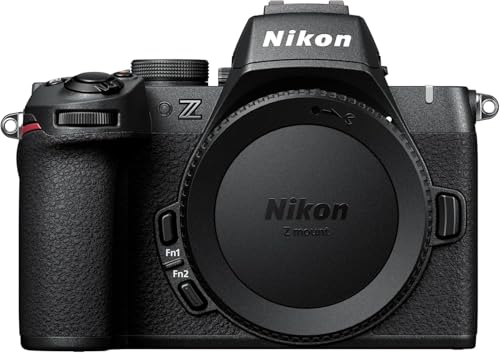
| Nikon Z50 II | Most modern platform start | Current autofocus intelligence on the Z mount, in a body sized for learning. |
| Canon EOS R50 | Friendly ladder, deep catalogue | RF mount’s welcoming rung, with Canon’s colour and a huge lens future above it. |
| Sony a6400 | Used-market platform bargain | E-mount’s enormous lens shelf meets a body the used market prices kindly. |
| Fujifilm X-M5 | Character with a system attached | Film-simulation colour and compact primes on the long-lived X mount. |
| Panasonic LUMIX G95 | Weather-sealed Micro Four Thirds value | The deepest used lens pool in photography, behind a rugged hybrid body. |
| Sony ZV-1F | The anti-platform, proudly | A 1-inch fixed-lens compact for photographers opting out of systems entirely. |
What makes a camera a platform rather than a purchase?
A platform is everything that outlives the body. Lenses are the obvious layer: they hold value, migrate to your next body, and define what photographs are possible — a mount with affordable fast primes, a proper telephoto and a macro option is a platform; a mount with two kit zooms and a flagship is a waiting room. Batteries and chargers form a second layer, because a household that standardises on one cell type packs lighter for a decade. Menus and control logic form a third: photographers build muscle memory, and a maker who keeps its interface philosophy stable across generations lets that memory compound instead of expiring.
Upgrade ladders are the test that separates platforms from products. Ask of each system here: if this hobby catches fire, what do I buy next, and does anything I own become useless? On the healthy ladders below, the answer is a better body that drinks from the same lens shelf, the same batteries in some cases, the same flash units. On a dead end, the answer is a sale listing and a fresh start. Five hundred dollars is exactly the spend where that question starts to matter, because it is large enough to anchor a system and small enough that abandoning it stings.
We also weighed the second-hand depth of each mount, since platform shoppers buy used constantly. A mount with fifteen years of lenses circulating second-hand lets you build a kit at half the new cost; a young mount forces new prices for everything. That arithmetic, more than any sensor chart, separates the picks below.

Nikon Z50 II — Most modern platform start
Nikon’s second-generation Z50 is what happens when flagship autofocus thinking trickles down to an entry body without the entry body noticing any insult. Subject detection recognises people, animals, birds and vehicles, and the tracking holds with a tenacity that owners of older budget bodies will find faintly unfair. The APS-C sensor delivers files with generous editing latitude, and the whole camera is sized like a tool you carry rather than a trophy you store. As a platform entry it is the most current on this page: the Z mount above it stretches from affordable DX zooms to professional full-frame glass that this body can also use, at a crop, when borrowed or bought used.
The ownership story deepens after month three. Nikon’s DX lens shelf, once thin, now covers the essentials — a compact standard zoom, a bright prime, a telephoto that reaches genuine wildlife distances — and third-party makers have joined with lenses that undercut first-party prices. The control layout teaches real photography: twin dials, a proper mode dial, customisable buttons that grow with you. What the body asks in return is modest: the battery is good rather than endless, and the lens catalogue, while sufficient, still trails Sony’s E-mount in sheer second-hand abundance.
Choose this Nikon if your five-year picture includes growth. A teenager’s sport, a birding habit, a portfolio that might turn semi-serious — the Z50 II absorbs all of it without demanding a system change, and when a full-frame Z body eventually tempts you, every DX lens still mounts, and the full-frame lenses you may have bought along the way come home. That continuity is the platform promise kept.
- Sensor: APS-C CMOS with current-generation processing
- Mount: Nikon Z, DX and full-frame lenses compatible
- Autofocus: subject detection across people, animals, vehicles
- Controls: twin command dials, customisable buttons
- Body: compact mirrorless with electronic viewfinder
Strengths
- Autofocus intelligence borrowed from far pricier Nikons
- Upgrade ladder that never orphans your lenses
- Handling that teaches deliberate photography from week one
Trade-offs
- Used Z-mount lens pool still smaller than Sony’s
- Battery life is adequate, not generous
- No in-body stabilisation; lean on stabilised lenses
A word about the view through its finder, because platform buyers live there. The electronic viewfinder shows exposure as the sensor sees it, which quietly rewires how beginners learn: mistakes appear before the shutter fires, not after. Pair that with focus peaking inherited from Nikon’s video line and manual-focus experiments — adapted classics, bargain antiques — become practical pleasures rather than guessing games. The body keeps revealing these second-layer virtues for months, which is what ‘current generation’ actually buys you.
Best for: growers — photographers who expect the hobby to escalate and want one mount for the journey. Not suited for: bargain hunters who need the deepest possible used lens shelf today.
Canon EOS R50 — Friendly ladder, deep catalogue
Canon’s R50 is engineered to be unintimidating, and that is a compliment about platform design rather than a criticism of ambition. The menus explain themselves, the automatic modes genuinely teach — the camera shows you what it chose and why — and the colour science flatters skin from the first frame. Underneath the friendliness sits the RF mount, the deepest future in this guide: Canon’s ladder climbs from this body through enthusiast APS-C to professional full-frame without a single orphaned lens, and the used RF pool grows richer every quarter as early adopters trade up.
The honest friction is lens pricing at the affordable end. Canon guards its mount more jealously than rivals, so the budget prime selection is thinner and third-party autofocus options have historically been limited, though the picture improves steadily. Owners answer this by buying Canon’s own compact primes and the excellent value zooms, and by shopping the used shelf where RF glass now circulates in real volume. The body’s video tools, incidentally, are strong enough that hybrid shooters will feel at home, but the platform case rests on stills growth.
Families gravitate to the R50 for a reason worth naming: it is the camera least likely to be abandoned in a drawer. The grip fits smaller hands, the touchscreen logic mirrors a phone’s, and the photographs it makes at a school concert need no editing to share. A platform only works if the body gets used while the system grows around it, and Canon has optimised precisely that probability.
- Sensor: APS-C CMOS in the twenty-four-megapixel class
- Mount: Canon RF, full ladder to professional bodies
- Autofocus: people and animal eye detection
- Screen: fully articulating touchscreen
- Body: compact, beginner-friendly control layout
Strengths
- The most welcoming first step onto a major mount
- Canon colour that flatters people straight from the camera
- Upgrade path to professional bodies without replacing lenses
Trade-offs
- Budget lens choice narrower than Sony’s E-mount
- Small body means a small battery; spares are wise
- Advanced customisation thinner than the Nikon offers
Canon’s colour deserves its reputation examined rather than repeated. Skin tones emerge warm without sliding orange, greens stay believable, and the JPEGs need so little correction that many owners abandon raw for family work entirely — a workflow gift worth real evenings. When those owners do graduate to raw, the files behave predictably in every major editor, because Canon’s profiles are the industry’s most thoroughly supported. Platform value hides in such unglamorous certainties.
Best for: families and first-time system buyers who value ease now and headroom later. Not suited for: tinkerers who want the widest third-party lens bazaar immediately.
Sony a6400 — Used-market platform bargain
The a6400 is the connoisseur’s answer to this entire keyword: a body from a few seasons ago whose autofocus was, at launch, the best in its class — and whose used price now slides comfortably inside the frame while its abilities have not aged a day. Real-time eye autofocus for people and animals, tracking that clings to erratic subjects, and a compact metal body make it a working tool rather than a nostalgia purchase. What elevates it from bargain to platform masterstroke is the mount behind it: Sony’s E-mount hosts the largest lens ecosystem in mirrorless photography, first-party and third-party, new and used, at every price from pocket money to professional.
That ecosystem changes ownership economics completely. A fast prime for portraits, a long telephoto for the school match, a macro for the garden — each exists used, in volume, at prices that make experimentation painless. The body’s compromises are period-typical: no in-body stabilisation, a screen that flips up rather than out, menus from Sony’s older, denser era. Photographers who shoot stills on lenses with their own stabilisation will barely notice; the files, the focus and the lens shelf carry the argument.
Buy the a6400 from a seller who can state its condition plainly, budget a fresh battery, and you own the strongest value-per-photograph platform in this guide. Its successor bodies add polish, but polish is not what five hundred dollars should buy first — capability and lenses are, and this body delivers both with money left for the prime that transforms it.
- Sensor: APS-C CMOS, roughly twenty-four megapixels
- Mount: Sony E, the largest mirrorless lens ecosystem
- Autofocus: real-time eye AF for people and animals
- Screen: tilts up for self-framing
- Body: compact metal construction, viewfinder included
Strengths
- Used price buys autofocus still competitive today
- Every lens you could want exists on this mount, used
- Compact, durable body that travels without ceremony
Trade-offs
- No in-body stabilisation for stills
- Older menu design rewards patience
- Rolling used-market dice requires a careful seller
Long-term owners report a particular satisfaction with this body: it disappears. Small enough for a jacket on the school run, tough enough for a decade of bags and gloveboxes, it becomes the camera that is simply always there. Its age shows only in side-by-side feature comparisons, never in the photographs, and there is a lesson in that for the whole platform question — the best system is the one whose body you stopped thinking about years ago.
Best for: value hunters willing to buy used in exchange for the richest lens shelf in the guide. Not suited for: anyone who needs a factory warranty and the latest interface polish.
Fujifilm X-M5 — Character with a system attached
Fujifilm sells something the spec sheets of its rivals do not list: a reason to pick the camera up on an ordinary Tuesday. The X-M5 wraps the X mount — a mature APS-C ecosystem with a beloved range of compact primes — in a tiny body whose film simulations render colour with a personality owners describe in emotional terms. Those simulations are not filters in the phone sense; they are carefully built colour profiles with decades of film heritage behind them, and they make straight-from-camera JPEGs that many photographers simply stop editing. For a platform purchase, that matters: a system you love using gets used, and lenses get bought for cameras that leave the house.
The X-M5 trims hardware to hit its size and price — no viewfinder, a simplified dial layout — so purists should look up the X range rather than down at this body with suspicion. What remains is the mount, and the mount is the argument: Fujifilm’s primes are small, sharp and relatively affordable, the used pool is deep, and the ladder climbs to bodies with the classic dial-driven handling the brand is famous for. Every lens bought for the X-M5 keeps working on those bodies.
Consider also who this camera recruits. Photographers who bounced off clinical, phone-like cameras often stay with Fujifilm because the images feel authored rather than captured. If your five-hundred-dollar question is really ‘which camera will I still be carrying in year three’, the X-M5’s charm is a legitimate engineering specification, and this guide treats it as one.
- Sensor: APS-C CMOS in Fujifilm’s X-Trans family
- Mount: Fujifilm X, deep compact-prime catalogue
- Colour: extensive film simulation profiles
- Screen: articulating touchscreen, no viewfinder
- Body: among the smallest system cameras made
Strengths
- JPEG colour with genuine character, minimal editing needed
- Compact primes make the whole system pocketable
- Mount longevity: lenses serve every future X body
Trade-offs
- No viewfinder for bright-day or traditional shooting
- Autofocus a step behind the Sony and Nikon here
- Simplified controls limit deep customisation
Travel with the X-M5 and its size rewrites itineraries. A body and two compact primes fit the sling bag that also holds a paperback and a bottle, so the camera attends dawn markets and midnight trains that a bigger system would have slept through at the hotel. Owners talk about photographs per trip doubling, not because the sensor improved but because attendance did. In platform terms, that is the X mount’s hidden specification: the whole ecosystem was designed small, and small gets carried.
Best for: photographers who shoot for pleasure and want colour with a point of view. Not suited for: viewfinder traditionalists or demanding sports shooters.
Panasonic LUMIX G95 — Weather-sealed Micro Four Thirds value
Micro Four Thirds is the oldest mirrorless platform in this guide, and age is its superpower: two decades of lenses from two major makers plus a swarm of third parties circulate used at prices that make APS-C owners blink. The G95 sits in the middle of that ecosystem as its value stronghold — weather-sealed, twin-dialled, stabilised in-body, with a grip shaped for long lenses and long days. Inside this guide’s frame, especially used, it buys a completeness the newer mounts cannot match: body, kit zoom, and change left toward the telephoto that the platform sells cheaply because it has sold it for years.
The sensor is smaller than the APS-C rivals’ — there is no honest way around that fact. In exchange, the lenses shrink proportionally: a telephoto that reaches serious wildlife distances fits a jacket pocket and a modest budget, which is why birders on a budget keep this platform alive. In-body stabilisation steadies every lens ever made for the mount, including manual antiques adapted for pennies — a playground for experimenters that no other pick here opens.
Judge the G95 as a five-year proposition and it shines. The used market will supply every lens ambition you develop, the body shrugs off weather that sends rivals under cover, and the hybrid video tools are a genuine bonus rather than the headline. Photographers whose subjects live outdoors and whose budgets live carefully should start their platform search here and make the others argue them out of it.
- Sensor: Micro Four Thirds CMOS
- Mount: Micro Four Thirds, two decades of lenses
- Stabilisation: in-body, works with any mounted lens
- Sealing: dust and splash resistant body and kit lens
- Controls: twin dials, deep customisation
Strengths
- Deepest, cheapest used lens pool in this guide
- Weather sealing and in-body stabilisation at value money
- Telephoto reach costs and weighs half the APS-C equivalent
Trade-offs
- Smaller sensor trails APS-C in very low light
- Autofocus tracking less tenacious than Sony’s
- Platform’s future sits in video-leaning bodies
The adapted-lens playground deserves emphasis, because it changes the hobby’s economics for tinkerers. Decades of manual lenses from every dead mount can be fitted to Micro Four Thirds with simple adapters, focus peaking and in-body stabilisation making them genuinely usable. A photographer can explore the rendering of a fifty-year-old portrait lens for the price of a pizza, learn what they love, and only then spend real money knowingly. No other platform in this guide opens that museum at that price.
Best for: outdoor photographers and experimenters who want maximum lens per dollar. Not suited for: low-light specialists who need the largest sensor the frame allows.

Sony ZV-1F — The anti-platform, proudly
Every platform argument has a respectable rebuttal, and it is this camera. The ZV-1F has no mount, no ladder, no second lens in its future — a 1-inch sensor behind a fixed bright wide lens, in white or black, finished. For photographers who have audited their own habits and found a decade of photographs taken at one focal length on phones, that finality is not a limitation but a liberation: the entire budget lands on one sensor and one lens, both excellent, and the upgrade conversation simply ends. Money that platform owners reserve for lenses stays in the bank, and the camera that results is small enough to be present for everything.
The stills case is stronger than its vlogging badge suggests. The sensor is the largest in any truly pocketable camera in this guide, the lens is bright enough for indoor work without flash, and eye autofocus borrowed from Sony’s system cameras locks onto faces with unfair reliability. Files edit gracefully, colours please immediately, and the articulating screen serves waist-level and overhead stills as happily as video. What you surrender is reach and separation: distant subjects stay distant, and background blur, while real, cannot match an APS-C prime.
Include it in a platform guide because choosing no platform is also a platform decision — the correct one for a real population of photographers. If you know you will never carry a lens bag, never shop a used lens shelf, never say the words ‘mount ecosystem’ with affection, then the ZV-1F is not the compromise pick. It is the honest one, and honesty about your own habits is worth more than any ladder.
- Sensor: 1-inch stacked CMOS
- Lens: fixed wide-angle, bright aperture, no interchangeability
- Autofocus: eye detection for people
- Screen: fully articulating touchscreen
- Body: pocket compact, two colour finishes
Strengths
- Whole budget spent on one sensor and one lens — both strong
- Zero future spending required or possible
- Pocket size guarantees presence, the first virtue in photography
Trade-offs
- No upgrade path of any kind, by design
- Fixed wide lens excludes distant subjects
- No viewfinder for glare-heavy days
There is a discipline the fixed lens imposes that owners come to value: you learn one field of view so thoroughly that you see photographs before raising the camera. Streets compose themselves in that familiar wide frame; interiors stop surprising you; the hesitation between seeing and shooting evaporates. Zoom photographers call it a limitation for a month, then quietly admit their hit rate rose. If a single focal length can carry your seeing — and for documentary, family and travel work it demonstrably can — the anti-platform is a master, not a compromise.
Best for: minimalists certain they want one camera, one focal length, no ecosystem. Not suited for: anyone whose interests might wander toward sport, wildlife or macro.
How much does the lens catalogue really matter in year one?
Less than forum culture claims, and more than first-time buyers assume. In year one, most photographers need exactly three capabilities: the kit zoom’s everyday range, one fast prime for low light and portraits, and — only if a subject demands it — reach. Every platform in this guide supplies the first two; they diverge on the third and on price. Where the catalogue truly bites is the second lens purchase, because that is where per-lens pricing separates the mounts: the same bright portrait prime can differ by a startling margin between systems, and the used pool’s depth decides whether you pay it. Read catalogues not for their flagships but for the price of your probable second and third lenses.
There is a subtler catalogue effect: confidence. Owners buy lenses for systems they believe in, and hesitate over systems surrounded by exit rumours. All five mounts here have earned belief — Canon and Sony by scale, Nikon by its Z-era momentum, Fujifilm by two decades of APS-C commitment, Micro Four Thirds by sheer accumulated glass. Belief is not a specification, but it prices your used lenses when you eventually sell, and it decides whether third parties keep designing for your shelf.
Which second lens should each platform owner buy first?
For Nikon Z and Canon RF owners, the answer is the affordable fast prime in the portrait range: it unlocks evening photography and background separation in a single purchase, and it will teach more about light than any other accessory. Sony E owners enjoy embarrassment of riches — several third-party primes compete at prices that make the genuine article optional — and should buy the same portrait prime, used, without overthinking. Fujifilm owners should look at the compact prime closest to their favourite film simulation subjects, because the X system’s joy is small lenses carried daily. Micro Four Thirds owners face a fork: the fast prime for people, or the astonishingly cheap telephoto for wildlife — the only platform where the telephoto is the budget choice.
Notice the discipline underneath: one lens, bought for a named purpose, used for a season before any third purchase. Platform wealth is built lens by lens, each earning its place in the bag. The photographers who regret their systems almost always bought three lenses in the first month for subjects they had not yet photographed.
How do you evaluate a used previous-generation body?
Previous-generation bodies are this frame’s engine, so evaluate them like an engineer and a sceptic combined. Shutter count tells you mechanical age on bodies that have one; ask for it, and prefer counts that suggest an enthusiast’s hobby rather than a professional’s workhorse. Photograph a plain bright surface at a narrow aperture to reveal sensor dust or damage, then a detailed scene at high sensitivity to check that noise looks like grain rather than banding or dead rows. Work every dial and button — repairs to control wheels cost real money — and inspect the mount contacts for corrosion if the body lived near the sea.
Then evaluate the ecosystem you are actually buying: confirm the battery type is still sold, the charger is included or obtainable, and the firmware’s final version is installed or downloadable. A previous-generation body with living support is a bargain; the same body orphaned by discontinued batteries is a countdown. The a6400 and G95 in this guide pass those tests comfortably, which is why they anchor the value end of the platform argument.
What hidden costs follow each system home?
Bodies are the visible price; systems bill you quietly afterwards. Memory formats differ — some mounts’ faster bodies want expensive card types, though none of the picks here demands the priciest tier for stills. Batteries differ more painfully: a platform whose cells changed between generations forces a fresh stock of spares at every body upgrade, while stable battery lines let a five-year-old spare keep working. Flash systems, remote releases and even strap lugs vary. None of these should veto a platform, but the honest five-year budget includes two spare batteries, a dual charger, cards, and the bag the system implies — a bag that grows with the lens shelf you are about to build.
Software is the last hidden cost. Raw files from every maker open in the major editors, yet colour profiles and lens corrections arrive at different speeds for different brands, and older bodies occasionally lose support in the newest software. If your editing workflow is settled, confirm your chosen body is welcome in it before the platform wedding, not after.
How does each platform handle the upgrade conversation?
Imagine it is three years from now and the hobby has caught fire. On Nikon’s ladder, the Z50 II owner buys a full-frame Z body for serious work and keeps the little body as the travel camera; every lens still mounts somewhere, and the DX glass either stays for the small body or sells into a healthy market. Canon’s R50 owner follows the same staircase with RF glass, gaining the most from Canon’s habit of cascading professional autofocus down the range. Sony’s a6400 owner faces the pleasantest problem: full-frame E bodies at every price, all drinking from the lens shelf already owned, including the third-party primes bought cheaply along the way.
Fujifilm’s ladder works differently, because the sensor size never changes: the X-M5 owner upgrades within APS-C to dial-rich bodies, and the reward is handling and refinement rather than a format jump — a calmer, cheaper staircase that suits photographers who never wanted full-frame weight. Micro Four Thirds owners upgrade toward Panasonic’s and OM System’s hybrid flagships, gaining video power and computational tricks while the lens shelf, already complete, asks for nothing. Every ladder here is climbable; they simply lead to different roofs, and choosing a platform means choosing which roof you would like to stand on.
What does a sensible three-year lens plan look like?
Year one: the kit zoom plus one fast prime, bought after the first hundred photographs reveal your favourite focal length — not before. Resist the telephoto unless a subject is already waiting for it. Year two: fill the gap your album complains about. Parents usually discover they need wider for interiors or longer for stages; travellers discover the opposite; the album, reviewed honestly, writes the shopping list better than any forum. Year three: one lens of genuine quality in your most-used range, bought used, which will out-serve three mediocre lenses bought new. Across those three years the body stays constant, and that constancy is the platform dividend: skill compounds on familiar equipment while the glass shelf quietly appreciates in usefulness.
Put numbers to the discipline and it becomes persuasive. A photographer who buys one considered lens a year owns, by year three, a kit that handles nearly everything they actually shoot, at a total outlay spread so gently it never felt like a purchase decision. The platform-hopper, by contrast, has owned nine lenses across three mounts and kept none long enough to learn. Photography rewards the first biography, and the five-hundred-dollar frame is where biographies begin.
How should you split five hundred between body, lens and the rest?
A workable split for new purchases runs roughly seventy percent body-and-kit, twenty percent reserved for the first prime within the year, ten percent for the unglamorous kit: a fast card, a spare battery, a bag that fits the system you are building rather than the camera you bought. Used shoppers can invert the emphasis — fifty percent body, thirty-five toward a better lens immediately — because used bodies depreciate into bargains faster than used lenses do. The ZV-1F exception spends everything on the camera and a card, which is the anti-platform’s whole financial charm.
Whatever the split, protect the reserve. The commonest platform regret is a body bought with every last dollar, followed by six months of kit-zoom-only photography while the prime waits for a birthday. Those six months are when new owners decide whether photography is joyful, and a fast prime in month one — evening light gathered, backgrounds melted — argues joy far more persuasively than any specification on the body’s box.
Why do menus and ergonomics belong in a platform decision?
You will touch the camera ten thousand times for every time you read its sensor specification. Dials that fall where your fingers expect, a menu that yields its secrets without a manual, a grip that suits your hand size — these decide whether the camera gets carried, and carried cameras are the only ones that improve. Makers have philosophies here: Canon optimises for the newcomer’s first week, Nikon for the growing photographer’s second year, Fujifilm for tactile pleasure, Sony for customisable depth, Panasonic for the hybrid shooter’s video-stills blend. None is wrong; each is a personality, and platform shopping is partly personality matching.
Test this before money moves if you possibly can. Ten minutes holding a body in a shop, raising it to your eye, changing sensitivity and aperture by feel, tells you more about your five-year satisfaction than a month of reviews. Photographers forgive a camera almost any specification shortfall except the daily irritation of controls that fight them, because irritation, unlike noise, cannot be processed out afterwards.
What happens to your platform if the hobby fades?
Plan for success, but price the exit. Systems differ in how gracefully they liquidate: Sony E and Canon RF lenses sell quickly into deep demand, Fujifilm primes hold value stubbornly, Micro Four Thirds glass sells for less but also cost less — the depreciation percentage is kinder than the headline suggests. Bodies everywhere lose value fastest, which is another argument for the used previous-generation strategy: the first owner’s depreciation becomes your discount, and your own exit, if it comes, is correspondingly gentle.
There is also the dignified fade to consider: the hobby cools, the camera stays. A platform body in a drawer still wakes for the annual holiday and the grandchild’s visit, and its lenses have not expired. The ZV-1F makes this case most simply — nothing to sell, nothing to maintain — but any pick here serves the quiet years honourably. Buy the platform for the photographer you are, insure it for the photographer you might become, and the five hundred will have been well spent either way.
How do you know a platform fits your hands and habits?
Specifications cannot answer this, so borrow evidence from your own behaviour. Which camera in your history did you carry most — and was it the best one you owned, or merely the smallest? Your answer predicts whether the X-M5’s miniature charms or the G95’s substantial grip will serve you better. Do you shoot one-handed at children’s parties, favouring compact bodies and touchscreen simplicity, or two-handed and deliberate, favouring dials? Do you photograph in weather that argues for sealing, or in cafés that argue for discretion? Platform marketing sells futures; your past, audited honestly, is the better prophet.
Then run the bag test mentally. Picture the kit you are actually willing to carry on the trip you actually take: for many photographers that is a body and two lenses, total, which means the platform question narrows to which two lenses — and suddenly the catalogues can be compared concretely, price against price, weight against weight. Platforms stop being abstractions the moment you shop for a specific pair of lenses with a specific bag in mind, and that is exactly when the right answer usually announces itself.
What separates a growing platform from a stranded one?
Watch what a maker does at the affordable end, because that is where platforms live or die. A growing platform receives new budget lenses regularly, welcomes third-party makers who multiply choice and discipline prices, and cascades technology downward — this year’s flagship autofocus becoming next year’s entry body standard, as the Nikon and Canon picks demonstrate. A stranding platform goes quiet at the bottom while flagships hog the announcements, leaving entry owners with lenses that never arrive and bodies that never quite get replaced. Every mount in this guide currently shows the healthy pattern, though at different tempos; the tempo is worth weighing if your horizon is a decade.
Second-hand shelves tell the same story from the other side. A platform whose used lenses sell within days at firm prices is a platform other photographers are joining; a shelf of depreciating orphans warns of exits. Spend an evening browsing the used listings for any mount you fancy — the depth, turnover and pricing of that market is the most honest platform review ever published, and it updates daily.
How do the six platform picks compare at a glance?
| Pick | Platform | Used lens depth | Upgrade ceiling | Defining virtue |
|---|---|---|---|---|
| Nikon Z50 II | Nikon Z | Growing | Professional full-frame | Most current autofocus |
| Canon EOS R50 | Canon RF | Growing fast | Professional full-frame | Friendly on-ramp |
| Sony a6400 | Sony E | Deepest APS-C pool | Professional full-frame | Value per photograph |
| Fujifilm X-M5 | Fujifilm X | Deep prime pool | APS-C flagship bodies | Colour and character |
| Panasonic G95 | Micro Four Thirds | Deepest overall | Hybrid enthusiast bodies | Reach and sealing per dollar |
| Sony ZV-1F | None — fixed lens | Not applicable | None, deliberately | Total simplicity |
Choose your column before your row. If used lens depth governs your future, the table argues for Sony or Panasonic; if the ceiling governs it, Canon and Nikon call; if daily joy governs it, Fujifilm and the little Sony compact make their case.
Which platform mistakes haunt buyers for years?
The expensive mistake is buying a body on promotion without pricing its lenses — a cheap ticket onto a dear railway. Close behind comes mount-hopping: selling a system at a loss every eighteen months in pursuit of a rival’s newest feature, a habit that converts photography budgets into depreciation. Third, buyers over-invest in the body and starve the lenses, ending with a flagship sensor behind a kit zoom — the photographic equivalent of a concert piano in a garage. Fourth, some shoppers ignore the used market entirely, paying new prices for lenses that circulate barely touched at half cost. Finally, there is the sentimental trap: choosing a platform because a favourite creator uses it, without checking whether its lens prices fit your income. Platforms are marriages of arithmetic; choose with a spreadsheet open and the heart consulted second.
Final Recommendation
Most readers should start on the Nikon Z50 II or the Canon R50: current bodies, honest ladders, no regrets priced in. Value maximalists should hunt the used a6400 and spend the savings on E-mount lenses, while outdoor photographers on strict budgets will extract more photographs from the G95’s cheap reach than from any rival. Choose the Fujifilm when colour and daily pleasure are the point, and choose the ZV-1F when you know, truly know, that a system is not. Five hundred dollars buys a platform or it buys a product; this guide exists so that you decide which, on purpose.
Frequently Asked Questions
Is it smarter to buy a cheaper body and a better lens?
Usually, yes — with one refinement. Lenses outlast bodies, hold value, and shape photographs more directly, so a previous-generation body paired with a good lens beats a new body behind a kit zoom for most subjects. The refinement is autofocus: if your subjects move — children, dogs, sport — a current body’s tracking may matter more than lens quality, because a sharp lens cannot rescue focus that missed. Match the spending split to your subjects, not to a slogan.
How long before a five-hundred-dollar body feels obsolete?
Longer than marketing suggests. Sensor quality has plateaued at a level that satisfies prints and screens for years; what ages fastest is autofocus intelligence and video specification. A stills photographer on any platform here can expect five or more satisfying years, especially since the lenses remain current when the body eventually upgrades. Obsolescence in photography is mostly a feeling, and feelings are cheaper to manage than systems are to replace.
Can I adapt old DSLR lenses onto these mirrorless platforms?
Yes, and each maker sells an adapter that preserves autofocus with its own legacy lenses — one reason used DSLR glass is a platform owner’s secret weapon. Performance varies: native lenses focus fastest and communicate fully, while adapted glass ranges from seamless to leisurely depending on the lens’s age. Treat adaptation as a bonus for lenses you already own or find remarkably cheap, not as the foundation of a new system.
Does the fixed-lens Sony really belong in a platform guide?
It belongs as the control group. Platform thinking assumes future purchases; some photographers will make none, and for them every platform virtue is an irrelevance priced into bodies they do not need. The ZV-1F’s presence disciplines the other recommendations: a system must justify its complexity against a camera that simply works, pockets, and never asks for another dollar.
Which platform is cheapest to own over five years?
Micro Four Thirds, by a clear margin, because its used lenses — including professional-grade glass — sell for sums the other mounts reserve for kit zooms. Sony E runs second on third-party competition and used depth. Canon RF and Nikon Z cost more per lens but repay with the strongest body ladders, while Fujifilm sits between: primes are fairly priced, bodies hold value well. Total cost, not entry cost, is the platform question.
Should I wait for the next model instead of buying now?
Only if a named, announced feature solves a problem you actually have. Camera generations now improve incrementally, and the used prices of current picks already reflect their successors. A photographer without a camera loses photographs every weekend spent waiting, and those photographs are worth more than a marginal autofocus improvement. Buy the platform, start the lens shelf, and let the next body arrive when your skills can invoice it.
Should I buy the body with its kit lens or body-only?
With the kit, unless you already own the prime you will shoot with. Kit zooms bundled at purchase cost a fraction of their separate price, cover the everyday range honestly, and remain useful as the lightweight travel option even after better lenses arrive. Body-only pricing tempts spreadsheet shoppers, yet the saving usually evaporates the first time a group photograph needs a wider view than your prime allows. The exception is the used market, where body-only bargains abound and a chosen used lens can accompany the body from day one — that combination is the value shopper’s ideal.
How important is in-body stabilisation for a stills platform?
Useful, rarely decisive. Stabilised lenses cover most everyday needs, and the Nikon and Canon picks rely on them comfortably. In-body stabilisation earns its premium in two situations: adapting unstabilised legacy or manual lenses, as the Panasonic invites, and shooting handheld in genuinely low light at slow shutter speeds. If neither describes your photography, do not let its absence veto an otherwise right platform; if both do, the G95’s implementation is the frame’s best value.
What if I already own lenses from a DSLR system?
Then your platform question is half answered, and happily so. Canon and Nikon both sell adapters that carry their DSLR lenses onto RF and Z bodies with autofocus largely intact, so an existing shelf of good glass argues strongly for staying within the family. Price the adapter, confirm your specific lenses are on the maker’s compatibility list, and your five hundred buys a modern body while your lens investment survives untouched. Switching mounts makes sense only when the existing shelf is small, elderly, or built around lenses you never loved.
Does full-frame need to be my platform’s destination?
Not necessarily, and assuming so distorts many purchases. Full-frame offers real advantages in low light and depth control, yet APS-C and Micro Four Thirds systems answer most photography completely, at half the weight and cost, forever. Fujifilm built an entire loyal platform on declining the full-frame race, and its owners are not waiting for anything. Choose a ladder whose top you might genuinely want — for many photographers that top is a superb APS-C body with three fine lenses, a destination every bit as legitimate as the professional tier, and far cheaper to furnish.
How do I keep platform spending from creeping?
Write the plan down: body, kit lens, one named prime this year, one named gap-filler next year, and a rule that any further lens must displace an unused one. Creep thrives on vague desire — ‘something for macro, someday’ — and starves under named purposes with dates. Review your album quarterly and let the photographs, not the announcements, nominate the next purchase. The platforms in this guide all reward that discipline, because none of them requires urgency: their shelves will still be stocked, and their used markets deeper, whenever your album genuinely asks.
Related Guides
One last platform habit costs nothing and pays for years: register your lenses, keep their boxes and receipts in one folder, and note what you paid on the used market. Systems are long relationships, and tidy records turn future upgrades, insurance claims and eventual sales from archaeology into administration. The folder takes an evening to start and saves a weekend every time the platform grows.
Continue the budget conversation with our stills-first guide to digital cameras under 300 dollars, our picks for new photographers choosing a first system, and a guide to the best digital cameras for low light.


