reviewstook.com is reader-supported. When you buy through links on our site, we may earn an affiliate commission.
Where to buy
Four of the six picks in this guide to the best cinematic cameras for 1000 dollars or thereabouts were confirmed in our verified pool and carry direct buying links; two further bodies are discussed prose-only because no verified listing backs them, and honesty about that beats a borrowed link. At this budget, where you buy matters almost as much as what: authorised dealers protect the warranty, and the used market — a genuine option at this level — rewards sellers who state shutter counts and sensor condition plainly. If a deal on a current body looks implausibly generous, it is usually a grey import whose warranty evaporates at the border.
A thousand is the most contested number in the camera market, and the most misunderstood. It will not buy the full-frame narrative bodies in our ten-thousand guide — readers who need that ceiling should start there instead. What it buys, chosen well, is a camera that teaches real filmmaking: proper frame rates, a log profile or a filmic colour mode to grade, manual control that stays manual, and footage that stops looking like a phone the moment light gets difficult. Chosen badly, the same money buys a spec sheet — high resolutions wrapped around weak codecs, tiny sensors and lenses that surrender at dusk.
The six routes below split into three philosophies. The Nikon Z50 II is the interchangeable-lens path: a real system camera whose mount grows with you. The Sony ZV-1F and DJI Osmo Pocket 3 reject lens-swapping entirely in favour of being ready in seconds. The GoPro HERO13 is the specialist support camera. Two prose-only bodies — Canon’s EOS R50 and Sony’s ZV-E10 II — round out the honest map of where this money can go, because a guide that only lists what it can link is a shop window, not advice. Read the trade-offs before the badges; at this level the badge matters least of all.
Key Takeaways
- At this level the trade is sensor size against convenience: interchangeable bodies grow, fixed-lens cameras simply work.
- The Nikon Z50 II is the strongest foundation — a real mount, real controls and video that grades.
- The DJI Osmo Pocket 3 delivers stabilised cinematic movement no similarly priced body can imitate.
- Log or flat profiles matter more than resolution bragging; gradeable 4K beats brittle headline numbers.
- Reserve part of the frame for a lens, a light or audio — at this budget the accessories decide the look.
- Two picks are prose-only on purpose: the Canon EOS R50 and Sony ZV-E10 II deserve consideration even without a verified link here.
In this guide
Quick Picks
| Camera | Badge | Why it is here |
|---|---|---|
| Nikon Z50 II | Best system foundation | An APS-C mirrorless body with a mount, controls and colour that support serious short-form filmmaking. |
| Sony ZV-1F | Best fixed-lens simplicity | A one-inch sensor compact with a wide lens and video-first design that is ready before the idea cools. |
| DJI Osmo Pocket 3 | Best stabilised movement | A three-axis gimbal camera whose walking shots look like a dolly budget you do not have. |
| GoPro HERO13 Black | Best supporting camera | The rugged specialist for mounts, weather and perspectives a main camera cannot survive. |
| Canon EOS R50 | Best Canon alternative (prose-only) | A friendly RF-mount body with Canon colour, discussed honestly without a verified link. |
| Sony ZV-E10 II | Best creator alternative (prose-only) | An APS-C video-led body in the deep E-mount, included on merit, not on linkage. |
How did we weigh the trade-offs at this price?
Judging began with the sensor question, because at a thousand the sensor is the budget’s loudest argument. APS-C mirrorless bodies offer depth of field control and low-light behaviour that one-inch compacts cannot match, and interchangeable mounts turn the camera into a platform. Against that, fixed-lens cameras spend the whole budget on one optimised package — no lens purchase pending, no mount decision haunting the future. Neither side wins in the abstract; the winner depends on whether the buyer is building a kit or buying a tool, so the guide keeps both philosophies at full strength rather than pretending one away.
The second filter was grading headroom. A cinematic image at this level is usually made in the edit: a flat or log profile, ten-bit colour where the body offers it, and highlight behaviour that survives a contrast curve. Bodies whose video was clearly tuned for instant sharing — oversharpened, oversaturated, brittle in mixed light — fell away even when their stills were charming. Audio inputs formed the third filter, because dialogue is half of cinema and a camera that cannot accept a real microphone outsources its sound to workarounds.
Finally, honesty about the frame itself: “for 1000” describes a neighbourhood, not a fence. Some kits land modestly inside it, some complete systems — body plus the lens the work actually needs — lean against its upper edge. Where a route only makes sense complete, the guide says so and prices the thinking in lenses and accessories rather than pretending the body alone is the purchase.
What does “cinematic” honestly mean at this level?
It means motion cadence, controlled depth and gradeable colour — not a resolution figure. Twenty-four frames per second with a conventional shutter gives footage the rhythm audiences associate with film. A lens fast enough to separate a subject from a background gives the frame its hierarchy. A profile that holds highlights while shadows are lifted in the grade gives the image its finish. Every pick here delivers those three ingredients in some proportion; the megapixel and headline-resolution races are deliberately ignored, because nobody has ever remembered a short film for its pixel count.
What cinematic does not mean at a thousand is full-frame shallowness on demand or raw recording. Buyers chasing those should read the ten-thousand narrative guide and accept its frame. Within this budget, the craft is substitution: lighting a scene instead of raising ISO, moving the camera instead of zooming, choosing locations whose existing depth does the work a faster lens would do on a richer production.
It also does not mean imitating a favourite film’s surface while ignoring its structure. The reference films beginners love were lit, blocked and edited with intent; their cameras were often the least interesting part of the recipe. A thousand buys entry to that recipe’s kitchen. The picks below are the doors; the cooking, as ever, is yours.
Which lens should a thousand-dollar kit start with?
For interchangeable bodies, the answer is one fast prime near the classic normal perspective for the sensor, bought before any zoom. A fast prime teaches framing with feet, survives the evening scenes this budget otherwise fears, and renders the shallow depth that signals “cinematic” to an audience faster than any filter. Kit zooms have their place — events, travel, learning — but their slow apertures quietly tax every interior and dusk shot, which is where beginner filmmakers most want the look they saw in a reference film.
Fixed-lens picks invert the question: the lens is already chosen, so judge whether its field of view matches your subjects. The ZV-1F’s wide lens favours people in rooms and vlog-style framing; the Pocket 3’s lens favours movement through spaces. Neither is wrong; each is a bet about what you will film most, and honest self-knowledge about that bet matters more than any comparison chart.
What do the numbers on the box leave out?
Retail boxes shout resolution and frame rates because those are the figures that fit in a banner. The figures that decide footage quality hide in reviews and rental-house wisdom: how the codec treats fine detail when the scene moves, whether the log profile is a genuine wide-latitude capture or a flat-looking picture style, how the camera behaves in the mixed tungsten-and-daylight light of real rooms, and whether the rolling shutter turns a modest pan into jelly geometry. Every pick here was chosen because its unglamorous numbers behave; several famous boxes were excluded because theirs do not.
Ergonomics is the other invisible specification. A camera whose exposure controls fall under the fingers gets its settings changed; a camera that buries them in menus gets shot on auto by tired people, whatever its sensor could have done. The Nikon and the two prose-only mirrorless bodies earn marks here that no chart records, and the fixed-lens picks sidestep the issue by having almost nothing to bury.
How does audio separate amateur footage from cinema at this level?
Show two clips to any audience — one shot on a flagship with its built-in microphone, one shot on a modest body with a proper microphone placed close — and they will call the second clip professional without knowing why. Sound is the invisible half of the cinematic impression, and at a thousand it is where the budget does its most disproportionate work. A camera-mounted shotgun microphone transforms the mirrorless and compact picks; a small separate recorder with a lavalier transforms dialogue scenes entirely, at the cost of syncing in the edit, which modern software has made nearly automatic.
The picks differ here in ways spec sheets flatten. The ZV-1F’s directional capsule is genuinely useful for its arm’s-length world. The mirrorless bodies accept real microphones through proper inputs and reward them. The Pocket 3 and GoPro record serviceable reference audio and pair with wireless systems when dialogue matters. Judge your likely scenes honestly: a dialogue-heavy filmmaker should weight audio inputs almost as heavily as the sensor, while a landscape and travel filmmaker can let the camera’s own microphones carry more of the load.
What should a first short film’s camera package actually contain?
Strip the package to what a three-day short truly uses and it fits in one bag: the body, one fast prime or the fixed lens it came with, a tripod with a fluid head, a light and a stand, a microphone, cards and batteries counted generously, and a monitor only if the body’s screen has already proven too small on tests. Everything beyond that list should have to argue its way in by naming the shot it enables. This discipline is why the guide resists recommending cages, matte boxes and lens sets at this level — they are second-film purchases, bought with knowledge of what the first film lacked.
The package thinking also exposes the fixed-lens picks’ hidden economy. A Pocket 3 kit is complete the day it arrives; a mirrorless kit is a subscription to future purchases. Neither is a trap if entered knowingly — the mirrorless subscription buys growth, the fixed kit buys finished work now — but the buyer who mistakes one for the other ends up either stalled or overspent.

Nikon Z50 II — Best system foundation
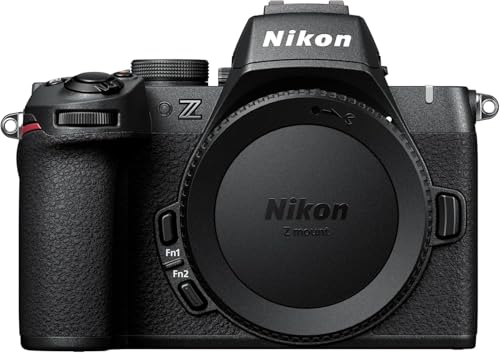
The Z50 II is the pick for buyers who mean it. Nikon’s second-generation APS-C body brings the company’s mature colour science — the same family look that makes its full-frame bodies popular with people photographers — into a compact mirrorless camera with video modes that respect the shooter: proper frame rates, a flat profile path for grading, and controls laid out by people who expect settings to be changed mid-scene. It feels like a small professional camera rather than a beginner’s appliance, and that feel changes how its owner works.
The mount is the long argument. Nikon Z glass spans affordable DX lenses, a growing shelf of fast primes, and — via adapter — decades of F-mount lenses whose rendering filmmakers deliberately seek. A thousand spent here is not consumed; it is invested in a system whose ceiling rises with every later purchase, which cannot be said of any fixed-lens camera on this page. For a first short film, the Z50 II behind one fast prime produces footage whose limits are the operator’s, not the equipment’s.
Working habits it rewards: manual exposure discipline, focus pulled deliberately, scenes lit rather than endured. Its stills are strong enough to cover posters and production photographs, its body small enough to ride a gimbal when a scene needs movement, and its colour intercuts respectably with larger Nikon bodies when a production later hires one as the A-camera — a growth path few rivals at this level can promise.
- Mount: Nikon Z (DX), F-mount adaptable
- Sensor: APS-C
- Recording highlight: 4K video with flat-profile grading path
- Handling: compact body, serious control layout
- Role: main camera for a growing kit
Strengths
- A real system: mount, controls and colour that scale with ambition.
- Nikon skin tones flatter cast members without grade heroics.
- Strong stills make it the only camera a small production needs.
Trade-offs
- Complete cost depends on the lens chosen; body-only thinking misleads.
- APS-C depth control needs fast glass to show its advantage.
- DX-native lens shelf is smaller than the full-frame Z catalogue.
Best for: aspiring filmmakers building a kit they intend to keep for years. Not suited for: buyers who want to film tonight without learning exposure basics.

Sony ZV-1F — Best fixed-lens simplicity
The ZV-1F makes a wager: that for many creators the best cinematic camera is the one already in the jacket pocket when the light turns beautiful. Its one-inch sensor is large enough to give footage a genuine step beyond phone video — cleaner shadows, kinder highlights, a lens with real character — while the fixed wide-angle lens removes every decision except where to stand. Video-first touches run through the design: a tally light, product-friendly autofocus behaviour, a directional microphone capsule and controls arranged for someone holding the camera at arm’s length as often as on a tripod.
That wide fixed lens shapes what the camera is for. It loves people in spaces: the two-shot across a café table, the walking monologue, the room whose geography matters to the scene. It is honest about what it is not — there is no reach for distant subjects and no swapping to a portrait lens — and within its chosen territory it is remarkably complete, including the vlogging and streaming duties that fund many young filmmakers’ narrative ambitions.
As a learning tool it has an underappreciated virtue: constraint. A fixed lens forces composition by position, which is the first skill of cinematography, and the ZV-1F’s footage grades well enough to teach colour discipline on real material. Owners who later graduate to a system camera carry those habits with them; the little Sony often stays in the kit as the always-ready second camera.
It also deserves credit as a social camera. Interview subjects and family members who tense up in front of a rigged mirrorless body relax in front of this small white-or-black slab, and relaxed people are the raw material of half the films beginners want to make. Documentary-leaning shorts, oral-history projects and community stories all benefit from equipment that reads as a gadget rather than a production.
- Lens: fixed wide-angle, no swapping
- Sensor: one-inch class
- Recording highlight: 4K video with creator-first controls
- Audio: built-in directional microphone capsule
- Role: ready-in-seconds main or second camera
Strengths
- Zero lens decisions; the whole budget buys one optimised package.
- One-inch sensor footage clearly outclasses phone video in hard light.
- Creator features serve the vlogs and streams that fund film habits.
Trade-offs
- Fixed wide lens cannot reach or compress distant subjects.
- No upgrade path — the camera is the whole system.
- Low-light depth control trails the APS-C bodies here.
Best for: creators who film people in real spaces and value readiness over flexibility. Not suited for: wildlife, sport or any subject that stays far away.

DJI Osmo Pocket 3 — Best stabilised movement
Nothing else near this money moves like the Pocket 3. Its three-axis mechanical gimbal turns a walking shot into a glide, a staircase descent into a crane move, a run into a tracking shot — the vocabulary of expensive cinema, produced by a device that fits in a coat pocket. The one-inch sensor behind that gimbal records footage with the dynamic range and colour depth to sit beside larger cameras in an edit, and the rotating screen plus face tracking make solo operation genuinely practical rather than a compromise to endure.
Filmmakers underestimate movement as a budget item until they price the alternatives: gimbals for mirrorless bodies cost a meaningful fraction of this camera’s whole price, demand balancing and practice, and still leave the operator carrying a rig. The Pocket 3 collapses that entire line item. For travel films, location scouts, rehearsal coverage and the moving master shots of a micro-budget short, it is not a toy adjunct but the enabling tool.
Its limits are equally clear and mostly optical: a fixed lens of one perspective, no weather sealing worth trusting in real rain, and a form factor that invites underestimating it on a professional set. Used as the movement specialist beside a stills-capable main camera — the pairing this guide quietly recommends — those limits rarely bind, and the footage routinely steals the film.
Ownership details reward a mention: the gimbal is a mechanism, so the camera travels best in its case rather than loose in a bag, and its batteries and small accessories are proprietary enough that spares should be bought with the camera rather than hunted later. None of this diminishes the proposition; it simply asks the owner to treat a precision instrument like one.
- Stabilisation: three-axis mechanical gimbal
- Sensor: one-inch class
- Recording highlight: high-quality 4K with tracking modes
- Screen: rotating, for solo framing at any height
- Role: movement specialist and travel main camera
Strengths
- Gimbal movement that reads as production value far beyond its price.
- Solo operation is genuinely designed-in, not improvised.
- Sensor quality lets its footage intercut with bigger cameras.
Trade-offs
- One fixed perspective; no lens language to grow into.
- Delicate gimbal mechanism asks for case discipline.
- Not the stills camera of any kit.
Best for: filmmakers whose stories move — travel, walk-and-talk, location-driven shorts. Not suited for: tripod-bound dialogue films as the only camera.

GoPro HERO13 Black — Best supporting camera
A GoPro in a cinematic guide needs one sentence of justification, and here it is: some of the most memorable shots in low-budget films are the ones no insured camera could be risked for. The HERO13 mounts to a car bonnet, a bicycle frame, a helmet, a boat rail; it survives rain, dust and the drop onto concrete; its ultra-wide view turns cramped interiors into geography. Its stabilisation smooths footage that would otherwise be unusable, and its tall sensor options give editors reframing room that narrative inserts exploit happily.
As a main camera it would be a compromise — fixed ultra-wide perspective, small-sensor manners in low light, audio that needs help. As the supporting camera beside any other pick here, it is close to irresponsible to omit: the cutaway that saves an edit, the establishing shot from an impossible position, the point-of-view that puts the audience inside the action. Productions at this budget win their distinctiveness from angles, not from resolution, and this is the angle machine.
Accessory logic differs from the other picks: mounts are its lenses. A small shelf of clamps, suction and magnetic mounts multiplies the camera more than any filter, and the waterproof body means the kit needs no housing debate before a wet scene. Budget for mounts and media, treat the camera as a perspective instrument, and it will earn its place in every project.
- Design: waterproof action camera
- Sensor: action-class with tall capture options
- Recording highlight: high-resolution video with strong stabilisation
- Lens: fixed ultra-wide
- Role: support camera, mounts and hostile environments
Strengths
- Perspectives and abuse no other pick here can attempt.
- Stabilisation rescues moving footage from unusable shake.
- Mount ecosystem is a creative multiplier, cheaply bought.
Trade-offs
- Ultra-wide fixed view is a voice, not a vocabulary.
- Low-light footage trails the larger sensors in this guide.
- Onboard audio needs an external solution for dialogue.
Best for: the supporting role on any kit, and action-led filmmakers as a main camera. Not suited for: dialogue-driven films as the sole camera.
Canon EOS R50 — Best Canon alternative (prose-only)
The R50 appears without a link because our verified pool holds no listing for it, and the guide’s rule is absolute: no verified listing, no buying link. On merit it belongs in this conversation. Canon’s compact RF-mount body pairs the company’s famously forgiving colour — faces look right with minimal grading, a mercy for beginners — with an APS-C sensor, approachable controls and a video mode that covers the frame rates and profiles a first short film needs. For creators whose audience-facing work is as important as their narrative ambitions, it is a genuinely balanced tool.
The RF mount is the strategic question. Canon’s native RF-S lens shelf is still young, while the full-frame RF catalogue tempts budgets upward; adapted EF glass fills the gap affordably and renders beautifully. Buyers should walk in knowing that lens planning, not the body, decides whether this route stays inside the thousand frame.
Why include a camera we cannot link? Because a reader cross-shopping this budget will meet the R50 in every store, and a guide that pretends it does not exist teaches distrust. Consider it fully alongside the Nikon — Canon colour and friendliness against Nikon’s control depth and colour science — and buy it from a reputable dealer when it wins.
- Mount: Canon RF (RF-S), EF adaptable
- Sensor: APS-C
- Recording highlight: 4K video with Canon colour profiles
- Handling: compact, beginner-welcoming controls
- Role: main camera for Canon-leaning creators
Strengths
- Canon skin tones shorten the path from filming to finished.
- Friendly handling lowers the learning cliff for first filmmakers.
- Adapted EF lenses open a huge affordable glass library.
Trade-offs
- No verified listing in our pool, hence no link here.
- Native RF-S lens choice is still maturing.
- Video depth trails dedicated creator bodies in small ways that add up.
Best for: Canon-loyal beginners who want colour that flatters without a colourist. Not suited for: buyers who need a deep native crop-sensor lens shelf today.
Sony ZV-E10 II — Best creator alternative (prose-only)
Sony’s second-generation ZV-E10 is the other body this budget’s shoppers will meet everywhere, and it too is discussed without a link because the verified pool does not carry it. The proposition is strong: an APS-C sensor in a video-led body, Sony’s autofocus pedigree, a deep E-mount lens catalogue shared with the company’s full-frame line, and creator ergonomics — vari-angle screen, product modes, livestreaming ease — that serve the audience-building work surrounding any film.
Against the Nikon Z50 II, the argument is ecosystem versus control philosophy. Sony’s lens shelf at every price is the industry’s deepest, and its autofocus is the benchmark nervous solo shooters lean on. Nikon’s counter is colour that many find kinder and a body that feels built for deliberate shooting. Neither answer is wrong; they are temperaments, and the honest guide says so rather than manufacturing a verdict the footage would not support.
As with the Canon, the inclusion is a matter of trust: this page exists to map the thousand-dollar decision accurately, and the map has six landmarks even though only four carry links. If the ZV-E10 II wins your comparison, buy it from an authorised dealer with the same care as any linked pick — and start with the same advice, one fast prime before anything else.
- Mount: Sony E (APS-C), full-frame lenses compatible
- Sensor: APS-C
- Recording highlight: video-led feature set with strong autofocus
- Handling: vari-angle screen, creator-first layout
- Role: main camera for Sony-ecosystem creators
Strengths
- E-mount lens depth gives the longest upgrade runway here.
- Autofocus confidence for solo and small-crew shooting.
- Creator features serve streaming and audience work natively.
Trade-offs
- No verified listing in our pool, so no buying link on this page.
- Menu depth can overwhelm absolute beginners.
- No in-body stabilisation, so lens or support choices matter.
Best for: creators committed to Sony’s ecosystem and autofocus. Not suited for: buyers who want stabilisation built into the body itself.
How do the six routes compare side by side?
| Camera | Type | Cinematic strength | Watch out for |
|---|---|---|---|
| Nikon Z50 II | APS-C mirrorless | System growth, colour, control | Lens decides total cost |
| Sony ZV-1F | One-inch compact | Readiness and people in rooms | Fixed wide lens only |
| DJI Osmo Pocket 3 | Gimbal camera | Movement like a dolly | One perspective, delicate gimbal |
| GoPro HERO13 Black | Action camera | Impossible angles, ruggedness | Dialogue audio and low light |
| Canon EOS R50 | APS-C mirrorless | Canon colour, friendly handling | Prose-only; young RF-S shelf |
| Sony ZV-E10 II | APS-C mirrorless | Autofocus and lens depth | Prose-only; no body stabilisation |
The table’s real message is that “best” at a thousand is a question about your next three years. The mirrorless three are platforms whose value compounds; the fixed three are finished tools whose value is immediate. A filmmaker certain about narrative work should buy the platform. A creator whose films are one strand of a busier output should buy the tool that ships footage this week.
How should the rest of the budget be spent?
Whatever remains after the body — and something should remain — buys light before it buys anything else. A single modest LED panel with a softbox transforms interiors more than any camera upgrade at this level, because cinematic images are mostly lighting decisions recorded adequately. Audio comes second: a camera-top microphone for the mirrorless and compact picks, or a small recorder, because audiences forgive soft focus long before they forgive unintelligible dialogue. A tripod with a genuinely smooth video head is third, and it will outlive every camera named here.
Storage and power close the list. High-bitrate 4K consumes cards quickly; buy capacity from reputable brands, because a failed card costs a scene, not a file. Spare batteries for a full shooting day are not an accessory but a schedule guarantee. Notice what is absent: no second lens, no filter collection, no cage sculpture. At a thousand total, restraint is a production value.
How do you get a filmic look out of modest hardware?
Technique closes most of the gap that money leaves. Shoot at twenty-four frames with the conventional shutter and lock exposure manually so the image stops breathing. Place subjects away from walls so backgrounds fall soft and separate. Light from the side rather than the camera, even if the source is a window, and expose for faces while letting rooms go moody. Use the flat or log profile, apply a gentle contrast curve in the edit, and resist the sharpening slider — softness reads as cinema, crispness as footage.
Movement deserves the same discipline: one deliberate move per scene, motivated by the action, executed at a speed the stabilisation — gimbal, in-body or careful hands — can render smooth. The Pocket 3 tempts its owners to move constantly; the films that use it best move rarely and mean it. Constraint, again, is the aesthetic engine at this budget.
How long will a camera at this level stay relevant?
Longer than marketing suggests. Delivery for independent film remains dominated by resolutions these cameras already exceed, and colour pipelines change slowly; a body bought today for its codec, mount and handling will shoot presentable work for many years. The obsolescence that actually bites is accessory drift — batteries discontinued, media formats abandoned — which argues for buying into living systems, one more quiet point for the mirrorless three and for DJI’s and GoPro’s enormous installed bases.
Skills compound faster than gear depreciates. The operator who spends three years learning light on a Z50 II will outshoot a newcomer holding a flagship, and when the upgrade day finally comes, the lenses, lights, microphones and habits all transfer. That is the deepest answer to the full-frame temptation at this budget: the thousand is tuition that keeps paying after the body is sold.
Which purchases should wait for the second film?
The second lens, almost always — the first film teaches which focal length you actually missed. The cage and matte box, until a filter or accessory genuinely needs mounting. The larger monitor, until the body’s screen has lost you a shot you can name. The drone, the slider, the second light: all legitimate, all premature. Sequencing purchases by evidence rather than anticipation is the habit that separates filmmakers who finish films from collectors who finish kits, and a first production is the cheapest teacher of that sequence there is.
One exception deserves carving out: education. A weekend course, a mentor’s day on set, even a shelf of cinematography books will improve the footage from any pick here more than the next accessory would. Budget lines are rarely drawn for learning, which is exactly why the filmmakers who draw them stand out.
How do the fixed-lens picks change the way you shoot?
Owners of interchangeable systems think in lenses; owners of the ZV-1F and Pocket 3 learn to think in positions. A fixed field of view turns every location into a puzzle of where to stand, and the solutions — closer, lower, through the doorway, from the stairs — are precisely the decisions that make footage look directed rather than captured. Directors trained on fixed lenses often keep the habit for life: block the scene for one honest perspective instead of papering it with zooms from a corner.
There is also a social dimension nobody lists in specifications. Small, friendly cameras change the behaviour of the people in front of them. Family members relax, strangers ignore the Pocket 3 entirely, actors stop performing for the apparatus. Documentary-leaning narrative work — stories built from real places and non-actors — may gain more from that invisibility than from any sensor advantage in this guide.
When does stepping above the frame make sense?
Three honest triggers justify breaking the thousand. The first is a lens: if the fast prime your style demands pushes a mirrorless kit over, the lens is the right place to break, because glass outlives bodies. The second is a second camera — a GoPro added to a mirrorless main, for instance — when the shot list genuinely contains two simultaneous perspectives. The third is audio infrastructure bought once and used for a decade. What never justifies the breach is a body upgrade bought for a specification the footage has not yet missed: resolution beyond your delivery, frame rates your stories do not use, a badge your audience will never see.
Buyers who suspect they will breach repeatedly should reconsider the frame itself and read the ten-thousand narrative guide, where the system maths changes completely. A budget is a tool for decisions, not a test of character; the failure mode is not spending more, it is spending more without knowing which shot the money bought.
How should a new owner practise before the first real project?
Deliberately, and on disposable footage. Shoot the same room at every hour of one day and watch what light does to the sensor’s manners. Film a friend reading the same paragraph while you vary only the microphone distance, and learn in one evening why audio placement outranks audio equipment. Record a walking shot three ways — locked exposure, auto exposure, flat profile graded afterwards — and compare what the edit can rescue from each. These small experiments cost nothing and inoculate against the expensive superstitions that circulate in camera forums.
Then shoot a complete tiny film: sixty seconds, one location, a beginning and an end. Finishing something miniature teaches the whole pipeline — cards, batteries, sync, grade, export — at a scale where mistakes are tuition rather than tragedy. Every pick in this guide is capable of that exercise this weekend, which is a better test of a purchase than any unboxing.
What does the used market offer at this level?
Used is the shadow budget that makes a thousand behave like more. Previous-generation mirrorless bodies from reputable dealers arrive with stated shutter counts, checked sensors and return windows, and their footage differs from current models far less than their prices do. Lenses are the safest used purchase in photography: glass does not wear out on any schedule a beginner should fear, and a used fast prime is the single highest-value upgrade available to the mirrorless routes in this guide.
The cautions are procedural rather than mysterious. Buy where returns exist, verify the sensor with a plain-sky frame, count the included batteries and charger honestly, and treat marketplace bargains from anonymous sellers as the gamble they are. A used body plus a new fast prime is a legitimate strategy this guide endorses; a used everything-from-a-stranger kit is how budgets die quietly.
How do you choose between the Nikon and the two prose-only bodies?
Handle them, if geography allows, because the deciding differences live in the hands and in colour taste. Nikon’s body feels like a small professional instrument and its colour leans toward a richness many portrait shooters love. Canon’s R50 is the friendliest first camera of the three, with colour that flatters faces with almost no grading. Sony’s ZV-E10 II counters with autofocus confidence and the deepest lens catalogue, at the cost of menu complexity and no in-body stabilisation. All three shoot films their owners can be proud of; the wrong choice is the one bought without asking which lens shelf the next three years will be spent on.
Renting the finalist for a weekend is the tiebreaker this guide recommends whenever the decision stalls. Two days of real shooting reveal more about fit — grip, menus, colour affection — than another month of comparison videos, and the rental cost is trivial against a system commitment measured in years.
How does stabilisation change the shot list at this budget?
Stabilisation is a scheduling tool disguised as a feature. A gimbal camera or a stabilised body converts the corridor walk, the staircase reveal and the following shot from specialist setups into single takes a small crew can repeat until the performance lands. That changes what a director dares to write: scenes can breathe in motion instead of being chopped into static coverage, and locations can be explored by the camera rather than merely occupied. The Pocket 3 builds its entire identity on this freedom, and the mirrorless bodies answer with lens stabilisation, technique and — when the shot truly demands it — a rented gimbal for the weekend rather than a purchased one forever.
The discipline is knowing where stabilisation stops helping. Locked-off dialogue gains nothing from a floating camera; slow pushes still read best from a tripod or slider; and stabilised footage at wide angles can warp edges in ways audiences feel without naming. Choose the stabilisation route that matches the movement your stories actually contain, and let static scenes be proudly static.
What does a sensible upgrade path look like after this purchase?
Year one belongs to the kit as bought, plus light and audio. Year two, evidence permitting, adds the lens the first films kept missing — usually a wider or a longer prime, identified by frustration rather than by catalogue. Year three is when body questions legitimately reopen, and by then the owner knows whether their ceiling is sensor size, autofocus, stabilisation or nothing at all, because many discover the ceiling was never the camera. This sequencing is the financial soul of the guide: at a thousand, patience is worth more than any single feature.
Selling discipline completes the path. Bodies from living systems hold resale value kindly when bought near the start of their cycle and kept with boxes, batteries and honest descriptions. Fixed-lens cameras sell to the next beginner with equal ease. A kit treated as a rotating fund rather than a permanent collection lets a growing filmmaker climb without ever facing a single painful flagship-priced decision.
How do you decide between a new fixed-lens camera and a used system body?
This is the crossroads where many thousand-dollar shoppers stall, because both answers are defensible and the forums argue them like religions. The used system body — a previous-generation mirrorless with a dealer’s warranty — buys sensor size, lens choice and growth, paid for with uncertainty and homework. The new fixed-lens camera buys certainty, a warranty that starts today and a tool matched to a defined job, paid for with a ceiling. Decide by naming your dominant risk: if your fear is outgrowing the tool, choose the system; if your fear is the tool failing, confusing or distracting you during the only summer you have to film, choose the finished camera.
Time horizon settles most cases. A buyer filming one defined project — a travel film, a family documentary, a season of location pieces — is served by the tool that completes that project beautifully and can be sold afterwards with little loss. A buyer building toward paid work should accept the homework of the used market, because the mount they learn becomes their professional address. Both buyers are right, which is why this guide refuses to collapse the choice into a single winner.
How do you protect footage when the production is just you?
Solo filmmakers are their own data department, and the rule scales down without changing: a shot does not exist until it lives in two places. Offload cards to a laptop and a portable drive before sleep, every shooting day, and keep the drive in a different bag from the laptop. Cloud upload is a fine third copy where bandwidth allows and a poor excuse to skip the first two. The cameras in this guide all record to common media that laptops read happily, which removes the last excuse for treating backup as a post-production problem.
Card discipline matters as much as copying. Format cards only in the camera, only after the copies verify, and rotate through a numbered set so a failure can be traced to a card rather than a mystery. More beginner films have been lost to housekeeping than to sensor limitations, and the fix costs nothing but a routine.
What should you check during the first week of ownership?
Everything the return window exists for. Photograph a plain bright surface to reveal sensor dust or defects. Record a long clip at your working frame rate and confirm the body completes it without warnings in a warm room. Test every port with the cables you own, charge every battery, and update firmware before habits form around an old menu. Shoot one graded clip end-to-end — profile, edit, export — so the pipeline is proven while a swap is still painless.
Register the warranty, photograph the serial number, and store the receipts with the production files rather than the junk drawer. These are unglamorous acts, but they are the difference between a tool and a liability, and they take less time than one argument with a support line conducted without them.
What mistakes do thousand-dollar buyers repeat?
- Buying the body with the entire frame, then filming through the slow kit zoom for a year.
- Chasing resolution figures while ignoring profiles, codecs and audio inputs.
- Skipping the light: one panel would have changed every interior they shot.
- Treating prose-only picks as second-class and missing the body that suited them.
- Filming everything handheld because stabilisation exists, and calling the wobble a style.
- Never practising the grade, so log footage stays grey and the camera gets the blame.
Final Recommendation
Build on the Nikon Z50 II if filmmaking is the destination: it is the only route here whose ceiling keeps rising, and its colour and controls teach the craft properly. Choose the DJI Osmo Pocket 3 if your films live in motion and locations, the Sony ZV-1F if readiness and people are the whole game, and add the GoPro HERO13 to any of them when the shot list starts dreaming of impossible angles. Weigh the Canon EOS R50 and Sony ZV-E10 II honestly in stores — they lost links here, not arguments. The thousand spent on any of these routes, with light and audio protected in the budget, buys a real filmmaking education that happens to leave films behind.
One closing caution: buy once, from a dealer you trust, and then leave the comparison pages alone for a year. The camera chosen from this list will not be the reason a film fails, and the hours not spent re-shopping are the hours the first finished short is made of.
Related guides
- Best DSLR Cameras for Around 1000: Building a Semi-Professional Used System With Its Lens
- Best Digital Cameras Under 500 Dollars: Bodies That Start a Real System
Frequently Asked Questions
Can a thousand-dollar camera really look cinematic?
Yes, when the operator supplies what the budget cannot: twenty-four-frame discipline, deliberate light, a grade applied with restraint. The cameras here provide gradeable files and proper controls; the look itself is a practice, not a purchase.
Is APS-C enough, or should I save for full-frame?
APS-C with a fast lens beats full-frame with a slow one for most beginner work, and costs far less to feed with glass. Save for full-frame only when a specific need — extreme low light, a particular lens look — has actually appeared in your footage.
Why are two picks prose-only?
Our verified pool carries no listing for the Canon EOS R50 or Sony ZV-E10 II, and this site links only what it has verified. Both bodies are common, legitimate options at this budget, so they are reviewed on merit and bought wherever you trust.
Should the whole thousand go on the camera?
Rarely. A body that consumes the frame leaves nothing for the lens, light and audio that shape the image more. The guide’s routes are framed as complete kits wherever the distinction matters.
What about buying used to stretch the frame?
Used mirrorless bodies from reputable dealers are a rational stretch — shutter counts and sensor condition stated, returns allowed. Lenses hold value and condition well; bodies depreciate kindly. Keep the same discipline: verify before you pay.
Do I need a gimbal if I buy the Nikon or a prose-only body?
Not immediately. Locked shots, a decent tripod and careful handheld technique cover most first films. Add stabilisation hardware when a specific recurring shot demands it — or choose the Pocket 3 route if movement is the point from day one.
Which pick is best for filming family and community stories?
The Sony ZV-1F, for social rather than technical reasons: it is small, unthreatening and ready instantly, and its footage is a clear step beyond a phone. Where the stories involve walking, travel or events, the Pocket 3’s stabilised discretion takes the same argument further.
Related Guides
Readers whose productions outgrow this frame should step up to our narrative cinema cameras under ten thousand, where full-frame bodies and raw workflows enter the picture. Those trimming the budget instead will find the honest floor in the under-five-hundred cinematic video cameras. And when a vintage stills camera joins the collection between films, our guide to CLA services for vintage cameras explains how to bring it back to life.


