reviewstook.com is reader-supported. When you buy through links on our site, we may earn an affiliate commission.
Where to buy
Student money is honest money: every unit of it was earned at a job that competed with studying, and every purchase must teach as well as perform. The best cameras for videography student life are therefore judged by a double curriculum — the films they make possible this semester, and the craft they build for the career after it. A student body should forgive early mistakes kindly, expose real technique gradually, survive a bag thrown into a bus locker, and leave enough budget unspent for the tripod, microphone and hard drive that separate student footage from student excuses.
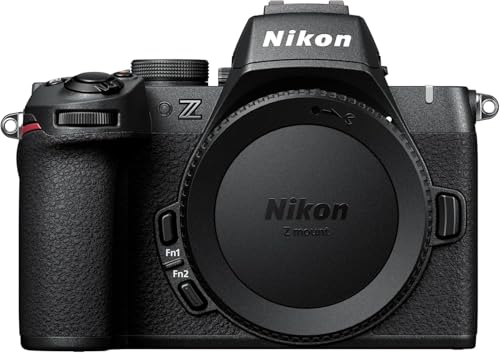
- Nikon Z50 II: check price on Amazon
- Sony ZV-1F: check price on Amazon
- DJI Osmo Pocket 3: check price on Amazon
- GoPro HERO12 Black: check price on Amazon
- Panasonic LUMIX S5II: check price on Amazon
- Canon EOS R50 (prose-only pick — see its section below): check specialist camera retailers
A student’s camera leads several lives at once. It shoots coursework with deadlines and marking rubrics, documents the society social and the housemate’s band, builds a portfolio that must impress strangers, and occasionally earns money at a weekend event. Versatility is not a vague virtue here; it is the timetable. Each pick below was weighed against that timetable, and against the used-market, rental and borrowing realities that shape how students actually equip themselves.
One warning belongs at the front, from everyone who has taught this subject: the camera is the smallest line in a working student kit. Sound, support, storage and light decide more grades than sensors do, and the wisest purchases in this guide deliberately leave money behind for them.
Key Takeaways
- Nikon’s Z50 II is the student sweet spot: teachable controls, honest colour and a system that grows with its owner.
- Sony’s ZV-1F serves beginners who need presentable films immediately, with almost no learning curve to climb first.
- DJI’s Pocket 3 teaches movement and framing while producing footage smooth enough for assessed work.
- GoPro’s HERO12 Black covers the action, weather and placement shots no delicate student camera should attempt.
- Panasonic’s S5II is the stretch purchase for final-year students ready for professional depth at a sane tier.
- Canon’s EOS R50, covered without a link, remains a beloved beginner route worth comparing before deciding.
In this guide
Quick Picks
| Camera | Badge | Why it is here |
|---|---|---|
| Nikon Z50 II | Student sweet spot | Real technique, kindly taught, in a system worth keeping after graduation. |
| Sony ZV-1F | Instant competence | Presentable films from the first afternoon, for students whose course starts now. |
| DJI Osmo Pocket 3 | Movement teacher | Gimbal smoothness lets beginners study framing instead of fighting shake. |
| GoPro HERO12 Black | Indestructible second eye | Action, weather and risky angles for coursework and life alike. |
| Panasonic LUMIX S5II | Final-year stretch | Professional colour depth and stabilisation for portfolio-defining projects. |
| Canon EOS R50 | Beloved beginner route | Friendly handling and strong video for students in Canon’s orbit. |
What should a student camera teach its owner?
Exposure as a language, not as a lottery. A body that shows aperture, shutter and sensitivity as connected decisions — and lets a student graduate from automatic help to manual authorship in stages — builds the understanding every later camera will assume. Picks below were chosen partly for how honestly they reveal that machinery, because a graduate who understands light can shoot on anything, while one who only learned a menu can shoot on one thing.
Focus as a responsibility. Autofocus should be good enough to trust during assessed work, yet transparent enough that a student learns what it is doing and when to overrule it. The middle path — reliable automation with visible behaviour — teaches faster than either a perfect black box or a purely manual antique, and it mirrors the professional world the student is entering.
Sound as a habit from the first semester. Cameras that monitor audio honestly, accept external microphones gracefully and make levels visible teach the lesson that ruins more student films than any other: audiences forgive pictures and never forgive sound. A student body earns marks here by making good audio practice easy rather than by boasting about its internal microphones.
Finally, durability as economics. Student equipment is borrowed against, sat on, rained on and resold; a body that survives the course and holds value at its end has effectively charged less tuition than a fragile bargain. Build quality and resale strength are therefore educational specifications, and they are weighed openly in the portraits below.

Nikon Z50 II — Student sweet spot
Start with the learning curve, because a student’s scarcest resource is not money but directed attention. This Nikon arranges its controls so that the first month can run on trustworthy automation while the second month begins asking questions — why did the camera choose that shutter, what would a wider aperture have done to the background — and answers them visibly. Tutors recognise the design instantly: it is a syllabus disguised as a camera, sequenced from confidence toward authorship.
Colour honesty accelerates that education. Skin looks like the classmate it belongs to, the campus looks like the campus, and a student’s early grading attempts start from truth rather than from a baked style they must first unlearn. When coursework is marked on storytelling and technique, honest files keep the feedback focused on decisions the student actually made, which is how technique compounds semester by semester.
Subject detection quietly protects assessed work. The interviewee who shifts in their chair, the dancer in the society showcase, the dog in the documentary exercise — the camera holds them while the student concentrates on framing, questions and the hundred other duties of a one-person crew. Marks are rarely lost to focus with this body in charge, and confidence grows in exactly the assignments where panic used to live.
The Z system gives the purchase a future. Kit glass covers coursework; one fast prime, bought used in the second year, transforms night scenes and portraits; and Nikon’s larger bodies wait at graduation without orphaning a single lens. A student investment that survives the degree is a different species from one that must be replaced by it, and parents or part-time wages funding the purchase will feel that difference in the total bill for becoming a videographer.
Practicalities suit student logistics: a body small enough for a daily bag, batteries that survive a teaching day with sense, files that a mid-range laptop can edit in the library without a proxy ritual. Coursework is made in the margins of a crowded life, and equipment that fits those margins gets used between lectures — which is where the real practice hours accumulate.
Choose the Z50 II as the default student answer. It teaches kindly, performs honestly, and graduates alongside its owner instead of being left behind by them.
Society life reveals a social dividend in this Nikon’s approachability: it can be handed to a trusted classmate with a thirty-second briefing. Student productions run on such lending — the society’s second angle, the housemate filming your assessed piece while you perform in it — and a camera that others can operate without a manual multiplies its owner’s possibilities in a way a temperamental professional body never will.
Night assignments deserve a practical note. Paired with one affordable fast prime, this body films the evening campus, the gig in the student union and the night-bus documentary with results that hold together for coursework and portfolios alike. The lesson embedded in that pairing — glass before bodies, light before gain — is among the most valuable a student budget can buy, and this system teaches it at the gentlest price in the guide.
Placement and internship interviews reveal an unexpected Nikon dividend: employers read a showreel shot on honest, well-handled footage as evidence of fundamentals, and this body’s files make fundamentals visible. A candidate whose work shows clean exposure, stable colour and disciplined focus — achieved without exotic equipment — advertises exactly the reliability a junior hire is bought for.
- Controls: staged path from auto to manual
- Colour: natural, feedback-friendly rendering
- Focus: subject detection for coursework
- System: Z-mount lenses kept for years
Strengths
- Teaches technique visibly
- Files behave on student laptops
- Investment survives graduation
Trade-offs
- Low light needs a fast lens
- Pro video depth lives higher up
- Single body for assessed events is a risk to manage
Best for: videography students wanting one teachable, durable main camera. Not suited for: final-year specialists needing full-frame depth immediately.

Sony ZV-1F — Instant competence
Some students cannot spend a semester learning before the first assessed film is due. The media course that starts with a production, the society role that begins with next week’s event, the side income that starts now — for them this little Sony’s gift is immediacy: open the box, and the afternoon’s footage already looks and sounds presentable. A one-inch sensor, a wide bright lens and face-priority focus conspire to make beginners look competent while they quietly become so.
Presenter-led coursework is its home ground. Pieces to camera, vlog-style field reports, product demonstrations for a student business — the framing suits an arm’s-length world, the microphone favours the speaker, and the whole apparatus fits the corner of a bag already carrying books and a laptop. Students whose subjects are themselves will produce more, and better, assessed work simply because the friction of starting approaches zero.
The fixed lens teaches by refusing. Unable to zoom, its owner learns to move, to stage, to choose a position with intention — foundational videography disguised as a limitation. Unable to swap lenses, its owner spends the lens budget on a microphone and a tripod instead, which markers will reward far sooner than they would a second focal length. Constraints that redirect money toward sound and support are a curriculum in themselves.
Honesty about its ceiling protects students from a wrong long-term bet. Low light beyond the friendly range, distant subjects, and manual technique all press against its simplified design; a student falling seriously in love with cinematography will outgrow it within the degree. As a first instrument that guarantees early success — and as a permanent second camera for presenter work afterwards — that ceiling is a fair price, openly charged.
Resale and hand-me-down strength soften the outgrowing. Compacts of this quality pass to younger siblings, society cupboards and first-year students at healthy prices, so the initial purchase functions partly as a deposit rather than a sunk cost. Student economics run on such recoveries, and equipment that holds value is equipment that effectively costs less per semester.
Immediate starts and confidence-first learning are this Sony’s home ground. It buys a student the early wins that make the harder learning worth attempting.
Deadline arithmetic flatters this Sony in a way spec sheets ignore. A student filming an assessed piece the night before submission — a rite of passage nobody admits to scheduling — needs a camera with no setup tax: no balancing, no profile decisions, no lens dilemma. The ZV-1F’s entire design is that absence of tax, and while planning ahead remains the official advice of this guide, equipment that rescues the unplanned night has saved more degrees than any colour profile.
Its second life after graduation surprises owners. The graduate who upgrades to a system camera keeps the little Sony for the talking-head updates, the behind-the-scenes clips and the family duties where a rig would be theatre — so the student purchase keeps working professionally for years, amortising its cost across a career’s worth of small, necessary films.
Confidence has a compounding interest rate in student life. The beginner whose first three films look presentable volunteers for the society’s next production, attempts the harder module, applies for the placement — while the beginner whose expensive camera defeated them quietly changes electives. Equipment that manufactures early confidence is therefore not a soft consideration but the engine of the whole degree, and this Sony manufactures it reliably.
- Sensor: one-inch for real low-light gains over phones
- Lens: fixed wide, always ready
- Audio: directional microphone for presenters
- Learning: automation first, technique by osmosis
Strengths
- Presentable films on day one
- Friction near zero for coursework
- Constraints redirect budget wisely
Trade-offs
- Serious cinematography outgrows it
- Distant subjects stay distant
- Manual control deliberately limited
Best for: beginners, presenter-led courses and student creators earning now. Not suited for: cinematography specialists planning a three-year technique arc.

DJI Osmo Pocket 3 — Movement teacher
Shake is the first thing markers notice and the last thing beginners can fix, which makes this gimbal camera a pedagogical gift. By removing tremor mechanically, the Pocket lets a student study the skills that actually earn grades — framing, timing, movement with motivation — on footage smooth enough to judge honestly. A walking shot through the library, a slow reveal of the workshop, a tracking shot beside a classmate’s project: all become exercises in directing rather than apologies for handholding.
Its image quality sustains assessed work without embarrassment. The one-inch sensor handles the mixed light of real campus buildings — tungsten corridors, fluorescent labs, dusk exteriors between lectures — with a composure that lets a student shoot the story where it happens instead of where the light is easiest. Coursework realism is a genre of its own, and this little camera is fluent in it.
Movement vocabulary arrives as a built-in tutor. Push-ins, orbits, reveals and follows can be rehearsed in an afternoon and reviewed on the device, so a student learns the grammar of camera motion by doing it, repeatedly, in the gaps of a teaching day. No rig to borrow from the department, no gimbal to balance, no permission slip for the good tripod: the practice hours multiply because the apparatus is always in the pocket that is already on the coat.
Group work benefits from its democracy. Anyone in the crew can operate it competently within minutes, so the directing student can direct — watching performance instead of babysitting equipment — while a classmate gathers smooth coverage. Student productions are chronically short of specialists; equipment that lowers the specialisation threshold raises the whole crew’s ceiling.
Boundaries remain boundaries. Serious dialogue still wants an external audio solution, the fixed view will not compress a distant stage, and a cinematography module will eventually demand manual controls this device simplifies away. As the movement-and-confidence half of a student kit — especially beside a department’s larger cameras — those limits sit comfortably outside its teaching brief.
Carry the Pocket when coursework involves walking, following, revealing and doing it all between lectures. It turns a student’s daily routes into a film school that never closes.
Campus geography becomes a shot list on this DJI. The staircase spiral, the library’s long aisle, the bridge between buildings at dusk — a student walking a daily route with a gimbal in the pocket starts seeing the institution cinematically, and that seeing is the actual education. Tutors can set all the exercises they like; the camera that turns a commute into practice delivers more of them.
Interview technique benefits unexpectedly. A Pocket on a small tripod, framing the subject steadily while the student sits beside it asking questions, produces the calm, undistracted footage that documentary marking rewards — and its unobtrusiveness helps nervous interviewees forget the apparatus entirely. First documentaries live or die on whether strangers relax, and small, quiet cameras are relaxation technology.
Assessment formats are quietly evolving toward this DJI’s strengths: the video essay, the practice-based presentation, the filmed fieldwork report. In each, a student must gather smooth, intelligible footage inside real institutions under time pressure, often alone — precisely the Pocket’s design brief. Students in subjects far beyond film, from geography to physiotherapy, are becoming its natural owners.
- Sensor: one-inch on a 3-axis gimbal
- Movement: dolly-like shots without rigs
- Operation: crew-friendly within minutes
- Size: pocketable between lectures
Strengths
- Removes shake from the learning equation
- Movement grammar practised daily
- Anyone in the crew can shoot
Trade-offs
- Dialogue wants external audio
- Fixed view limits distant work
- Manual technique simplified away
Best for: mobile coursework, documentaries and movement-hungry beginners. Not suited for: manual-control cinematography modules.

GoPro HERO12 Black — Indestructible second eye
Every student kit needs one member that can be risked. The HERO12 is that member: waterproof, knock-proof and small enough to mount where the story is dangerous — on the kayak for the outdoor-pursuits film, at the edge of the workshop bench for the making-of, on the handlebars for the travel documentary, in the rain that cancelled everyone else’s shoot day. Coursework distinguishing itself often does so by viewpoint, and this camera collects viewpoints no tutor’s insurance would allow a main body to attempt.
Slow motion is its second teaching gift. High frame rates let a student dissect motion — the athlete’s technique for the sports-science film, the skateboarder’s trick for the society edit, water and machinery slowed into visible mechanics — and footage of that kind elevates projects across subjects far beyond videography itself. Classmates in other departments will borrow it, which is a social asset as well as a creative one.
As a second camera it professionalises a student’s coverage. The main body holds the interview while the GoPro’s wide, fixed vigil covers the room; the concert film gains a drum riser’s perspective; the cooking demonstration gains the overhead angle. Learning to think in two cameras — what each owes the edit — is a professional skill, and this is the cheapest honest way to practise it during a degree.
Image character asks for understanding. The wide, deep-focus view is a language of energy and place rather than of portrait intimacy, and low light is its acknowledged frontier, where footage should be planned around available brightness rather than wished through it. Used inside its language — daylight, action, proximity, weather — the results have a vigour that polished bodies cannot imitate.
Ownership economics suit student life unusually well. The second-hand market is deep, mounts and cases are cheap and universal, and the camera’s toughness means a used example is a safer bet than a used anything else in this guide. A HERO12 bought in the first year will still be the kit’s risk-taker at graduation, having survived things its owner will dine out on.
Add the GoPro when your course — or your life around it — involves motion, weather or places a precious camera should not go. It is the student kit’s brave friend, and every kit needs one.
Sports societies should read this GoPro’s section twice. Mounted at the goalpost, the poolside or the climbing wall — with the venue’s permission — it gathers the angles that make a society’s season film worth watching, and its slow motion turns coaching analysis into a genuine teaching tool. A single HERO12 shared by a club can raise every member’s project, which makes it a unusually fundable purchase for a society grant application.
Travel semesters extend the argument geographically. A camera that survives a monsoon trek, a desert placement or a marine field course — and films them from inside the experience rather than from a dry doorway — returns with coursework material no library-bound classmate can match. Students whose degrees involve the physical world should weigh that survivability as an academic specification, not as an adventure garnish.
Failure tolerance completes the GoPro’s student case. It is the camera a beginner can drop, drench and lend without a semester’s savings flashing before their eyes, and that psychological safety changes behaviour: its owner experiments more, volunteers for the wet shoot, tries the angle nobody else dared. Experimentation volume is the hidden curriculum of every creative degree.
- Build: waterproof and knock-resistant
- Motion: high frame rates for slow analysis
- View: very wide for action and placement shots
- Role: second camera and risk-taker
Strengths
- Viewpoints no main body should attempt
- Slow motion teaches across subjects
- Deep, safe second-hand market
Trade-offs
- Low light is its frontier
- Wide view flattens portraits
- Audio is atmosphere, not dialogue
Best for: action coursework, second angles and outdoor lives. Not suited for: interview-led projects as a main camera.

Panasonic LUMIX S5II — Final-year stretch
There comes a semester when a student’s ambitions outgrow friendly equipment: the final project that must screen like a professional short, the portfolio that will be judged by employers, the first paid commissions arriving before graduation. This Panasonic is the stretch that answers that semester — full-frame depth, log colour for real grades, stabilisation for confident handheld work — at a tier a working student can reach with a summer job and a used-lens plan, rather than a fantasy.
Its teaching value at this level is professional honesty. Files respond to exposure and colour decisions the way the industry’s do, autofocus behaves like the systems on professional sets, and nothing about the footage needs apologising for in a showreel. A final-year student cutting a portfolio on this body is rehearsing the exact workflow of their first job, which is what the final year is for.
Stills strength keeps the side income alive. Many videography students fund their studies with photography — events, portraits, society formals — and this body’s stills quality carries that work professionally while its video builds the portfolio. One purchase serving both the income and the ambition is student economics at its most elegant, and it is why full hybrids dominate this guide’s upper reaches.
The stretch must be budgeted honestly. Lenses for a full-frame system, faster cards, more storage for richer files and a computer that enjoys them all join the invoice across the following year, and a student who spends everything on the body will feel each omission weekly. The wise route is staged: body and one versatile lens now, the fast prime when the first commission lands, the rest as the work itself pays — a plan this ecosystem supports gracefully.
Smaller cautions mirror its professional nature: it is a larger daily companion than the APS-C picks, and its depth will expose a beginner’s unsettled technique more plainly than forgiving automation does. Those are final-year virtues wearing stern faces — the camera stops protecting its owner because the profession will not either.
Stretch to the S5II when the portfolio, not the coursework, has become the point. It is the student purchase most likely to still be working professionally at the owner’s five-year reunion.
Commission discipline is the final-year lesson this Panasonic teaches best. Its footage satisfies paying clients — the café’s promo, the band’s live film, the department’s open-day video — so a student can learn quoting, briefs, deadlines and delivery on real work without apologising for the tool. Earning while learning changes a student’s relationship with the craft from coursework to practice, and equipment that clients accept is the threshold of that change.
Mentorship runs through this ecosystem in the owner’s favour. Because the S5 line is used by working filmmakers at accessible levels, a student can find local mentors, second-shooter shifts and rental support inside the same mount family — an apprenticeship network that functions as an unofficial final module of the degree.
Rental income is a final, pragmatic Panasonic note. A final-year owner with a capable full-frame body, one good lens and a reputation for reliability can hire the kit — and often themselves with it — to societies, departments and local businesses, turning the stretch purchase into the degree’s best-paying part-time job. Equipment that other people rent is equipment that has stopped costing money.
- Capture: V-Log depth for real grades
- Sensor: full-frame for portfolio work
- Stabilisation: confident handheld filming
- Stills: professional side-income quality
Strengths
- Portfolio footage needs no apology
- Rehearses the graduate workflow
- Funds itself through hybrid work
Trade-offs
- System costs continue after the body
- Larger daily carry
- Exposes unsettled technique honestly
Best for: final-year students and working student professionals. Not suited for: first-semester beginners on tight total budgets.
Canon EOS R50 — Beloved beginner route
No student shortlist is complete without the camera half the internet’s tutors recommend first, and Canon’s EOS R50 earns that fame honestly — which is why it appears here without a purchase link, our verified pool not carrying it, and with the advice to compare it in person at a camera shop or through a college’s kit store before deciding. Friendly handling, strong video for its class and Canon’s colour welcome have made it the default first body for a generation of creators.
Its educational personality differs subtly from the Nikon’s. Canon leans toward immediacy: results that look pleasing quickly, controls arranged for creators who film themselves, and a community of fellow beginners so vast that every question a first-year student can type has been answered on video by someone a semester ahead. For a student learning alone, without a tutor’s office hours, that crowd is a genuine feature no specification can match.
Self-filming is its home territory. The articulating screen, dependable face tracking and creator-minded touches suit the coursework vlog, the solo documentary and the student business’s product films — the genres through which many students actually earn and learn simultaneously. A one-person crew is the commonest student production unit, and this body was designed by people who clearly interviewed several.
Growth paths deserve the same scrutiny as first impressions. Canon’s RF system offers a full professional ladder, though its lens economics and third-party landscape differ from Nikon’s and should be compared with a three-year lens plan in hand, not with launch-day enthusiasm. Students intending to borrow department glass should also check which mount their institution stocks — free access to a cupboard of lenses can outweigh any body comparison ever printed.
Limits are the class’s usual ones, stated plainly: a smaller sensor than the full-frame stretch pick, video depth aimed at creators rather than colourists, and a body whose lightness is a virtue daily and a compromise in the roughest handling. Within a beginner’s first two years, those limits rarely appear in the marks.
Shortlist the R50 beside the Z50 II and let your hands, your institution’s lens cupboard and your three-year plan decide between two genuinely kind teachers. Either choice, made deliberately, is a good start to a videographer’s education.
Borrowing culture should be interrogated before the Canon-versus-Nikon decision hardens. If the department’s cupboard, the society’s kit bag and every classmate’s shelf speak Canon, the R50’s value quietly multiplies: borrowed lenses on assessed weekends, shared batteries in a crisis, a tutor who can fix your settings from memory. Students buy into communities as much as into systems, and the wise ones inspect the community first.
Its creator orientation also suits the portfolio economy students actually inhabit. The part-time product films for a local shop, the society’s social clips, the personal channel that might become income — the R50 was designed for exactly that mixture, and a student whose ambitions run commercial-creator rather than cinematographic may find its priorities match their own more closely than any purist alternative.
Second-hand abundance deserves the Canon’s final word. Because so many beginners start on bodies of this class, the used market, the tutorial archive and the accessory shelf are all deep, and a student buying carefully can assemble a complete R50 kit — body, lens, microphone, bag — for the price of a new body alone in a dearer system. Student arithmetic of that order deserves respect, not snobbery.
- Handling: creator-friendly, self-filming ready
- Colour: Canon’s welcoming rendering
- Community: vast beginner support online
- System: RF ladder for later years
Strengths
- Immediacy for solo creators
- Tutor crowd answers everything
- Pleasing results from week one
Trade-offs
- Creator depth, not colourist depth
- Lens economics need a plan
- Light build for rough handling
Best for: solo student creators and Canon-leaning beginners. Not suited for: students whose institution stocks another mount’s glass.
How should a student divide a real budget?
Begin with the unglamorous thirds. Roughly, a working student kit divides among the camera and lens, the sound-and-support pair of microphone and tripod, and the storage-and-power foundation of cards, drives and batteries — and a purchase that consumes the whole budget on the first third produces a semester of beautiful, unusable intentions. The picks above were tiered with that division in mind: the friendlier bodies deliberately leave two thirds unspent, while the stretch pick assumes its owner will stage the rest across the year.
Borrow before buying the specialised items. Departments, societies and friends own gimbals, lights and exotic lenses that a student needs twice a year; owning the daily essentials and borrowing the occasional exotica is the arithmetic that keeps student kits solvent. A camera, though, is needed weekly and personally — which is why this guide exists, and why its recommendations concentrate on bodies worth owning rather than renting.
What habits earn marks that no camera can?
Recording room tone and checking audio on headphones during the shoot, not after it. Slating or verbally labelling takes so the edit begins organised. Backing up the day’s cards before sleep, in two places, every time, including the disappointing days — especially the disappointing days, since reshoots are rarely possible and markers are unsentimental about lost footage. Shooting ten seconds more than the scene needs at both ends, because edits breathe through those margins. Each habit is free, each is visible in the finished work, and together they outweigh a full tier of camera upgrades in any honest marking rubric.
Reviewing rushes the same evening completes the set. A student who watches the day’s footage while the shoot is still correctable learns at triple speed, and arrives at the next session with settings, questions and a shot list already improved. The cameras above all make that review easy; the discipline to perform it is the actual distinction between students who improve and students who merely accumulate equipment.
How do you build a portfolio while still studying?
Choose finished over ambitious. Three short, complete, well-sounded pieces impress employers more than one magnificent fragment, because finishing is the professional skill being hired. Let each piece demonstrate a different virtue — an interview’s sound discipline, a documentary’s patience, a music piece’s movement — and let the camera serve those virtues rather than dictating the subjects. The bodies in this guide can all produce portfolio-grade work when the finishing habit leads.
Publish on a rhythm and keep the archive ruthless. A monthly piece, however small, builds an audience and a practice simultaneously, while a curated archive — best work forward, coursework behind it — presents the student as a professional in formation rather than as a hard drive with ambitions. Tutors and first clients read portfolios exactly that way.
How do you survive a group project with one good camera?
By treating the camera as the crew’s shared instrument rather than its owner’s treasure. Agree the settings recipe in writing, rotate operating duties so every member learns, and let the person directing actually direct while others shoot — group marks reward collaboration visibly, and a camera simple enough to hand over, like several picks here, turns that requirement from a risk into a method. Log every card at the wrap, together, before anyone leaves for the bus; group projects lose footage socially, in the gap between one member’s bag and another’s laptop, far more often than they lose it technically.
Insurance habits belong in the same conversation. A shared kit list, a named borrower for any overnight loan and a society-level agreement about damage sound bureaucratic until the first assessed weekend, after which they sound like wisdom. Students who professionalise their borrowing early graduate with both their equipment and their friendships intact.
What should a student practise in the holidays?
One complete micro-film per month, on a theme small enough to finish: the street’s morning, a grandparent’s recipe, the last bus home. Holiday projects are where technique becomes instinct, because nobody is marking them and everything is at stake emotionally — the two conditions under which learning accelerates. Choose the camera exercises deliberately: a whole film on one focal length, a whole film without dialogue, a whole film in a single location, and let the constraints, not new purchases, supply the curriculum.
Sound-only exercises deserve a place in that calendar. Record an interview with the camera’s lens capped and listen to what your audio habits actually capture; then fix one flaw — distance, room, levels — and repeat. Students who spend one holiday on sound return with an advantage their classmates will spend a year failing to diagnose in their own work.
How should a student choose between borrowing and owning?
Own what you use weekly; borrow what you use monthly; rent what you use once. The main camera sits firmly in the first category for any videography student, because skill is built in unplanned hours — the evening light through the flat window, the society emergency, the idea that must be tested before the tutorial. A borrowed body returns to its cupboard before those hours happen, which is why this guide’s friendly tiers exist: they lower the price of owning the daily instrument to a level where the weekly rule can be obeyed on a student income.
Specialist glass inverts the rule happily. A department’s fast telephoto for the one sports assignment, a society’s cinema lens for the final project — borrowing those is not a compromise but the system working as designed, and a student whose own kit covers the daily ninety percent will be welcomed as a borrower precisely because they so rarely need to be one.
Why does the first external microphone change everything?
Because it moves the listening point from where the camera stands to where the subject speaks, and that single relocation improves perceived production value more than any sensor upgrade available at student prices. Interviewees sound present instead of distant, dialogue survives ordinary rooms, and markers — who forgive grain, wobble and ambitious framing — stop writing the same comment about sound on every feedback sheet. Every body in this guide accepts that upgrade gracefully, and students should schedule it as the second purchase, before any lens, light or accessory, because it is the one their grades will notice first.
The habit that accompanies it matters as much: headphones during recording, levels watched rather than assumed, a ten-second test played back before the real take. Students who build that ritual in the first semester carry it into professional life intact, where it will save them publicly and repeatedly. Cameras cannot install the ritual, but the friendly monitoring on these picks removes every excuse for skipping it.
What does graduation change about a student camera?
Less than the industry implies, if the purchase was made well. The teachable Nikon or Canon becomes the graduate’s reliable second body and daily companion; the Panasonic simply continues as a professional instrument; even the little Sony keeps its presenter niche in a working kit. What graduation actually changes is the owner’s questions — from what will this teach me to what will this earn me — and a body bought for honest capability answers both editions of the question without embarrassment. That continuity is the final argument for buying the best-fitting system rather than the cheapest available box: a degree is three years, but a mount, a colour language and a set of reflexes can serve for a decade, and students who choose with that decade in view rarely regret the arithmetic.
How do you know a student camera was the right one?
By the middle of the second year, the evidence is unglamorous and complete: the body has been to every shoot it was invited to, its footage fills the portfolio without apology, its controls have disappeared beneath the owner’s intentions, and its owner talks about subjects, stories and subjects again — never about the camera at all. Equipment that reaches that invisibility was correctly chosen, whatever its badge, and every pick in this guide was selected because students demonstrably reach it: the Nikon’s pupils by fluency, the little Sony’s by confidence, the Pocket’s by movement, the GoPro’s by daring, the Panasonic’s by professional depth, the Canon’s by community. Judge your own purchase by that standard at the end of the first year, and you will know whether to keep, supplement or trade it with a clear conscience.
Comparison Table
| Camera | Student role | Strongest suit | Watch out for |
|---|---|---|---|
| Nikon Z50 II | Main teachable body | Technique, kindly sequenced | Fast lens needed at night |
| Sony ZV-1F | Instant starter | Competence from day one | Outgrown by specialists |
| DJI Osmo Pocket 3 | Movement tutor | Smooth footage, daily practice | External audio for dialogue |
| GoPro HERO12 Black | Risk-taking second eye | Action viewpoints, slow motion | Low light and portraits |
| Panasonic LUMIX S5II | Portfolio stretch | Professional depth, sane tier | System costs follow |
| Canon EOS R50 | Beginner favourite | Solo creator friendliness | Compare lens plans first |
Which student buying mistakes cost the most marks?
Spending the sound budget on a body upgrade leads, and it is not close: markers hear the difference in the first ten seconds of every submission. Second is buying a system the institution cannot support — no borrowed lenses, no tutor familiarity, no classmate compatibility. Third is choosing a first camera so precious that its owner films nothing risky, nothing rainy and nothing spontaneous, arriving at graduation with pristine equipment and a timid portfolio. Fourth is ignoring the used market, where last year’s excellent bodies fund this year’s complete kits.
Final Recommendation
Default to the Z50 II for a teachable main camera that survives the degree; start on the ZV-1F or the R50 when immediacy and solo creation lead; add the Pocket 3 when movement is your coursework’s language and the HERO12 when it is action’s; and stretch to the S5II when the portfolio becomes the point. Whichever body arrives, buy the microphone next, back up like a professional from the first card, and finish things — a student’s camera is ultimately judged by the work it helped complete.
Frequently Asked Questions
Should a student buy new or used?
Used, carefully, is often the wisest student arithmetic: bodies from reputable dealers with shutter counts checked and returns allowed can free a third of the budget for sound and support. The exceptions are heavily abused action gear and any deal too hurried to test. A used Z50-class body plus a new microphone beats a new body plus regret in almost every marking rubric.
Do I need 4K for coursework?
It helps for reframing and future-proofing, and every pick here offers capable high-resolution recording, but markers assess framing, sound, structure and finish far above pixel counts. A well-made 1080p submission will outscore a chaotic 4K one in any honest rubric, so choose settings your laptop and your skills can finish comfortably.
Which lens should a student buy after the kit lens?
A fast prime in a normal focal length, for almost everyone. It transforms night scenes, interviews and portraits, teaches depth of field as a storytelling tool, and costs less used than almost any other upgrade with comparable impact. Buy it when the kit lens’s limits have genuinely cost you a shot, not before.
Can a phone still be part of a student kit?
Absolutely — as the always-present third camera, the behind-the-scenes recorder and the emergency backup. The bodies here exist to teach technique and to deliver quality a phone cannot sustain in light, sound and control, but a wise student uses every tool owned rather than performing purity about any of them.
How important is a flip screen for students?
Very, for the solo majority. Self-filming, high and low angles, and reviewing framing without a monitor all depend on it, and most picks here provide one. Students who always work in crews can deprioritise it; students who are the crew should treat it as close to essential.
When should a student upgrade?
When a specific, repeated limitation is costing marks, money or a portfolio opportunity — and not one lecture earlier. Name the limitation in a sentence; if the sentence is really about sound, support or storage, upgrade that instead. Bodies should be replaced by evidence, not by envy of a classmate’s newer box.
What grades can a student realistically expect equipment to affect?
Equipment sets the floor, not the ceiling: a reliable camera with decent sound removes the technical deductions that cap otherwise strong work, while ideas, structure and finish determine how high above that floor a submission climbs. Buy enough camera to make technique invisible, then spend your remaining effort — and money — on the storytelling variables that markers actually reward.
Should a student insure their camera?
If its loss would end the semester’s coursework, yes — through a household policy extension, a student possessions policy or a society scheme, whichever the institution recommends. The calculation is not the camera’s price but the cost of the deadline it protects, and by that measure even the friendly bodies here are worth more insured than their receipts suggest.
Keep the student body even then, whatever the first salary tempts you to trade. Years later, its footage of the flat, the friends and the first uncertain films will be the archive you actually treasure, and the camera that made it — scuffed, familiar, still working — becomes a reminder that the craft was never in the equipment. It was in the finishing, the backing-up, the showing-up: the habits this guide kept recommending while pretending to talk about cameras.
If the verdict is keep — as it usually is with a deliberate first choice — spend the upgrade money the verdict saved you on the microphone, the tripod and the drive this guide kept insisting were the real curriculum. Your second year will be visibly, audibly better for it, and your markers will assume you bought a new camera.
They will be wrong, happily — and their mistake is the finest review a student camera can earn, because it means the work, not the equipment, is what people have started noticing.
Let them keep making it. A student whose audience discusses the films rather than the kit has already graduated in every way that matters, whatever the calendar says — and the camera’s last lesson, delivered silently across three years, is that it was never the point.
The point was the work. It always was.
Choose accordingly, finish relentlessly, and let the degree’s last submission be the first piece of the career rather than the last piece of the course.
Related Guides
A degree passes quickly and a portfolio remains. Choose the camera that teaches you the most per pound while leaving the kit around it complete, keep every habit this guide nagged about, and let the finished pieces — not the equipment list — be what graduation shows the world.
Related reading: best cameras for video making and photos, best cameras for beginning videography and best cameras for video for short films.


