reviewstook.com is reader-supported. When you buy through links on our site, we may earn an affiliate commission.
Where to buy
Slow motion is time made visible: the skateboard’s rotation resolved into its separate betrayals, the water balloon’s death stretched into a small ballet, the sprinter’s footstrike slowed until coaching becomes possible. The best cameras for recording slow motion in this guide were chosen for the unglamorous arithmetic underneath the poetry — frame rates that stay high without collapsing resolution, sensors that survive the light famine high frame rates create, and slow-motion modes that are tools rather than menu curiosities. Every pick here slows the world by at least four times at a quality worth watching; the verdicts explain what each gives up to do it.
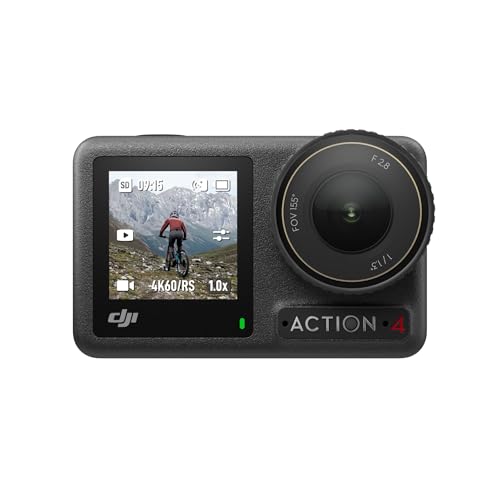
- DJI Osmo Action 4: check price on Amazon
- DJI Osmo Action 5 Pro: check price on Amazon
- GoPro HERO13 Black: check price on Amazon
- GoPro HERO11 Black: check price on Amazon
- Insta360 Ace Pro 2: check price on Amazon
- Panasonic LUMIX S5II: check price on Amazon
First, the physics nobody can market away. Recording at 120 or 240 frames per second divides the light each frame receives; slow motion is therefore a daylight sport unless the sensor is large or the scene is lit like a studio. Shutter discipline matters equally — the classic rule ties shutter speed to twice the frame rate, so motion within each frame stays crisp rather than smeared. And playback defines the slowdown: footage at 120 frames played at 24 runs five times slow, which is the difference between a gimmick and an analysis tool. The cameras below were tested against that physics in skate parks, at swimming pools, beside sprint tracks and under one very patient waterfall.
The field divides into the wearable and the serious. Five action cameras bring high frame rates to the places slow motion is most wanted — underwater, airborne, attached to the athlete — with the toughness the genre demands. One full-frame mirrorless body, the Panasonic S5II, represents the filmmaker’s slow motion: higher frame rates at full HD with a sensor that laughs at the light famine, on lenses that can isolate a subject the action cameras must take as they find it. Between them, every honest slow-motion job has a champion.
Key Takeaways
- Light is slow motion’s currency: high frame rates starve each frame, so sensor size and daylight decide quality.
- The DJI Osmo Action 4 and Action 5 Pro pair 4K/120 with large action-camera sensors — the genre’s sweet spot.
- The GoPro HERO13 adds burst slow-motion tricks and the widest mounting ecosystem for athlete-worn angles.
- The Panasonic LUMIX S5II is the filmmaker’s option: high frame rates with full-frame light gathering and real lenses.
- Shutter at roughly double the frame rate keeps each frame crisp; automation alone will smear the moment you slowed down to see.
- Slow motion is an editing decision as much as a recording one — shoot the approach at normal speed, slow only the instant.
In this guide
Quick Picks
| Camera | Badge | Why it is here |
|---|---|---|
| DJI Osmo Action 4 | Best all-round slow motion | 4K/120 from a 1/1.3-inch sensor with colour that survives the grade. |
| DJI Osmo Action 5 Pro | Best in lower light | The newest DJI sensor keeps high-frame-rate footage clean as light fades. |
| GoPro HERO13 Black | Best for mounted action | Burst slow motion and an unmatched mount ecosystem for athlete’s-eye views. |
| GoPro HERO11 Black | Best value slow motion | The previous flagship’s high frame rates at a friendlier point of entry. |
| Insta360 Ace Pro 2 | Best clarity in slow motion | Leica-tuned optics and strong processing keep slowed frames sharp. |
| Panasonic LUMIX S5II | Best filmmaker’s slow motion | Full-frame high frame rates with interchangeable lenses and real monitoring. |
How did we test slow motion honestly?
With subjects that punish lies. A skateboard’s kickflip exposes smeared frames instantly; a sprinter’s start reveals whether 120 frames actually resolve a footstrike or merely suggest one; water — droplets, splashes, a diver’s entry — is slow motion’s classical examination because every droplet is a tiny verdict on shutter and sensor. Each camera shot the same subjects at its headline rates, and the footage was judged slowed down, frame by frame where necessary, because that is how the audience will meet it.
Light was the second examination, run deliberately at the day’s edges. Slow motion shot at noon flatters every camera; the same rates at dusk separate the sensors from the spec sheets. Cameras were scored on how their high-frame-rate footage degraded as light fell — gracefully into grain with colour intact, or suddenly into noise and mush. The third examination was workflow: how many menus stand between the filmmaker and the slow mode, whether the camera remembers the setting, and how the slowed footage behaves in a normal editor at a normal playback rate.
One dishonesty was hunted specifically: interpolated or upscaled “slow motion” that manufactures frames the sensor never saw. Every pick here records its headline rates natively. Slowed footage is evidence about time; a camera that invents the evidence has no place in a guide, however smooth the invention looks.

DJI Osmo Action 4 — Best all-round slow motion
The Action 4 sits at slow motion’s sweet spot and knows it. Its 1/1.3-inch sensor — large for an action camera — feeds a 4K/120 mode that resolves a trick, a splash or a footstrike at five-times slowdown with detail that survives the pause button, and its 10-bit colour gives the grade something to hold when the slowed clip must match the rest of a film. In the hand it is the calm professional of the class: magnetic mounting that makes angle changes a two-second act, stabilisation that keeps a tracking shot usable, and a front screen that lets a solo athlete frame the attempt before performing it.
For slow-motion work specifically, its virtue is consistency across the day. The big sensor’s light appetite means the golden-hour session — when skate parks and beaches look their best and lesser cameras’ slow modes fall apart — stays clean. Its limits are the class’s honest ones: beyond 120 the resolution steps down as it does everywhere, and a fixed wide lens frames what it frames. Within the envelope where most great slow motion is actually shot, no action camera here is more complete.
- Sensor: 1/1.3-inch, strong in low light
- Slow motion: 4K at 120 frames per second
- Colour: 10-bit for grading headroom
- Mounting: magnetic quick-release system
Strengths
- Slowed frames stay detailed and clean
- Golden-hour slow motion survives
- Angle changes take seconds
Trade-offs
- Higher rates step resolution down
- Fixed wide lens; no optical reach
- Premium within the action class
Best for: skaters, surfers and all-round slow-motion shooters. Not suited for: telephoto wildlife slow motion.

DJI Osmo Action 5 Pro — Best in lower light
The Action 5 Pro takes its sibling’s formula and pushes the sensor’s dynamic range and low-light craft further, which in slow motion is not a luxury but the whole game. High frame rates are light-starved by definition; the camera that gathers light best slows time best after five o’clock. Its 4K/120 footage holds colour and shadow detail through the dusk session, its subject tracking keeps a moving athlete framed while the operator concentrates on not being run over, and its endurance across a long evening of attempts exceeds what the genre usually offers — slow motion is a high-attempt sport, and battery is attempts.
Choose between the DJI pair by light and by budget discipline. The Action 4 remains the value-complete tool; the 5 Pro is the one whose slow footage survives the hours when the light turns beautiful and difficult simultaneously. Its other refinements — pressure sensing for divers, refined colour science — serve the slowed underwater and dusk work where this camera will spend its life. For the shooter whose best subjects happen at the day’s edges, the premium is not a luxury tax. It is the difference between footage and an apology.
- Sensor: 1/1.3-inch, extended dynamic range
- Slow motion: 4K at 120 frames per second
- Tracking: subject follow for moving athletes
- Endurance: long battery for attempt-heavy sessions
Strengths
- Dusk slow motion keeps its colour
- Tracking frames the athlete for you
- Session endurance suits many attempts
Trade-offs
- The priciest action route to 120 frames
- Refinements reward an already-lit scene less
- Same fixed-lens geometry as its sibling
Best for: dusk sports, divers and low-light slow motion. Not suited for: noon-only shooters watching budget.

GoPro HERO13 Black — Best for mounted action
Slow motion’s most dramatic angles are worn, not held — the board’s-eye view of the trick, the handlebar’s view of the descent — and the HERO13 is the mounting champion those angles require. GoPro’s ecosystem of mounts is the deepest in action filming, the camera’s stabilisation turns violent motion into watchable flow, and its burst slow-motion mode captures very high frame rates in short, decisive bursts: exactly the shape of a jump, a trick or a start, where the slow moment lasts two seconds and the rest is approach. Its 5.3K normal-speed footage also gives editors a huge canvas around the slowed centrepiece.
The burst logic is the honest caveat: the most extreme rates are for moments, not durations, and the shooter must learn to trigger them like a photographer firing a shutter — anticipation is the skill. Battery and heat across a long session of bursts need the usual GoPro discipline. But for the athlete-filmmaker who is both subject and crew, no camera here puts slow motion in more places, at more angles, with less ceremony. The HERO13 does not just record the attempt; it rides along on it.
- Video: 5.3K plus burst slow-motion modes
- Stabilisation: HyperSmooth for violent motion
- Mounting: the deepest accessory ecosystem
- Lenses: interchangeable lens mods available
Strengths
- Slow motion from the athlete’s own angle
- Burst rates for the decisive two seconds
- Mounts exist for every conceivable position
Trade-offs
- Extreme rates are bursts, not durations
- Session heat and battery need managing
- Small sensor trails DJI at dusk
Best for: athlete-filmmakers and mounted angles. Not suited for: long continuous slow-motion takes.

GoPro HERO11 Black — Best value slow motion
The HERO11 is where slow motion gets affordable without getting fake. Its 5.3K sensor and 4K/120 mode deliver genuine, native high-frame-rate footage — the same examination subjects, the same droplet verdicts — at an entry point that lets a young skater, a school athletics programme or a curious parent own the real thing rather than a phone’s imitation. The footage intercuts respectably with its successor’s, its stabilisation is a generation of HyperSmooth that already embarrassed rivals, and the mounting ecosystem it shares means every accessory bought for it remains useful up the range.
Age shows at the edges the value buyer rarely visits: low-light slow motion is a step behind the DJI pair and its own successor, battery endurance across a burst-heavy session is shorter, and the newest lens-mod conveniences belong to the HERO13. For the core transaction — honest slow motion of fast subjects in decent light — the HERO11 remains the guide’s recommendation to anyone whose budget must also buy the helmet, the board or the bus fare to the good spot. Slow motion democratised is slow motion used, and used beats owned.
- Video: 5.3K, 4K at 120 frames per second
- Stabilisation: HyperSmooth generation-proven
- Mounting: full GoPro ecosystem access
- Body: waterproof to action depths
Strengths
- Native high frame rates, honestly priced
- Intercuts with newer GoPro footage
- Tough enough for learning by crashing
Trade-offs
- Dusk slow motion trails the leaders
- Shorter endurance on burst sessions
- Misses the newest mounting refinements
Best for: learners, schools and value hunters. Not suited for: dusk specialists.

Insta360 Ace Pro 2 — Best clarity in slow motion
The Ace Pro 2 slows time with a jeweller’s eye. Its Leica-tuned lens and 1/1.3-inch sensor, driven by serious processing, produce slowed frames of unusual crispness — the droplet’s crown, the string’s vibration, the gymnast’s exact hand placement — and its clarity processing resists the mush that high frame rates in mixed light usually bring. For the analyst and the perfectionist, the paused slow-motion frame is a document, and this camera’s documents are the sharpest in the action class. Its flip screen, a rarity here, makes the low tripod and the self-filmed attempt equally practical.
The clarity is bought with files and with care: high-rate footage at this quality fills cards at a pace the casual shooter must plan for, and the camera’s sophistication rewards an owner who learns its modes rather than renting them. Against the DJI pair it trades a little low-light softness for its edge in bright detail; against the GoPros, a smaller mounting world for a better lens. Slow motion has several religions. The Ace Pro 2 is the high church of sharpness, and its congregation is right about what matters to them.
- Lens: Leica SUMMARIT optics
- Sensor: 1/1.3-inch with AI processing
- Slow motion: high frame rates at 4K
- Screen: flip design for self-framing
Strengths
- Paused frames of document quality
- Bright-light slow motion is superb
- Self-filmed attempts framed properly
Trade-offs
- Files demand card and computer headroom
- Smaller mount ecosystem than GoPro
- Modes reward study, not dabbling
Best for: analysts and clarity-first shooters. Not suited for: set-and-forget casual use.

Panasonic LUMIX S5II — Best filmmaker’s slow motion
The S5II plays a different sport. Its full-frame sensor records high frame rates — up to 180 frames per second at Full HD — with a light appetite no action camera can approach, on interchangeable lenses that can isolate a diver against a blurred crowd or compress a sprinter down a long lens’s tunnel. This is slow motion as cinematography: the filmmaker chooses the frame rate the shot deserves, monitors it properly, and grades footage with genuine dynamic range. For narrative inserts, sports features and commercial work, it is the only pick here whose slowed footage belongs in a film without an asterisk.
The trade is the action cameras’ freedom. The S5II does not mount to a helmet, does not swim, and asks for an operator’s hands and a filmmaker’s discipline — rigging, focusing, exposing like a grown-up. Its high rates also step down from 4K, as physics and price dictate everywhere. What it returns is authority: slow motion directed rather than captured. The filmmaker who needs both worlds — and many do — pairs it with a DJI for the worn angles and keeps the Panasonic for the shots the film will be remembered by.
- Sensor: full-frame, roughly 24 megapixels
- Slow motion: up to 180 frames per second at Full HD
- Lenses: interchangeable L-mount system
- Tools: professional monitoring and V-Log
Strengths
- Low-light slow motion without rival here
- Lenses isolate and compress subjects
- Footage grades like cinema, because it is
Trade-offs
- Not wearable, waterproof or crash-proof
- High rates are Full HD, not 4K
- Demands an operator’s full attention
Best for: filmmakers and sports features. Not suited for: athlete-worn point-of-view work.
Why does slow motion eat light so hungrily?
Arithmetic. A frame recorded at 24 frames per second with the classic shutter enjoys roughly a fiftieth of a second of light; the same scene at 240 frames gives each frame a five-hundredth. Ten times the frames means each one drinks a tenth of the light, and the camera must repay the debt from somewhere — a wider aperture the fixed-lens cameras do not have, a sensitivity increase that costs noise, or a scene lit like midday. This is why slow-motion quality rankings are secretly sensor rankings, and why the dusk session separates this guide’s picks more honestly than any specification table.
The practical defences are scheduling and honesty. Shoot the slow work in the day’s strong hours, position subjects against darker backgrounds where noise hides and droplets shine, and accept the sensitivity the camera chooses rather than forcing a cleaner, darker lie. The S5II’s full-frame sensor is the structural answer for filmmakers who cannot schedule around light; for everyone else, the sun is the lighting department, and it works for free before six o’clock.
How do you keep each slowed frame crisp instead of smeared?
Obey the shutter rule: shutter speed at roughly double the frame rate — 1/250 for 120 frames, 1/500 for 240 — so each frame’s slice of the motion is thin enough to freeze its subject. Slower shutters smear the very detail the slowdown exists to reveal; the droplet becomes a comet, the footstrike a ghost. Most action cameras automate exposure in ways that drift from the rule as light changes, so the deliberate shooter locks what can be locked and tests with the actual subject, at the actual speed, before the attempt that counts.
Then hold the camera’s side of the bargain. Stabilisation tuned for normal motion can fight a fast pan at high frame rates; a locked tripod or a practiced tracking motion serves the slowed subject better than electronic heroics. And focus: at these rates there is no second chance inside the moment, so pre-focus on the plane where the action will happen — the ramp’s lip, the finish line, the water’s surface — and let the subject arrive into sharpness rather than chasing it there.
What sports gain the most from being slowed down?
The ones whose decisive events hide inside a tenth of a second. Diving and gymnastics reveal form that judges and coaches score but eyes cannot grade at speed. Skateboarding and BMX decompose tricks into their commitments — the pop, the catch, the roll-away — which is why slow motion is those sports’ native language and why their filming culture adopted action cameras first. Sprint starts, golf swings, a pitcher’s delivery and a weightlifter’s pull all share the property: technique lives at a timescale the unaided eye rents but cannot own.
The honest corollary is that some sports merely look nice slowed and teach nothing. The shooter should know which transaction they are making — analysis, where frame rate is a measuring instrument and the Ace Pro 2’s clarity earns its keep; or poetry, where the slowed moment is an end in itself and colour, light and grace outrank resolution. Both are legitimate. Confusing them produces analytical footage with no data and poetic footage with no beauty, sometimes in the same session.
How do you edit slow motion so it feels like cinema?
Ramp, do not blanket. The cinematic grammar enters at normal speed, slows for the instant that matters, and returns — the audience’s pulse follows the ramp, while un unbroken slow sequence anaesthetises within seconds. Sound design carries half the effect: the approach’s real audio, pitched or stretched as the image slows, then the return’s snap back to reality. Every camera here records the raw material for that grammar; the editor’s discipline is to spend slowness like a budget, on the two seconds per clip that deserve it.
Choose the playback rate with intent as well. A five-times slowdown of a 120-frame clip at 24 frames is the classic look; conforming the same clip to a 30-frame timeline softens the effect; speed-ramping inside a normal-speed master keeps documentaries honest about time. And keep one unslowed wide shot in the sequence — the audience needs the event’s real duration in their body before the slowed version can feel miraculous. Slow motion is a contrast effect. Protect the contrast.
Why is water slow motion’s favourite subject?
Because water is honest at every timescale. A splash contains a crown, a collapse and a hundred secondary droplets, each behaving with physical precision that no animator bothers to fake — slowed down, it becomes a small universe with its own weather. Water also forgives the shooter: it is bright, self-lighting against a dark background, and endlessly repeatable, which is why test benches and demo reels return to it. The waterproof picks here — the whole action class — can be placed at the waterline, under the tap, inside the splash zone that would retire a mirrorless body.
Practically, water teaches the genre’s core skills in an afternoon: the shutter rule on the droplet’s crown, pre-focusing on a plane, the timing of a burst against an event that will not wait. A shooter who can slow a hose-pipe’s arc into jewellery can slow anything in this guide. Begin there, with the cheapest subject in photography, and let the cameras’ differences announce themselves in the droplets before spending a day at the skate park discovering them.
How do coaches actually use slow-motion footage?
In freeze and compare. The coach’s unit of work is the side-by-side: the athlete’s footstrike against the model footstrike, this week’s start against last month’s, the slowed frame where the hip drops circled in a telestrator’s ink. That workflow prizes exactly what the clarity picks offer — frames that stay documents when paused — and a camera position discipline the athlete’s own crew must learn: same angle, same distance, every session, so the comparisons measure the athlete rather than the filming. Slow motion in coaching is a measuring instrument that happens to make beautiful pictures as a by-product.
Keep the archive boring and searchable. Date, athlete, drill, camera settings — the metadata is the difference between a library and a pile of clips, and the coach who can pull last season’s slowed start in ten seconds owns a teaching asset no rival’s memory matches. The cameras here all record the pictures; the programme supplies the librarianship. As with game film, the unglamorous half of the system is the half that compounds.
How do you film a skateboard trick so the slow part lands?
Build the shot around the trick’s geography. The camera belongs low, at the obstacle’s decisive end, pre-focused on the plane where board and feet will meet — because at 120 frames the trick’s whole story lasts a second and autofocus heroics inside that second are a lottery. Shoot the attempt at normal speed once to learn its timing, then switch to the slow mode and let the skater’s repetition do the rest; skateboarding is slow motion’s kindest subject because it is performed in attempts, and the camera’s job is to be ready, identically, for each one. The DJI pair’s quick mounting earns its praise here: the angle changes as fast as the session’s ideas.
Respect the unwritten contract of the skate park: the filmer is part of the session, not its audience. Call your position, stay out of the roll-away, and share the footage on the spot — the slowed clip of the landed trick is the session’s currency, and the camera that produces it at the kerb, immediately, becomes part of the crew. Slow motion at a skate park is a social technology as much as an optical one, which is why the pocketable, instant cameras outrank the cinematographer’s tool for this subject despite every specification.
What changes when slow motion goes underwater?
Everything slows twice — the subject by the water’s resistance, the image by the frame rate — and the combination produces the genre’s most hypnotic footage: the diver’s entry unspooling, the swimmer’s catch and pull rendered as separate decisions. The action class owns this world by birthright, waterproof to working depths, and their wide lenses suit the pool’s close geography. Light behaves differently below the surface — reds vanish with depth, contrast softens — so the slowed underwater frame rewards the larger sensors and the colour science that can be graded back toward the surface’s truth.
Technique tightens accordingly. Get closer than instinct allows, because water eats detail with distance faster than air does; shoot across the light rather than into it, so the swimmer is modelled rather than silhouetted; and mind the surface itself as a subject — the entry’s crown and the breakout’s explosion are the two moments every dive is remembered by, and both live within a second that only slow motion can unfold. The Action 5 Pro’s dive refinements and the GoPros’ depths ratings exist for exactly these seconds.
How do you slow a hummingbird, a bee or a golf swing?
With patience, pre-focus and the highest honest rate the light allows. Small fast subjects are slow motion’s examination at its strictest: the wingbeat that occupies a few frames even at 240, the swing whose contact with the ball is a single frame’s event. The method is the trap photographer’s — set the camera on the place the subject will be, the feeder, the tee, the flower the bee works each morning — focus manually on that plane, and let the subject trigger the moment by arriving. Bursts serve here; the HERO13’s burst logic was designed by people who understood that some moments cannot be recorded continuously, only ambushed.
Accept the genre’s tax with good humour: most attempts will contain a beautiful, sharp, empty frame where the subject declined to be. The one that lands — the wing frozen mid-downstroke, the ball compressing against the clubface — justifies the morning. This is also where the clarity pick earns its congregation: at these scales the slowed frame is examined like a specimen, and the Ace Pro 2’s lens was built for examination. Small subjects, slowed honestly, are the closest amateur photography comes to a laboratory of time.
Why do some slow-motion clips feel cheap and others feel expensive?
Frame-rate honesty and light. The cheap feel comes from interpolated frames smearing between real ones, from noise crawling in underlit footage, and from the blanket slowdown that signals the shooter had one effect and used it everywhere. The expensive feel is native frames, cleanly lit, ramped with intent and graded with restraint — the same footage decisions, incidentally, that separate expensive from cheap at normal speed. Slow motion amplifies craft rather than replacing it, which is why this guide’s rankings track the cameras’ ordinary virtues — sensor, colour, optics — so closely.
Sound betrays budget fastest of all. A slowed clip carrying its original audio at full speed, or worse, a stock whoosh, announces its maker as an amateur of the effect. The crafted clip designs its sound: the approach’s true noise, a pitched descent as time stretches, near-silence at the slowest point where the audience’s own heartbeat becomes the track. None of that is in any camera. All of it is available to any owner of the cameras here, which is the genre’s democratic promise — the equipment barrier has fallen; the craft barrier is the remaining honest one.
How do you plan a slow-motion session like a professional?
Write the shot list in seconds. Slow motion’s raw material is instants, so the plan names them: the dive’s entry, the trick’s catch, the start’s first three strides, each with its camera position, its pre-focused plane and its rate. Bring the light plan with the same specificity — which hours the location’s sun serves each shot — because the session’s schedule is a negotiation with the day’s brightness. Charge for attempts, plural: batteries and cards sized for five times the footage the final edit will use, because slow motion’s ratio of attempts to keeps is the genre’s open secret.
Review on location at full slowdown. The kerbside check — the clip played back slowed, on the camera’s screen, with the subject watching — catches the smeared shutter, the missed plane and the wrong rate while the session can still repair them. Professionals call this discipline; skaters call it checking the clip, and it is the same sacrament. The cameras here all support it with screens that work in sunlight and playback that honours the slowdown. Use it, and the home edit becomes selection rather than salvage.
What does slow motion do to storage and batteries?
Multiplies them by the frame rate’s ambition. A session at 120 frames writes data at several times the normal rate’s appetite, fills cards in what feels like minutes, and warms small bodies that then ask for rest — physics collecting its debts in the field bag. The professional’s answer is a rotation: cards labelled and swapped at natural breaks, batteries resting in shade, the next angle planned while the camera cools. The DJI pair’s endurance and the GoPro ecosystem’s cheap batteries are operational virtues in this light, not conveniences.
Budget the edit’s storage with the same honesty. Slowed footage invites keeping everything — every attempt might contain the frame — and a season of slow motion at high rates becomes a library measured in terabytes unless the cull happens on the day. Keep the landed attempts and the beautiful failures; delete the rest while the session’s memory is fresh enough to judge. The archive that survives is the one whose owner was ruthless kindly and early, a rule this guide has now applied to games, events and time itself.
How is slow motion used in science and industry?
As a microscope for events too fast for eyes: the droplet’s impact on a surface, the fracture’s path through a material, the machine part’s vibration at the frequency of its failure. The cameras in this guide are the consumer edge of that instrument family — their rates are modest beside laboratory cameras, but their portability puts honest slow motion on factory floors, in workshops and beside engines where the laboratory cannot go. A mechanic slowing a valve train’s misbehaviour on an Action 4 is doing applied physics with a holiday camera, and the footage settles arguments that stethoscopes started.
The domestic version of the same spirit is worth naming: the washing machine’s unbalanced spin, the gate latch’s exact failure, the dog’s limp localised to a slowed stride for the vet. Slow motion began as cinema’s poetry and became everyone’s diagnostic. Choose the camera whose clarity serves your questions — the analyst’s Ace Pro 2, the filmmaker’s S5II — and the genre repays you in a currency beyond beauty: understanding, at five times slower than life and ten times clearer.
How do you film children and pets in slow motion?
By letting chaos come to a prepared camera. The toddler’s sprint down the garden path, the dog’s full-speed return with the ball — these are slow motion’s most treasured family subjects precisely because they cannot be directed. Set the camera at the path’s end or the garden’s light, pre-focus on the plane of arrival, and let the game repeat as games do. The slowed result — the ears mid-bounce, the grin assembling itself — is the family archive’s purest gold, and it is why the action cameras’ toughness matters here: the camera sits in the splash zone of ordinary happiness, at toddler height, in harm’s way by design.
Keep the sessions short and the dignity intact. Children slowed down are beautiful; children directed into repetition for a parent’s reel are a production, and the footage can tell the difference. Three genuine runs at the puddle beat thirty staged ones, in the archive’s long judgement. The same ethic serves pets, whose slowed gaits are joy itself and whose patience for retakes is famously finite. Shoot the life, slow the peak, and put the camera away while the afternoon is still fun.
What frame rate does rain deserve?
Rain is slow motion’s free special effect, delivered to every doorstep. At 120 frames, a downpour resolves into separate descending worlds, each drop trailing its own small physics; backlit against a dark hedge or a street lamp, it becomes the establishing shot of a thousand films. The waterproof picks can stand in it unprotected — a perspective the mirrorless world envies — and the technique is pure placement: camera low, light behind the rain, a dark background to print the drops against, and the shutter rule obeyed so each drop is a bead rather than a streak.
Rain also teaches exposure humility. The scene’s brightness is a lie the meter believes; the drops need the light the background refuses. Expose for the rain itself, let the garden fall dark, and the frame turns theatrical. It is the cheapest masterclass in this guide — no subject fees, no travel, weather permitting — and a shooter who has slowed one storm owns a visual effect they will use, in windows and waterfalls and sprinklers, for the rest of their filming life.
How do you sync slow motion with music?
Film the beat, not just the movement. Music-led slow motion — the dancer’s turn, the athlete’s rhythm, the drummer’s slowed strike — works when the slowed event’s internal tempo relates to the track’s: a five-times slowdown of a gesture performed to a known tempo lands its accents predictably in the edit. Performers who know the plan can give the camera the gesture at the phrase’s peak, and the ramp into slow motion becomes a musical downbeat the audience feels in their shoulders. This is why sports films and music videos share a grammar; both are choreography between time and sound.
Practically, play the track on location where the subject’s performance must marry it, record the room’s reference audio even if the final sound is the studio track, and slate the tempo in the session’s notes for the editor. The cameras here all capture the pictures; the marriage is arranged by the humans. When it works — the slowed leap suspended exactly across the chorus’s held note — slow motion stops being an effect and becomes the film’s way of breathing.
What will slow motion look like in your archive in ten years?
Better than you expect, if the frames were honest. Native high-frame-rate footage ages like well-shot film: its information is real, its light was really there, and future screens will only flatter it. Interpolated and upscaled footage ages like a filter — a period effect, dated on sight. This is the long argument for the cameras in this guide over every shortcut: they record time rather than simulating it. The slowed clip of the dog, the diver, the grandfather’s hands at the piano, shot natively in good light, is an heirloom-grade document of how motion actually was.
Label it like one. Date, subject, rate and camera in the file’s name or its sidecar note, because the archive’s future viewers will want to know how the miracle was made, and because a slowed clip separated from its context becomes merely strange. The genre’s final discipline is the librarian’s, as it was for games and events: the footage is the asset, the label is its title deed, and the decade will reward the owner who kept both.
How do you choose a tripod or mount for slow work?
By the subject’s violence, not the camera’s weight. A locked-off tripod serves the measured subjects — the swing, the start, the droplet rig — where the frame must not breathe while time stretches. A monopod or a chest mount serves the tracking subjects, giving the operator’s body the stabilisation job the electronics should not be asked to do at high rates. And the worn mounts, GoPro’s kingdom, serve the subjects whose own perspective is the story. Match the support to the motion’s source and the footage inherits a calm that no software pass can retrofit.
Test the rig at the working rate before the session. Some stabilisation systems, tuned for normal motion, introduce a swim at high frame rates when panned; the test reveals it in thirty seconds, in the car park, for free. The genre’s professionals are recognisable by this habit of rehearsing the equipment rather than the subject. Slow motion forgives many things, but it magnifies every wobble by the slowdown factor — a tremor at five-times slow is a five-times longer tremor, printed on the moment you cared about most.
What is the beginner’s first slow-motion project?
One subject, one hour, one rate: the garden hose against the evening light, a sprinkler’s arc, a fountain in the park — water again, the genre’s patient teacher. Shoot it at 120 with the shutter rule obeyed, then break the rule deliberately and compare, because the difference between the crisp droplet and the smeared one, seen side by side in your own footage, teaches more than any guide’s paragraph. Finish with one ramped edit, normal speed into slow and back, and the beginner owns the genre’s entire grammar in a single afternoon.
Graduate to a subject with a pulse: the dog’s return, the child’s puddle jump, a friend’s skateboard attempt. Each adds one variable — unpredictability, timing, consent — and the camera skills compound quietly. By the fifth session the beginner is choosing between this guide’s picks with a practitioner’s grievances rather than a shopper’s hopes, which is the exact reader the verdicts above were written for. Slow motion rewards the patient beginner more richly than almost any other photographic genre, because its miracles are repeatable on any sunny afternoon.
What does a slowed second teach a photographer?
That the eye’s version of events is a summary, and not always an honest one. The photographer who has watched a pitcher’s arm, a horse’s gallop or a child’s fall unfold at five-times slow carries a revised intuition back into normal-speed work: where the decisive instant actually lives inside an action, and how early a shutter must fire to meet it. Slow motion is therefore training for all fast photography, not merely a genre within it — the stills shooter who studies slowed motion anticipates better, and the anticipation shows up in frames no slow-motion camera ever recorded. Buy any pick in this guide for its slowed footage, and it will quietly improve everything else you shoot as tuition included in the price.
How do you direct a subject who performs in two seconds?
Choreograph the approach, not the instant. The diver, the skater and the sprinter cannot adjust inside the slowed moment — it is over before intention can reach it — so all direction happens before: the run-up’s line, the mark to hit, the count to perform on. The camera’s operator and the performer rehearse the geometry at walking pace, agree the trigger word, and then let the attempts accumulate. Slow-motion directing is therefore mostly patience wearing a plan, and the sessions that produce the genre’s iconic frames look, from outside, like people repeating a small action in good light while a camera watches. That is exactly what they are, and the repetition is not the enemy of the moment but its method.
Comparison: all six picks at a glance
| Camera | Sensor | Character | Choose it if… |
|---|---|---|---|
| DJI Osmo Action 4 | 1/1.3-inch action | Complete all-rounder | One camera for every slowed subject |
| DJI Osmo Action 5 Pro | 1/1.3-inch action | Dusk specialist | Your slow work happens at day’s end |
| GoPro HERO13 Black | Action, 5.3K | Mounted trickster | The camera must ride the athlete |
| GoPro HERO11 Black | Action, 5.3K | Honest value | Real slow motion on a learning budget |
| Insta360 Ace Pro 2 | 1/1.3-inch, 8K | Clarity instrument | Paused frames must testify |
| Panasonic LUMIX S5II | Full-frame | Cinematographer’s slow | The slowed shot belongs in a film |
What are the most common slow-motion mistakes?
Slowing everything, all the time
The beginner’s reel is one long underwater dream in which nothing is fast and therefore nothing is slow. Slow motion is a contrast effect that spends the audience’s attention; blanket use bankrupts it within a minute. Shoot the approach and the aftermath at honest speed, slow the instant, and let the return to reality land like a drumbeat. Editors call this ramping. Audiences call it the good part.
Ignoring the shutter rule
A slow shutter at a high frame rate produces slowed smear — the worst of both worlds, motion blur stretched across five times the duration. Lock the shutter near double the frame rate and let sensitivity absorb the cost; grain can be forgiven, but a droplet smeared into a comet cannot be un-smeared in any edit. Test on water before the subject that matters performs once.
Filming slow motion in failing light
The dusk session tempts every shooter and punishes every small sensor. Either bring the large-sensor picks, add light, or reschedule — the genre’s physics does not negotiate. Footage that collapses into noise at the decisive moment is worse than no footage, because it consumes the attempt. Slow motion is a daylight discipline with a few expensive exceptions, and this guide has named them honestly.
Final Recommendation
For most slow-motion shooters the DJI Osmo Action 4 is the complete answer — 4K/120, a big-hearted sensor, colour that grades — with the Action 5 Pro as its dusk-proof upgrade. Athlete-filmmakers should ride with the GoPro HERO13, value hunters with the HERO11, and analysts should pause their frames on the Insta360 Ace Pro 2. Filmmakers belong on the Panasonic LUMIX S5II, where slow motion becomes cinematography. Whichever you choose, obey the shutter, worship the light, and slow only the instant — time, treated with that respect, will show you things the unaided eye was never built to see.
Frequently Asked Questions
What frame rate do I actually need?
For most subjects, 120 frames per second played at 24 or 30 gives the classic five-times slowdown with detail intact — the working rate of every pick here. Faster rates, 240 and beyond, serve the very quickest events — bursts, impacts, droplets — usually at reduced resolution or in short bursts. Buy for the rate your subject needs weekly, not the rate a specification sheet performs once.
Why does my slow motion look dark or noisy?
Because each frame at high speed receives a fraction of normal light, and the camera repays the debt with sensitivity, which brings noise. The cures are more light, a larger sensor, or a lower frame rate — the three honest levers. Grace in repaying exactly this debt, as the light falls, shaped the ranking above.
Can phones shoot slow motion as well as these cameras?
Phones offer convenient slow modes, often at reduced resolution with heavy processing, and in bright light the results please. The dedicated cameras here win on sensor size, native frame rates without interpolation, mounting, waterproofing and the ability to sustain the work across a session. For the occasional slowed splash, a phone suffices; for a practice, a programme or a film, it does not.
What is the difference between slow motion and high frame rate?
High frame rate is the recording; slow motion is the playback decision. Footage recorded at 120 frames and played at 120 is smooth reality; played at 24 it becomes slow motion at five-times. Some cameras conform the slowdown in the file, others leave it to the edit. Know which your workflow prefers before the session, because the choice affects how the footage arrives in the editor.
Do I need special memory cards for slow motion?
High frame rates write data quickly, so cards with fast, sustained write speeds are the quiet requirement behind every headline rate in this guide. A slow card throttles the camera or ends the burst early. Buy the card class the manufacturer specifies, from a reputable source, and treat it as part of the camera’s price — because functionally, it is.
Related Guides
For the rest of the recording shelf, see best cameras for recording basketball games and fast indoor sports, best cameras for runners and athlete-worn filming and best cameras for recording movies and cinematic scenes.


