reviewstook.com is reader-supported. When you buy through links on our site, we may earn an affiliate commission.
Where to buy
On Poshmark, the photograph is the shop, the shopkeeper and the sales pitch, all in a square thumbnail competing against ten thousand other square thumbnails. The best cameras for Poshmark sellers are not the best cameras in any general sense — they are the ones that render a sweater’s true colour so a buyer cannot claim “not as described,” that focus close enough to prove a handbag’s stitching is genuine, that turn a pile of weekend listings into an hour of shooting instead of an afternoon, and that make a small seller’s closet look like a boutique a buyer trusts with her money.
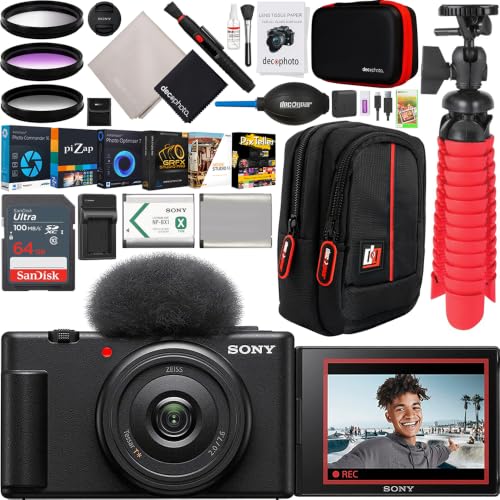
- Sony ZV-1F: check price on Amazon
- Nikon Z50 II: check price on Amazon
- Canon EOS R6 Mark II: check price on Amazon
- Canon EOS R50: check current availability at your preferred retailer
- Panasonic Lumix G100: check current availability at your preferred retailer
- Fujifilm X-M5: check current availability at your preferred retailer
The sellers behind this search divide into three camps, and this guide serves all of them. There are casual closet-clearers photographing twenty items between other jobs, for whom speed and simplicity are the whole specification. There are steady side-hustle sellers listing weekly, who need a repeatable setup — same light, same background, same honest colour — that turns listing day into a rhythm. And there are boutique-scale resellers shooting modelled clothing, handbags and shoes at volume, whose photographs must look editorial enough to justify boutique prices while staying truthful enough to keep returns at zero.
Six cameras made the cut, chosen against a seller’s criteria rather than a photographer’s. Three are linked below with verified listings; three are described in prose because the right camera does not always sit in the pool this guide may link to. The spread runs from a pocket camera that shoots a flat lay in seconds to a full-frame body whose colour and detail serve the luxury end of the platform. What unites them is an understanding that Poshmark photography is a business process with a camera inside it — and the best camera is the one that makes the process faster, truer and better looking at the same time.
A disclosure of priorities before the picks: your phone is the incumbent, and it is genuinely capable. The cameras here earn their place by beating it where selling is decided — colour accuracy under home lighting, close detail for authentication shots, consistent output across fifty items in an afternoon, and files that still look crisp after the platform’s compression. If a camera could not beat the phone at a named selling task, it is not in this guide.
Key Takeaways
- Colour accuracy is a Poshmark camera’s first job: true colour prevents returns, disputes and “not as described” claims.
- Close focusing matters for authentication details — stitching, hardware, labels, wear — which are the photographs that close luxury sales.
- Speed is a feature: flip screens, fast transfer to phone and simple controls decide how many listings an afternoon produces.
- Consistency sells: one camera, one corner, one light setup makes a whole closet look like one trusted boutique.
- Most sellers should start small (ZV-1F, Z50 II, R50 class); full-frame earns its place only at boutique volume and prices.
In this guide
Quick Picks
| Camera | Badge | Why it is here |
|---|---|---|
| Sony ZV-1F | Best for fast listings | A pocket camera whose wide lens and product-friendly autofocus shoot a flat lay before a phone unlocks. |
| Nikon Z50 II | Best all-round seller’s camera | Honest colour, a close-focusing kit lens and a flip screen for overhead shots of clothing. |
| Canon EOS R6 Mark II | Best for boutique sellers | Full-frame detail and forgiving colour for modelled clothing and higher-priced inventory. |
| Canon EOS R50 | Best starter system | A friendly, affordable mirrorless body built for creators who list and post daily. |
| Panasonic Lumix G100 | Best for video listings | A compact creator camera for sellers adding try-on clips and closet tours to their listings. |
| Fujifilm X-M5 | Best for styled closets | Film-look colour that gives a whole shop one recognisable, boutique visual identity. |
How did we choose these cameras for Poshmark sellers?
The selection process imitated a listing session rather than a photo walk. Each candidate was judged on a table of actual merchandise: a patterned dress that moiré patterns love to ruin, a black handbag whose texture vanishes in bad light, a pair of shoes needing a sole shot, a necklace needing a macro honest enough to show a clasp, and a white blouse — the exposure and colour examination every camera fails somewhere. Cameras that rendered the table truthfully, quickly and without a lighting rig made the shortlist.
Colour discipline came first, because returns are the tax on bad colour. A camera was favoured if its auto white balance behaved under the mixed light of real homes — window daylight from one side, warm ceiling bulbs from above — and if its colour profiles offered a neutral, believable rendering rather than a saturated one. Sellers photograph under the lights they have; the camera must be the adult in the room. Nikon’s restraint and Canon’s consistency scored heavily here; the Fujifilm scored differently, for sellers whose brand is a look, with the caveat that the look must never falsify the garment.
Workflow was the second filter, timed like a business. How fast from garment-on-table to listing-ready file on the phone? Flip screens for overhead flat lays, reliable wireless transfer, and menus that do not punish a tired seller at item forty all counted. The third filter was close focus: authentication photography is where Poshmark’s money is protected, and a camera that cannot fill a frame with a zipper pull or a heat stamp forces the phone back into the process it was meant to replace.
Finally, each pick had to suit a recognisable seller at a recognisable scale, because “best” without a business model is a horoscope. The guide therefore spans the pocket sprinter, the two starter systems, the compact video specialist, the style-led boutique option and the full-frame flagship for sellers whose average sale justifies it. Read the verdicts against your own listing volume and average price, and the right camera identifies itself quickly.

Sony ZV-1F — Best for fast listings
For the seller whose listing session is squeezed between school runs and a shift, the ZV-1F is less a camera than a shortcut. It lives in a pocket or a drawer beside the packing tape. Its ultra-wide lens takes in a whole flat lay from standing height without the step-back-and-crop dance, its autofocus was tuned by Sony for exactly this product-on-a-surface situation, and its colour defaults to a clean, bright rendering that makes garments look fresh rather than moody. A twenty-item closet clear-out becomes a single cup of coffee’s worth of work.
Its limits are the honest ones of a fixed wide lens. Authentication close-ups — the clasp, the stamp, the stitching — ask you to move the camera close and crop, which the 1-inch sensor’s files tolerate modestly but not luxuriously. Modelled shots at flattering distances belong to other cameras. But judge it by its job: fast, bright, truthful-enough listing photographs at volume, with zero setup and zero learning curve, plus genuinely good video for the sellers adding quick try-on clips. For casual and steady sellers alike, it is the camera most likely to actually be used every listing day, and in a business where consistency compounds, used beats perfect.
- Sensor: 1-inch, roughly 20 megapixels
- Lens: fixed ultra-wide, bright aperture
- Autofocus: product-showcase tuning from Sony’s creator line
- Video: 4K for try-on clips and closet tours
Strengths
- Listing photographs at a speed nothing else here matches
- Wide lens swallows a flat lay from standing height
- Simple enough that listing day needs no warm-up
Trade-offs
- Close-up authentication shots rely on cropping
- No zoom for modelled detail at a distance
- Fixed lens; the camera cannot grow with the business
Best for: casual clearers and steady sellers who prize speed. Not suited for: luxury authentication photography or modelled editorials.

Nikon Z50 II — Best all-round seller’s camera
The Z50 II is the camera this guide would hand to the median Poshmark seller and feel no anxiety about the choice. Its virtues read like a listing session’s wish list. The kit zoom focuses close enough to fill a frame with a handbag’s hardware or a label’s text. The flip screen makes overhead flat lays a composed photograph instead of a hopeful guess. And Nikon’s colour — restrained, believable, allergic to exaggeration — renders the navy dress navy and the cream blouse cream under the mixed light of an ordinary room, which is the single most valuable behaviour a seller’s camera can have.
Growth is the second argument. The Z mount means the seller who outgrows the kit lens can add a macro for authentication work or a fast prime for modelled shots without changing systems, and the body itself is small enough to live on the listing table permanently rather than being fetched from a cupboard. Its autofocus, inherited from Nikon’s flagship thinking, handles a modelled garment on a moving human as happily as a still life. It is not the cheapest route here, nor the fastest, nor the most glamorous. It is the balanced one — the camera a growing closet business can buy once and build its whole visual identity on.
- Sensor: APS-C, roughly 21 megapixels
- Kit lens: close-focusing, suited to labels and hardware
- Screen: flip design for overhead flat lays
- Mount: Nikon Z, room to add macro and portrait glass
Strengths
- Colour honest enough to build a low-returns business on
- Flat-lay workflow with the flip screen is genuinely fast
- A system that scales from closet clear-out to boutique
Trade-offs
- No in-body stabilisation; keep shutter speeds honest indoors
- Kit lens close-ups are good, not true macro
- Crop sensor asks more of dim listing rooms
Best for: steady and growing sellers wanting one dependable system. Not suited for: sellers who only ever list a handful of items a year.

Canon EOS R6 Mark II — Best for boutique sellers
At the top of Poshmark’s economy, photographs stop being documentation and start being justification: the modelled coat must look worth its three-figure tag before a buyer reads a word. The R6 Mark II is the boutique seller’s instrument. Full-frame files hold the texture of wool, the grain of leather and the fall of silk with a richness smaller sensors approximate; Canon’s colour flatters both the garment and the person modelling it; and the autofocus treats a turning model the way it treats any subject it was built for — as the obvious priority, held without fuss.
The business case is narrower than the photographic one, and this guide will state it plainly: this body earns its place when average sale prices and weekly volume are high enough that photography quality is a measurable conversion lever, and when modelled content — try-ons, styled shoots, video — is part of the shop’s identity. Its stabilisation rescues indoor shoots, its files survive the platform’s compression with detail to spare, and its presence in a listing workflow signals a shop operating at boutique standard. For the seller still photographing on a bedspread, it is a destination rather than a starting point — and knowing the destination helps the whole closet plan its upgrades.
- Sensor: full-frame, roughly 24 megapixels
- Colour: warm, forgiving rendering for garments and skin
- Stabilisation: in-body, for indoor modelled shoots
- Mount: Canon RF, with fast primes for editorial looks
Strengths
- Detail and texture that justify premium pricing
- Modelled shoots handled with professional calm
- Files that stay rich after platform compression
Trade-offs
- Investment only makes sense at boutique volume
- Bigger and heavier at the listing table
- Capability far beyond flat-lay needs
Best for: boutique and luxury resellers shooting modelled inventory. Not suited for: casual sellers, whose money works harder elsewhere.
Canon EOS R50 — Best starter system
The R50 exists for the seller who has decided the phone era is over but whose budget is a business decision, not a hobby indulgence. Canon aimed it squarely at creators: friendly controls, a flip screen for overhead and selfie angles, subject detection that finds a modelled outfit’s wearer without instruction, and colour that shares the family warmth of the R6 at a fraction of the commitment. As a listing camera it covers the whole Poshmark repertoire — flat lays with the kit lens, detail shots by stepping closer, modelled photographs with autofocus doing the worrying.
Its strategic virtue is the mount. Starting on RF glass, even the humble kit zoom, means the seller’s second lens — the fast prime that makes modelled shots look editorial — joins the same system rather than replacing it. The body is light enough for a listing table and a sourcing trip alike, and Canon’s menus are the gentlest in this guide for a first-time system owner. Sellers choosing between the R50 and the Nikon above are choosing between two good futures: Canon’s creator polish and lens warmth, or Nikon’s colour restraint and close-focusing kit. Either beats the phone they replace by the only margin that matters — photographs that sell the garment truthfully and well.
- Sensor: APS-C, roughly 24 megapixels
- Screen: vari-angle, for flat lays and self-modelling
- Autofocus: subject detection tuned for creators
- Mount: Canon RF, shared with the full-frame line
Strengths
- The friendliest first system a seller can buy
- Creator features map directly onto listing work
- A mount with a clear, affordable upgrade path
Trade-offs
- No in-body stabilisation
- RF’s affordable lens shelf is still growing
- Plastic build asks for reasonable care
Best for: new sellers graduating from a phone on a budget. Not suited for: high-volume boutiques needing flagship durability.
Panasonic Lumix G100 — Best for video listings
Poshmark’s centre of gravity is moving: live shows, try-on clips, closet tours, the fifteen-second video that shows how a fabric actually drapes. The G100 was built for exactly that creator economy in a compact interchangeable-lens body. Its video is its headline — clean, well-stabilised-enough footage with audio taken seriously, a flip screen for the solo seller filming herself, and a size that disappears onto a small tripod in a bedroom corner. For sellers whose listings increasingly speak and move, it is the specialist pick.
As a stills camera for listings it remains entirely competent: Micro Four Thirds sensors render colour pleasantly, the lens range is deep and affordable, and the small system suits small rooms and smaller listing tables. Its compromises are the format’s known ones — dim rooms ask more of it than of the APS-C picks, and ultimate detail for luxury authentication belongs to bigger sensors. But a seller whose competitive edge is personality on camera — the try-on, the haul, the styling advice — will find the G100’s priorities match their own. It is the camera for the shop that is becoming a channel.
- Sensor: Micro Four Thirds, roughly 20 megapixels
- Video: creator-focused, with strong built-in audio
- Screen: flip design for solo filming
- Mount: Micro Four Thirds, deep affordable lens range
Strengths
- Video listings and live selling handled natively
- Compact body suits bedroom-scale studios
- Lenses are plentiful and inexpensive
Trade-offs
- Low-light stills trail the larger-sensor picks
- Authentication detail is good, not forensic
- Autofocus for stills is a generation behind the leaders
Best for: sellers building video and live content into their shops. Not suited for: stills-only luxury sellers.
Fujifilm X-M5 — Best for styled closets
Some closets win on recognition: a buyer scrolling a feed knows the shop before she reads its name, because every photograph shares one unmistakable look. The X-M5 is the tool for building that identity. It is Fujifilm’s small creator body, built around the company’s film simulations — ready-made colour personalities, including the soft, slightly nostalgic looks that flatter vintage and Y2K inventory especially — with a film simulation dial that makes switching the shop’s mood a physical gesture rather than a menu dive.
The discipline it demands is honesty. A simulation may style a photograph; it must never falsify a garment’s colour, because the return and the review will arrive together. Used with restraint — a gentle look, verified against the garment in daylight — the X-M5 gives a small shop the visual branding that boutiques pay designers for. The body is tiny, the screen flips for the solo modeller, and Fujifilm’s compact primes offer an upgrade path into genuinely editorial modelled shots. For the seller whose taste is the product, this is the camera that makes the taste visible, consistently, across five hundred listings.
- Sensor: APS-C, roughly 26 megapixels
- Colour: film simulations with a dedicated dial
- Body: among the smallest interchangeable-lens cameras made
- Mount: Fujifilm X, with compact characterful primes
Strengths
- A recognisable shop identity, applied in-camera
- Vintage inventory photographed in its own visual language
- Tiny body, flip screen, solo-seller friendly
Trade-offs
- Styled colour must be policed against the truth
- No viewfinder; screen-only composing
- Autofocus trails the newest rivals
Best for: style-led and vintage boutiques building a brand look. Not suited for: sellers whose buyers demand forensic colour neutrality.
What makes a Poshmark photograph actually sell the item?
Trust, rendered visible. A buyer on a resale platform is purchasing from a stranger, and every photographic choice either deposits or withdraws confidence. Sharpness at the details a faker would hide. Colour that matches the description’s words. A full set of angles, including the unflattering ones — the sole, the lining, the flaw photographed before it is described. Sellers fixate on making items look good; the data of experienced closets says making items look true is what converts, because the buyer who trusts the photographs forgives the price.
Within that truth, craft still matters. The hero shot — the first image, the thumbnail — must read instantly at small size: the whole garment, evenly lit, against a background quieter than the item. Clutter is the thumbnail’s enemy; a busy bedspread taxes the eye before the dress gets its hearing. The cameras here help by rendering cleanly and focusing surely, but the composition discipline is the seller’s: one item, one calm background, light that shows the thing rather than the room. Everything after the hero shot is evidence. The hero shot is the invitation, and invitations are judged in a second.
How do you light listings in a normal home?
The seller’s lighting secret is that the best rig is a window and a white wall, arranged once and used forever. Place the listing surface near the largest window, with daylight falling across the garment rather than onto its front, and let a white wall or a hung sheet bounce fill into the shadows. Shoot in the same hours each listing day and the whole closet gains the consistency buyers read as professionalism. Overcast days are not a problem to reschedule around; they are the softbox arriving free of charge.
When artificial light must serve, the rule is one source, large and diffused, rather than the ceiling’s committee of bulbs, whose mixed colour temperatures are what make phone photographs of clothing lie. A single inexpensive LED panel through a shower curtain or a softbox beats a bright room. Whatever the source, fix the camera’s white balance to it for the session — the picks here all allow it — because auto white balance drifting between items is how one closet ends up showing the same black in four colours. Consistency is a lighting decision before it is a camera setting.
Flat lay, hanger, or modelled: which presentation converts?
Each format answers a different buyer question, and strong closets use all three in sequence. The flat lay answers “what is it, exactly” — shape, pattern, construction — with an honesty no body can argue with, and it is the fastest format to shoot at volume with an overhead screen. The hanger shot answers “how does it hang,” restoring the third dimension flat lays flatten, and suits structured pieces — blazers, coats, dresses with architecture. The modelled shot answers the only question that closes premium sales: “what will it look like on a person like me,” supplying scale, drape and desire in one frame.
The cameras map onto the formats cleanly. Flip screens — nearly every pick here — serve the overhead flat lay. Autofocus that holds a moving wearer serves the modelled shot. Close focus serves the fourth, unlisted format: the detail set, without which the other three are merely advertising. A seller’s upgrade path usually follows the formats in order — flat lays first, a dress form or hanger setup next, modelled content when the inventory’s prices justify the session time — and the systems in this guide were chosen because none of them strands a seller at stage one.
How close is close enough for authentication photographs?
Close enough that a knowledgeable buyer can do your quality control for you. Authentication photography is a checklist disguised as a gallery: the brand stamp or heat stamp, hardware engraving, stitching density and regularity, zipper brand, date code or serial, lining logo, and the wear points — corners, handles, soles — photographed without mercy. Each of those frames should fill with its subject, sharply, in light flat enough to show texture rather than mood. This is where the kit lenses’ close focusing and the systems’ macro options stop being specifications and start being revenue protection.
Technique carries what optics cannot. A small tripod or a propped camera ends the blur that makes detail shots look evasive. Focus on the stamp, not near it; check at full zoom before the item is packed away, because reshooting a sold handbag is a special kind of regret. And photograph the flaw you have described in the listing text with the same care as the logo — the congruence between words and pictures is the deepest trust signal a resale shop can send, and it costs nothing but honesty and a close-focusing lens.
What does a repeatable listing workflow look like?
It looks boring, which is its beauty. Garments steamed and staged in a queue. The camera on the same settings, in the same corner, under the same light. A fixed shot list per item — hero, back, detail, label, flaw, scale — executed without decisions, because decisions are where afternoons go. Files transferred, culled to the shot list, and listed in the same session while the garments are still at hand for a forgotten angle. Sellers who build this rhythm photograph three times the inventory of sellers who improvise, with better pictures, and the camera’s contribution is mostly obedience: fast startup, a flip screen, reliable transfer, colour that does not drift between item one and item forty.
Batch by category for a subtler gain. All the black garments together teach your eye the exposure they need; all the shoes together keep the sole-shot setup assembled. Keep a notebook — settings, light, the hour — for the first month, until the rhythm is muscle. The cameras in this guide differ in how much friction they add to this workflow, and the verdicts weighted it heavily: in resale, the camera is a production tool, and production tools are judged on the shift, not the showroom.
How should a seller handle colour-critical categories?
Some inventory forgives colour drift — a patterned scarf has no single truth to betray. Some does not: the navy blazer that photographs black, the blush dress that arrives orange, the white sneaker whose “cream” was a lighting accident. For colour-critical pieces, add three habits to the workflow. Photograph a grey card or a plain white sheet in the same light at the session’s start, giving editing a reference the eye can trust. Check the listing photographs on a second screen — a phone’s optimism about saturation has ended more sales than any lens. And describe the colour in words as carefully as you photograph it, noting the light the photograph was taken in, because the buyer comparing your words to your pictures is performing trust arithmetic.
Camera choice supports the habits rather than replacing them. Nikon’s restraint and Canon’s consistency are the safest foundations; Fujifilm’s simulations are a deliberate styling layer to be used with a daylight verification shot in every set. Whichever body serves, the principle is platform economics: a return costs shipping, fees, time and rating, and it is almost always cheaper to prevent with a grey card than to process. Colour discipline is not photography pedantry. On Poshmark, it is margin.
How do shoes, bags and jewellery each change the brief?
Categories interrogate a camera differently. Shoes are geometry and condition: pairs must sit true, soles must be photographed as evidence, and the toe box — where wear confesses first — needs light that rakes across it rather than flattening it. A camera with a flip screen and close focus, shooting from the table’s height rather than above it, turns shoe listings into a two-minute routine. Bags are texture and hardware: leather grain under side light, hardware without blown reflections, interiors lit honestly enough to show a clean lining. Jewellery is the category that humbles everyone — tiny, reflective, and allergic to autofocus that prefers the table — where the close-focusing picks and a steady hand or small tripod separate the professionals from the hopeful.
The wise seller notices that the camera matters less than the station built for each category: a shoe shelf at fixed height, a bag corner with side light, a jewellery pad in matte grey that neither competes nor reflects. Build the stations once and the camera — any of these six — simply reports to work. Sellers who photograph every category on the same bedspread in the same light are not saving effort; they are spending conversion, one category at a time, and blaming the algorithm for a lighting decision.
What should a sourcing trip camera do?
The listing session begins at the thrift store, the estate sale and the clearance rack, where the photographs are notes rather than listings: the label of a promising piece, the flaw that decides the offer, the reference shot that lets you research the item’s true value before money moves. A seller’s camera earns a second salary here if it is small enough to carry sourcing, quick enough to use unobtrusively, and honest enough in colour that the garment photographed under store light can be judged at home. The pocket and small-system picks — the ZV-1F, the X-M5, the R50 class — suit this double life best.
There is a discipline to sourcing photography that pays immediately: photograph every candidate with its price tag in frame, and the evening’s review becomes a spreadsheet with pictures. Photograph flaws at the severity you would list them, because the camera at the rack is the first and cheapest returns department you will ever run. And keep the sourcing archive; patterns emerge — the brands whose colours photograph true, the categories whose details your setup flatters — that quietly steer future buying better than any trend report.
How do you photograph on a dress form or mannequin?
The dress form is the flat lay’s three-dimensional rival, and it solves the hanger’s droop while avoiding the modelled shoot’s scheduling. Its photographic demand is evenness: a form has no face to anchor exposure, so the camera meters the garment and the background together, and a bright window behind will silhouette the very dress you are selling. Position the form so light wraps from the side, keep the background a full tone quieter than the garment, and let the camera’s exposure compensation become a habit rather than an emergency. The flip screens here help again, because forms are photographed from heights and angles a fixed screen makes into guesswork.
Styling the form is a seller’s craft the camera merely records: pin the back for shape rather than stuffing the front, steam before the session rather than retouching after, and rotate through a fixed sequence — front, three-quarter, back, detail — so listings share a grammar buyers learn to read. A ghost-mannequin effect, where the form is edited out, belongs to software and patience rather than to any camera in this guide; the honest form, well lit, converts perfectly well and costs minutes instead of hours. On Poshmark, throughput is a feature no filter can substitute for.
What role should video play in a listing now?
A growing one, with a specific job: video answers the questions stills cannot. Drape is a motion — the way a skirt moves, a leather bag’s softness, a knit giving over a shoulder — and fifteen honest seconds of it retire more buyer hesitation than three extra angles. The technique is deliberately plain. One slow turn, one close pass over the fabric in good light, the garment handled so its weight reads through the screen. Over-produced video reads as advertising and reawakens suspicion; plainly shot video reads as a seller showing you the thing, which is the platform’s entire social contract.
The creator-aimed picks exist for this shift. The G100 and ZV-1F record try-ons and detail passes with audio clean enough to narrate over, and the X-M5 gives the footage the shop’s signature look. Sellers do not need cinema; they need a camera whose video is as frictionless as its stills, because a feature that costs twenty minutes of setup per item will be used twice and abandoned. Judge video features by the stopwatch, and the right camera for a video-forward closet is rarely the one with the longest recording specification.
How do you keep a high-volume closet’s photographs organised?
Volume turns photography into inventory management. The sellers who survive scale name files by SKU rather than by date, shoot in listing order so the card’s sequence is the spreadsheet’s sequence, and cull with the ruthlessness of people who know storage is cheap but confusion is expensive. A camera that transfers reliably and quickly — tested before purchase, not discovered after — is the difference between a same-day listing rhythm and a backlog folder named “to sort” that every high-volume seller can describe from memory.
Backups graduate from advice to infrastructure at this scale. A sold item’s photographs are the shop’s only defence in a dispute, and they should outlive the transaction by a deliberate margin, in two places, one of them not in the house. The cameras here all produce files any ordinary backup habit can handle; the discipline is the seller’s. Treat photographs as business records from the first hundred listings, and the archive becomes an asset — evidence, analytics and a visual history of what your eye has learned to buy.
When is it time to upgrade a seller’s camera?
When the photographs, not the features, start costing money. The signals are specific: returns citing colour, at a rate your workflow cannot explain. Authentication shots that buyers keep asking to have retaken. Modelled content your current body makes so laborious that you skip it on the inventory that needs it most. A listing ceiling — items per session — set by transfer speed and battery swaps rather than by your own energy. Each signal names its own upgrade, and a camera bought against a named cost pays for itself in a way a camera bought against a review never does.
The equal and opposite discipline is knowing when not to. A seller whose photographs are truthful, consistent and converting has a working asset, and the next investment usually belongs elsewhere — lighting, a dress form, steaming, sourcing. This guide sells cameras, in the sense that it recommends them; it recommends the workflow first without embarrassment. Buy the camera when the camera is the bottleneck. Until then, the most profitable upgrade in Poshmark photography is an hour spent making the corner, the light and the shot list permanent.
What do top sellers’ photographs have in common?
Less than gear forums suggest and more than beginners hope. A recognisable light — the same window, the same panel, the same hour — so a whole shop reads as one place. A shot list that treats detail and flaws as first-class citizens. Colour a buyer can set her watch by. And a palpable absence of hurry in the frames themselves, even when the seller shot forty items that afternoon, because systems absorb hurry so photographs do not have to. None of that is a camera feature. All of it is easier with the right camera, which is the most honest sentence in this guide: the tool does not create the standard, but it decides how expensive the standard is to keep.
Study the closets you admire with that lens and the pattern clarifies. Their photographs are rarely the most beautiful on the platform; they are the most believable at speed, and believability is the currency resale runs on. Choose from these six the camera whose handling fits your hand and your workflow, build the corner it deserves, and let consistency compound. In a marketplace of strangers, the seller whose photographs never lie becomes a brand — and brands, unlike listings, appreciate.
How do you shoot a whole collection drop as one story?
Curated drops — the vintage denim edit, the autumn knits, twenty pieces released as a collection — are where a closet becomes a boutique in buyers’ minds, and photography is the whole mechanism. The drop’s photographs should share more than a setup; they should share a sequence, each item shot in the same order of angles, so a buyer browsing the collection reads it as a lookbook rather than a jumble sale. Colour grading discipline matters doubly here: the collection’s shared light must not drift across the afternoon, which is one more argument for the fixed white balance and fixed corner this guide keeps prescribing. The styled picks, the X-M5 above all, can give a drop a signature grade in-camera, provided every piece is verified against daylight before the set goes live.
Shoot the drop’s group photograph first — the rack, the rail, the flat lay of the whole edit — while everything is steamed and present. That single image becomes the shareable banner, the party post and the buyer’s map of the collection, and it is the frame sellers most often forget until the first pieces have sold and the set can never be assembled again. Cameras with reliable wide coverage and honest colour, the Z50 II’s kit among them, make the group shot a formality rather than a production. A drop is a story told in inventory; the photographs are the narration, and narration rewards planning over equipment every time.
What should a new seller’s first month of photographs teach?
Where the light in their home actually lives. The first month with any of these cameras should be treated as reconnaissance: the same garment photographed at every plausible station, at several hours, until the house reveals its one great corner — and every home has one, usually discovered by accident and then defended like property. Keep the experiments. A month of comparisons teaches more about a camera’s colour, a lens’s close focus and a room’s temperament than any review, including this one, because the student and the subject are the actual business rather than a test chart.
By the second month the experiments should harden into the system: the corner chosen, the shot list printed, the settings written down, the transfer ritual timed. Sellers who rush this foundation spend years improvising at a slightly higher level. Sellers who build it find their photographs stop being a variable and become a constant — and a constant, on a platform where buyers return to shops they trust, is worth more than any single camera body this guide could recommend.
How do you handle returns that claim the colour was wrong?
Occasionally, despite every discipline, a buyer insists the garment in hand is not the garment in the photograph. The photographs then stop being marketing and become evidence, which is why this guide has treated them as records from the first page. A seller whose listing set includes a daylight verification shot, whose colour words in the description match the frames, and whose archive retains the originals has a calm, factual reply available. A seller whose photographs were styled, filtered and deleted has a negotiation. The difference between those two positions is decided months earlier, at the listing table, by habits rather than by any camera — but a camera whose colour can be trusted makes the habits easier to keep.
Prevention remains cheaper than defence. When a colour is genuinely hard — the teal that lives between blue and green, the burgundy that flirts with brown — photograph it beside a known reference, a white sheet and a familiar object, and say in the description what the camera cannot: “deep teal, closer to green in daylight.” Buyers reward that candour with the only metric that matters, which is buying again. In resale, the second purchase is the business; the first is merely its advertisement, and honest photographs are how the advertisement keeps its promises.
A note on photographing other people’s brands honestly
Resale photography carries one responsibility art photography does not: the trademarks, logos and designs in frame belong to brands whose authenticity your photographs implicitly assert. Shoot authentication details completely and without cosmetics, never photograph a replica in a way that borrows a genuine article’s credibility, and let listings’ words match the evidence in the gallery. The camera is neutral in this; the seller’s standards are the whole policy, and platforms, buyers and brands all grade those standards from the photographs. A shop that treats every listing as a small affidavit will find that reputation — like the colour discipline and the fixed corner — compounds quietly into the only durable advantage resale offers.
Comparison: all six picks at a glance
| Camera | Sensor | Character | Choose it if… |
|---|---|---|---|
| Sony ZV-1F | 1-inch fixed lens | Listing sprinter | Speed and simplicity run your listing day |
| Nikon Z50 II | APS-C | Honest workhorse | You want one system from clear-out to boutique |
| Canon EOS R6 Mark II | Full-frame | Boutique flagship | Modelled, premium inventory justifies it |
| Canon EOS R50 | APS-C | Friendly starter | You are leaving the phone behind on a budget |
| Panasonic Lumix G100 | Micro Four Thirds | Video specialist | Try-ons and live selling are your edge |
| Fujifilm X-M5 | APS-C | Style signature | Your closet’s look is its brand |
What are the most common mistakes Poshmark sellers make with photos?
Photographing in the evening under ceiling bulbs
Warm household light turns whites yellow, blues muddy and blacks brown, and no description can argue a buyer out of what the photograph shows. Move listing sessions to daylight hours near a window, or commit to one diffused artificial source with a fixed white balance. Your return rate will grade the change before your followers notice it.
Skipping the flaw and detail photographs
A listing with four glamorous angles and no close-ups reads, to an experienced buyer, as a listing with something to hide. Photograph the stamp, the stitching, the wear and the described flaw with the same care as the hero shot. The detail gallery is where trust — and the sale — is actually decided.
Changing the setup for every item
A closet photographed in nine lights against nine backgrounds looks like nine sellers, none of them a boutique. Lock the corner, the light and the camera settings, and let consistency brand the shop. Buyers follow sellers whose photographs they recognise in a feed before they read a name.
Final Recommendation
Most sellers should start with the Z50 II if they are building a business, or the ZV-1F if they are clearing a closet at speed; those two cover the platform’s honest centre, and either one will pay for itself in prevented returns and faster listing days sooner than a new seller expects. Choose the R50 for the gentlest first step into a system, the G100 when video becomes the strategy, the X-M5 when the shop’s look is its signature, and the R6 Mark II when boutique prices and modelled shoots make photography a conversion lever worth funding. Whichever camera you choose, spend the first month building the boring workflow — same corner, same light, same shot list — because on Poshmark the system outsells the camera, and the camera’s job is to disappear into it.
Related guides
Frequently Asked Questions
Is a camera really better than my phone for Poshmark?
At the tasks selling is decided by, yes: colour under home lighting, close-up detail for authentication, and consistency across a long listing session. A phone remains fine for casual selling; a dedicated camera becomes worth it when volume, prices or return rates make photography a business cost.
What is the most important setting for listing photos?
White balance, fixed for the session rather than left to drift automatically. Consistent, truthful colour prevents more returns than any other single choice. A close second is the largest, cleanest file setting — detail is trust, and compression is not your friend.
How do I photograph black clothing so it keeps its texture?
Use soft side light rather than frontal brightness, expose slightly for the garment rather than the room, and check the result at full size: true black should hold folds and fabric grain, not collapse into a silhouette. A touch of exposure compensation, reviewed honestly, usually lands it.
Do I need a macro lens for handbag authentication?
Not at first. The kit lenses in this guide focus close enough for stamps, hardware and stitching when you move in and crop modestly. A macro lens becomes worthwhile when luxury authentication is a weekly, revenue-bearing routine rather than an occasional listing.
Can one camera do both listings and my social content?
Yes — that dual life is exactly what the creator-aimed picks were built for. The ZV-1F, G100 and X-M5 in particular treat listing stills, try-on video and feed content as one job. Sellers building a personal brand around a closet should weight those three heavily.
How many photos should each listing have?
Enough to answer every buyer question before it is asked: hero, back, both sides or angles, label, two or three details, the flaw, and a scale reference. Most strong listings land between eight and twelve photographs — a set any camera here can produce in minutes once the workflow is set, and a set whose completeness quietly tells the buyer that this seller photographs everything, hides nothing, and will pack and ship with the same care the pictures show.
Related Guides
Keep exploring with our companion reading: best cameras for product photography that sells, best cameras for online sellers and marketplaces and best cameras for content creators on a budget.


