reviewstook.com is reader-supported. When you buy through links on our site, we may earn an affiliate commission.
Where to buy
Streaming outdoors breaks every rule indoor streaming relies on. The best cameras for outdoor streaming must stabilise while you walk, survive weather, sip battery across hours, connect through a phone without a tangle of adapters, and keep faces exposed correctly when the background is snow, water or midday glare. A desk webcam in this world is a paperweight; even good travel cameras fail on connectivity and endurance. This guide is for creators whose studio has no walls.
- GoPro HERO13 Black: check price on Amazon
- DJI Osmo Action 5 Pro: check price on Amazon
- Insta360 Ace Pro 2: check price on Amazon
- GoPro Hero: check price on Amazon
- DJI Osmo Action 3 Outdoor Combo: check price on Amazon
- Insta360 GO 3S: check price on Amazon
Outdoor streaming also splits by ambition. Casual streamers walk and talk — hikes, city tours, fishing sessions — where simplicity and battery rule. Ambitious ones stream action: rides, runs, paddles, where mounting and stabilisation decide everything. The six picks span both, and the verdicts are blunt about which tribe each serves, because a camera that delights a hiking streamer will frustrate a mountain-bike channel.
Connectivity deserves its headline early: every camera here can feed a stream directly or through a phone app, but the reliability of that link in wind, cold and low-signal countryside varies more than image quality does. Bonded connections and platform apps are the streamer’s problem; the camera’s job is a clean, stable feed and honest battery reporting. Both are graded below.
Heat is the final outdoor variable nobody mentions. Cameras streaming in summer sun throttle or shut down exactly when the festival peaks. Picks were assessed for sustained streaming behaviour, and the mistakes section covers shade, airflow and duty cycles — the unglamorous knowledge that separates channels that finish streams from channels that apologise for them.
Consider also what outdoor streaming does to a creator’s relationship with their audience: chat expects presence in places offices never see, and the stream’s geography becomes the channel’s identity. That is why this guide weighs boring virtues — a mount that does not slip at hour two, a battery gauge that tells the truth, a feed that degrades gracefully — above cinematic peaks. Channels are built on finished streams. Every pick below was chosen to finish them, in weather, at distance, on the move, with the streamer still smiling at the end.
Key Takeaways
- Stabilisation and battery decide outdoor streams more than resolution.
- The GoPro HERO13 is the action streamer’s default for mounting and toughness.
- The Insta360 Ace Pro 2 leads on low light for evening streams.
- Test your full phone-and-camera chain at the location before going live.
- Heat ends more summer streams than rain ever will.
- A compact GoPro Hero suits walk-and-talk streamers who travel light.
In this guide
Quick Picks
| Camera | Badge | Why it is here |
|---|---|---|
| GoPro HERO13 Black | Best for action streaming | The mounting universe, stabilisation and streaming support that action channels are built on. |
| DJI Osmo Action 5 Pro | Best for long streaming days | Endurance and low-light strength for streamers whose sessions run from morning to dark. |
| Insta360 Ace Pro 2 | Best low-light outdoor streamer | A large sensor and Leica-tuned optics for streams that happen after the sun gives up. |
| GoPro Hero | Best compact walk-and-talk streamer | The small, simple GoPro for streamers who carry everything in a jacket, not a production bag. |
| DJI Osmo Action 3 Outdoor Combo | Best starter streaming kit | A proven action camera bundled with the chest and backpack straps outdoor streamers actually use. |
| Insta360 GO 3S | Best wearable streaming experiment | A thumb-sized camera that clips anywhere for POV streams no other camera can attempt. |
How did we choose the cameras for outdoor streaming in this guide?
Evaluation streamed, not just recorded. Each camera fed live sessions from a windy ridge, a lakeside path and a busy street market, through a phone connection, while we monitored dropped frames, exposure behaviour against bright water and sky, and how the feed recovered when signal dipped. A camera whose stream collapsed gracefully to lower quality outscored one that froze at full quality.
Endurance runs followed: continuous streaming until shutdown, in shade and in direct sun, logging heat warnings and battery honesty. Mounting trials covered chest, cap, pole and handlebar positions, with gloved and one-handed operation scored as strictly as image quality, because outdoor streamers adjust cameras while doing the activity the audience came to watch.
Audio in wind closed the judging. Built-in microphones were compared on exposed ground with a standard spoken piece, and wind-reduction modes were graded on whether voices survived intelligibly. No built-in microphone aced this test — the verdicts note where an external microphone is effectively mandatory for serious channels.
One further field behaviour separated the picks and belongs in the open: recovery from embarrassment. Streams fail publicly, and cameras differ in how gracefully their owners can restart — how many menus between a frozen feed and a live one, whether settings survive the restart, whether the streamer can narrate a thirty-second fix without panic. We timed restarts with cold hands. The leaders here return to live in seconds with their configuration intact; that, on a bad day, is the entire difference between a channel and a cautionary tale.
Audio monitoring closed the technical judging: whether the streamer can hear what the audience hears. Setups that let the creator check their own feed’s sound — even briefly, at a pause — catch the dead microphone and the wind disaster before chat does. Cameras and apps that support a confidence check earned marks that spec sheets cannot express, because the first rule of live work is that the audience should never be your monitoring system.

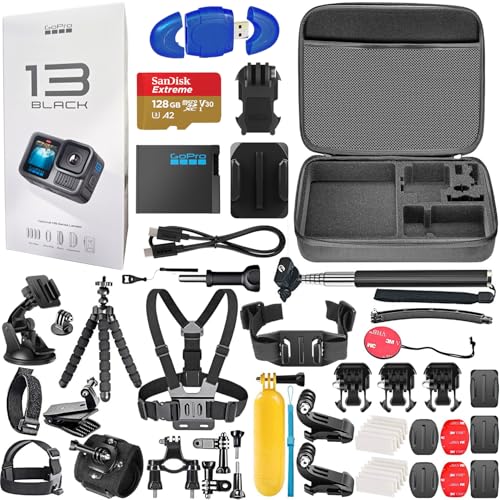
GoPro HERO13 Black — Best for action streaming
Action streaming is a mounting problem wearing a camera costume, and GoPro’s ecosystem solves it deepest: chest, helmet, bar, board and boat positions all exist, all proven, all swappable mid-adventure. The HERO13’s stabilisation keeps a mountain descent watchable live, its streaming modes are mature, and its toughness means the stream survives the crash that makes the clip. Channels grow on moments; this camera is present for more of them.
- 5.3K video, high frame rates
- Advanced stabilisation
- Native waterproofing
- Live streaming support via app
- Industry-standard mount ecosystem
Battery discipline remains the streamer’s homework — carry spares or a bank — and low light trails the Insta360 rival. In daylight action, which is most action, it leads. The sheer number of working streamers using this platform also means every problem you will ever have has a searchable solution, an underrated feature at 6 a.m. on a launch ramp with chat already asking questions.
Strengths
- Mounts for every activity
- Stream-proven platform maturity
- Survives the moments that make channels
Trade-offs
- Battery swaps on long streams
- Low light second to Insta360
- Accessories accumulate cost
Best for: Action sports and adventure streamers.
Not suited for: Evening city walkers prioritising low light.
The HERO13’s streaming maturity shows in failure behaviour, which is where outdoor streams are actually decided. When bandwidth dips, its feed steps down quality rather than freezing the frame, and when the connection returns it recovers without a restart — behaviours learned across generations of live events. Streamers learn to trust that degradation curve the way drivers trust brakes: not by reading about it, but by surviving a few bad-signal valleys together.
The HERO13’s colour in streamed mode deserves a note for creators who also publish recordings: the streamed image is processed for transmission, slightly punchier than its recorded files. Channels that cut stream highlights into uploads should expect a small matching job in editing, or record simultaneously at their preferred profile where the camera allows. Knowing the two looks in advance turns a surprise into a workflow.
A HERO13 streaming detail that separates calm creators from frantic ones: rehearse the dead-battery moment until the swap is a ten-second, on-camera non-event with a joke ready. Audiences read a streamer’s composure as production quality. The camera supports hot confidence with batteries that swap without tools or menus — the rest is choreography, and choreography is learnable in an evening.

DJI Osmo Action 5 Pro — Best for long streaming days
Streaming days are marathons judged by their final hour. The Action 5 Pro’s efficiency stretches each battery furthest in this guide, and its larger sensor keeps the stream handsome as light fails — the golden-hour hike home, the evening market, the dusk paddle that other cameras render as grain. Subject tracking adds a production trick solo streamers love: the camera holds a companion or a pet in frame while hands stay busy.
- 1/1.3-inch sensor
- 4K high-frame-rate video
- Long battery endurance
- Subject tracking
- Dual touchscreens
DJI’s magnetic mounting swaps positions in seconds, which encourages the angle variety that keeps long streams watchable. The ecosystem is younger than GoPro’s but covers the streamer’s core positions well. For channels built on duration — full-day hikes, event coverage, travel days streamed whole — endurance is not a specification, it is the format itself, and this is the camera that respects it.
Strengths
- Longest streaming legs here
- Dusk streams stay clean
- Fast magnetic mount swaps
Trade-offs
- Ecosystem still growing
- Premium tier
- Tracking features need setup time
Best for: All-day and into-the-evening streamers.
Not suited for: Budget starters or mount collectors.
Heat behaviour is equally practised: in moving air the camera streams for long sessions, and its thermal warnings arrive with enough notice to find shade rather than as a sudden black screen. Static noon streaming in full sun remains every action camera’s enemy, this one included, and the guide’s shade discipline applies. Within that discipline, it is the stream finisher of this list.
DJI’s streaming through its app has a party trick outdoor creators underuse: the ability to keep a local high-quality recording while the stream runs at transmission quality. The stream serves the moment; the recording serves the archive and the edited upload. Streamers building a back catalogue should weight this heavily, because a channel’s long-term value lives in its recordings, and the stream is merely their premiere.
The Action 5 Pro’s low-light streaming has a civic use: night markets, evening festivals, the illuminated old town — the places where travel streaming earns its audience are disproportionately nocturnal. A camera that keeps those scenes clean effectively doubles a travel channel’s usable hours. Streamers planning evening-led formats should treat this pick as the default and argue themselves out of it, not into it.

Insta360 Ace Pro 2 — Best low-light outdoor streamer
Evening is streaming prime time and outdoor darkness is its tax. The Ace Pro 2 pays it with the strongest low-light hardware in this guide: a big 1/1.3-inch sensor, fast Leica-co-engineered optics and processing tuned for night scenes. City night walks, festival evenings, night fishing and aurora-season streams keep colour and faces where rivals smear into noise, and the flip screen frames solo night presenting perfectly.
- 1/1.3-inch sensor, Leica optics
- 8K capability, strong streaming resolutions
- Flip touchscreen
- Waterproof body
- Advanced low-light processing
Its 8K headline matters less than its behaviour at streaming resolutions, where the sensor’s quality shows as clean, stable footage. Waterproofing is native, the mounting system is increasingly standard, and Insta360’s app polish flatters the whole workflow. Streamers whose brand is the night — or whose latitude makes winter afternoons dark — will find no better tool here; daytime action purists may prefer GoPro’s ecosystem depth.
Strengths
- Night streams look genuinely good
- Flip screen for solo framing
- Clean detail at stream bitrates
Trade-offs
- Premium tier
- Ecosystem smaller than GoPro’s
- 8K mostly irrelevant to live work
Best for: Night walkers, evening events and winter streamers.
Not suited for: Daytime action channels on a budget.
For channels mixing recorded content with live sessions, its recorded footage and streamed footage share a colour character that edits together cleanly — a small production virtue that saves hours across a season of uploads. Consistency, again, is the professional feature hiding inside a consumer camera.
The Ace Pro 2’s flip screen changes solo streaming ergonomics in one specific way: the streamer can check framing with a glance rather than a phone, keeping eyes and attention on the environment — safer on trails, more natural on camera. Small ergonomic mercies compound across a streaming season. Its weight, slightly above the slimmest rivals, is the honest price of the sensor and screen, and streamers feel it mostly in cap mounts worn for hours.
Ace Pro 2 owners should learn its wind handling early, because its microphones are good enough to tempt complacency: good is not immune, and a foam cover plus body positioning still separate the intelligible channels from the atmospheric ones. Its audio rewards the streamer who does the basics — which is this guide’s audio sermon in one camera.

GoPro Hero — Best compact walk-and-talk streamer
Walk-and-talk streaming rewards disappearance: a camera small enough to forget, simple enough to start with cold fingers, tough enough for the weather the walk happens in anyway. The compact Hero is that camera — GoPro’s essentials distilled, waterproof, stabilised, and light enough that a day of city touring or trail talking never becomes a carrying complaint. For creators whose content is conversation in places, it is honestly all the camera required.
- Compact waterproof body
- 4K video with stabilisation
- Simple one-button operation
- Built-in battery
- GoPro mount compatibility
Simplicity sets its ceiling: fewer frame-rate tricks, a smaller sensor than the flagship, battery built in rather than swappable, so power-bank discipline replaces the swap ritual. Within walk-and-talk’s actual demands — stable, clear, present — those limits rarely appear on screen. Streamers upgrading later will keep it as the spare that always comes along, which is the sincerest compliment small cameras earn.
Strengths
- Lightest streaming presence here
- Zero-fuss starting and handling
- Tough enough for daily weather
Trade-offs
- Built-in battery needs power-bank planning
- Fewer creative modes
- Sensor below flagship class
Best for: Travel and walk-and-talk streamers.
Not suited for: Action channels needing swappable batteries.
The Action 5 Pro’s battery advantage compounds with its charging behaviour: it accepts power gracefully while working, so a power bank in the pack becomes a range extender rather than a rescue device. Streamers walking all-day routes — pilgrimage trails, city marathons, festival coverage — plan around that: camera on chest, bank in pack, cable dressed along a strap, and the stream simply continues.
The compact Hero’s simplicity creates one streaming discipline its owner must supply: because it lacks the flagship’s deeper settings, exposure and framing decisions live in positioning — where you stand, which way you face, when you pause in shade. Veteran walk-and-talk streamers insist this constraint improves their craft. Beginners should simply know the trade exists and that the camera rewards environmental awareness over menu knowledge.
The compact Hero’s streaming simplicity has a community benefit: it is the camera to lend. Channels grow by collaboration, and a spare simple camera lets a friend stream their angle of the same hike with zero training. Creators who build a small pool of identical simple cameras own a multi-angle outdoor studio for less than one flagship — a strategy worth more than it costs.

DJI Osmo Action 3 Outdoor Combo — Best starter streaming kit
Starter kits usually bundle the accessories nobody needs; this one bundles the straps outdoor streamers genuinely live on — chest and backpack mounts that put viewers inside hikes, rides and climbs from the first session. The Action 3 itself remains a capable, waterproof camera with strong stabilisation and cold-weather manners, streaming happily through DJI’s app while its quick-release mounts make position changes a one-second decision.
- 4K video with stabilisation
- Waterproof body
- Chest and backpack straps included
- Quick-release mounting
- Cold-resistant battery design
As a previous-generation model its sensor trails the newest DJI, mostly visible at dusk. In daylight — the starter streamer’s natural habitat — the footage is clean and the workflow forgiving. The combo’s value logic is compelling: camera plus the two mounts a beginner would buy separately anyway, at a tier that leaves budget for the wireless microphone every streamer eventually needs. Start here, stream a season, upgrade informed.
Strengths
- Bundle matches real streaming needs
- Proven, forgiving platform
- Leaves budget for a microphone
Trade-offs
- Previous-generation sensor
- Dusk footage softer than leaders
- Fewer tracking refinements
Best for: New outdoor streamers wanting a complete kit.
Not suited for: Night-focused or flagship-chasing channels.
Its subject tracking earns a second mention for a specific format: the guided walk, where the streamer films a companion, a guide or a dog ahead on the trail. The camera holds them in frame while the streamer narrates and walks, producing a two-person production from a one-person crew. Formats like this are how small channels out-produce their size, and hardware that enables them is worth its tier.
The Action 3 combo’s straps deserve a longevity note: chest and backpack mounts are wear items, elastic tires, buckles meet granite. Budget a replacement strap across a heavy season and inspect before big streams. The camera will outlive its first straps comfortably, and a streamer whose mount fails mid-broadcast learns the inspection habit at the traditional tuition rate.
The Action 3 combo’s batteries in cold deserve the trek note from this guide’s power doctrine: they were designed with cold tolerance in mind, and winter streamers — skiers, ice-fishers, Christmas-market channels — feel the benefit as sessions that simply continue. Warm-spare discipline still applies; chemistry is chemistry. But the starting point is higher here than rivals of its generation.

Insta360 GO 3S — Best wearable streaming experiment
The GO 3S streams from perspectives the rest of this guide cannot reach: clipped to a cap brim, magnetised to a chest pendant, stuck to a fishing rod or a dog’s harness. Its 4K footage from a camera the size of a thumb remains faintly miraculous, and for POV-led channels — climbers, anglers, skaters, makers outdoors — it captures the literal view the audience came for, hands entirely free.
- Thumb-sized 4K camera
- Magnetic and clip mounting anywhere
- Action Pod with screen and extended power
- Waterproof camera body
- Hands-free POV capture
Physics collects its fee in battery life and heat: sessions are short, the Action Pod extends them while adding bulk, and long-form streaming belongs to the bigger picks. Treat the GO 3S as the specialist second camera of an outdoor streaming kit — the angle machine — or as the primary for short, frequent POV streams. Streamers who understand that bargain gain footage their competitors structurally cannot copy.
Strengths
- Angles no rival can physically reach
- Truly hands-free streaming
- Disappears on the body
Trade-offs
- Short sessions without the pod
- Heat limits long streams
- Not a primary all-day camera
Best for: POV channels and second-angle specialists.
Not suited for: Long-form single-camera streamers.
Menu depth is the tax: DJI packs options, and a new owner should spend an evening configuring streaming presets at home rather than discovering menus on a windy ridge with chat waiting. Set it once, save it, and the camera becomes as simple as its rivals where it matters — in the field, with gloves on.
The GO 3S creates a streaming format with no rival here: the ambient stream, where the camera rides along through a market, a boat trip or a festival and the streamer simply lives, narrating occasionally. Audiences find the format hypnotic in small doses. Its session limits suit it — ambient streaming is a spice, not a staple — and creators who programme it as a weekly special own a slot competitors cannot copy without buying the same tiny camera.
The GO 3S’s pod screen makes it the only pick that can be framed precisely while worn — glance at the pod, adjust the clip, stream — a small workflow that removes the POV camera’s traditional guesswork. Creators who tried earlier wearables and abandoned them for framing frustration should retest their prejudice on this generation; the pod changes the experience categorically.
What does an outdoor stream actually demand from a camera?
Stability of the feed comes before beauty of the feed. Viewers forgive a 1080p stream that never stutters and abandon a 4K stream that buffers at every bridge. Choose cameras and modes your connection sustains with headroom, and let the platform’s adaptive quality do its work. Every pick here streams comfortably at sensible resolutions; the discipline of choosing them is yours.
Exposure outdoors is a fight between face and sky. Cameras that expose for the scene render the streamer a silhouette against any bright background; the better outdoor cameras weight faces and hold them steady as clouds move. When testing, walk toward and away from the sun on camera — the streamer who checks this at home avoids the most common outdoor-stream failure entirely.
Interaction shapes camera choice too. Chat must be read, which means the phone runs the platform while the camera films — a division of labour the picks support through their apps and mounts. Solo streamers should rehearse the whole arrangement: where the phone sits, how chat is glanced at safely while walking, and how the camera starts without looking at it.
How long can you really stream outdoors?
Battery mathematics are unforgiving: streaming draws more than recording, wireless radios add their share, and cold or heat shrink the remainder. Plan around honest halves — take the manufacturer’s recording endurance, halve it for streaming with connectivity active, and halve your trust again in freezing or roasting conditions. The picks below are graded on how gracefully they handle swaps, external power and pass-through charging.
Power banks are the outdoor streamer’s second battery and should be treated as core kit: a bank in the pack, a short cable dressed so it cannot snag, and a routine of topping up during natural pauses. Cameras that charge while streaming simplify this enormously; those that cannot demand a swap ritual rehearsed before it happens live in front of an audience.
Heat management is endurance’s summer twin. Shade the camera at rest stops, avoid streaming from a dashboard or a black rock at noon, and know your camera’s thermal behaviour before the big event stream. Several picks shed heat through their bodies by design; all of them last longer with airflow from walking than baked stationary in sun — movement, happily, is the outdoor streamer’s natural state.
Which mount tells your stream’s story best?
Chest mounts put viewers inside the activity: hands, handlebars, rod and reel all present, face absent. They suit action channels where the doing is the content. Pole and selfie mounts restore the face and the place together — the walk-and-talk streamer’s classic frame — at the cost of an occupied hand and a silhouette against the sky that exposure must handle.
Cap and head mounts deliver true point of view, beloved of fishing, climbing and craft-outdoor channels, and they punish head movement mercilessly; streamers learn a slower head within a week. Static tripod shots still matter: the campsite cook, the lakeside interview, the summit talk. A small folding tripod in the pack multiplies any camera in this guide.
Choose the mount when you choose the camera, not after. Ecosystems differ: GoPro’s mounting fingers are the industry’s default, DJI’s magnetic system is faster to swap, Insta360’s accessories lean creative. A streamer mid-season changing ecosystems repurchases every accessory — the hidden switching cost that never appears in camera comparisons.
How do you keep an outdoor stream legal, safe and welcome?
Permissions first: public spaces generally welcome filming, but private land, ticketed venues and organised events set their own rules, and a streamer is a broadcaster in the eyes of most regulations. Check before the big stream, not during it; a channel built on locations it cannot revisit is a channel built on sand. Music in the environment — buskers, cafés, festivals — also carries rights that platforms enforce automatically and without appeal.
Safety outranks content in moving environments. Streams filmed while cycling, paddling or driving demand mounted cameras and eyes on the world, not on chat; the audience forgives a missed message and would not forgive the alternative. Build the interaction rhythm around stops: stream the action silently, read chat at the pause, answer in a bunch. It produces better streams and living streamers.
Courtesy completes the trio. Strangers did not consent to be broadcast; a camera kept on the streamer and the landscape, faces of bystanders treated with restraint, and a cheerful answer when someone asks what you are doing — these keep outdoor streaming welcome in the places it visits. The channels that last are the ones locations are glad to see return.
What does a minimal outdoor streaming kit bag contain?
Beyond the camera: power, mounting and mercy. Power means a bank and a short cable, plus the spare battery if your camera swaps. Mounting means the one mount your format uses and the small tripod that covers the static segments — not the whole ecosystem, which is how bags become reasons to stay home. Mercy means the cloth for a rained-on lens, the foam cover for wind, the snack that keeps the streamer’s temper sweet at hour three.
Connectivity kit is the streamer’s insurance drawer: a second SIM or a hotspot arrangement for known dead zones, downloaded maps so navigation never depends on the same signal the stream is fighting for, and a plan — stated to the audience in advance — for what happens when the signal dies anyway. Professionalism outdoors is mostly pre-decided responses to predictable failures.
Keep the whole kit in one bag that lives packed. Outdoor streaming opportunities arrive like weather — suddenly, and gone by evening. The streamer whose kit is a single grab has a channel; the streamer who assembles kit per outing has a hobby that occasionally broadcasts. Every camera in this guide was chosen to disappear into that one bag without complaint.
A short note on the first ten streams
Give yourself ten streams before judging anything — the camera, the format, the audience size, yourself. The first three are tuition in logistics: signal, sound, the mount that slips. The next three are tuition in presence: learning to narrate a place while walking through it, to greet regulars without losing the thread, to end on time. Streams seven to ten are where a channel’s actual shape appears, and they are the first ones whose evidence deserves a decision. Streamers who quit at three have reviewed the tuition and called it the course.
Record every one and watch exactly one thing per recording: the first stream for audio, the second for framing, the third for pacing. Improvement aimed at everything improves nothing; improvement aimed at one variable per stream compounds like interest. The cameras in this guide will not be the constraint in any of the ten — their job is to be boringly reliable while the streamer becomes interesting, which is the correct division of labour and the reason reliability outranks brilliance throughout this guide.
By the tenth stream, write the channel’s one-sentence promise from what the evidence shows — not what you hoped, what the audience actually returned for — and programme the next season to that sentence. Channels built on evidence feel inevitable in retrospect. The ones built on hope feel exhausting in the present. Your camera, your logbook and your ten streams are all the research the decision needs.
One last consideration for the channel ahead
Build the channel on the stream you can sustain weekly, not the expedition you can survive once. Audiences bond with rhythm; algorithms reward it; and the streamer’s own life must carry the production alongside everything else it carries. The cameras in this guide were chosen for sustainable excellence — the session that can be repeated fifty weeks a year without heroics. Heroics are for season finales. The other forty-nine weeks are the channel.
Keep a logbook, unfashionable and invaluable: location, signal, weather, what failed, what the audience loved. Outdoor streaming’s variables are too many for memory, and the logbook converts a season of anecdotes into a route-planning database. The streamers who grow are the ones whose second year is visibly built on the first year’s notes. Your future self, planning the anniversary stream, is the reader you are writing for.
Protect the joy deliberately, because it is the product. The moment outdoor streaming becomes an obligation performed for metrics, the audience can tell — presence curdles into content. Schedule the streams you would do with no audience at all, in the places you would visit camera-less, and let the channel be the overflow of a life being lived outdoors. That is the whole strategy, and every camera in this guide is merely its instrument.
And when the stream ends, put the camera away and stay in the place a while. The streamer who experiences nothing off-camera eventually has nothing to bring on-camera. The trail after the broadcast, the lake after the farewell — that unrecorded hour is where next week’s material, and next year’s love of the work, quietly comes from.
A streaming season: what the audience never saw
The season began with a failure this guide exists to prevent: a much-promoted summit stream that died at the col, where the signal map had promised coverage and the wind delivered a masterclass in audio destruction instead. The streamer — experienced, embarrassed, honest — published the post-mortem, and the channel grew from the honesty. Its lessons became this guide’s doctrine: test at the location, respect the wind, promise conservatively, and treat every failure as content about the craft rather than as shame.
By midsummer the same channel’s dawn lake streams had become a ritual with a waiting audience — regulars arriving before the streamer, greeting each other by name, treating the lake as a shared place. The camera was a mid-tier pick from this guide, chosen for endurance; the production values that built the ritual were punctuality, a foam wind cover and a streamer who had learned to narrate water. Equipment enabled the ritual. It did not create it, and the distinction is the season’s whole teaching.
Autumn brought the night-market streams and the low-light camera’s vindication: scenes that a season earlier would have been grain and apology became the channel’s most-shared broadcasts. The upgrade was real and it mattered — this guide will not pretend gear never does — but it mattered in the hands of a streamer whose habits were already built. Gear amplifies systems; it does not substitute for them. The order of purchase is the order of importance, always.
Winter closed the season with the cold-weather streams: a frozen river, a Christmas market, batteries rotating through inside pockets, the audience warm at home and the streamer earning every viewer honestly. The cameras performed as their verdicts promised, which is to say the technology vanished and the places remained. A streaming season judged whole teaches what a camera review cannot: the audience returns for the world, delivered reliably, by a person they trust. Everything in this guide is in service of that sentence.
A stream-day runbook for outdoor creators
The hour before: charge everything, format nothing in a panic, check the route’s dead zones on the coverage map, and post the stream’s promise — place, time, rough duration — so the audience can plan around you. Outdoor streaming is appointment media wearing adventure’s clothes; the appointment half is what turns viewers into regulars.
On location, spend the first ten minutes as a technician, not a creator: signal test at the stream’s hardest point, a private test stream watched back for audio, the mount checked with a tug, the sun’s path noted against your route. Ten minutes of technician buys hours of creator. Streamers who skip it pay the same ten minutes publicly, in fragments, all afternoon.
After the stream: download the recording before anything else, note three timestamps while memory is fresh — the moment, the mistake, the surprise — and charge the camera before you charge yourself with dinner. The runbook’s last page is gratitude: thank the audience specifically, name the next stream’s place, and stop. Channels are built from these repetitions far more than from any camera in this guide.
How do outdoor streamers grow an audience that returns?
Consistency of place and time beats production value in the early life of a channel: the same trail every Sunday, the same lake at dawn on Fridays, so the audience builds a ritual around geography. The cameras in this guide serve rituals by being ready without ceremony — the streamer who can be live in two minutes keeps promises that a production-heavy setup quietly breaks.
Talk to the one viewer. Outdoor streams are watched alone, on phones, often while the viewer is stuck indoors — the streamer is their window, and the channels that understand this narrate the place like a companion rather than performing like a broadcaster. Describe what the camera cannot show: the cold, the smell of rain coming, the gradient of the climb. Presence is the product; the camera merely delivers it.
End streams deliberately, at a place and a view worth ending on, with the next stream promised specifically. The audience that knows where and when the story continues behaves like readership. Outdoor streaming’s great advantage over studio content is serial geography — the journey itself is the narrative — and the streamer who programmes it as episodes owns a format with a memory.
What weather plans separate professional outdoor streamers?
A rain plan made in advance: the stream continues, the phone goes in a waterproof pouch with its screen still usable, chat is read at shelters, and the content leans into the weather rather than apologising for it. Audiences reward the streamer who treats a storm as a plot development. Every camera here is waterproof; the plan exists to protect everything else, including the streamer’s morale.
A heat plan for summer: dawn and evening scheduling, shade stops written into the route, the camera rested in a light-coloured pouch rather than black kit, and a hard rule about stopping at the camera’s first thermal warning rather than negotiating with it. Heat failures cluster at the stream’s climax because climaxes happen at noon; the plan moves the climax, not the camera.
A wind plan for audio: route choices that keep the streamer in lee shelter for the talking segments, a foam cover fitted before departure, and the discipline of turning the body to shield the microphone for important announcements. Wind is the outdoor streamer’s true final boss, and it is beaten by geography and habit, never by settings alone.
Comparison: all six picks at a glance
| Camera | Badge | Best for |
|---|---|---|
| GoPro HERO13 Black | Best for action streaming | Action sports and adventure streamers. |
| DJI Osmo Action 5 Pro | Best for long streaming days | All-day and into-the-evening streamers. |
| Insta360 Ace Pro 2 | Best low-light outdoor streamer | Night walkers, evening events and winter streamers. |
| GoPro Hero | Best compact walk-and-talk streamer | Travel and walk-and-talk streamers. |
| DJI Osmo Action 3 Outdoor Combo | Best starter streaming kit | New outdoor streamers wanting a complete kit. |
| Insta360 GO 3S | Best wearable streaming experiment | POV channels and second-angle specialists. |
What are the most common mistakes to avoid?
Streaming at maximum resolution on a rural connection
Ambition outruns bandwidth at every scenic location, because scenic locations have the worst signal. Set a resolution your connection sustains from the actual spot, test at the actual hour, and let stability be the channel’s signature. Viewers return for streams that finish; nobody subscribes to a buffering screen with a lovely view behind it.
Ignoring wind until the audience complains
Outdoor audio fails by default: wind finds every microphone. Use wind-reduction modes, foam covers where they fit, body positioning against the gusts, and an external microphone for any channel past casual. Check a recorded minute of your stream’s audio before the next one; streamers are always the last to know how bad it sounded.
Letting the sun cook the camera
A camera streaming in direct summer sun is a shutdown timer. Rest it in shade during pauses, keep air moving over it while walking, and schedule the static talking segments for shade. Heat shutdowns strike at peak moments because peak moments happen at peak heat — plan the stream’s geography around shadows.
Final Recommendation
Action streamers should start with the GoPro HERO13 and its mounting universe, choosing the DJI Osmo Action 5 Pro instead when streams run into dusk or battery swaps are impractical. Evening and low-light channels belong to the Insta360 Ace Pro 2. Walk-and-talk creators who travel light will love the compact GoPro Hero, budget streamers the DJI Action 3 combo with its ready-made straps, and experimenters the Insta360 GO 3S for angles no rival attempts. Stream at the resolution your worst location sustains, carry power like it matters — because outdoors, it is the whole show.
One last rehearsal rule separates prepared streamers from apologetic ones: run the full stream, privately, from the real location at the real hour, and watch the recording end to end. You will find the wind direction that ruins audio, the bridge where signal dies, the sun angle that silhouettes you — while the only audience is you. Fix those three things and the public stream feels effortless. The cameras above are capable of professional outdoor broadcasting; the rehearsal is what makes it look that way.
Frequently Asked Questions
Can I stream directly from these cameras without a phone?
Some support direct streaming to major platforms over Wi-Fi, but the phone-based workflow remains the most flexible outdoors: better chat handling, connection sharing and platform apps. Test your chosen route at home first. Remote locations argue for the simplest chain that works — every extra link is a failure point with an audience watching.
Which camera streams longest on one battery?
The DJI Osmo Action 5 Pro leads this list on endurance, and its efficient design stretches streaming sessions furthest before a swap or power bank. All figures shrink outdoors; carry a power bank regardless of brand promises, and rehearse a mid-stream battery swap until it takes seconds.
How do I stream from places with weak signal?
Lower the resolution, position for signal before positioning for beauty, and consider that some locations simply will not sustain a live stream — record a ‘stream-style’ video there instead and premiere it later. Audiences accept this honesty readily. A camera with a stable feed at modest quality, like every pick here, is the best tool weak signal allows.
Is 360 streaming worth trying?
The Insta360 ecosystem makes it possible and it delights viewers who like looking around, but it demands more bandwidth and a smaller, more technical audience. Most outdoor streamers grow faster on a well-framed conventional stream. Treat 360 as a special-event experiment until your channel’s data argues otherwise.
What microphone works outdoors with these cameras?
A compact wireless microphone clipped to the streamer transforms outdoor audio more than any camera upgrade, defeating wind by proximity. Foam windscreens are mandatory, not accessories. If budget forces a choice between a better camera and a wireless microphone, established streamers choose the microphone every time — audiences leave bad audio long before they leave soft video.
Do I need a waterproof camera for streaming near water?
For fishing, paddling and coastal channels, yes in practice: one capsize or wave ends an unprotected camera and the stream with it. Every pick in this guide swims without a housing, which is why the list is built from action cameras. Rinse salt off after sessions and dry connectors before charging.
Should I stream in portrait or landscape orientation outdoors?
Follow the platform and the place: portrait suits phone-first platforms and tall subjects — waterfalls, towers, forest — while landscape suits action and scenery-led channels and any platform where viewers watch on screens. Several picks handle both through mounting choices. Decide per series rather than per stream, because audiences subscribe to a consistent visual grammar.
How do I handle rain mid-stream?
Keep streaming — every camera here is waterproof, and rain is content: audiences love weather. Wipe the lens at natural pauses, shelter the phone that runs chat, and watch your footing, which rain makes the real story. Dry all connectors before charging at home. A streamer who treats rain as a feature rather than a failure gains the most loyal viewers in this genre.
How do I know if outdoor streaming is really for me?
Run the ten-stream test this guide describes, in your own nearest beautiful place, at a sustainable hour, with the simplest camera setup you can borrow. By stream six you will know: either the sessions have become the week’s hinge — planned around, looked forward to, talked about — or they remain an obligation performed for an audience of statistics. Both answers are valuable, and both are cheap at ten streams. If it is the first, buy the camera your logbook recommends, because by then your logbook, not this guide, is the expert on your channel: it knows your wind, your dead zones, your light and your audience’s habits, and it will choose between these six cameras more wisely than any reviewer who has never stood in your streaming place at your streaming hour, in your own weather, on your own ground.
Do I need a gimbal for outdoor streaming?
For walking formats, the stabilisation in these action cameras has largely retired the separate gimbal for solo creators — the footage is smooth enough that audiences never think about it, which is the point. A gimbal still serves deliberate cinematic work and heavier cameras. Streamers should spend the gimbal money on the wireless microphone first; sound remains the upgrade audiences actually notice.
Can I monetise outdoor streaming from the start?
Platforms set their own thresholds for monetisation, and outdoor channels typically grow through consistency before revenue. Treat early streams as audience-building: regular schedule, a recognisable place or journey, and recordings edited into uploads that keep working between live sessions. The cameras here support that dual life — stream for the community, record for the catalogue — from the first day.
What is the best time of day to stream outdoors?
The hours your audience is free and your light is kind rarely coincide perfectly; evening golden hour is the classic compromise, flattering light with an audience leaving work. Dawn streams build smaller, fiercely loyal audiences. Whatever you choose, consistency matters more than the hour itself — a channel is a promise about a time as much as about a place.
Related Guides
Streamers building a channel should read next our wireless microphone guide for outdoor creators, together with our mobile data and bonding guide for remote broadcasts. For the recorded side of the channel, our action-camera editing workflow completes the picture.


