reviewstook.com is reader-supported. When you buy through links on our site, we may earn an affiliate commission.
Where to buy
Nightlife videography is its own craft: the moving record of clubs, bars, gigs and city nights, made for the feed, the aftermovie and the venue’s next campaign. It is video first — the stills-led club guide and the tripod-led night-shots guide are its siblings, not its rivals — and every camera below was chosen for how it films after dark: low-light sensors, stabilisation that survives a crowd, and sound that respects the music. All are available on Amazon, and each is ranked for the working videographer and the serious creator, not the casual guest.
Buy the second battery and the fast card in the same order, without debate: nightlife is a deadline medium shot in the dark, and the videographer who runs out of either, at the drop, owns a very expensive souvenir of the night they nearly filmed.
- DJI Osmo Pocket 3: check price on Amazon
- DJI Osmo Action 5 Pro: see the current price on Amazon
- Insta360 Ace Pro 2: view this camera on Amazon
- Sony ZV-1F: check availability on Amazon
- GoPro HERO13 Black: see it on Amazon
- Insta360 X4: look at it on Amazon
The best cameras for nightlife videography solve a specific triangle of problems that daylight video never meets. The light is low, coloured and moving. The camera is handheld, jostled and frequently one-handed. And the footage is due tomorrow — the aftermovie that sells next weekend is edited from tonight, by a videographer whose other job was enjoying none of the night they filmed. A camera that cracks that triangle — clean low-light image, calm stabilisation, fast turnaround — is worth more to nightlife work than any specification that shines in a studio, and this guide ranks by the triangle alone.
Nightlife video has become the industry’s memory and its marketing in one: the DJ’s aftermovie, the venue’s reels, the festival’s nightly diary, the bar’s story that must look like the night felt. That last phrase is the craft’s whole difficulty. Nightlife feels like immersion — bass, haze, colour, crowd — and a camera that records it clinically, with flat light and shaky edges, has documented the night and lost it. The picks below were chosen for the cameras that keep the feeling: sensors that hold the colour of the room, stabilisation that glides rather than corrects, and lenses or views wide enough to be inside the crowd rather than observing it.
The list is built for the working end of the craft. At the top, the gimbal camera that has quietly become nightlife’s signature instrument. Beside it, the action cameras whose low-light generation finally grew up, for the booth, the stage edge and the crowd POV. The creator compact serves the roaming social shooter, and at the list’s foundation sits the camera for the videographer who needs one device to film the night and everything else in their working life. Each is a different answer to the same triangle, priced for different points in a career.
One discipline runs through every section and deserves stating at the door: nightlife videography is a permissioned art. Venues, performers and crowds have rights and expectations that the stills guides in this batch treat at length, and the moving camera inherits them all, with sound’s additional duties. Film the night as its guest and its professional, and the night will keep hiring you. The cameras are the easy part, and they follow.
A distinction worth making before the products, because buyers confuse the shelves: this guide is about filming nightlife as a product — for venues, artists and audiences who were not there. The guest who wants a keepsake of their own night out is served by the club guide’s small cameras and by every phone in the room. The videographer’s question is harder: what will make a stranger, scrolling at noon on Tuesday, feel the room they missed and buy a ticket to the next one? Every ranking below is an answer to that question, and cameras that merely document the night score lower here than cameras that transmit it.
Key Takeaways
- Nightlife video is a triangle: low light, handheld movement, tomorrow’s deadline — rank cameras by all three.
- The Pocket 3 is nightlife’s signature instrument: gimbal glide, 1-inch sensor, pocket discretion.
- The current action cameras finally film the dark respectably — the Action 5 Pro leads them.
- Sound is half the aftermovie: plan the audio before the first frame.
- Wide is the nightlife focal language — be inside the crowd, not observing it.
- Deliver the vertical cut first: the feed is where nightlife video earns.
- Pace the night like a professional: doors, support, headliner, dawn — and be rested, charged and in position for the peak.
In this guide
Quick Picks
| Camera | Badge | Why it is here |
|---|---|---|
| DJI Osmo Pocket 3 | Best camera for nightlife videography | A 1-inch sensor on a gimbal in a pocket body — the glide, the tracking and the low-light image nightlife runs on. |
| DJI Osmo Action 5 Pro | Best action camera for nightlife video | The low-light leader among action cameras: booth mounts, stage edges and crowd POV with a battery that outlasts the night. |
| Insta360 Ace Pro 2 | Best low-light action camera for creators | A creator-focused action camera with serious low-light processing — the roaming camera for bars, gigs and city nights. |
| Sony ZV-1F | Best simple camera for nightlife social content | A pocket compact with a wide lens and easy 4K — the promoter’s and host’s camera for the night’s social story. |
| GoPro HERO13 Black | Best tough camera for festival nightlife | The most mountable, survivable camera for festival nights, outdoor stages and the crowd’s-eye view. |
| Insta360 X4 | Best 360 camera for immersive nightlife film | Films the whole room at once — DJ, crowd and lasers in one record, reframed into the aftermovie at home. |
How did we judge cameras for filming the night out?
We judged these cameras on a working night out, in working order: the booth during a headline set, the floor at its peak, the bar’s neon corner, the smoking area’s sodium gloom and the walk between venues in the rain. We scored the low-light image as the feed will see it — colour that survives magenta and ultraviolet, faces that stay faces at the sensitivities the room imposes — and the stabilisation as the crowd will test it: bumps, turns, a camera raised and passed hand to hand. Autofocus and tracking were judged on dancers and DJs, subjects who move like the music rather than like a test chart.
Turnaround completed the judging, because nightlife video is a deadline medium. We weighted how fast footage reaches an edit — the card, the app, the vertical crop that the feed demands — and how the camera’s own colour treats the quick grade at 4 a.m. Battery across a whole night, discretion in rooms that regulate cameras, and audio options from the honest built-in microphone to the wireless systems the professionals use were all scored as production features, because on the night, they are.
A final criterion separated the top of this list from its middle: how the footage behaves in the hands of a tired editor at 4 a.m. Cameras whose colour is honest out of the gate, whose stabilisation removes the micro-shake that no software fully forgives, and whose files arrive in the edit without a transcoding ritual are worth a measurable premium in a deadline craft. Nightlife videography is won in the small hours twice — once in the room, once at the desk — and the cameras ranked highest here win both shifts.

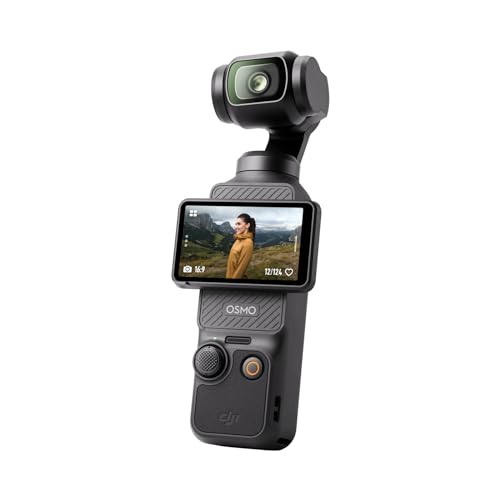
DJI Osmo Pocket 3 — Best camera for nightlife videography
The Pocket 3 has become nightlife videography’s signature instrument for reasons that compound. The gimbal delivers the craft’s defining shot — the glide through the crowd toward the booth, smooth as a dolly that the room never saw — while the 1-inch sensor films the dark room with a cleanliness that action cameras of a generation ago could not approach and phones still cannot. Subject tracking holds the DJ through the set, freeing the videographer to work the room’s other angles, and the whole instrument lives in a pocket, passing doors and crowds that would stop a rig.
Its low-light colour is the professional secret. Nightlife’s palette — magenta wash, ultraviolet edges, the green of a cheap laser — destroys lesser sensors’ skin tones, while the Pocket 3’s larger sensor holds faces as faces and lets the room’s colour read as atmosphere rather than damage. Aftermovies cut from it have the immersion the craft is paid for: the viewer is in the crowd, at the barrier, behind the DJ, and the camera never once announces how.
Work it as the production tool it is. Protect the gimbal with your body in the crush, run the tracking on the performer and the wide shots on the room’s rhythm, and shoot the vertical versions of the hero moments as you go — the feed’s cut is the deliverable that pays, and reframing a horizontal glide at 4 a.m. is a poorer use of the night than shooting both. Spares and a power bank in the pocket turn its set-length battery into a whole night’s.
For the creator whose nightlife is the business — the resident videographer, the DJ’s content partner, the venue’s social shooter — this is the first purchase and the centre of the kit. Everything else in this guide supports, widens or toughens the production. The Pocket 3 is the production.
- Format: gimbal-stabilised pocket camera
- Sensor: 1-inch class sensor
- Video: 4K at high frame rates
- Tracking: subject tracking for performers
- Audio: quality built-in and wireless options
Strengths
- Glides through crowds like a dolly
- Tracks the DJ while you work the room
- Low-light footage far beyond its size
Trade-offs
- A specialist — stills are a side dish
- Gimbal needs a bodyguard in a crush
- Battery suits a night of clips, with spares for sets
Best for: nightlife videographers, DJ content creators and venue social shooters. Not suited for: photographers whose night work is stills-led

DJI Osmo Action 5 Pro — Best action camera for nightlife video
The Action 5 Pro is the nightlife crew’s second camera that keeps becoming the first. Mounted in the booth, it films the DJ’s hands and the crowd’s answering wave for the entire set on one battery, in low light that its larger sensor handles with a composure the action class spent a decade promising. Worn or mounted at the stage edge, it takes the crowd POV — the barrier’s view of the drop — and survives the surge, the spray and the weather that the night keeps in its pockets.
Its footage cuts beside the Pocket 3’s acceptably for the feed, which is the professional test that matters: a two-camera nightlife production — the gimbal roaming, the action camera holding the booth — edits like a crew’s work from one bag and one operator. Promoters watching the aftermovie cannot see the joins, and the videographer who delivers a multi-angle film from a solo night has doubled their rate’s justification.
The endurance deserves its own emphasis in a nightlife context, because the night is longer than the set. Doors at ten, the headliner at one, the close at four, the afterparty’s rumour at five — the Action 5 Pro is the camera still awake for the whole story, and its front screen lets the DJ’s team frame their own content while the videographer works the floor. In a craft where the best moment is reliably the last one, the camera that lasts is the camera that gets it.
Choose it as the production’s foundation: the mounted, the worn, the survivable angle. Pair it with the Pocket 3 and the modern nightlife commission is covered — glide and witness, hero and coverage — in a kit that fits a jacket’s pockets and a promoter’s budget alike.
- Format: waterproof action camera
- Sensor: larger, strong in low light
- Battery: class-leading endurance
- Screens: front and rear touchscreens
- Mounts: booth, barrier and wearable
Strengths
- Cleanest action-cam footage after dark
- Films a whole set from the booth
- Survives the crowd, the drink and the weather
Trade-offs
- Wide view flattens faces at distance
- No gimbal — stabilisation is electronic
- Stills remain documentation
Best for: booth and stage-edge coverage, crowd POV and multi-camera nightlife shoots. Not suited for: the roaming hero camera for close crowd work

Insta360 Ace Pro 2 — Best low-light action camera for creators
The Ace Pro 2 is the nightlife creator’s action camera: built around the insight that after dark, processing is a lens. Its low-light modes clean and brighten the dark venue’s footage in-camera, delivering a feed-ready image from rooms where a traditional action camera hands its owner a murky problem for the morning. For the creator filming the gig, the bar launch and the city night as content — with themselves in frame as often as the subject — that in-camera rescue is not a shortcut. It is the production schedule, honoured.
Its flip screen serves the presenter-led genres that nightlife content increasingly is: the review from the venue door, the walk-and-talk through the festival, the piece to camera from the booth’s edge. Combined with the wide, forgiving view, it makes a one-person nightlife channel a realistic proposition — no operator, no rig, no negotiation with the room about the size of your equipment.
Be honest about the processing’s taste. The cleaned, brightened night look is a style, and filmmakers who grade heavily will prefer the DJI’s more neutral file to push around themselves. Audiences, meanwhile, have voted with their attention for exactly this bright, legible night — which is why the Ace Pro 2’s footage performs so well where nightlife video is actually consumed. Know which master the production serves, and choose accordingly.
It earns its place as the roaming second angle and the solo creator’s main camera for the night economy’s fastest-moving formats. The videographer building a channel on nightlife — rather than servicing venues — will find its priorities are their priorities, stated in hardware.
- Format: waterproof action camera
- Sensor: 1/1.3-inch class sensor
- Processing: AI-assisted low-light modes
- Screen: flip touchscreen for presenting
- Role: roaming nightlife coverage
Strengths
- Low-light processing rescues dark venues
- Flip screen suits presenter-led content
- Creator tools speed the same-night edit
Trade-offs
- Processing look divides purists
- Battery trails the DJI rival
- Ecosystem younger than GoPro’s
Best for: creators filming nightlife content front-of-camera and behind it. Not suited for: purists who want unprocessed footage for heavy grading

Sony ZV-1F — Best simple camera for nightlife social content
Not every nightlife film is a commission; most are the venue’s own story, shot by the promoter, the host or the DJ between their other jobs. The ZV-1F in black is that camera: pocketable, instant, wide-lensed for the booth and the group, and honest in 4K. Its 1-inch sensor out-films the phones around it precisely where phones fail — the dark room’s moving crowd — while asking no more skill than a phone does, which is the correct amount for an operator whose night is already full.
Its black finish is listed as a working detail: in a dark room, discretion is a colour. The camera reads as a guest’s, the crowd behaves as itself, and the resulting clips have the insider ease that venue socials live on. The directional microphone respects the voice in the piece to camera from the door queue, and the files reach the phone while the night is still postable — the turnaround that decides whether nightlife content is marketing or archaeology.
Its ceiling is the sensor’s, and the darkest rooms will find it: grain rises, focus slows, and the professional cameras in this guide pull away. Deploy it in the lit two-thirds of nightlife — bars, launches, gigs with stage light, the club’s brighter rooms — and it is entirely sufficient. For the basement’s black heart, it is the camera you carry to the door and the Pocket 3 you carry through it.
For venues building a content habit rather than hiring a crew, this is the founding purchase: one camera, always charged, always in the office drawer, that any trusted member of the team can shoot a respectable night on. Consistency of content beats occasional brilliance in the feed’s economy, and the ZV-1F is consistency in a pocket.
- Format: compact camera, fixed wide lens
- Sensor: 1-inch class sensor
- Video: 4K recording
- Operation: simple, touchscreen-led
- Audio: directional built-in microphone
Strengths
- Guest-sized — works every room
- Wide lens is the social focal length
- Clips reach the phone in moments
Trade-offs
- Sensor fights the darkest clubs
- Fixed lens, fixed view
- Battery is a set, not a night
Best for: promoters, hosts and venues shooting their own nightlife content. Not suited for: hired videographers on flagship commissions

GoPro HERO13 Black — Best tough camera for festival nightlife
Festival nightlife — the outdoor stage at midnight, the tent in the rain, the crowd as a landscape — is the HERO13’s native country. Its mount ecosystem puts it on the barrier, the lighting truss with permission, the performer’s mic stand and the videographer’s chest, and its stabilisation and slow-motion turn the night’s set pieces — the confetti drop, the crowd’s bounce, the fireworks over the main stage — into the aftermovie’s poster moments. Where the night is big, wet and physical, this is the camera that is still filming at the end of it.
Its low light, while a step behind the DJI pair’s larger sensors, remains entirely workable in the festival context, where stage lighting does the heavy work and the camera’s job is coverage and survival. The honest division of labour in this guide is consistent: the DJI cameras own the dark room, the GoPro owns the big night — and a festival videographer carrying both owns the whole event, from the basement tent to the main stage’s sky.
Battery discipline is the ownership craft, as ever with GoPro: spares in rotation, the camera wired where it is mounted, and the night’s shooting planned around the headliner’s set rather than spread evenly across hours that matter less. Crews who run festivals on HERO cameras treat batteries like film stock — counted, labelled, husbanded — and the footage that discipline buys is the drop, in slow motion, every time.
Choose it when the nightlife is outdoors, enormous or both. It is the veteran of this list, with the scars and the accessory drawer to prove it, and festival work — the nightlife sector that breaks the most equipment — keeps choosing it for the oldest reason in production: it comes home working.
- Format: waterproof action camera
- Stabilisation: advanced electronic stabilisation
- Mounts: the largest accessory ecosystem
- Video: high-resolution, high frame rates
- Power: swappable batteries
Strengths
- Mounts anywhere a night can happen
- Slow-motion for confetti and crowd moments
- Survives festivals entire
Trade-offs
- Low light trails the DJI pair
- Small screen in a dark crowd
- Battery discipline on long nights
Best for: festival nightlife, outdoor stages and mounted crowd coverage. Not suited for: intimate indoor venues where its width flattens the room

Insta360 X4 — Best 360 camera for immersive nightlife film
The X4 films the nightlife no operator can: all of it, at once. Mounted above the booth or at the room’s centre, it records the DJ, the crowd, the lasers and the door in a single spherical record, from which the editor later extracts the aftermovie’s angles — including the reaction, the incident and the perfect stranger’s joy that no roaming camera was pointing at. For immersive and experimental nightlife film — the venue’s VR piece, the festival’s 360 diary — it is not an option in this guide. It is the guide’s only door, and it opens onto a genuinely different medium.
Its working method inverts the videographer’s night. Instead of hunting moments, you place the camera where the night will happen around it, verify the position, and let the room perform; the hunting happens in the edit, with a coffee, in daylight. That inversion suits certain commissions beautifully — the long festival residency, the venue portrait — and disqualifies it, honestly, from the same-night turnaround, because reframing a night of 360 footage is a day of work that the feed’s deadline does not contain.
Its low light is the class’s honest weakness: the small sensors that make 360 possible work hardest in the dark, and the X4’s night footage is atmospheric rather than pristine. In the lit spectacle of a main room or a festival stage that atmosphere reads as the night’s texture; in the basement it reads as a limitation. Deploy it where the light performs, protect its lenses like the production depends on them — it does — and it returns a record of the night that no other camera in this guide can imitate.
Buy it as the production’s special weapon: the immersive piece, the overhead booth record, the archive of the whole room against the day the venue wants to remember itself entire. Nightlife is an environment before it is a sequence of shots, and this is the only camera here that films the environment.
- Format: 360 action camera
- Capture: full sphere, reframed in edit
- Mounts: booth and overhead positions
- Mode: single-lens action mode
- Role: immersive and VR-ready nightlife film
Strengths
- The whole room in one recording
- Reframe the drop a dozen ways
- Singles out crowd reactions no operator saw
Trade-offs
- Editing time is real — not a same-night tool
- Lenses are vulnerable in a crowd
- Low light is its weakest examination
Best for: immersive nightlife films, festival diaries and experimental venue content. Not suited for: same-night turnaround commissions
How do you film nightlife sound without ruining the music or the night?
Start from the truth that the camera’s microphone hears the night as a wall, not as a mix: bass saturates, voices vanish, and the recording of a great set sounds like a washing machine in a storm. The working solutions ascend in professionalism. Stand where the sound is balanced — the sound engineer’s position is the room’s acoustic truth, and filming from near it inherits the balance. Record a separate audio track on a small recorder placed with permission near a speaker or fed from the desk, and sync it in the edit with the camera’s scratch audio; the difference is not incremental but categorical, the difference between footage of a night and the night itself.
Protect the recording from the camera’s own handling: every grip change and button press is a percussion track on a built-in microphone, so the disciplined videographer sets, locks and holds, letting the gimbal and the room do the moving. Wireless microphone systems serve the interview and the piece to camera — the DJ’s thirty seconds for the aftermovie — and should be rehearsed in the venue’s noise before the set, because nightlife is where wireless goes to be humbled by a hundred phones.
Respect the music’s owners. Filming for a venue’s promotion under its licence is one thing; publishing full sets is another, and performers’ and labels’ rights in recorded music are real even when the night feels informal. The professional’s agreements — what may be filmed, how long a clip may run, where it may appear — are made before the night, in writing where money is involved. Sound is half the film and most of its law; treat both halves seriously.
How do you cut a nightlife aftermovie that feels like the night felt?
Cut on the music’s structure, not the clock’s. The aftermovie that works is built like the set it remembers: an establishing drift through the arriving room, the build of faces and details, the drop given the film’s widest, wildest ten seconds, and a comedown of last dances and dawn pavements. Ninety seconds of that shape outperforms ten chronological minutes every time, because the audience is not reviewing the night — they are deciding whether to attend the next one, and the film is a trailer for a feeling.
Use the night’s own sound as the spine and let the pictures illustrate it: the crowd’s roar under the wide shot, the breakdown’s hush under the close faces, the drop landing exactly where the film’s energy peaks. Grade for the room’s colour rather than against it — nightlife’s magenta and gold are the brand, and the videographer who corrects them toward daylight has edited the night into a conference. Keep the vertical cut in the plan from the first frame: shoot the hero moments with headroom for the crop, and the feed version — the version that earns — will not be an amputation of the film but its twin.
Deliver while the night is still news: a same-night story cut from the phone, the aftermovie within days, the long archive kept for the venue’s anniversaries. Nightlife video decays faster than any other kind — its value is this weekend’s ticket — and the videographer whose workflow honours that decay is the one the industry keeps. Speed is not the enemy of quality here. Speed is a quality, and the cameras in this guide were chosen partly for it.
How do you work a whole night without burning out or missing the drop?
Structure the night like the professionals do: scout and set during the soundcheck, shoot the doors and the early room economically, rest — genuinely, off the floor — during the support set’s middle, and spend your sharpest hour on the headliner, whose set contains the aftermovie’s spine. The videographer who films everything films the drop exhausted, with a full card and an empty battery; the one who paces the night arrives at the peak with all three resources intact. Earplugs, water and a pocket that zips are production equipment, and the second battery is charged before the first is empty, as a religion.
Keep a shot list of five frames the night must yield — the room wide, the DJ’s hands, the crowd at the drop, one face lost in it, the venue’s name in lights — and hunt those first. Everything beyond the five is abundance; missing one is a gap the edit will feel. The list lives on the phone’s lock screen, reviewed at every natural pause, and it converts a chaotic night into a completable assignment. Nightlife rewards the prepared with a consistency that looks, from outside, like talent.
What separates a nightlife videographer promoters rebook from one they forget?
The same things as in the stills club guide, translated to motion: discretion in the room, speed in the delivery, and footage that sells the next night. Add the videographer’s specific virtues — sound that respects the music, edits that understand the set’s shape, and the humility to make the DJ and the crowd the film’s heroes rather than its backdrop. The rebooked videographer is a collaborator in the night’s success, credited in the group chat and defended at the door; the forgotten one was a person with a camera who happened to be present. The equipment difference between them is usually nil, which is the most hopeful sentence in this guide for the beginner reading it with a Pocket 3 and a dream.
How do vertical and horizontal versions change the way you shoot?
Shoot the night twice in your head at once. The horizontal film wants the room’s breadth — the crowd as a sea, the booth as a stage — while the vertical cut wants the individual: one dancer, one face at the drop, the DJ framed like a portrait with the lasers for a backdrop. The disciplined videographer composes the hero moments wide enough to serve both, then deliberately re-shoots the night’s three biggest beats vertically, because a native vertical frame always outperforms a crop of a horizontal one. It costs ninety seconds across a whole night and it doubles the deliverables’ quality, which is the best exchange rate in the entire production.
Keep the safe zones in mind as you frame: platform interfaces will cover the top and bottom of a vertical frame with captions and controls, so the subject of a vertical shot lives in the middle band, and the horizontal master keeps its action clear of the edges the crop will amputate. These are small, learnable geometries, and the videographer who internalises them stops delivering films that feel translated and starts delivering films that feel made — in both orientations, from the same night, by design rather than by rescue.
What does a nightlife videographer’s bag look like on a working night?
Smaller than the audience expects and more deliberate than it looks. The hero camera and its second angle, batteries counted for the whole night plus the failure, a power bank that has saved more productions than any lens, cards with room for the night twice over, a cloth for the lens that the haze will film every twenty minutes, earplugs, a small torch, and the promoter’s contact in the phone with the shot list beneath it. Everything in the bag has a job in the night’s plan; everything without one stays home, because a nightlife videographer moves through crowds for a living and every unnecessary gram is a negotiation with the room.
The bag itself is part of the discretion: small, dark, closable in one motion, never set down outside the booth or the office. Nightlife equipment walks away from unattended bags with a reliability that insurance companies could set their watches by, and the professional’s kit lives on their body or behind a locked door. The glamour of the aftermovie is built, like everything else in this craft, on unglamorous disciplines practised without exception.
How do you film the opening and the end of the night — the parts everyone forgets?
The night’s bookends are the aftermovie’s soul and the amateur’s blind spot. Film the doors: the queue’s anticipation, the empty room’s held breath, the first dancers claiming the floor while the staff still outnumber them. That footage is the build made visible, and without it the film begins at a peak it cannot explain. Film, too, the soundcheck and the lighting test, when the room performs for an audience of one and the videographer can take the positions the crowd will later forbid — the centre of the empty floor, the booth’s shoulder, the truss’s view.
And film the end, which is harder and better: the last track’s communion, the lights coming up on a crowd blinking like swimmers surfacing, the dawn pavement outside with the night still on everyone’s faces. The comedown is where nightlife film becomes documentary, and the videographers whose aftermovies get shared beyond the venue’s own channels are reliably the ones still shooting when the music stops. Anyone can film the drop. The night is the story, and the story includes its edges.
How do you keep filming when the night turns chaotic?
Chaos is the nightlife videographer’s exam, and it is passed in advance. When the confetti fires early, the guest vocalist appears unannounced or the room surges at a surprise drop, the prepared videographer is already in the position the shot list demanded, with the camera set for the room rather than for the previous calm. The unprepared spend the moment in menus. Build the night’s settings for its peak, not its average — exposure that survives the whiteout, focus that tracks rather than hunts, a second camera already rolling in the booth — and chaos becomes a harvest instead of an interruption.
After the moment, resist the review. The screen check that costs twenty seconds costs the next moment too, and the night does not repeat its surprises for a videographer who was watching the last one. Trust the settings, glance at the histogram’s silhouette if you must, and keep the camera up. The edit will tell you what you caught; the night will tell you what you missed, and only one of those conversations can still be changed.
How do you build a nightlife showreel that wins better rooms?
Cut the reel to ninety seconds and open with the drop — no logos, no slow build, no apology — because the promoter watching it is deciding in the first five seconds whether you understand the product. Follow with the evidence of range: a booth glide, a crowd’s joy in close-up, a quiet beautiful moment from the night’s edge, and one shot that could only have been made in their kind of room. End on the venue’s name in lights or the dawn outside a famous door, and let the reel close like a night does — suddenly, with the music still in the viewer’s ears.
Then do the unglamorous work the reel cannot: be referable. The nightlife industry hires through its group chats and its staff networks, and the videographer whose name is passed with the words “fast, easy, no drama” attached will out-book a showreel of genius attached to a reputation for difficulty. Deliver the small jobs like flagship commissions, credit the venue and the DJ in every post, and keep the archive that lets a promoter ask, a year later, for the night their room changed hands — and receive it within the hour.
Comparison Table
| Camera | Type | Role in this guide | Key virtue |
|---|---|---|---|
| DJI Osmo Pocket 3 | gimbal-stabilised pocket camera | Best camera for nightlife videography | A 1-inch sensor on a gimbal in a pocket body — the glide, the tracking and the low-light image nightlife runs on. |
| DJI Osmo Action 5 Pro | waterproof action camera | Best action camera for nightlife video | The low-light leader among action cameras: booth mounts, stage edges and crowd POV with a battery that outlasts the night. |
| Insta360 Ace Pro 2 | waterproof action camera | Best low-light action camera for creators | A creator-focused action camera with serious low-light processing — the roaming camera for bars, gigs and city nights. |
| Sony ZV-1F | compact camera, fixed wide lens | Best simple camera for nightlife social content | A pocket compact with a wide lens and easy 4K — the promoter’s and host’s camera for the night’s social story. |
| GoPro HERO13 Black | waterproof action camera | Best tough camera for festival nightlife | The most mountable, survivable camera for festival nights, outdoor stages and the crowd’s-eye view. |
| Insta360 X4 | 360 action camera | Best 360 camera for immersive nightlife film | Films the whole room at once — DJ, crowd and lasers in one record, reframed into the aftermovie at home. |
What mistakes do nightlife videographers make first?
The first is filming the whole night at one energy: three hours of identical mid-shots from the same corner, an edit with nowhere to go. The second is neglecting sound until the edit, where the night’s wall of bass reveals that the film has pictures of music and no music. The third is the unprotected lens and the unbacked card — the crowd’s two taxes, collected nightly from the unprepared.
The fourth mistake is grading the night toward daylight, bleaching the colour that was the venue’s identity into a well-exposed anonymity. And the fifth is delivering late: the perfect aftermovie on Thursday, for a night whose tickets went on sale Monday. Nightlife video is a perishable good. Make it fast, make it feel, make it sound — and let the perfect be the enemy of nothing, because here the good and the punctual are the same film.
A sixth mistake is the silent bag: arriving without earplugs, spares or a cloth, and spending the night as a series of small surrenders — the fogged lens wiped on a shirt, the dead battery at the headliner’s first drop, the ringing ears in the edit. The night is an environment with rules, and it collects its taxes from the unequipped with total reliability. Equip for the room as it is, not as the brochure photographed it.
Final Recommendation
For most nightlife videographers the kit assembles itself from this list: the Pocket 3 as the roaming hero, an Action 5 Pro holding the booth, and the night covered entire. The Ace Pro 2 serves the creator-led channel, the ZV-1F the venue’s own story, the HERO13 the festival’s big wet nights, and the X4 the immersive special. Each cracks the triangle — darkness, movement, deadline — from a different side, and the working shooter will likely own two before the season ends.
Whichever you carry, arrive with the sound planned, the shot list written and the delivery promised at an hour you can keep. Nightlife videography is the art of bottling a feeling by morning, and the cameras here are the best bottles the craft has ever had. Fill them well.
One final encouragement for the beginner pricing their first Pocket 3 against a term of weekends: nightlife videography is one of the few camera crafts where the entry equipment and the professional equipment now overlap almost completely. The gap between the resident videographer and the newcomer is not in the bag. It is in the pacing, the sound, the edit and the delivery — all learnable, all free, and all waiting on the other side of your next ten nights.
Frequently Asked Questions
What is the best single camera for nightlife video?
The Pocket 3, for most shooters: its gimbal glide, 1-inch sensor and tracking were effectively designed for this work, and its pocket size passes doors that stop bigger rigs. Add an Action 5 Pro for the booth angle when commissions grow, and the production is complete.
Can action cameras really film in a dark club?
The current generation can — the Action 5 Pro and Ace Pro 2 use larger sensors and low-light processing that hold a dark room respectably. They will not match the Pocket 3’s sensor or a full-frame rig in the blackest basement, but for the lit majority of nightlife they are entirely professional tools.
How do I record good sound at a gig or club night?
Film from near the sound engineer’s position for balance, and record a separate track — a small recorder near a speaker or a desk feed with permission — to sync in the edit. Never rely on a camera microphone across a room. For interviews and pieces to camera, a wireless microphone rehearsed in the venue is the professional route.
Should I shoot nightlife video horizontally or vertically?
Both, deliberately: horizontal for the aftermovie and the venue’s channels, vertical for the feed that sells the tickets. Shoot hero moments with headroom to crop, or turn the camera for dedicated vertical takes of the drop and the crowd. Deciding in the edit which one the night deserved is deciding too late.
Do I need permission to film in a club?
For commercial work, yes — agree it with the promoter or venue beforehand, including where footage may appear and any areas or moments that are off-limits. Respect guests who decline to be filmed, and take particular care with identifiable close-ups. The stills club guide in this batch covers the social rules at length, and they apply to video with sound’s extra duties added.
How long should a nightlife aftermovie be?
Short enough to be finished: sixty to ninety seconds is the working length for the feed and the venue’s channels, shaped like the set — build, drop, comedown. Longer films have their place in festival diaries and artist features, but the aftermovie that sells next weekend is a trailer for a feeling, and trailers are brief by design.
What should a beginner charge for a first nightlife video job?
Price the deliverables and the deadline, not the hours in the room: a same-night story cut and a ninety-second aftermovie within days is a defined product a promoter can value. Beginners often trade a first night for access and a credit — once. Thereafter charge, in writing, with the usage agreed, because the industry respects the videographer who respects their own work, and the archive you are building has a value that grows with every night it contains.
How do I avoid flicker and banding under club lighting?
Cheap LED fixtures pulse with the mains supply, and a shutter speed that clashes with that pulse paints moving dark bands across walls and faces. In regions with 50 Hz mains, start at 1/50 second or a 180-degree shutter equivalent and watch a test clip at full size before the headline set. Some cameras offer flicker reduction or fine shutter tuning in small increments; adjust until a plain lit wall records evenly. Lasers and strobes complicate everything further, so record short tests whenever the lighting operator changes scenes. A clean test minute on site beats an evening of unusable atmosphere.
What is a safe way to move through a packed crowd with a gimbal?
Scout your route during the support set, noting steps, low speakers, cable ramps and the security pit entrance you can retreat into. Keep elbows tucked, the rig close to your chest, and one eye off the monitor for feet and drinks at floor level. Short travelling shots planned between songs cause fewer collisions than continuous wandering. Agree a hand signal with security staff so they can wave you out of a surge, and never back into the crowd while watching the screen. If the floor becomes a crush, stop filming, lower the rig and become a person first.
How should cards and batteries be rotated during a long night?
Number every card and battery before doors open, then work through them in order so used media always lands in one pocket and fresh media leaves another. Dual-slot recording in mirrorless bodies gives instant insurance for headline sets, while single-slot cameras deserve a mid-night backup to a portable drive during a support act. Format cards only after the footage exists in two places and you have played a clip from the copy. Batteries drained by cold corridors or hungry stabilisers should be marked as spent, not returned to the fresh pile by mistake at two in the morning.
Before doors, agree with the promoter where finished clips may be used, how long raw footage will be kept, and who approves anything filmed backstage. A short message thread confirming those points prevents most disputes, especially when an artist’s management later restricts a performance you captured beautifully. Keep card backups until the venue confirms receipt of the final edit, and archive the project file with its music licences and releases together. Nightlife archives become valuable to venues years later; the videographer who can actually find and legally resell that material owns a real asset. Keeping a shared folder naming convention with the venue avoids lost edits when several shooters cover the same festival weekend across different rooms.
Related Guides
Related reading: the best cameras for night clubs and event photography, the best cameras for concerts and live performance, how to film a DJ set for social media.


