reviewstook.com is reader-supported. When you buy through links on our site, we may earn an affiliate commission.
Where to buy
A music video is a short film that happens to have a soundtrack, so its camera is chosen like a film camera: for the image it makes under pressure, at night, in one take that cannot be repeated. Every pick below is available through Amazon, ordered by how completely it can carry a real production — from a bedroom single to a band’s location shoot.
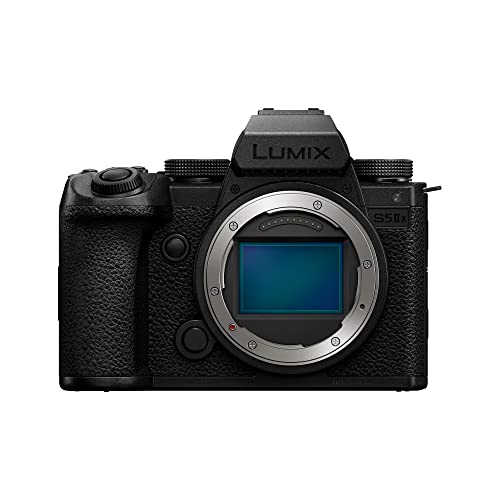
- Panasonic LUMIX S5IIX: check price on Amazon
- Sony Alpha 7 IV: see the current price on Amazon
- Canon EOS R6 Mark II: view this camera on Amazon
- DJI Osmo Pocket 3: check availability on Amazon
- GoPro HERO13 Black: see it on Amazon
- Sony ZV-1F: look at it on Amazon
The gap between a filmed song and a music video is intention. A filmed song documents; a music video interprets — it decides what the song looks like, and the camera is where that decision becomes physical. The best cameras for making music videos share a short list of virtues that have little to do with the spec-sheet headlines: they hold their image together in the mixed, coloured, often miserable light of real locations; they focus reliably on a performer who will not stand still for your convenience; they record long enough to capture the take where the band finally catches fire; and they produce files that survive the colour grade, because the grade is where a music video’s visual identity is actually authored.
Budgets in this genre stretch from a borrowed room and one lamp to a hired location with a small crew, and this guide respects the whole range. The six cameras below are ranked as production tools: the full-frame bodies that anchor serious shoots, the gimbal camera that has quietly become the indie sector’s favourite accomplice, the action camera that films where nothing else survives, and the compact that lets a solo artist shoot a real video alone this weekend.
Key Takeaways
- A music video camera is judged in bad light at midnight, not in a bright studio at noon — low-light integrity decides this list.
- The grade is the look: files with colour depth and dynamic range matter more than headline resolution.
- The S5IIX is the production pick; the Pocket 3 is the one-person-crew revolution.
- Playback discipline beats camera cleverness — the video is shot to a track, in sections, out of order.
- Rent the hero camera for the big shoot and own the camera that films everything else.
- One great location and one strong visual idea outperform any equipment list.
In this guide
Quick Picks
| Camera | Badge | Why it is here |
|---|---|---|
| Panasonic LUMIX S5IIX | Best production camera for music videos | Video-led full-frame body with the recording, monitoring and colour tools a real shoot runs on. |
| Sony Alpha 7 IV | Best all-round performer | Superb autofocus on moving singers, deep lens catalogue and low-light files that grade beautifully. |
| Canon EOS R6 Mark II | Best for Canon-colour productions | Beloved skin tones and dependable performance for directors who light faces first. |
| DJI Osmo Pocket 3 | Best one-person-crew camera | Gimbal movement and tracking that let a solo artist shoot a moving, cinematic video alone. |
| GoPro HERO13 Black | Best for chaos, water and impact shots | Mounts anywhere, survives anything, and films the angles that make a video feel dangerous. |
| Sony ZV-1F | Best starter video camera | A simple, flattering compact for bedroom singles and first videos that still look intentional. |
How did we judge cameras as music video tools?
We shot three test productions: a single-performer night exterior lit by practicals and one panel, a band rehearsal-room performance with movement and mixed colour temperatures, and a daylight narrative sequence with walking shots. Cameras were scored on whether skin survived coloured light without turning to plastic, whether autofocus held a singer crossing the frame in low light, whether the files took a strong grade without banding in the shadows, and how the camera behaved across a long shooting day — heat, battery rhythm, and the morale effect of a tool the crew trusts.
One test in particular predicted real-world success with embarrassing accuracy: the corrupted-plan drill. Midway through each test shoot we removed the planned key light, moved the performance outside the scheduled room, and asked the camera — and its operator — to recover a usable look in five minutes. Productions live inside that drill. The bodies that recovered fastest, with autofocus and exposure tools a stressed operator can drive by feel, are the bodies at the top of this list, and the correlation with their professional reputations is not a coincidence.
We weighted the director’s realities over the reviewer’s:
a music video is shot in fragments against playback, out of sequence, under time pressure, often with the artist’s patience as the scarcest resource on set. The camera that is ready when the performance ignites — and forgiving when the light is a neon sign and a prayer — outranks the camera with the finer laboratory numbers.

Panasonic LUMIX S5IIX — Best production camera for music videos
The S5IIX tops this list because it was specified by people who shoot video for a living and it shows in the places productions actually bleed: recording options that suit professional workflows, monitoring tools that let a director judge exposure in a dark room with confidence, and stabilisation that turns a walking shot into a glide without a rigging hour. Its full-frame image has the dynamic range a night shoot spends — neon in the highlights, faces in the murk, both surviving into the grade.
On the band test it behaved like a crew member rather than a diva: phase-detect autofocus tracked the singer through the drummer’s cymbal crashes of light, the body kept recording through long takes, and the files accepted a heavy teal-and-warm grade that would have torn lesser footage into banding. Directors building a repeatable production — an EP’s worth of videos across a season — value exactly this predictability: the camera’s look becomes the artist’s visual signature, consistent from the first single to the fifth.
It asks for a director’s literacy in return. The menus and monitoring tools repay an evening of study, and the L-mount lens shelf, while growing and shared across brands, asks for deliberate choices. For a production-minded artist or a filmmaker specialising in music, those are the right problems to have.
There is a temperament point worth making about this body: it rewards the director who arrives with a shot list and punishes, mildly but consistently, the one who wings it. Its tools — waveforms, recording modes, monitoring assists — are a professional’s checklist made physical. On a music video’s compressed schedule that checklist is not bureaucracy; it is the difference between discovering the exposure error in the monitor and discovering it in the edit, three weeks after the location has been handed back.
- Format: full-frame mirrorless, video-led X variant
- Stabilisation: strong in-body system for moving shots
- Autofocus: phase-detect subject tracking
- Workflow: professional recording and monitoring options
- Colour: files built to be graded hard
Strengths
- A complete production tool, not a stills camera moonlighting
- Night and mixed-light footage that survives the grade
- Stabilisation replaces rigging on small crews
Trade-offs
- Rewards study; casual users will underuse it
- Lens choices need planning in the L-mount ecosystem
- More machinery than a simple performance capture needs
Best for: artists and directors shooting videos as productions. Not suited for: anyone who wants the camera to make every decision.

Sony Alpha 7 IV — Best all-round performer
If the S5IIX is the specialist, the A7 IV is the camera that never gives a director a reason to worry. Its autofocus is the argument: a singer pacing, turning, dropping to their knees mid-chorus stays in focus with a reliability that frees the operator to compose rather than chase. In music video, where the best take is often the most physical one, focus you can forget is focus that saves the shoot.
The lens catalogue is the second argument. Fast primes for the intimate close-up, a standard zoom for the location day, specialist glass rentable in every city — the system lets a production design its look rather than accept one. Low-light files grade with grace, and the colour science gives skin a fighting chance under the genre’s beloved coloured gels. Bands graduating from filmed rehearsals to real videos most often land here, and their back catalogues show why: the footage looks like the budget was bigger than it was.
It is also the safest pair of hands for a hired director: rental houses stock it, crew know it, and its stills side covers the campaign photography in the same bag. Versatility is a production value.
Its presence on professional sets has a network effect a solo director should not underrate: assistants, rental houses and second shooters all speak this camera’s language fluently, so help is easy to hire and failures are easy to cover. A production built on the common tool inherits an ecosystem of competence, and on a one-day shoot that inheritance can be worth more than any single feature on a spec sheet.
- Format: full-frame mirrorless, extensive lens system
- Autofocus: class-leading tracking of moving performers
- Low light: files that hold together for grading
- Stills: campaign and artwork photography in the same body
- Availability: rental and crew familiarity everywhere
Strengths
- Focus reliability that liberates the operator
- A lens answer for every visual idea
- Doubles as the production’s stills camera
Trade-offs
- Video toolset a step behind the dedicated X model
- Full capability arrives with full system cost
- Menus reward configuration time before the shoot
Best for: bands and directors wanting one dependable flagship. Not suited for: micro-budget shoots where simplicity outranks ceiling.

Canon EOS R6 Mark II — Best for Canon-colour productions
Some directors light for faces before everything, and for them Canon’s rendering is a creative position, not a preference. The R6 Mark II carries that colour into a body with the speed and reliability a performance shoot needs: confident subject detection, files that treat skin under stage colour with unusual kindness, and a track record on real sets that lets a small crew stop thinking about the camera entirely.
Its music video niche is the performance-led piece — the live-session video, the one-room band film, the singer-songwriter’s intimate single — where the human in the frame is the entire visual argument and colour fidelity to their face is the production’s honour. Paired with a fast prime it makes the kind of footage that bookers and playlist editors read as professional at a glance.
Choose it when your visual identity is warmth and presence rather than grit and grade. It will also serve the artist’s photography needs — artwork, press shots — with the same colour signature, keeping a campaign visually coherent across every format.
Wedding and event filmmakers crossing into music work often bring this body with them, and the transfer is smoother than expected: the same instinct for faces, moments and unrepeatable light serves a band’s one-take chorus exactly as it served a first dance. If your hands already know Canon, let them keep their knowledge — in a genre shot at speed, muscle memory is a feature no rival can patch in.
- Format: full-frame mirrorless
- Colour: skin rendering with a devoted following
- Detection: face and eye tracking for performers
- Reliability: proven across long shooting days
- Stills: strong campaign photography in the same body
Strengths
- Faces survive coloured light with grace
- Dependable, familiar operation for small crews
- Coherent colour across video and stills
Trade-offs
- Video-specialist tools trail the S5IIX
- Heavy grades are less its home territory
- Rolling performance in fast pans needs care
Best for: performance-led videos where faces carry the film. Not suited for: directors whose look is built on aggressive grading.

DJI Osmo Pocket 3 — Best one-person-crew camera
The Pocket 3 changed who gets to make a music video. A solo artist with this camera can shoot a moving, tracking, genuinely cinematic performance piece entirely alone: set it down and it follows you; carry it and the gimbal irons your footsteps into a glide; its one-inch sensor keeps the image respectable in the evening light where solo shoots usually happen. The entire grammar of the one-person video — the walk-and-sing, the room-to-room single take — exists because cameras like this made it possible.
Professional shoots have adopted it as the accomplice camera: the impossible angle inside the drum kit, the smooth pass across the piano, the vertical cutdown shot natively rather than cropped. Its footage intercuts with full-frame material more convincingly than any pocket camera before it, provided the light is kind — which, on a planned shoot, it is.
Respect its terms: it is a fair-weather, careful-handling instrument, and long narrative days will want batteries and breaks. Within them, it gives a single creator the movement that used to require a crew of three, and that is a genuine shift in the genre’s economics.
Learn its movement vocabulary deliberately and it stops looking like a gadget: the slow push-in during a verse, the orbit reserved for the chorus’s peak, the stillness — gimbal locked, frame held — that makes the final shot land. Directors are remembered for restraint as much as for motion, and this little camera tempts its owners toward constant movement the way a new synth tempts a producer toward constant notes. Discipline is the upgrade that costs nothing.
- Format: gimbal camera with one-inch sensor
- Tracking: follows the performer automatically
- Movement: stabilised walking and orbiting shots
- Screen: rotating for vertical formats
- Role: solo main camera or production accomplice
Strengths
- A one-person crew with real camera movement
- Tracking solves the solo performer’s framing
- Intercuts surprisingly well with bigger cameras
Trade-offs
- Delicate mechanism around energetic sets
- Low-light ceiling below the full-frame bodies
- Long shoots need battery management
Best for: solo artists and small crews wanting movement. Not suited for: rough locations or all-day narrative shoots alone.

GoPro HERO13 Black — Best for chaos, water and impact shots
Every memorable music video has the shot that makes you ask how they filmed it, and disproportionately often the answer is a camera like this, mounted somewhere unreasonable. On the drum riser during the drop. Inside the pool party scene. On the guitar’s body looking up the neck. In the rain the director prayed for. The HERO13’s waterproof, impact-tolerant build and interchangeable lens mods make it the designated survivor of music video production — the camera whose loss would be annoying rather than catastrophic, and whose survival produces the footage the whole video gets remembered by.
Its wide, deep-focus image is a style as much as a specification: the distorted, immersive, too-close perspective that punk, electronic and hip-hop videos have used for decades to put the viewer inside the performance’s personal space. Modern colour and stabilisation have civilised the footage without taming that energy, and its slow-motion modes turn a cymbal hit or a hair-whip into a visual event.
No production should make it the only camera — dialogue-quiet scenes and shallow-focus beauty shots are other tools’ work — but a shoot without one is a shoot missing its exclamation marks.
Mounting is a craft discipline here, not an afterthought: a camera that shakes loose onto a stage mid-take is a hazard and a headline, so every mount gets a safety tether and a pull test, and drum-adjacent positions get checked after the first full-volume rehearsal, because vibration is patient. The shots this camera is famous for were all taken by people who respected the physics first and the daring second.
- Format: waterproof action camera
- Lenses: interchangeable mods for different looks
- Mounting: effectively anywhere, including instruments
- Video: high frame rates for slow-motion impacts
- Build: survives water, drops and stage chaos
Strengths
- Films the angles and conditions nothing else survives
- Slow motion turns impacts into visual hooks
- Cheap enough to risk, good enough to use
Trade-offs
- Wide deep-focus look cannot do shallow-focus beauty
- Small sensor struggles in true darkness
- Audio is a scratch track, never the master
Best for: energy shots, mounts, water and weather. Not suited for: carrying a whole video’s narrative alone.

Sony ZV-1F — Best starter video camera
The first music video most artists make is a performance in a room, and the ZV-1F is the honest tool for it: wide enough to frame a singer and a guitar in a bedroom, flattering to faces without a colourist, and simple enough that the artist’s attention stays on the performance where it belongs. Its footage will not be mistaken for a full-frame production, and it does not need to be — at the stage where songs are finding their audience, consistency of output beats cinematic ceiling, and this camera publishes weekly where a complex rig publishes eventually.
Its limitations teach the right lessons in the right order. The fixed wide lens forces composition with position and light — the foundational skills. The modest low-light reach forces the artist to light deliberately rather than spray and pray. Graduates of this school arrive at a full-frame body already knowing what they want it for, which is the only sane way to buy one.
Keep it when you upgrade, too: as the behind-the-scenes and vertical-content camera, it will keep earning its shelf space long after the flagship arrives.
One honest encouragement for the artist starting here: the history of the genre is on your side. Iconic videos were shot on camcorders, on borrowed film cameras, on phones — the audience has never once asked what a beloved video was shot on before deciding to love it. Shoot the song in front of you with the camera you can run confidently, and let the work, not the wishlist, set the upgrade date.
- Format: fixed-lens creator compact
- Framing: wide lens for small rooms
- Colour: flattering skin rendering without grading
- Operation: minimal setup between idea and take
- Video: 4K for platform-ready files
Strengths
- Publishes fast, looks intentional immediately
- Teaches composition and lighting fundamentals
- Lives on as a second camera after upgrading
Trade-offs
- Ceiling is real: night exteriors will strain it
- Fixed lens limits visual variety
- Not a multi-camera production’s anchor
Best for: first videos, bedroom singles and weekly content. Not suited for: productions with locations, crews and night shoots.
How does a music video shoot actually run?
Playback is the metronome of the entire production. The track plays aloud — or in the performer’s ear for quiet locations — and every take is performed to it, so the edit can cut any take against any other at the same bar. Shoot the song in sections: the full performance wide for safety, then closer passes for the verses, the chorus filmed until the energy peaks and one take beyond it, because the take after the peak is so often the keeper. Performers lip-sync and play-sync to their own recording, which feels like cheating for exactly one take and like professionalism ever after.
The shooting order deserves its own logic: film the hardest, highest-energy material while the band is fresh and the light is as planned, bank the safe wide performance early so the video exists in some form whatever happens, and leave the experimental shots — the HERO13 in the drum kit, the Pocket’s long orbit — for the schedule’s elastic end. Directors call this shooting the insurance first and the glory last, and it has saved more videos than any camera feature ever shipped.
Coverage is the insurance policy:
the wide, the close, the detail inserts — hands, instruments, the room’s telling objects — and the reaction shots a narrative needs. A director with coverage can rescue any edit; a director with one perfect angle and a corrupted card has a story for the pub. The cameras above were partly chosen for how their footage intercuts, because a music video is usually a multi-camera argument even when the cameras shot on different days.
What should performers wear, and how does the camera judge it?
Wardrobe is lighting you can put on a person, and cameras have opinions about it. Fine patterns — tight checks, narrow stripes, dense herringbone — can shimmer and crawl on video, an artefact called moiré that no grade removes; test the hero outfit on camera before the shoot day, in the shoot’s light, at the shoot’s distances. Black wardrobe against a dark location needs separation light or the performer becomes a floating face; white in hard light blows to featureless paper on all but the most forgiving sensors, which is one more reason the dynamic range of the full-frame picks is a creative tool rather than a number.
Colour is the wardrobe department’s real power. One deliberate colour — the red jacket in a desaturated world — gives the video its poster and its memory, and it should be chosen with the location’s palette open on the table. Skin sits at the centre of the calculation: whatever surrounds the face either flatters it or argues with it under the chosen grade, and the test footage, again, is where the argument gets settled cheaply. Bring the backup outfit. The video that survives a coffee spill on the hero jacket is the one whose director packed like a pessimist.
What lighting makes a music video look expensive?
Motivation and contrast. Expensive-looking videos light from sources the frame can explain — a window, a neon sign, a practical lamp — and let the rest of the frame fall toward darkness, because contrast is what money looks like on screen. Cheap-looking videos light everything evenly and brightly, like a corridor. The practical recipe for small crews: one strong key with a reason, colour in the background from practicals or a gelled second light, and haze if the location allows it, because haze makes light visible and visible light is the genre’s oldest glamour.
Colour temperature is the small crew’s secret weapon: rather than fighting a location’s mixed sources into neutrality, choose a side — embrace the tungsten warmth and cool the key, or drown the room in one gelled colour and let skin fight its way out with a clean source of its own. Audiences read a committed palette as style and a negotiated one as accident, and the cameras here differ mainly in how much of that commitment their files will carry into the grade.
Faces keep their own law inside the style:
whatever the concept, the singer’s eyes need catchlights and their skin needs one honest source, or the audience disconnects from the performance emotionally. The Canon and Sony bodies in this guide forgive coloured light on skin better than most, but forgiveness is a safety net, not a lighting plan.
How do you choose and dress a location that photographs like a budget?
Location scouting is where independent videos win or lose against funded ones, because a great space is the one production value that cannot be faked in post. Hunt for depth — rooms and streets that layer foreground, performer and background into separate planes — and for light that already does something interesting at the hour you can have the room. Industrial spaces, old halls, rooftops at dusk, a laundrette at midnight: the canon of music video locations is a list of places with texture and depth that cost permission and persistence rather than money.
Dress the location with subtraction first: remove everything that argues with the concept, then add back only what the frame needs — the practical lamp, the instrument cases, the one colour that rhymes with the wardrobe. Shoot test frames on the recce at the planned hour and study them for the frame’s thieves: exit signs, modern clutter in a period concept, the white wall that will drink your contrast. Every thief found on the recce is a thief that does not steal a take on the day.
Secure the unglamorous essentials while you are there: where the power is, where the neighbours are, when the light dies, and who to thank. Locations are relationships; the crew that leaves a place cleaner and quieter than promised gets invited back for the next single, and a band’s visual world is often built inside two or three beloved rooms.
How do you plan a video around one strong idea?
The videos that travel are built on a single visual sentence that can be said in one breath: the band performs underwater in a drained pool; the singer walks one continuous street from dawn to noon; the whole song is one unbroken take orbiting the drummer. Test your concept against the sentence test, then against the budget test — can the cameras you own, in the location you can get, actually shoot that sentence? The picks in this guide cover an unusual amount of conceptual territory between them precisely because their makers cover different physical possibilities: gimbal movement, underwater survival, night sensitivity, solo operation.
Hold the concept against the song’s own structure before falling in love with it: the visual idea should have somewhere to go at the bridge and something to become at the final chorus, because a video whose idea peaks at forty seconds has two minutes of apology left to shoot. The strongest concepts are engines, not images — they generate the next shot by their own logic — and a camera kit chosen for range, like the six here, exists to keep up with an engine once it starts.
Storyboard in stills, not drawings, if drawing is not your gift:
walk the location with a phone, photograph every intended frame, and assemble the film on a wall before the shoot day spends a penny. Gaps in the wall are gaps in the video, discovered at the price of a phone walk instead of a crew day.
Who does what on a small music video crew?
The minimum viable crew is a division of attention, not a headcount. One person owns the camera and nothing else — the moment the operator also owns playback, batteries and the schedule, the frame starts paying for it. A second person owns the track: playback, sync discipline, the take log that tells the edit which chorus was the great one. A third, when fortune allows, owns light and the location’s practical mercies — power, permission, the kettle. Bands filming themselves should assign these roles explicitly and rotate the misery jobs, because the unassigned task is the one that fails publicly at the worst take.
The director’s chair on a small shoot is mostly a voice: calling sections, protecting the performers’ energy, deciding when the chorus is truly captured rather than merely recorded. That voice should belong to whoever has the clearest picture of the finished video, and it should be obeyed on set even when — especially when — it belongs to the singer, with the camera operator empowered to veto only on grounds of physics. Shoots rarely fail for lack of talent; they fail for lack of a single deciding ear, and the role costs nothing to fill.
Where does the money show on screen in a music video budget?
Experienced producers spend in a ruthless order, and camera choice sits lower in it than beginners expect. First, the location: a distinctive place does more for a video’s memorability than any lens, and it works for free in every frame. Second, light: one strong source and the means to shape it. Third, time — the extra hour that lets the band’s energy peak on camera rather than in the car park afterwards. Fourth, the people: a second pair of competent hands outproduces a camera upgrade on any shoot day ever held. The camera itself comes fifth, which is why this guide’s mid-list picks punch so far above their cost on real productions.
Feed the crew before you feed the camera fund, and say so in the plan: a shoot that eats well forgives its director almost anything, including a second hour of choruses. Rental is the budget’s secret passage.
The hero body for the one big shoot — rented for a weekend with the exact lens the concept wants — plus an owned camera for everything else is the professional pattern, and it maps neatly onto this list: own the ZV-1F or the Pocket 3, rent the S5IIX or A7 IV when the production deserves it, and let the rental house carry the insurance and the maintenance. Artists who buy the flagship first often discover they have spent the location money on a sensor, and the video looks like it.
Keep a contingency, in money and in schedule. A card fails, a location’s power trips, the singer’s voice needs an hour. Productions are remembered by how their problems were absorbed, and the absorbing is budgeted or it is improvised — the audience can always tell which.
How do you direct performers who are musicians, not actors?
Most music video casts are the band, and directing them is a translation exercise: musical instructions land where cinematic ones bounce off. Ask for the energy of the third chorus rather than a bigger performance; ask the drummer to play like the encore, not to emote. Give each take one note, in tempo language, and protect the performers from the camera’s technical anxieties — focus hunts and card changes are the crew’s private weather, never the artist’s. The takes improve in proportion to how musical the set feels, which is why experienced music video directors run playback loud, keep the room’s vibe closer to a gig than a film set, and shoot the fun the band is actually having.
For narrative elements, cast the performance burden carefully: the singer carries the close-ups because the audience’s contract is with them, and narrative cutaways should be built from actions a musician can do truthfully — walking, waiting, driving, watching — rather than acted emotions. Simplicity in the story beats lets the song do the feeling, which is the division of labour the genre evolved for a reason.
Energy management is direction’s invisible half. A band’s fifth full-tilt chorus is a different animal from its first, and the director’s job is to spend the peak takes on the shots that need them — the wide, the hero close-up — while the technical experiments wait for the energy’s second wind. Feed people, schedule the breaks before the slump rather than after it, and never let the crew’s problem-solving become audible during a take’s playback. Morale is a production value with a frame rate.
Solo artists directing themselves face the mirror problem:
no eyes on the frame. The Pocket 3’s tracking and a monitor-fed mirrorless setup are the two honest solutions, and both reward rehearsal of the movement before the recording light comes on. Choreograph the camera and the body as one dance, in sections, and the solo video stops looking solo.
What does the colour grade actually do to a music video?
The grade is where footage becomes a look, and it deserves planning before the shoot rather than rescue after it. Decide the palette in pre-production — the references, the dominant colours, the skin’s place within them — and light the set toward that decision, because a grade can push footage but cannot repaint it. This is the practical reason the full-frame bodies top this list: their files hold highlight colour and shadow detail through aggressive looks, so the teal stays in the shadows without crawling, and the neon keeps its hue instead of clipping to white.
Shoot a test through the whole pipeline before the production day: one minute of footage, in the location’s light, graded to the reference and viewed on a phone. Every unpleasant surprise — the banding, the skin that goes waxy under the chosen look, the practical light that blooms — is cheaper by a factor of a crew day when discovered at the test. Directors who skip the test are not being spontaneous; they are scheduling the surprise for the most expensive possible moment.
Comparison Table
| Camera | Type | Production role | Signature strength |
|---|---|---|---|
| Panasonic LUMIX S5IIX | Full-frame, video-led | Main production camera | Grading-ready night footage |
| Sony Alpha 7 IV | Full-frame mirrorless | Main camera, all-round | Autofocus on moving singers |
| Canon EOS R6 Mark II | Full-frame mirrorless | Performance-led pieces | Skin under coloured light |
| DJI Osmo Pocket 3 | Gimbal camera | Solo shoots, B-camera | Movement and tracking alone |
| GoPro HERO13 Black | Action camera | Impact and mount shots | Survives anything, goes anywhere |
| Sony ZV-1F | Creator compact | First videos, weekly content | Speed from idea to publish |
How do frame rates and slow motion serve the song?
Slow motion is the music video’s italics: it emphasises, and overuse devalues it. The grammar that works is to reserve high frame rates for the moments the song itself underlines — the drop, the held note, the leap — where stretching time feels like the music’s own rhetoric rather than the editor showing off. The HERO13 and Pocket 3 in this guide shoot those rates natively, and the full-frame bodies cover the moderate slow-downs of performance work. Shoot the moment at speed with intent, because slow motion discovered accidentally in the edit is usually just a soft shot played slowly.
Shutter discipline keeps the motion honest: the conventional relationship between frame rate and shutter gives movement its natural blur, and breaking it deliberately — a fast shutter for staccato, strobing energy in dance and electronic pieces — is a look to choose in pre-production, not to stumble into. Test it on a rehearsal take; the difference between aggressive and broken is visible immediately and fixable only before the shoot.
How do you shoot at night and in clubs without the footage falling apart?
Night is the genre’s native light and its technical exam. The rules are few and stern. Expose for the faces and let the backgrounds go — a singer correctly exposed against darkness reads as cinema, while a singer lifted to match a bright background reads as a news report. Use the fastest lens you have and accept the shallow focus as the look, because it is. Keep the camera’s sensitivity as low as the light allows rather than as high as the camera permits, since the full-frame bodies here hold their colour together longest when they are not pushed to their ceilings.
Club and stage light adds motion to the problem: beams sweep, strobes argue with your shutter, colours cycle faster than white balance can follow. Set the balance manually to the room’s dominant source and let the rest of the palette dance around it — the audience reads that dance as atmosphere. Shoot the rehearsal or the support set as your test reel whenever the venue allows it; the main set is no place to discover that the haze machine turns your backlight into soup at the exact angle of your best shot.
And protect the performance’s sound contract: in live rooms the camera near the PA hears a different concert from the audience, so the master audio should come from the desk or a placed recorder, with the camera track kept, as ever, for sync. Night forgives grain; it never forgives a great performance married to a broken recording.
How do you shoot a live-session video that feels alive?
The live-session format — the band actually playing, filmed as it happens — has become a genre of its own, and its camera logic differs from the mimed production. Here the performance cannot be repeated for a closer angle, so cameras multiply or the operator must move with a musician’s instincts: anticipate the solo, be at the drummer before the fill, trust the stabilisation in the S5IIX or the Pocket’s gimbal to keep motion graceful. Audio becomes a recording session in its own right, and the camera’s sound is again merely the sync witness.
Rehearse the camera, not just the band. A session shoot benefits from one full song played purely for the operator — to learn where the solos live, which member the light loves, and where the drummer’s fills will demand the frame — before a single keeper is attempted. Musicians accept this instantly when it is framed as what it is: the camera is an instrument, and this is its soundcheck.
The aesthetic contract is honesty:
fewer cuts, longer takes, the room’s real acoustics and light admitted into the film. Audiences read that honesty as proof of musicianship, which is why session videos convert viewers into ticket buyers at a rate stylised videos envy. Film them with the bodies that behave under one-take pressure — the reliable autofocus of the A7 IV, the Canon’s kind faces, the action camera forgiven its wide view because it caught the moment the amp fell over and the band played on.
What mistakes sink first music videos?
Shooting the song straight through, in order, once, is the classic: the edit then has nothing to cut to and the video’s energy is hostage to the weakest section. Second is lighting the room instead of the performer — brightness everywhere, meaning nowhere. Third is neglecting playback discipline, so takes drift against the track and the sync unravels in the edit. Fourth is a concept that needs a crane, a rain machine and a cast of forty, attempted with a camera and a cousin: ambition is admirable, but the finished modest video beats the abandoned epic in every discography. And fifth is forgetting the vertical cutdown until after the shoot, then discovering the singer was framed at the frame’s edge all day.
What happens after the shoot: edit, versions and release?
The edit of a music video is a musical act: cut on the track’s skeleton — the downbeats, the fills, the breath before the chorus — and let the song’s dynamics conduct the cutting rate, sparse in the verses and denser as the arrangement climbs. Assemble the performance first, the spine of best takes, before touching the narrative material; a video whose performance core is weak cannot be rescued by its story, while a strong spine can carry a simple concept to greatness. Watch every cut with the sound off once, too — the images should still phrase like music.
Delivery is now a family of versions, and the shoot should have planned for all of them: the full horizontal master, the vertical cutdown whose framing was protected during filming, the fifteen-second hook for the feeds, the clean version without text for playlists and press, and captioned editions because a large share of first views are silent. Archive the project and the raw cards’ contents as the artist’s visual masters; storage is cheap, and a catalogue’s early videos become more valuable, never less, as the career compounds.
Release timing belongs to the campaign rather than the edit suite, but one craft rule survives every strategy: the thumbnail and the first three seconds are part of the video, shot and graded with the same care as the chorus. Choose them from real frames, at honest colour, and the audience that arrives will be the audience the video was made for.
Final Recommendation
Directors and serious artists should anchor productions on the S5IIX for its video-first completeness, or the A7 IV where autofocus and lens range lead the concept; Canon-colour performance pieces belong on the R6 Mark II. Every production, whatever its anchor, should carry the HERO13 for the shots that make people text the link to a friend. Solo artists: the Pocket 3 is your crew, and beginners should start on the ZV-1F and shoot the first video this month rather than the perfect one next year. The genre rewards the finished and the brave, in that order.
Frequently Asked Questions
How many cameras do I need for a music video?
One, used with coverage discipline, beats three used randomly. Most strong independent videos are one main camera shot across multiple passes, plus an action camera for inserts. Multi-camera simultaneous shooting earns its complexity mainly for live performances that cannot be repeated.
Should I shoot a music video in 4K or higher?
Shoot at the highest quality your workflow handles comfortably, because the crop freedom in the edit — reframing, stabilising, extracting the vertical cutdown — is worth more than the resolution itself. All the main bodies here provide that headroom.
Do performers really mime to playback?
Yes, almost universally, including live-session-style videos where the performance is genuinely played but still to the recorded track for sync. It is not fakery; it is how the edit gains the freedom to choose the best visual take for every bar.
What is the best first lens for music videos?
A fast standard zoom covers the most concepts per pound; a fast prime follows for the intimate and night work. Directors with one lens only should choose the zoom and light carefully — versatility is the first production value.
How long should a music video shoot take?
Plan one focused day for a performance-led video and two for anything with narrative or multiple locations, with the second day protected for the material the first day teaches you that you need. Performers’ energy is the schedule’s real currency: choruses shot in hour two outshine choruses shot in hour nine, so front-load the peaks and let the day descend into details and cutaways.
Can a solo artist make a real music video alone?
Demonstrably yes — the Pocket 3’s tracking and the ZV-1F’s simplicity exist for exactly this, and solo-made videos now anchor major campaigns. The constraints are time and angles, not legitimacy: plan sections, use playback, and let the concept embrace the one-person crew rather than disguise it.
A last piece of craft advice that outlives every camera on this page: finish the video you can finish this month. Discographies are built from released work, and the modest video that exists teaches the band, the director and the audience more than the masterpiece that remains a mood board. Choose the camera that removes your particular excuses — crew, light, money, nerve — and let the song have its picture.
Related Guides
Related reading: our guides to the best cameras for filming guitar performances, cameras for live streaming concerts and sessions and the best cameras for low-light video work.


