The best antennas for helium mining are the 915 MHz LoRa antennas that lift a hotspot signal above the roofs, because a Helium hotspot earns by witnessing other hotspots, and a good antenna with the right gain reaches hotspots that a stock antenna never sees. A helium mining antenna should match the 915 MHz band, carry the right gain for the location, and survive outdoors in rain and wind, and the antennas in this guide all state their gain, their frequency and their cable in the listing title. All six are 915 MHz antennas for Helium hotspots, and all six are sold as new listings.
An antenna for helium mining suits the hotspot owner who wants more witnesses and more rewards, and who has a hotspot stuck behind a window with a small stock antenna. The antennas in this guide cover the main choices, from the long-range RAIGEN 10dBi to the balanced RAIGEN 5.8dBi, and from the short Bingfu 3dBi to the directional SIGNALPLUS Yagi. All six work at 915 MHz with Helium hotspots; the Bingfu, SIGNALPLUS and gateway antennas include a cable, while the RAIGEN antennas are sold without a cable and need one bought separately.
The antennas in this guide cover the main buyers. The RAIGEN 10dBi is the long-range pick, the RAIGEN 8dBi is the balanced pick, the RAIGEN 5.8dBi is the city pick, the Bingfu 3dBi is the indoor pick, the SIGNALPLUS Yagi is the directional pick, and the 8dBi gateway antenna is the outdoor pick. All six are 915 MHz LoRa antennas, and all six state their gain, their length and their connector in the listing title.
This guide covers six best antennas for helium mining: three RAIGEN, one Bingfu, one SIGNALPLUS and one gateway antenna. All six are 915 MHz antennas for Helium hotspots, all six are omnidirectional or directional as stated, and all six state their gain and their length in the listing title. The comparison table below gives the short version, and the sections after it give the detail.
In this guide
Quick picks: best antennas for helium mining
| # | Product | Where to buy |
|---|---|---|
| 1 | RAIGEN Helium Miner 10dBi antenna | Check on Amazon |
| 2 | RAIGEN 8dBi LoRa antenna | Check on Amazon |
| 3 | RAIGEN Helium Miner 5.8dBi antenna | Check on Amazon |
| 4 | Bingfu 915MHz Helium antenna 3dBi | Check on Amazon |
| 5 | SIGNALPLUS Outdoor Yagi 915MHz antenna | Check on Amazon |
| 6 | 8dBi LoRa Gateway Antenna 915MHz | Check on Amazon |
How the picks were chosen for the best antennas for helium mining
Every antenna below started as a listing returned by the reviewstook.com product lookup, and every listing was checked the same way. First, the title had to name the exact brand and the exact model, because a RAIGEN 10dBi antenna is not a RAIGEN 8dBi antenna, and a Bingfu 3dBi is not a Bingfu 4dBi, and a buyer who orders the wrong model gets the wrong gain. Second, the title had to state 915 MHz, because a Helium hotspot in the US uses 915 MHz, and an antenna built for 868 MHz or for cellular bands will not work with it.
The antennas were also checked for the details that decide real mining use. The gain decides how far the signal reaches, and the antennas here range from 3dBi to 10dBi, so a buyer can choose between a wide nearby pattern and a long flat reach. The build decides whether the antenna survives outdoors, and the antennas here are fiberglass and waterproof, so rain and wind will not harm them. The cable and connector decide whether the antenna fits the hotspot, and the Bingfu, SIGNALPLUS and gateway antennas include a low-loss cable, while the RAIGEN antennas are sold without a cable and need one with an N-type connector bought separately.
One more check shaped the list: the antenna must be an antenna alone, not a magnetic base, not a hotspot miner, and not a cellular antenna. Listings for bases, for miners and for cellular antennas were left out, because a buyer searching for the best antennas for helium mining wants a 915 MHz antenna for a hotspot. The six antennas below are all 915 MHz LoRa antennas for Helium hotspots, with the brand, the gain, the frequency and the cable stated in the title.
What an antenna for helium mining is, and who should buy one
An antenna for helium mining is a 915 MHz LoRa antenna that replaces the small stock antenna on a Helium hotspot, and it is the antenna most hotspot owners should buy, because it lifts the signal above the roofs and reaches hotspots that the stock antenna never sees. A Helium hotspot earns by witnessing other hotspots, and a good antenna with the right gain witnesses more of them, so the rewards grow. A 915 MHz antenna with the right gain, mounted high and outdoors, is the single best upgrade for a hotspot.
An antenna for helium mining suits the hotspot owner who has a hotspot stuck behind a window with a small stock antenna, and who wants more witnesses and more rewards. It is the right choice when the hotspot sits low, when the neighbours are far, and when the owner can mount an antenna on a roof or a pole, because height and gain together decide the reach. It is not the right choice for a hotspot already on a tall roof with a good antenna, because the gain is already there, and it is not the right choice for a hotspot in a region that uses 868 MHz, because that band needs a different antenna.
The six antennas in this guide cover the main buyers. The long-range pick is for the rural owner with far neighbours, the balanced pick is for the suburban owner, the city pick is for the urban owner with close neighbours, the indoor pick is for the owner who cannot mount outdoors, the directional pick is for the owner with neighbours in one direction, and the outdoor pick is for the owner who wants a tough fiberglass antenna on a pole. All six are 915 MHz antennas, and all six are built for Helium hotspots.
An antenna for helium mining also suits an owner who plans to keep the hotspot for years, because a fiberglass antenna will survive rain, wind and sun, and a good cable will not lose the signal. A buyer should check the gain, the frequency and the connector in the title before buying, because they decide whether the antenna works with the hotspot. The right antenna is the one that fits the location, the hotspot and the roof.
What makes a good antenna for helium mining
Gain is the first test, and it decides how far the signal reaches. A high gain like 10dBi reaches far in a flat pattern, and it suits a rural owner with far neighbours, while a low gain like 3dBi reaches nearby in a wide pattern, and it suits a city owner with close neighbours. A buyer should check the gain in the title before buying, and should match it to the neighbours, because the wrong gain will miss them. The antennas here range from 3dBi to 10dBi, so a buyer can choose.
Frequency is the second test. The frequency decides whether the antenna works at all, and a Helium hotspot in the US uses 915 MHz, so the antenna must state 915 MHz in the title. An antenna built for 868 MHz or for cellular bands will not work with a US hotspot, and a buyer who orders the wrong band will get silence. The antennas here all state 915 MHz, so they work with US hotspots.
Build is the third test. The build decides whether the antenna survives outdoors, and a fiberglass antenna with a waterproof seal will last for years in rain and wind, while a thin plastic antenna will crack in the sun. A buyer should check the build in the title before buying, and should look for fiberglass and waterproof, because the antenna will live on a roof. The antennas here are fiberglass and waterproof, so they survive outdoors.
Cable and connector are the fourth test. The cable decides how much signal reaches the antenna, and a low-loss cable keeps the loss small, while a long thin cable eats the signal. The connector decides whether the antenna fits the hotspot, and a buyer should check the connector in the title, because an N-type connector needs an adapter for an SMA hotspot. The Bingfu, SIGNALPLUS and gateway antennas include a low-loss cable, while the RAIGEN antennas are sold without a cable, so a buyer should add a short low-loss cable.
Quick picks at a glance
| Antenna | Gain and band | Cable and mount | Best for |
|---|---|---|---|
| RAIGEN 10dBi | 10dBi, 915 MHz, 59in | Cable sold separately | Long-range pick |
| RAIGEN 8dBi | 8dBi, 915 MHz, 43.3in | Cable sold separately | Balanced pick |
| RAIGEN 5.8dBi | 5.8dBi, 915 MHz, 20in | Cable sold separately | City pick |
| Bingfu 3dBi | 3dBi, 915 MHz | 10ft cable included | Indoor pick |
| SIGNALPLUS Yagi | 10dBi, 915 MHz, directional | 16.5ft cable included | Directional pick |
| 8dBi Gateway Antenna | 8dBi, 915 MHz, omni | Bracket + cable included | Outdoor pick |
The best antennas for helium mining

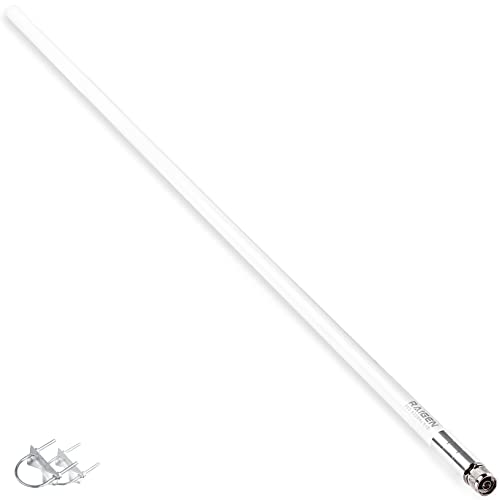
RAIGEN Helium Miner 10dBi Antenna LoRa 915 MHz 59in Outdoor Omni-Directional HNT Hotspot for MNTD, Nebra, RAK, Bobcat, Syncrob, and Sensecap [Cables Sold Separately] (10 dbi)
The RAIGEN Helium Miner 10dBi Antenna is the long-range pick, and it is the antenna for a rural hotspot owner with far neighbours. It is a RAIGEN Helium Miner 10dBi antenna for LoRa 915 MHz, 59 inches long, outdoor omnidirectional, for HNT hotspots including MNTD, Nebra, RAK, Bobcat, Syncrob and Sensecap, with cables sold separately. The 10dBi gain reaches far in a flat pattern, and the 59-inch fiberglass body stands tall above the roof.
The RAIGEN 10dBi suits a rural owner. The high gain covers the distance to far hotspots, the outdoor build survives rain and wind, and the omnidirectional pattern hears neighbours in all directions. A buyer should add a short low-loss cable, because the cable is sold separately.
Key specs:
- RAIGEN Helium Miner 10dBi Antenna
- LoRa 915 MHz, 59in long
- Outdoor omni-directional
- For MNTD, Nebra, RAK, Bobcat, Syncrob, Sensecap
- Cables sold separately
Strengths:
- 10dBi gain for long-range reach
- 59-inch fiberglass body for height
- Outdoor omnidirectional for all directions
Trade-offs:
- Cable sold separately, an extra purchase
- Flat pattern can miss nearby hotspots
- 59 inches needs a strong mount
The RAIGEN 10dBi fits a rural hotspot owner with far neighbours.
Best for: Long-range rural mining with far neighbours. Not suited for: A city owner with close neighbours, or a buyer who wants a cable included.
Check price on Amazon: RAIGEN Helium Miner 10dBi antenna

RAIGEN 8dBi LoRa 915 MHz Antenna 43.3in Indoor Omni-Directional LoRaWAN Helium Miner HNT Hotspot for MNTD, Nebra, RAK, Bobcat, Syncrob, and Sensecap [Cables Sold Separately] (8 dbi)
The RAIGEN 8dBi LoRa Antenna is the balanced pick, and it is the antenna for a suburban hotspot owner who wants reach and spread together. It is a RAIGEN 8dBi LoRa 915 MHz antenna, 43.3 inches long, indoor omnidirectional, for LoRaWAN Helium Miner HNT hotspots including MNTD, Nebra, RAK, Bobcat, Syncrob and Sensecap, with cables sold separately. The 8dBi gain reaches far enough for the suburbs while still spreading wide enough for nearby hotspots.
The RAIGEN 8dBi suits a suburban owner. The balanced gain covers the neighbourhood, the 43.3-inch length gives height, and the omnidirectional pattern hears neighbours in all directions. A buyer should add a short low-loss cable, because the cable is sold separately.
Key specs:
- RAIGEN 8dBi LoRa Antenna
- 915 MHz, 43.3in long
- Indoor omni-directional
- For MNTD, Nebra, RAK, Bobcat, Syncrob, Sensecap
- Cables sold separately
Strengths:
- 8dBi gain balances reach and spread
- 43.3-inch length for height
- Omnidirectional for all directions
Trade-offs:
- Cable sold separately, an extra purchase
- Indoor rating, needs shelter outdoors
- 8dBi can miss very far hotspots
The RAIGEN 8dBi fits a suburban hotspot owner with neighbours at a middle distance.
Best for: Balanced suburban mining. Not suited for: A rural owner with very far neighbours, or a buyer who wants a cable included.
Check price on Amazon: RAIGEN 8dBi LoRa antenna

RAIGEN Helium Miner 5.8dBi Antenna LoRa 915 MHz 20in Indoor Outdoor Omni-Directional HNT Hotspot for MNTD, Nebra, RAK, Bobcat, Syncrob, and Sensecap [Cables Sold Separately] (5.8 dbi)
The RAIGEN Helium Miner 5.8dBi Antenna is the city pick, and it is the antenna for an urban hotspot owner with close neighbours. It is a RAIGEN Helium Miner 5.8dBi antenna for LoRa 915 MHz, 20 inches long, indoor and outdoor omnidirectional, for HNT hotspots including MNTD, Nebra, RAK, Bobcat, Syncrob and Sensecap, with cables sold separately. The 5.8dBi gain spreads wide enough to reach hotspots above and below, and the short 20-inch body mounts easily.
The RAIGEN 5.8dBi suits a city owner. The wide pattern reaches nearby hotspots in all directions, the indoor and outdoor rating covers a window or a roof, and the short body is easy to mount. A buyer should add a short low-loss cable, because the cable is sold separately.
Key specs:
- RAIGEN Helium Miner 5.8dBi Antenna
- LoRa 915 MHz, 20in long
- Indoor outdoor omni-directional
- For MNTD, Nebra, RAK, Bobcat, Syncrob, Sensecap
- Cables sold separately
Strengths:
- 5.8dBi gain spreads wide for close neighbours
- Indoor and outdoor rating
- Short 20-inch body mounts easily
Trade-offs:
- Cable sold separately, an extra purchase
- 5.8dBi cannot reach far rural hotspots
- Short body gives less height
The RAIGEN 5.8dBi fits a city hotspot owner with close neighbours.
Best for: City mining with close neighbours. Not suited for: A rural owner with far neighbours, or a buyer who wants a cable included.
Check price on Amazon: RAIGEN Helium Miner 5.8dBi antenna

Bingfu 915MHz Helium HNT Lora Antenna 3dBi – 10ft ALSR240 Low Loss Cable – Compatible with Nebra Bobcat 300 Cal-Chip RAK V2 Syncrobit SenseCAP M1 Helium HNT Miner Hotspot Gateway
The Bingfu 915MHz Helium HNT Antenna is the indoor pick, and it is the antenna for an owner who cannot mount outdoors and wants a simple upgrade over the stock antenna. It is a Bingfu 915MHz Helium HNT LoRa antenna with 3dBi gain and a 10ft ALSR240 low loss cable, compatible with Nebra, Bobcat 300, Cal-Chip, RAK V2, Syncrobit and SenseCAP M1 Helium HNT miner hotspot gateways. The 3dBi gain spreads wide in all directions, and the included 10ft cable reaches the hotspot without an extra purchase.
The Bingfu 3dBi suits an indoor owner. The wide pattern reaches hotspots above and below, the low-loss cable keeps the signal strong, and the compatibility covers the common hotspots. It is the antenna for a buyer who wants a simple window upgrade.
Key specs:
- Bingfu 915MHz Helium HNT Antenna, 3dBi
- 10ft ALSR240 low loss cable included
- Compatible with Nebra, Bobcat 300, Cal-Chip, RAK V2, Syncrobit, SenseCAP M1
- Helium HNT miner hotspot gateway
Strengths:
- 10ft low-loss cable included
- Wide 3dBi pattern for close neighbours
- Compatible with the common hotspots
Trade-offs:
- 3dBi cannot reach far hotspots
- Short gain for a roof mount
- A basic antenna with no mount stated
The Bingfu 3dBi fits an owner who cannot mount outdoors.
Best for: Indoor window upgrades over the stock antenna. Not suited for: A rural owner with far neighbours, or a roof mount that needs height.
Check price on Amazon: Bingfu 915MHz Helium antenna 3dBi

SIGNALPLUS Outdoor Yagi 915mhz lora Antenna 10 dbi Helium Antenna for Lora Miner Bobcat RAK Nebra Sensecap+Low Loss Cable RG58 16.5ft
The SIGNALPLUS Outdoor Yagi Antenna is the directional pick, and it is the antenna for an owner with neighbours in one direction who wants the signal focused there. It is a SIGNALPLUS outdoor Yagi 915MHz LoRa antenna with 10 dbi gain, a Helium antenna for LoRa miners including Bobcat, RAK, Nebra and Sensecap, with a low loss RG58 cable of 16.5ft. The Yagi design focuses the power in one direction, and the included cable reaches the hotspot.
The SIGNALPLUS Yagi suits an owner with neighbours in one direction. The focused beam reaches far where it points, the outdoor build survives rain and wind, and the 16.5ft cable gives room to mount. A buyer should aim it carefully, because a Yagi that points the wrong way will miss the neighbours.
Key specs:
- SIGNALPLUS Outdoor Yagi Antenna, 10 dbi
- 915MHz LoRa, Helium antenna
- For Bobcat, RAK, Nebra, Sensecap miners
- Low loss RG58 cable 16.5ft included
- Outdoor directional
Strengths:
- 10 dbi directional gain for one direction
- 16.5ft low-loss cable included
- Outdoor build for a roof or pole
Trade-offs:
- Directional, so it must be aimed carefully
- Misses neighbours behind it
- A Yagi is bigger than an omni antenna
The SIGNALPLUS Yagi fits an owner with neighbours in one direction.
Best for: Directional mining toward far neighbours. Not suited for: An owner with neighbours all around, or who cannot aim the antenna.
Check price on Amazon: SIGNALPLUS Outdoor Yagi 915MHz antenna

8dBi LoRa Gateway Antenna 915MHz Omni-Directional Glass Fiber Waterproof Indoor Outdoor LoRaWAN Antenna with Mount Bracket RP-SMA SMA Connect Cable for RAK Nebra Bobcat Helium Hotspot HNT Miner
The 8dBi LoRa Gateway Antenna is the outdoor pick, and it is the antenna for an owner who wants a tough fiberglass antenna on a pole with everything included. It is an 8dBi LoRa gateway antenna at 915MHz, omnidirectional, glass fiber and waterproof, for indoor and outdoor LoRaWAN use, with a mount bracket and an RP-SMA SMA connect cable, for RAK, Nebra and Bobcat Helium hotspot HNT miners. The 8dBi gain balances reach and spread, and the mount bracket holds it to a pole.
The gateway antenna suits an owner who wants a complete outdoor setup. The fiberglass body survives rain and wind, the mount bracket fits a pole, and the included cable connects to the hotspot. It is the antenna for a buyer who wants to mount once and leave it.
Key specs:
- 8dBi LoRa Gateway Antenna, 915MHz
- Omni-directional, glass fiber, waterproof
- Indoor outdoor LoRaWAN
- Mount bracket included
- RP-SMA SMA connect cable, for RAK Nebra Bobcat Helium hotspots
Strengths:
- Fiberglass waterproof build for outdoors
- Mount bracket included for a pole
- 8dBi gain balances reach and spread
Trade-offs:
- No brand name stated in the title
- 8dBi can miss very far hotspots
- A gateway antenna with a plain look
The gateway antenna fits an owner who wants a tough outdoor antenna on a pole.
Best for: Outdoor pole mounting with everything included. Not suited for: A rural owner with very far neighbours, or a buyer who wants a named brand.
Check price on Amazon: 8dBi LoRa Gateway Antenna 915MHz
Buying guide for the best antennas for helium mining
Which gain fits the location
Start with the gain, because it decides how far the signal reaches and how wide the pattern is. A high gain like 10dBi reaches far in a flat pattern, and it suits a rural owner with far neighbours, because the signal travels flat and far. A low gain like 3dBi reaches nearby in a wide pattern, and it suits a city owner with close neighbours, because the signal spreads up and around buildings.
A buyer in the suburbs should choose a middle gain like 5.8dBi or 8dBi, because it balances reach and spread, and a buyer who is unsure should start with 5.8dBi, because it works in most places. Check the gain in the title before buying, because the gain decides the witnesses.
915 MHz or 868 MHz
A Helium hotspot in the US uses 915 MHz, and the antenna must state 915 MHz in the title, because an antenna built for 868 MHz will not work with it. A hotspot in Europe uses 868 MHz, and it needs a different antenna, so a buyer should check the region first. The antennas here all state 915 MHz, so they work with US hotspots.
A buyer who is unsure should check the hotspot listing, because it states the band. The band decides the antenna, and the antenna decides whether the hotspot hears anything. Check the frequency, because it is the purchase.
Outdoor or indoor mounting
An outdoor antenna on a roof or a pole reaches farthest, because height clears the roofs and the trees, and a buyer who can mount outdoors should do so. A fiberglass antenna with a waterproof seal will survive rain and wind, and a mount bracket will hold it to a pole. The antennas here are fiberglass and waterproof, so they suit a roof or a pole.
An indoor antenna suits an owner who cannot mount outdoors, because it still beats the stock antenna, and a buyer should place it near a window and as high as possible. A window blocks some signal, but height helps, and an indoor antenna near a high window will witness more than a stock antenna behind a desk. Check the mounting in the title, because it decides where the antenna can live.
Cable loss and connectors
Cable loss eats the signal, and a long thin cable can lose more than the antenna gains, so a buyer should keep the cable short and low-loss. The Bingfu antenna includes a 10ft low-loss cable and the SIGNALPLUS a 16.5ft cable, while the RAIGEN antennas are sold without a cable, so a buyer should add a short low-loss cable and check its length, because a cable longer than needed wastes signal. Use the shortest cable that reaches, because every metre costs signal.
The connector decides whether the antenna fits the hotspot, and a buyer should check it in the title, because an N-type connector needs an adapter for an SMA hotspot. Most Helium hotspots use an RP-SMA connector, and the antennas here include adapters or state the connector clearly. Check the connector, because it decides the fit.
Directional or omnidirectional
An omnidirectional antenna sends the signal in all directions, and it suits most owners, because the neighbours are all around. A directional Yagi antenna sends the signal in one direction, and it suits an owner with neighbours in one direction, because it focuses the power where it is needed. The antennas here are mostly omnidirectional, and one Yagi covers the directional case.
A buyer who chooses a Yagi should aim it carefully, because a Yagi that points the wrong way will miss the neighbours. Check the antenna type in the title before buying, because the type decides the pattern. An omnidirectional antenna is the safe choice, and a Yagi is the focused choice.
Using and caring for a helium mining antenna
Mount it high and clear
Mount the antenna as high as possible and clear of metal, because height clears the roofs and the trees, and metal nearby will block the signal. A pole on the roof is best, and a window is second best, because a high clear spot hears the most hotspots. A buyer should check the view from the antenna, because a clear horizon means more witnesses.
Keep the antenna away from metal roofs and large metal objects, because metal reflects the signal and creates dead spots. A fiberglass antenna on a non-metal pole will perform best, and a buyer should test the witnesses after mounting, because the count will show whether the spot is good.
Seal the connections against rain
Seal the cable connections against rain, because water in the connector will corrode it and kill the signal. Wrap the connections with waterproof tape, and point the cable down from the antenna, because water that runs down the cable will drip off instead of pooling. A buyer should check the seals once a year, because a seal that fails will cost witnesses.
Use a drip loop in the cable, because a loop lets water drip off before it reaches the hotspot. A dry connection lasts for years, and a wet one fails in months. A little tape keeps the signal strong.
Look after the antenna for the long term
Check the antenna once a year, because wind can loosen the mount and sun can crack a cheap build. Tighten the mount, check the cable for wear, and look for cracks in the fiberglass, because a cracked antenna will let water in. A fiberglass antenna will last for years when it is checked.
Keep the hotspot itself cool and dry, because heat and damp will harm it. A buyer who moves the hotspot should keep the antenna cable short, because a long cable loses signal. A little care keeps the hotspot earning.
Common mistakes when buying antennas for helium mining
Buying the wrong frequency
The most common mistake is buying the wrong frequency, because an antenna built for 868 MHz will not work with a US hotspot that uses 915 MHz, and the hotspot will hear nothing. A buyer should check that the title states 915 MHz, because the frequency is the purchase. The antennas here all state 915 MHz, so they work with US hotspots.
A buyer who is unsure should check the hotspot listing, because it states the band. The band decides the antenna, and the antenna decides whether the hotspot earns. Check the frequency first, because everything else follows.
Choosing too much gain for the city
The second mistake is choosing too much gain for the city, because a 10dBi antenna sends a flat pattern that flies over nearby hotspots, and a city owner with close neighbours will miss them. A buyer in the city should choose a low gain like 3dBi or 5.8dBi, because the wide pattern reaches the neighbours above and below. Check the gain against the neighbours, because the gain decides the witnesses.
A buyer who is unsure should start with 5.8dBi, because it works in most places, and should only move to 10dBi when the neighbours are far. The gain is the purchase, and the location decides it.
Mounting the antenna low or indoors
The third mistake is mounting the antenna low or indoors, because a low antenna sits behind roofs and walls, and a window blocks part of the signal. A buyer who can mount outdoors should do so, because height is the cheapest gain. A buyer who cannot mount outdoors should place the antenna near a high window, because height helps even indoors.
A buyer who leaves the stock antenna on the hotspot will witness few hotspots, because the stock antenna is short and weak. Mount the new antenna high, because height decides the reach.
Using a long lossy cable
The fourth mistake is using a long lossy cable, because a long thin cable can lose more signal than the antenna gains, and the hotspot will hear less than before. A buyer should use the shortest low-loss cable that reaches, and should check the cable in the title, because the cable decides how much signal survives. The Bingfu, SIGNALPLUS and gateway antennas include a low-loss cable, while the RAIGEN antennas are sold without a cable, so a buyer should add a short low-loss cable.
A buyer who needs a long run should use a thick low-loss cable, because a thin cable over a long run will eat the signal. Check the cable length and type, because the cable is part of the antenna.
Final recommendation
The best antenna for helium mining for most owners is the RAIGEN 8dBi antenna, because its balanced gain reaches far enough for the suburbs while still spreading wide enough for nearby hotspots, and its fiberglass build survives outdoors. An owner who wants one antenna for a typical neighbourhood should buy this one, because it witnesses well without missing the neighbours close by.
A rural owner with far neighbours should buy the RAIGEN 10dBi antenna, because its long flat reach covers the distance, and a city owner with close neighbours should buy the RAIGEN 5.8dBi antenna, because its wide pattern reaches the hotspots above and below. An owner who cannot mount outdoors should buy the Bingfu 3dBi antenna, because its short pattern suits a window, and an owner with neighbours in one direction should buy the SIGNALPLUS Yagi, because it focuses the power where it is needed. An owner who wants a tough outdoor antenna should buy the 8dBi gateway antenna, because its fiberglass build and mount bracket suit a pole.
Whichever antenna is chosen, check that the title states 915 MHz, match the gain to the neighbours, mount it high and clear, keep the cable short and low-loss, and seal the connections against rain, because an antenna bought well will witness more hotspots and earn more rewards for years.
Related reading on Reviewstook: see our guides to best indoor TV antennas, best long range TV antennas, TV antenna guide for more on this topic.
Frequently asked questions about antennas for helium mining
What gain antenna do I need for helium mining?
The gain needed depends on the neighbours, because a high gain like 10dBi reaches far in a flat pattern and suits a rural owner, while a low gain like 3dBi reaches nearby in a wide pattern and suits a city owner. A suburban owner should choose a middle gain like 5.8dBi or 8dBi, because it balances reach and spread. A buyer who is unsure should start with 5.8dBi, because it works in most places.
Does a Helium hotspot in the US use 915 MHz?
A Helium hotspot in the US uses 915 MHz, and the antenna must state 915 MHz in the title, because an antenna built for 868 MHz will not work with it. A hotspot in Europe uses 868 MHz, and it needs a different antenna. A buyer should check the hotspot listing for the band, because the band decides the antenna. The antennas in this guide all state 915 MHz.
Should I mount my helium antenna indoors or outdoors?
An outdoor antenna on a roof or a pole reaches farthest, because height clears the roofs and the trees, and a buyer who can mount outdoors should do so. An indoor antenna suits an owner who cannot mount outdoors, because it still beats the stock antenna, and it should be placed near a high window. A window blocks some signal, but height helps, and an indoor antenna near a high window will witness more than a stock antenna behind a desk.
How long should the antenna cable be?
The antenna cable should be as short as possible, because a long thin cable loses signal and can eat more than the antenna gains. A buyer should use the shortest low-loss cable that reaches, and should check the cable length in the title. The antennas in this guide include a low-loss cable, and a buyer who needs a long run should use a thick low-loss cable.
Will a bigger antenna always earn more?
A bigger antenna will not always earn more, because the gain must match the location, and a 10dBi antenna in a city will fly over nearby hotspots. Height matters as much as gain, because a high antenna clears the roofs, and a low antenna sits behind them. A buyer should match the gain to the neighbours and mount the antenna high, because those two together decide the witnesses.