This site is reader-supported, and when you buy through links on our pages we may earn an affiliate commission. That support keeps our phone guides independent, and it never decides which handsets earn a place in this roundup.
“Right now” is doing real work in this guide’s title. Android phones do not age in a straight line: a handset that was easy to recommend at launch can look very different eighteen months later, once its update clock has ticked down, its battery has settled into real-world patterns, and newer rivals have reset what buyers expect at its tier. Equally, some phones get better with time, as manufacturers polish camera processing and extend support promises through software updates. So this list is built around a simple rule — every phone here is a current, officially sold model you can walk out and buy today, judged on the state it is actually in now, not on the press release it launched with.
That framing matters because the Android market splits into two very different shopping problems. At the top, Samsung, Google, and OnePlus flagships trade blows on camera quality, display brightness, and AI features, and the honest differences between them are narrower than the marketing suggests. Lower down, the question is not which phone is fastest but which compromises are survivable: how many years of security patches remain, whether the screen is pleasant outdoors, and whether the camera still produces a photo you would share without apologising for it. A good recommendation has to answer both problems, and it has to be honest that a mid-range phone in 2026 is genuinely excellent for most people, most of the time.
Below are six picks that cover that realistic spread. There is a compact flagship for people who refuse to carry a slab, a camera-first flagship built around computational photography, a performance flagship that charges faster than anything else here, a larger Samsung that trades a little polish for a friendlier position in the range, a value champion that keeps the flagship camera experience at a mid-range tier, and a clean, understated Motorola for buyers who want the essentials done properly. Each pick is positioned by what it does well and who it suits, because the best Android phone right now is the one whose strengths line up with your habits — not the one with the longest spec sheet.
A note on how the six were chosen. This is not a ranking of the six most powerful Android phones, and it is not a list of everything worth buying — the very large Ultra-class flagships, for instance, are superb devices that most buyers neither need nor enjoy carrying, and they would crowd out the variety this guide exists to provide. Instead, each pick holds a distinct job: the compact flagship, the camera flagship, the performance flagship, the big-screen value Samsung, the all-round value champion, and the clean mid-range alternative. If two phones here seem to overlap, read their trade-offs closely, because the difference between them is the difference the buying decision actually turns on — size, zoom, charging, or support length. Prices are deliberately described in tiers rather than figures, since street pricing moves with promotions; use the “check price” prompts to see where each phone sits today.
Why timing changes the answer
Android release cycles are staggered through the year, and where a phone sits in its own cycle affects its value more than most spec comparisons admit. A flagship bought late in its cycle often carries a shorter remaining runway of major Android upgrades than a newer mid-range phone, even though it costs more. Samsung and Google both now promise seven years of OS and security updates on their flagship lines, which has quietly rewritten the maths: a phone bought today can realistically stay current, patched, and banking-app-safe well into the next decade. Phones from just a few generations ago, launched under two- or three-year promises, are already approaching the end of their supported lives.
Timing also shapes the second-hand and trade-in picture, but for new purchases the practical questions are simpler. Is this model the current generation, or a leftover that the manufacturer is quietly clearing? Has it already received the big Android version upgrade it was promised this year, or is it still waiting? And how does its remaining support window compare with rivals at the same tier? Every pick in this guide is a model whose support window still has years to run, which is precisely why some older, heavily discounted flagships you will see elsewhere did not make the cut — a cheap phone with eighteen months of patches left is not a bargain, it is a countdown.
There is one more timing trap worth naming: buying the outgoing model the week before its successor launches. Nothing here is in that position as of writing, but the general principle is to check whether a replacement has been announced before paying flagship money. Announcement season tends to cluster around the late summer and early autumn for Google, and the start of the year for Samsung’s main line, with OnePlus usually landing in between.
In this guide
The Android landscape, briefly
It helps to know what this list deliberately leaves out. Foldable phones — Samsung’s Flip and Fold lines, Google’s Pixel Fold family — have matured into genuinely usable devices, but they remain specialist purchases: pricier, more fragile, and bought by people who already know they want one. If that is you, treat them as a separate category with separate homework. At the other extreme, the sub-budget tier below these picks involves real sacrifices in update support and camera quality that most buyers regret within a year. The six phones here occupy the sensible core of the market, where every dollar buys something tangible.
Two shifts define Android right now. The first is the AI race: Google builds its Gemini assistant and features like Circle to Search into the Pixels at the system level, Samsung answers with Galaxy AI layered over One UI, and Motorola and OnePlus integrate Google’s tools more lightly. The honest summary is that the genuinely useful features — call screening, transcription, photo cleanup, smart replies — are present in some form on most of these phones, and none of them should be the sole reason you choose one handset over another. The second shift is quieter but more important: messaging between Android and iPhone has improved with RCS adoption, so the old green-bubble friction is a weaker reason than it used to be for families to standardise on one platform.
Safety connectivity is the third shift, and the one most buyers have not yet priced in. Emergency SOS features, crash detection, and — on the newest flagships — satellite messaging for reaching help beyond mobile coverage are moving from novelty to expectation. Google has led on the Pixel line, Samsung has been adding equivalent capabilities to its flagships, and the mid-range is following a step behind. For hikers, rural drivers, and anyone whose work takes them off the grid, these features are a legitimate reason to favour the newer flagships over a discounted older model whose hardware predates them.
What to look for in an Android phone
Software support is the spec that matters most
Of everything in this guide, the update policy deserves the closest read. A phone’s processor will feel fast for years; its battery can be replaced; but when security patches stop, the phone becomes a liability for banking, work email, and two-factor authentication. Samsung and Google have set the modern standard with seven years of combined OS upgrades and security patches on their flagship lines, and Google extends the same seven-year promise to its A-series value phones, which is a large part of why the Pixel 8a appears below. Motorola’s support windows are shorter — typically a couple of major OS upgrades with several years of security patches — and that gap is priced into its positioning. OnePlus sits in the middle, with four major upgrades and five years of security updates on the OnePlus 12. None of these policies is a secret, but they are rarely printed on the box, so treat them as a first-class buying criterion.
Camera quality is about processing, not megapixels
Every phone here carries a main camera sensor in the same broad class, and the megapixel counts tell you almost nothing useful. What separates them is processing: how the phone handles a backlit face, a dim restaurant, a child who will not sit still. Google’s Pixel line remains the reference for point-and-shoot reliability, producing balanced, shareable photos with almost no effort. Samsung leans warmer and more vivid, which flatters landscapes and food but can oversaturate skin tones. OnePlus has improved markedly, though its results still vary more between scenes. Telephoto is the other divider: the Galaxy S24 offers a proper 3x optical zoom, the Pixel 9 relies on a very good digital crop from its main sensor alongside its ultrawide, and the mid-range picks below largely do without dedicated zoom hardware. If you photograph concerts, sports, or wildlife from the stands, that difference is real; if you photograph people and meals, it barely matters.
Displays have converged — brightness is the battleground
All six phones use OLED panels with high refresh rates, so the old screen-quality arguments are mostly settled. What differs now is outdoor brightness, where the flagships pull clearly ahead, and size. The Galaxy S24’s 6.2-inch panel suits one-handed use in a way the 6.8-inch OnePlus 12 simply does not attempt. Variable refresh rates that drop to 1Hz on the flagships save battery during static reading, while the value picks use simpler 60–120Hz switching. If you read a lot outdoors or navigate in bright sun, flagship brightness is a genuine quality-of-life upgrade rather than a spec-sheet vanity.
Battery life and charging are two different virtues
Battery endurance across these phones ranges from comfortably-a-day to easily-two-days for lighter users, and raw capacity in milliamp-hours is a poor predictor because chip efficiency and screen behaviour matter as much. Charging philosophy splits the field more sharply. OnePlus’s wired charging can refill its phone at a pace that makes overnight charging optional — a short top-up while you make coffee genuinely changes the routine. Samsung and Google charge more conservatively, prioritising long-term battery health, and their wireless charging support (including magnetic alignment on the Pixel 9 through compatible cases, and standard Qi pads across the board) suits desk-and-nightstand habits. Decide which routine matches your life before deciding the phone.
Performance: how much chip do you actually need
Processor branding invites anxiety it does not deserve. Every phone in this guide is fast enough that app launches, scrolling, photography, and multitasking feel immediate, and none will leave you watching a loading spinner in daily life. The differences appear at the margins: sustained gaming over thirty minutes or more, where the OnePlus 12’s Snapdragon holds its frame rates longest and the Pixel’s Tensor warms and eases back; heavy video editing on the phone itself; and emulation or other hobbyist workloads. RAM follows the same pattern — the flagships carry more, which mainly buys smoother app-switching after days without a reboot. If your most demanding app is a maps program or a social feed, processor choice should be the last tiebreaker you consult, not the first.
Size and hand comfort are real specifications
Manufacturers list dimensions; your hand experiences them. The spread here runs from the 6.1-inch Pixel 8a and 6.2-inch Galaxy S24, both manageable one-handed for most adults, to the 6.82-inch OnePlus 12, which is a two-handed device for everyone. Weight matters as much as width — a phone used for reading in bed or one-handed on a train punishes bulk quickly. Curved screens, as on the OnePlus and Motorola, look dramatic and feel slim but can invite accidental edge touches and cost more to repair. If you can, hold the size class before buying; if you cannot, measure your current phone and compare honestly rather than assuming you will adapt.
Connectivity: 5G, Wi-Fi, and eSIM
All six phones support sub-6GHz 5G on the major US networks, and the flagships add the faster millimetre-wave bands in the cities where those exist — useful in stadiums and dense downtowns, irrelevant in most suburbs. Wi-Fi 7 appears on the newest flagships, Wi-Fi 6E on the rest, and in practice your home router will be the bottleneck long before the phone is. SIM arrangements vary more meaningfully: the Pixels and Galaxies sold in the US lean on eSIM (with the Galaxy line retaining a physical tray in most configurations), the OnePlus and Motorola keep physical nano-SIM slots alongside eSIM, and dual-SIM standby is available across the board for a work line or a travel data plan. International travellers should confirm band support for their destinations, but within North America and Europe every phone here connects without drama.
Build, water resistance, and the details
IP68 water resistance is standard on the flagships and the Pixel 8a (at IP67), and it is worth having: phones die from rain, sinks, and spilled drinks far more often than from drops onto concrete. Frame materials — aluminium on most, titanium only on larger Ultra-class devices not featured here — matter less than the quality of the glass and how slippery the back panel is in a dry hand. Storage deserves a thought too: none of these phones accepts a microSD card, so buy the capacity you will need in year three, not the one that fits this month’s photos. Finally, check band support if you travel or use a smaller carrier; all six picks cover the major US networks, but the Motorola and OnePlus are most often sold unlocked, while Samsung and Google models are available everywhere from carriers to big-box stores.
Quick comparison
| Phone | Position in range | Character | Best suited to |
|---|---|---|---|
| Samsung Galaxy S24 | Compact flagship | Polished all-rounder, proper telephoto, seven years of updates | Buyers who want flagship quality in a one-hand-friendly size |
| Google Pixel 9 | Camera flagship | Best point-and-shoot camera, clean software, long support | Photographers and Android purists |
| OnePlus 12 | Performance flagship | Very fast charging, big bright screen, strong battery | Power users who hate waiting for a charge |
| Samsung Galaxy S24 FE | Upper mid-range | Big Samsung screen and cameras at a friendlier tier | Samsung fans who want size without flagship pricing position |
| Google Pixel 8a | Value pick | Flagship-grade camera and seven years of updates | Most people, most of the time |
| Motorola Edge 2024 | Mid-range | Clean software, slim build, dependable essentials | Buyers who want simplicity and an understated design |
With the landscape mapped, here is each pick in detail — what it does well, where it compromises, and who should actually buy it.

Samsung Galaxy S24 — the compact flagship that gives up almost nothing
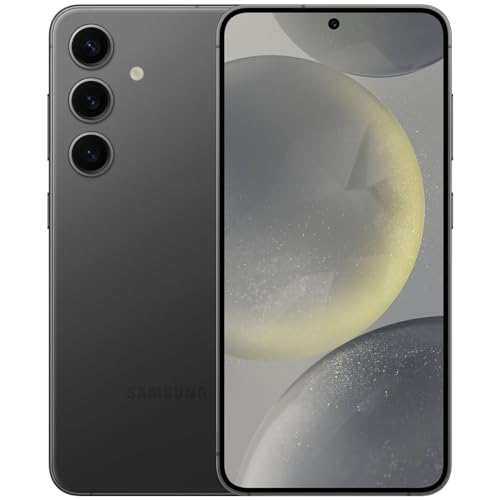
The Galaxy S24 is the rare small flagship that is not a compromise wearing a flagship badge. Its 6.2-inch display makes it genuinely usable one-handed — reachable corners, comfortable thumb-typing, no pinky-shelf gymnastics — yet inside it carries the same class of processor, the same seven-year update commitment, and a more complete camera system than most phones at any size. Samsung’s flat aluminium frame and matte glass back give it a tidy, jewellery-like finish, and at this size it disappears into a pocket in a way its larger siblings never will.
The camera system is the headline advantage over its direct rivals. Alongside the 50-megapixel main camera and an ultrawide, there is a proper 3x telephoto lens, and that optical reach changes what the phone can do: portraits without stepping into someone’s space, detail at a school play from the tenth row, compressed landscapes that a digital crop cannot fake. Samsung’s processing leans vivid, which makes travel and food photography look immediately shareable, though it can push reds and greens harder than the scene deserves. In low light it is strong, if a touch more aggressive with noise reduction than the Pixel 9, occasionally smoothing fine texture in faces.
Software is where expectations need calibrating. One UI is the most feature-dense Android skin here — split-screen multitasking, a full desktop mode through DeX, deep customisation — and Samsung’s Galaxy AI features, including live call translation and summarisation, are genuinely useful rather than decorative. The cost is duplication: two galleries, two assistants, two app stores, and a settings menu that rewards patience. Owners who invest a weekend in setting it up tend to love it; owners who do not will spend years ignoring half the phone. Battery life from the 4,000mAh cell is a solid day for most users, helped by the efficient display, and charging is mid-pack — reasonably quick wired, standard wireless, nothing that changes your routine.
Day to day, the S24’s details hold up well. The ultrasonic fingerprint reader is fast and works with a slightly damp thumb, the stereo speakers are clear enough for podcasts in a kitchen, and the display’s anti-reflective qualities make it the easiest screen here to read on a bright pavement. It is also the phone most likely to be offered with generous trade-in terms through Samsung’s own store and the major carriers, which regularly reshuffles its real-world value against the rest of this list.
Strengths
- True 3x optical telephoto in a compact body — unique at this size
- Seven years of OS and security updates, matching the best in the industry
- Bright, efficient display that stays readable in direct sun
- DeX desktop mode and the deepest feature set of any phone here
Trade-offs
- One UI duplicates many Google apps and takes effort to tame
- Charging speeds trail the OnePlus 12 by a wide margin
- Base storage is adequate rather than generous, with no expansion
Who it suits: buyers who want a flagship that fits a normal hand and a normal pocket, photographers who will actually use a telephoto, and anyone planning to keep a phone for five years or more. If you mostly want the camera to think for you, the Pixel 9 below is the easier recommendation. For the full Samsung experience in its most liveable size, check price on Amazon.
Availability note: the current listing for this pick is a renewed unit, professionally inspected and restored rather than factory-new.

Google Pixel 9 — the camera that thinks, on the cleanest Android
The Pixel 9 is the phone for people who take photographs the way most people actually take them: quickly, in imperfect light, of subjects who are moving, with no intention of editing afterwards. Google’s computational photography remains the most reliable in the business at producing a balanced, detailed, correctly exposed image from a single press of the shutter, and the Pixel 9’s 50-megapixel main camera paired with an upgraded ultrawide — which now handles macro work too — covers the scenes that matter. Skin tones are rendered with unusual care across a range of complexions, and Night Sight still turns dim restaurants and evening streets into photographs rather than evidence.
What the Pixel 9 does not have is a dedicated telephoto lens; that is reserved for the Pro tier. Its 2x crop from the main sensor is genuinely good, helped by high-resolution capture, and casual zoom shots hold up well on a phone screen. Push further, though, and the Galaxy S24’s optical lens pulls ahead clearly. This is the one structural compromise in an otherwise flagship-grade package, and whether it matters depends entirely on how often you photograph things you cannot walk closer to.
Software is the other half of the appeal. The Pixel runs Android as Google designs it: no duplicate apps, no pre-installed clutter, and features that feel considered rather than accumulated — Call Screen quietly interrogating spam callers, Hold For Me waiting through hold music, and recorder transcription that journalists and students swear by. Google’s Gemini-powered tools are woven in with a lighter touch than Samsung’s equivalent suite. The Tensor G4 processor prioritises these AI workloads over raw gaming muscle; sustained heavy gaming is where it runs warmest and where the OnePlus 12 is simply stronger. In exchange, the Pixel 9 matches Samsung’s seven years of OS and security updates, and receives new Android versions first. Battery life is a dependable full day, charging is unhurried by flagship standards, and the polished, pebble-like design with its pill-shaped camera bar is the most distinctive here.
Video deserves a specific mention, because it is where Pixels historically lagged and have now largely caught up. The Pixel 9 shoots stable, well-exposed 4K video with reliable autofocus, and Google’s cloud-assisted Video Boost can rescue genuinely dark footage — a school concert, a birthday cake in a dim room — in a way rivals do not offer. The front camera’s autofocus also makes it the strongest here for video calls and front-facing vlogging, small things that add up over years of ownership.
Strengths
- The most reliable point-and-shoot camera on any phone, in any light
- Clean software with genuinely useful call and transcription features
- Seven years of updates and first access to new Android versions
- Excellent ultrawide that doubles as a capable macro camera
Trade-offs
- No dedicated telephoto lens — zoom beyond 2x relies on cropping
- Tensor G4 trails rivals for sustained gaming performance
- Charging is slower than Samsung’s and far slower than OnePlus’s
Who it suits: parents, travellers, and anyone whose camera roll is their memory — people who want the photo to just work. It is also the natural home for Android purists and spam-call sufferers. If optical zoom or marathon gaming sessions rank higher, look elsewhere in this list; for the smartest camera and the calmest software, check price on Amazon.
Worth knowing: the listing linked here is renewed stock, a pre-owned unit checked and restored to full working order.

OnePlus 12 — the performance flagship that refuels in minutes
The OnePlus 12 is built around a single liberating idea: charging anxiety is optional. Its wired charging is fast enough that the overnight plug-in stops being a ritual — a phone at twenty percent in the morning can be effectively full by the time you have showered and dressed, and even a few minutes on the cable buys hours of use. That one trait reshapes ownership more than most camera comparisons do. It also restores fast wireless charging, which OnePlus skipped for a generation, so the phone no longer asks you to choose between its party trick and a charging pad.
Around that battery — a large cell that comfortably delivers a day and a half to many users — sits a properly flagship device. The 6.82-inch display is big, bright, and fluid, with a clever trick of remaining responsive to wet fingers, which anyone caught in rain with a navigation app will appreciate. The Snapdragon 8 Gen 3 processor is the strongest here for sustained gaming, holding frame rates in long sessions where the Pixel’s Tensor throttles earlier. This is a large, curved-screen phone, though, and there is no smaller option: if the Galaxy S24 is a jacket-pocket phone, the OnePlus 12 is a two-handed commitment.
The Hasselblad-branded camera system is better than OnePlus’s reputation suggests — a strong main sensor, a capable periscope telephoto with 3x optical zoom, and colour tuning that has matured into something natural rather than merely punchy. It still lacks the Pixel’s consistency in tricky mixed light, and moving subjects in dim rooms produce more misses. OxygenOS is fast and comparatively clean, though OnePlus’s update promise — four major OS upgrades and five years of security patches — is a clear step behind Samsung and Google, which matters on a phone positioned to be kept. Water resistance is rated IP65 rather than the full IP68 of its rivals: fine for rain and splashes, not rated for a dunk in the sink.
Small hardware pleasures survive here that others have abandoned. The three-stage alert slider on the side flips the phone between ring, vibrate, and silent without waking the screen — once you have lived with it, every other phone feels slightly unfinished. There is even an infrared blaster for controlling a television or air conditioner. The in-display fingerprint reader is among the fastest here, and the haptics are tight and crisp, giving the interface a mechanical solidity that matches the performance.
Strengths
- Charging so fast it changes your routine — minutes instead of hours
- Large, bright display that works with wet fingers
- Top-tier gaming performance with a big two-day-leaning battery
- Periscope telephoto gives real optical reach
Trade-offs
- Shorter update commitment than Samsung or Google flagships
- IP65 rating trails the IP68 standard set by rivals
- Large curved screen only — no compact alternative
Who it suits: heavy users, mobile gamers, frequent travellers, and anyone whose phone regularly dies before they do. If you keep phones for six or seven years, the shorter support window is a real consideration; if you upgrade on a three- or four-year rhythm and value speed in every sense, check price on Amazon.
Quick note: this pick is currently sold as a renewed model, inspected and refurbished through the seller’s renewal program.

Samsung Galaxy S24 FE — the big Samsung experience at a friendlier tier
The FE line exists to answer a specific buyer: someone who wants the Samsung flagship experience — the big screen, the camera system, the software features, the seven-year support — but cannot justify flagship-tier spending. The Galaxy S24 FE delivers that brief faithfully. Its 6.7-inch display matches the size of Samsung’s Plus models, the camera system keeps a proper telephoto (a rarity below flagship level), and it carries the same update commitment as the S24: seven years of OS upgrades and security patches, which at this tier is close to unmatched.
In the hand, the compromises are about materials and refinement rather than capability. The frame and finish feel a step less jewellery-like than the S24, the bezels are slightly more visible, and the Exynos processor Samsung fits in most regions is a fraction behind the flagship silicon in sustained performance, though in daily use — messaging, browsing, photography, streaming — the difference is something you have to hunt for with benchmarks rather than something you feel. Gaming is perfectly respectable; only long, maxed-out sessions reveal the gap.
The camera trio is the FE’s strongest argument. A 50-megapixel main camera, an ultrawide, and a 3x telephoto mean the same shooting flexibility as the flagship in most daylight and indoor conditions, with Samsung’s vivid processing intact. Low-light results are a half-step behind the S24, and the front camera is less impressive for video calls in dim rooms, but the gap is smaller than the tier gap suggests. Battery life benefits from the large body — a full day is easy, lighter users will stretch further — and it keeps wireless charging and IP68 water resistance, two features value phones often quietly drop. One UI’s feature depth and duplication come along unchanged, for better and worse.
The FE also plugs into Samsung’s wider ecosystem without friction — Galaxy Watches and Buds pair in seconds, and features like call-and-text continuity across Samsung tablets work exactly as they do on the flagships. For households already partly Samsung, that continuity is a real argument. It is also a sensible family phone: large screen for shared video, durable-enough build, and a support window that will comfortably see a teenager from first phone to graduation.
Strengths
- Large 6.7-inch screen with a real 3x telephoto camera
- Same seven-year update commitment as Samsung’s flagships
- Keeps IP68 water resistance and wireless charging
- Strong battery life from the bigger body
Trade-offs
- Materials and bezels feel a step below the true flagships
- Processor trails flagship silicon in sustained gaming
- Nearly as large as the Plus models — not for small-phone fans
Who it suits: Samsung loyalists who want the big screen and long support without paying the flagship premium, and media-heavy users who value display size over pocketability. If the smaller S24 is within reach and you prefer compact phones, it is the more refined object; if size and value lead your list, check price on Amazon.
One detail to flag: the current listing is a renewed version, professionally restored and covered by the renewed program’s guarantee.

Google Pixel 8a — the value pick that keeps the flagship camera brain
The Pixel 8a is the easiest phone in this guide to recommend, because it keeps the two things that matter most — camera intelligence and software longevity — and trims almost everything else with good judgement. It uses the same Tensor G3 generation of Google silicon as the previous flagship line, drives the same camera software that makes Pixels famous, and carries a seven-year update commitment that embarrasses phones costing far more. For the buyer who asks “what should I just buy?”, this is the answer most of the time.
Photography is the headline. The 64-megapixel main camera and 13-megapixel ultrawide do not match the Pixel 9’s hardware, but Google’s processing closes most of the distance: the same reliable exposure, the same natural skin tones, the same Night Sight confidence after dark. Side by side, the Pixel 9 resolves a little more detail and handles extreme contrast a little more gracefully; in the camera roll of a normal week, most people would not sort the photos correctly. There is no telephoto, and digital zoom softens quickly, so this is a camera for people and places, not for the far end of a football pitch.
The savings show up in the body and the charging speeds. The frame is plastic rather than metal — pleasant, warm in the hand, and arguably more drop-forgiving — the bezels are chunkier, and water resistance is IP67 rather than IP68, which still covers rain and accidents. The 6.1-inch OLED screen runs at up to 120Hz and is bright enough outdoors, though not flagship bright. Wired charging is slow by modern standards, and wireless charging is slower still, so the 8a suits an overnight-charging routine rather than a top-up lifestyle. Battery life itself is a dependable day. What you never feel is that the phone is slow or unsupported: it is quick, clean, and patched for years, which is the correct order of priorities at this tier.
Google also includes safety features that used to be flagship exclusives: car crash detection that can call emergency services after a severe impact, and crisis alerts woven into the system. The 8a supports both a physical SIM and eSIM, making it easy to add a travel data plan, and its wireless charging — slow, but present — is something several similarly positioned rivals still omit. As a first phone for a teenager or a dependable handset for a parent, its combination of camera, safety tools, and seven years of patches is unmatched at its tier.
Strengths
- Pixel camera experience and processing at a mid-range position
- Seven years of OS and security updates — best in class at this tier
- Compact 6.1-inch size with a bright 120Hz OLED screen
- Clean software, first in line for Android updates
Trade-offs
- Slow wired and wireless charging by current standards
- Plastic frame and chunkier bezels than the flagships
- No telephoto camera; digital zoom softens quickly
Who it suits: students, parents buying for family members, and anyone who keeps a phone until it dies and wants it supported the whole way. It is the default recommendation for most buyers; only zoom photographers, fast-charging devotees, and heavy gamers need to look further up this list. To see the current deal, check price on Amazon.
Note on availability: this model is presently listed in renewed condition, not as brand-new factory stock.

Motorola Edge 2024 — clean software and quiet competence in the mid-range
Motorola’s Edge 2024 takes a different route through the mid-range: instead of chasing camera headlines, it focuses on how the phone feels and behaves every day. It is slim and light with a softly curved 6.6-inch pOLED display, a vegan-leather-style back on some finishes that grips rather than slips, and software that stays close to stock Android with a handful of genuinely handy additions — the double-chop to fire the torch and the wrist-twist to open the camera are the kind of gestures owners actually keep using years later.
Performance from its Snapdragon 7s Gen 2 processor is tuned for the mainstream: apps open promptly, scrolling is smooth at the display’s high refresh rate, and casual games run happily, while demanding 3D titles need their settings trimmed. That is the honest mid-range bargain, and the Edge makes it without fuss. Battery life is a strength — the combination of an efficient chip and a sensibly sized cell routinely stretches past a day, and Motorola’s TurboPower wired charging is brisk, noticeably quicker than the Pixel 8a’s. There is no wireless charging, which is the clearest single omission.
The camera system, a 50-megapixel main with optical stabilisation plus an ultrawide that handles macro shots, is competent rather than class-leading. Daylight photos are clean and pleasing; low-light results are acceptable without matching Google’s processing wizardry, and video stabilisation is a step behind the flagships. The bigger caveat is longevity: Motorola’s update policy for this tier — a couple of major OS upgrades and a few years of security patches — is the shortest in this guide, and the phone’s IP68 rating, unusual and welcome at this level, does not offset a support clock that runs down years earlier than the Pixel 8a’s. Buy it for what it is now, not for what it will become.
The everyday checklist is otherwise complete: NFC for tap-to-pay, an under-display fingerprint reader that is quick and consistent, dual SIM support through nano-SIM and eSIM for a work line or travel plan, and stereo speakers that handle video and calls without strain. Motorola’s software adds almost nothing you need to learn, which makes the Edge an easy hand-me-down or first smartphone — set it up once, and it stays out of the way.
Strengths
- Slim, light design with a grippy finish and IP68 rating
- Near-stock Android with useful gesture shortcuts
- Strong battery life and fast wired charging
- Smooth high-refresh pOLED display
Trade-offs
- Shortest software support window of any phone here
- No wireless charging
- Camera is competent rather than competitive with Pixel processing
Who it suits: buyers who value a slim phone, clean software, and strong battery life over camera bragging rights, and who tend to upgrade every two to three years anyway — on that rhythm, the shorter support window never bites. If you keep phones longer, the Pixel 8a is the safer home for your money. For a straightforward, pleasant mid-range phone, check price on Amazon.
Buying note: the linked listing is a renewed unit that has passed professional inspection before being offered for resale.
The ecosystem question: watches, buds, and chargers
A phone no longer lives alone, and the accessories you already own should influence — though not dictate — the choice. Samsung’s Galaxy Watch and Galaxy Buds integrate most deeply with the Galaxy S24 and S24 FE, including health features that only unlock inside Samsung’s own apps. Google’s Pixel Watch and Pixel Buds pair most gracefully with the Pixel 9 and 8a, and features like the Watch’s phone-unlock work across the Pixel family. OnePlus and Motorola accessories are more loosely coupled, which cuts both ways: less synergy, but also less lock-in, and both phones work perfectly well with third-party watches and earbuds. If you are deeply invested in one brand’s wearables, staying in that family is rational; if you are starting fresh, buy the phone first and let accessories follow.
Budget for the unglamorous extras whichever phone you choose. None of these handsets ships with a charging brick in the box, and the fast-charging claims — particularly OnePlus’s — assume the manufacturer’s own adapter and cable, so factor that purchase in. A case is close to mandatory on the glass-backed flagships; the matte finishes here resist fingerprints but not gravity. Screen protectors remain cheap insurance, and a decent wireless charging pad by the bed makes the slower-charging phones, especially the Pixel 8a, feel less compromised than their spec sheets suggest.
How these phones actually differ day to day
Specifications flatten differences that daily life exaggerates, so it is worth translating the list into routines. If your phone is primarily a camera that also makes calls, the Pixel 9 and Pixel 8a separate themselves — not because their sensors are exotic, but because the gap between pressing the shutter and getting a good photo is the shortest there. If your phone is a work tool — calls, documents, multitasking, the occasional desktop monitor — the Galaxy S24’s DeX mode and feature depth earn their complexity, and the S24 FE extends that to a bigger canvas. If your phone is a games console and media screen that happens to ring, the OnePlus 12’s display, processor, and charging speed form a package the others do not attempt to match. And if your phone is simply an appliance that should work, stay patched, and not demand attention, the Pixel 8a’s combination of price position and seven-year support is quietly unbeatable.
Two practical checks before buying anything on this page. First, storage: none of these phones takes a memory card, and photos, offline video, and game installs grow faster than most people predict — if you are anywhere near full on your current phone, buy the next storage tier up. Second, carrier and purchase route: all six are sold unlocked, and the unlocked route keeps you free of carrier bloatware and lets you move networks; Samsung and Google models additionally appear in carrier stores if you prefer monthly billing. Trade-in values on recent flagships can be surprisingly strong during launch windows, which occasionally makes the S24 cheaper to own than the FE over two years — worth an evening of arithmetic before deciding the FE is automatically the value play.
Longevity deserves one final word, because it quietly determines what a phone costs per year. A flagship-tier phone with seven years of patches, bought at a sensible moment and kept for five years, often works out cheaper annually than a bargain phone replaced every two years — and it generates less e-waste and less setup fatigue along the way. That maths only holds if the battery is treated reasonably: every phone here will lose some capacity over years, and a mid-life battery replacement is a normal, worthwhile service rather than an admission of defeat. The picks with the longest support windows — the two Galaxies and the two Pixels — are the ones where that long-ownership strategy works best.
best android phones for seniors
When to buy, and how the timing affects value
Android pricing follows a predictable rhythm, and a little patience is usually rewarded. Samsung’s main line launches early in the year, Google’s flagships arrive in late summer, and the A-series value models land in spring; in each case, the months after launch bring promotional periods — holiday sales, carrier trade-in events, back-to-school offers — where the effective cost of ownership drops meaningfully. The FE and A-series models exist precisely to hold the value position once the flagships have had their launch moment, so they are rarely bad purchases at any point in the year.
Two cautions are worth more than any discount. First, carrier deals that advertise a phone as free almost always mean bill credits spread over two or three years, which is a contract by another name — fine if you were staying anyway, expensive if you were not. Second, when a successor is announced, the outgoing model usually remains on sale briefly at a reduced tier; that can be a smart buy for a flagship with a long support window, because the seven-year clock started at its launch, not at your purchase. A Galaxy S24 bought after its successor arrives still carries most of its update runway, which is more than can be said for a brand-new budget phone with a two-year policy.
The previous-generation question deserves honesty too. When a new model launches, last year’s version often remains an excellent phone — the Galaxy S23 and Pixel 8 families are still capable devices with years of support left. They are not in this guide because “right now” means the current, fully supported line-up that retailers stock as new, and because stock of outgoing models becomes patchy quickly. If you find one new, sealed, and meaningfully below the current model’s tier, the arithmetic can favour it; just count its remaining update years from its original launch date, not from the day you unbox it.
Frequently asked questions
How long will these phones keep getting updates?
The Samsung Galaxy S24, S24 FE, Google Pixel 9, and Pixel 8a all carry seven-year commitments covering major Android upgrades and security patches, counted from launch. The OnePlus 12 promises four major upgrades and five years of security patches. The Motorola Edge 2024 has the shortest window, with a couple of major upgrades and several years of security patches. For buyers who keep phones longest, the seven-year group is the safest choice.
Which of these has the best camera?
For point-and-shoot stills, the Pixel 9 is the most reliable — it produces the most consistently balanced photos with the least effort, especially of people and in low light. The Galaxy S24 is the better tool if you use zoom, thanks to its real 3x telephoto lens. The Pixel 8a gets remarkably close to the Pixel 9 for everyday scenes and is the best camera at its tier by a comfortable margin.
Is a mid-range phone like the Pixel 8a or Edge 2024 enough, or do I need a flagship?
For messaging, browsing, photography, navigation, and streaming, the mid-range picks here are genuinely enough — the experience gap in daily tasks is small. Flagships earn their position with brighter screens, telephoto cameras, faster charging (in OnePlus’s case), better gaming headroom, and more premium materials. Buy the flagship for those specific traits, not from a general fear that mid-range means slow; it no longer does.
Do any of these phones have expandable storage or a headphone jack?
No — none of the six offers a microSD slot or a 3.5mm headphone jack, which is now standard across these tiers. Choose your internal storage tier carefully at purchase, and plan on USB-C or Bluetooth audio. If expandable storage is non-negotiable, you will need to look at more budget-focused lines outside this roundup.
On audio, the practical adjustment is smaller than it first appears. A compact USB-C-to-3.5mm adapter restores any wired headphones you already own for a few dollars’ worth of hardware, and every phone here supports high-quality Bluetooth codecs for wireless buds and headphones. Audiophiles running demanding wired headphones may want a small USB-C DAC, which all six phones can drive. Within a week, most switchers stop missing the jack entirely — though runners who liked a cable that could not fall out remain the honourable exception.
I’m switching from an iPhone — which of these will feel most familiar?
The Pixel 9 is usually the softest landing: the software is uncluttered, updates arrive promptly, and Google’s transfer tools move photos, messages, and most app data across in one guided flow. The Galaxy S24 is the better choice if you want an ecosystem of watches, buds, and tablets that mirrors Apple’s breadth. Either way, expect a week of small adjustments rather than a real learning curve — and with RCS now standard, group chats with iPhone-owning family no longer lose features the way they once did.
Whatever your shortlist looks like, buy the phone whose strengths match the way your days actually run — the camera you will trust, the battery routine you will keep, the support window that outlasts your ownership — and the best Android phone right now will be the one already in your hand.