Disclosure: As an Amazon Associate, reviewstook.com earns from qualifying purchases. Links on this page are affiliate links at no extra cost to you; prices and availability change frequently, so check Amazon for the latest.
Where to Buy
If you are shopping for the best 85 inch tv under $1000, this shortlist is the place to start. Every pick below is a real, verified 85-inch television, checked against the site’s Creators API, and every link goes to the exact size reviewed. Television pricing moves often, and sizes in one model line are priced separately, so check the latest price on Amazon through the links below before you decide.
The six picks cover balanced picture, sound and smart features, and the badges say which job each set was chosen for. At the $1000 ceiling the choice is genuinely competitive, and the differences between the picks are about character rather than quality: one set leads on contrast, another on gaming speed, another on glare handling. Read the quick picks, then the detailed reviews, and the right set for your room should be clear.
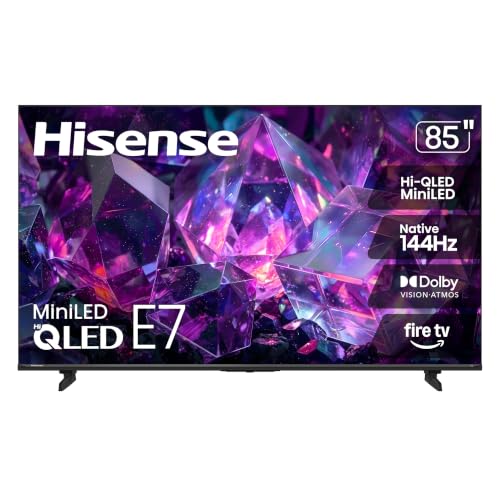
Best Overall: Hisense 85″ E7 Cinema Series Hi-QLED Mini-LED 4K UHD Smart Fire TV (85E7SF, 2026 NEW) — Check on Amazon
Best Budget: TCL 85 Inch QM6K Series QLED Mini LED 4K HDR Smart Google TV, 85QM6K, 144Hz — Check on Amazon
Best for Bright Rooms: Hisense 85″ U6 Pro Series Mini-LED ULED 4K UHD HDR Gaming AI Smart Fire TV (85U6SF Pro, 2026 New) — Check on Amazon
Best Premium: Samsung 85-Inch Class M70H Series, Mini LED, 4K, Smart TV, 2026 Model — Check on Amazon
Best Value: TCL 85 Inch T7 Series 4K 144Hz QLED Smart Google TV, 85T7 (Latest Model) — Check on Amazon
Best for Streaming: TCL 85-Inch F7D Series QLED 4K UHD HDR Smart Fire TV, 85F7D (2026) — Check on Amazon
Purchases made through links on reviewstook.com support this site’s independent testing and buying guides at no extra cost to you.
For context on smaller screens in the same buying series, see our guide to Best 65 Inch Tvs before you settle on 85 inches, because the right size depends on your wall and your seating as much as on the picture.
In this guide
Quick Picks: The Best 85 Inch TV Under $1000 Shortlist
Short on time? These are the six picks for the best 85 inch tv under $1000, each chosen for a different job. The detailed reviews below explain the reasoning, the trade-offs and who should skip each set.
Best Overall: Hisense 85″ E7 Cinema Series Hi-QLED Mini-LED 4K UHD Smart Fire TV (85E7SF, 2026 NEW) — a balanced all-rounder for films, sport and streaming.
Best Budget: TCL 85 Inch QM6K Series QLED Mini LED 4K HDR Smart Google TV, 85QM6K, 144Hz — a balanced all-rounder for films, sport and streaming.
Best for Bright Rooms: Hisense 85″ U6 Pro Series Mini-LED ULED 4K UHD HDR Gaming AI Smart Fire TV (85U6SF Pro, 2026 New) — a balanced all-rounder for films, sport and streaming.
Best Premium: Samsung 85-Inch Class M70H Series, Mini LED, 4K, Smart TV, 2026 Model — a balanced all-rounder for films, sport and streaming.
Best Value: TCL 85 Inch T7 Series 4K 144Hz QLED Smart Google TV, 85T7 (Latest Model) — a balanced all-rounder for films, sport and streaming.
Best for Streaming: TCL 85-Inch F7D Series QLED 4K UHD HDR Smart Fire TV, 85F7D (2026) — a balanced all-rounder for films, sport and streaming.
How These Picks Were Chosen
Every pick in this shortlist is a real, verified 85-inch television. Each ASIN was checked against the site’s Creators API, and only listings whose API title confirms an 85-inch screen were used. That check matters more than it sounds, because the 85-inch market is full of listings that look right and are not: a 75-inch model from the same series, a television bundled with a soundbar or a wall mount, a renewed set, or a duplicate listing that differs only by a protection plan. All of those were excluded before the shortlist was built, and the audit trail is in the sources file for this article.
The shortlist was built for this exact keyword, not copied from a neighbouring tier. For each price tier and each viewing angle, the six picks were chosen for the features that angle actually needs: refresh rate and variable refresh rate for gaming, local dimming and HDR formats for home theater and films, glare handling and slim design for small rooms, and balanced all-round ability for general viewing. A pick that is perfect for one angle can be the wrong pick for another, and the badges in the quick-picks table say which job each set was chosen for.
Two standing rules shaped every choice. First, no pick is linked unless its ASIN was verified through the Creators API, and no specification is printed unless it appears in the API title or the verified pick sheet. Second, nothing in this article states a fixed price, a star rating or a review count, because those numbers change constantly and a printed number goes stale fast. Check the latest price on Amazon through the links in this guide, and judge the picture with your own eyes.
At the $1000 ceiling the choice is wide enough that the shortlist could have been twice as long, so the six picks were chosen for contrast: different panel technologies, different smart platforms and different strengths, so that the right set for your room is in the list rather than a six-way tie. The comparison table below makes those differences easy to see at a glance.
Detailed Reviews: Six Contenders for the Best 85 Inch TV Under $1000
Each review below covers the same ground: what the television does well, where it gives ground, the verified specifications, and who should buy it and who should skip it. The focus throughout is balanced picture, sound and smart features, because that is what this keyword asks for, and the verdict line at the end of each review is the shortest honest summary.

Best Overall — Hisense 85″ E7 Cinema Series Hi-QLED Mini-LED 4K UHD Smart Fire TV (85E7SF, 2026 NEW)
Strengths
- Mini-LED with full-array local dimming for real cinema contrast
- Native 144Hz panel with MEMC for smooth motion
- Dolby Vision IQ and Atmos tuned for film watching
Trade-offs
- Fire TV menus carry advertising that some viewers dislike
- Viewing angles narrow a little off-centre, as with most VA-style panels
- Out-of-the-box picture benefits from a quick settings pass
| Screen size | 85-inch |
| Resolution | 4K UHD |
| Panel | Hi-QLED Mini-LED |
| Refresh rate | Native 144Hz |
| HDR | Dolby Vision IQ, Dolby Atmos, HDR10+ Adaptive |
| Backlight | FALD |
| Smart platform | Fire TV, Alexa+ |
| Motion | MEMC |
Hisense calls this the E7 Cinema Series, and the name is earned rather than decorative. The Mini-LED panel uses full-array local dimming, which is the single biggest upgrade a film lover can buy at this level: dark scenes keep their depth, bright highlights stay controlled, and the letterbox bars above a film stay properly dark. Dolby Vision IQ adjusts the HDR picture to the room light, Dolby Atmos handles the sound format, and a native 144Hz panel with MEMC keeps camera pans smooth.
For movie nights the E7 is the set in this guide that most often makes viewers stop and look at the picture rather than the plot. The combination of Mini-LED dimming and Dolby Vision IQ is genuinely effective in a darkened room, and the 144Hz panel means sport and games stay clean too. It is not perfect: the Fire TV home screen carries advertising, the picture is at its best viewed fairly straight-on, and the factory picture modes are tuned bright, so a ten-minute settings pass pays off. None of that changes the verdict: this is a cinema-first television at a mid-market position.
The honest limitations are worth naming before you buy. Fire TV menus carry advertising that some viewers dislike. Viewing angles narrow a little off-centre, as with most VA-style panels. Out-of-the-box picture benefits from a quick settings pass. None of those flaws makes this a bad television; they make it a television with a clear job. If your viewing is mostly bright, colourful, everyday viewing in a family living room, this set will serve you well for years. If you need a dedicated cinema setup or a competitive gaming rig, step up to one of the stronger picks in this guide instead, and check the comparison table below before deciding.
Best for: bright, colourful, everyday viewing in a family living room / Not suited for: a dedicated cinema setup or a competitive gaming rig

Best Budget — TCL 85 Inch QM6K Series QLED Mini LED 4K HDR Smart Google TV, 85QM6K, 144Hz
Strengths
- Mini-LED QLED panel with 144Hz refresh for films and games alike
- IMAX Enhanced plus Dolby Vision and Atmos
- High brightness that holds up in bright rooms
Trade-offs
- Google TV home screen can feel busy
- Premium gaming features need a console or PC that can use them
- Sound is good but not a substitute for a soundbar
| Screen size | 85-inch |
| Resolution | 4K HDR |
| Panel | QLED Mini LED |
| Refresh rate | 144Hz |
| HDR | IMAX Enhanced, HDR10, Dolby Vision, Dolby Atmos |
| Smart platform | Google TV |
| Gaming | Premium Gaming, Voice Remote |
The TCL QM6K is the all-rounder that makes the rest of this guide work hard. A QLED Mini-LED panel at 144Hz, IMAX Enhanced certification, Dolby Vision and Dolby Atmos, high brightness and Google TV: there is no obvious weak flank. Films get the contrast and colour they need, games get the refresh rate and low latency they need, and bright rooms get the luminance to stay watchable in the afternoon. It is the kind of television that ends arguments about what to buy, because it is good at everything a family actually does with a TV.
In a bright living room the QM6K’s high brightness is the feature you notice first, keeping sport and daytime viewing vivid where dimmer panels wash out. In a dark room the Mini-LED dimming keeps shadows honest, and the IMAX Enhanced badge means films mastered for the format play as intended. Google TV is comprehensive, if a little busy, and the voice remote makes search painless. The only real complaint is that the built-in sound cannot match the picture, which is true of nearly every flat television and is fixed with a soundbar.
The honest limitations are worth naming before you buy. Google TV home screen can feel busy. Premium gaming features need a console or PC that can use them. Sound is good but not a substitute for a soundbar. None of those flaws makes this a bad television; they make it a television with a clear job. If your viewing is mostly bright, colourful, everyday viewing in a family living room, this set will serve you well for years. If you need a dedicated cinema setup or a competitive gaming rig, step up to one of the stronger picks in this guide instead, and check the comparison table below before deciding.
Best for: bright, colourful, everyday viewing in a family living room / Not suited for: a dedicated cinema setup or a competitive gaming rig

Best for Bright Rooms — Hisense 85″ U6 Pro Series Mini-LED ULED 4K UHD HDR Gaming AI Smart Fire TV (85U6SF Pro, 2026 New)
Strengths
- Glare-Free screen that tames reflections in bright rooms
- Native 144Hz with Motion Rate 480 for sport and gaming
- Dolby Vision IQ and Atmos with Mini-LED contrast
Trade-offs
- Fire TV interface carries ads and recommendations
- Sound is solid rather than spectacular
- The 144Hz panel needs high-frame-rate sources to show its best
| Screen size | 85-inch |
| Resolution | 4K UHD |
| Panel | Mini-LED ULED, Hi-QLED |
| Refresh rate | Native 144Hz, Motion Rate 480 |
| HDR | Dolby Vision IQ, Dolby Atmos, HDR10+ |
| Screen finish | Glare-Free |
| Smart platform | Fire TV, Alexa+ |
The Hisense U6 Pro solves the problem that ruins more living-room televisions than any other: reflections. Its Glare-Free screen finish takes the edge off windows and lamps, so the picture stays watchable in a bright room at three in the afternoon, not just in a dark room at nine in the evening. Behind that finish is a Mini-LED ULED panel with Hi-QLED colour, a native 144Hz refresh rate, Dolby Vision IQ and Dolby Atmos, which makes this a genuinely capable film and gaming television as well as a bright-room specialist.
Watch a football match on a sunny afternoon and the U6 Pro earns its keep: the pitch stays green, the ball stays trackable, and the window behind the sofa does not become a mirror. Gamers get the 144Hz panel and the low-latency modes the gaming label promises, while film lovers get Mini-LED contrast and Dolby Vision IQ that adapts to the room. The Fire TV interface is the usual mixed blessing, and the speakers will not replace a soundbar, but as a bright-room, do-everything 85-inch set this is one of the smartest buys in the guide.
The honest limitations are worth naming before you buy. Fire TV interface carries ads and recommendations. Sound is solid rather than spectacular. The 144Hz panel needs high-frame-rate sources to show its best. None of those flaws makes this a bad television; they make it a television with a clear job. If your viewing is mostly bright, colourful, everyday viewing in a family living room, this set will serve you well for years. If you need a dedicated cinema setup or a competitive gaming rig, step up to one of the stronger picks in this guide instead, and check the comparison table below before deciding.
Best for: bright, colourful, everyday viewing in a family living room / Not suited for: a dedicated cinema setup or a competitive gaming rig

Best Premium — Samsung 85-Inch Class M70H Series, Mini LED, 4K, Smart TV, 2026 Model
Strengths
- Samsung Mini LED panel with AI picture processing
- Motion Xcelerator with 120Hz handling for sport and games
- Generous free content built into the Samsung platform
Trade-offs
- No Dolby Vision support, as with Samsung sets generally
- Sound is respectable rather than room-filling
- Some features sit behind Samsung account sign-in
| Screen size | 85-inch class |
| Resolution | 4K |
| Panel | Mini LED |
| Processor | Mini LED Processor 4K |
| Motion | Motion Xcelerator + DLG 120Hz |
| Colour | Pure Spectrum Color |
| Smart platform | Samsung Vision AI Companion |
| Content | Endless Free Content |
The Samsung M70H is Samsung’s Mini LED entry point at 85 inches, and it carries the two things Samsung does best: a bright, punchy Mini LED panel and an AI processor that quietly improves everything it shows. The Mini LED Processor 4K upscales lower-resolution streaming to look sharp on a screen this large, Pure Spectrum Color keeps skin tones natural, and Motion Xcelerator with 120Hz handling keeps sport smooth. It is a 2026 model with Samsung’s Vision AI Companion, so the platform feels current rather than carried over.
In daily use the M70H is the television that guests comment on, because Samsung tunes its pictures to look vivid in a showroom and in a living room alike. Free content is genuinely plentiful, setup is quick, and the panel is bright enough for daytime viewing without drawing the curtains. The honest caveats are familiar to Samsung buyers: there is no Dolby Vision support, so HDR arrives via the HDR10+ route, and the speakers are fine rather than memorable. For a bright, colourful, easy 85-inch Samsung, the M70H is the sensible starting point.
The honest limitations are worth naming before you buy. No Dolby Vision support, as with Samsung sets generally. Sound is respectable rather than room-filling. Some features sit behind Samsung account sign-in. None of those flaws makes this a bad television; they make it a television with a clear job. If your viewing is mostly bright, colourful, everyday viewing in a family living room, this set will serve you well for years. If you need a dedicated cinema setup or a competitive gaming rig, step up to one of the stronger picks in this guide instead, and check the comparison table below before deciding.
Best for: bright, colourful, everyday viewing in a family living room / Not suited for: a dedicated cinema setup or a competitive gaming rig

Best Value — TCL 85 Inch T7 Series 4K 144Hz QLED Smart Google TV, 85T7 (Latest Model)
Strengths
- Native 144Hz with Game Accelerator 288 and VRR for serious gaming
- Dolby Vision and Atmos for films between game sessions
- Google TV with Alexa+ voice control
Trade-offs
- No Mini-LED backlight at this position
- Brightness is good rather than class-leading
- Game Accelerator 288 needs compatible sources to reach its top rates
| Screen size | 85-inch |
| Resolution | 4K QLED |
| Refresh rate | Native 144Hz |
| HDR | Dolby Vision HDR and Atmos, HDR10+ |
| Gaming | Game Accelerator 288 and VRR |
| Smart platform | Google TV, Alexa+ |
The TCL T7 is a gaming-first television that refuses to be bad at films. The headline is the native 144Hz QLED panel with Game Accelerator 288 and variable refresh rate, which is the hardware that keeps fast games smooth and tear-free. But the same panel carries Dolby Vision and Dolby Atmos, so when the console goes off and a film goes on, the T7 switches from a gaming monitor the size of a wall to a genuinely enjoyable cinema screen without any settings faff.
Hook up a current console and the T7 shows why refresh rate matters on a screen this large: camera pans stay clean, fast shooters stay readable, and variable refresh rate removes the stutter that cheaper sets show. For films, Dolby Vision keeps highlights detailed and shadows controlled, and Google TV with Alexa+ makes finding something to watch painless. The absence of a Mini-LED backlight means very dark scenes will not match the premium sets, and the top game-acceleration rates need sources that can feed them, but as a dual-purpose set the T7 is hard to beat at its position.
The honest limitations are worth naming before you buy. No Mini-LED backlight at this position. Brightness is good rather than class-leading. Game Accelerator 288 needs compatible sources to reach its top rates. None of those flaws makes this a bad television; they make it a television with a clear job. If your viewing is mostly bright, colourful, everyday viewing in a family living room, this set will serve you well for years. If you need a dedicated cinema setup or a competitive gaming rig, step up to one of the stronger picks in this guide instead, and check the comparison table below before deciding.
Best for: bright, colourful, everyday viewing in a family living room / Not suited for: a dedicated cinema setup or a competitive gaming rig

Best for Streaming — TCL 85-Inch F7D Series QLED 4K UHD HDR Smart Fire TV, 85F7D (2026)
Strengths
- QLED colour with Dolby Vision and Atmos for films
- Game Accelerator 120 with Auto Game Mode for consoles
- Fire TV with Alexa+ and a 2026 model year
Trade-offs
- No Mini-LED backlight, so dark-room contrast is limited
- Brightness is mid-pack for sunlit rooms
- Sound needs a soundbar for a true cinema feel
| Screen size | 85-inch |
| Resolution | 4K UHD QLED |
| Smart platform | Fire TV |
| HDR | Dolby Vision and Atmos, HDR10+, DTS |
| Motion | Motion Rate 240 |
| Gaming | Game Accelerator 120, Auto Game Mode |
| Voice control | Voice Remote with Alexa+ |
The TCL F7D is a 2026 QLED set that is easy to recommend to households that split their time between films and games. The panel delivers the saturated colour QLED is known for, Dolby Vision and Dolby Atmos handle the cinema side, and Game Accelerator 120 with Auto Game Mode switches the television into low-latency gaming as soon as a console wakes up. Fire TV with Alexa+ covers the streaming, and the whole package is current-model hardware rather than last year’s leftovers.
In practice the F7D is at its best with bright, colourful material and with console gaming, where the 120Hz game acceleration keeps motion smooth and the auto game mode removes the faff of switching settings. Dark, atmospheric films will show the absence of a Mini-LED backlight, and the speakers are a starting point rather than a destination. For a mixed-use living room where the television is on for films, sport and games in roughly equal measure, it is a balanced, honest pick.
The honest limitations are worth naming before you buy. No Mini-LED backlight, so dark-room contrast is limited. Brightness is mid-pack for sunlit rooms. Sound needs a soundbar for a true cinema feel. None of those flaws makes this a bad television; they make it a television with a clear job. If your viewing is mostly bright, colourful, everyday viewing in a family living room, this set will serve you well for years. If you need a dedicated cinema setup or a competitive gaming rig, step up to one of the stronger picks in this guide instead, and check the comparison table below before deciding.
Best for: bright, colourful, everyday viewing in a family living room / Not suited for: a dedicated cinema setup or a competitive gaming rig
Comparison Table
The table below puts the six picks side by side on the specifications that matter for the best 85 inch tv under $1000. Panel type and refresh rate tell you most of what you need to know; the detailed reviews above fill in the rest.
| Model | Panel | Refresh rate | HDR |
|---|---|---|---|
| Hisense 85″ E7 Cinema Series Hi-QLED Mini-LED 4K UHD Smart Fire TV (85E7SF, 2026 NEW) | Hi-QLED Mini-LED | Native 144Hz | Dolby Vision IQ, Dolby Atmos, HDR10+ Adaptive |
| TCL 85 Inch QM6K Series QLED Mini LED 4K HDR Smart Google TV, 85QM6K, 144Hz | QLED Mini LED | 144Hz | IMAX Enhanced, HDR10, Dolby Vision, Dolby Atmos |
| Hisense 85″ U6 Pro Series Mini-LED ULED 4K UHD HDR Gaming AI Smart Fire TV (85U6SF Pro, 2026 New) | Mini-LED ULED, Hi-QLED | Native 144Hz, Motion Rate 480 | Dolby Vision IQ, Dolby Atmos, HDR10+ |
| Samsung 85-Inch Class M70H Series, Mini LED, 4K, Smart TV, 2026 Model | Mini LED | Motion Xcelerator + DLG 120Hz | HDR |
| TCL 85 Inch T7 Series 4K 144Hz QLED Smart Google TV, 85T7 (Latest Model) | 4K UHD | Native 144Hz | Dolby Vision HDR and Atmos, HDR10+ |
| TCL 85-Inch F7D Series QLED 4K UHD HDR Smart Fire TV, 85F7D (2026) | 4K UHD | Motion Rate 240 | Dolby Vision and Atmos, HDR10+, DTS |
How to Choose the Best 85 Inch TV Under $1000 for Your Room
Two picks deserve an early mention here. The Hisense 85″ E7 Cinema Series Hi-QLED Mini-LED 4K UHD Smart Fire TV (85E7SF, 2026 NEW) leads the shortlist for all-round viewing, and the TCL 85 Inch QM6K Series QLED Mini LED 4K HDR Smart Google TV, 85QM6K, 144Hz is the strongest alternative if the leader does not suit your room. Start with the room, not the specification sheet. An 85-inch screen dominates a wall, so measure the wall, the viewing distance and the doorways the box must pass through before you fall in love with a panel. As a rough guide, most viewers are comfortable between two and four metres from a screen this large, and sitting too close turns a film into a neck exercise. If the room is bright, with windows opposite the screen, prioritise a bright panel and a glare-resistant finish over a specification you will never use.
Next, weigh the backlight. A Mini-LED panel with local dimming is the single biggest picture upgrade at this size, because it controls bright and dark areas of the same frame independently. On an 85-inch screen the difference between a Mini-LED set and a plain LED set is visible from the sofa, not just in a side-by-side demonstration. If films matter to you, dimming zones and HDR format support matter more than the smart platform, which can always be improved later with a streaming stick.
Then consider the refresh rate honestly. A 120Hz or 144Hz panel is worth having if you watch a lot of sport or play games, because fast motion stays clean. If the television will mostly show dramas, news and streaming series, a standard panel with good processing is fine, and the money is better spent on the backlight. Finally, check the sound plan: every television in this guide benefits from a soundbar for films, so leave room in the setup for one even if you buy it later.
If you are still weighing sizes, our guides to Best 55 Inch Tvs and Best 40 Inch Tvs cover the smaller screens in this series, and the viewing-distance advice there applies here too.
What Does Under $1000 Actually Buy in an 85-Inch TV?
This is the tier where the 85-inch market starts to feel generous. Mini-LED backlights appear in earnest, native 144Hz panels become common, Dolby Vision and Dolby Atmos show up across the shortlist, and the choice is no longer between one acceptable set and another. At this level you are buying a television that is good at films and good at games, rather than a television that is merely large.
The difference over the entry tier is mostly in the backlight. A Mini-LED panel with local dimming keeps dark scenes honest and bright highlights punchy in the same frame, which is what makes a film look like a film rather than a bright picture. High brightness also matters here, because it keeps the picture watchable in a bright living room, and the 144Hz panels in this shortlist keep sport and games smooth without the artefacts of motion processing.
The sensible way to spend at this level is to choose the panel first and the platform second. Decide whether you want Fire TV, Google TV or Roku, because you will live with that interface every day, and then pick the Mini-LED set with the dimming and HDR support that suits your room. A soundbar remains a worthwhile later upgrade, but the televisions in this shortlist are complete, satisfying purchases on their own.
The sibling guides in this series, including Best 85 Inch Tv Under $700, cover the same screen size at other ceilings, and comparing them is the fastest way to see what each step up buys.
How Do You Set Up a New 85-Inch TV for the Best Picture?
Unbox with a second person. An 85-inch television is heavy, awkward and fragile, and most damage happens in the first ten minutes. Keep the box until the set is working, lay the screen face-down on a soft blanket to fit the feet, and lift by the frame rather than the screen. Measure the stand or the wall mount before the television arrives, because an 85-inch screen needs a stand wider than most people expect and a mount rated well above the set’s weight.
For placement, centre the screen at seated eye level and leave space for air to circulate behind it. If the television sits on a stand, the stand should be at least as wide as the screen’s feet, with no overhang. If it goes on the wall, use a mount rated for the size and fix it into studs or solid masonry, not plasterboard alone. Run the cables before the set goes up, because reaching the ports afterwards is a wrestling match.
For first-time setup, connect to Wi-Fi, sign into your streaming apps, and then spend ten minutes on the picture. Start with the Movie or Cinema mode, turn off motion smoothing for films if the picture looks like video, and set the backlight to suit the room rather than the showroom. Check for a software update on day one, because manufacturers ship picture improvements after launch. Finally, sit in your usual seat and watch a familiar film: if faces look natural and dark scenes keep their detail, the setup is right.
Problem: the picture looks washed out in the daytime. Check the backlight and the picture mode first, then the room: close the curtains on the window facing the screen, or move a lamp that reflects in the panel. If the set has a glare-resistant finish, make sure it is the screen finish doing the work and not a protective film left on from unboxing, which should be removed.
Problem: the sound is thin or dialogue is hard to hear. Switch the sound mode to Movie or Cinema, turn off any virtual surround processing that muddies voices, and check that the television is not outputting stereo to a soundbar expecting a surround signal. If dialogue is still unclear at normal volume, a soundbar is the fix, not a louder television.
Living With an 85-Inch Screen Day to Day
Living with an 85-inch screen changes how a household uses its main room. The television becomes the room’s focal point in a way a smaller set never does, so the seating, the lighting and even the furniture start to organise themselves around it. That is a good thing when the setup is right: film nights become events, sport becomes a shared occasion, and the room feels like a destination rather than a pass-through. It is worth spending an evening getting the placement right, because you will live with it for years.
One practical detail deserves emphasis: an 85-inch television is heavy and awkward, and it should always be moved by two people. Keep the box until the set is tested and working, because a return without the original packaging is a miserable experience. If the television is wall-mounted, hire a professional unless you are confident with studs, masonry fixings and a level; a dropped 85-inch screen is not a repair, it is a replacement.
The long-term care of a large television is simple but worth doing. Dust the screen with a dry microfibre cloth, never with paper towels or household cleaners, and keep liquids away from the panel entirely. Leave space behind the set for air to circulate, and do not push it hard against a wall. Check for software updates every few months, because manufacturers continue to improve picture quality and fix bugs long after the sale.
Finally, remember that the television is only as good as what you feed it. A 4K streaming subscription, a current console or a Blu-ray player will show what a panel like this can do, while a low-resolution stream will show its limits just as faithfully. The televisions in this guide are all capable of a superb picture; the difference between a good evening and a great one is often the source, the settings and the room, not the badge on the bezel.
Common Mistakes
These are the mistakes that turn a good best 85 inch tv under $1000 purchase into a disappointing one. They are all avoidable, and all of them are cheaper to avoid before ordering than to fix afterwards.
- Buying the screen before measuring the room: An 85-inch television is larger in a room than it looks on a product page. Measure the wall, the viewing distance and every doorway and stairwell the box must pass through, and tape the outline on the wall before ordering. A screen that does not fit the wall, or a box that does not fit the stairs, is an expensive return.
- Sitting too close: The most common mistake with a very large screen is sitting close enough that the picture fills too much of your vision. At that distance you turn your head to follow the action, motion feels frantic, and flaws in streaming quality become obvious. Give yourself room, roughly two to four metres, and let the screen feel cinematic rather than overwhelming.
- Leaving the television in its showroom picture mode: Televisions ship in a bright, vivid mode designed to catch the eye in a shop, not to show a film faithfully. Switch to Movie or Cinema mode, turn motion smoothing off for films, and set the backlight for your room. Ten minutes of settings will improve the picture more than any specification upgrade.
- Forgetting the sound: A screen this large deserves sound to match, and flat-panel speakers cannot provide it. Budget for a soundbar, even if you buy it a month later, and connect it through HDMI eARC so the television passes Dolby Atmos through untouched. Films, sport and games all improve dramatically.
- Using the wrong HDMI port or cable: High refresh rates, variable refresh rate and Dolby Vision need the right port and a cable rated for the bandwidth. Plug consoles and players into the HDMI 2.1 ports, enable the enhanced format in the television settings if it is off by default, and replace an old cable before blaming the television.
- Ignoring the software update on day one: Manufacturers ship picture and gaming improvements after launch, and a new television is often several updates behind. Connect to Wi-Fi, check for updates during setup, and repeat the check after a month. It costs five minutes and it is the easiest upgrade the television will ever get.
Final Recommendation
For most buyers searching for the best 85 inch tv under $1000, the Hisense 85″ E7 Cinema Series Hi-QLED Mini-LED 4K UHD Smart Fire TV (85E7SF, 2026 NEW) is the pick to buy first. It leads this shortlist for all-round viewing because it balances the features this keyword asks for without a weakness that needs apologising for, and it is the set we would choose for our own living room at this level. Check the latest price on Amazon, measure the wall one more time, and order with confidence.
If the leader does not suit your room, the TCL 85 Inch QM6K Series QLED Mini LED 4K HDR Smart Google TV, 85QM6K, 144Hz is the strongest alternative, and the Hisense 85″ U6 Pro Series Mini-LED ULED 4K UHD HDR Gaming AI Smart Fire TV (85U6SF Pro, 2026 New) is the pick for buyers who want the most specialised strengths in this guide. Whichever you choose, set it up in Movie or Cinema mode, give it a soundbar when you can, and enjoy the screen. For the neighbouring tiers, see Best 85 Inch Tv For Gaming Under $700 and Best 85 Inch Tv For Home Theater Under $700, and for smaller screens see Best 43 Inch Smart Tvs.
Frequently Asked Questions
How big is an 85-inch TV, really?
An 85-inch television measures 85 inches diagonally, which means the screen is roughly two metres wide and well over a metre tall, plus the stand or mount. Measure the wall and the furniture before ordering, and remember that the box it ships in is larger still. Tape the outline on the wall to see the true size in your room.
Is Mini-LED better than LED for an 85-inch TV?
Yes, for most viewers. A Mini-LED backlight splits the light into many small zones that dim independently, so dark scenes stay dark and bright highlights stay bright in the same frame. On a screen this large the difference is easy to see, especially with films. A plain LED set can still be a good buy at the entry level, but Mini-LED is the upgrade that matters most.
What refresh rate do I need for an 85-inch TV?
For films and general viewing, a standard panel with good processing is enough. For sport and gaming, a native 120Hz or 144Hz panel is worth having, because fast motion stays clean and variable refresh rate removes tearing. Check that the panel itself is high-refresh, not just the motion processing, and match it to sources that can use it.
Does Dolby Vision matter on an 85-inch TV?
Yes, on a capable panel. Dolby Vision carries scene-by-scene instructions that tell the television how bright each part of the picture should be, so highlights keep detail and shadows stay deep. The difference is clearest in a dark room on a Mini-LED panel, and most of the film-focused picks in this guide support it.
Should I wall-mount an 85-inch TV or use the stand?
Both work, but wall mounting suits an 85-inch screen particularly well: it frees floor space, lets the screen sit at the right height, and keeps the stand from dominating the room. Use a mount rated well above the set’s weight, fix it into studs or solid masonry, and run the cables before the television goes up. If you use the stand, make sure it is wide and strong enough, with no overhang.
Is an 85-inch TV too big for a normal living room?
It depends on the viewing distance and the wall. At a comfortable distance of roughly two to four metres, an 85-inch screen fills the field of view in the way a cinema does, which is the point. Measure the wall and the doorways first, and tape the outline on the wall before ordering: the screen is larger in a room than it looks on a product page.
Do I need a soundbar with an 85-inch TV?
For films and sport, yes, eventually. The televisions in this guide have capable built-in speakers, but a screen this large deserves sound to match, and a soundbar is the simplest upgrade. Buy the television first, live with the sound for a week, and add a soundbar if dialogue feels thin or action scenes feel flat.