The best EV car chargers are the ones that fill the car overnight, every night, without thinking about it. A home EV charger turns a parking spot into a fuel station, and the car leaves every morning with a full battery. The six chargers in this guide were picked because their listing titles state the exact brand, model, amperage, connector, and installation type, and every listing was checked in full before it was linked.
Home charging is the cheapest way to run an electric car, and it is the most convenient. Public fast charging costs more per mile and takes time out of the day, while home charging happens while the car is parked and the owner is asleep. A Level 2 charger fills most cars overnight, and the difference between a 40A charger and a 50A charger is the difference between a car that is full by morning and a car that is not quite there.
The six chargers in this guide are all Level 2 chargers, which means they run on 240V power and charge far faster than a standard wall outlet. Four are hardwired for the fastest charging, one plugs into a 240V outlet for flexibility, and all six use the J1772 connector that fits most electric cars. A Tesla owner needs an adapter for J1772, and the EVIQO in this guide states that it is for non-Tesla EVs.
This guide covers six EV car chargers: two ChargePoint models for the fastest and the most flexible charging, an Emporia for smart homes, an Autel for 50A charging with Bluetooth, an EVIQO for outdoor charging, and a Grizzl-E for tough use. All six are home charging stations, all six are sold as new listings, and all six have their amperage and connector stated in the listing title, so the comparison is honest.
In this guide
Quick picks: best ev car chargers
| # | Product | Where to buy |
|---|---|---|
| 1 | ChargePoint HomeFlex Level 2 EV charger | Check on Amazon |
| 2 | ChargePoint Home Flex plug-in EV charger | Check on Amazon |
| 3 | Emporia Level 2 48 amp EV charger | Check on Amazon |
| 4 | Autel Level 2 50 amp EV charger | Check on Amazon |
| 5 | EVIQO Level 2 48 amp EV charger | Check on Amazon |
| 6 | Grizzl-E 48A Ultimate Level 2 EV charger | Check on Amazon |
How the picks were chosen for the best EV car chargers
Every charger below started as a listing returned by the reviewstook.com product lookup, and every listing was checked the same way. First, the title had to name the exact brand and the exact model, including the amperage, because a ChargePoint HomeFlex 50A is not a ChargePoint Home Flex 40A, and an Emporia 48A is not an Emporia 40A. Second, the title had to state the connector and the installation type, because a J1772 charger is a different purchase from a NACS charger, and a hardwired charger needs an electrician while a plug-in one does not.
The chargers were also checked for the numbers that decide charging speed. Amperage decides how fast the car charges, and the chargers here range from 40A to 50A. Miles per hour decides how much range the car gains, and the chargers here add from 30 to 50 miles per hour. Cable length decides where the charger can be mounted, and the chargers here have 23 foot and 25 foot cables.
One more check shaped the list: the charger must be a charger, not an accessory. Listings for charger covers, cables alone, adapters, and portable Level 1 chargers were left out, because a buyer needs a home charging station, not a part for one. The six chargers below are all Level 2 home charging stations, sold as new listings, with the amperage, the connector, and the installation type stated in the title.
What an EV car charger is, and who should buy one
An EV car charger, or electric vehicle supply equipment, is a wall-mounted station that delivers power from the home electrical system to the car battery. A Level 2 charger runs on 240V power, like a dryer or an oven, and charges a car in hours instead of the days a standard 120V outlet would take. The charger connects to the car with a cable and a J1772 connector, and it communicates with the car to control the charging speed and to stop when the battery is full.
An EV car charger suits anyone who owns an electric car and has a place to park it at home. It is the right choice when the car is driven every day, when public charging is inconvenient or expensive, and when the owner wants the car full every morning. It is not the right choice for a renter who cannot install one, unless a plug-in model like the ChargePoint Home Flex in this guide is used, and it is not the right choice for a buyer who only drives a few miles a week, because a standard outlet may be enough for that use.
The six chargers in this guide cover the main uses. The ChargePoint HomeFlex is the pick for the fastest charging, the ChargePoint Home Flex plug-in is the pick for flexibility, the Emporia is the pick for smart homes, the Autel is the pick for 50A charging with Bluetooth, the EVIQO is the pick for outdoor charging, and the Grizzl-E is the pick for tough use.
What makes a good EV car charger
Amperage is the first test, and it decides how fast the car charges. A 50A charger fills a car faster than a 40A charger, and the difference matters on a long commute. The chargers in this guide range from 40A to 50A, and the 50A models, the ChargePoint HomeFlex and the Autel, are the fastest here. But amperage is limited by the electrical panel, and a 50A charger needs a panel with spare capacity, so check the panel before buying the fastest charger.
The connector and the installation type are the second test. The J1772 connector fits most electric cars, while Tesla cars need an adapter or a NACS charger. A hardwired charger delivers its full amperage and looks neat, but it needs an electrician to install. A plug-in charger fits a standard 240V outlet and can be moved, but it is limited to 40A by the plug. Buy the connector that fits the car, and the installation that fits the home.
Smart features, cable length, and certification decide the rest. A WiFi app schedules charging for cheap overnight rates, and the ChargePoint, Emporia, Autel, and EVIQO models here have one. A longer cable, like the 25 foot cables here, reaches the car wherever it is parked. UL and ETL certification mean the charger has been tested for safety, and the EVIQO and Grizzl-E here carry it. A weatherproof rating, like the IP66 on the EVIQO, matters for outdoor charging.
Quick picks at a glance
| Charger | Amperage and connector | Speed and cable | Best for |
|---|---|---|---|
| ChargePoint HomeFlex 50A | 50A hardwired, J1772 | Up to 37 mi/hr, WiFi | Fastest pick |
| ChargePoint Home Flex Plug-In | 40A plug-in, J1772 | Up to 30 mi/hr, WiFi | Best plug-in pick |
| Emporia Level 2 48A | 48A hardwired, J1772 | WiFi, 25 foot cable | Best smart home pick |
| Autel Level 2 50A | 50A hardwired, J1772 | Up to 46 mi/hr, WiFi and Bluetooth | Best all-rounder |
| EVIQO Level 2 48A | 48A hardwired, J1772 | Up to 50 mph, IP66 | Best outdoor pick |
| Grizzl-E 48A Ultimate | 48A hardwired, J1772 | Metal case, UL certified | Toughest pick |
The best EV car chargers

ChargePoint HomeFlex Level 2 EV Charger Hardwired
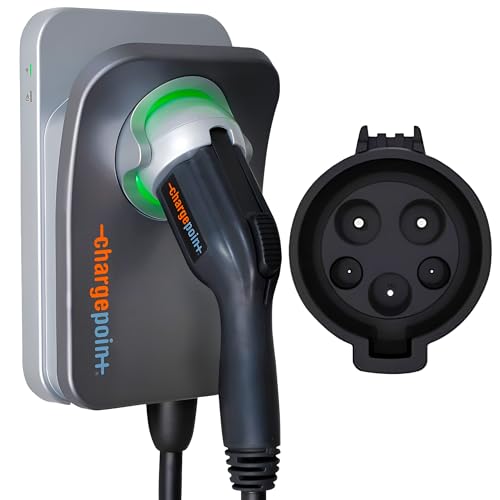
The ChargePoint HomeFlex Level 2 EV Charger is the fastest charger in this guide, and it is the charger for a buyer who wants the quickest home charging available. It is a Level 2 EV fast charger, J1772, smart, hardwired, 50A, for electric cars, adding up to 37 miles per hour, with WiFi app control, a 23 foot cable, adjustable 16 to 50A, indoor and outdoor rated, and Energy Star certified. The hardwired connection delivers the full 50A, the WiFi app schedules charging for cheap overnight rates, and the 23 foot cable reaches the car wherever it is parked.
The HomeFlex suits a buyer with a long daily commute, a household with two electric cars, and anyone who wants the car full by morning no matter how empty it was. Its 50A output is the strongest here, its smart app controls when charging starts and stops, and its Energy Star rating means it wastes little power. It is the charger for the fastest home charging.
Key specs:
- ChargePoint HomeFlex Level 2 EV Charger
- J1772, smart, hardwired, 50A
- Adds up to 37 mi/hr
- WiFi app control, 23 foot cable
- Adjustable 16-50A, indoor/outdoor rated, Energy Star
Strengths:
- 50A output, the fastest charging here
- WiFi app schedules cheap overnight charging
- Hardwired for the full 50A with no plug limit
Trade-offs:
- Hardwired installation needs an electrician
- A 50A circuit needs a panel with spare capacity
- The fastest charger costs the most to install
The HomeFlex fits a buyer with a long daily commute, a two-EV household, and anyone who wants the car full by morning.
Best for: the fastest home charging. Not suited for: a renter who cannot install a hardwired charger, or a buyer with a small electrical panel.
Check price on Amazon: ChargePoint HomeFlex Level 2 EV charger

ChargePoint Home Flex Level 2 EV Charger Plug-In
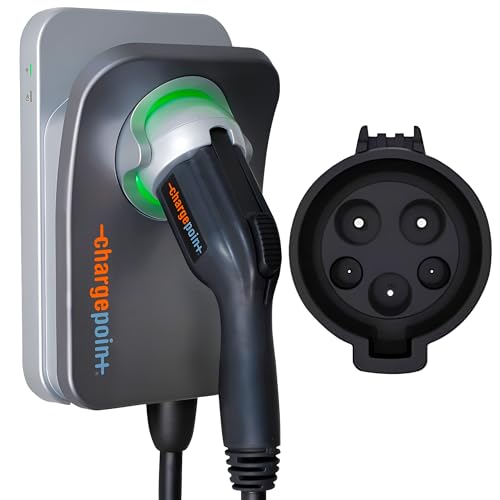
The ChargePoint Home Flex Level 2 EV Charger with a NEMA 14-50 plug is the flexible charger in this guide, and it is the charger for a buyer who wants fast charging without a hardwired installation. It is a Level 2 EV fast charger, J1772, with a NEMA 14-50 plug, smart charging for electric cars, adding up to 30 miles per hour, with WiFi app control, a 23 foot cable, adjustable 32 to 40A, and indoor and outdoor rating. The plug fits a standard 240V outlet, so it can be installed without an electrician when the outlet already exists, and it can be unplugged and taken along when moving house.
The Home Flex plug-in suits a buyer who rents, a buyer whose garage already has a 240V outlet, and anyone who wants fast charging that can move. Its 40A output charges most cars overnight, its WiFi app schedules charging for cheap rates, and its plug means it can be removed in minutes. It is the charger for fast charging without a permanent installation.
Key specs:
- ChargePoint Home Flex Level 2 EV Charger
- J1772, NEMA 14-50 plug
- Adds up to 30 mi/hr
- WiFi app control, 23 foot cable
- Adjustable 32-40A, indoor/outdoor rated
Strengths:
- Plugs into a standard 240V outlet
- Can be unplugged and moved to a new home
- WiFi app schedules cheap overnight charging
Trade-offs:
- 40A is slower than the 50A hardwired model
- Needs a 240V outlet, which not every garage has
- A plug connection is less neat than hardwired
The Home Flex plug-in fits a renter, a buyer whose garage already has a 240V outlet, and anyone who wants fast charging that can move.
Best for: fast charging without a permanent installation. Not suited for: a buyer who wants the fastest possible charging, or who has no 240V outlet.
Check price on Amazon: ChargePoint Home Flex plug-in EV charger

Emporia Level 2 EV Charger 48 Amp
The Emporia Level 2 EV Charger is the smart home pick in this guide, and it is the charger for a buyer who wants charging that works with the rest of the house. It is a Level 2 EV charger with a J1772 connector, 48 Amp, 240V, WiFi enabled electric vehicle charging station, a 25 foot cable, hardwired with whip, in white. The WiFi connection links it to the Emporia energy app, so charging can be scheduled, monitored, and managed alongside the home energy use, and the 25 foot cable is the longest here.
The Emporia suits a buyer with a smart home, a household that watches its energy use, and anyone who wants the longest cable in this guide. Its 48A output is nearly the fastest here, its WiFi app shows charging history and costs, and its hardwired connection delivers the full power. It is the charger for smart homes and long cables.
Key specs:
- Emporia Level 2 EV Charger
- J1772 connector, 48 Amp, 240V
- WiFi enabled charging station
- 25 foot cable
- Hardwired with whip, white
Strengths:
- 48A output, nearly the fastest here
- WiFi app manages charging with home energy use
- 25 foot cable, the longest here
Trade-offs:
- Hardwired installation needs an electrician
- The app is most useful with other Emporia products
- White finish shows dirt in a garage
The Emporia fits a smart home, a household that watches energy use, and anyone who needs the longest cable here.
Best for: smart homes and long cable runs. Not suited for: a renter who cannot install a hardwired charger, or a buyer who wants a simple charger with no app.
Check price on Amazon: Emporia Level 2 48 amp EV charger

Autel Level 2 EV Charger 50A
The Autel Level 2 EV Charger is the powerful all-rounder in this guide, and it is the charger for a buyer who wants 50A charging with smart controls. It is a Level 2 EV charger, 50A, J1772 hardwired home charger, with WiFi, a 25 foot cable, up to 46 miles per hour, smart WiFi and Bluetooth app control, indoor and outdoor rating, adjustable 16 to 50A, and certified safety protection. The 50A output matches the fastest here, the Bluetooth app works even without WiFi, and the adjustable current lets it run on a smaller circuit when needed.
The Autel suits a buyer who wants the fastest charging, a household with a weak WiFi signal in the garage, and anyone who wants a charger that adapts to the electrical panel. Its 50A output charges fast, its Bluetooth control works without WiFi, and its adjustable current means it can be set to 16A on a small circuit and raised later. It is the charger for fast charging with flexibility.
Key specs:
- Autel Level 2 EV Charger
- 50A, J1772 hardwired home charger
- WiFi, 25 foot cable
- Up to 46 mi/hr
- Smart WiFi and Bluetooth app control, adjustable 16-50A, indoor/outdoor rated
Strengths:
- 50A output, the fastest here
- Bluetooth app control works without WiFi
- Adjustable current fits small and large circuits
Trade-offs:
- Hardwired installation needs an electrician
- A 50A circuit needs a panel with spare capacity
- Smart features need the app to use fully
The Autel fits a buyer who wants the fastest charging, a garage with weak WiFi, and anyone whose panel needs an adjustable charger.
Best for: fast charging with Bluetooth control. Not suited for: a renter who cannot install a hardwired charger, or a buyer with a small electrical panel.
Check price on Amazon: Autel Level 2 50 amp EV charger

EVIQO Level 2 EV Charger J1772 48A
The EVIQO Level 2 EV Charger is the weatherproof pick in this guide, and it is the charger for a buyer who charges outdoors in all weather. It is a Level 2 EV charger, J1772, 48A, hardwired 240V wall charging station, for non-Tesla EVs, up to 50 miles per hour, with a 25 foot cable, WiFi on 2.4GHz, a smart app, weatherproof IP66 and NEMA 4 rating, and UL and ETL certification. The IP66 rating means it keeps out dust and heavy rain, the UL and ETL certifications mean it has been tested for safety, and the 48A output is nearly the fastest here.
The EVIQO suits a buyer who charges in a driveway, a household with no garage, and anyone who wants the toughest outdoor charger here. Its weatherproof rating handles rain, snow, and dust, its 48A output charges fast, and its certifications give peace of mind. It is the charger for outdoor charging in all weather.
Key specs:
- EVIQO Level 2 EV Charger
- J1772, 48A, hardwired 240V
- Up to 50 mph
- 25 foot cable, WiFi 2.4GHz, smart app
- Weatherproof IP66, NEMA 4, UL and ETL certified
Strengths:
- IP66 weatherproof rating for outdoor use
- UL and ETL certified for safety
- 48A output with up to 50 miles per hour
Trade-offs:
- For non-Tesla EVs only, so Tesla owners need an adapter
- Hardwired installation needs an electrician
- WiFi is 2.4GHz only
The EVIQO fits a buyer who charges in a driveway, a household with no garage, and anyone who wants the toughest outdoor charger here.
Best for: outdoor charging in all weather. Not suited for: a Tesla owner without an adapter, or a buyer who charges only indoors.
Check price on Amazon: EVIQO Level 2 48 amp EV charger

Grizzl-E 48A Ultimate Level 2 EV Charger
The Grizzl-E 48A Ultimate Level 2 EV Charger is the tough pick in this guide, and it is the charger for a buyer who wants a metal box that lasts. It is a Grizzl-E 48A Ultimate Level 2 fast electric vehicle charger, UL tested and certified, with a metal case, indoor and outdoor electric car fast charging station, hardwired, classic black, J1772. The metal case takes knocks that would crack a plastic one, the UL certification means it has been tested for safety, and the simple design has no app to learn and nothing to go wrong.
The Grizzl-E suits a buyer who wants a charger that just works, a workshop or a farm where equipment gets knocked around, and anyone who distrusts smart features. Its metal case is the toughest here, its 48A output is nearly the fastest here, and its simple design means it charges the car every time without an app or a WiFi connection. It is the charger for tough use and simple charging.
Key specs:
- Grizzl-E 48A Ultimate Level 2 EV Charger
- 48A, J1772, hardwired
- UL tested and certified
- Metal case
- Indoor/outdoor, classic black
Strengths:
- Metal case is the toughest here
- UL tested and certified for safety
- Simple design with no app needed
Trade-offs:
- No WiFi or app for scheduling
- Hardwired installation needs an electrician
- A heavy metal box that needs solid mounting
The Grizzl-E fits a buyer who wants a charger that just works, a workshop or farm, and anyone who distrusts smart features.
Best for: tough use and simple charging. Not suited for: a buyer who wants app scheduling, or a renter who cannot install a hardwired charger.
Check price on Amazon: Grizzl-E 48A Ultimate Level 2 EV charger
Buying guide for the best EV car chargers
Amperage: 40A or 50A
Amperage decides how fast the car charges, and 50A is faster than 40A. A 50A charger adds up to 37 miles per hour, like the ChargePoint HomeFlex, or up to 46 miles per hour, like the Autel, while a 40A charger adds up to 30 miles per hour, like the ChargePoint Home Flex plug-in. For a buyer with a long daily commute, the extra speed means the car is full by morning even after a long day.
But a 50A charger needs a 60A circuit, and a 40A charger needs a 50A circuit, so the electrical panel must have the spare capacity. Check the panel before buying, and ask an electrician if it is not clear. A charger that is too big for the panel cannot be installed, and a panel upgrade costs more than the charger. Buy the amperage the panel can support, not the biggest number on the list.
Hardwired or plug-in: which installation fits the home
A hardwired charger is wired directly into the electrical panel, and it delivers its full amperage with a neat, permanent installation. Four of the six chargers in this guide are hardwired, and they are the picks for a buyer who owns the home and wants the fastest charging. A hardwired installation needs an electrician, and it cannot be moved without one.
A plug-in charger fits a NEMA 14-50 outlet, the same outlet a dryer uses, and it can be installed without an electrician when the outlet already exists. The ChargePoint Home Flex plug-in in this guide is the plug-in pick, and it is the charger for a renter, a buyer whose garage already has a 240V outlet, and anyone who wants a charger that can move to a new home. Buy hardwired for speed and permanence, and buy plug-in for flexibility.
J1772 or NACS: match the connector to the car
The J1772 connector fits most electric cars, including Chevrolet, Ford, Hyundai, Kia, Nissan, and Volkswagen, and all six chargers in this guide use it. Tesla cars use the NACS connector, and they need an adapter to use a J1772 charger, or a NACS charger made for Tesla. The EVIQO in this guide states that it is for non-Tesla EVs, so a Tesla owner should buy a different charger or an adapter.
Check the car before buying, because the connector is the one thing that cannot be changed. Look at the charging port, read the manual, or ask the dealer. A charger with the wrong connector is a return, and a Tesla owner who buys a J1772 charger without an adapter will find it does not fit.
Smart features: schedule charging for cheap rates
A WiFi app lets the charger schedule charging for the hours when electricity is cheapest, usually overnight, and that saves money every month. The ChargePoint, Emporia, Autel, and EVIQO models in this guide have WiFi apps, and they show charging history, costs, and the state of the battery. A buyer who charges every night will save more from scheduling than from any other feature.
Smart features need WiFi in the garage, so check the signal before buying a smart charger. The Autel in this guide also has Bluetooth control, which works even when WiFi is weak, and the Grizzl-E has no app at all, which is the pick for a buyer who wants a charger that just works. Buy smart features when the garage has WiFi, and buy simple when it does not.
Cable length and weatherproofing
Cable length decides where the charger can be mounted and where the car can be parked. A 25 foot cable, like the ones on the Emporia, Autel, EVIQO, and Grizzl-E here, reaches a car parked in the driveway or on the far side of the garage, while a 23 foot cable, like the ones on the ChargePoint models, is a little shorter. Measure the distance from the mounting spot to the car before buying, and buy the longer cable when in doubt.
Weatherproofing matters for outdoor charging. A charger mounted outside needs a weatherproof rating, like the IP66 on the EVIQO, and a charger mounted in a garage does not. The Grizzl-E with its metal case is also made for outdoor use. Buy a weatherproof charger for a driveway, and any charger for a garage.
Using and caring for an EV car charger
Install it properly, with an electrician when needed
A hardwired charger must be installed by a licensed electrician, because it connects directly to the electrical panel and the work must meet the electrical code. A plug-in charger can be installed without an electrician when the outlet already exists, but the outlet should be checked by an electrician if it is old or if it has never been used for a charger. Do not install a charger on a circuit that is already loaded, because it will trip the breaker.
After installation, test the charger with the car before the first overnight charge. Plug it in, check that the car starts charging, check the app if the charger has one, and check that the breaker does not trip. A charger that is tested on the first day will not surprise its owner at midnight.
Charge overnight and keep the cable tidy
Charge overnight, when electricity is cheapest and the car is parked anyway. Set the app to start charging late at night and to stop when the battery is full, or when it reaches the level set in the car. Most electric cars do not need a full charge every night, and charging to 80 percent is enough for most days and kinder to the battery.
Keep the cable tidy when it is not in use, coiled on its hook or holder, and off the ground where it can be driven over or tripped on. A cable that is left on the floor gets dirty, damaged, and dangerous. Coil it loosely after every use, and it will last for years.
Look after the charger and the connector
Wipe the connector clean before plugging it in, because dirt and water in the connector cause poor contact and slow charging. Keep the connector in its holster when it is not in use, so it stays dry and clean. Check the cable once a year for cuts, cracks, or wear, and replace it if it is damaged, because a damaged cable is a safety risk.
Keep the charger itself clean and dry, and check the mounting once a year to make sure it is still firm. A charger that is loose on the wall will pull on its wiring, and a charger that is full of dust will run hot. A few minutes of care each year keeps the charger safe and working.
Common mistakes when buying an EV car charger
Buying a charger the panel cannot support
The most common mistake is buying a 50A charger and discovering the electrical panel has no spare capacity for it. A 50A charger needs a 60A circuit, and many older homes do not have room for one. Check the panel before buying, and ask an electrician if it is not clear. A panel upgrade costs more than the charger, and it should be known before the charger is bought, not after.
If the panel cannot support 50A, buy a 40A charger, or buy an adjustable charger like the Autel in this guide, which can be set to a lower current and raised later if the panel is upgraded. An adjustable charger is the safe choice when the panel capacity is uncertain.
Buying the wrong connector
The second most common mistake is buying a J1772 charger for a Tesla, or a NACS charger for a non-Tesla car, without an adapter. The connectors look similar and the listings look similar, but they do not fit each other. Check the car before buying, and buy the connector that fits it. The EVIQO in this guide states that it is for non-Tesla EVs, and that warning should be read.
The third mistake is buying a portable Level 1 charger and expecting it to charge the car overnight. A Level 1 charger runs on a standard 120V outlet and adds only a few miles per hour, so it takes days to fill a car. A Level 2 charger is needed for overnight charging, and all six chargers in this guide are Level 2.
Forgetting the cable length
The fourth most common mistake is mounting the charger where the cable cannot reach the car. Measure the distance from the mounting spot to the charging port on the car, and add a few feet for slack, before buying. A 25 foot cable reaches further than a 23 foot cable, and the difference matters in a wide garage or a driveway.
The fifth mistake is forgetting that the car may be parked nose in or nose out, and the charging port may be on the other side. Check where the port is, and mount the charger on the side that reaches it. A charger mounted on the wrong side of the garage is a charger that cannot be used.
Final recommendation
For most EV owners, the ChargePoint HomeFlex 50A is the best all-round choice in this guide. It has the fastest charging, a WiFi app for scheduling, a 23 foot cable, and Energy Star certification, and it fills the car by morning no matter how empty it was. It is the charger for the fastest home charging.
For a renter or a buyer with a 240V outlet, buy the ChargePoint Home Flex plug-in, with its flexible installation. For a smart home, buy the Emporia 48A, with its energy app and 25 foot cable. For 50A charging with Bluetooth, buy the Autel 50A. For outdoor charging, buy the EVIQO 48A, with its IP66 rating and certifications. For tough use and simple charging, buy the Grizzl-E 48A Ultimate, with its metal case.
Whichever charger is chosen, check the electrical panel first, match the connector to the car, and measure the cable run before buying. A home EV charger is bought once and used every night, and the right one is the one that fits the panel, the car, and the garage.
Related reading on Reviewstook: see our guides to fast chargers, charging stations for travel, 3-in-1 charging cables for more on this topic.
Frequently asked questions about EV car chargers
What is a Level 2 EV charger, and how fast does it charge?
A Level 2 EV charger runs on 240V power and charges a car in hours instead of days. The chargers in this guide add from 30 to 50 miles of range per hour, depending on the amperage, so most cars fill overnight. A standard 120V outlet, known as Level 1, adds only a few miles per hour and takes days to fill a car.
Do I need an electrician to install an EV charger?
A hardwired charger must be installed by a licensed electrician, because it connects directly to the electrical panel. A plug-in charger can be installed without an electrician when a 240V outlet already exists, but the outlet should be checked if it is old. Four of the six chargers in this guide are hardwired, and one plugs in.
Will a J1772 charger work with a Tesla?
A J1772 charger fits most electric cars, but a Tesla uses the NACS connector, so it needs an adapter to use a J1772 charger. The EVIQO in this guide states that it is for non-Tesla EVs. A Tesla owner should buy a NACS charger or an adapter, and check the car before buying.
How long should the charging cable be?
Measure the distance from the mounting spot to the charging port on the car, and add a few feet for slack. The chargers in this guide have 23 foot and 25 foot cables, and the 25 foot cable reaches further in a wide garage or a driveway. Buy the longer cable when in doubt, because a cable that cannot reach the car is useless.
Can I charge my EV outside in the rain?
Yes, with a weatherproof charger. The EVIQO in this guide has an IP66 rating, which means it keeps out dust and heavy rain, and the Grizzl-E is also made for outdoor use. A charger mounted outside should have a weatherproof rating and a solid mounting, and the connector should be kept in its holster when it is not in use.