The best digital antennas for rural areas have one job that city antennas never face: pulling in a watchable signal from towers that can sit 40, 60, or even 70 miles away, often across hills, trees, and weather. In town, almost any flat indoor panel works. Out in the country, the difference between a well-built outdoor antenna and a cheap indoor one is the difference between a full channel lineup and a blank screen.
Rural reception is a game of range, direction, and height. A directional Yagi antenna mounted on a roof or mast can reach far-away towers, while an omnidirectional design suits homes surrounded by towers in several directions. Amplification helps with long cable runs and weak signals, but it cannot create a signal that is not there, and the wrong amplifier can overload a tuner when a strong local station sits nearby.
This guide rounds up seven digital antennas for rural areas that cover the main rural situations: long-range directional Yagis for a single distant tower cluster, a high-gain amplified design for the far edge of coverage, omnidirectional models for towers in every direction, and a compact outdoor antenna for smaller homes. Every pick below comes from the same product search used across this site, with its exact model name and listed features.
In this guide
Quick picks: best digital antennas for rural areas
| # | Product | Where to buy |
|---|---|---|
| 1 | Antennas Direct ClearStream 4V Outdoor TV Antenna | Check on Amazon |
| 2 | Winegard HD7694P Heavy-Duty Outdoor Yagi TV Antenna | Check on Amazon |
| 3 | Winegard HD8200A Platinum Heavy-Duty Outdoor Yagi TV Antenna | Check on Amazon |
| 4 | Channel Master STEALTHtenna Elite 60 Outdoor TV Antenna | Check on Amazon |
| 5 | Channel Master Omni+ 50 Omnidirectional Digital HDTV Antenna | Check on Amazon |
| 6 | GE Outdoor HD Digital TV Antenna | Check on Amazon |
| 7 | Five Star Outdoor Digital Amplified HDTV Antenna | Check on Amazon |
| 8 | 1byone Outdoor TV Antenna | Check on Amazon |
How the best digital antennas for rural areas were chosen
Picks were chosen for rural use first. That means outdoor-rated construction, real long-range designs rather than inflated range claims on indoor panels, and support for both VHF and UHF channels, since rural stations still broadcast on both bands. Directional Yagis were favored where towers sit in one direction, omnidirectional models where they do not, and amplified models where the run from antenna to TV is long. Models with clear, verifiable feature lists were preferred over listings that hide behind vague range numbers.
Quick comparison
| # | Product | Best for |
|---|---|---|
| 1 | Antennas Direct ClearStream 4V Outdoor TV Antenna | Compact outdoor, VHF + UHF, multi-directional |
| 2 | Winegard HD7694P Heavy-Duty Outdoor Yagi TV Antenna | 45-mile directional Yagi, non-amplified, heavy-duty |
| 3 | Winegard HD8200A Platinum Heavy-Duty Outdoor Yagi TV Antenna | 65-plus mile Yagi, largest in this guide |
| 4 | Channel Master STEALTHtenna Elite 60 Outdoor TV Antenna | Low-profile outdoor, USA-made, UHF/VHF |
| 5 | Channel Master Omni+ 50 Omnidirectional Digital HDTV Antenna | 360-degree omni, no aiming, bracket included |
| 6 | GE Outdoor HD Digital TV Antenna | Long-range outdoor, J mount included |
| 7 | Five Star Outdoor Digital Amplified HDTV Antenna | Amplified, rotatable, up to 200-mile rating |
| 8 | 1byone Outdoor TV Antenna | 360-degree omni, 100-plus-mile rating |
The table above is a shortcut, not a verdict. Two products can look close on a spec line and feel very different in daily use, so use it to narrow the field to two or three candidates, then read those full sections before deciding.
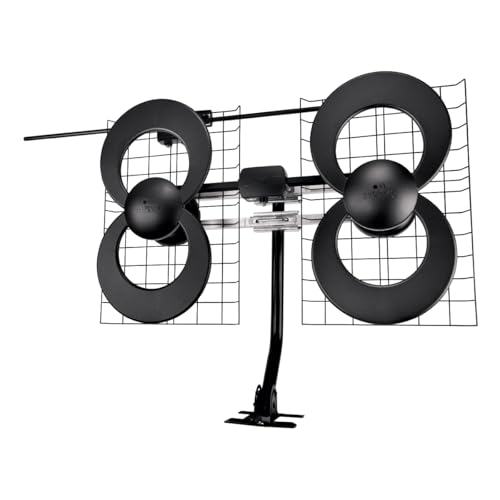
1. Antennas Direct ClearStream 4V Outdoor TV Antenna
The ClearStream 4V is a compact outdoor antenna built around a 20-inch mast with reflectors and dedicated Hi-VHF elements, so it covers both UHF and VHF signals instead of leaving VHF stations behind. Its multi-directional design gives it a wider reception window than a narrow Yagi, which suits rural homes where the towers are spread across a broad arc rather than lined up in one spot.
In practice, the ClearStream 4V suits homes where the channel list is split between UHF and VHF stations, which is common in rural areas. Mount it on a short mast above the roofline, aim it toward the middle of your tower cluster, and run a channel scan. Its compact size means a single person can install it, and its wider pattern forgives small aiming errors that would cost a narrow Yagi its signal.
Verified specs
- 20-inch mast with reflectors
- Hi-VHF elements plus UHF reception
- Multi-directional reception pattern
- Outdoor-rated build for roof or mast mounting
Strengths
- Covers both VHF and UHF, so fewer missing channels
- Wider reception arc than a strict directional Yagi
- Compact footprint that is easy to mount and aim
The ClearStream 4V is the balanced choice in this guide. It does not promise the longest range on paper, but its VHF elements and wider pattern mean it picks up stations that UHF-only antennas miss, and it is small enough to mount without a heavy mast or a second pair of hands.
Before you buy, it is worth checking the practical details that cause most returns. Confirm that the listing shows the exact model name and configuration you expect, because similar models often share a name and differ in one specification that matters. Check the size and the connections against your setup, and make sure you know what is included in the box and what is sold separately. Read the return policy before ordering, and when the product arrives, test it with your real setup in the first few days rather than leaving it in the box. A quick check at the start saves a return later, and it is the simplest way to be sure the product you receive is the one you meant to buy.
Trade-offs
- Shorter maximum range than the big Yagi models here
- No built-in amplifier, so very long cable runs may need one
- Needs a clear mounting spot with a view toward the towers
If your towers are 60-plus miles away in one direction, a long Yagi will reach further. The ClearStream 4V is at its best inside that range, where its wider pattern and VHF support earn their keep.
Who it fits best
Rural homes 20 to 50 miles from the towers, especially where stations sit in more than one direction and VHF channels matter.
Best for: Rural homes that need both VHF and UHF from towers in a broad arc.
Not suited for: Homes at the far edge of coverage needing maximum single-direction range.
Check price on Amazon: Antennas Direct ClearStream 4V Outdoor TV Antenna

2. Winegard HD7694P Heavy-Duty Outdoor Yagi TV Antenna
The Winegard HD7694P is a heavy-duty outdoor Yagi rated for a 45-mile range, built as a directional antenna for homes that know exactly where their towers are. It is non-amplified, which keeps the signal clean when local stations are strong, and its weather and rust resistant construction is made for years on a roof or mast.
The HD7694P rewards a careful install. Use a tower map to find the exact bearing of your stations, mount the antenna on a solid mast, and aim it precisely before tightening the hardware. Because it is non-amplified, the signal it delivers is clean, which helps when a strong local station sits alongside weaker distant ones. Pair it with a short, good-quality coax run for the best results.
Verified specs
- 45-mile range, directional Yagi design
- Non-amplified for a clean signal
- Heavy-duty, weather and rust resistant build
- UHF and VHF reception
Strengths
- Directional focus pulls in distant towers reliably
- No amplifier means no overload from strong nearby stations
- Heavy-duty build holds up to wind and weather
The HD7694P is a workhorse. A directional Yagi is the right tool when the towers sit in one direction, and 45 miles of honest range covers a large share of rural homes. Being non-amplified is a feature here, not a gap: with a strong local signal, an amplifier can do more harm than good.
Before you buy, it is worth checking the practical details that cause most returns. Confirm that the listing shows the exact model name and configuration you expect, because similar models often share a name and differ in one specification that matters. Check the size and the connections against your setup, and make sure you know what is included in the box and what is sold separately. Read the return policy before ordering, and when the product arrives, test it with your real setup in the first few days rather than leaving it in the box. A quick check at the start saves a return later, and it is the simplest way to be sure the product you receive is the one you meant to buy.
Trade-offs
- Must be aimed at the towers; wrong aim means weak reception
- 45-mile range is less than the biggest Yagis in this guide
- Larger than a compact panel, so it needs a solid mount
Aiming matters with any Yagi. Check a tower map for your address before mounting, and expect to fine-tune the direction once it is up. A few degrees can be the difference between a stable picture and breakup.
Who it fits best
Rural homes with towers clustered in one direction, 25 to 45 miles away, where a clean unamplified signal is preferred.
Best for: Single-direction tower clusters up to 45 miles away.
Not suited for: Homes with towers in opposite directions or beyond 45 miles.
Check price on Amazon: Winegard HD7694P Heavy-Duty Outdoor Yagi TV Antenna

3. Winegard HD8200A Platinum Heavy-Duty Outdoor Yagi TV Antenna
The Winegard HD8200A Platinum is the biggest Yagi in this guide, a heavy-duty outdoor antenna rated for 65-plus miles. It is a directional, non-amplified design built for the far edge of coverage, where smaller antennas give up. Its size is the point: a long boom and large elements collect more signal than any compact antenna can.
The HD8200A is a permanent install, not a weekend experiment. Its size and weight demand a sturdy mast, proper guying in windy areas, and a mount that will hold for years. In return, it reaches towers that smaller antennas cannot, which makes it the right choice for the most remote homes. Plan the install carefully, and the antenna will reward you with channels nothing else can pull in.
Verified specs
- 65-plus mile range, directional Yagi
- Non-amplified, heavy-duty construction
- Weather and rust resistant build
- UHF and VHF reception
Strengths
- Longest range in this guide for distant towers
- Large elements gather weak signals other antennas miss
- Durable build designed for permanent outdoor mounting
When the towers are 60 miles away and every other antenna shows nothing, the HD8200A is the kind of antenna that still works. Its size is not cosmetic: long-range reception needs element area, and this model has it. For the most remote homes, it is the strongest option here.
Before you buy, it is worth checking the practical details that cause most returns. Confirm that the listing shows the exact model name and configuration you expect, because similar models often share a name and differ in one specification that matters. Check the size and the connections against your setup, and make sure you know what is included in the box and what is sold separately. Read the return policy before ordering, and when the product arrives, test it with your real setup in the first few days rather than leaving it in the box. A quick check at the start saves a return later, and it is the simplest way to be sure the product you receive is the one you meant to buy.
Trade-offs
- Large and heavy, needs a sturdy mast and mount
- Strictly directional, so aiming is critical
- Overkill for homes within 30 miles of the towers
Do not buy the biggest antenna by default. If your towers are close, a smaller model will do the same job with less wind load and an easier install. The HD8200A earns its size only at long range.
Who it fits best
Remote rural homes 50 to 65-plus miles from the towers, with a solid mast and a clear line toward the broadcast cluster.
Best for: Maximum-range rural reception from a single tower direction.
Not suited for: Homes close to towers, or with towers in several directions.
Check price on Amazon: Winegard HD8200A Platinum Heavy-Duty Outdoor Yagi TV Antenna

4. Channel Master STEALTHtenna Elite 60 Outdoor TV Antenna
The Channel Master STEALTHtenna Elite 60 is a USA-made outdoor antenna built for local channels on UHF and VHF, with a low-profile design that mounts discreetly. It is aimed at homes that want a proper outdoor antenna without a large Yagi boom on the roof, and its Elite 60 naming points to the 60-mile class it is built for.
The STEALTHtenna Elite 60 fits homes where a large Yagi would be an eyesore or a planning concern. Its low profile mounts neatly on a wall or a short mast, and its USA-made build is designed for years outside. It works best when mounted high with a clear view, so favor a roof or gable mount over a low wall mount, and scan for channels after aiming it at your tower cluster.
Verified specs
- Outdoor UHF and VHF antenna
- USA-made construction
- Low-profile stealth design
- Compatible with smart TVs and standard tuners
Strengths
- Discreet profile that blends in on a roof or wall
- USA-made build quality
- Covers both UHF and VHF bands
The STEALTHtenna Elite 60 suits rural homeowners who want real outdoor performance without a big antenna dominating the roofline. Its compact form makes mounting simpler, and Channel Master has a long history in over-the-air reception, which shows in the build.
Before you buy, it is worth checking the practical details that cause most returns. Confirm that the listing shows the exact model name and configuration you expect, because similar models often share a name and differ in one specification that matters. Check the size and the connections against your setup, and make sure you know what is included in the box and what is sold separately. Read the return policy before ordering, and when the product arrives, test it with your real setup in the first few days rather than leaving it in the box. A quick check at the start saves a return later, and it is the simplest way to be sure the product you receive is the one you meant to buy.
Trade-offs
- Less element area than a full-size Yagi, so extreme-range performance is lower
- Needs a good mounting position to reach its rated range
- No amplifier included for very long cable runs
Treat the STEALTHtenna as a mid-to-long-range outdoor antenna, not a replacement for the biggest Yagi at 65 miles. Mounted high with a clear view, it covers most rural situations comfortably.
Who it fits best
Rural homes that want a tidy, low-profile outdoor antenna with solid mid-to-long-range performance.
Best for: Discreet outdoor mounting with UHF and VHF coverage.
Not suited for: The most remote homes needing maximum Yagi range.
Check price on Amazon: Channel Master STEALTHtenna Elite 60 Outdoor TV Antenna
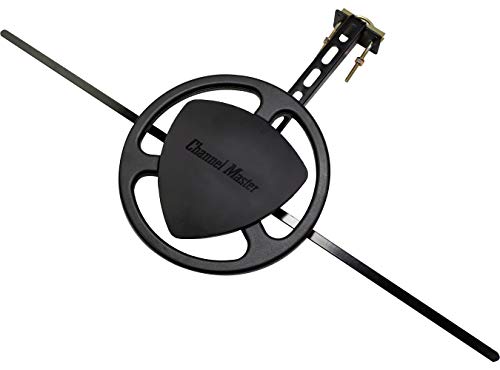
5. Channel Master Omni+ 50 Omnidirectional Digital HDTV Antenna
The Channel Master Omni+ 50 is an omnidirectional digital HDTV antenna with 360-degree reception, so it picks up signals from every direction without aiming. It includes a mounting bracket for outdoor installation, and it suits rural homes where the towers are scattered around the compass rather than grouped in one place.
The Omni+ 50 is the easiest antenna in this guide to install, because there is no aiming to get wrong. Mount it high, connect the coax, and scan. It suits homes where towers surround the property, such as valleys with stations in several directions, and it is a good choice for anyone who does not want to climb a ladder twice to fine-tune the aim.
Verified specs
- 360-degree omnidirectional reception
- No aiming required
- Includes mounting bracket
- Digital HDTV antenna for UHF and VHF
Strengths
- Receives from all directions with no aiming
- Simple setup compared with a directional Yagi
- Good fit when towers surround the home
Omnidirectional antennas solve a problem Yagis cannot: towers in opposite directions. If one cluster sits north and another sits south, a directional antenna forces a choice, while the Omni+ 50 takes both. That makes it the easiest install in this guide.
Before you buy, it is worth checking the practical details that cause most returns. Confirm that the listing shows the exact model name and configuration you expect, because similar models often share a name and differ in one specification that matters. Check the size and the connections against your setup, and make sure you know what is included in the box and what is sold separately. Read the return policy before ordering, and when the product arrives, test it with your real setup in the first few days rather than leaving it in the box. A quick check at the start saves a return later, and it is the simplest way to be sure the product you receive is the one you meant to buy.
Trade-offs
- Less gain in any one direction than a Yagi of similar size
- Shorter effective range than the big directional models
- Can pick up interference from directions you do not need
Omnidirectional reception trades peak range for coverage in every direction. It is the right call when towers surround you, and the wrong call when a single distant cluster is the only target.
Who it fits best
Rural homes with broadcast towers in several directions, within moderate range, who want a no-aim install.
Best for: Towers in every direction with no aiming.
Not suited for: A single distant tower cluster 50-plus miles away.
Check price on Amazon: Channel Master Omni+ 50 Omnidirectional Digital HDTV Antenna

6. GE Outdoor HD Digital TV Antenna
The GE Outdoor HD Digital TV Antenna is a long-range outdoor antenna that supports 4K and 1080p HD smart TV signals on VHF and UHF, and it ships with a J mount for attic or outdoor installation. It is a straightforward, widely available outdoor antenna for rural homes that want a proven design without a specialist brand.
The GE antenna is a good first outdoor antenna because the J mount is in the box and the design is straightforward. Try it in the attic first if access is easy, since some homes get a full channel list that way, but move it to the roof if the attic test is weak. Its VHF and UHF support means it will not miss the major networks that broadcast on VHF.
Verified specs
- Long-range outdoor reception
- Supports 4K and 1080p HD, VHF and UHF
- J mount included
- Attic or outdoor mounting
Strengths
- J mount included, so mounting hardware is sorted
- Works in an attic as well as outdoors
- Wide availability and simple design
The GE antenna is the practical pick: a known brand, the mount in the box, and the option to try it in the attic before committing to a roof install. For many rural homes, an attic mount with a clear roofline is enough, and this model makes that test easy.
Before you buy, it is worth checking the practical details that cause most returns. Confirm that the listing shows the exact model name and configuration you expect, because similar models often share a name and differ in one specification that matters. Check the size and the connections against your setup, and make sure you know what is included in the box and what is sold separately. Read the return policy before ordering, and when the product arrives, test it with your real setup in the first few days rather than leaving it in the box. A quick check at the start saves a return later, and it is the simplest way to be sure the product you receive is the one you meant to buy.
Trade-offs
- Attic mounting cuts signal versus a roof mount
- Less range than the largest Yagis here
- No amplifier in the box for long cable runs
An attic install is convenient but costs signal, since roofing and foil insulation block reception. If the attic test disappoints, move the same antenna outside before judging it.
Who it fits best
Rural homes wanting a simple, complete outdoor antenna kit with the mount included, for roof or attic use.
Best for: A straightforward outdoor antenna with mounting hardware included.
Not suited for: Extreme-range installs beyond 60 miles.
Check price on Amazon: GE Outdoor HD Digital TV Antenna
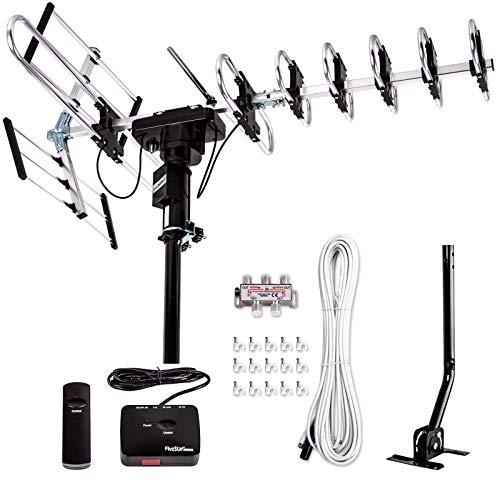
7. Five Star Outdoor Digital Amplified HDTV Antenna
The Five Star Outdoor Digital Amplified HDTV Antenna is an amplified outdoor antenna rated up to 200 miles, with 360-degree rotation and support for HD 4K and 1080p signals. Its amplifier and rotatable design target the hardest rural cases: weak signals, long cable runs, and towers that are not all in one direction.
The Five Star amplified antenna is at its best where the signal is weak but present and the cable run is long. Mount it high, power the amplifier, and use the rotation feature to favor the tower group that matters most. If a strong local station causes breakup, try the antenna without the amplifier first, since amplification helps weak signals and hurts strong ones.
Verified specs
- Amplified design, up to 200-mile range rating
- 360-degree rotation
- HD 4K and 1080p support
- Directional design for attic or roof mounting
Strengths
- Built-in amplifier helps weak signals and long cable runs
- Rotatable design lets you aim at different tower groups
- High range rating for the far edge of coverage
Amplification is genuinely useful in rural installs: a long coax run from a roof antenna to a distant TV can lose a surprising amount of signal, and a good amplifier makes up for it. The rotation feature also helps when towers sit in two different directions and you want to favor one or the other.
Before you buy, it is worth checking the practical details that cause most returns. Confirm that the listing shows the exact model name and configuration you expect, because similar models often share a name and differ in one specification that matters. Check the size and the connections against your setup, and make sure you know what is included in the box and what is sold separately. Read the return policy before ordering, and when the product arrives, test it with your real setup in the first few days rather than leaving it in the box. A quick check at the start saves a return later, and it is the simplest way to be sure the product you receive is the one you meant to buy.
Trade-offs
- 200-mile ratings are best-case figures, not typical results
- An amplifier can overload the tuner if a strong station is nearby
- Needs power for the amplifier, so placement must allow for it
Take any 200-mile claim as a marketing ceiling. Real-world range depends on terrain, tower power, and height. The amplifier is the real feature here, and it helps most on long cable runs.
Who it fits best
Rural homes with weak signals or long cable runs, especially where towers sit in more than one direction and rotation helps.
Best for: Weak-signal rural homes with long cable runs.
Not suited for: Homes with a strong local station that could overload an amplifier.
Check price on Amazon: Five Star Outdoor Digital Amplified HDTV Antenna

8. 1byone Outdoor TV Antenna
The 1byone Outdoor TV Antenna is a 360-degree omni-directional antenna with a 100-plus-mile range rating and 4K-ready HDTV support, with enhanced VHF and UHF reception. It is an omnidirectional alternative to the Channel Master Omni+ 50, for rural homes that want reception from every direction without aiming.
The 1byone antenna suits a rural home where the towers are scattered. Mount it high on a mast or a gable, connect the coax, and scan for channels: there is no aiming to adjust. Its omni-directional design means it will also pick up stations you did not expect, which is a bonus in areas where the tower map is incomplete. Keep the coax run short and use outdoor-rated cable for the best results.
Verified specs
- 360-degree omni-directional reception
- 100-plus-mile range rating
- 4K-ready HDTV, enhanced VHF and UHF
- Outdoor mounting
Strengths
- No aiming needed, receives from all directions
- High range rating for an omnidirectional design
- 4K-ready for modern TVs
The 1byone is the second omnidirectional option in this guide, and it suits the same situation: towers in several directions and a homeowner who does not want to aim an antenna. Its 100-plus-mile rating is optimistic, but its omni-directional design is genuinely useful where towers surround the home.
Before you buy, it is worth checking the practical details that cause most returns. Confirm that the listing shows the exact model name and configuration you expect, because similar models often share a name and differ in one specification that matters. Check the size and the connections against your setup, and make sure you know what is included in the box and what is sold separately. Read the return policy before ordering, and when the product arrives, test it with your real setup in the first few days rather than leaving it in the box. A quick check at the start saves a return later, and it is the simplest way to be sure the product you receive is the one you meant to buy.
Trade-offs
- Omni-directional gain is lower than a Yagi in one direction
- Range rating is a best-case figure
- Needs a clear mounting spot to reach its rated range
As with any omnidirectional antenna, the 1byone trades peak range for coverage in every direction. It is the right call when towers surround you, and the wrong call for a single distant cluster.
Who it fits best
Rural homes with towers in several directions who want a no-aim install with a high range rating.
Best for: Omni-directional reception with a high range rating.
Not suited for: A single distant tower cluster 50-plus miles away.
Check price on Amazon: 1byone Outdoor TV Antenna
Buying guide
Warranties, returns, and checking your purchase
Most products in this guide come with a manufacturer warranty, and the length and coverage vary by brand, so check the warranty terms before you buy rather than after something goes wrong. Keep the packaging until you have tested the product, because a return is much easier with the original box. When the product arrives, check that the model name, the configuration, and the included accessories match the listing, and test it with your real setup in the first few days. If anything is wrong, contact the seller promptly, because return windows are limited and the first week is the time to find problems.
Range ratings are ceilings, not promises
A 200-mile or even 65-mile rating describes ideal conditions: flat land, a high mast, and a powerful transmitter. Hills, trees, buildings, and weather all cut real range. Use the rating to compare antennas, not to predict your exact channel count, and check a tower map for your address to see how far your stations actually are.
Height beats almost everything else
Raising an antenna from the attic to the roof, or from the roof to a taller mast, often adds more channels than switching models. Signal strength grows with height because the antenna clears trees and rooflines. If you can only change one thing about a weak install, change the height first.
Directional or omnidirectional?
Choose directional when your towers cluster in one direction, because a Yagi concentrates its gain where it counts. Choose omnidirectional when towers surround you. Aiming a directional antenna at the wrong bearing is the most common rural install mistake, so confirm the tower directions before you climb the ladder.
VHF still matters
Many rural stations broadcast on VHF, and a UHF-only antenna will miss them entirely. Every pick in this guide covers both bands, but if you ever shop outside this list, check for VHF support explicitly. A missing VHF element is the quiet reason some installs lose a major network.
Amplifiers help long runs, not dead zones
An amplifier boosts the signal already at the antenna, which helps when a long cable run would eat it. It cannot rescue a signal that never reaches the antenna, and it can overload a tuner when a strong local station is present. Use one for long runs and weak signals, not as a fix for a bad mounting spot.
How to use and care for your pick
Inspect the mount and coax at least once a year, ideally before storm season. Tighten any loose hardware, check the cable for cracks or water entry at the connectors, and clear leaves or nests that can shift the aim. Keep the coax run as short as practical and use outdoor-rated cable, since indoor cable degrades quickly outside. If reception drops suddenly after a storm, check the aim first: wind can rotate a mast by a few degrees, and a small shift is often the whole problem. A quick re-aim and a rescan usually restores the channels.
Common mistakes to avoid
The most common mistakes are mounting too low, aiming by guesswork instead of a tower map, and judging an antenna from an attic test when the roof would work. Another is stacking an amplifier on top of an already strong signal, which causes overload and pixelation that looks like weak reception. Finally, many people scan for channels once and never rescan: stations move frequencies and new channels appear, so rescan every few months and after any antenna change.
Final recommendation
For most rural homes, the Winegard HD7694P is the sweet spot: a proven 45-mile directional Yagi with a clean, unamplified signal and a heavy-duty build. If the towers are further out, step up to the Winegard HD8200A for its 65-plus-mile reach. If towers surround the house, the Channel Master Omni+ 50 removes aiming from the equation, and the ClearStream 4V is the best all-rounder when VHF channels matter. Whichever you choose, mount it high, aim it with a tower map, and rescan after install.
Frequently asked questions
Do I need an outdoor antenna in a rural area?
In most rural areas, yes. Indoor antennas are built for strong city signals, and the distance to rural towers is usually too great for them. An outdoor antenna mounted high has a far better chance of a stable picture, and it is the standard recommendation once you are more than 25 miles from the towers.
How far can a rural TV antenna really reach?
It depends on terrain, tower power, and height, but a good directional Yagi can reliably reach 45 to 65 miles in open country. Hills and dense trees cut that down, while a tall mast and a clear line of sight extend it. Range ratings are best-case figures, so treat them as comparisons, not guarantees.
Should I get an amplified antenna?
An amplifier helps when the cable run from the antenna to the TV is long, or when the signal is weak but present. It does not help when there is no signal at the antenna, and it can overload the tuner if a strong station is nearby. Start unamplified if your towers are within 45 miles, and add amplification for long runs.
What is the difference between VHF and UHF?
They are two frequency bands used by broadcast TV. Many stations use UHF, but a meaningful share of rural stations still broadcast on VHF. An antenna that covers only one band will miss the channels on the other, so rural buyers should always choose a model that lists both.
Can I mount an antenna in the attic?
You can, and it is worth trying, but an attic mount loses signal to roofing, foil insulation, and the structure itself. If the attic test gives you most channels, a roof mount will usually give you the rest. If the attic test gives you almost nothing, move outside before deciding the antenna is at fault.
How do I find where my TV towers are?
Use a free tower map site and enter your address: it shows the direction and distance of every station near you, and whether each broadcasts on VHF or UHF. That information decides whether you need a directional or omnidirectional antenna, and how much range you need. Aim a directional antenna at the bearing the map gives, not at a guess.
More from Reviewstook
If this guide helped, these related guides cover the rest of your setup: Best Long-Range TV Antennas, Best Indoor TV Antennas, TV Antenna Guide.
Conclusion
Rural TV reception rewards the right antenna more than any other part of the setup. A directional Yagi aimed at a distant tower cluster, an omnidirectional model for towers in every direction, or an amplified design for long cable runs can each turn an unwatchable signal into a full channel lineup, and the picks in this guide cover all three situations.
Start with a tower map, pick the design that matches your tower layout, mount it as high as you safely can, and rescan after the install. The best digital antennas for rural areas are the ones that fit your specific towers and terrain, and with the right choice, free over-the-air TV works just as well in the country as it does in the city.


