When you buy through links on this page, we may earn an affiliate commission. That commission does not decide which graphics cards appear in this roundup or the order they appear in. Every model below was selected from published manufacturer specifications and documentation — core counts, memory configurations, board power figures and feature lists published by NVIDIA, AMD and Intel — and judged against the buying criteria set out in the guide section of this article.
An entry level graphics card is the first discrete GPU in a build, or the card that rescues an older desktop whose integrated graphics have run out of road. The job description is narrower than the rest of the market’s: play modern games well at 1080p, drive one or two ordinary monitors without drama, fit inside a case and a power budget that were never designed with gaming in mind, and leave enough money in the build for the parts that matter next year. Every card in this roundup was chosen against that job description and nothing grander.
That framing matters because the entry tier is where specification sheets mislead most efficiently. A card can carry a famous name and a current-generation badge while shipping with too little memory for the texture settings modern games assume. Another can look weak on a core-count table while sipping so little power that it installs in a prebuilt office machine with no spare cables and no ventilation to speak of. The three axes that actually separate these six cards are 1080p value, memory capacity, and power requirements — in that order for most buyers, but not all, which is why the guide below works through each axis before any pick is discussed.
Scope needs stating plainly. This roundup is locked to the opening models of the three GPU makers: nothing here reaches into the mid-range, and cards such as the RTX 4060 Ti or the RX 7700 series are deliberately excluded even where their street positioning drifts downward, because a first-build buyer comparing them against true entry cards is really asking a different question about a different budget. Readers whose question is the broader one — which graphics card at any level — will find the site’s general guide to the best graphics cards covers the full ladder; this article stays on its bottom rungs and goes deeper there.
best low profile graphics cards
One more piece of housekeeping before the picks. Graphics cards are sold by board partners — ASUS, MSI, Gigabyte, ASRock, Sapphire, Sparkle, Acer and others — who wrap the same GPU silicon in different coolers, at slightly different clocks, in different lengths. The GPU, its memory configuration and its feature set are what this roundup compares, because those are fixed by NVIDIA, AMD and Intel. The partner card is a fit-and-finish decision made afterwards, and the guide section explains how to make it without undoing the choice of GPU itself.
The order of the picks is deliberate and worth understanding before it is misread as a league table. The cards are arranged from the lowest power draw upward through the group’s roles — the slot-powered enabler first, then the value anchor, the longevity pick, the two feature-led current designs, and finally the first-generation bargain — because at this tier the buyer’s constraint usually chooses the card before preference gets a vote. A reader whose constraint is a missing power cable has a shortlist of one; a reader whose constraint is memory has a shortlist of one as well, and it is a different one. Read the pick that matches the constraint first, and treat the others as the comparison set that proves the match.
The six picks at a glance
The table summarises the published facts that drive the comparison: memory, board power, the power connector situation, and the headline feature each card brings to the entry tier. Performance is discussed qualitatively throughout this article, in resolution and settings classes, because that is the level of precision manufacturer documentation honestly supports.
| Model | Memory | Board power | Power connector | Headline feature | Suits |
|---|---|---|---|---|---|
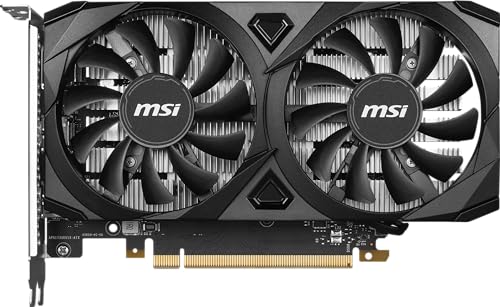
| NVIDIA GeForce RTX 3050 6GB | 6GB GDDR6, 96-bit | 70W | None — slot power | DLSS upscaling at the lowest power draw in the group | Prebuilt PCs with no spare cables |
| AMD Radeon RX 6600 | 8GB GDDR6, 128-bit | 132W | 1x 8-pin | Strong 1080p raster value | Traditional gaming on a tight budget |
| Intel Arc B580 | 12GB GDDR6, 192-bit | 190W | 1x 8-pin | Most VRAM in the group, AV1 encode, XeSS 2 | Buyers who keep a card for years |
| AMD Radeon RX 7600 | 8GB GDDR6, 128-bit | 165W | 1x 8-pin | AV1 encoding on RDNA 3 | Streamers and newer-feature seekers |
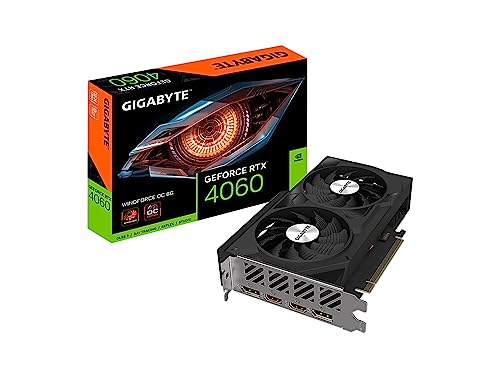
| NVIDIA GeForce RTX 4060 | 8GB GDDR6, 128-bit | 115W | 1x 8-pin | DLSS 3 Frame Generation, very low power | Feature-first buyers, small quiet builds |
| Intel Arc A750 | 8GB GDDR6, 256-bit | 225W | 1x 8-pin + 1x 6-pin (reference) | Wide memory bus, AV1 encode, soft pricing | Bargain hunters with a capable power supply |
In this guide
What to look for in an entry level graphics card
Start with the resolution and settings class, not the badge
Every card here is a 1080p card. That sentence does more buying work than any other in this article, because it converts a vague wish — a card that plays games well — into a testable requirement: full HD resolution, at the high settings class in most current titles, with medium settings as the fallback in the heaviest releases. None of these six cards is a 1440p card in the same sense, whatever a product page implies; several can visit 1440p in lighter or older games, and upscaling stretches a couple of them further, but a buyer whose monitor is 1440p and whose library is current should be shopping a tier up. Conversely, a buyer on a 1080p screen who pays for capability aimed at higher resolutions is spending on headroom that the display cannot show.
Within the 1080p class, expectations split by game type. Esports titles — the competitive shooters, football and racing games that dominate play time — are built to run on modest hardware and ask mainly for a card that can hold high frame rates at high settings, which every pick here manages. Story-driven releases with dense worlds and heavy lighting ask a different question, about memory and upscaling rather than raw pace, and that is where the six cards separate. Naming the dominant half of a game library before choosing a card is the single most useful step in the whole purchase.
Refresh rate refines the same point. A 1080p monitor at 60Hz asks every card here for the same modest thing, and all six deliver it in most titles at sensible settings. A 1080p monitor at 144Hz or beyond — the standard pairing for competitive play — asks for frame rates the esports catalogue happily gives and the cinematic catalogue mostly does not, which is why high-refresh buyers should weight the upscaling sections of each pick more heavily than the raw rendering story. The monitor already on the desk is, once again, part of the graphics card decision whether the buyer invites it or not.
VRAM: the specification that ages a card
Video memory is where entry cards diverge most and where the consequences arrive latest. The six picks carry 6GB, 8GB or 12GB, and the difference is not about frame rate on day one so much as texture quality in year three. Games allocate memory for texture pools sized to the settings selected; when a card’s memory fills, the visible results are textures that resolve late or stay soft, stutter as assets stream, or settings menus that quietly cap texture quality below what the GPU cores could otherwise drive. A card can therefore be fast enough and still look worse than a slower card with more memory, in the specific games that lean hardest on textures.
The practical reading for this group: 6GB is a workable floor for esports and for story games at medium texture settings, and it is the honest compromise inside the RTX 3050 6GB’s very low power envelope. 8GB is the current centre of gravity — comfortable at 1080p high in most titles, with texture settings occasionally trimmed in the most demanding releases. 12GB, offered only by the Arc B580 here, is the longevity play: it removes memory as the likely reason for replacement across the card’s whole service life, and it is the main reason that card anchors the top half of this roundup despite Intel being the newest name in discrete graphics.
Power draw decides what the card can be installed in
Board power figures in this group run from 70W to 225W, and that spread matters less for the electricity bill than for physical compatibility. A card at 70W draws everything it needs from the PCIe slot itself, which is why the RTX 3050 6GB exists: prebuilt office desktops and older home PCs frequently have power supplies with no spare PCIe power cable at all, modest wattage, and proprietary connectors that cannot be adapted. For those machines, the connector question is not a preference but a gate, and only a slot-powered card passes through it.
Above that floor, each card needs one 8-pin connector — except the reference-design Arc A750, which asks for an 8-pin plus a 6-pin — and the power supply needs enough total wattage and enough honesty in its labelling to run the whole system, not just the card. Manufacturer guidance for cards in this class clusters around the 450W to 550W mark for a complete system, with the A750’s higher board power pushing its recommendation upward. A buyer reusing an old power supply should read its label rather than its marketing: the wattage printed on the unit, its age, and whether the required cables physically exist decide the question. Replacing a genuinely inadequate power supply is a legitimate part of an entry GPU budget, and a card choice that forces that replacement is not automatically the wrong choice — but it must be a chosen cost, not a discovered one.
Upscaling and frame generation are part of the product now
All three makers ship a temporal upscaling system — NVIDIA’s DLSS, AMD’s FSR and Intel’s XeSS — that renders the game below the display resolution and reconstructs the image, buying frame rate at a modest cost in image softness. At 1080p the reconstruction has less source material to work with than at higher resolutions, so the balanced and performance modes deserve more scepticism here than quality mode; but for a card at this tier, upscaling is routinely the difference between high settings and medium in a heavy release, and support for it is a genuine product feature rather than a footnote.
Frame generation goes a step further, inserting constructed frames between rendered ones. In this group it belongs to the RTX 4060, whose DLSS 3 Frame Generation is the headline reason to pay its premium, and to the Arc B580 through Intel’s XeSS 2 frame generation support. Two honest cautions apply everywhere the feature appears. Generated frames raise the displayed frame rate without lowering input latency in the same proportion, so the feature flatters slower-paced and cinematic games more than competitive ones. And frame generation consumes memory and works best from a healthy base frame rate — it polishes a playable game rather than rescuing an unplayable one. AMD’s competing Fluid Motion Frames operates at driver level rather than per game, a different trade-off that the RX 6600 and RX 7600 sections return to.
Ray tracing at this tier: a seasoning, not the meal
Every card in this roundup can switch ray tracing on, and none of them should be bought primarily for it. At entry level, full ray-traced lighting in current releases pulls frame rates below comfortable 1080p play unless upscaling carries much of the load, and the realistic use of the feature here is selective: a reflection or shadow setting enabled in a game whose engine implements it cheaply, or a slower-paced title where a lower frame rate is an acceptable price for the look. The makers’ hardware generations do differ — NVIDIA’s RT cores and Intel’s second-generation units handle the work more gracefully than AMD’s first attempts in the RX 6600, with the RX 7600 improved but still happiest in rasterised rendering — and those differences are noted per pick. A buyer who has ray tracing at the top of the wish list has, again, described a purchase a tier up.
Encoders: the quiet reason some buyers should pay more
A graphics card’s video encoder matters to anyone who streams, records gameplay, or edits video, and the entry tier hides a real generational split. The dividing line is AV1 encoding, the modern codec that streaming platforms increasingly favour for its quality at a given bitrate. The Arc B580, Arc A750, RX 7600 and RTX 4060 all encode AV1 in hardware — Intel’s media engine was early to it, and both AMD and NVIDIA added it in their current architectures. The RX 6600 and RTX 3050 6GB encode the older H.264 and HEVC formats only; both decode AV1 for playback, which covers watching, but a buyer planning to stream in AV1 should strike them from the list on this ground alone. For everyone else the encoder question is simpler: all six cards hardware-encode H.264 competently, which is enough for recording clips and casual streaming.
The PCIe lane caveat for older motherboards
Five of these six cards connect to the motherboard over eight PCIe lanes rather than sixteen. On a modern PCIe 4.0 board that is a non-issue. On an older PCIe 3.0 board — exactly the kind of machine an entry card is often bought to revive — the same eight lanes carry half the bandwidth, and the effect, while usually small, is real in some games and slightly larger on the 8GB cards when memory pressure pushes traffic across the bus. The RX 6600 deserves a specific note: it is an eight-lane card from the PCIe 4.0 generation most often dropped into older systems. None of this disqualifies any pick; it simply means a buyer pairing one of these cards with a much older platform should expect the combination to land a little below the card’s showing in a modern system, and should not mistake that gap for a faulty card.
Board partners, lengths and the last-fit checks
Once the GPU is chosen, the partner card decides whether it physically fits and how quietly it cools. Entry cards come in lengths from compact single-fan designs around 17cm to triple-fan designs that belong in a different conversation entirely; the measurement that matters is the case’s stated GPU clearance against the specific card’s stated length, with the power cable’s bend allowed for on top. Single-fan and low-profile variants of the RTX 3050 6GB exist precisely for small and slim cases, including half-height designs for office chassis. Two further checks cost nothing: confirm the display outputs match the monitor’s inputs — HDMI and DisplayPort mixes vary by partner — and confirm the card’s slot width, since a thick cooler can swallow the neighbouring slot a Wi-Fi card was living in.
Resizable BAR: the free setting Arc buyers must check
One platform setting deserves its own paragraph because it changes what two of these cards are. Resizable BAR lets the processor address a graphics card’s whole memory at once rather than through a small window, and modern drivers from all three makers assume it is enabled. For the AMD and NVIDIA picks the effect of leaving it off is a modest performance tax in some games. For Intel’s Arc cards, both generations, the effect is considerably larger — Arc’s architecture leans on the setting hard enough that Intel’s own guidance treats it as a requirement, and an A750 or B580 installed in an older board with no Resizable BAR option will underperform its specification in a way that looks like a defective card. The setting lives in the motherboard’s firmware menu, most boards from the last several years expose it, and enabling it costs nothing. A buyer reviving a genuinely old platform for an Arc card should confirm the option exists before ordering; a buyer choosing AMD or NVIDIA for the same machine can treat it as a pleasant bonus instead.
Cooling and noise at this tier
Entry cards are not silent by default, and the difference between partner designs is mostly audible. A 70W or 115W card gives its cooler little work to do, and dual-fan designs at those power levels can hold low fan speeds under gaming load; several also stop their fans entirely at desktop temperatures, a feature worth checking in the partner card’s specification if the machine lives in a bedroom or a shared room. At the other end, a 225W card exhausts real heat into the case, and a small case with one exhaust fan will recycle that heat through every other component. Single-fan versions of the more powerful cards exist for short cases and earn their place there, but in a roomy case the dual-fan version of the same GPU is almost always the quieter purchase. Coil whine — the faint electrical buzz some cards emit under high frame rates — is a lottery no specification settles; it varies by individual card and power supply pairing, and it is a reason to buy from a retailer with a painless returns policy rather than a reason to choose one GPU over another.
The picks in detail

NVIDIA GeForce RTX 3050 6GB
The RTX 3050 6GB is the card this roundup’s power axis exists for. NVIDIA’s specification is a 70W board built on the GA107 chip with 2,304 CUDA cores and 6GB of GDDR6 on a 96-bit bus — and 70W is the number that matters, because it sits under the 75W a PCIe slot alone can deliver. No power connector, no cable hunt, no power supply arithmetic: the card goes into the slot of a prebuilt desktop that was never meant for gaming and turns it into a machine that plays esports titles at high settings and current story games at medium ones. That is a specific and genuinely underserved job, and no other card in this group can do it at all.
Precision about the name is essential, because the RTX 3050 6GB is not the RTX 3050 8GB with a smaller memory sticker. The 8GB card is a different, stronger product — more cores, a wider 128-bit bus, higher clocks and a 130W appetite that requires an 8-pin connector. The 6GB card’s compromises are the direct price of its slot-power design: the narrower bus and 6GB capacity cap texture settings in demanding games sooner, and DLSS support stops at upscaling, with no frame generation. Bought knowingly, as the enabler of a machine that otherwise cannot be upgraded, those compromises are coherent. Bought by accident, by a reader who meant to order the 8GB model, they would be a disappointment — which is why listings deserve a careful read at purchase time.
Ownership of the card is otherwise uneventful in the way buyers at this tier hope for. NVIDIA’s driver support for the Ampere generation is mature and still current, the GeForce software stack handles recording and streaming through the older but capable encoder for anyone who wants clips rather than a channel, and the card’s 6GB is honestly matched to the settings classes its cores can drive — the pairing is coherent rather than crippled. It is also the pick most likely to be found in half-height form for the slimline office towers that line second-hand marketplaces, which makes it the natural second half of the cheapest respectable gaming conversion those machines can receive.
Strengths
- Runs entirely on slot power at 70W — the only pick that installs in prebuilt PCs with no spare PCIe power cable.
- DLSS upscaling stretches its modest hardware further than raw specifications suggest in supported games.
- Partner range includes compact single-fan and low-profile half-height cards for slim office cases.
- Second-generation RT cores and a mature driver stack; AV1 decode covers modern video playback.
Trade-offs
- 6GB of memory on a 96-bit bus is the tightest memory configuration in the group; texture settings in heavy games need trimming first.
- No AV1 encoding and no frame generation — streamers should look at the encoder picks instead.
- Its raster pace is the gentlest here; high settings at 1080p are an esports expectation, not a story-game one.
- The 8GB namesake invites ordering mistakes, and some partner listings blur the two.
Who it suits: owners of prebuilt and older desktops whose power supplies offer no spare connector, players whose library is esports-led, and anyone upgrading a slim or small-form-factor machine where length and heat rule out everything else in this roundup. For a cable-free card that turns an ordinary desktop into a gaming machine, the RTX 3050 6GB is the one to check price on Amazon.

AMD Radeon RX 6600
If the RTX 3050 6GB is the power pick, the RX 6600 is the value pick — the card that has anchored sensible 1080p builds since its RDNA 2 generation was current, and whose case rests on straightforward arithmetic. Its 1,792 stream processors and 8GB of GDDR6 on a 128-bit bus deliver the strongest traditional rasterised gaming pace per unit of money in this group, at a 132W board power that asks for a single 8-pin connector and nothing exotic from the power supply. There is no feature headline, and that is the point: the money went into the rendering itself.
The card’s age shows in its feature list rather than its frame rates. FSR upscaling is supported in its current forms and works on the card, but the hardware predates AMD’s machine-learning upscaling generation, so reconstruction quality leans on the older algorithmic versions. Ray tracing is present and usable in light doses, though the first-generation RT implementation is the least comfortable here. The encoder encodes H.264 and HEVC only, with no AV1 — the clearest single reason for a streaming-minded buyer to pass it by. And as noted in the guide, its eight-lane PCIe connection asks a small toll on older PCIe 3.0 motherboards, the very systems it is most often bought into.
Two ownership details round out the RX 6600’s case. AMD’s driver-level frame generation can be switched on for games that never integrated the feature, which partially answers the frame generation gap against the RTX 4060 — with the caveat that driver-level generation lacks the game’s own motion data and produces a rougher result than the integrated kind. And because RDNA 2 was a high-volume generation, the partner-card catalogue is deep and the second-hand knowledge base around the card is extensive; a buyer troubleshooting anything from a fan curve to a display quirk will find the question has been asked and answered many times over.
Strengths
- Strongest 1080p raster value in the group; 8GB of memory suits high texture settings in most current titles.
- Modest 132W board power and one 8-pin connector make power supply requirements easy.
- Wide partner range, including short dual-fan designs that fit smaller cases.
- FSR upscaling support across a large game catalogue, with driver-level frame generation available as an option.
Trade-offs
- No AV1 encoder; H.264 quality for streaming is a generation behind the encoder picks.
- Ray tracing performance is the weakest in the group — a light-touch feature only.
- Eight-lane PCIe interface loses a little on older PCIe 3.0 boards.
- An older design: efficiency and features trail the RX 7600 even where raw pace is close.
Who it suits: buyers building or upgrading a conventional gaming PC on the tightest sensible budget, whose library is traditional rasterised gaming at 1080p and whose plans include neither streaming in AV1 nor serious ray tracing. For traditional 1080p gaming value with no feature tax, the RX 6600 remains the card to check price on Amazon.
Availability note: the current listing for this pick is a renewed unit, professionally inspected and restored rather than factory-new.

Intel Arc B580
The Arc B580 is the most modern card in this roundup and, on the specifications that age a GPU, the most generous. Intel’s second-generation Battlemage design carries 20 Xe cores and — the figure that defines the pick — 12GB of GDDR6 on a 192-bit bus, half again the memory of the 8GB cards and double the RTX 3050 6GB’s, at a 190W board power fed by one 8-pin connector. In a tier where every rival asks the buyer to accept a memory ceiling, the B580 simply declines to impose one, and that single decision makes it the easiest card here to recommend to someone who intends to keep a GPU for four or five years.
The rest of the specification supports the headline. XeSS 2 brings both upscaling and frame generation, Intel’s media engine encodes AV1 alongside HEVC and H.264, and the ray tracing hardware is a clear generation ahead of the A750 below it. The honest caveats are about ecosystem rather than silicon. Intel’s driver story has improved markedly across the Arc generations and the B580 launched in far better shape than the first Alchemist cards did, but buyers of older games — particularly DirectX 9-era titles — should know the Arc line’s emulation path can still produce uneven results where NVIDIA and AMD drivers are boringly consistent. Availability of partner designs is also thinner than the big two’s catalogues, so the specific card on sale deserves the fit checks from the guide section.
The platform check from the guide applies to this card with full force: Resizable BAR should be enabled for the B580 to perform to its specification, and buyers with boards old enough to lack the setting should factor that in as seriously as the power connector. Intel also sells its own Limited Edition design of the B580 alongside partner cards, an unusual arrangement at this tier that gives buyers a reference cooler with published dimensions straight from the manufacturer — useful certainty for tight cases. Driver releases for the Arc line arrive frequently, and the cadence itself is part of the ownership proposition: this is the one pick whose software is still visibly improving underneath it.
Strengths
- 12GB of VRAM on a 192-bit bus — the most memory headroom in the group by a wide margin, and the strongest longevity case.
- Current-generation feature set: XeSS 2 upscaling and frame generation, AV1 encode and decode.
- Second-generation ray tracing units are competitive at this tier rather than decorative.
- Strong 1080p pace with genuine stretch into lighter 1440p play.
Trade-offs
- 190W board power is the second-highest here; not a card for marginal power supplies.
- Driver maturity in very old games still trails NVIDIA and AMD, despite large improvements.
- Fewer board partner designs to choose from, so size and cooler options are narrower.
- Idle power behaviour has historically been a weak point for Arc cards; check the specific partner card’s documentation.
Who it suits: buyers who keep hardware for years and want memory removed as a reason to upgrade, players of texture-heavy current releases at 1080p, and anyone who wants one card to cover gaming, streaming and a little headroom above the tier. For the longest useful life at this level, the Arc B580 is the first card to check price on Amazon.

AMD Radeon RX 7600
The RX 7600 is what the RX 6600 grows into: AMD’s RDNA 3 design with 2,048 stream processors, 8GB of GDDR6 on a 128-bit bus, and the two generational additions that matter most at this tier — a hardware AV1 encoder and improved ray tracing units. Its 165W board power and single 8-pin connector keep installation uncomplicated. Where the RX 6600 wins on raw value arithmetic, the RX 7600 answers with currency: every feature a buyer in this class is likely to ask about over the next few years is present in its current form.
The card’s limits are the tier’s limits rather than design mistakes. The 128-bit bus and 8GB capacity are shared with the RTX 4060, and in memory-hungry games the two cards meet the same ceiling; AMD’s larger Infinity Cache softens the bus width on paper but does not repeal it. FSR upscaling in its algorithmic form is a step behind DLSS in reconstruction finesse at 1080p, and AMD’s machine-learning FSR generation is reserved for its newer hardware, so this card’s upscaling story is good rather than class-leading. Ray tracing, while improved over the RX 6600, still asks for restraint and upscaling support in heavier titles.
The RX 7600’s display engine is a quieter advantage worth naming. RDNA 3 brought DisplayPort 2.1 to AMD’s stack, and partner cards that wire it up can drive high-refresh 1080p and 1440p monitors with room to spare, alongside the AV1 decode that makes the card a clean media-centre citizen. AMD’s game-integrated FSR 3 frame generation is also supported on this card — distinct from the driver-level feature on the RX 6600 — so in titles that implement it, the RX 7600 does have a frame generation answer, even if the catalogue of supporting games is thinner than DLSS 3’s. For a buyer whose monitor upgrade is planned before the next graphics card, that headroom in the display path is a sensible thing to bank.
Strengths
- AV1 encoding on board — the cheapest route into modern streaming codecs from AMD’s side of this group.
- Current RDNA 3 architecture with better efficiency and ray tracing than the RX 6600 it succeeds.
- 8GB of memory and a single 8-pin connector keep the rest of the build specification simple.
- Compact partner designs are common, including short cards for smaller cases.
Trade-offs
- The same 8GB, 128-bit memory ceiling as the RTX 4060, without frame generation to offset it.
- Upscaling quality at 1080p trails DLSS in fine detail, and the newest FSR generation is not available to this card.
- 165W is unremarkable efficiency for its pace next to the RTX 4060’s 115W.
- Buyers cross-shopping the RX 6600 pay a premium for features some will never open.
Who it suits: streamers and recorders who want AV1 without leaving AMD’s ecosystem, buyers who value a current architecture over the last generation’s discount, and 1080p players who expect to use upscaling regularly. For a current-generation AMD card with AV1 on board, the RX 7600 is the model to check price on Amazon.

NVIDIA GeForce RTX 4060
The RTX 4060 is the feature pick and the efficiency pick at once, which is an unusual combination at any tier. NVIDIA’s Ada Lovelace design — 3,072 CUDA cores, 8GB of GDDR6 on a 128-bit bus — runs at a 115W board power, the lowest here of any card that needs a connector at all, and brings the group’s most complete software story: DLSS upscaling in its most refined form, DLSS 3 Frame Generation, and an eighth-generation NVENC encoder with AV1 support. In games that support frame generation, the displayed smoothness this card produces sits above what its raw rendering pace would predict, and that is the honest core of its premium.
The premium is the argument against it, and it should be stated without flinching. Measured purely as rasterised 1080p rendering per unit of money, the RTX 4060 is not the value leader of this group — the RX 6600 and the Intel cards press it hard, and the B580 offers half again the memory at a similar place in the market. Its 8GB on a 128-bit bus is the configuration most exposed to the memory trend described in the guide, and its eight-lane PCIe interface repeats the older-board caveat. The card makes sense when its specific features are worth money to the buyer: frame generation for slower-paced games, DLSS quality, AV1 streaming, or a small and quiet build where 115W of heat is a design gift. Bought as a generic 1080p card with the features ignored, it is an expensive way to stand still.
The card’s ecosystem is the other half of its defence. DLSS is integrated into the largest catalogue of games, Reflex latency reduction is a standard feature of competitive titles, and NVIDIA’s Studio driver branch serves the creators who edit video or stream from the same machine they game on — a dual use the AV1 encoder makes genuinely practical at this level. The RTX 4060 is also the card most often found inside ready-built gaming PCs at this tier, which means the prebuilt route and the component route converge on it; buyers comparing a prebuilt against a self-build should note when the same GPU anchors both, because the comparison then becomes about the rest of the machine rather than the graphics.
Strengths
- DLSS 3 Frame Generation and the most polished upscaling in the group.
- 115W board power — cool, quiet partner cards and easy power supply requirements.
- AV1 encoding via the current NVENC, plus NVIDIA’s mature streaming software ecosystem.
- Third-generation RT cores handle selective ray tracing more gracefully than rivals here.
Trade-offs
- Weakest raw value arithmetic in the group; the price buys features, not rendering pace.
- 8GB on a 128-bit bus is the memory configuration with the least headroom among the 8GB cards.
- Frame generation does not reduce input latency and helps least in competitive games.
- Eight-lane PCIe connection, with the usual small toll on PCIe 3.0 motherboards.
Who it suits: buyers who play the slower-paced, frame-generation-friendly end of the catalogue, streamers set on NVIDIA’s software stack, and builders of small, quiet systems who prize the 115W heat budget as much as the frame rate. For frame generation at a whisper of power draw, the RTX 4060 is the pick to check price on Amazon.

Intel Arc A750
The Arc A750 is the first-generation bargain: Intel’s Alchemist flagship silicon trimmed to an entry price, carrying specifications that read a class above its station — 28 Xe cores and 8GB of GDDR6 on a 256-bit bus, the widest memory interface in this group, with bandwidth the 128-bit cards cannot approach. Its media engine was the first in the industry to encode AV1, and it still anchors the card’s case for streamers shopping the bottom of the market. Since its launch generation, street positioning has drifted to the softest in this roundup, which converts yesterday’s mid-range hardware into today’s value argument.
The counterweight is power and polish. At 225W the A750 draws more than any other pick here — the reference design asks for an 8-pin plus a 6-pin connector — and it converts that power into pace less efficiently than the newer designs, so the power supply and case airflow questions from the guide apply to it with full force. Its generation is also where Intel’s driver learning curve was steepest: the current state of Arc drivers is respectable, and DirectX 12 and Vulkan titles run as they should, but older DirectX 9 and 11 games remain the line’s least predictable territory, improved by translation work yet occasionally uneven. A buyer whose library is current loses little; a buyer devoted to older games should weigh the B580’s newer architecture instead.
Resizable BAR matters more to this card than to any other pick: the first-generation Arc design leans on it heavily, and an A750 in a system without the setting enabled gives away a substantial share of its pace. With the setting on and a current driver installed, the picture is far brighter than the card’s launch-era reputation suggests, and Intel’s own Limited Edition version of the A750 remains one of the more handsome reference designs sold at any tier. The A750 is therefore the most conditional pick in the roundup — the conditions are simply a capable power supply, a motherboard new enough to expose one firmware setting, and a library weighted toward current games.
Strengths
- 256-bit memory bus and bandwidth beyond anything else here — a genuine advantage in bandwidth-sensitive games.
- Full AV1 encode and decode from the media engine that introduced AV1 encoding to this market.
- The softest pricing position in the group relative to its hardware.
- XeSS upscaling support, and 8GB of memory as the floor rather than the ceiling.
Trade-offs
- 225W board power and two power connectors on the reference design — the most demanding installation here.
- First-generation Arc drivers remain least predictable in older DirectX titles.
- Efficiency trails the newer cards; more heat to exhaust from the case.
- Partner availability is patchier than the AMD and NVIDIA catalogues.
Who it suits: bargain hunters with a power supply that can feed it, streamers who want AV1 encoding at the lowest entry point in the group, and buyers of current games who are comfortable trading a little driver polish for hardware a class above the price. For a wide-bus bargain with a strong encoder, the Arc A750 is the card to check price on Amazon.
How to choose between the six
The six cards sort themselves quickly once the buyer’s constraint is named. A machine with no spare power cable admits exactly one answer, the RTX 3050 6GB, and its section above is effectively a separate buying guide for prebuilt PCs. A conventional build on the tightest budget, aimed at traditional games, belongs to the RX 6600. A buyer who keeps hardware for years and plays texture-heavy releases should start at the Arc B580 and justify moving away from it rather than toward it. Streaming splits by ecosystem: the RX 7600 for AMD loyalists, the RTX 4060 for NVIDIA’s software stack, and either Intel card for AV1 at the keenest prices, with the A750 the choice when the power supply is already generous and the B580 when it is merely adequate.
Two pairings deserve a final word because they are the comparisons buyers actually agonise over. Between the RX 6600 and RX 7600, the question is whether AV1 encoding, better ray tracing and a current architecture are worth the step up — for a pure gaming machine on a fixed budget, the older card’s arithmetic still wins; for a machine that records or streams, it does not. Between the Arc B580 and the RTX 4060, the question is memory against features: 12GB and bandwidth against frame generation and efficiency. Games are trending toward the memory side of that argument, and software features toward the other; the library on the buyer’s drive is the tiebreaker, not the badge on the box.
There is also an honest case for skipping this tier entirely, and it rests on three signals. A 1440p high-refresh monitor already on the desk is the first: every card here would leave that display underfed in current games. A VR headset is the second, since VR’s frame-rate floor and memory appetite sit above this class. The third is a build whose other parts — a fast current processor, a large power supply, a spacious case — are already mid-range in everything but the graphics line, because a system like that is one component away from a tier where the compromises in this roundup simply evaporate. Entry cards reward matched systems; they punish lopsided ones.
Entry graphics cards also anchor the rest of a first build’s decisions, and one neighbouring purchase deserves mention. Readers speccing a desk for both gaming and photography — a common pairing, since a card in this class edits photos and cuts 1080p video perfectly well — will find the site’s guide to the best lenses for Fujifilm mirrorless cameras covers the other half of that hobby with the same specification-first approach.
best lenses for nikon z mirrorless cameras
Frequently asked questions
Entry level cards beyond gaming
Not every buyer arrives here from a game library, and the same six cards sort differently when the workload changes. For photo editing and 1080p video work, all six accelerate the common editing applications comfortably, and the decision collapses to memory and encoder: the B580’s 12GB gives timelines and large photo catalogues the most room, while the RTX 4060’s Studio drivers and AV1 encoder make it the polished creator pick. For a media-centre PC, the requirement inverts — decode matters and encode does not — and every card here decodes AV1, so the slot-powered RTX 3050 6GB’s silence-friendly power draw makes it the living-room favourite. For a household server that transcodes video for the family’s devices, the Intel cards’ media engines do the work at a fraction of a processor’s power draw.
Local AI image generation and similar hobbyist workloads deserve a sentence of their own because they are quietly becoming a reason people buy a first discrete card. Those tools are memory-bound above almost everything else, which rearranges this roundup’s order more than any game does: the B580’s 12GB becomes the headline feature outright, the 8GB cards form a workable middle, and the 6GB card’s ceiling arrives quickly. None of that changes the gaming advice — it simply means a buyer with one eye on those tools has a second, independent argument pointing at the same Intel pick.
Frequently asked questions
Is 8GB of VRAM enough for 1080p gaming now?
For most current titles at high settings, yes — with texture settings as the first dial to trim in the heaviest releases. The trend line matters more than the snapshot: memory demands rise across a card’s life, which is why the 12GB Arc B580 is this roundup’s longevity pick and why the 6GB RTX 3050 6GB is recommended for esports-led libraries rather than texture-heavy ones.
Can an entry level card handle ray tracing?
It can enable ray tracing, and selective use — a reflections or shadows setting in a lighter title, or a slower game with upscaling active — is a fair expectation. Full ray-traced lighting in current releases at native 1080p sits beyond this tier’s comfortable pace on all six cards, and buyers who rank the feature first should budget a tier higher.
What power supply does an entry level graphics card need?
It depends entirely on the card. The RTX 3050 6GB needs none beyond the slot. The single-connector cards in this group sit comfortably in systems with a decent 450W to 550W unit, while the 225W Arc A750 wants the stronger end of that range and both an 8-pin and a 6-pin cable. The label on the existing power supply, and the cables physically present, answer the question for any specific machine.
Is an Intel Arc card a safe buy for older games?
For DirectX 12 and Vulkan titles, yes. For libraries built on DirectX 9 and early DirectX 11 games, Arc’s drivers translate rather than run natively, and results vary by title even though the situation has improved steadily across both Arc generations. Players devoted to older catalogues get the most predictable behaviour from the AMD and NVIDIA picks.
Should a first-time builder buy a used card instead?
The used market is a legitimate rival to this whole roundup, with one structural risk: a used card’s history is unknowable, and ex-mining or heavily overclocked examples carry wear that no listing photograph shows. A new entry card trades a little raw pace for a warranty, a known history and current driver support. Buyers confident in judging used hardware can save money; buyers building a first machine usually value the certainty more.
Entry level is the tier where honesty about the job matters most, because every card here is a compromise somebody designed on purpose. Choose the compromise that matches the machine, the monitor and the library actually in front of you, and the smallest rung of the graphics ladder turns out to be a perfectly respectable place to stand.