reviewstook.com is reader-supported. When you buy through links on our site, we may earn an affiliate commission.
Where to buy
First, a translation, because the search term hides one. People looking for the best dsc cameras for astrophotography are asking about Sony’s Cyber-shot line: DSC is the model prefix Sony stamps on its compact cameras — DSC-RX100, DSC-HX99 and their relatives — the fixed-lens machines that live in jacket pockets rather than camera bags. So this guide answers a precise and slightly unfair question: how far can a pocket Sony compact be pushed into photographing the night sky, and which models deserve the attempt?
The honest answer begins with physics rather than products. Stars are faint, the sky is dark, and a compact camera’s small sensor gathers far less light than the big-sensor machines astrophotographers usually recommend. Nobody in this guide will pretend a pocket camera rivals a full-frame body on a tracking mount. What compacts can do — genuinely, repeatably, beautifully within limits — is the wide night landscape: the Milky Way’s bright core over a dark horizon, star fields above a campsite, conjunctions and bright comets, meteor-shower attempts, and the long-exposure star trails that patience builds from many frames. Judged on that territory, some DSC models are surprisingly capable and others are honest dead ends, and telling them apart is the work below.
Technique carries more of the result here than in any other guide in this series. A tripod is not an accessory for night work; it is half the camera. A remote release or self-timer, manual focus magnified on a bright star, the longest exposure the sky’s rotation allows before points become streaks, and stacking software that merges many frames into one clean image — these decide whether a compact’s small sensor becomes a limitation or merely a budget. Every pick below is therefore judged twice: once as hardware, and once by how completely it lets its owner practise that technique.
- Sony Cyber-shot DSC-RX100 VA: prose-only pick, the fast-lens compact whose bright aperture drinks the most starlight
- Sony Cyber-shot DSC-RX100 VII: prose-only pick, the zoom flagship for travellers who shoot the sky occasionally
- Sony Cyber-shot DSC-HX99: prose-only pick, the tiny-zoom traveller whose moon shots outshine its Milky Way attempts
- Sony Cyber-shot DSC-RX10 IV: prose-only pick, the bridge-sized DSC with a one-inch sensor and an all-night zoom range
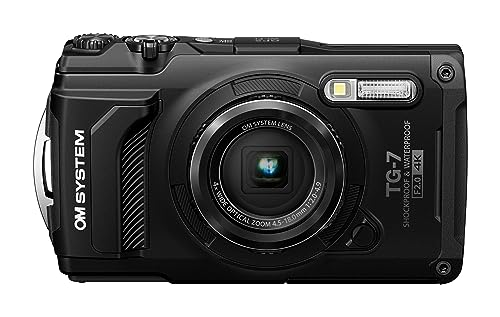
- OM SYSTEM Tough TG-7: linked pick, the rugged auxiliary whose composite mode builds star trails automatically
- Sony ZV-1F: linked pick, the wide fixed-lens compact auxiliary that frames whole constellations at once
Four picks are prose-only because the verified pool for this site holds no DSC compacts; the two linked cameras sit outside the DSC family entirely and are labelled as auxiliaries, useful companions to a compact kit rather than substitutes for it. Prices and fixed ratings appear nowhere, because neither would survive contact with the used market these older compacts now mostly trade on.
Key Takeaways
- DSC means Sony Cyber-shot: fixed-lens compacts whose small sensors set honest limits for night-sky work.
- Lens brightness beats almost everything else — a fast aperture is worth more than extra megapixels under stars.
- The tripod, remote timing and stacking software contribute as much to the final image as the camera does.
- Wide bright scenes succeed: Milky Way landscapes, star trails and bright events; faint deep-sky objects do not.
- Manual focus and full manual exposure are non-negotiable features; a compact lacking them is a dead end.
- Expect clean results at modest sizes, and treat every success as technique defeating physics by a negotiated margin.
In this guide
Quick Picks
| Pick | Badge | Why it earns its place |
|---|---|---|
| Sony Cyber-shot DSC-RX100 VA | Starlight drinker | The brightest lens fitted to a pocket DSC, on a one-inch sensor. |
| Sony Cyber-shot DSC-RX100 VII | Traveller’s flagship | Zoom range and modern manners for skies shot between other subjects. |
| Sony Cyber-shot DSC-HX99 | Moon and travel mite | Enormous zoom in a tiny body; honest about its small-sensor ceiling. |
| Sony Cyber-shot DSC-RX10 IV | Bridge all-rounder | One-inch sensor behind a huge zoom for comets, moon and landscapes. |
| OM SYSTEM Tough TG-7 | Star-trail auxiliary | Composite mode stacks trails in-camera, in a body weather cannot hurt. |
| Sony ZV-1F | Wide-sky auxiliary | An ultra-wide fixed lens that swallows constellations whole. |
Why do small sensors struggle under the stars?
Because astrophotography is a famine discipline. A landscape at noon floods a sensor with light; the Milky Way offers a sensor almost nothing, photon by reluctant photon, and the camera must amplify that trickle enormously to build an image. Amplification raises the signal and the noise together, and small sensors — with small pixels gathering small counts of photons each — reach the noisy end of that bargain sooner. The visible result is familiar to anyone who has tried: skies that sparkle with coloured grit, stars drowned in grain, shadows that smear when the camera’s noise reduction panics.
Sensor size is therefore the first honest divide in this guide. Sony’s one-inch compacts gather roughly four times the light of the much smaller sensors in the travel-zoom class, and that difference, not resolution, is what separates a Milky Way photograph from a Milky Way suggestion. Lens brightness multiplies the same ledger from the other side: each wider aperture step doubles the light admitted, so the fast lens on the RX100 VA is not a luxury but a second sensor’s worth of advantage.
None of this makes small sensors useless; it makes them specialists. Bright targets — the moon, planets in conjunction, the sky’s brightest star fields, trails built from dozens of frames — sit within their reach, and stacking lets software average the noise away across many exposures. The failure mode is expectation: a buyer who imagines nebulae portraits from a pocket zoom will be disappointed by physics, while a buyer who plans dark-sky landscapes within the limits will be quietly amazed at what a jacket pocket produced.
What technique rescues a compact camera at night?
Stability first, because the exposures are long and the camera is light. A compact on a cheap wobbling tripod in a night breeze records vibration as faithfully as starlight, so the support should be sturdier than the camera seems to deserve, set low, and shielded from wind where the terrain allows. Trigger the shutter with a remote, an app or the self-timer — a fingertip’s press is an earthquake at fifteen seconds — and switch off any stabilisation, which hunts for movement that is not there and invents some.
Focus is the second rescue, and it is entirely manual. Autofocus starves in the dark, so the method is ancient and reliable: find the brightest star or a distant light, magnify the rear screen, and turn the focus control until the point is smallest and hardest. Tape or remember that position, because an accidental nudge at midnight costs a whole sequence. Exposure follows the sky’s rotation: the wider the lens, the longer the shutter can stay open before Earth’s turning stretches stars into dashes, which is why the wide fixed lens among the auxiliaries below punches above its sensor size.
Stacking completes the rescue. Shooting many shorter exposures instead of one heroic long one, then merging them in dedicated software, averages random noise toward invisibility while keeping the stars that appear in every frame. It also forgives interruptions — a car’s headlights, a cloud’s transit — because ruined frames can simply be discarded from the pile. A compact that offers an interval timer or a composite mode is quietly offering this entire technique built in, and that is why such features weigh so heavily in the picks.
How did we choose these six cameras?
The DSC picks had to pass three gates. Full manual exposure control, because the night cannot be metered by a camera’s guesses. Manual focus with magnification, because autofocus is decorative after dark. And raw capture, because stacking and noise work in post are where small sensors are redeemed, and a JPEG-only compact has already thrown away the evidence. Models failing any gate were excluded however charming their daylight manners.
Within the gates, lens brightness and sensor size ranked the field, with zoom range treated as a travel virtue rather than a night one. The two linked auxiliaries were admitted for specific night tricks the DSC line does not offer — in-camera trail compositing and an ultra-wide fixed lens — and they are labelled auxiliaries everywhere they appear, so no reader mistakes them for Cyber-shot compacts or for pool-verified DSC recommendations.
Finally, availability realism shaped the list. Several DSC generations now trade mostly second-hand, so the guide favours models common enough on the used market to actually find, and the buying notes treat inspection and battery age as part of the recommendation rather than fine print.
Sony Cyber-shot DSC-RX100 VA — Starlight drinker
If one pocket DSC was born for this assignment, it is this one. The VA pairs the family’s one-inch sensor with the fastest zoom lens Sony fitted to the line — opening to f/1.8 at its wide end — and that combination is the closest a jacket pocket comes to a night-sky instrument. At a dark site, framed wide, it records the Milky Way’s core as a genuine structure rather than a rumour: the bright galactic band, the dark dust lanes silhouetted inside it, and a foreground ridge held in the same long exposure.
Its controls respect the work. Manual exposure runs to genuinely long shutter times, focus can be magnified on a bright star and left exactly there, raw files feed stacking software properly, and the lens ring gives the focusing hand something precise to turn in the dark. Owners develop a ritual with this camera — tripod low, timer set, a test frame examined at full magnification, then a sequence left to accumulate while the photographer steps back and simply looks up, which is not the worst way to spend the middle of a night.
The limits are the family’s limits, stated once and applicable everywhere below: push sensitivity high and the one-inch sensor’s noise arrives on schedule, so the craft lies in keeping amplification modest and letting exposure time and stacking do the heavy lifting. The zoom’s bright aperture narrows as you zoom, so the night work happens at the wide end, and the wide end is where wide skies live anyway.
On the used market this generation is the connoisseur’s find — less famous than its successor, often gentler priced, and better suited to darkness than the newer flagship for the single reason of its lens. Buy it checked and complete, with a healthy battery, and it will out-photograph cameras twice its size on the nights that matter.
- Class: One-inch compact, fast zoom lens
- Night signature: Brightest aperture in the pocket DSC line
- Controls: Full manual exposure and magnified manual focus
- Files: Raw capture for stacking workflows
- Market note: Mostly used now — inspect before paying
Strengths
- Fast lens doubles its sensor’s night reach
- Controls built for deliberate dark work
- Pocket size travels to genuinely dark places
Trade-offs
- Noise still arrives at high sensitivity
- Brightness fades as the zoom extends
- Used-market purchase needs inspection care
Best for: compact owners determined to photograph the Milky Way properly
Not suited for: buyers wanting deep-sky objects or autofocus convenience at night
Learn its ceiling on a familiar hilltop across one season: the same composition in spring haze and in autumn’s crystalline air will teach you that the camera was rarely the limiting factor — the sky was, and choosing nights becomes the real skill this little Sony trains.
Sony Cyber-shot DSC-RX100 VII — Traveller’s flagship
The seventh generation is the DSC flagship most travellers actually own, and its night case rests on a different bargain: a much longer zoom for the day’s subjects, modern autofocus and handling, and a one-inch sensor that still does respectable work after dark when the lens is kept wide. Its aperture at the wide end is more modest than the VA’s, so each exposure gathers less light — a deficit the owner repays with stacking discipline, shooting deeper sequences and letting software average the difference away.
That trade suits the camera’s real owner. This is the compact carried through a whole trip — street, family, landscape, wildlife at the zoom’s long reach — which also happens to be standing on a tripod at a dark-sky reserve on the one clear night of the holiday. A dedicated astro camera would beat it under those stars and lose the other six days; the VII’s virtue is being present, capable and already paid for when the sky performs.
Its night manners are thoroughly modern: silent electronic shutter options for discreet sequences, an interval habit that supports stacking sets, and a screen and menu system that remain legible to cold fingers at 2 a.m. The electronic viewfinder helps compose against a black landscape more than sceptics expect, because a brightened preview finds horizons the naked eye has lost.
Buy it for the trip first and the sky second, and it will satisfy both masters. Buy it for the sky alone and the VA above is the sharper instrument at gentler money — the kind of fork this guide exists to mark clearly.
- Class: One-inch compact, long zoom
- Night signature: Respectable wide-end work plus deep stacking
- Daylight story: The trip camera that does everything else too
- Controls: Full manual modes, modern handling
- Market note: Widely available new and used
Strengths
- One camera for the whole journey, sky included
- Modern menus and silent shooting at night
- Strong used and new availability
Trade-offs
- Slower lens gathers less starlight per frame
- Stacking discipline is mandatory, not optional
- Flagship pricing for a secondary night role
Best for: travellers who shoot one clear dark night per trip
Not suited for: dedicated night specialists counting every photon
Give it a fixed place in your travel routine — the last night of any trip outside a city, one hour, one composition — and the VII will build you a small, serious archive of skies from places you may never visit again.
Sony Cyber-shot DSC-HX99 — Moon and travel mite
Here the guide’s honesty is tested, because the HX99’s sensor is far smaller than the one-inch models and its Milky Way ceiling is correspondingly low. What this tiny camera does brilliantly is fit anywhere — it is among the smallest zoom compacts ever made — while carrying a zoom of almost absurd reach, full manual controls and raw capture. Under the stars it should be aimed at the sky’s bright citizens, and there it performs small miracles of convenience.
The moon is its masterpiece. That long zoom frames the lunar disc at a size the one-inch compacts cannot reach without cropping, and the moon is bright enough to be a daylight subject wearing a black coat, so the small sensor’s noise never enters the story. Lunar eclipses, crescent earthshine, conjunctions where a planet visits the moon — the HX99 records them from a coat pocket with a mini tripod, which means it records them at all, on evenings when bigger kits stayed home.
Milky Way attempts should be framed as experiments with stacking and low expectations: a bright core region, a short sequence, a result for the phone screen rather than the print wall. Some owners will be pleasantly surprised at a truly dark site; none should buy this camera for that purpose. Its night role is the opportunistic one — the camera present at the meteor shower because it was already in the bag.
As a travel camera generally, its combination of size, reach and manual control remains nearly unique, and buyers choosing it for daylight will find its night talents a bonus honestly described rather than a promise oversold. In a guide determined to respect physics, that is a respectable place to stand.
- Class: Tiny-sensor travel zoom compact
- Night signature: Moon and bright-event photography
- Zoom story: Huge reach from a coat-pocket body
- Controls: Manual exposure, focus and raw files
- Ceiling: Milky Way work is experimental only
Strengths
- Frames the moon like a telescope’s souvenir
- Impossibly small for its zoom range
- Manual controls survive the pocket format
Trade-offs
- Small sensor caps faint-sky ambitions
- Long exposures show noise quickly
- Tiny controls challenge cold hands
Best for: travellers wanting lunar and bright-sky shots from a pocket
Not suited for: Milky Way landscapes as a primary goal
Keep a tabletop tripod in the same pocket as this camera and the pairing becomes a philosophy: the best night photograph is frequently the one taken by the camera that happened to be there when the sky cleared unexpectedly.
Sony Cyber-shot DSC-RX10 IV — Bridge all-rounder
The RX10 IV breaks the pocket rule and keeps the DSC badge: a bridge camera with a one-inch sensor behind a fixed zoom of remarkable range, built like a small DSLR and weather-sealed like it means it. For night work its sensor matches the RX100 models while its lens reaches the moon, comets and planetary conjunctions at magnifications no pocket compact can imitate, and its size buys the handling stability that long exposures on a tripod quietly appreciate.
Consider the comet hunter’s evening, a recurring appointment in this hobby. A bright comet is a moving target announced days ahead, best framed with landscape at one focal length and examined at another, and the RX10 IV walks that whole range without a lens change in the dark — no small mercy when fingers are cold and the visitor is fading. The same flexibility serves lunar eclipses through their phases and the occasional bright nova or conjunction that rewards reach over aperture.
For wide Milky Way landscapes it behaves like its one-inch siblings: work at the wide end, keep sensitivity honest, stack when the result matters. The lens is not the fastest at any setting, so this camera’s night identity is versatility rather than brilliance — the one body a household might own that can attempt every bright event the decade’s sky offers, from meteor showers to eclipses, without a system of lenses behind it.
The cost is written on its silhouette. It travels in a bag, not a pocket, and buyers whose night photography is an extension of walking and camping should weigh the smaller picks first. Buyers whose nights are driven to, set up and savoured will find the bridge format’s comforts — the grip, the dials, the viewfinder — worth every gram after midnight.
- Class: Bridge camera, one-inch sensor, fixed long zoom
- Night signature: Comets, moon and eclipses at real magnification
- Handling: DSLR-like grip, dials and sealing
- Landscape mode: Wide-end work like the RX100 models
- Carry note: A bag camera, proudly not a pocket one
Strengths
- Every bright sky event within one lens’s range
- Stable, weather-sealed night platform
- No lens changes in the cold and dark
Trade-offs
- Size ends the pocket-compact dream
- Aperture is respectable, never fast
- Overlaps a small mirrorless kit in bulk
Best for: event-chasers — comets, eclipses, conjunctions — wanting one camera
Not suited for: walkers and campers counting every gram
Build an events calendar into this camera’s life: the year’s eclipses, showers and predicted comets marked months ahead, each with a scouted location. The RX10 IV rewards planners, because its whole talent is being ready for whatever the sky schedules.

OM SYSTEM Tough TG-7 — Star-trail auxiliary
This linked pick is not a Sony and not a DSC; it earns its paragraph through one feature the Cyber-shot line never offered. The TG-7’s Live Composite mode watches a long exposure accumulate in real time, adding only the parts of the scene that brighten — which is to say, it builds star trails in the camera, frame by patient frame, while the photographer watches the arcs grow on the rear screen and stops the exposure when the picture is finished rather than when mathematics guesses it might be.
Star trails are the small sensor’s revenge on astrophotography. Each individual frame can be short and clean, the composite hides noise that a single long exposure would parade, and the result — concentric arcs wheeling over a tent, a lighthouse, a desert arch — is among the most striking images any camera in this guide can produce. The TG-7’s ruggedness completes the trick: a camera waterproofed, crushproofed and freezeproofed can sit outside a tent all night in dew or frost that would send a delicate compact indoors, still quietly drawing circles.
Its conventional night stills are modest, and this guide will not inflate them: the sensor is small, the lens is a zoom of ordinary brightness, and single Milky Way frames are souvenirs rather than statements. Deploy it as the trail specialist and the all-weather second camera — the one that works the overnight shift while the DSC rests — and its role is not a compromise but a division of labour.
Fieldcraft note: composite trails need a truly dark foreground anchor and a battery plan, because the camera composes for as long as you let it. A small power bank and a low tripod turn the TG-7 into the hardest-working sleeper agent in a night photographer’s bag.
- Class: Rugged compact, waterproof and freezeproof
- Night signature: Live Composite star trails in-camera
- Sensor note: Small — trails yes, faint fields modest
- Weather story: Dew, frost and drizzle are working conditions
- Role: Auxiliary to a DSC, never a DSC itself
Strengths
- Trails composed live, without stacking software
- Survives the nights other compacts hide from
- Works unattended for hours on a tripod
Trade-offs
- Single-frame Milky Way work is limited
- Small sensor, ordinary lens brightness
- A specialist, not a household’s only camera
Best for: star-trail makers and campers wanting an overnight sky worker
Not suited for: buyers seeking one compact for every night subject
Point it north on your first clear camp night, start the composite before dinner, and check its progress whenever you pass — few experiences in photography teach the Earth’s rotation as personally as watching those arcs lengthen because your planet turned.

Sony ZV-1F — Wide-sky auxiliary
The second auxiliary is at least a Sony, though a vlogging camera rather than a DSC, and its night gift is geometry. Its fixed lens is ultra-wide — wide enough to hold an entire constellation, a meteor shower’s radiant and a sweep of landscape in a single frame — and wide lenses enjoy a physical privilege under rotating skies: stars can expose longer before their points stretch into trails. On a one-inch sensor with a reasonably bright fixed aperture, that geometry converts directly into cleaner, longer, calmer night frames than zoom compacts manage at their wide ends.
Simplicity is the second gift. A fixed lens means one focal length to learn, no zoom ring to knock in the dark, and a camera that can be set up by a beginner in minutes: tripod, manual focus on a bright star, timer running, a sequence accumulating for stacking. For households whose night photography is a shared holiday ritual rather than a solitary discipline, that low ceremony matters — the camera that children and partners can operate is the camera that gets operated.
Boundaries, as always in this guide, stay bright. There is no zoom for the moon, no viewfinder for the traditionalists, and the vlogging feature set spends money on microphones and product-showcase tricks that stars will never use. Its stills controls are capable rather than luxurious. What it offers the night is one superb trick — the widest honest window in this list — and owners who value that trick will forgive the rest, while owners who do not should pass it by for the RX100 models above.
Think of it as the constellation camera: the instrument for the Pleiades rising over a roofline, for Orion sprawled above a winter beach, for the shower meteors that appear anywhere except where a narrow lens is pointing. Width is a strategy against the sky’s unpredictability, and this little camera is that strategy made metal and glass.
- Class: One-inch compact, fixed ultra-wide lens
- Night signature: Whole constellations in one frame
- Exposure edge: Wide angle permits longer star exposures
- Handling: Simple, beginner-friendly setup at night
- Role: Auxiliary — a vlogging compact, not a DSC
Strengths
- The widest framing in this guide
- Longer clean exposures from its geometry
- One-inch sensor with easy manners
Trade-offs
- No zoom, no viewfinder, no moon reach
- Video-first features stars never use
- Controls are capable rather than rich
Best for: constellation, meteor-shower and night-landscape framing
Not suited for: lunar detail or traditional camera handling
Use it during a meteor shower with the radiant near a frame corner and the landscape holding the bottom third, then let a long sequence run — the wide window catches the strays that every narrower camera on the same field will miss.
How do you plan a night that a compact camera can actually win?
Choose the darkness before the destination. Light-pollution maps divide the world into skies where the Milky Way is a presence and skies where it is a rumour, and a compact’s small sensor widens that divide: the same camera that fails in a suburb can succeed two hours from it. Plan around the moon as ruthlessly as around the map, because a full moon is a second sun for night landscapes, washing faint structure away while flattering lunar photographers. The week around new moon, at a site where the horizon in your chosen direction is genuinely dark, is the compact owner’s whole calendar strategy in one sentence.
Scout in daylight with the night in mind. The foreground makes the photograph — a tree with character, a ruin, still water for reflections — and it must be found, framed and safely navigable before dark, because wandering unknown ground at midnight with a tripod is how ankles and cameras both retire early. Note where you will stand, where the galactic core will rise relative to that foreground as the season turns, and where you will retreat to if cloud wins. Applications that simulate the sky’s position for a date and place turn this planning from astrology into arithmetic, and every serious compact owner eventually keeps one on the phone’s home screen.
Bring a notebook, paper if your hands allow it. Settings that worked, the hour the core cleared the ridge, the neighbour’s light that switched off at eleven — a season of such notes turns scattered nights into a personal atlas, and compact owners, who win by preparation, profit from atlases more than anyone.
Arrive before darkness completes. Twilight is for setting the tripod level, focusing while a bright planet or the last lit ridge still offers a target, and composing with enough residual light to see the frame’s edges. Then wait. Eyes need half an hour to become night instruments, the sky deepens through the blue hour into true dark, and the photographer who rushed is still fighting a torch while the prepared one is already exposing.
What does stacking actually do, and when is it worth the effort?
Noise in a digital photograph is partly random — a sparkle that changes completely from one frame to the next — while stars are stubbornly constant. Average many frames and the constants survive while the randomness cancels toward smoothness; that single statistical fact is the small sensor’s pardon. A sequence of twenty short exposures, aligned and merged by dedicated software, can look cleaner than one exposure of the same total length, with the bonus that satellites, aircraft and headlight sweeps can be rejected from individual frames instead of tattooed across the whole.
The effort is real but front-loaded. The camera work is a settings ritual — interval timer or a patient finger, identical exposures, no touching the tripod between frames — and the computer work is a recipe that becomes automatic by the third attempt. Owners discover a pleasant side effect: because each frame is short, the night yields a time-lapse of the sky’s rotation as a free by-product, and many compact astrophotographers end up valuing the moving version as much as the stacked still.
Know the technique’s border. Stacking cleans noise; it cannot invent photons the sensor never caught, rescue a blurred focus, or darken a light-polluted sky into a desert one. It raises a compact’s ceiling by a storey, not by a tower — which, for cameras bought for coat pockets, is a generous and honest raise.
How should a used DSC be inspected before a night purchase?
Compact cameras die quiet deaths, so the inspection is a small ceremony. Work the zoom through its whole range listening for grit, because a single beach holiday can seed a mechanism with sand that only announces itself months later. Photograph a plain bright surface at the smallest aperture to reveal sensor dust and marks, then a dark frame with the cap on to see whether hot pixels swarm beyond what editing forgives. Check the lens glass at an angle to the light for the haze and scratches that flare cruelly around bright stars.
Batteries deserve their own paragraph in any used compact purchase. These cameras sip power in daylight and drink it on cold nights of long exposures, and an aged pack that reports full at dusk may surrender by the second sequence. Price one fresh battery into every used bargain, buy from sellers who answer questions about the camera’s working life, and favour listings that include the charger — proprietary chargers for discontinued compacts have a way of costing more than the patience that finds them.
Finally, test the exact features this guide’s gates demanded: manual exposure to its longest setting, manual focus with magnification, raw capture confirmed in the menus. A DSC that passes those three tests in the seller’s kitchen will pass them under the sky; one that fails at the table will not be redeemed by starlight.
How does the sky change with the seasons, and what should a compact owner chase in each?
The night sky is a calendar wearing a disguise, and compact owners — whose equipment rewards planning over power — benefit more than anyone from learning its timetable. Spring evenings belong to galaxies in other people’s telescopes, but for a wide compact lens the season’s gift is the rising arc of the Milky Way late at night and the zodiacal light after sunset, a faint pyramid of glow that dark western horizons reveal and small sensors can record with patient stacking. Spring is also the forgiving classroom: nights are lengthening in warmth if not yet in darkness, and mistakes cost a short drive rather than a frozen expedition.
Summer is the compact’s high season in northern latitudes. The galactic core stands highest, meteor showers arrive on schedule, and warm nights forgive the long sequences stacking demands. The enemy is the short night itself — true darkness compressed into a few hours — so summer technique is efficiency: arrive focused, compose during twilight, and have the sequence running before the sky finishes darkening. Southern readers should reverse this whole calendar, a reminder that every piece of sky advice is secretly local.
Autumn offers the connoisseur’s skies: the core early in the evening for photographers who value sleep, the Andromeda galaxy riding high as a smudge a wide lens can frame with its neighbouring constellations, and air that turns crystalline after the first cold fronts. Winter then trades comfort for the brightest stars of the year — Orion’s sprawling architecture is the fixed-wide auxiliary’s favourite subject — at the price of batteries fading in the cold and photographers doing the same. Keep spare packs in a warm pocket, rotate them like the drone pilots do, and let the camera acclimatise slowly on the return home so condensation forms on the bag rather than inside the lens.
What etiquette and equipment keep a night session welcome and working?
Red light is the night photographer’s passport. A torch filtered red preserves the dark adaptation your eyes spent half an hour building, and it signals to every other watcher on the hill that you belong to the tribe that understands darkness. White light — a phone screen at full brightness, a car’s headlights swept across a viewpoint — destroys twenty minutes of everyone’s vision in a second, and compact owners, who often shoot at shared dark-sky sites and campsites, should guard the commons as carefully as their own exposures. Set screens dim before leaving home; some of these compacts let you lower display brightness or switch it off between frames, and both habits pay rent all night.
Warmth is equipment too. Night photography is standing still in falling temperatures while dressed for a walk, a mismatch that ends more sessions than cloud does. Layers, a hat, something insulated to stand on, and a flask are not colour for a buying guide; they are the difference between a sequence completed and a sequence abandoned at frame nine. A small stool changes posture economics surprisingly, and a headtorch worn but rarely lit beats a handheld torch in every negotiation with a tripod.
Site courtesy completes the kit. Dark places are often farmed, gated or simply someone’s horizon; park where you are permitted, close gates, keep voices at the volume the darkness suggests, and leave before your presence becomes a story the landowner tells against the next photographer. The compact camera’s whole advantage is being welcomed where big rigs are conspicuous — do not spend that welcome carelessly.
How should raw night files be processed without ruining them?
Gently, and in a particular order. Begin with the stacked result or the single best frame, and resist the import presets that consumer software applies with such confidence: night files want their contrast built slowly, because the subject is a whisper of structure a few shades above black. Lift the shadows until the landscape separates from the sky, then set the black point by eye on a dim screen in a dark room — processing night photographs in a bright office is how skies end up grey and stars end up clipped to holes.
Noise reduction is a negotiation, not a slider to maximise. Aggressive smoothing erases faint stars along with the grain, turning a rich field into a few bright survivors floating in plastic. Reduce until the grit stops distracting at the size the picture will actually be seen, and no further; a print forgives texture that a screen at full magnification condemns, and most compact night work lives happily at sharing sizes. Sharpening, if used at all, belongs at the very end and at low strength, because stars are already points and sharpening points manufactures halos.
Colour deserves the same restraint. The night sky is not blue-black by nature; it carries airglow greens, the warm tint of distant towns on one horizon, and star colours that range from ember orange to steel blue. White balance chosen to keep those differences reads as truth, while the fashionable deep-blue grade reads as a filter applied to evidence. Your compact gathered few enough photons — do not spend them on a look.
Why not simply use a phone for the night sky?
Modern phones photograph the night with computational confidence, stacking and brightening behind the scenes, and for a first souvenir of a dark sky they are genuinely good. The compact’s counter-argument is control and honesty. A DSC offers a real tripod thread, full manual exposure that stays where it was set, raw files that contain what the sensor saw rather than what an algorithm preferred, and an optical zoom for the moon that no digital crop imitates. Its battery is also its own: a phone spent on a three-hour sequence is a phone unavailable for the map home, the emergency call or the sky app guiding the session.
There is a subtler difference in what the two devices teach. A phone’s night mode hides the craft, delivering a result without an education; a compact on manual settings forces its owner to learn exposure, focus and patience, and those lessons transfer to every camera that follows. Photographers who begin on compacts under stars tend to become photographers. Phone night modes are a wonderful shortcut to a picture and a poor shortcut to a practice, and this guide — written for people who searched for a camera on purpose — sides with the practice.
How do the six cameras compare at a glance?
| Pick | Sensor class | Night strength | Honest ceiling |
|---|---|---|---|
| Sony DSC-RX100 VA | One-inch | Milky Way landscapes | Noise at high sensitivity |
| Sony DSC-RX100 VII | One-inch | Trip skies plus everything else | Slower lens needs stacking |
| Sony DSC-HX99 | Small travel sensor | Moon and bright events | Faint skies stay faint |
| Sony DSC-RX10 IV | One-inch bridge | Comets and eclipses at reach | Bag-sized, aperture modest |
| OM SYSTEM Tough TG-7 | Small rugged sensor | Star trails by composite | Single frames are souvenirs |
| Sony ZV-1F | One-inch, fixed wide | Constellations and showers | No reach for the moon |
Which mistakes ruin compact night photographs most reliably?
Shooting from light is the first: the cottage garden under a security lamp, the lay-by beside a lit road, the campsite whose lanterns feel cosy and photograph like noon. The camera records the sky it is given, and no setting darkens a bright location into a wilderness. Second is the handshake shutter — pressing the button by finger, on a tripod light enough to tremble, with stabilisation left on to invent movement — a trio that softens more first attempts than any sensor limitation.
Focus by hope follows. A sequence shot at the lens’s autofocus guess, reviewed only on the camera’s small screen at a size where everything looks sharp, reveals itself at home as an hour of beautifully exposed blur. Magnify the test frame. Always magnify the test frame. The third mistake is impatience with the moon’s calendar: attempting the Milky Way under a bright moon, concluding the camera cannot do it, and selling a capable compact for the wrong reason.
The final mistake is buying reach for a width problem. Beginners seduced by zoom specifications purchase travel zooms for the night sky, then discover the galaxy does not need magnification — it needs darkness, width and light gathered patiently. This guide’s ranking, aperture before zoom, exists to prevent exactly that purchase.
Final Recommendation
Buy the Sony DSC-RX100 VA if the night sky is the purpose and a pocket is the requirement; its fast lens on a one-inch sensor is the strongest physics a DSC can offer, and the used market is its natural home. Travellers should take the RX100 VII and stack with discipline, event-chasers the RX10 IV, and moon lovers on a budget the little HX99 with expectations set honestly. Add the TG-7 when star trails and hard weather call, and the ZV-1F when whole constellations are the quarry. Then plan like an astronomer — dark site, new moon, scouted foreground — because with compacts, the plan is not preparation for the photograph. The plan is most of the photograph.
Frequently Asked Questions
Can a DSC compact really photograph the Milky Way?
The bright core region, yes — from a genuinely dark site, on a tripod, with the one-inch models in this guide and the fast lens of the VA doing the best work. The result will not match a full-frame camera’s depth or cleanliness, and this guide has never pretended otherwise, but a well-planned compact frame shows the galactic band, its dust lanes and a landscape beneath it in a way that satisfies anyone except a pixel-level rival. The smaller-sensor HX99 should be aimed at brighter targets instead.
What is the longest exposure before stars start to trail?
It depends on the lens’s width and the direction faced, but the working rule is generous to wide lenses and strict with zooms: a wide compact lens can often expose for tens of seconds before points become dashes, while a zoomed lens shows trailing within a few seconds. That arithmetic is why night landscapes are shot wide in this guide and why the fixed ultra-wide auxiliary earns its place. When in doubt, shorten the exposure and stack more frames.
Do I need special software for stacking?
Free and inexpensive tools exist for every computer platform, built precisely for aligning and merging star frames, and the learning curve is an evening rather than a course. The TG-7’s composite mode is the exception that needs no software at all, building trails inside the camera. For stills from the DSC models, stacking is the single highest-value skill a compact owner can learn — it buys back more image quality than any accessory in this guide.
Why does this guide include cameras that are not DSC models?
Because the pool of verified products for this site contains no DSC compacts, the two linkable cameras are included as clearly labelled auxiliaries for tricks the Cyber-shot line lacks: in-camera star-trail compositing and an ultra-wide fixed lens. They are companions to a DSC kit, never presented as DSC cameras themselves, and the four Cyber-shot picks carry the guide’s actual answer to the search.
Is a compact or a cheap DSLR better for the night sky?
A DSLR with a fast lens gathers more light and wins on physics, as the DSLR guides in this series explain. The compact wins on presence: it is the camera already in the traveller’s pocket at the dark site, already owned by the camper, already permitted by the baggage allowance. Astrophotography’s first law is that the sky performs for the camera that is there, and DSC compacts are there remarkably often.
Can I photograph a meteor shower with a pocket compact?
Yes, and showers forgive small sensors more than most subjects do, because a bright meteor is a brief daylight event written across the dark. Aim the widest lens you have toward the radiant’s neighbourhood, run long sequences of the longest exposures the trailing limit allows, and accept the shower’s arithmetic: most frames will hold only stars, a few will hold a streak, and one, with luck, will hold the fireball everyone talks about at breakfast. The fixed-wide ZV-1F and the RX100 models at their widest are the tools here; the HX99’s zoom should stay home in its pocket for once. Patience is the real equipment, and a reclined chair is its tripod.
What should I photograph on my very first night out?
A bright, forgiving target with a strong foreground: the galactic core over a familiar hill if the season offers it, or a constellation above a building you know, exposed as a sequence you can stack. Success on night one is a sharp, honest frame and a notebook of what the settings did — not a masterpiece. The sky keeps every appointment you make with it, and the second night is always better than the first.
Related Guides
Night-sky readers should continue with the best DSLR cameras for beginning photographers when a bigger sensor starts calling, the best digital cameras for travel for the daylight side of these compacts’ lives, and the best cameras for low light photography for the wider physics of shooting after dark.


