reviewstook.com is reader-supported. When you buy through links on our site, we may earn an affiliate commission.
Where to buy
Let us draw the boundary first, because this site already has a guide about freezing the moment itself. Our companion piece on action shots is about the photographer’s craft at the instant of the play — anticipation, shutter discipline, the peak of the jump. This guide is the other half of the decision: choosing the best digital cameras for sports as a system you will stand behind for a whole season. Telephoto reach across a full-size pitch. A buffer that survives a goalmouth scramble rather than a single sprint. Weather sealing for the November fixture when the rain arrives sideways. Burst behaviour matched to the rhythm of your particular sport, from the rallying patience of tennis to the ten-second hurricanes of gymnastics floor routines.
The six picks below are therefore judged as season-long equipment. Lens mounts matter here more than in almost any other genre, because the camera body is the smaller purchase — the long glass that reaches the far touchline is where a sports budget truly lives. Every pick is assessed with its telephoto path in mind: what reach exists for the mount, what it weighs across a double-header afternoon, and whether the system will still make sense when your sport moves under floodlights.
- Canon EOS R6 Mark II: linked pick, the club photographer’s system with deep buffer and detection for players and vehicles
- Sony Alpha 7 IV: linked pick, the lens-catalogue system for sports shooters building reach gradually
- Canon EOS R6 Mark III: linked pick, the newer Canon generation for committed RF sports kits
- Nikon Z50 II with Two Lenses: linked pick, the lightweight system whose long kit zoom teaches reach cheaply
- Panasonic LUMIX S5II: linked pick, the value full-frame system for mixed sport and video duties
- GoPro HERO13 Black: linked pick, the boundary pick — a training and analysis camera, not a touchline telephoto tool
A season is the unit of judgement throughout. A body that dazzles for one match and then frustrates — cards too small for its bursts, a battery that fades before the second half, a mount whose long lenses you cannot afford — fails this guide’s test even if its single-frame quality is superb. Sports photography is logistics conducted at speed, and the picks below respect that.
Key Takeaways
- Buy the lens system first and the body second; reach decides sports photographs more than sensors do.
- Buffer depth at your file settings matters more than the headline burst rate on the box.
- Each sport has a rhythm — rally, sprint, scramble, routine — and the right burst behaviour matches yours.
- Weather sealing is a season feature, not a spec flourish, for anyone shooting outdoors beyond September.
- Crop-sensor systems multiply reach cheaply and lighten the bag; full-frame systems own the floodlit evening.
- A fixed action camera belongs in the sports bag for analysis and unusual angles, never as the main telephoto tool.
In this guide
Quick Picks
| Pick | Badge | Why it earns its place |
|---|---|---|
| Canon EOS R6 Mark II | Club season workhorse | Deep buffer, player and vehicle detection, dual slots for full match days. |
| Sony Alpha 7 IV | Build-your-reach system | Telephoto options at every price through a vast third-party catalogue. |
| Canon EOS R6 Mark III | RF sports upgrade | The newer generation for Canon kits already invested in long RF glass. |
| Nikon Z50 II with Two Lenses | Lightweight reach learner | Two kit zooms cover the park game while skills and budget grow. |
| Panasonic LUMIX S5II | Hybrid sport value | Stills and match video from one affordable full-frame system. |
| GoPro HERO13 Black | Analysis and angle camera | Fixed viewpoints for coaching review and participant perspectives. |
How much reach does your sport actually demand?
Reach is a geometry problem before it is a shopping problem. A football photographer behind the goal experiences a different sport from the one at the halfway line: the far penalty area sits a hundred metres from one position and thirty from the other. Tennis compresses into a court where a moderate telephoto from the baseline covers everything, while cricket spreads its decisive moments across distances that humble all but serious long glass. Before pricing a single lens, pace your venue. The honest number of metres between your permitted position and the far action is the specification that should drive the entire purchase.
Crop factor is the budget player’s quiet ally in that arithmetic. A smaller sensor narrows the field of view, so a modest telephoto frames like a longer lens on full-frame — the reason wildlife and school-sports photographers have loved crop systems for decades. The trade arrives with the light: smaller sensors gather less of it, and the floodlit evening match is where full-frame systems collect their rent. Daytime sport on a budget argues crop; night sport argues full-frame; most club photographers live between those poles and should buy for the fixtures they actually shoot.
Stabilisation completes the reach equation. Long lenses magnify handshake exactly as they magnify the winger, and a monopod — the sports photographer’s third leg — matters more than any stabilisation mode at the longest reaches. Systems were judged here partly on how their bodies and long lenses cooperate with that monopod reality across a three-hour afternoon, because a combination that fights its support produces tired arms and soft frames by the second match.
Why does the buffer matter more than the burst rate?
Because sport does not happen in the first second. A camera boasting a spectacular frame rate that exhausts its buffer in two seconds has photographed the run-up and missed the collision; the goalmouth scramble, the gymnastics tumble sequence, the photo finish all unfold over spans that punish shallow buffers. What the working sports photographer needs is a rate the buffer can sustain for the length of a play, at the file quality the client expects, onto cards fast enough to keep the pipe clear.
File choice is the lever most owners never pull. Full raw files at maximum rate fill any buffer eventually; the seasoned shooter matches the format to the assignment — full quality for the final and the portfolio plays, a leaner setting for the league match destined for web-sized delivery. Card speed belongs in the same calculation, since a slow card turns a deep buffer into a waiting room. Systems in this guide were judged as pipelines: sensor to buffer to card to the photographer’s evening, because a season is edited in bulk or not at all.
There is also a discipline dividend. A sustainable burst teaches anticipation rather than carpet-bombing; the photographer who knows the buffer’s true depth shoots the play’s shape — approach, peak, aftermath — instead of holding the button and praying to the frame counter. The cameras below reward that discipline with hit rates that make culling an evening’s pleasure rather than its punishment.
How did we match these systems to a season rather than a single match?
Each system was walked through a calendar: pre-season friendlies in kind light, the autumn mud, the winter floodlit cup tie, the spring finals. Weather sealing, battery behaviour in cold, card appetite across double-headers and the availability of a second body in the same mount all counted, because a season finds every weakness a single afternoon forgives. Lens paths were priced as journeys — the first telephoto a club shooter can afford, the brighter glass a semi-professional graduates to — rather than as single purchases.
Sport-specific rhythms shaped the rankings. Motorsports and cycling reward vehicle detection and panning manners; team field sports reward player tracking through clutter; racket sports reward short, violent bursts at the net; athletics rewards the sustained rate across a finishing straight. No body leads every rhythm, and the picks below say plainly which calendar each one serves.

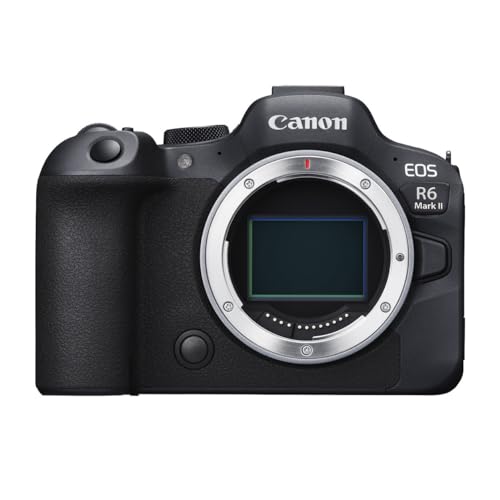
Canon EOS R6 Mark II — Club season workhorse
This is the body grassroots and club photographers have quietly standardised on, and a season explains why. Its subject detection names the things sport is made of — people, animals for the equestrian calendar, vehicles for the circuit — and holds them through the clutter of a touchline. The buffer swallows a full goalmouth sequence at working settings, and the dual slots mean a double-header Saturday is recorded twice before the photographer has left the car park.
Weather writes the second paragraph of its case. Sealing that treats rain as an inconvenience shows its value in the season’s middle third, when fixtures continue in weather that sends lesser-sealed systems into plastic bags and prayer. Paired with a weather-sealed telephoto zoom, the combination works the whole calendar outdoors — which is precisely the promise a club photographer makes when accepting the role in August.
The RF telephoto path is the system’s honest arithmetic. Canon’s own long zooms cover the club game admirably, and the brighter professional glass waits at prices that reflect its professional purpose. A photographer can enter with the sensible zoom, learn the season’s rhythms, and graduate one lens at a time without the body ever becoming the weak link — the definition of a system purchase rather than a gadget purchase.
Floodlights test its smaller compromises. The sensor’s low-light files are strong, though the resolution leaves less room to crop a too-distant frame into a deliverable one, so positioning discipline matters more than with higher-resolution rivals. Mechanical shutter use for the fastest racket and bat work keeps rolling-shutter honesty, at rates that still cover the play. None of this troubles the club brief; all of it is priced into the recommendation.
Battery and card logistics across a tournament day are manageable with the professional habits this batch’s first guide describes: spares warm in an inside pocket, cards in labelled pairs, a monopod taking the lens’s weight so the photographer’s shoulders survive to the final. The R6 Mark II does not ask for coddling. It asks for a season, and gives one back.
- Class: Full-frame mirrorless, RF mount
- Sports signature: Detection for players, animals, vehicles
- Buffer story: Sustains sequences at working settings
- Season note: Sealing for the wet middle of the calendar
- Cards: Dual slots for double-header days
Strengths
- Tracking that survives touchline clutter
- A whole wet season without plastic-bag anxiety
- Lens path that grows one rung at a time
Trade-offs
- Cropping headroom is modest for distant play
- Brightest RF telephotos are professional-priced
- Electronic burst needs shutter-mode judgement
Best for: club, school and semi-pro field sport across a full season
Not suited for: extreme-distance sports on a small lens budget
Walk your main venue in pre-season with this body and a notebook: the distances from each permitted position, the floodlights’ colour, the background that will sit behind the finish line. A season’s best photographs are usually decided by that walk, and the R6 Mark II rewards the photographer who treats venues as familiar rooms rather than weekly surprises.

Sony Alpha 7 IV — Build-your-reach system
Sony’s sports case is an economics argument wearing a camera. The Alpha 7 IV itself brings eye autofocus that finds a striker’s face inside a forest of limbs, a burst rate suited to rally and field rhythms, and files with enough resolution to crop a frame when the play ran further away than the lens could follow. Around it stands the E mount’s telephoto shelf — independent makers selling long zooms at prices that let a club shooter own reach this season rather than admire it for three.
That shelf changes career timelines. A photographer can begin with an affordable long zoom, shoot a season, sell prints and club packages, and reinvest in brighter glass without changing bodies, batteries or habits. Third-party telephotos for E mount have matured into genuine working tools, and the competition among them keeps the ladder’s rungs close together — the kindest structure a growing sports practice can ask for.
On the touchline the body behaves like the mature tool it is. Tracking holds a runner crossing behind officials and opponents, the viewfinder keeps the play legible, and the customisation depth lets a shooter build a sports configuration — focus area, burst mode, card behaviour — that loads in a second when the fixture changes. Two slots guard the day; the sealing handles the season’s ordinary weather with the usual respect for driving rain.
Video threads through modern sports work — the club’s highlights reel, the athlete’s recruitment tape — and the a7 IV’s recording covers those duties from the same position as the stills, a consolidation small operations feel in their budgets. Heat discipline on long summer recordings asks for the rehearsal this batch’s recording guide prescribes, and then behaves.
Its limits are the known ones. Ten frames a second samples a dive less densely than the fastest rivals, so the photographer’s anticipation carries more of the load — a burden experienced shooters often prefer, since it keeps file volumes sane across a tournament. For the system builder, that trade is the right one: money saved on the body’s burst headline becomes money spent on the reach that decides the pictures.
- Class: Full-frame mirrorless, E mount
- Sports signature: Eye autofocus inside crowded play
- Reach story: Third-party telephotos at climbable prices
- Buffer story: Moderate rate, sustainable rhythm
- Hybrid note: Highlights video from the same body
Strengths
- The kindest telephoto ladder in the business
- Faces found and held through clutter
- Cropping headroom rescues distant frames
Trade-offs
- Burst rate asks for anticipation over volume
- Long hot recordings need rehearsal
- Menus take setting up before the season
Best for: sports shooters building reach season by season
Not suited for: spray-volume shooters at elite sprint events
Buy the telephoto before the second body with this system. The a7 IV’s economics only sing when the lens shelf is exploited in order — reach first, brightness second, duplication third — and the photographer who follows that order discovers each season’s photographs improving for reasons that have nothing to do with luck.

Canon EOS R6 Mark III — RF sports upgrade
Every committed Canon sports kit reaches the rotation season described in this batch’s professionals guide: the trusted body steps down to second duty, and the newer generation takes the main strap. The R6 Mark III is that rotation for RF sports shooters — a body bought not for novelty but to refresh the pipeline their long glass already feeds, with newer processing behind the same controls their hands know at full sprint.
Sports work exposes generational improvements in unglamorous places. Focus calculation between frames during a burst, file cleanliness as floodlights push sensitivity upward, the speed at which a card-full of match photographs becomes an edited gallery at midnight — these are the currencies of a season, and they are where a newer body quietly pays its owner weekly. The photographer covering two fixtures a weekend feels processing and autofocus refinements as time and hit rate, not as specifications.
The system logic is continuity under load. The RF telephotos already owned keep their roles; the older body becomes the wide-angle second camera for the celebrations and the team photograph, or the insurance that lets the main body be used without flinching. Dual slots, sealing and the detection subjects sports requires carry the family resemblance, so the season’s habits transfer intact on the day the new body arrives.
For whom is the upgrade mistimed? The club shooter whose Mark II is young and whose telephoto is still the kit’s limiting factor should spend on glass first — the recurring verdict of this guide. The Mark III’s case is strongest where the body is genuinely the bottleneck: high-volume shooters, heavy floodlight calendars, and professionals whose clients’ expectations have climbed into the newer generation’s strengths.
Read as a system decision rather than a product launch, it is the conservative, correct purchase for its audience — which is what season equipment is supposed to be. Sports photography punishes drama in its supply chain as surely as on its touchlines.
- Class: Full-frame mirrorless, RF mount
- Sports signature: Newer processing for volume fixtures
- Reach story: Inherits the owner’s RF telephoto shelf
- Season note: Demotes its predecessor to second-body duty
- Cards: Dual slots, mirrored match recording
Strengths
- Refreshed pipeline where volume shooters feel it
- Zero relearning during the season
- Turns the old body into real insurance
Trade-offs
- Young Mark II kits gain more from glass
- Launch-season pricing
- Same mount economics as its sibling
Best for: established Canon sports kits rotating their main body
Not suited for: first-time buyers choosing a system from zero
Rehearse the two-body configuration at a friendly before the league starts: long lens on the new body, wide zoom on the old, one card routine for both. Rotation only becomes insurance when the pair has actually worked together under mild pressure, and pre-season exists precisely for that rehearsal.

Nikon Z50 II with Two Lenses — Lightweight reach learner
School and park sport runs on different economics: the photographer is a parent, a student or a club volunteer, the venue is a field without fences or floodlights, and the kit must travel in a bag that also holds a life. This two-lens Z50 II bundle answers with crop-sensor reach — its longer kit zoom framing like a substantially longer lens on full-frame — and subject detection inherited from Nikon’s professional bodies, at a total weight a touchline afternoon cannot punish.
The crop advantage deserves plain statement. Youth football photographed from the sideline with this kit’s long zoom fills the frame the way a far more expensive full-frame combination would, because the smaller sensor crops the view for free. In daylight — when school and grassroots sport overwhelmingly happens — the smaller sensor’s compromises stay theoretical, and the photographer’s real constraints are position and anticipation, which cost nothing but attention.
Detection autofocus is the bundle’s quiet luxury. Young faces sprinting toward the camera, the classic beginner failure, are held by subject detection that behaves like a tutor’s hand on the photographer’s shoulder. Bursts are quick enough for the finishing sprint and the goalmouth jump, and the colour presets let a volunteer deliver the team’s photographs before the minibus leaves — a delivery speed that builds a club photographer’s reputation faster than any specification.
The growth path is honest. Evening fixtures under weak lights will expose the kit zooms’ modest apertures, and the system answers with brighter Z-mount glass bought one lens at a time as the photographer’s commitment deepens. The body remains useful as the light second camera even after a full-frame main body arrives, which is more than most starter kits can claim at their retirement.
Weather sealing and buffer depth are proportionate to the brief: fine for league mornings and school tournaments, not promised for professional cup ties in a storm. Within the calendar it was chosen for, this kit produces the photographs that fill clubhouse walls — which is, in the end, the assignment.
- Class: APS-C mirrorless with two kit zooms
- Sports signature: Detection autofocus from Nikon’s top line
- Reach story: Crop framing multiplies the long zoom
- Carry note: A full afternoon without shoulder punishment
- Growth path: Brighter Z glass one lens at a time
Strengths
- Frame-filling reach at grassroots prices
- Detection that tutors beginners kindly
- Instant, shareable colour for team pages
Trade-offs
- Floodlit evenings stretch the kit zooms
- Buffer suits school sport, not pro volume
- Smaller sensor in the darkest venues
Best for: school, youth and grassroots sport in daylight
Not suited for: night leagues as a main assignment
Spend one training session photographing only with the long zoom, from the halfway line, tracking runners without firing. The Z50 II’s detection will do its half; the drill teaches your half — the smooth pan and the early pick-up — which together decide whether reach becomes photographs or merely magnification.

Panasonic LUMIX S5II — Hybrid sport value
Many sports photographers are also the club’s video department, and the S5II is the system priced for that double life. Its phase hybrid autofocus tracks players with a confidence earlier Panasonic generations denied their owners, its stabilisation steadies the long handheld pans that follow a counterattack, and its video recording covers the highlights package without a second body in the bag. For a one-person media team at a semi-professional club, that consolidation is the budget.
The L-mount lens story suits the climb. Telephoto zooms from the alliance’s several makers give the sports shooter options at sane prices, and the same mount serves the video side’s needs — a standard zoom for interviews, a fast prime for the dressing-room piece. A system bought once and aimed at both deliverables is how small operations survive their second season.
On the touchline its manners are grown-up: dual slots for the match, sealing for the weather, a viewfinder and grip that hold through a cold afternoon. The burst character suits rally and field rhythms rather than the densest sprint sampling, and the photographer who times a peak — a header’s rise, a bowler’s release — will find the files reward timing with lovely depth for cropping and print.
Where it concedes ground is specialisation. The very fastest detection ecosystems and the longest native telephoto traditions belong to rivals, and a shooter whose whole life is elite athletics should weigh those temples accordingly. The S5II’s congregation is the enormous middle: club sport, school finals, local motorsport, the wedding photographer’s weekend football — work where value and versatility outrank the last frame per second.
As a second system it also tempts: a Canon or Sony sports main body for the touchline, the S5II owning the video and the interview work, each playing to its strength. However it is deployed, it represents the season’s most efficient spend for hybrid duties.
- Class: Full-frame mirrorless, L mount
- Sports signature: Phase hybrid tracking, strong stabilisation
- Reach story: Alliance telephotos at sane prices
- Hybrid note: Highlights video from the touchline body
- Cards: Dual slots for match days
Strengths
- Stills and video duties in one system
- Stabilised pans for following play
- Value that funds the lens sooner
Trade-offs
- Burst density trails the sprint specialists
- Telephoto tradition thinner than rivals’
- Detection ecosystem still maturing
Best for: one-person club media teams and hybrid shooters
Not suited for: elite athletics specialists living at maximum burst
Build one match-day preset that serves both trades — stills settings and video settings a dial apart, same card routine, same colour family. The S5II’s gift to the hybrid worker is the absence of a bag change at half-time; presets are how that gift survives contact with a noisy touchline.

GoPro HERO13 Black — Analysis and angle camera
Every guide should contain one pick that corrects its own premise, and this is ours. The HERO13 cannot photograph sport from the touchline — its fixed wide lens turns a distant striker into a rumour — and it earns its place in a sports system for the jobs telephoto cannot do: the fixed analysis angle above the court, the participant’s-eye record of the descent, the waterproof witness at the pool’s turning end, the training camera that a coach mounts, starts and forgets.
Coaching has quietly become a camera market. A HERO13 on a tripod behind the goal records every training pattern in a wide, honest frame that staff can review at leisure; mounted at a gymnastics hall’s corner it captures the whole floor exercise for the routine’s debrief; on a swimmer’s starting block it shows the dive’s shape that poolside eyes miss at full speed. Its burst stills and high-frame-rate recording serve technique analysis — the stride, the release, the catch — with a patience no touchline photographer can spare.
Durability is the enabling feature. Sport happens around water, mud, impact and weather, and a camera that treats all four as working conditions gets placed where the fragile system cannot go. Teams that would never risk a mirrorless body at the scrum’s edge will tape a GoPro to the post and learn from what it sees. Its replaceable lens cover turns the inevitable scuff into a trivial cost rather than a repair.
The boundaries must stay bright. As a stills camera for distant action it is the wrong tool, full stop; as a low-light tool its small sensor concedes to every other pick here; and its footage, however useful, speaks in a wide-angle accent that editors must cut around deliberately. A sports bag containing a telephoto system and one of these is complete in a way that neither half achieves alone — reach for the spectacle, the GoPro for the truth.
Battery and mounting discipline decide its usefulness, as with all fixed cameras: spares warm, mounts checked, a tether where the fall would be final. Coaches who adopt that discipline gain an assistant that never blinks, never tires and never asks to leave before the second half.
- Class: Waterproof action camera, fixed wide lens
- Sports signature: Fixed analysis angles and participant views
- Placement note: Survives posts, pools and weather
- Analysis story: Bursts and slow motion for technique review
- Boundary: Not a touchline stills camera
Strengths
- Angles no telephoto system can occupy
- Coaching footage on a set-and-forget basis
- Toughness that invites brave placement
Trade-offs
- Distant subjects stay distant
- Low light concedes to larger sensors
- Wide accent needs deliberate editing
Best for: coaches, analysts and teams wanting participant perspectives
Not suited for: touchline stills of distant play
Give the analysis camera a fixed home — the same tripod position at every training session, marked and repeated. Comparable angles across a season turn footage into evidence: the stride that lengthened, the release that drifted, visible because the camera refused to improvise.
How do different sports change what the camera must do?
Motorsport and cycling are panning sports: the subject crosses the frame at predictable speed, and the craft is a smooth swing at a shutter slow enough to blur the background into velocity. Systems serve it with vehicle detection and stabilisation modes that steady the vertical while freeing the horizontal. Racket sports invert the problem — stillness, then violence within arm’s reach — rewarding bodies whose focus snaps and whose short bursts are dense. Team field sports live between the poles: long periods of positional patience broken by scrambles that test buffer and tracking simultaneously.
Athletics is the metronome sport. Runners arrive on a schedule the photographer can rehearse, and the finishing straight rewards the sustained burst and the pre-planned position more than any detection cleverness. Water sports add the environment as an opponent — spray, glare and the photographer’s own position on a bank or a boat — where sealing and a polarising habit matter more than frame rates. Indoor sports trade weather for light: the hall’s flickering, amber poverty pushes sensitivity upward and makes fast glass and full-frame sensors collect their rent.
The buying lesson is to name your sport’s verb before shopping. If your calendar pans, prioritise detection for vehicles and stabilisation manners. If it scrambles, prioritise buffer and tracking through bodies. If it glows under floodlights, prioritise the sensor and the bright lens. A camera chosen for a verb will serve a decade; a camera chosen for a specification sheet serves until the first fixture that asks a different question.
What should a sports kit contain besides the camera and the long lens?
The monopod, first and always: it carries the telephoto’s weight, steadies the pan, and converts a three-hour afternoon from an endurance event into a working day. Rain covers follow — for the lens, the body and the photographer, in that order of honesty — plus a stool or kneeling pad for the low angle that makes athletes heroic, and enough cards and batteries staged in labelled pairs that a double-header never becomes an arithmetic problem at half-time.
Clothing is equipment in this genre. The sports photographer stands still in weather the players warm up through, so layers, waterproof boots and gloves that can work dials are as much a part of the system as any lens. A headtorch for the winter walk back to the car park, a flask, and a bag whose rain cover deploys in seconds complete the unglamorous list that separates the season regular from the August enthusiast.
Finally, the paperwork of access: accreditation where the sport requires it, the club’s permission confirmed, a knowledge of where photographers may stand and where the sightlines forbid. The finest system in this guide photographs nothing from the wrong side of a steward’s decision, and professionals treat access as part of the kit they maintain.
When does a sports photographer need a second body on the same strap?
The moment the play starts happening at two distances at once. The long body owns the far action; the second body, wearing a standard zoom, owns the celebration that erupts ten metres away, the team photograph at the whistle, the manager’s reaction on the bench. Changing lenses mid-celebration is how photographers photograph their own lens cap. Working sports shooters at every level eventually arrive at the two-body harness, and the systems in this guide were judged partly on how gracefully they support it — shared batteries, shared cards, menus that do not require translation between shoulders.
The second body need not be the flagship’s twin. A previous-generation body in the same mount, bought used or demoted from main duty as the rotation described in this guide suggests, serves perfectly — its job is readiness at moderate distances, not heroics at the far touchline. What it must share is the photographer’s muscle memory, because the celebration allows no time for a menu consultation.
Weight is the honest cost, and it argues for building toward the harness gradually: the second body joins for finals, tournaments and the fixtures where two distances genuinely collide, and stays home for the single-match Sunday where one body and a pocketful of patience suffice. Systems thinking means matching the rig to the fixture list, not carrying the maximum everywhere out of anxiety.
How do you keep a system working through the worst weather of the season?
Preparation divides the soaked from the ruined. Rain covers fitted at the car, not improvised at the first shower; a microfibre cloth in a sealed bag, because a wet cloth is a smearing device; silica gel in the kit bag overnight so the morning after is not a fogged viewfinder. Sealed bodies and lenses — the Canon picks here, with due respect to conditions — tolerate working rain, but every system appreciates being wiped down before it is bagged, and being warmed gradually indoors rather than blasted by a heater that invites condensation inside the glass.
Cold writes its own rules. Batteries lose their enthusiasm near freezing, so spares rotate through an inside pocket, warmed by the photographer like relief pitchers. Breath fogs rear screens; dials stiffen under gloves that were chosen for warmth rather than for dials. The season regular treats November as a design specification, buying gloves with working fingertips and a bag that opens without being set down in the mud.
And the photographer is part of the system. Waterproof boots, layers that survive standing still, and a flask of something hot decide more November photographs than any sensor. Clubs remember the photographer who stayed for the whole cup tie in the rain; that memory, more than any portfolio, is what a season of sports work is actually building.
How fast must sports photographs be delivered to stay valuable?
Sport decays. The club’s social channels want the winner’s photograph before the supporters reach the car park; parents want the album while the weekend still feels like the weekend; local media work to editions that do not wait for a photographer’s leisurely evening. Systems earn their keep partly in this delivery race — wireless transfer of selected frames from the touchline, in-camera marking of keepers during lulls, and file sizes matched to the destination so the upload is a moment rather than a migration.
The working method is to edit during the event’s own pauses. Half-time is a cull, not a rest: mark the keepers, send the three frames the club needs, and let the full gallery follow within the day rather than within the week. Photographers who build that rhythm into their match routine discover that speed, practised calmly, costs no quality — the frames were chosen by the same eye, merely sooner.
Archives complete the delivery story. A season indexed by fixture, with the best frames marked as they were made, becomes the club’s history and the photographer’s portfolio in the same gesture. When the end-of-season awards need the year in pictures, the archive answers in an afternoon. The camera system began that archive at the buffer; the photographer’s habits finish it.
What changes when the sport moves indoors?
The hall replaces weather with light poverty and echo. Ceiling fittings mix colour temperatures across the court, the brightness that felt adequate to adapted eyes collapses at the shutter speeds sport demands, and every system in the bag is pushed toward its sensitivity ceiling. This is where bright lenses stop being luxuries: a fast telephoto indoors buys the shutter speed that the whole genre is made of, and full-frame sensors collect the rent mentioned earlier in this guide.
Flicker joins the enemy list indoors. Many hall lights pulse with the mains, and exposures made under them can band or vary frame to frame at the fastest shutter speeds. Bodies with flicker-reduction habits, and photographers who test their fixture’s lighting during the warm-up, avoid the gallery that looks striped like a referee’s shirt. The warm-up, in indoor sport, is the photographer’s rehearsal as much as the players’.
Echo changes behaviour too. A mechanical shutter’s clatter in a badminton hall or a snooker room is a social event; the electronic modes these bodies offer, used with the rolling-shutter judgement this guide has noted, let the photographer become furniture. Indoor sport rewards the discreet system — quiet, bright-eyed, and gone from everyone’s attention by the second game.
How should you behave around youth sport and its safeguards?
Permission is the first piece of kit. Youth fixtures operate under club and school safeguarding rules that govern who may photograph, where images may be published, and how a parent may withdraw a child from coverage. The professional habit is to confirm the policy with the organiser before the season, carry the confirmation, and treat any parent’s quiet word at the touchline as an instruction rather than a debate. A photographer known for that care gets welcomed back; the opposite reputation travels faster than any lens.
Practical courtesy supports the policy: identify yourself to coaches on arrival, wear the club’s accreditation visibly, publish through the club’s channels rather than personal ones where that is the agreement, and never let a gallery’s convenience outrun its consent. None of this dims the photography. The same frames, made inside a framework of trust, are the ones clubs commission year after year — and trust, like reach, is a system built across a season.
Is used sports gear a wise way to build a system?
Sport is where the used market earns its reputation, because professionals rotate bodies on schedules that flood the shelves with healthy equipment. A previous-generation body with a documented shutter count and a dealer’s warranty can carry a club photographer’s season for the price of this year’s mid-range novelty, and long lenses — built like infrastructure and often cosseted by their owners — are among the safest used purchases in photography. The system’s total reach grows faster per pound spent than any other route in this guide.
The discipline is inspection. Shutter counts against the model’s rated life, sensor marks checked with a small-aperture sky frame, lens focus and zoom actions worked through their ranges, and a returns window treated as part of the price. Buy used bodies from sellers who can answer questions about the camera’s working life; a sports body that covered weddings gently and one that covered motorsport in the rain are different propositions wearing the same name.
Mixing new and used across a system is normal professional practice — a new main body for the warranty and the support programme, used glass for the reach, a used second body for the strap. The calendar does not care which component arrived with a ribbon on it. It cares that everything works in the rain in November, and a wisely mixed kit often works better, sooner, than an all-new kit bought one piece per year.
How do the six sports systems compare at a glance?
| Pick | System strength | Season character | First lens priority |
|---|---|---|---|
| Canon EOS R6 Mark II | Buffer, detection, sealing | Full outdoor calendar | Weather-sealed telephoto zoom |
| Sony Alpha 7 IV | Telephoto ladder economics | Build reach season by season | Affordable long zoom, then brighter |
| Canon EOS R6 Mark III | Refreshed volume pipeline | Rotation for committed RF kits | Already owned — buy time instead |
| Nikon Z50 II with Two Lenses | Crop reach, light carry | Daylight school and club sport | Included — then one bright prime |
| Panasonic LUMIX S5II | Stills and video consolidation | One-person media teams | Alliance telephoto zoom |
| GoPro HERO13 Black | Analysis angles, toughness | Training grounds and posts | Mounts before everything |
Which mistakes end sports photographs before the shutter fires?
Arriving without knowing the venue’s distances is the founding error — the lens that was plenty at the training ground is a toy at the stadium, and the discovery is always made during the warm-up. Second comes the unformatted, unmatched card collection: a season’s photographs deserve media bought in pairs, formatted in the body, and retired on a schedule rather than on a failure.
Position sins follow. Standing where the background is a car park of white vans, shooting into the floodlights’ glare, choosing the end the home team attacks only in the second half and never moving — these are composition failures disguised as equipment complaints. The sports regular walks the venue, notes where the light and the clean backgrounds live, and plans the half-time migration like a player.
The last mistake is editing despair: arriving home with nine thousand frames because the burst was free. Sustainable rates, deliberate sequences and a same-night cull keep the season’s archive an asset. The photographer who cannot find last month’s best frame does not own a body of work; they own a storage problem with highlights.
Final Recommendation
Buy the system your season can grow inside. Most club and school photographers should start with the Canon EOS R6 Mark II and a weather-sealed telephoto zoom, the combination that survives the whole calendar. Budget-led builders of reach belong with the Sony Alpha 7 IV and its kind telephoto ladder; committed Canon kits rotate to the R6 Mark III when the old body becomes the bottleneck. Daylight grassroots work is the Nikon Z50 II kit’s home, hybrid club media belongs to the LUMIX S5II, and every serious programme should add the GoPro HERO13 Black for the angles and analysis no touchline tool can supply. Then go and stand in the rain with it — that is where sports systems are actually chosen.
Frequently Asked Questions
Is full-frame necessary for sports photography?
Necessary only where the light is worst. Floodlit evenings, indoor halls and professional expectations push toward full-frame sensors and bright lenses. Daylight field sport — where most of the world’s sport is played — is served beautifully by crop systems whose reach advantage is real money saved. Match the sensor to your calendar’s darkest fixture, not to its brightest brochure.
How many frames per second do I actually need?
Enough to sample your sport’s decisive motion at the rhythm it happens: rallies and field play are well served by moderate rates with deep buffers, while dives, releases and finishes reward density. The honest test is the play’s duration — a two-second scramble at a sustainable rate yields more keepers than a headline rate that stalls after the first second. Buffer behaviour, not the box number, is the specification to interrogate.
Which lens should a sports photographer buy first?
The longest sensible zoom your venue’s distances demand and your budget survives — reach before brightness, because an unreached subject cannot be rescued by a fast aperture. Learn its character across a season, then let the fixtures you actually shoot argue for the brighter, longer or wider second lens. Photographers who buy in that order own kits that match their calendars; photographers who buy by envy own expensive cupboards.
Can I photograph sport with only a kit zoom?
Yes, in the sports whose geometry allows it — court games, school athletics, park football from the touchline — and the Nikon kit in this guide exists for exactly that start. The kit zoom’s limits appear at distance and dusk, and both limits announce themselves honestly in your own photographs, which is the right time to spend more. Begin where you stand; upgrade where the evidence points.
Why does this guide include an action camera in a sports list?
Because a sports system is more than its touchline stills. Coaching analysis, participant perspectives and fixed angles at posts and pools are now part of how teams document themselves, and the GoPro performs those duties better than any mirrorless body at any price. It is included as a complement with its boundary stated in capital letters: it will not photograph a distant striker, and pretending otherwise would be the kind of advice this guide refuses to give.
How do I keep sport photographs sharp when panning?
Practise the swing without the shutter: track the subject through the frame several times before firing, feet planted for a full rotation, and let the burst ride the middle of the pan rather than its startled beginning. Stabilisation modes that steady vertical movement while freeing the horizontal exist for exactly this, and a monopod turns the whole exercise from weightlifting into marksmanship. Sharp pans are a rehearsed physical skill that the right system supports and no system replaces.
How do I choose between the two Canon bodies in this guide?
Ask which one is the bottleneck in your current kit. If your R6 Mark II is young and your telephoto is the limiting factor, keep it and buy glass — the Mark III will still be there when the body genuinely ages. If you shoot volume fixtures weekly, work heavy floodlight calendars, or your Mark II’s shutter count reads like a motorway odometer, the newer body’s refreshed pipeline pays you back every single weekend. Rotation is a schedule, not an impulse, and the photographers who treat it that way never own a camera they resent.
Related Guides
Sports shooters should pair this system guide with the moment-craft in the best digital cameras for action shots, the freezing technique in the best digital cameras for stop action shots, and the working discipline of the best digital cameras for professionals when the club work turns into a business.


