reviewstook.com is reader-supported. When you buy through links on our site, we may earn an affiliate commission.
Where to buy
Backpacking is not hiking with a longer lunch. It is a week or a month of carrying everything — shelter, food, fuel, and whatever camera earns its grams against all three — through weather that does not consult your itinerary. Choosing the best digital cameras for backpacking is therefore an exercise in honest accounting: every gram audited, every battery a ration, every seal a promise the trail will test at altitude, in sleet, on the morning your gloves are too thick for small buttons.
This guide deliberately separates the multi-day load from the day-hike camera. A day hiker can carry a mirrorless body and charge it that night; a backpacker crossing a range cannot, and the picks below reflect that arithmetic. Compact and action cameras dominate because they survive immersion, sip power, ride on straps and chest mounts, and keep working when the nearest socket is three valleys away. Image quality still matters — nobody crosses a pass for a photograph that disappoints — but it is weighed here in grams per memory, the only currency the trail accepts.
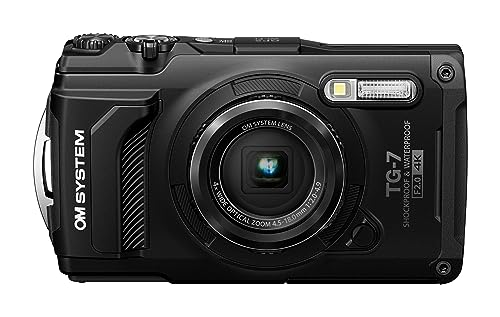
- OM SYSTEM Olympus Tough TG-7: linked pick, waterproof, freezeproof compact built for river crossings and summit frost
- GoPro HERO12 Black: linked pick, action camera generation prized for endurance, ideal for weeks between sockets
- DJI Osmo Action 4: linked pick, action camera known for low-light strength and cold-rated battery performance
- Insta360 GO 3S: linked pick, thumb-sized camera for the ultralight walker counting every gram twice
- Sony ZV-1F: linked pick, one-inch sensor compact for backpackers who prioritise image quality over armour
- DJI Osmo Action 3 Outdoor Combo: linked pick, previous-generation DJI bundled with chest and backpack strap mounts in the box
Power strategy threads through every review, because a backpacking camera is really a small energy system wearing a lens. How many frames or hours a charge buys, whether batteries swap in seconds with cold fingers, whether a power bank can top the camera up inside a tent at midnight — these questions decide what you photograph on day nine, when the light over the last col is the finest of the trip and the day-hike cameras of the world are all at home on their chargers.
Key Takeaways
- Audit cameras in grams per memory: weight, battery swaps and durability decide what survives a long trail.
- Weather sealing is not a luxury on a multi-day route; it is the difference between photographing the storm and hiding from it.
- A camera that charges from the same power bank as your phone and headtorch simplifies the whole energy ration.
- Chest and strap mounts beat neck straps over distance — a swinging camera is a camera left in the pack by day three.
- Carry the camera where a hand reaches it without stopping; trail photographs die in the top lid of a rucksack.
- All six picks come from our verified pool, each checkable at its listing before it joins your kit list.
In this guide
Quick Picks
| Pick | Badge | Why it earns its place |
|---|---|---|
| OM SYSTEM Olympus Tough TG-7 | Indestructible stills camera | A real stills camera that survives immersion, freezing and drops while weighing less than a water bottle. |
| GoPro HERO12 Black | Long-battery trail workhorse | Extended battery life, waterproof toughness and stills bursts from a strap-mounted viewpoint. |
| DJI Osmo Action 4 | Cold-weather low-light pick | Strong performance in forest gloom and dawn cold, with quick magnetic mounting between pack and pole. |
| Insta360 GO 3S | Featherweight minimal option | A camera so light it survives the kit-list cull that kills every other model, with a charging case as its base. |
| Sony ZV-1F | Compact for quality stills and diary video | A larger one-inch sensor and bright wide lens deliver the finest files in this list, in a jacket-pocket body. |
| DJI Osmo Action 3 Outdoor Combo | Strap-ready combo for hikers | The combo’s included strap mounts put the camera on the pack from hour one, at a gentler price tier. |
How did we weigh cameras for a week under a rucksack?
Weight was measured as a system, never as a body alone. The honest figure includes the battery inside, the spare the route demands, the mount or case that protects it, and the share of the power bank its appetite consumes. A camera that looks light in a shop and heavy in a system was marked down accordingly, because the trail weighs systems and so do knees on the fourth descent of the day.
Durability testing in our judgement meant the failures trails actually inflict: rain that arrives sideways, a fall onto granite with the camera on a chest strap, river crossings where a dunking is a matter of when, frost on a summit bivouac, and dust ground into every seam by a week of wind. Fully waterproof bodies earned their premium here; merely splash-resistant ones were asked harder questions about the routes they could honestly serve.
Energy was the third scale. We favoured cameras whose batteries swap in seconds, whose charging speaks the same USB language as the rest of a modern trail kit, and whose sleep manners waste nothing overnight in a cold tent. A camera that must be babied awake for each photograph misses the eagle; one that rides ready on the strap, sipping standby power, becomes part of the walk itself — which is the whole ambition of a backpacking camera.

OM SYSTEM Olympus Tough TG-7 — Indestructible stills camera
The TG-7 is the backpacking photographer’s traditional answer, refined across generations: a proper stills camera sealed against water, dust and freezing, tough enough to be dropped on the very rocks it photographs. It rides in a hip-belt pocket or clipped to a strap, asks for no case, no rain cover and no anxiety, and produces raw files that edit like a grown-up camera’s because, beneath the armour, that is what it is.
Its party pieces suit the trail uncannily well. The macro modes turn a rest stop into a field studio — alpine flowers, frost feathers on the tent fly, the beetle crossing the map — at magnifications that give wet rest days a purpose. The built-in GPS and field sensors log position, altitude and temperature into the files, so the photograph of the col carries the col’s data home with it, a diary written by the camera while the walker’s hands were busy with poles.
River days show the design’s worth most plainly. Where other cameras retreat into dry bags at a crossing, the TG-7 hangs outside, photographs the far bank mid-ford, and rinses clean under a tap at the hut. Waterproof to real depths rather than weatherproof in the brochure sense, it also swims at the lake camp and snorkels at the coast section of a long trail, territories where every rival in this guide except the action cameras simply cannot follow.
The honest limits are a small sensor’s limits. In the blue gloom before dawn at a high camp, its files grain sooner than a big camera’s would, and its zoom range is a walker’s range rather than a wildlife photographer’s. Backpackers who accept those terms — most do, by day two, gratefully — gain a camera whose presence is total: every weather, every hour, every crossing, still shooting.
Battery manners suit the ration. A charge covers days of trail photography rather than hours, spares are small enough to carry two without a committee meeting, and charging speaks USB like the rest of the kit. In the economy of a long route, the TG-7 is the camera that spends least — of weight, of power, of worry — per photograph delivered, and that exchange rate is why it leads this list.
- Class: Waterproof compact stills camera
- Trail armour: Immersion-rated, freezeproof, crush-resistant class
- Field data: GPS and sensors log altitude and temperature
- Close work: Powerful macro modes for camp details
- Power: Days per charge; small, cheap spares
Strengths
- Photographs in weather that benches other cameras
- Macro and logging turn rest stops into material
- No case, cover or dry-bag ritual required
Trade-offs
- Small sensor grains early in dawn gloom
- Zoom reach suits walkers, not wildlife hunters
- Screen can struggle in summit glare
Best for: through-hikers wanting real stills in all weather
Not suited for: wildlife photographers needing long telephoto reach
Clip it to the strap with a short tether and forget the camera bag entirely; the TG-7’s design assumes it will live outside, exposed, for the whole route. Owners who baby it in the pack’s lid defeat its purpose and halve their photographs. Worn like a tool and rinsed like a mug, it becomes the trail’s memory with almost no carrying cost at all.

GoPro HERO12 Black — Long-battery trail workhorse
The HERO12 generation earned its trail reputation on a single, unglamorous virtue: it lasts. GoPro stretched this model’s endurance substantially over its predecessor, and on a backpacking route endurance is not a convenience but a genre — the difference between rationing photographs and taking them. Mounted on a shoulder strap, it documents the walk as it happens: stills bursts at the summit cairn, time-lapse clouds from the tent door, the river crossing filmed and photographed without a pause in the day’s rhythm.
Strap mounting is the idea to steal even if you buy nothing else in this guide. A camera on the shoulder strap sits where a gloved hand finds it in one second, points where the walker looks, and never swings, digs or demands a stop. Over five hundred kilometres, that placement produces ten times the archive of a finer camera buried in the pack, because photography on a long trail is a habit of seconds, not sessions.
Its stills are honest action-camera stills: wide, deep-focused, vivid in mountain light, and limited in the ways the format always is — no optical reach toward the ibex on the far ridge, and dusk files that ask forgiveness. Backpackers solve the first by walking closer, which the trail usually arranges anyway, and the second by accepting that the blue hour belongs to memory while the camera rests. What it never does is miss the midday summit because its owner feared the weather.
Waterproofing without a housing keeps the system weight honest, and the lens cover swaps in seconds when trail grit finally scars it. Voice control, often dismissed as a gadget, earns its keep with poles in both hands and gloves on: the summit photograph happens because the camera obeyed a shout, not because the walker performed a finger ballet at altitude.
Power planning remains the owner’s craft. A spare battery weighs little and doubles the confident days; the camera sips from the shared power bank overnight like everything else in the tent. Walkers who treat it as the route’s visual diary — short bursts, regular stills, one time-lapse per camp — routinely bring home a complete story on two batteries and a modest bank, which is an exchange rate no mirrorless system on earth can currently match.
- Class: Waterproof action camera, strap-mount native
- Trail signature: Endurance generation, long runtimes
- Stills: Bursts, time-lapse and wide scenic frames
- Control: Voice commands for gloved, pole-carrying hands
- Protection: Replaceable lens cover, housing-free waterproofing
Strengths
- Battery life that respects a week between sockets
- Strap placement multiplies photographs taken
- Shrugs at crossings, storms and summit frost
Trade-offs
- No reach toward distant wildlife
- Dusk files grain sooner than big-sensor rivals
- Wide lens bends horizons at frame edges
Best for: long-distance walkers keeping a visual diary
Not suited for: photographers who frame with telephoto compression
Set the stills burst and the time-lapse interval before the route begins, at home, with warm hands and a manual. On the trail the HERO12 should ask exactly one question — did you press the button — and answer it in a second. Configured that way it becomes less a camera than a habit, and habits are what survive to day nine.

DJI Osmo Action 4 — Cold-weather low-light pick
Trails spend half their photographic life in gloom: forest shade at noon, dawn starts under a ridge’s shadow, the long twilight of northern summers. The Osmo Action 4 was chosen for exactly those hours. Its sensor class drinks more light than most action cameras, so the forest path stays textured rather than muddy and the pre-sunrise col keeps its colours, while its battery is rated to keep working in cold that turns lesser cells sulky and brief.
Cold deserves its own emphasis because backpackers meet it honestly. A camera that dies at a frosty summit bivouac has failed at the precise moment the route becomes legend. The Action 4’s cold manners — paired with the walker’s trick of sleeping with the battery in the bag — keep it alive for the dawn photograph over a sea of cloud, which is the image the whole climb was for. Reliability in the cold is not a specification here; it is the product.
DJI’s magnetic mounting snaps the camera between shoulder strap, trekking pole and tent-pole tripod in a heartbeat, and that promiscuity changes behaviour: the walker actually moves the camera, because moving it costs two seconds rather than two minutes of screws. Low angles at the stream, the group shot at the refuge, the self-timed portrait at the pass — all happen because the mount made them nearly free.
Stabilisation flatters the walking footage and steadies burst stills taken one-handed from a moving line of walkers. Colours lean natural rather than theatrical, which editors of a long route’s archive appreciate by the third week, when garish files begin to pall. The front screen helps the solo backpacker frame the summit self-portrait without the traditional ten attempts and a deleted card of elbows.
Against the GoPro above, the DJI trades a little ecosystem sprawl and stills-burst fame for gloom performance, cold courage and that magnetic mount. Routes decide the winner: bright desert traverses flatter either; the shaded, frosty, dawn-heavy ranges of the temperate world are this camera’s home terrain, and it walks them like it was born there.
- Class: Waterproof action camera, larger-sensor class
- Trail signature: Low-light strength plus cold-rated battery
- Mounting: Magnetic quick-release across accessories
- Screens: Front display for solo summit portraits
- Colour: Natural rendering for long archives
Strengths
- Forest gloom and dawn cols stay textured
- Keeps working through frosty bivouacs
- Mount swaps encourage varied viewpoints
Trade-offs
- Accessory world younger than GoPro’s
- Stills bursts less famous than its video
- Front screen tempts battery-hungry framing
Best for: northern and alpine routes with dawn starts
Not suited for: desert walkers who never see shade or frost
Sleep with its battery on cold nights — in the sleeping bag, next to the water filter and tomorrow’s socks. The ritual sounds eccentric in the gear shop and reads as genius at a frosted dawn, when the Action 4 wakes willing and the light over the ridge does the rest. Small rituals, repeated nightly, are what separate a route’s archive from its anecdotes.

Insta360 GO 3S — Featherweight minimal option
Every long route has a kit-list night when the scales come out and beloved objects are exiled to the postal box home. The GO 3S is the camera that survives that night. The camera itself weighs about as much as a couple of tent pegs; its case, which charges it and carries a small screen, still leaves the whole system lighter than any rival here. For the ultralight walker, this is not a smaller camera — it is the only camera, because the alternative was a phone and a prayer.
Wearability is its method. Clipped to a cap, hung on its magnetic pendant under a shirt, or stuck to a trekking pole, it photographs the walk from the walker’s own eyes with a discretion that changes what people do in front of it: nothing. Fellow hikers forget it exists within an hour, refuge evenings stay unposed, and the archive gains the unguarded quality that bigger cameras, however beloved, tax away by their presence.
The case is the system’s brain and its ration book. It charges the little camera repeatedly, previews framing, and extends the working day far beyond what the thumb-sized cell could manage alone. Trail discipline becomes simple: shoot in short, deliberate bursts, dock the camera while walking the dull miles, and the system paces itself across a week with a power bank’s help. It rewards the intentional photographer and quietly starves the compulsive one, which many owners come to count as a feature.
Image quality must be judged in its weight class, where it is remarkable, rather than against the full-frame world, where it is not. Mountain light flatters it; deep dusk defeats it; its stills serve the diary, the blog and the family screen handsomely. A walker whose alternative was no camera at all will find its summit frames miraculous. A walker choosing between this and the TG-7 should choose by weather and ambition, not by grams alone.
Durability is splash-and-shower class rather than immersion class, so river crossings return it to a pocket and the lake swim belongs to the tougher picks. Within those honest borders, it offers something no other camera here can: a photographic record whose carrying cost is, functionally, zero — the only price at which some routes allow a camera to exist at all.
- Class: Thumb-sized wearable camera with charging case
- Trail signature: Lightest complete system in this guide
- Carry: Cap clip, pendant and pole mounts
- Power model: Case recharges the camera between bursts
- Weather: Shower-proof class; pocket it for crossings
Strengths
- Survives the ultralight kit-list cull
- Unobtrusive enough to keep people unposed
- Case system stretches a tiny battery across days
Trade-offs
- Not an immersion camera like the leaders
- Deep dusk defeats its small sensor
- Short bursts demand deliberate shooting
Best for: ultralight through-hikers and minimalist diarists
Not suited for: river-heavy routes or dusk specialists
Decide its three shots each morning — the col, the camp, the face of the day — and let the little camera rest between them. The GO 3S teaches an old photographic virtue by rationing: intention. Walkers who embrace the ration return with forty considered frames instead of four hundred nervous ones, and their route stories are, frame for frame, the stronger for it.

Sony ZV-1F — Compact for quality stills and diary video
Some backpackers walk primarily to photograph, and for them the gram audit bends toward image quality. The ZV-1F packs a one-inch sensor — several times the area of an action camera’s — behind a bright, wide fixed lens, in a body that still disappears into a hip pocket. Its stills carry real depth and clean dusk files, and its video diary quality embarrasses every action camera here, which matters on routes whose story will be told as a film to the family back home.
The wide lens suits the trail’s own geometry. Mountain scenery is breadth: ridges unrolling, valleys dropping, weather arriving from a whole sky. A wide, bright optic at a high camp captures the tent glowing against the gloaming with a quality the smaller sensors chase and miss, and the same lens at arm’s length frames the walker’s video diary entry with the pass still visible behind their shoulder.
What it is not is armoured, and no honest review should dress it up as anything tougher. Rain means a cover or a pocket; a dropped camera on granite is a repair, not a rinse. Its owners accept a treaty the other picks refuse: the camera is babied in bad weather and rewarded in good light. On routes chosen for scenery over suffering — the great ridge walks in settled seasons, the hut-to-hut journeys with roofs nightly — that treaty is honestly kept and richly repaid.
Battery life is a compact camera’s, measured in hundreds of frames rather than days, so the power ration tightens: two spare batteries, small and light, plus overnight sips from the bank. The camera charges by USB like the rest of the kit, and its screen-hungry video habits are the main drain to discipline. Stills-first walkers will find the ration comfortable; film-everything diarists should count their hours before committing.
Choose the ZV-1F when the photographs are the point of the walk and the route’s weather can be negotiated with rather than endured. It is the connoisseur’s backpacking camera: the finest files here, the least forgiveness, and a bargain that experienced walkers — the ones who know exactly which of their routes are kind — strike with open eyes and dry bags ready.
- Class: Compact with one-inch class sensor
- Trail signature: Finest stills and diary video here
- Lens: Bright, wide, fixed — mountain geometry
- Weather: Unsealed; cover or pocket in rain
- Power: Compact-camera appetite; carry two spares
Strengths
- Dusk files the action cameras cannot match
- Video diary quality leads this list
- Pocketable despite the larger sensor
Trade-offs
- No weather sealing or impact armour
- Battery ration tighter than trail cameras
- Fixed wide lens, no telephoto stories
Best for: photography-first walkers on kinder routes
Not suited for: storm-season traverses and river routes
Pack its rain cover where the snacks live — reachable in seconds, not buried with the spare socks. The ZV-1F’s whole treaty depends on the speed of that reach: covered before the shower lands, it survives seasons of mountain weather; caught open twice, it becomes a story about a camera. Its owners are made by that single habit more than by any setting in its menus.

DJI Osmo Action 3 Outdoor Combo — Strap-ready combo for hikers
The Action 3 Outdoor Combo understands something the spec sheets miss: a backpacking camera’s most important accessory is the mount that puts it on the strap, and this box includes the chest and backpack straps outright. No accessory hunt, no second order, no first week wasted with the camera in a pocket. It arrives as a trail system rather than a camera with ambitions, and for many walkers that completeness is the deciding argument.
The camera itself is the Action 4’s elder sibling, a generation behind in low-light polish and ahead of most rivals in the virtues that matter at altitude: cold tolerance that made its name among winter walkers, a battery system built for long days, and stabilisation that keeps walking footage watchable and burst stills crisp. In bright mountain light — the majority of most routes’ photographs — its files stand proudly beside its successor’s.
Combo economics deserve respect on a gear budget that also funds boots, food and the train to the trailhead. The previous generation at a friendlier tier, with the mounts included, leaves money for the spare battery and the larger card that trail systems actually consume. Experienced backpackers, who know that systems fail at their cheapest component, will recognise the wisdom of a bundle that spends on completeness rather than novelty.
Its limits mirror its generation. Forest gloom and dusk ask more forgiveness than the Action 4 requires, and the newest colour and tracking refinements live in the newer body. Walkers whose routes are shaded and northern should weigh the successor; walkers crossing bright ranges in high summer will rarely meet the difference, and never at the summit at noon, which is where this camera will spend its life.
As a first trail camera it has a final virtue: forgiveness of the owner. It tolerates being learned on — dropped, soaked, frozen, mis-set and reset — with a grace that fragile equipment resents. The novice backpacker returns from their first long route with an archive and a working camera; the second route begins with skill instead of a repair bill. In a guide full of specialisations, that makes the combo the generalist’s honest friend.
- Class: Waterproof action camera, bundled trail kit
- Trail signature: Chest and backpack straps included
- Cold record: Winter-proven battery behaviour
- Value: Previous generation, friendlier tier
- Stills: Bursts and time-lapse for the route diary
Strengths
- A complete strap system from the first hour
- Cold and knocks tolerated gracefully
- Savings fund spares and cards that matter
Trade-offs
- Low-light polish trails the Action 4
- Newest refinements live in the successor
- Combo mounts fit most, not all, pack straps
Best for: first long routes and budget-conscious through-hikers
Not suited for: shaded northern routes shot mostly at dusk
Fit the strap mount at home and walk the dog with it twice before the route. Strap geometry — height, angle, the pole’s swing — is personal, and the trailhead is a poor classroom with the group waiting. Two practice walks tune the system to your body, and from the first col onward the camera simply belongs to the walk, which is all any backpacking camera has ever wanted.
How is backpacking different from hiking when you choose a camera?
Distance changes the physics of everything. A day hiker’s camera can be heavy because the day ends; a backpacker’s camera is weighed against food, and food is life measured in calories. By day four, every unnecessary hundred grams has been carried up and down several mountains, and the photographer’s affection for it has been audited by their knees. Multi-day gear earns its place nightly or gets posted home from the first town, and cameras are posted home more often than any category except spare clothing.
Self-sufficiency changes the second term. The day hiker charges nightly as a birthright; the backpacker rations a power bank among phone, headtorch, navigation and camera, in weather that may keep solar panels sulking for a week. A camera’s appetite is therefore a route-planning variable, like water carries between sources, and the picks here were chosen as much for their diets as for their lenses.
Exposure to consequence completes the difference. A day camera risks an afternoon’s rain; a backpacking camera must survive the trip’s worst hour — the storm on the exposed ridge, the slip at the ford, the frost of the highest camp — because there is no replacement, no repair and no second chance at the col. Durability on a long route is not about protecting an investment. It is about protecting the only witness the journey will ever have.
How do you plan power for a camera across a long route?
Start with an honest consumption diary from a practice weekend: frames per day, minutes of video, the time-lapse habit at camp, and what a charge truly delivers in your hands rather than in a laboratory. Multiply by the longest stretch between resupply towns, add a cold-weather penalty of a third for high routes, and the battery count writes itself. Walkers are always surprised by their video appetite and never by their stills; plan for the appetite you have, not the one the brochure assumes.
Unify the charging language ruthlessly. Camera, phone, headtorch and bank should all drink from the same USB well, so one cable failure cannot orphan a device and one bank serves every master. Charge at camp in the evening while the stove works, top the camera first because its memories are irreplaceable, and keep the bank itself in the sleeping bag on frosty nights — lithium cells sulk in the cold exactly like the walkers carrying them.
Build the ration into the day’s rhythm rather than its emergencies. Stills on the move, video in deliberate minutes, reviews saved for the tent instead of the windy col where the screen devours power to show you what the summit looked like. The photographers who return from day nine with a living camera are not the ones with the biggest bank; they are the ones whose habits were designed, at home, around a finite and respected ration.
Where should a camera live while you walk?
On the body, within one second of a hand, or it may as well be at home. The shoulder-strap mount is the long route’s great photographic invention: camera at chest height, lens facing the trail, freed by one press and returned by one click, all without breaking stride or shedding the pack. Hip-belt pockets serve compacts like the TG-7 nearly as well. The top lid of the rucksack, traditional home of the day-hike camera, is where backpacking photographs go to be postponed until they are forgotten.
Protect the position from the walk’s own violence. A short tether to the strap insures against the fumbled catch at a river crossing; a lens cover or the action cameras’ replaceable protectors absorb the grit that a week of wind delivers; and the camera’s angle should be checked after every pack removal, because straps shift and a day of photographs aimed at your own chin is a tuition nobody needs to pay twice.
At camp the camera changes jobs and deserves a ritual: dried if the day was wet, battery rotated if the ration demands it, card never formatted until the archive exists twice. A small dry pouch in the tent’s porch keeps it safe from condensation’s drip and the midnight boot. These unglamorous habits, repeated across a month of evenings, are the real difference between a camera that documents a whole route and one that documents its first week beautifully.
What photographs should a backpacker plan for, beyond the summit shot?
The summit frame is the route’s punctuation, not its story. Plan the sentence around it: the kitchen-table map the night before departure, boots at the trailhead sign, the first col’s reveal, hands around the stove at the storm camp, the stranger who shared their bread at the refuge. A long route’s archive is a narrative of effort and kindness, and the cameras in this guide — worn, ready, weatherproof — exist to catch its chapters rather than its cover alone.
Weather deserves portraits of its own. Most walkers photograph the view the storm interrupted and hide during the storm itself, yet the rain-lashed col, the tent in spindrift and the river in spate are the images that make listeners gasp a decade later. This is where the armoured picks earn their legend: they keep working inside the weather that gives a route its character, and their owners come home with the storm in the archive instead of merely in the anecdotes.
People, finally, are the trail’s true scenery. Portraits of companions at day five — salt-streaked, sunburnt, incandescent with tiredness — outvalue every ridge in the folder when memory goes looking for the journey. Ask, frame kindly, and share the files at the route’s end; a long walk makes a small temporary family, and the backpacker with the ready camera becomes its historian, a role worth every gram the camera cost.
How do you protect the archive itself on a long route?
A card is a single point of failure carrying a month of irreplaceable evidence, and trails specialise in finding such points. Rotate two smaller cards rather than filling one enormous one, so a loss, a corruption or a dunking costs days rather than the expedition. Keep the full card in a different place from the camera — a different pocket, a different bag, ideally a different walker — because archives die in the same accident as their cameras when they travel together.
Back up opportunistically wherever civilisation leaks in. Refuge wifi, a town library, a companion’s phone with spare room: a partial copy in a second location converts catastrophe into inconvenience. The ultralight GO 3S system and the phones most walkers already carry make such copies painless, and the five minutes at a town stop insure the previous five hundred kilometres more cheaply than any case or cover.
Treat the home ritual as part of the route. Cards are copied twice before anything is formatted, the archive is named by route and date while the diary is fresh, and only then does the camera get cleaned, charged and stood down. Expeditions end twice — once at the trailhead and once at the desk — and the second ending, done properly, is what turns a month’s walking into a lifetime’s evidence.
How should you choose between an action camera and a compact on the trail?
Ask where your photographs live. If they live on the move — crossings, ridges in wind, the walking itself — the action cameras’ armour, mounts and bursts serve that life, and their wide lens matches a walker’s eye. If they live at the stops — the camp’s macro world, the portrait at the refuge door, the still valley at dawn — the compacts’ larger sensors and deliberate handling repay their fragility every evening.
Ask also how your hands behave at altitude. Gloves, poles and exhaustion punish small buttons and deep menus; the action cameras’ single-button honesty and voice control were designed by people who understood cold fingers. The TG-7 splits the difference gracefully, with real photographic control in a body that forgives weather and clumsiness alike, which is why so many long routes carry it as the compromise that stopped feeling like one.
And ask, finally, what the archive is for. The diary, the family film and the club slideshow forgive the action camera everything; the framed print above the desk asks for the compact’s files. Many veterans answer by stages — action camera for the first long route, compact added when a favourite trail deserves a second, slower crossing — and that staged answer, bought with evidence, is the most backpacking answer of all.
How do group dynamics change what a trail camera should be?
A solo walker’s camera answers to one patience; a group’s camera negotiates with everyone’s. The companion who will wait ninety seconds for a photograph will not wait nine minutes for a tripod ritual at every col, and the ready, strap-mounted cameras in this guide owe half their value to that sociology. They take the group portrait in the time a water stop takes anyway, and the archive grows without the photographer becoming the expedition’s brake.
Sharing changes the specification too. A camera passed hand to hand at the summit should forgive strangers’ grips, gloves and guesswork — armour and simple controls again — and its files should flow home to the whole group without a seminar. Build the sharing into the route’s end: one evening, one laptop or phone, everyone’s addresses collected before the group dissolves at the station. Trails make families quickly and geography unmakes them just as fast; the archive is the reunion that survives.
There is also the matter of the group’s memory-keeper becoming its bottleneck. Rotate the honour on long routes: the camera rides a different strap on alternate days, perspectives multiply, and the usual photographer finally appears in their own expedition. The picks here, light and simple enough to hand over without a briefing, support that rotation; a delicate flagship with a owner’s manual for a personality does not.
What should happen to trail photographs in the first week home?
Resist the two temptations of the first evening: deleting in exhaustion and posting in euphoria. Copy everything twice, sleep, walk the dog, and only then open the archive with the route diary beside it. The frames that matter announce themselves more honestly to a rested eye, and the diary restores the names — of cols, refuges and companions — that captions will need when memory begins its gentle forgery a month later.
Edit in the route’s order, not the camera’s. A chronological pass rebuilds the journey as a story and exposes the missing chapters while a companion can still supply their version from another card. Select a small exhibition set — the twenty frames that carry the whole expedition — and finish those properly: edited, captioned, backed up in the second location. The remaining hundreds can wait for winter; the twenty are the route’s legacy and deserve the first week’s best hours.
Print one. A single large print of the finest frame, hung where mornings begin, does more for the next route than any gear review: it sets the standard the next camera must beat, justifies the grams to the household, and converts a holiday into a permanent resident of the home. Backpacking archives die in folders; they live on walls, and the walkers who print are the ones still walking, and still photographing, a decade later.
How do the six trail cameras compare under a rucksack?
The honest comparison is a kit-list table: what each system weighs on the walk, how it drinks power, and which weather it laughs at. Read it with your own route in mind — its longest carry, its wettest crossing, its coldest camp — because the right row is the one whose strengths match your trail’s cruelties rather than its postcards.
| Pick | Badge | Choose it when | Think twice when |
|---|---|---|---|
| OM SYSTEM Olympus Tough TG-7 | Indestructible stills camera | through-hikers wanting real stills in all weather | wildlife photographers needing long telephoto reach |
| GoPro HERO12 Black | Long-battery trail workhorse | long-distance walkers keeping a visual diary | photographers who frame with telephoto compression |
| DJI Osmo Action 4 | Cold-weather low-light pick | northern and alpine routes with dawn starts | desert walkers who never see shade or frost |
| Insta360 GO 3S | Featherweight minimal option | ultralight through-hikers and minimalist diarists | river-heavy routes or dusk specialists |
| Sony ZV-1F | Compact for quality stills and diary video | photography-first walkers on kinder routes | storm-season traverses and river routes |
| DJI Osmo Action 3 Outdoor Combo | Strap-ready combo for hikers | first long routes and budget-conscious through-hikers | shaded northern routes shot mostly at dusk |
Which mistakes do backpackers make with cameras again and again?
Burying the camera leads the list, as it has since film. A camera in the pack’s lid is a camera on holiday, and the route’s unrepeatable seconds — the eagle off the col, the light breaking over the lake — do not wait for a rucksack to be unpacked. Second comes the single giant memory card, a month of evidence balanced on one fragile wafer; third, the battery ration planned from brochure numbers and discovered, at altitude in the cold, to have been fiction with a logo.
Fourth is testing nothing. New mount, new camera, new power bank, all maiden-voyaged together on the year’s great route, failing in combinations nobody rehearsed. A practice weekend near home exposes every weak joint in the system for the price of a bus fare. Fifth is forgetting the tether, the cover and the cloth — the three cheapest objects in the entire kit — and learning their value in the order listed, at a river, in a gale, through a smeared lens, respectively.
Sixth, and quietest, is photographing only the famous frames — the signed summit, the postcard lake — while the route’s true character walks past unrecorded: the mending of a boot with tape, the refuge keeper’s cat, the exact green of the valley after rain. Famous frames prove you arrived; the unregarded ones prove you travelled, and a camera worn ready on the strap is precisely the tool that collects them.
Final Recommendation
For most long routes, the TG-7 is the stills answer: armoured, patient, honest, and light enough to be forgiven its grams by day one. The HERO12 and the two DJIs divide the moving diary between them — endurance, gloom-and-cold talent, and strap-ready value — while the GO 3S serves the ultralight walker for whom any camera at all is a negotiation, and the ZV-1F rewards the photography-first traveller on routes kind enough to honour its treaty with the weather.
Whichever system joins the kit list, rehearse it on a wet weekend before the great route, weigh it as a system rather than a body, and mount it where a gloved hand finds it in a second. The best digital cameras for backpacking are not the finest cameras that can survive a trail; they are the ones still awake, still ready and still on your strap on day nine, when the last col turns and the light does something the whole journey has been promising. Be there, charged, with a clean lens — that is the entire secret, and it weighs nothing.
Frequently Asked Questions
Can I rely on my phone instead of a backpacking camera?
For fair-weather day sections, many walkers do. Across a long route the phone is also the map, the lifeline and the emergency beacon, and spending its battery and risking its screen at every crossing endangers all three jobs. A dedicated trail camera insures the phone by replacing it in the rain, the cold and the rough places — and its archive survives even if the phone does not.
How many spare batteries does a week-long route need?
For the action cameras here, one spare usually covers a photographic week when paired with a modest power bank; heavy video habits argue for two. Compact shooters should carry two spares for the ZV-1F class of appetite. Whatever the count, prove it on a practice weekend, because your personal frames-per-day figure is the only honest input to the calculation.
Is waterproof or weather-sealed enough for a long trail?
Weather sealing resists rain; waterproofing survives the fall into the river that rain sometimes arranges. Routes with serious crossings, coastal sections or storm seasons deserve true immersion standards of the kind the TG-7 and the action cameras carry. Sealed compacts serve kinder routes honourably, provided their owners honour the treaty and shelter them when the sky means business.
What is the best way to carry a camera with trekking poles?
On the shoulder strap, freed by one hand in one second, or in a hip-belt pocket for the compact class. Neck straps swing into poles and temper; chest harnesses suit the action cameras and keep both hands honest. Whichever system you choose, add the short tether — poles occupy the hands that would otherwise catch a fumbled camera above a long drop.
Should I shoot raw files on a long route?
If your editing habit is real, yes: the TG-7 and ZV-1F class of raw files rescue dusk camps and storm skies that in-camera processing would abandon, at the cost of card space the rotation plan already budgets. Action cameras serve the diary best in their processed modes. Decide by what you will actually do at home, because unedited raw archives are just heavier regrets.
How do I keep a camera working in freezing camps?
Sleep with the batteries, not the camera: cells lose their courage in the cold long before the body does. Warm the morning battery in an inside pocket until the summit, shoot the dawn, and rotate. The DJI picks here carry cold-rated designs that forgive more than most, but no chemistry repeals physics, and the sleeping-bag battery is the oldest trick on the winter trail for a reason.
Related Guides
Trail photography continues across the site, from the day-walk version of this question to the camps at its end, in the best digital cameras for hiking the best action cameras for travel the best compact cameras for mountain photography.


