reviewstook.com is reader-supported. When you buy through links on our site, we may earn an affiliate commission.
Where to buy
Amazon listings for all six picks are linked from the buying list directly under this section. Trail kit is bought by weight as much as by money, so price the whole system, camera, case, spare batteries, cards, before the order, and then go and weigh it in the pack you actually carry.
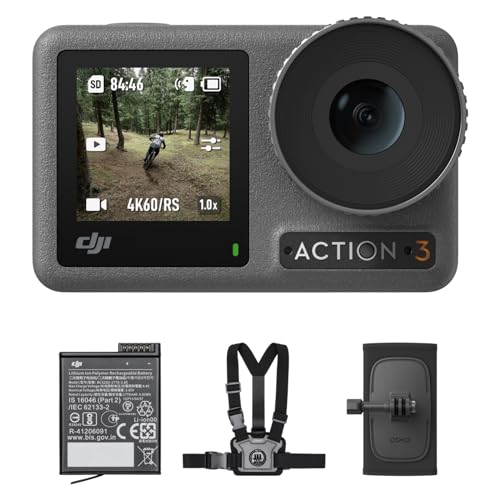
- DJI Osmo Action 3 Outdoor Combo: check price on Amazon
- GoPro HERO12 Black: check price on Amazon
- OM SYSTEM Olympus Tough TG-7: check price on Amazon
- DJI Osmo Pocket 3: check price on Amazon
- Insta360 GO 3S: check price on Amazon
- Nikon Z50 II: check price on Amazon
Every gram in a rucksack is carried twice, up and down, and every camera decision on a trail is secretly a weight decision wearing a specification’s clothes. The best cameras for hiking camping are the ones that respect that arithmetic while surviving the trail’s other certainties: rain that arrives horizontally, dust that behaves like weather, batteries that cannot be recharged from a tree, and subjects, dawn ridges, tent-light evenings, a fox at the treeline, that appear exactly once and do not wait for a lens change. This guide ranks for the carried life, where the best camera is the one still on your chest strap at mile nineteen.
The fleet divides the trail’s jobs honestly. Two action cameras, one sold as a hiking-ready outdoor combo, split the moving record between them. A sealed compact takes the stills that weather tries to prevent. A gimbal camera walks the camp and the viewpoint with cinematic calm. A thumb-sized camera rides a cap or a sternum strap almost without existing. And one compact mirrorless body, carried deliberately on the days photography is the point, delivers the stills quality the small cameras salute and step aside for.
Nothing here requires a sherpa, a vehicle or a charging point. Power plans assume a power bank and discipline; weather plans assume the worst hour of the forecast; and every pick can be operated by cold fingers wearing liner gloves, because trails are not showrooms and November does not care about your touchscreen.
Key Takeaways
- Weight carried is the first specification; image quality is the second.
- The Action 3 Outdoor Combo arrives trail-ready with hiking mounts included.
- The TG-7 is the stills camera rain cannot cancel.
- Action cameras own the moving record; the Z50 II owns the deliberate still.
- Power is a plan, not a hope: banks, rotation and settings discipline.
- The GO 3S proves a real camera can weigh almost nothing at all.
In this guide
Quick Picks
| Camera | Badge | Why it is here |
|---|---|---|
| DJI Osmo Action 3 Outdoor Combo | Best Trail Kit Overall | Action camera bundled with chest and backpack mounts for hiking and cycling. |
| GoPro HERO12 Black | Best for Hard Weather Video | Stabilised, waterproof summit and storm footage with deep mounts. |
| OM SYSTEM Olympus Tough TG-7 | Best Weatherproof Stills | Sealed compact with macro for trail details and position logging. |
| DJI Osmo Pocket 3 | Best for Camp and Viewpoints | Gimbal-smooth evening walks and dawn panoramas from a pocket. |
| Insta360 GO 3S | Best Ultralight Pick | Cap-and-strap 4K that ultralight hikers can actually justify carrying. |
| Nikon Z50 II | Best Deliberate Stills Body | Interchangeable-lens quality for photography-first trips. |
How did we choose cameras for hiking and camping?
We began with the scales. Total carried weight, camera, mount, case, batteries and cards, was computed for each candidate as a system, and systems were ranked by what their weight buys: a camera that doubles the carried grams must visibly double the photographic return, or it stays home and so, in honesty, should it. That arithmetic favours the small and the sealed, and it is why no full-frame body appears in this guide despite several appearing elsewhere in this series: on a trail, full frame’s quality is real and its carriage is a decision most hikers regret by the second pass.
Weatherproofing was the second gate, judged as a trail experiences it: not a laboratory submersion but days of drizzle, a summit squall, condensation inside a tent at dawn, dust on a dry ridge. Sealed bodies and cameras waterproof without housings passed; cameras requiring faith and zip bags were confined to the deliberate-photography role, where their outings can be chosen around the forecast.
Third came power realism. A hiking camera’s true battery life is measured against cold mornings, long days and a shared power bank, so we favoured efficiency, swappable batteries and settings discipline over headline recording minutes. The picks below, used as directed, can document a week on the trail without meeting a wall socket, which is the only power standard a camping guide is entitled to use.
The picks in detail

DJI Osmo Action 3 Outdoor Combo — Best Trail Kit Overall
The Outdoor Combo is the rare bundle that understands its own brief: an action camera sold with the chest and backpack strap mounts a hiker actually uses, so the walking record, hands free, pack on, poles swinging, starts on day one without an accessory scavenger hunt. The Action 3 itself is a mature, waterproof instrument with strong stabilisation, dual touchscreens that work with trail-grubby fingers, and a magnetic mounting system that moves the camera from chest strap to trekking-pole improvisation to tent-ridge timelapse in seconds. For the hiker whose trip is a journey rather than a series of viewpoints, that mounted, always-ready record is the trip’s true diary.
Its cold-weather manners deserve the emphasis DJI themselves give them: batteries and electronics chosen to keep working when frost is on the tent, which is when the light is best and lesser cameras file their excuses. Battery life is generous for the class, the files are honest, and the whole system packs into a hip-belt pocket’s worth of space, leaving the pack’s heart free for food, water and the layers that keep the photographer alive to edit.
Newer siblings out-spec it in frame rates and low light, and the HERO12 below stabilises a shade harder in violence. At its combo price and with its trail kit included, though, the Action 3 remains the thinking hiker’s default: complete, weatherproof, cold-proof and carried without a thought, which on a long trail is the highest specification of all.
- Form: waterproof action camera combo
- Kit: chest and backpack strap mounts included
- Cold: designed for freezing-weather operation
- Mounting: quick magnetic transitions
- Role: walking record, trails, bikepacking
Strengths
- Arrives as a complete hiking system.
- Keeps working in tent-frost cold.
- Hands-free record from the chest strap.
Trade-offs
- Newer models out-spec its frame rates.
- Low light is good, not class-leading.
- Stills are documentation grade.
Best for: through-hikers and trail diarists. Not suited for: deliberate stills photography.

GoPro HERO12 Black — Best for Hard Weather Video
When the trail turns theatrical, horizontal rain on the ridge, the summit wind trying to take the camera as a souvenir, the HERO12 is the recorder to trust with it. Its stabilisation is the strongest argument in this guide for moving footage, ironing a stumbling descent into watchable evidence, and its waterproof body treats the storm as a location rather than an emergency. Voice control starts it inside gloves and a hood; its accessory lenses widen the summit panorama; its slow motion turns the river crossing and the scree run into studies rather than blurs.
The GoPro mount world’s depth matters doubly outdoors, because trail filming improvises: the chest mount for the walk, the clamp for the tent pole, the adhesive base on the helmet for the scramble, the mini tripod that doubles as a grip at the viewpoint. Every one of those exists for this camera, tested by a decade of people who also forgot to pack the right mount and improvised anyway.
Battery appetite is the known tax, and cold multiplies it; the power plan in this guide’s workflow section is written largely around this camera’s honesty about its hunger. Pay the tax in spare batteries carried warm, and the HERO12 returns the trail’s most dramatic hours in footage that does them justice, which is the entire reason to carry a camera into weather at all.
- Form: waterproof action camera
- Stabilisation: strongest here for motion
- Control: voice start in gloves and hood
- Mounts: deepest ecosystem available
- Role: summits, storms, descents, crossings
Strengths
- Storm footage that stays watchable.
- A mount for every improvisation.
- Slow motion for the trail’s drama.
Trade-offs
- Batteries drain fast, faster in cold.
- Needs a real power plan for long trips.
- Stills remain an afterthought.
Best for: dramatic weather and moving records. Not suited for: week-long trips without power discipline.

OM SYSTEM Olympus Tough TG-7 — Best Weatherproof Stills
The TG-7 is the camera that makes hiking stills a daily practice instead of a fair-weather hobby. Sealed against water, dust and freezing, rated for the drops a trail guarantees, it rides on a chest strap or in a hip pocket through everything the forecast can legally do, and it photographs like a serious compact when it arrives: a real zoom for the chamois on the far slope, close focusing for the alpine flowers and fungi that are the trail’s small print, and position logging that pins each frame to the map, so the trip’s photographs become a located diary rather than a beautiful rumour.
Its field virtues compound quietly. The sensor-shift stabilisation steadies the dusk shot at the refuge; the underwater modes handle the tarn and the waterfall plunge pool; the controls remain usable in liner gloves; and the whole instrument asks for no bag, no housing and no anxiety, which is why it returns with photographs on the days the mirrorless stayed in the tent and the phone stayed in a zip bag. Presence, again, is the specification that decides archives.
Its small sensor concedes the darkest hours and the largest prints to the Z50 II below, and its video is a servant rather than a star. As the trail’s stills camera, carried always and forgiven everything, it has no rival in this guide, and many hiking photographers will find it the only camera they actually needed.
- Form: sealed rugged compact
- Macro: close focus for trail details
- Logging: position data in every frame
- Build: waterproof, dustproof, freezeproof
- Role: daily stills in all weather
Strengths
- Photographs on the days others cannot.
- Macro finds the trail’s small print.
- Located frames make a true trip diary.
Trade-offs
- Small sensor limits dusk and prints.
- Video is serviceable only.
- Zoom stops short of wildlife reach.
Best for: all-weather trail stills and located diaries. Not suited for: large prints or primary video.

DJI Osmo Pocket 3 — Best for Camp and Viewpoints
Camp has its own cinematography: the tent glowing at dusk, the stove’s small ceremony, the walk to the viewpoint as the light turns, and the Pocket 3 is built for exactly that register. Its gimbal turns a stroll around the tarn into a tracking shot, its one-inch sensor keeps the evening’s low light rich rather than noisy, and its rotating screen frames the vertical diary piece for the folks at home without a second take. At the weight of a sandwich, it earns its place in packs that would never carry a mirrorless for video, and it deploys in seconds when the light does something unrepeatable, which on a trail is most evenings.
Its tracking holds a walking companion in frame while the operator narrates, its timelapse modes turn the tent into an observatory for cloud and star movement, and its wireless microphone companions capture the camp conversation at a quality that makes the trip film feel produced rather than merely recorded. Dawn is its finest hour: while the action cameras are still being mounted, the Pocket 3 is already gliding across the ridge’s first light.
It is not weatherproof in the TG-7’s sense and not expendable in the action cameras’ sense; rain sends it into a jacket until the shower passes, and its fixed lens frames what it frames. As the camp and viewpoint specialist in a two-camera trail kit, though, it contributes the footage that makes people at home understand why the hikers went, which the summit clips alone never quite achieve.
- Form: pocket gimbal camera, one-inch sensor
- Stabilisation: three-axis mechanical
- Low light: evenings and dawn excel
- Screen: rotates for vertical diaries
- Role: camp, viewpoints, trip films
Strengths
- Camp footage with genuine cinema calm.
- Dusk and dawn stay rich and clean.
- Deploys before the light changes its mind.
Trade-offs
- Shelter it from real rain.
- Fixed lens, fixed framing.
- Too precious for storm duty.
Best for: camp life, viewpoints and the trip film. Not suited for: storm records or expendable mounts.

Insta360 GO 3S — Best Ultralight Pick
Ultralight hiking is a philosophy with a spreadsheet, and the GO 3S is the only camera in this guide the spreadsheet waves through without an argument: a thumb-sized 4K camera that clips to a cap, a sternum strap or a pack shoulder, records the walker’s true point of view, and adds less weight than the trail snack it documents being eaten. For fastpackers, trail runners and gram-accountants, it converts the camera question from whether to how, and its footage, stabilised, honest, genuinely 4K, serves the trip record and the route guide alike.
Its magnetic mounting makes it the trail’s improviser: on the trekking pole for the river crossing, on the tent’s lantern hook for the evening, on the cap for the scramble where hands are otherwise employed. The action pod waits in a pocket with the screen, the controls and a recharge, so the system’s total weight stays inside the philosophy while its working day stretches across a long stage.
Short native recording stretches, modest low light and a size that demands a tether habit are the honest costs. It will not be the trip’s only camera for a photographer, but as the always-worn witness of a light-and-fast journey, it is unmatched here, because it is the camera whose presence the philosophy cannot object to.
- Form: thumb-sized modular camera
- Mounts: cap, strap and magnetic surfaces
- Video: 4K point-of-view capture
- Pod: screen, controls and recharge
- Role: ultralight, running, fastpacking
Strengths
- Survives the ultralight spreadsheet.
- True walker’s-eye record, hands free.
- Mounts anywhere in seconds.
Trade-offs
- Short bursts between pod recharges.
- Low light is modest.
- Tether it or lose it.
Best for: ultralight hikers and trail runners. Not suited for: the trip’s sole photographic instrument.

Nikon Z50 II — Best Deliberate Stills Body
Some trips are photography expeditions that happen to involve walking, and for those the Z50 II is the carried indulgence this guide endorses: a compact mirrorless body whose interchangeable lenses, a wide zoom for the valley, a telephoto for the wildlife, a fast prime for camp portraits, deliver stills quality the small cameras cannot approach, with modern subject detection and colour that prints beautifully. Carried in a chest harness or a padded case at the pack’s top, it is present for the deliberate hours, the dawn shoot at the col, the evening at the refuge, without pretending to be an all-weather daily driver.
Its honesty about its role is the recommendation: it is not sealed like the TG-7, so its outings are chosen, its protection is a real case and a rain cover, and its batteries join the power plan as citizens. In exchange, the trip’s best stills, the ones that become prints, come from this camera with a regularity that justifies every gram on the days it is carried. Many photographers will run it as the second camera beside the TG-7, one for the record, one for the wall.
System cost and carriage discipline are the prices, and video, while capable, is not this pick’s argument. As the deliberate stills body of the trail fleet, it completes the guide’s logic: small cameras for presence, this one for the photographs the trip was taken to make.
- Form: APS-C mirrorless, interchangeable lenses
- Focus: modern subject detection
- Colour: Nikon’s dependable stills rendering
- Sharing: wireless transfer for the diary
- Role: photography-first trips, prints
Strengths
- Stills quality the compacts cannot reach.
- Lens choice for valley to wildlife.
- Compact enough to genuinely carry.
Trade-offs
- Needs weather protection and a case.
- Heaviest system in this guide.
- System cost grows with lenses.
Best for: photography-led hikes and print makers. Not suited for: ultralight or all-weather daily carry.
Comparison table
| Camera | Form | Best at | Standout | Choose it for |
|---|---|---|---|---|
| DJI Osmo Action 3 Combo | Action camera kit | Trail record | Hiking mounts included | Through-hikes |
| GoPro HERO12 Black | Action camera | Hard weather video | Stabilisation and mounts | Storms and summits |
| OM SYSTEM Tough TG-7 | Rugged compact | Weatherproof stills | Sealed, macro, logging | Daily trail diary |
| DJI Osmo Pocket 3 | Gimbal camera | Camp cinema | Low light and glide | Evenings and films |
| Insta360 GO 3S | Micro camera | Ultralight POV | Thumb-sized 4K | Fastpacking |
| Nikon Z50 II | Mirrorless | Deliberate stills | Lens system quality | Photography trips |
How do you plan power for a week without sockets?
Start from the honest budget: minutes of recording per day, per camera, multiplied by the trip’s length, then matched against batteries carried and the power bank’s real, cold-discounted capacity. The Action 3’s efficiency and the TG-7’s modest appetite stretch a bank across a week of diary filming; the HERO12’s drama costs more and should be budgeted like the luxury it is, summits and storms rather than all-day record. Settings are a power tool: the diary does not need maximum frame rates, and dropping them doubles some cameras’ useful day without the audience ever knowing.
Rotation discipline keeps the budget honest. Batteries numbered, used in order, spent ones pocketed separately, the bank itself rationed with a written nightly allowance, because power anxiety at day five is always arithmetic that was skipped at day zero. Solar panels earn their weight only on slow, sunny, basecamp-style trips; on a moving through-hike they are usually a talisman, and the weight is better spent on batteries.
Cold is the budget’s tax collector. Batteries sleep inside the tent, inside a pocket, inside the photographer’s layers on the summit push, and cameras are warmed by the same hospitality. Every pick in this guide tolerates the regime; none repeals its physics, and the hiker who plans for the tax arrives at the last dawn with a working camera, which is the entire point.
How do you photograph a trail, not just its viewpoints?
Shoot the walking, not only the arrival
The chest-mounted record and the GO 3S’s cap view exist because a trail’s truth is in its walking: the path’s texture, the weather’s mood, the companions’ effort and laughter. Trips remembered only as viewpoints become a slideshow of other people’s postcards; trips recorded in their walking become journeys again at every viewing. Build the mounted record into the day’s rhythm, a few minutes each hour, and the archive gains the connective tissue that makes the viewpoints mean something.
Give camp the same respect as the summit
More of a trip’s life is lived in camp than on summits, and the Pocket 3’s evening work plus the TG-7’s tent-side stills are how that life gets kept. Photograph the routines, the stove, the map conference, the sock-drying line, with the same care as the panorama. In ten years the routines will be the treasure, because the panorama is on a thousand postcards and the sock line is only in your archive.
Let the small print stand for the place
The TG-7’s macro and the close details on every camera here, the frost on the tent zip, the lichen’s map on the boulder, the boot print in volcanic dust, locate a trip more precisely than its grand views. Places differ most in their details. A trail archive with a details habit can be identified blind; one of viewpoints only could be anywhere with mountains.
What mistakes do hiking photographers make?
Carrying the flagship and leaving it in the pack
The camera in the pack’s depths photographs nothing, however fine its sensor. Carry the daily camera on the body, chest strap, hip belt, cap, and let the deliberate body ride where a stop can reach it. Access is a specification; the TG-7’s whole career is built on it.
Trusting the forecast instead of the sealing
Mountain weather does not read forecasts. A camera system that requires the forecast to be right will eventually be rained on in its bag, and the archive will show the gap. Sealed daily cameras and honest rain covers for the deliberate body are not pessimism; they are how the record survives the trip’s actual weather rather than its predicted weather.
Spending the power bank by Wednesday
Unbudgeted filming feels free until it is expensive. The written allowance, the settings discipline and the rotation rota exist so that the last day’s dawn, often the trip’s best light, is filmed on a living camera. Trips are remembered by their endings; power the ending first.
Photographing the group only at summits
Summit portraits are the genre’s cliché because they are easy, and they flatten a party into a row of grins against a view. Film the effort, the kindnesses, the ridiculous moments of the walking and the camping, and the archive becomes a portrait of people rather than of geography with people pasted on.
Final Recommendation
Most hikers should carry the Action 3 Outdoor Combo as the moving record and the TG-7 as the daily stills camera: together they cover weather, walking and wonder at a weight a real pack forgives. Add the HERO12 when storms and summits are the story, the Pocket 3 when the trip deserves a film, the GO 3S when grams rule, and the Z50 II when photography is the expedition’s purpose. Weigh the system, plan the power, carry the daily camera on your body, and the trail will give you back its whole self, not just its viewpoints.
Frequently Asked Questions
Is my phone enough for hiking photos?
For daylight viewpoints, increasingly yes, and this guide will not pretend otherwise. The dedicated picks win on weather sealing, mounting, battery rotation, cold behaviour and being present on the chest strap rather than buried in a pocket inside a waterproof bag inside the pack. If photography matters to the trip, that presence is the argument.
How many batteries does a week on the trail need?
It depends on the camera’s appetite and your recording discipline, but the planning method matters more than the number: budget minutes per day, respect the cold discount, rotate in order, and carry the bank sized to the hungriest camera’s plan. The workflow section’s arithmetic, done once at home, replaces a week of anxiety.
Action camera or rugged compact first?
If your trips are remembered in motion, the Action 3 Combo; if in photographs, the TG-7. Most hikers eventually carry both, because the two records answer different questions, what it looked like and what it felt like to move through it, and a complete archive answers both.
Can the Z50 II survive camping?
Yes, with the deliberate body’s courtesies: a real case, a rain cover, a dry tent routine and outings chosen with the forecast in mind. It is not the daily driver in a storm week, and this guide assigns it accordingly, but photography-first trips in kind seasons are exactly its homeland.
What about condensation inside the tent?
Bring cameras into the tent’s warmth gradually, keep them in their cases with desiccant overnight, and let a cold camera warm inside a sealed bag so condensation forms on the bag rather than the lens. The sealed picks forgive the regime best, but the bag habit protects every camera in this guide, and it costs nothing but forethought.
How do different trails change the camera plan?
The desert trail is a study in dust, glare and water carried rather than found: sealed cameras rule, lenses are cleaned with air rather than cloth, and the TG-7’s logging helps navigate a landscape whose features repeat like verses. The forest trail is a low-light, high-humidity world where the Pocket 3’s sensor and the Action 3’s cold-bred electronics earn their keep among the dripping greens, and where macro, fungi, bark, the forest’s floor, becomes the archive’s richest vein. The alpine trail adds altitude’s cold and ultraviolet violence, punishing batteries and rewarding the chest-mounted record that never asks frozen fingers to do anything but walk.
Coastal trails salt everything, and the evening rinse in fresh water becomes part of the camp ritual for any camera that has spent the day in sea air. Winter trails rewrite the plan around the power section’s cold arithmetic and the gloves test, every control rehearsed in the actual mittens. The point of the catalogue is that no single camera wins every trail, which is why this guide built a fleet with overlapping virtues rather than a champion with excuses: match the fleet’s emphasis to the trail’s character, and the archive stops depending on the weather’s mercy.
Long-distance trails add the final variable, resupply. Cameras and batteries can be posted ahead, cards can be posted home, and the through-hiker’s system should be designed for those logistics from the start: identical batteries that a trail town can replace, files that a cheap laptop can copy, a camera, usually the TG-7 or the Action 3, whose loss at a road crossing would wound the record without ending it.
What does the trail teach about all camera buying?
That presence beats potential, in equipment as in everything the trail examines. The hiker learns to distrust any tool whose virtues require conditions the world rarely provides, and to love the tool that works at dawn, in drizzle, with cold hands and a tired mind. Cameras bought by that standard, and the six above were, tend to be carried for years and to appear in archives that actually exist, which is the only review that cannot be argued with.
The trail also teaches sufficiency: a record that answers what it looked like, what it felt like and where it happened is complete, and the chase for a fourth answer usually costs one of the first three. Hikers who internalise that stop upgrading and start walking further, and their archives, complete and located and alive with weather, are the envy of photographers with finer equipment and shorter trails. Buy for presence, carry for the worst hour, and let the miles do the rest.
How should a group hike share the filming?
A party of walkers films best as a relay rather than a competition. Assign the records at the trailhead, cheerfully and in writing if the trip is long: one walker carries the chest-mounted Action 3 for the route’s diary, one carries the TG-7 with the people-and-details brief, and the Pocket 3 rotates to whoever has the evening’s energy for camp. Rotation matters because the camera’s carrier sees the trip through its duties, and sharing the duties shares that way of seeing around the party, so nobody’s whole journey becomes work and nobody’s is missing from the record.
The archive should be communal from the first evening: one laptop or tablet, one folder per day, every card copied while the stove runs. Groups that pool nightly return with a single coherent film of the trip; groups that promise to share files later return with six partial trips and a group chat that fades by October. The cameras in this guide support the pooling with standard files and painless transfers, but the habit is social, not technical, and it is set, like most expedition habits, by whether the first evening does it properly.
Consent and credit ride along: walkers agree who may appear in films that travel beyond the party, and the shy walker’s wishes are designed into the filming rather than edited around afterwards. A group that settles this at the trailhead films freely for a week; the cameras’ discretion, the GO 3S above all, helps, but the agreement is the real enabler, and it costs one honest conversation.
What is the trail photographer’s evening ritual?
It mirrors the river expedition’s and the range day’s, because archives everywhere are saved by the same unglamorous liturgy. Cards are copied to two places before any is cleared. Batteries go on charge or into the rotation pouch in their numbered order. Lenses are inspected by headtorch, cleaned with air first and cloth second, and the day’s cameras are dried, not sealed away damp, with desiccant in the storage pouch doing the night shift. Ten minutes, while the meal cooks, and the system is ready for a dawn that will not wait for anyone’s troubleshooting.
The ritual includes one creative act: a glance through the day’s frames, not to edit but to learn. Which viewpoint did the light betray? Which detail deserved more time? The glance sets the next day’s intentions while the trail can still act on them, and photographers who keep it find their archives improving visibly by day four of any trip, because the feedback loop is running at trail speed rather than at homecoming speed, when the lessons are archaeology.
And the ritual ends with the cameras put where the morning needs them: the dawn camera charged and at the tent door, the chest mount already on the strap, the power bank’s remaining charge known and written on the plan. Expeditions are not usually lost to disasters; they are lost to a hundred small unpreparednesses, and the evening ritual is simply the decision to win those hundred in advance, nightly, for the price of ten minutes and a headtorch.
Why do wildlife encounters reward the ready, not the finest?
The fox at the treeline allows perhaps twenty seconds. In those seconds the finest camera in a pack is worth nothing and the ready camera on a chest strap is worth everything, and the trail’s wildlife archive is therefore built almost entirely by the TG-7’s presence and the action cameras’ mounted readiness rather than by the deliberate body’s reach. This is not an argument against the Z50 II’s telephoto, which on a photography-led trip, waiting at the treeline by intention, produces the wildlife portraits the ready cameras cannot. It is an argument for knowing which wildlife photographer you are on this trip: the waiter or the walker. The fleet serves both, but it serves them with different cameras, and confusing the roles produces the familiar archive of distant dots and beautiful intentions.
Ethics set the encounter’s terms before optics do: the animal’s behaviour is the boundary, and a photograph that costs the fox its hunt or the bird its nest is a theft wearing a hobby’s clothes. The ready cameras help here too, because their wide, quick record respects distance naturally, and the deliberate body’s telephoto exists precisely to honour distance with quality rather than to close it on foot. Keep the distance, keep the animal’s day intact, and let the archive’s wildlife be evidence of encounters rather than of pursuits.
Back home, those twenty-second frames carry a charge the composed landscapes cannot match, because everyone in the room understands they were nearly not taken. Readiness is the trail’s whole photographic philosophy compressed into one encounter, and it is why this guide has ranked presence above potential from its first paragraph.
What should the first trail season teach a new photographer?
Mostly, which camera they actually are. The first season’s archive is a diagnostic instrument: count the frames by camera and by hour, and the pattern confesses everything, whether the stills or the motion carried the memory, whether the dawns or the evenings did the work, whether the expensive body earned its carriage or rode as a passenger. New photographers should buy the first season cheaply and honestly, the Action 3 Combo or the TG-7, precisely so the diagnosis is affordable, and let the second season’s purchases answer the first season’s evidence. Fleets built that way fit their owners like boots; fleets built from aspiration fit like other people’s boots, and the trail is unkind to both kinds of misfit.
The season also teaches the trail’s editing mercy: most frames are for the walker, not the wall, and their job is to hold the day’s truth for the walker’s own memory rather than to impress a jury. Cameras that serve that job with presence and location data, the TG-7’s logged diary above all, become beloved in a way specification leaders rarely do. Beloved equipment gets maintained, charged and carried, which closes the loop this guide has been drawing all along: the archive improves because the camera is loved, and the camera is loved because the archive improves.
By the second season the pattern is set, and the upgrades, when they come, arrive as answers: the Pocket 3 because the evenings proved cinematic, the Z50 II because the stills proved worthy of prints, the GO 3S because the pack proved too heavy for pride. That is the correct order of a photographic life outdoors, evidence first, equipment second, and it is available to every reader who starts with any honest pick in this guide and walks.
Evidence first, equipment second is also the right frame for the hiker torn between this fleet and a single do-everything device. One camera carried everywhere, the TG-7 is the strongest candidate in this guide for that monogamy, will out-archive a stable of specialists left in rotation at home, because archives are made of presence accumulated daily. The specialists earn their places when the trips diversify, the film, the expedition, the photography pilgrimage, and by then the one-camera years have taught the owner exactly which specialism their own archive keeps asking for. There is no shortcut through that education, and fortunately there is no need of one: the education is the hobby itself, conducted at walking pace, in weather.
A closing word on leaving the camera in the tent
Every guide in this series ends by defending the equipment’s importance, so let this one end by defending its occasional absence. There are summits whose weather is for surviving, evenings whose company is for keeping, and dawns whose light a person should simply receive once in a while without a viewfinder’s mediation. The fleet above, precisely because it is ready and effortless, makes the choice honest rather than accidental: the camera is there, charged, on the strap, and the walker who leaves it silent for an hour is choosing presence over record with open eyes. Archives built by people who sometimes choose presence have a quality no specification can confer, because their makers were actually on the trips the archives describe.
Choose the fleet, learn its rituals, power it with a plan, and then walk out with the confidence that the record is handled. The trail will do the rest, in weather, in light and in the small print of fungi and frost, and the cameras, carried lightly and used completely, will bring it home.
Bring it home, and then do the last thing the trail asks of its photographers: share it in a form the people who stayed behind can actually enter. Not the thousand frames, but the evening’s selection, sequenced like the journey, located, captioned while the names are still in your legs. A trip shared that way recruits its own future companions, teaches the next party what the trail demands, and justifies every gram the cameras weighed with the only currency that ever really settles a rucksack argument: other people’s understanding of why you went. The fleet above was chosen to make that sharing inevitable, by being present for the whole story rather than its highlights.
Present for the whole story: that is the standard to hold against any future temptation, whether it arrives as a heavier body with a finer sensor or a lighter toy with a louder promise. Ask of it the trail’s three questions. Will it be on my body at mile nineteen? Will it work in the trip’s worst hour? Will its files still be organised when I am tired? The six cameras above answer yes in their assigned proportions, which is why they are in this guide and why, seasons from now, their archives will still be answering for them.
Seasons from now is the right horizon for trail equipment generally, and it is worth buying with that horizon in view: straps and cases replaceable, batteries standardised across the fleet where the makers allow, files in formats any future computer will open. The hiker who buys for the decade walks past a hundred product launches without breaking stride, and the archive grows in one continuous handwriting. That continuity, more than any single trip’s footage, is what a life outdoors actually accumulates, and the cameras that serve it become, in the fullest sense, old companions rather than old models.
Old companions earn a particular care: the strap replaced before it frays through, the seals inspected each spring, the firmware left alone when it works and the settings card in the case rewritten when it changes. Keep that care as part of the hobby rather than as a tax on it, the way a walker cares for boots, and the companions will keep their side of the bargain across more miles than any warranty contemplates. The trail rewards the maintained, in equipment as in knees, and it punishes the neglected with a punctuality that borders on the personal.
With a punctuality that borders on the personal: every hiker has a story that ends with that sentence’s evidence, a camera dead at the one summit that mattered, a card lost to a format performed in a tent at midnight. The rituals in this guide exist because those stories were collected and believed. Follow them, and your own stories will be about the fox, the storm survived and the dawn that turned the ridge to copper, with the cameras playing the part they were bought for: present, working and almost unmentioned, the way all great trail companions are.
Almost unmentioned, until the evening the photographs are shown and someone asks what took them, and the answer, a small sealed compact, a chest-strapped action camera older than the boots, surprises the room. That surprise is the trail’s verdict on the whole specification race, delivered in the only venue that counts. Choose the companions in this guide, carry them completely, and prepare to deliver that surprise for years, one located, weatherproof, honestly powered archive at a time.
One located, weatherproof archive at a time is also a fair description of how a hiking life is built, and the cameras, in the end, are simply how it remembers itself. Buy them as you would buy boots, for fit, for weather, for the miles actually planned, and the remembering will take care of itself with a completeness that surprises even the walkers who lived it. That surprise, renewed at every showing, is the return on every gram this guide asked you to count, and it compounds for exactly as long as the walking does.
For exactly as long as the walking does: so let the last practical word be about starting. The next trail is closer than the perfect kit, and every camera in this guide can be in a pack by the weekend, learning its owner while its owner learns the light. Start with the honest pick your budget and your pack agree on, walk the season, read the archive’s evidence, and upgrade, if the evidence asks, with the confidence of someone whose questions finally come from experience. That is how every good trail fleet in this guide’s collective memory was actually built, one season and one located, weatherproof frame at a time.
One season and one frame at a time, and then, seasons later, the whole shelf of them: the storm on the first ridge, the fox, the tent-light evenings, the companions laughing in weather that should have cancelled everything. Nobody assembles that shelf by buying brilliantly once. They assemble it by carrying something honest every single time, and the six cameras above are, as this guide has argued from its first weighing, the current most honest ways to carry it. Lace up, strap one on, and go and earn the next frame.
Go and earn the next frame, and the one after it, until the earning becomes the habit and the habit becomes the archive. That progression, from purchase to practice to memory, is the trail’s gift to anyone who walks it equipped and attentive, and it is available this weekend, at every budget represented above, to every reader willing to carry a little honestly and plan the power like it matters. It matters. So does the walking. Begin both.
Begin both, and notice, somewhere around the third trip, that the camera question has quietly stopped being a question. The strap is where it lives, the rota runs itself, the archive grows by evenings, and the walker’s attention has returned to the things the walk was always for: the weather’s theatre, the companions’ company, the body’s honest tiredness and the light doing its unrepeatable work on a ridge that will never look exactly like that again, except in the frame you are about to make of it, with a camera that was chosen, weighed, powered and carried for exactly that moment, and that will be ready again tomorrow at dawn when the light does something entirely different and equally unrepeatable over the next valley.
Ready again tomorrow at dawn: keep that as the acceptance test for the whole system, straps, rota, power plan and all, and any fleet assembled from this guide will pass it in the field rather than in the imagination. The dawn, after all, is the trail’s daily referendum on every piece of equipment a walker owns, and it returns its verdict without appeal, in light, across the tent’s frosted fly, while the walker’s hands are still too cold for anything complicated and the camera, if the system was built honestly, asks for nothing but to be picked up and pointed at the day.
The trailhead is closer than the perfect kit, and the light up there is not waiting for either of them.
Related Guides
Hikers who also paddle should read our Grand Canyon rafting camera guide. For field science on foot, see our geology camera picks, and for head-mounted options, our helmet camera roundup.


