reviewstook.com is reader-supported. When you buy through links on our site, we may earn an affiliate commission.
Where to buy
One boundary must be drawn before a single camera is named, because this guide’s territory is specific: the best compact digital cameras for landscape photography, as covered here, are fixed-lens digital compacts — cameras whose lens is built into the body and cannot be changed. That excludes the interchangeable-lens compacts and small mirrorless systems discussed elsewhere in this series, however compact their bodies may be. The fixed-lens compact is a distinct photographic philosophy: one lens, chosen by the maker and mastered by the owner, in a body small enough to be present on every walk, every trip and every unplanned sunset. Landscape photography, which rewards presence and patience more than equipment breadth, turns out to be the genre where that philosophy shines brightest.
- Ricoh GR III: prose-only pick, the wide prime landscape pocket camera
- Fujifilm X100V: prose-only pick, the classic fixed-lens landscape companion
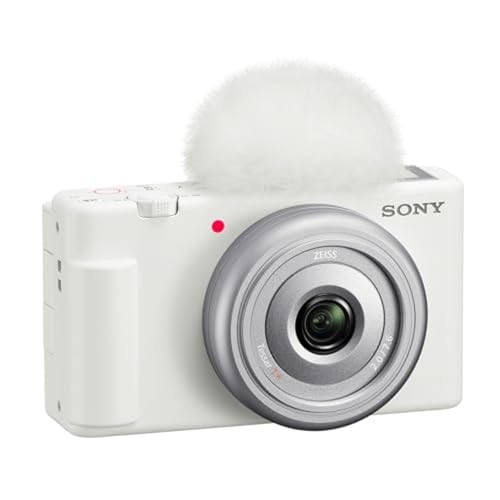
- Sony ZV-1F: check price on Amazon
- Panasonic LUMIX LX100 II: prose-only pick, the multi-aspect landscape compact
- DJI Osmo Pocket 3: check price on Amazon
- OM SYSTEM Olympus Tough TG-7: check price on Amazon
Three picks are prose-only, and the pattern will be familiar to readers of this series: the guide links only listings verified against maker data, and the Ricoh, Fujifilm and Panasonic flagships of the fixed-lens world were not in that verified pool at the time of writing. They are recommended on their documented merits — each is among the most respected landscape compacts ever made — and you should source them from reputable sellers under their exact model names. The three linked picks, by contrast, carry the guide’s verification behind every click.
Why would a landscape photographer accept a lens that cannot be changed? Because landscape is the genre least dependent on focal-length variety and most dependent on everything else: dynamic range for skies, colour for atmosphere, sharpness across the frame, and a body light enough that the photographer actually climbs to the viewpoint at dawn. A fixed wide or standard lens covers the overwhelming majority of serious landscape compositions, and the constraint underneath it — learning one field of view until it becomes instinct — is the same discipline the great landscape photographers of the film era practised with their single plate cameras. The picks below divide by how each maker interpreted that discipline.
Digital matters to the definition too. These are cameras whose raw files, instant review and exposure tools serve the modern landscape workflow: check the histogram on the ridge, bracket the sky, review the foreground focus, and walk home knowing the photograph exists rather than hoping the film agrees. Film compacts have their charms and their own guides; this one’s cameras answer to the card and the editing desk.
Key Takeaways
- Scope is fixed-lens digital compacts only: no interchangeable lenses, by design and by philosophy.
- Ricoh’s GR III is the landscape purist’s pocket camera — APS-C sensor, superb wide lens, raw files.
- Fujifilm’s X100V pairs its fixed lens with film-simulation colour landscape shooters love.
- Sony’s ZV-1F brings an ultra-wide fixed lens and one-inch sensor to accessible landscape work.
- Panasonic’s LX100 II offers multi-aspect framing and a fast zoom in a compact body.
- The Pocket 3 and TG-7 extend landscape work to moving scenes and brutal weather.
In this guide
Quick Picks
| Camera | Badge | Why it is here |
|---|---|---|
| Ricoh GR III | Best pure landscape compact | APS-C raw quality and a brilliant wide prime in a coat-pocket body. |
| Fujifilm X100V | Best colour and craft | Fixed-lens classic with film simulations and a hybrid viewfinder for slow landscapes. |
| Sony ZV-1F | Best ultra-wide value | A 20mm-equivalent fixed lens and one-inch sensor for sweeping scenes. |
| Panasonic LUMIX LX100 II | Best framing flexibility | Multi-aspect sensor use and a fast zoom for composed landscapes. |
| DJI Osmo Pocket 3 | Best for moving landscapes | Gimbal-smooth landscape video and panoramas from a one-inch sensor. |
| OM SYSTEM Olympus Tough TG-7 | Best for wild weather | Raw landscape stills from a body that laughs at coasts and storms. |
How were landscape compacts judged differently from travel cameras?
Landscape has its own hierarchy of virtues, and it is nearly the reverse of the travel camera’s. Corner-to-corner sharpness outranks autofocus speed, because a landscape is examined whole, at leisure, often in print. Dynamic range outranks burst rate, because the sky and the shadowed valley must coexist in one file. Colour character outranks connectivity, because atmosphere is the subject and the file’s rendering of dawn mist matters more than how fast it reaches a phone. Picks were scored on that hierarchy first, and only then on the compact virtues of size and simplicity.
Raw support was required in spirit if not in name: every pick here records raw, because landscape editing — graduated skies, recovered highlights, balanced shadows — is where raw earns its reputation most completely. Tripod-friendliness was weighed quietly: a compact that sits happily on a mini-tripod or a rock, with a self-timer or remote option and a screen that tilts for low compositions, serves the landscape ritual of waiting for light. Filters and lens hoods, the landscape photographer’s old allies, earned credit where a fixed lens accepts them gracefully.
Finally, the judges asked the presence question in its landscape form: which of these cameras will be in the pocket on the ordinary Tuesday walk that suddenly offers an extraordinary sky? Landscape portfolios are built disproportionately from unplanned encounters with beautiful light, and the compact’s whole case rests on being there. The finest landscape camera in this guide is not the one with the best specifications; it is the one its owner stops leaving at home.
Ricoh GR III — Best pure landscape compact
The GR III is what happens when a maker designs a compact for photographers rather than for spec sheets, and landscape shooters recognised it instantly. An APS-C sensor — large-format territory by compact standards — sits behind a fixed wide lens of exceptional quality, recording raw files with the depth, tonal smoothness and editing headroom that serious landscape work demands. The combination prints large, crops gracefully and holds a dawn sky’s gradations without the banding that betrays lesser files. In a guide restricted to fixed-lens compacts, it is the benchmark the others are measured against.
The wide fixed framing suits landscape’s grammar naturally. Foreground interest, leading lines, the subject placed in its environment rather than extracted from it — the GR’s view composes the way landscape photographers are taught to see, and its snap-focus discipline encourages the pre-visualised, deliberate method the genre rewards. Owners describe a rhythm: the scene noticed, the frame felt before the camera rises, one exposure made with intent. Landscapes shot this way have a calm authority that spray-and-pray archives rarely achieve.
In-body stabilisation extends the handheld day at both ends, and the sensor’s low-light cleanliness lets the blue hour — landscape’s second golden period — be worked without a tripod in many conditions. When a tripod does come out, the camera’s simplicity becomes an asset: few controls, no lens decisions, the whole attention budget spent on light and tide and cloud.
The debits are the purist’s usual taxes. One focal length means some compositions are simply not available, and the photographer walks, waits or lets them go. Weather sealing is minimal, so coastal spray and moorland rain are managed with shelter and judgement. Battery life is short enough that multi-day landscape trips plan spares the way they plan water. None of these will surprise the camera’s intended owner, who has always traded convenience for quality at exactly this exchange rate.
Its JPEG colour deserves a mention even in a raw-first guide: the GR’s rendering, particularly its monochrome, has a devoted landscape following, and black-and-white landscape — where tone replaces colour as the argument — is a genre this camera serves with unusual grace straight from the field.
Choose the GR III when the landscape is the purpose, the pocket is the bag and one perfect wide view is worth more than a bag of options. It is the fixed-lens landscape camera in its purest form, and its files are the reason the form survives.
- Type: fixed wide prime compact, APS-C sensor
- Files: raw with deep editing headroom
- Method: snap focus and deliberate single frames
- Carry: coat-pocket, always-present size
Strengths
- Largest sensor class in a true pocket body
- Lens sharpness worthy of large prints
- Monochrome and colour rendering loved by purists
Trade-offs
- One focal length, accepted wholly or not at all
- Minimal weather protection
- Short battery life on long trips
Best for: dedicated landscape walkers and print-makers. Not suited for: zoom-dependent compositions or storm exposure.
Coastal photographers form a quiet GR cult worth noting: the wide view, the pocket carry on cliff paths and files that hold a grey sea’s thousand tones have made it the camera of the contemplative shoreline, where the landscape changes by tide rather than by season.
Fujifilm X100V — Best colour and craft
The X100V is the fixed-lens compact as an object of craft: a rangefinder-styled body with analogue dials, a hybrid viewfinder that switches between optical and electronic views, and a fixed standard-wide lens behind a leaf shutter of legendary quietness. Landscape photographers love it for a reason beyond nostalgia — Fujifilm’s film simulations render colour the way memory renders it, with greens that stay green and skies that graduate like emulsion, and the camera’s whole design slows its owner into the contemplative tempo that landscape rewards.
The hybrid viewfinder changes fieldwork in a way specifications undersell. The optical view shows the scene with framelines and the world beyond the frame’s edge — approaching clouds, shifting light — while the electronic view previews exposure and focus with digital precision. Landscape is the genre of waiting and watching, and a finder that lets the photographer watch the light change outside the frame while composing inside it is a genuine creative instrument, not a retro garnish.
Its sensor records raw files of APS-C quality, and the simulations apply to the JPEG layer while the raw keeps every option open — the best of the film and digital temperaments in one exposure. Tilt screen composition serves the low, foreground-led frames landscape loves, and the leaf shutter’s silence suits dawn places where the photographer’s presence should register as little as possible: hides, shores, sleeping valleys.
Availability and price form the honest caveat: this camera’s popularity has kept it scarce and expensive in its market, and buyers should expect a hunt rather than a click. The fixed lens, slightly narrower than the Ricoh’s, frames a touch more intimately — some landscape shooters prefer exactly that — and weather resistance requires the optional adapter and filter arrangement to complete, a detail owners should arrange before the first moorland trip rather than during it.
Choose the X100V when the making of the photograph matters as much as the file: when dials, finders and film-born colour are part of the landscape ritual you are buying. It is the connoisseur’s fixed-lens compact, and its landscape following is a community as much as a customer base.
- Type: fixed-lens APS-C compact, rangefinder style
- Finder: hybrid optical and electronic
- Colour: film simulations over raw files
- Shutter: quiet leaf shutter for dawn places
Strengths
- Colour rendering landscape shooters treasure
- Hybrid finder for watching light arrive
- Craft and handling that slow the maker well
Trade-offs
- Scarce and premium-priced in its market
- Weather sealing needs the add-on arrangement
- Fixed lens slightly narrower than rivals
Best for: contemplative landscape and colour devotees. Not suited for: bargain hunters or the impatient.
Lake District and desert photographers — two tribes who rarely agree — both claim this camera, which says something about its range: mist-softened fells and hard-edged dune light are opposite colour problems, and the simulations plus raw depth handle each in its own dialect.

Sony ZV-1F — Best ultra-wide value
The ZV-1F was designed for vloggers, and landscape photographers adopted it for the specification its makers headlined for another purpose: a very wide fixed lens on a one-inch sensor, in a body priced within ordinary reach. That lens — wider than the Ricoh’s or Fujifilm’s views — is a landscape instrument of real drama: foregrounds loom, skies expand, interiors of canyons and forests open up, and the one-inch sensor behind it gathers enough light and detail to make the drama printable. It is the accessible entry into serious fixed-lens landscape work in this guide.
Wide lenses teach landscape composition faster than any tutorial, because they punish laziness visibly. A wide frame with no foreground is an empty postcard; the ZV-1F’s owner learns within a month to kneel, to find the stone, the stream bend, the fence line that leads the eye — the entire grammar of landscape — because the lens demands it on every frame. Cameras that teach are worth more than cameras that merely perform, and this one’s tuition is built into its glass.
Sony’s colour and autofocus, tuned for creators, serve the landscape walker in passing ways: reliable exposure in mixed light, a screen that flips for low compositions and self-timed group-at-the-viewpoint shots, and video good enough that the landscape diary can move when the scene does. Stills remain the guide’s subject, and the stills — raw-capable shooters should check their settings, as the camera’s creator defaults favour video — reward the owner who sets it up as a stills instrument first.
The limits are the wide lens’s own shadow: no reach for the distant detail, distortion that must be composed with rather than against, and a video-first control layout that stills purists find occasionally indirect. Battery life is a day’s walking rather than a weekend’s, and the body asks for ordinary care in weather rather than the TG-7’s indifference.
Choose the ZV-1F when the landscape budget is real, the scenes are grand and wide, and one camera must also serve the family’s filming life. It is the guide’s value door into fixed-lens landscape photography, and the door opens onto a surprisingly large room.
- Type: fixed ultra-wide compact, one-inch sensor
- Lens: the widest view in this guide
- Screen: flip design for low compositions
- Role: accessible landscape plus creator video
Strengths
- Dramatic wide framing for grand scenes
- One-inch sensor quality at a fair level
- Teaches foreground composition by design
Trade-offs
- No telephoto reach at all
- Video-first controls for stills shooters
- Ordinary weather care required
Best for: grand vistas, canyons, forests and coasts. Not suited for: distant detail or wildlife landscape work.
Architecture-in-landscape shooters — the lighthouse, the bothy, the ruined abbey in its valley — quietly favour ultra-wide compacts like this one, because buildings in scenery need the near-far drama that only a genuinely wide lens composes in a single frame.
Panasonic LUMIX LX100 II — Best framing flexibility
The LX100 II is the fixed-lens compact for photographers who think in aspect ratios. Its large multi-aspect sensor design lets the camera switch between framing proportions while using the lens’s image circle properly — a feature landscape photographers, who compose for prints, panoramas and screens in different shapes, recognise as a serious tool rather than a gimmick. Add a fast zoom lens, a proper aperture ring, a shutter-speed dial and a built-in viewfinder, and the result is the most photographically complete compact Panasonic ever made.
The zoom deserves its framing within this guide’s fixed-lens scope: the lens is fixed to the body — nothing interchanges — but it zooms, giving the landscape shooter the moderate range from wide scene-setting to gentle telephoto compression. That flexibility answers the purist compacts’ one real frustration, the unreachable composition, while keeping the body honest to the guide’s definition and the owner’s bag light.
Manual controls are this camera’s love language. Aperture on the lens, shutter on a dial, exposure compensation under the thumb — the LX100 II can be operated by touch and habit, eyes on the scene, which at dawn on a cold ridge is the difference between a camera that collaborates and one that interrupts. Its raw files from the Four Thirds-class sensor edit with depth, and its monochrome modes have their own quiet following.
Age and availability are the caveats: this is a mature design, its video and connectivity reflect its era, and buyers should source it carefully from sellers who describe condition honestly. The sensor is smaller than the APS-C pair above, and low-light landscape work shows the difference at the margins. What does not age is the handling, which remains a benchmark for what a compact can feel like in a photographer’s hands.
Choose the LX100 II when framing flexibility and tactile control matter more than sensor size — when the landscape day involves many compositions and the camera must keep up by instinct. It is the craftsman’s zoom compact, and its owners tend to keep it for a decade.
- Type: fixed zoom compact, multi-aspect sensor
- Controls: aperture ring and shutter dial
- Finder: built-in electronic viewfinder
- Files: raw with tactile, manual-first handling
Strengths
- Aspect-ratio freedom for print-minded framing
- Manual controls that work by touch
- Zoom range inside a fixed-lens body
Trade-offs
- Mature design, era-level connectivity
- Sensor below the APS-C pair
- Source carefully; condition varies
Best for: print-framing landscape photographers. Not suited for: buyers wanting the newest connectivity.
Panorama-minded shooters give this camera its most distinctive trail reputation: the aspect discipline, practised daily, trains an eye for the wide composition until the photographer starts seeing in banners — and landscape portfolios with a strong panoramic thread usually trace back to exactly this training.

DJI Osmo Pocket 3 — Best for moving landscapes
Some landscapes move: rivers braid, cloud shadows race, waterfalls do their one trick endlessly, and the Pocket 3 is this guide’s instrument for the moving scene. Its one-inch sensor rides on a three-axis gimbal that turns a walking approach into a gliding reveal, records landscape video of genuine beauty, and shoots stills and panoramas from a device the size of a chocolate bar. Landscape photographers who also film — for family, for channels, for the portfolio’s moving page — will find no more capable landscape tool per gram in this guide.
The panorama function deserves specific praise in a landscape context. The gimbal rotates the camera through a precise sweep, stitching a wide scene with mechanical accuracy that handheld panoramas approximate and tripod heads envy, and it does so from a device pulled from a coat pocket in seconds. The spontaneous panorama — the light that will not wait for a tripod ritual — is a real landscape genre, and this is its finest instrument.
Stills from the one-inch sensor are honest landscape files: good dynamic range for the class, raw available for the serious frames, and a wide view that suits the genre’s grammar. Low-light performance benefits from the gimbal’s steadiness, which permits slower exposures than a shaking hand in a summit wind could hold — a practical advantage that spec sheets cannot express and dawn photographers feel immediately.
The gimbal is also the fragility: a mechanical head that wants its case, dislikes being crushed in a pack and should be treated as an instrument rather than a tool. Battery sessions suit a landscape day with the usual spare-power planning, and the small screen asks for the phone app’s help on detailed composition. None of this dims the central fact: for moving landscape, nothing else here is even attempting the same job.
Choose the Pocket 3 when your landscape practice includes motion — the approach film, the river, the racing light — or when panoramas are your signature. It widens what a fixed-lens compact can mean, in the literal direction of movement.
- Type: gimbal compact, one-inch sensor
- Motion: three-axis stabilised landscape video
- Panorama: mechanical sweep stitching
- Stills: raw-capable wide landscape files
Strengths
- Moving landscapes filmed with glide
- Panoramas in seconds from a pocket
- Gimbal steadiness for dawn exposures
Trade-offs
- Gimbal head needs careful packing
- Small screen for fine composition
- Session battery on long days
Best for: filming landscape photographers and panorama lovers. Not suited for: rough handling or crush-prone packs.
Waterfall country is its showcase: the long-exposure look on moving water, the gimbal-smooth approach through the gorge and the stitched panorama at the plunge pool give one small device the whole location’s story, stills and motion alike.

OM SYSTEM Olympus Tough TG-7 — Best for wild weather
Landscape’s finest hours are frequently its worst weather, and the TG-7 is the pick for the photographer who refuses to let a forecast edit the portfolio. Waterproof, freeze-proof and shock-resistant, with raw recording that this guide has praised in hill country and praises again at sea level, it shoots the storm coast, the sleet moor and the waterfall’s spray zone while the delicate compacts wait in the car. Some of the most powerful landscape photographs ever made are of weather itself, and this is the compact built to stand inside it.
The raw files serve the storm palette specifically: slate seas, white water and black rock compress a scene’s tones into the extremes where JPEG engines surrender, and the TG-7’s unprocessed files let the editor separate water from stone and sky from sea with a precision its size should not allow. Its macro modes add the storm’s small print — rain-beaded moss, frost feathers on the viewpoint rail — to the landscape archive.
Field sensors log position, altitude and temperature into the files, turning a landscape series into a documented survey of a place across conditions — the long-term project work that serious landscape photographers build books from. A coast photographed monthly for two years, in all weathers, with the data embedded, is a body of work; the TG-7 is the only pick here that can attend every single session regardless of what the sky is doing.
The sensor’s small size remains the standing limit: fine detail in distant textures and clean darkness are the APS-C picks’ territory, and the TG-7’s zoom is modest. Its landscape case is not ultimate quality but ultimate attendance — the portfolio that exists because the camera was present for every condition the place could offer.
Choose the TG-7 when your landscape is coastal, northern, wet or winter — when attendance matters more than resolution and the weather is a subject rather than an obstacle. It completes portfolios that fair-weather cameras only start.
- Type: rugged compact with raw recording
- Build: waterproof, freeze-proof, shock-resistant
- Logging: position, altitude and temperature in files
- Role: the all-weather landscape witness
Strengths
- Landscape attendance in any weather
- Raw separation for storm tones
- Macro detail for the scene’s small print
Trade-offs
- Small sensor limits fine detail
- Modest zoom range
- Dusk detail trails the big sensors
Best for: coasts, moors, waterfalls and winter. Not suited for: ultimate-resolution print work.
Storm-chasing landscape photographers — a real and growing tribe — treat this camera as the scout and sometimes the shooter: the frame that proves the location’s drama, taken from inside weather that would end a lesser compact’s season, let alone its day.
How do the best compact digital cameras for landscape photography compare side by side?
| Camera | Home ground | Signature strength | Watch out for |
|---|---|---|---|
| Ricoh GR III | Pure stills landscapes | APS-C raw in a pocket | One view, little sealing |
| Fujifilm X100V | Colour-led scenes | Film colour, hybrid finder | Scarcity and price |
| Sony ZV-1F | Grand wide scenes | Ultra-wide drama, value | No reach, video-first layout |
| Panasonic LUMIX LX100 II | Composed print work | Aspect freedom, dials | Mature design |
| DJI Osmo Pocket 3 | Moving scenes | Gimbal panoramas and video | Delicate head |
| OM SYSTEM Olympus Tough TG-7 | Wild weather | Raw attendance in storms | Small sensor detail |
What makes a landscape file worth printing large?
Three properties, in order of how often they are confused. First, tonal smoothness: skies and water must graduate without steps or blotches, which is a sensor-and-file property — the reason the APS-C pair lead this guide for print work and why raw files, with their deeper tonal record, outprint their own JPEGs from the same exposure. Second, edge sharpness across the frame, a lens property where the fixed primes shine because a lens designed for one focal length can be corrected to a standard zooms rarely meet. Third, and most neglected, the photograph itself: composition and light outprint resolution every time, and a beautifully seen scene from the humblest pick here will hold a wall that a dull scene from the finest will not.
Set expectations by pick with the honesty this guide has practised throughout. The GR III and X100V print to serious sizes with ease. The one-inch pair print respectably to the sizes most homes hang. The TG-7 prints its storms happily at moderate sizes, where mood outranks micro-detail. None of them embarrasses a wall when the seeing was good, which is the landscape photographer’s oldest consolation and remains true in the compact era.
Which mistakes do compact landscape shooters make?
Shooting at noon leads the list, and compacts tempt it because they are present at noon. Presence is the compact’s gift, but landscape light keeps its own hours: the same scene at dawn and midday are two different photographs, and only one of them belongs in the portfolio. Carry the camera always, by all means — and learn to let the ordinary hours produce scouting notes and snapshots while the portfolio waits for the day’s edges.
Horizon neglect runs second, and small screens abet it: the two-degree tilt nobody noticed in the field becomes the only thing visible in the print. Grid overlays exist on every pick here; turn one on, level the sea, and save the editing hour. Third comes foreground laziness, the wide lens’s standing temptation — the empty bottom third that turns a grand view into a postcard of nothing in particular. Kneel. The stone, the pool, the path are waiting at your feet in almost every landscape on earth.
How do you work a single location with a fixed lens?
Slowly, and in a spiral. Start wide and far, recording the scene’s geography; then walk the location’s edges, watching how the elements rearrange — the fixed lens makes the photographer’s feet the zoom, and the rearrangements are where original compositions hide. Work the foregrounds at ankle height and the details at eye level; let the light, not the itinerary, decide when the main frame is ready; and finish by standing exactly where you started, seeing how much the first view has changed now that the place is known. Landscape photographers call this working a scene, and a fixed lens is its strictest and best teacher.
Return visits complete the method. A location photographed in four seasons and three weathers stops being a view and becomes a subject, and the fixed-lens compact — always carried, always ready — is the ideal instrument for that long acquaintance. The portfolio that results has a quality no expedition can buy: intimacy with one place, recorded in one consistent vision.
What role does the mini-tripod play with compacts?
A larger one than with big cameras, paradoxically. A compact on a pocket tripod can sit on rocks, walls and fence posts at heights and angles a full tripod would need minutes to reach, and long exposures — the waterfall’s silk, the dawn’s stillness, the night sky’s patience — become available to a kit that fits a coat. Every pick here benefits; the gimbal camera least, since steadiness is its birthright, and the purist primes most, since their owners work the day’s edges where light is scarcest.
Technique is minimal and worth stating: self-timer or remote release so the press of the shutter does not shake the frame, stabilisation off when the camera is firmly mounted on some systems, and a composition checked at full magnification before the long exposure rather than after. Ten seconds of discipline per frame is the whole tuition, and the return is an entire genre — the long, calm landscape — added to a pocket camera’s repertoire.
How should landscape colour be handled from these cameras?
Decide whether colour is your subject or your servant, because the picks divide on the question. Fujifilm’s simulations make colour the subject: the rendering is the art, and owners shoot JPEG with intent, trusting the film-born palettes. The raw-first picks make colour the servant: neutral files, developed at the desk toward the memory of the scene. Neither temperament is superior; mixing them unconsciously — shooting careless JPEGs on a raw camera, or raw on a simulation camera and never developing — is the only real error, and it is common enough to name.
White balance is the landscape editor’s first and most powerful move, worth more than any saturation slider: dawn warmed or cooled by a few hundred degrees changes a scene’s emotional weather entirely. Raw files from every pick here allow that move without penalty, which is the practical reason this guide insisted on raw-capable cameras for a genre defined by coloured light.
How do the seasons rewrite the same landscape?
A fixed-lens compact is the ideal instrument for the longest project in landscape photography: one place, known completely, photographed across the turning year. Spring’s landscape is a study in green’s thousand dialects and water running high and white; the wide compacts compose it generously, and raw files separate greens that JPEG engines merge into a single cabbage tone. Summer brings the photographer’s paradox — the fullest landscape under the harshest light — and rewards the dawn-and-dusk discipline this guide keeps prescribing, with the long evenings extending the golden period until bedtime itself becomes the limit.
Autumn is the compact’s showcase season, because its subjects are colour and texture at conversational distances: the wood, the lane, the river bend. The Fujifilm’s simulations were practically designed in this season’s palette, while the raw-first picks develop the same scenes toward each owner’s memory of them. Winter strips the landscape to structure — line, tone, weather — and belongs to the TG-7’s attendance and the monochrome discipline of the GR, where a snowfield’s subtlety tests tonal smoothness harder than any summer sky.
The practical lesson hides inside the poetry: a camera small enough to be carried on the daily walk, in every month, builds the seasonal archive automatically. The expedition camera photographs the landscape’s highlights; the pocket compact photographs its biography, and biographies are what viewers eventually cannot put down.
What should a landscape compact owner learn first?
The histogram, before any composition rule. Landscape light lies to eyes and screens with total conviction — the dawn frame that looked perfect on a dim screen is a stop under at the desk, the noon frame that looked safe has a sky clipped beyond rescue — and the histogram is the one witness that never flatters. Every pick in this guide displays one; the owner who glances at it after the first frame of each scene will save more photographs in a month than a year of composition tutorials could add.
Second, the discipline of the single viewpoint. Beginners wander with the camera raised, collecting views; landscape photographers plant themselves, lower the camera and look — sometimes for twenty minutes — until the scene resolves into the one frame that contains it. A fixed lens enforces the lesson by removing the zoom’s false promise that the photograph can be found from where you happen to stand. The feet move, the eye learns, the portfolio changes character within a season.
Third, printing — early, small and often. A landscape file’s virtues and failures declare themselves on paper in a way screens conceal, and the compact owner who prints monthly learns their camera’s true resolution, their editing’s true restraint and their eye’s true habits faster than any other practice teaches. The print is the landscape genre’s final examiner, and sitting the exam regularly is the whole secret of the photographers whose work hangs straight.
How do water and sky dominate landscape exposure?
Because they are the two brightest things in most landscapes and the two textures viewers judge first. A sky blown to paper white cannot be un-blown — the raw file may hold a whisper more than the JPEG, which is one more reason this guide required raw-capable picks — and water overexposed loses the movement that made it worth photographing. The working method is exposure compensation as a reflex: photograph the scene, inspect the sky’s corner of the histogram, dial down and repeat until the brightest meaningful tone sits safely inside the file. Thirty seconds of method at the shore saves the entire frame’s sky.
Reflections double the problem and the reward. Still water mirrors the sky’s exposure problem at half brightness, and the gap between the two is exactly the dynamic range test that separates this guide’s sensor classes. Bracketing — the landscape photographer’s oldest insurance — exists for these scenes, and compact raw files bracketed by a stop either way give the editor a blended sky-and-reflection that no single exposure from any camera here could hold. The technique costs three frames and a mini-tripod’s steadiness, and it is the closest thing landscape photography has to a free lunch.
Why do landscape photographers return to the same viewpoint for years?
Because a viewpoint is not a view; it is a relationship. The first visit produces the postcard — competent, obvious, done. The fifth visit, in different weather and a different season, produces the photograph that could only be made by someone who knew where the light would fall in February and where the mist pools after rain. Fixed-lens compacts serve this long courtship perfectly: the same field of view, the same rendering, the camera disappearing as a variable until only the place and the photographer’s deepening knowledge remain in the equation.
There is also a conservationist’s argument that landscape photographers increasingly make: knowing one place completely, and showing its changes, is worth more — as witness and as art — than skimming fifty famous viewpoints. The compact in the coat pocket, carried on unremarkable walks in unremarkable months, is how that witness accumulates. When the extraordinary morning finally arrives at the familiar bend in the river, the photographer is already there, camera ready, relationship years deep. That is the photograph the expedition never gets, and it is the fixed-lens compact’s finest justification.
How should a beginner choose between the purist and the flexible?
By auditing their own past photographs rather than their aspirations. Open the last year of pictures and ask what the scenes actually were. If they are overwhelmingly wide places — coasts, hills, streets, rooms — the purist primes will feel like coming home, and their constraint will read as relief. If the archive is full of crops, zooms and details pulled from larger scenes, the honest diagnosis is a framing-flexible photographer, and the LX100 II or the ZV-1F’s wide drama will serve better than a beautiful prime that fights its owner’s instincts daily.
Temperament matters as much as archive. Some photographers are completists who want every option present before they can relax; others are minimalists whose creativity wakes only when options are removed. Landscape rewards both temperaments at different viewpoints, but it punishes the mismatch between photographer and tool with a special consistency — the completist with a prime feels amputated, the minimalist with a system feels burdened, and both produce less work than either would with the honest match. The picks in this guide are all excellent; the beginner’s task is not finding the excellent one but finding theirs.
What does a landscape compact kit weigh, honestly?
Less than the water bottle it travels beside, and that comparison is the compact’s whole manifesto. Camera, mini-tripod, spare battery, cloth and card — the complete landscape kit built around any pick in this guide rides in a coat’s pockets or a daypack’s lid, leaving the shoulders free for the walking that finds the photographs. Set against the traditional landscape outfit — body, two lenses, full tripod, filter wallet — the compact kit’s freedom changes the photographer’s behaviour measurably: more dawn starts accepted, more detours taken, more unplanned viewpoints climbed, because none of them costs a heavy carry.
The kit’s lightness also changes who landscape photography is for. Older photographers, recovering photographers, parents carrying a child’s everything as well as their own — the compact returns the genre to people the heavy era quietly excluded, and their viewpoints, literally and figuratively, are enriching the field. A guide that treated weight as a secondary specification would miss the compact’s primary revolution: landscape photography, unburdened.
How does fog rewrite every landscape rule?
Fog is the landscape photographer’s favourite weather and the compact’s sternest examination. It deletes the horizon, inverts the exposure problem — now everything is bright and nothing has contrast — and turns depth into a series of grey veils that only tonal smoothness can separate. This is where the APS-C files earn their reputation a second time: fog exposes banding and blotching in lesser files mercilessly, because a fog gradient is the smoothest test pattern nature prints. The raw shooters in this guide develop fog scenes by shaping contrast in gentle S-curves, recovering the nearest ridge’s texture while letting the far ones dissolve, and the discipline is restraint — fog overcooked becomes soup, fog respected becomes atmosphere.
Composition simplifies under fog into the genre’s purest form: one strong shape, placed deliberately, against graduated nothing. Trees, piers, fences and single walkers carry whole frames, and the fixed wide lenses here compose them with the foreground discipline fog rewards. Autofocus may hunt in the murk on any camera; the landscape method — focus on the near shape, or pre-focus manually where the camera allows — turns the limitation into a non-event. Photographers who learn to love foggy mornings double their landscape season, because the misty dawns everyone else sleeps through become the portfolio’s most distinctive pages.
What is the ethics of the landscape compact age?
A small question with a growing weight. Compacts make landscape photography effortless to practise in fragile places, and effortlessness has consequences: the trampled meadow at the famous viewpoint, the cryptobiotic crust crossed for a foreground, the drone-era crowds now arriving with pocket cameras at dawn. The fixed-lens compact’s very lightness argues for a lighter footprint to match — stay on the path even when the better angle beckons from the moss, leave the foreground stone where the next photographer’s composition needs it, and treat geotagged fame as a responsibility rather than a trophy.
There is a positive side to record as well. Compact landscape photography has democratised witness: rangers, walkers and residents now document changing valleys, retreating ice and returning wetlands with a consistency professional expeditions never could. The archive of ordinary places, photographed lovingly across years by the people who live in them, may prove the compact era’s most important landscape work — and every pick in this guide is capable of contributing to it.
How long does a fixed-lens compact stay relevant?
Longer than almost any other camera category, because landscape’s fundamentals do not churn. Light, weather and composition obey the same rules they obeyed for the film masters; a sensor that resolves them well and a lens corrected for one focal length do not expire when a newer model adds a menu feature. Owners of the purist picks in this guide routinely shoot them for the better part of a decade, and the second-hand market’s respect for these models is the financial echo of that longevity. Buy the fixed-lens compact as a long companion rather than a seasonal gadget, maintain its battery and its lens cloth, and it will still be making the morning walk’s photographs when several generations of do-everything devices have been recycled.
And if the choice still feels difficult after all of the above, borrow the landscape photographer’s own patience: the camera is the smallest decision in a landscape practice, behind the places you return to, the hours you keep and the attention you bring. Any pick in this guide, carried faithfully through a year of dawns, will produce a body of work its owner can be proud of — which is the quiet truth underneath every comparison this series publishes.
Final Recommendation
Within the fixed-lens compact world, choose by temperament. The purist takes the GR III and its unmatched quality per gram. The colourist takes the X100V and its film-born rendering. The grand-scene value hunter takes the ZV-1F and its sweeping wide view. The print-framer takes the LX100 II and its aspects and dials. The moving-scene maker takes the Pocket 3, and the weather-defier takes the TG-7. The best compact digital cameras for landscape photography share one trait beneath their differences: a lens that cannot be changed, carried by a photographer who stopped needing it to be.
Related guides
- Best Digital Cameras for Landscape and Wildlife Photography
- Best Digital Cameras for Product Photography
Frequently Asked Questions
Why does this guide exclude small mirrorless cameras?
By definition, stated at the top: this roundup covers fixed-lens digital compacts only. Interchangeable-lens compacts are a different philosophy with their own coverage elsewhere in this series. Readers who want lens choice should start there; readers who want one lens mastered will find this guide’s constraint is its point.
Is one fixed focal length really enough for landscapes?
For the great majority of serious landscape compositions, yes — the genre’s grammar is wide scenes, foregrounds and light, not reach. The honest exceptions are telephoto compression and distant detail, which is why the LX100 II’s fixed zoom and the guide’s framing-flexibility pick exist.
Which pick prints the largest?
The APS-C pair — GR III and X100V — hold the deepest, smoothest files and print largest with ease. The one-inch cameras follow respectably, and the TG-7 prints its weather at the moderate sizes where mood matters more than micro-detail.
Do I need filters for compact landscape work?
Fewer than tradition claims. A polariser remains genuinely useful for skies and water reflections where the lens accepts one, and the editing desk now does much of the graduated filter’s old work on raw files. Buy the polariser if your scenes are watery; skip the filter wallet until a specific photograph demands a specific filter.
How important is a viewfinder for landscapes?
Useful in glare and for slow composition — the X100V’s hybrid and the LX100 II’s electronic finder earn real credit — but not essential. Screen composition with a grid and a shaded hand has made most of the landscape photographs of the compact era, including many in this guide’s spirit.
Can these cameras handle night landscapes and stars?
The larger sensors can, within compact limits: the APS-C and one-inch picks on mini-tripods produce credible night skies and star fields, especially away from city glow. The TG-7 is the weakest here. Serious astro work still belongs to larger systems, and this guide says so rather than stretching a compact past its physics.
Related Guides
Walkers who carry their landscape cameras up mountains should compare the best compact cameras with raw support for hiking roundup, while coastal specialists will find tougher tools in the best waterproof cameras for landscape trips guide. For the printing half of the craft, see the best photo printers for landscape work guide.


